MENT3000: Applying Functional Behavioral Theory in Nursing

Verified

Added on  2023/06/11

|13
|680
|133
Case Study
AI Summary
This assignment presents a functional behavioral solution to address issues within a mental health ward, focusing on high conflict levels and overuse of containment interventions. The solution emphasizes maintaining a therapeutic relationship between nurses and patients, increasing patient involvement in daily activities, and encouraging participation in recreational activities. The evaluation process includes assessing therapeutic relations, evaluating the benefits of patient involvement, and assessing replacement strategies using the ABC-FR pathway and the Safewards model. Data collection methods involve tracking improvements in depression scores, self-esteem, and skill development. The efficacy of the data is judged by the preciseness of psychological outcomes, specificity of social skill improvements, and detail regarding self-esteem enhancement. The behavioral solution's efficacy is evaluated by improvements in depression and stress levels, patient satisfaction, skill development through recreational activities, and a decrease in conflict incidents between nurses and patients. Desklib offers similar solved assignments and past papers for students.
Document Page
FUNCTIONAL
BEHAVIORAL SOLUTION
Name of the student:
Name of the University:
tabler-icon-diamond-filled.svg

Paraphrase This Document

Need a fresh take? Get an instant paraphrase of this document with our AI Paraphraser
Document Page
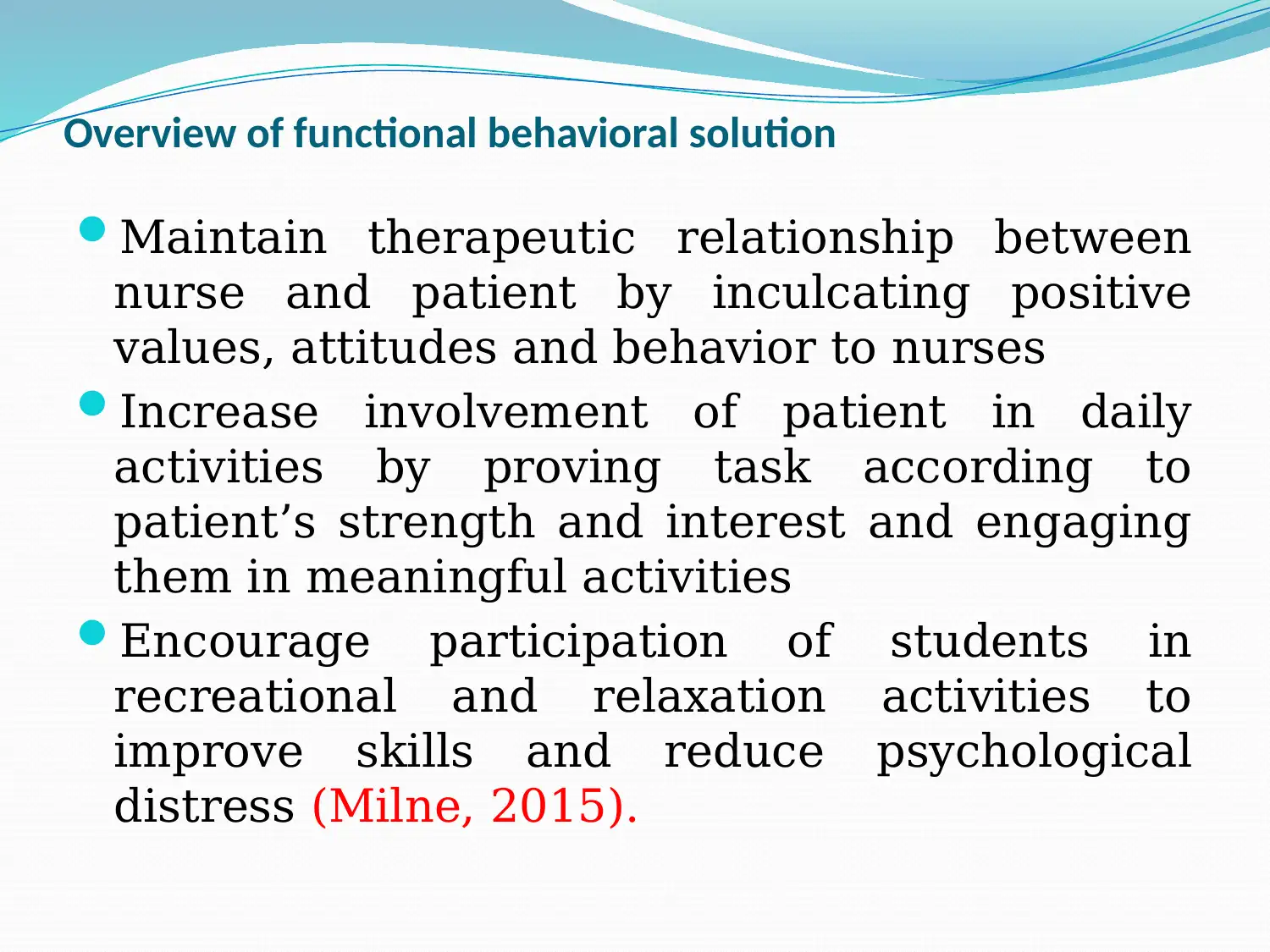
Overview of functional behavioral solution
Maintain therapeutic relationship between
nurse and patient by inculcating positive
values, attitudes and behavior to nurses
Increase involvement of patient in daily
activities by proving task according to
patient’s strength and interest and engaging
them in meaningful activities
Encourage participation of students in
recreational and relaxation activities to
improve skills and reduce psychological
distress (Milne, 2015).
Document Page
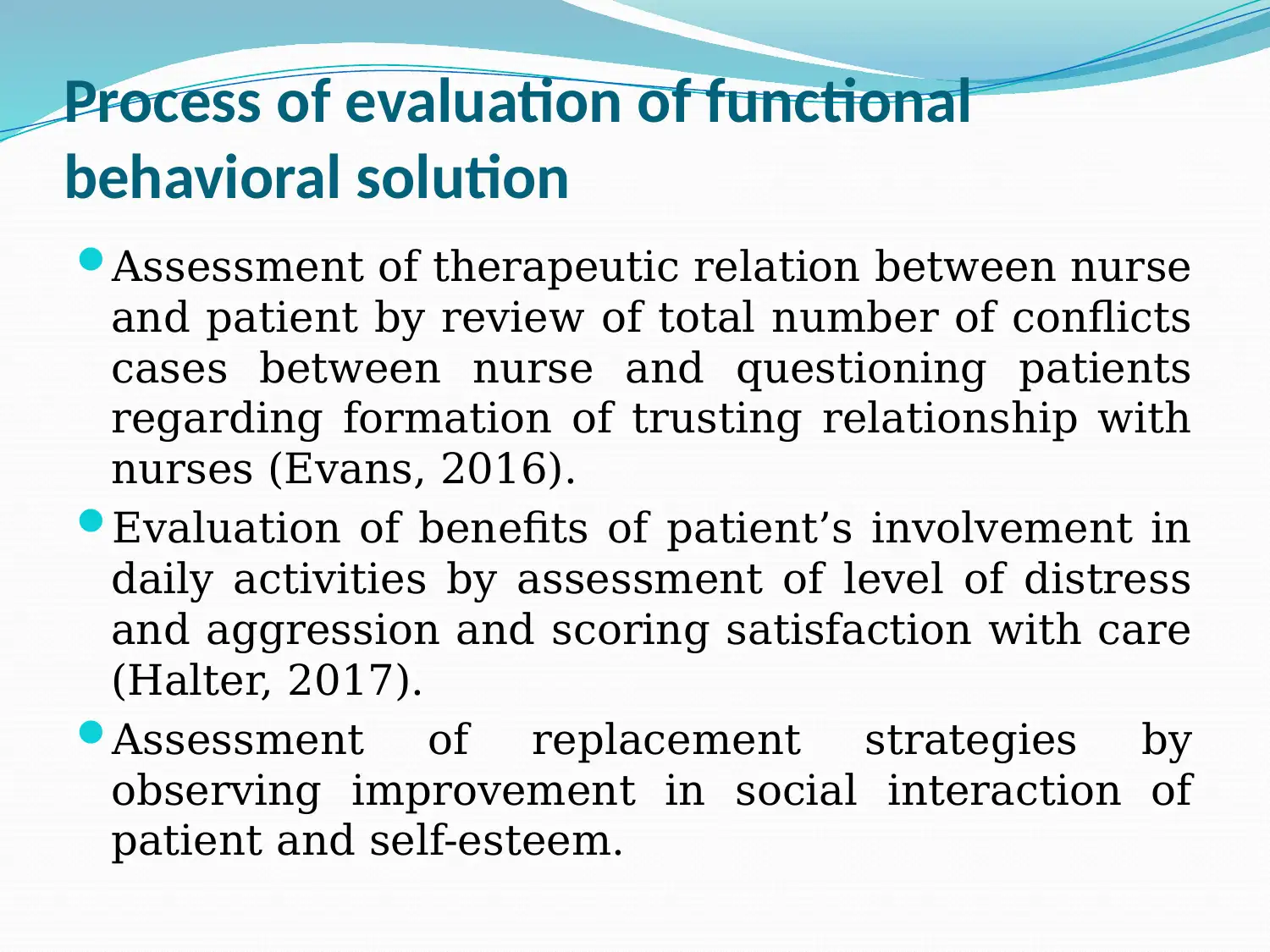
Process of evaluation of functional
behavioral solution
Assessment of therapeutic relation between nurse
and patient by review of total number of conflicts
cases between nurse and questioning patients
regarding formation of trusting relationship with
nurses (Evans, 2016).
Evaluation of benefits of patient’s involvement in
daily activities by assessment of level of distress
and aggression and scoring satisfaction with care
(Halter, 2017).
Assessment of replacement strategies by
observing improvement in social interaction of
patient and self-esteem.
Document Page
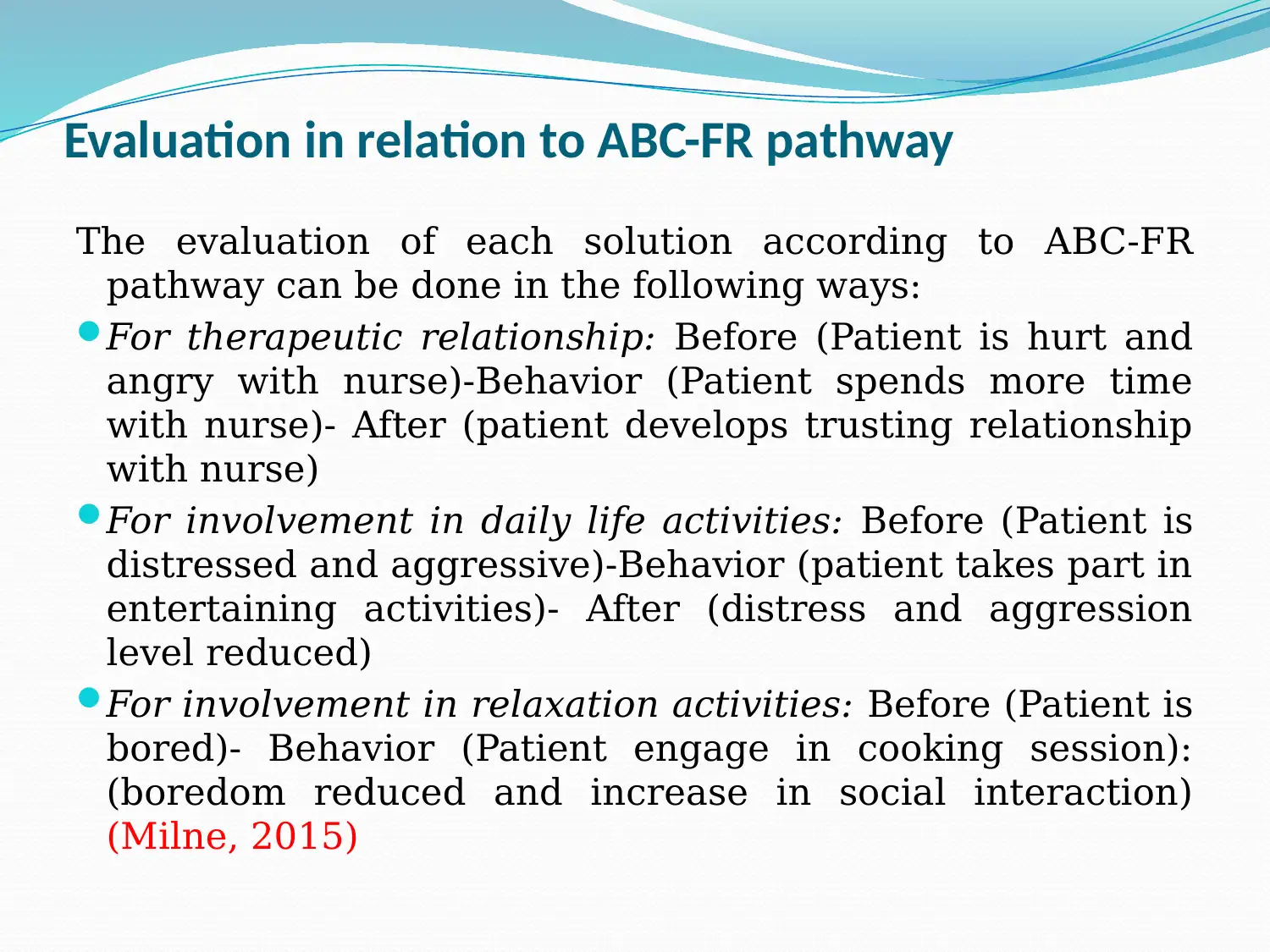
Evaluation in relation to ABC-FR pathway
The evaluation of each solution according to ABC-FR
pathway can be done in the following ways:
For therapeutic relationship: Before (Patient is hurt and
angry with nurse)-Behavior (Patient spends more time
with nurse)- After (patient develops trusting relationship
with nurse)
For involvement in daily life activities: Before (Patient is
distressed and aggressive)-Behavior (patient takes part in
entertaining activities)- After (distress and aggression
level reduced)
For involvement in relaxation activities: Before (Patient is
bored)- Behavior (Patient engage in cooking session):
(boredom reduced and increase in social interaction)
(Milne, 2015)
tabler-icon-diamond-filled.svg

Paraphrase This Document

Need a fresh take? Get an instant paraphrase of this document with our AI Paraphraser
Document Page
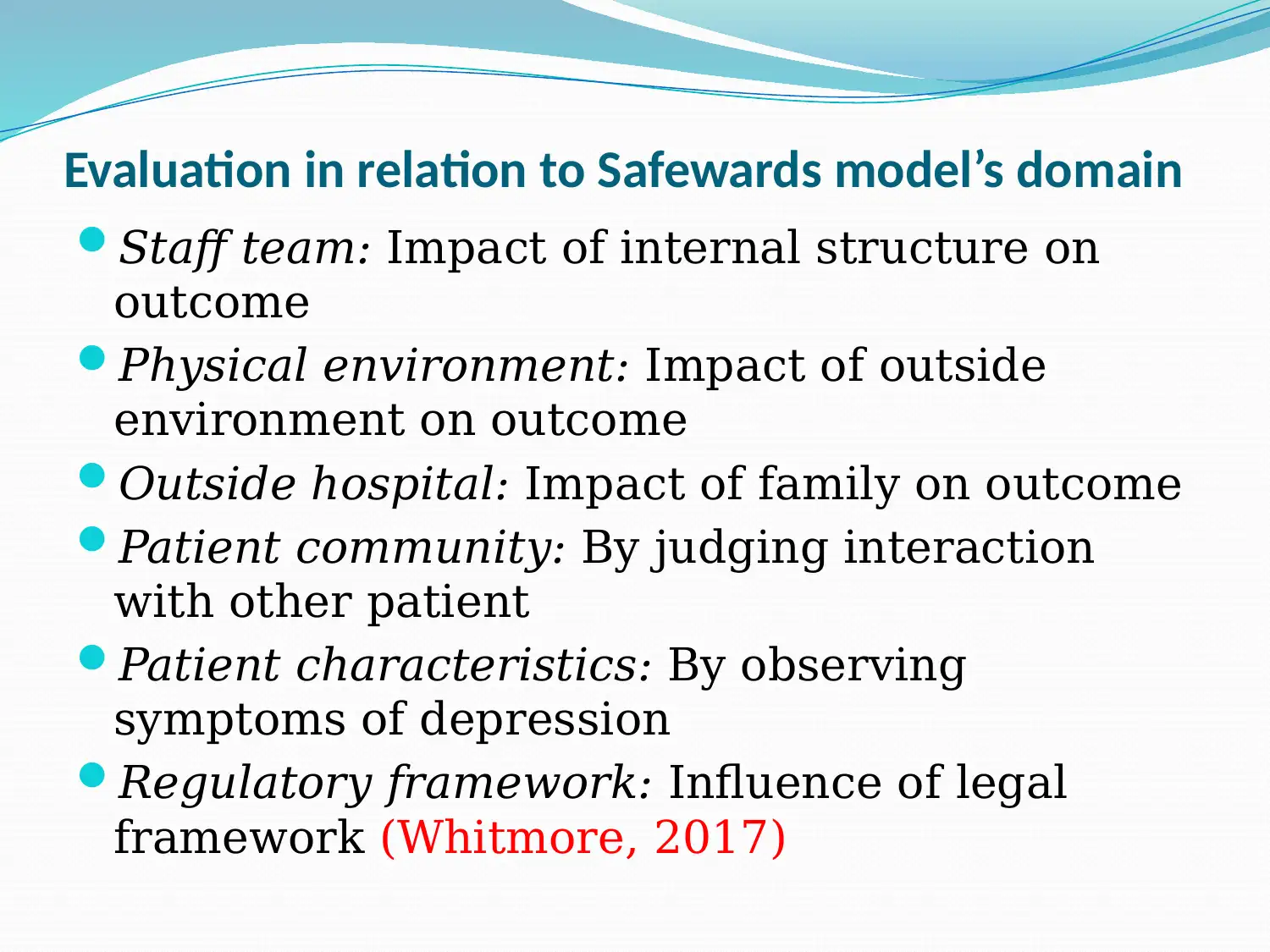
Evaluation in relation to Safewards model’s domain
Staff team: Impact of internal structure on
outcome
Physical environment: Impact of outside
environment on outcome
Outside hospital: Impact of family on outcome
Patient community: By judging interaction
with other patient
Patient characteristics: By observing
symptoms of depression
Regulatory framework: Influence of legal
framework (Whitmore, 2017)
Document Page
Data collection to demonstrate result
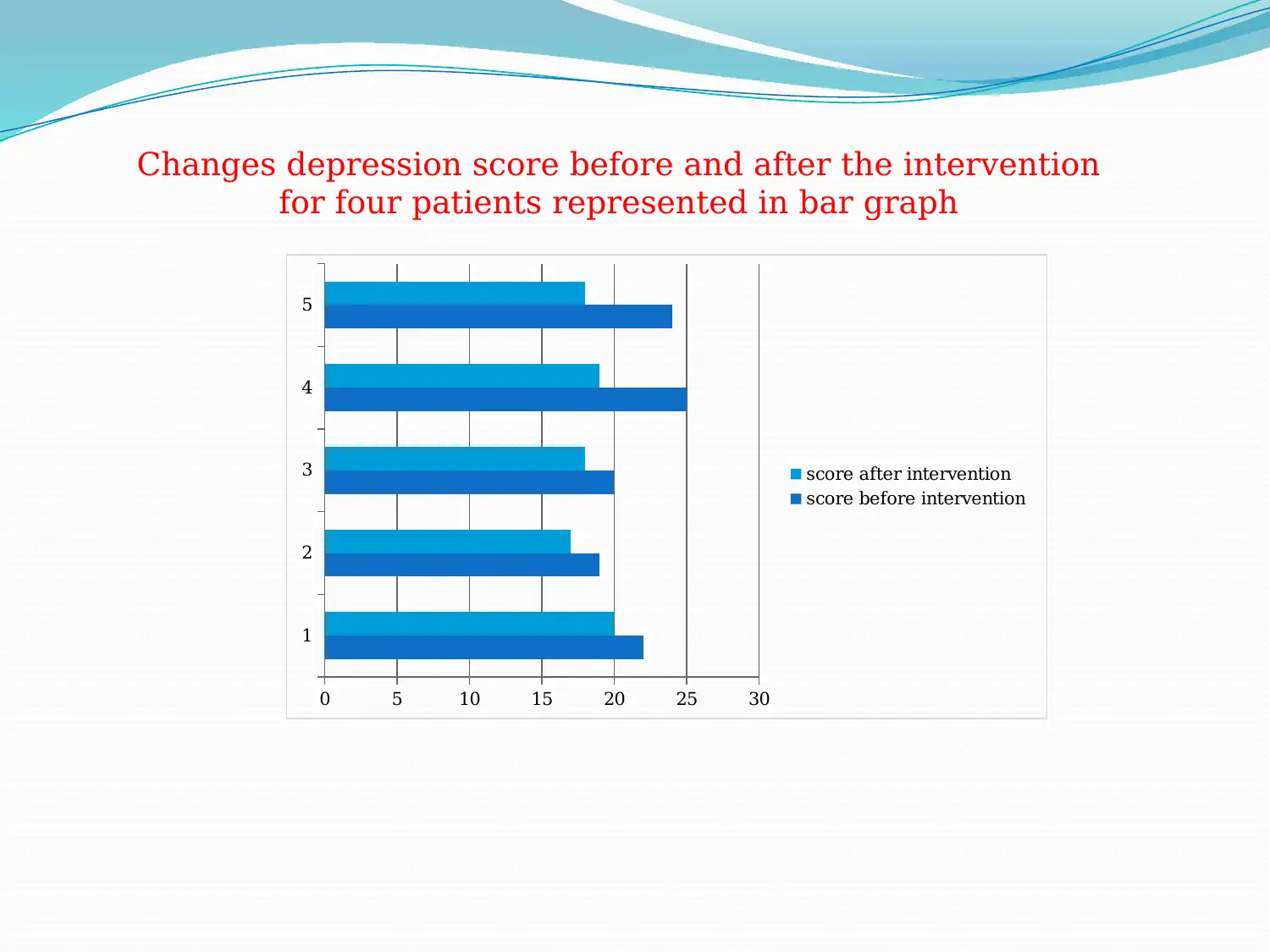
Improvement in depression score before and
after the intervention represented in bar
graph
Improvement in self-esteem and interest by
self-esteem checklist
Benefits of relaxation activities represented
by development of new skills in patient
Document Page
Changes depression score before and after the intervention
for four patients represented in bar graph
1
2
3
4
5
0 5 10 15 20 25 30
score after intervention
score before intervention
tabler-icon-diamond-filled.svg

Paraphrase This Document

Need a fresh take? Get an instant paraphrase of this document with our AI Paraphraser
Document Page
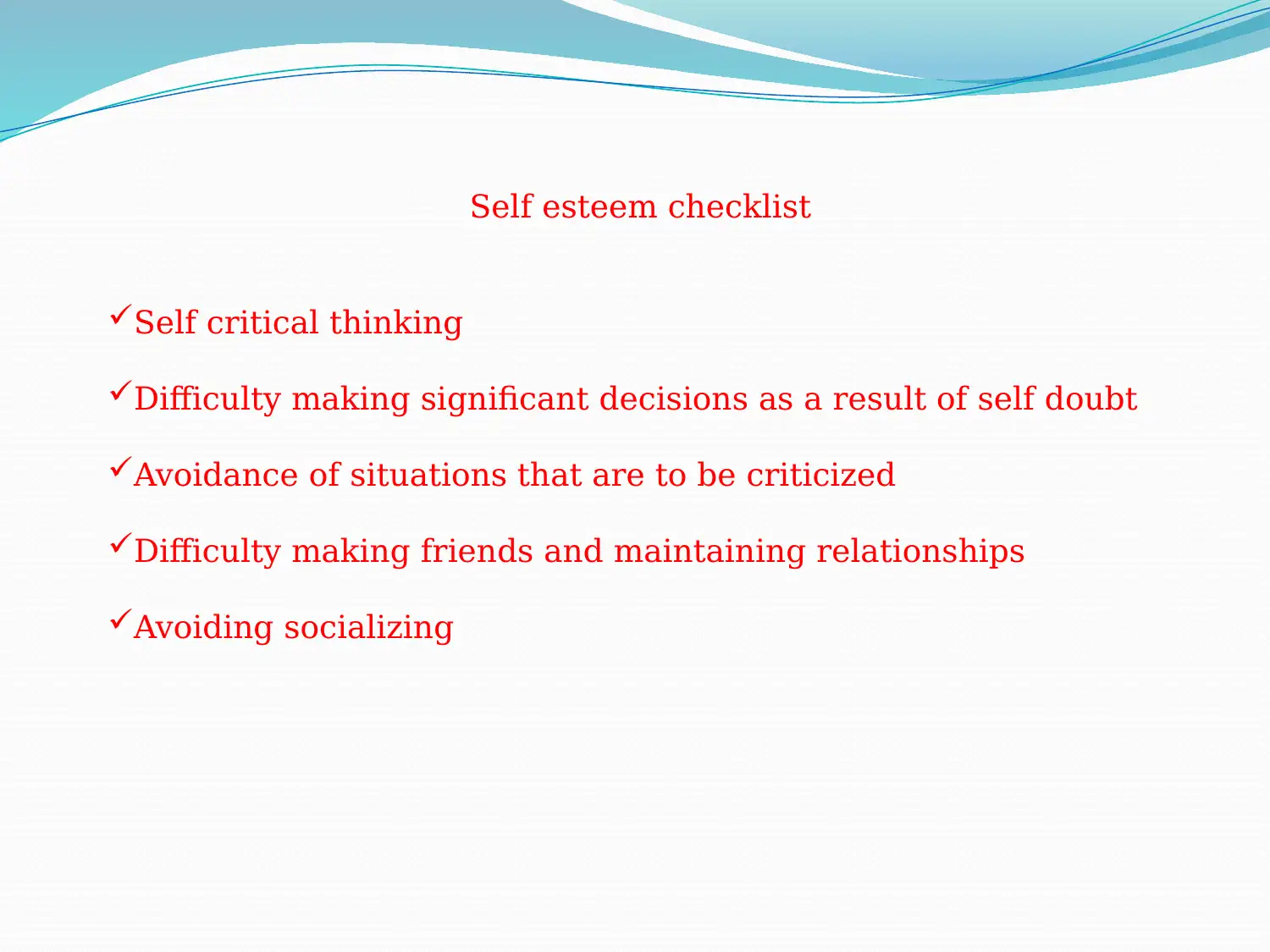
Self esteem checklist
Self critical thinking
Difficulty making significant decisions as a result of self doubt
Avoidance of situations that are to be criticized
Difficulty making friends and maintaining relationships
Avoiding socializing
Document Page
Efficacy of the data
Efficacy of the data will be judged by:
Preciseness of psychological outcomes
Specificity of improvement in social skills
Complete detail regarding improvement in
self-esteem (Halter, 2017)
Document Page
Finding evidence for efficacy of the
behavioral solution
Efficacy of behavioral solution will be evaluated
by:
Looking at improvement in depression and
stress level score
Assessing patient’s experience regarding
satisfaction with care
tabler-icon-diamond-filled.svg

Paraphrase This Document

Need a fresh take? Get an instant paraphrase of this document with our AI Paraphraser
Document Page
Finding evidence for efficacy of the
behavioral solution
Judging the impact of recreational activities
on skill development in patient
Evaluating nurse-patient relationship by
decrease in the number of conflict incidents.
Document Page
REFERENCE
Evans, E. C. (2016). Exploring the nuances of nurse-patient
interaction through concept analysis: impact on patient
satisfaction. Nursing science quarterly, 29(1), 62-70.
Halter, M. J. (2017). Varcarolis' Foundations of Psychiatric-
Mental Health Nursing-E-Book: A Clinical Approach.
Elsevier Health Sciences.
Milne, D. (2015). Training Behaviour Therapists (Psychology
Revivals): Methods, Evaluation and Implementation with
Parents, Nurses and Teachers. Routledge
Whitmore, C. (2017). Evaluation of Safewards in forensic
mental health: a response. Mental Health Practice
(2014+), 20(8), 26.
chevron_up_icon
1 out of 13
circle_padding
hide_on_mobile
zoom_out_icon
[object Object]