Comprehensive Report: Mental Health Ward Issues and Interventions
VerifiedAdded on 2022/08/13
|12
|1362
|354
Report
AI Summary
This report, prepared by the head nurse of a mental health ward, addresses critical issues impacting healthcare delivery. The report highlights problems such as insufficient bed capacity, lack of staff clinical competency, and inadequate preparedness for emergency cases. To address these issues, the report proposes several interventions, including increasing the number of beds, establishing a pact with a general hospital for clinical assistance, conducting training sessions for nursing staff, implementing routine assessments to ensure quality standards, forming a steering committee for policy evaluation, and implementing corrective strategies. The report emphasizes the importance of continuous improvement through regular evaluation of the quality assurance program and aims to improve patient satisfaction and overall healthcare outcomes. The author requests that the concerned authorities take necessary actions to address the identified challenges.
Addressing the Issues Faced
by Mental Health Ward
Name of the Student
Name of the University
Author Note
by Mental Health Ward
Name of the Student
Name of the University
Author Note
Paraphrase This Document
Need a fresh take? Get an instant paraphrase of this document with our AI Paraphraser

Introduction
Health care delivery for mental illness is struggling to maintain higher standards of care
delivered to the patient.
The mental hospital that I am currently working in is situated alongside a general hospital.
As the head nurse of the mental hospital, I want to bring your attention to the major problems
that the health care facility is currently facing.
The overall effectiveness of the mental health hospital is highly determined by the quality of
health care provided by it, and quality assurance plays a crucial role in upholding the
standards of clinical practice in a health care system.
The following slides of the presentation will evaluate the major problems with the intention to
highlight major interventions that are required to address the problems and seek continuous
improvements in the health standards ion the mental hospital.
Health care delivery for mental illness is struggling to maintain higher standards of care
delivered to the patient.
The mental hospital that I am currently working in is situated alongside a general hospital.
As the head nurse of the mental hospital, I want to bring your attention to the major problems
that the health care facility is currently facing.
The overall effectiveness of the mental health hospital is highly determined by the quality of
health care provided by it, and quality assurance plays a crucial role in upholding the
standards of clinical practice in a health care system.
The following slides of the presentation will evaluate the major problems with the intention to
highlight major interventions that are required to address the problems and seek continuous
improvements in the health standards ion the mental hospital.

Preparedness and Standards of
Health Care Delivery
The mental health ward is designed to handle only cases that are ready to be deported or
discharged.
This indicates the inability of the ward to address the needs of aggressive patients, which critically
highlights the lack of preparedness of the ward for emergency cases (Drake and Wallach 2019).
In addition to this, several cases have been experienced concerned with relapse of patient’s health
during their stay at the mental health ward.
The lack of awareness among the nursing professionals working in the ward can be deemed to be
the cause behind this situation.
It is important that the overall competency of the mental health ward is raised to quality
standards to ensure that the ward is more capable of handling aggressive patients and provide
them with a better quality of care.
Health Care Delivery
The mental health ward is designed to handle only cases that are ready to be deported or
discharged.
This indicates the inability of the ward to address the needs of aggressive patients, which critically
highlights the lack of preparedness of the ward for emergency cases (Drake and Wallach 2019).
In addition to this, several cases have been experienced concerned with relapse of patient’s health
during their stay at the mental health ward.
The lack of awareness among the nursing professionals working in the ward can be deemed to be
the cause behind this situation.
It is important that the overall competency of the mental health ward is raised to quality
standards to ensure that the ward is more capable of handling aggressive patients and provide
them with a better quality of care.
⊘ This is a preview!⊘
Do you want full access?
Subscribe today to unlock all pages.

Trusted by 1+ million students worldwide

Interventions Required
Owing to the problems in the ward, it is evident that critical
interventions are required to address the problems and raise the overall
quality of health care delivery by the ward.
The foremost step towards improving health care delivery would be to
increase the count of beds in the mental health ward. With this strategy,
critical improvement in the management of patients can be achieved.
The bed count for the mental health ward should be increased to a
minimum of twenty beds from the present count of twelve, which will be
sufficient to provide adequate health care services to patients.
Owing to the problems in the ward, it is evident that critical
interventions are required to address the problems and raise the overall
quality of health care delivery by the ward.
The foremost step towards improving health care delivery would be to
increase the count of beds in the mental health ward. With this strategy,
critical improvement in the management of patients can be achieved.
The bed count for the mental health ward should be increased to a
minimum of twenty beds from the present count of twelve, which will be
sufficient to provide adequate health care services to patients.
Paraphrase This Document
Need a fresh take? Get an instant paraphrase of this document with our AI Paraphraser

Pact with General Hospital
A pact will be created between the mental health ward and the
general hospital which will ensure the two-way provision of clinical
assistance during crisis situations and times of need.
The major highlights of this pact should be the provision of greater
assistance, especially from the general hospital during a crisis
situation.
The transfer of cases of aggressive patients to the mental health
ward should be aided with clinical assistance from the general
hospital.
A pact will be created between the mental health ward and the
general hospital which will ensure the two-way provision of clinical
assistance during crisis situations and times of need.
The major highlights of this pact should be the provision of greater
assistance, especially from the general hospital during a crisis
situation.
The transfer of cases of aggressive patients to the mental health
ward should be aided with clinical assistance from the general
hospital.

Nursing Staff Awareness
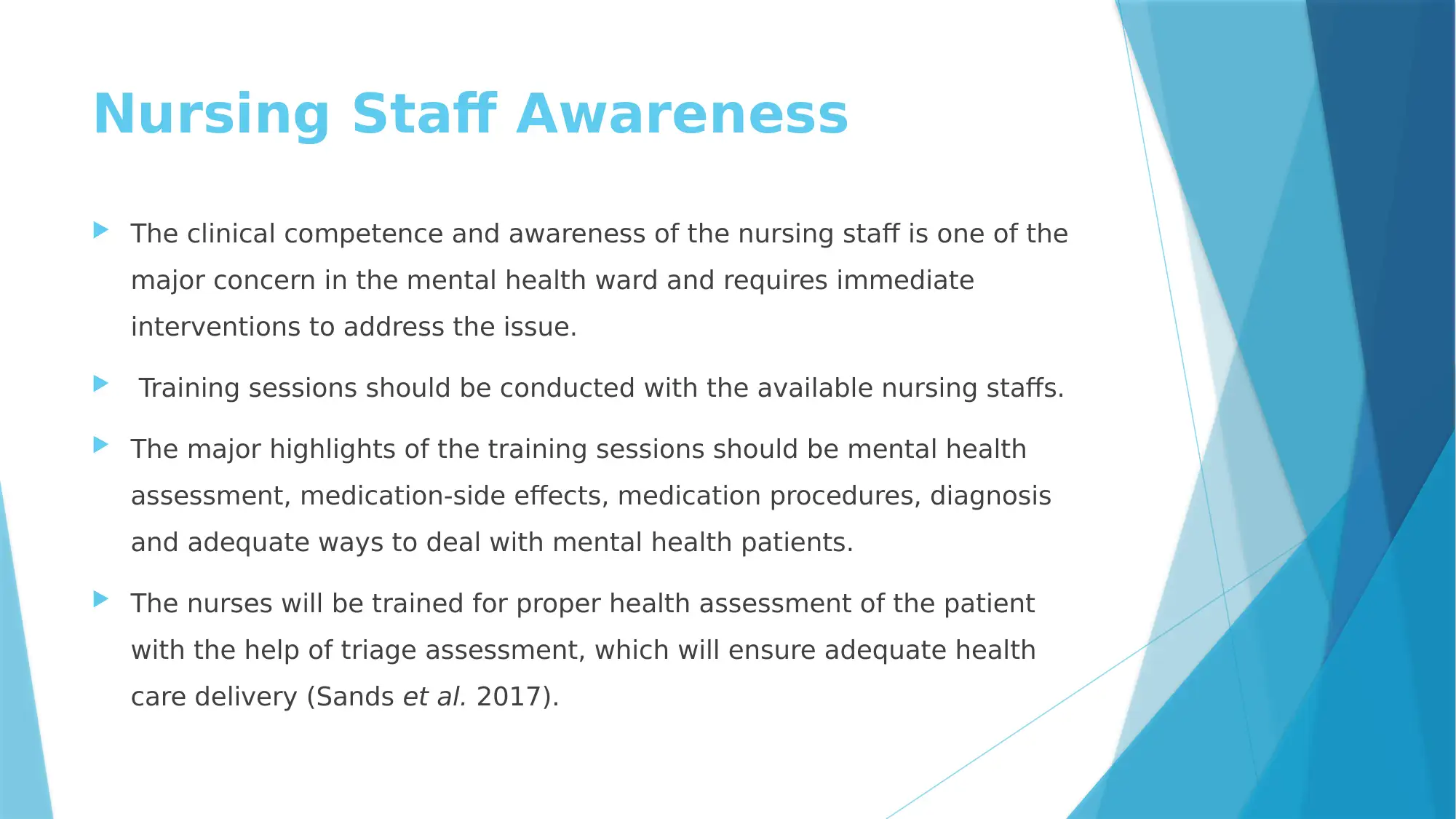
The clinical competence and awareness of the nursing staff is one of the
major concern in the mental health ward and requires immediate
interventions to address the issue.
Training sessions should be conducted with the available nursing staffs.
The major highlights of the training sessions should be mental health
assessment, medication-side effects, medication procedures, diagnosis
and adequate ways to deal with mental health patients.
The nurses will be trained for proper health assessment of the patient
with the help of triage assessment, which will ensure adequate health
care delivery (Sands et al. 2017).
The clinical competence and awareness of the nursing staff is one of the
major concern in the mental health ward and requires immediate
interventions to address the issue.
Training sessions should be conducted with the available nursing staffs.
The major highlights of the training sessions should be mental health
assessment, medication-side effects, medication procedures, diagnosis
and adequate ways to deal with mental health patients.
The nurses will be trained for proper health assessment of the patient
with the help of triage assessment, which will ensure adequate health
care delivery (Sands et al. 2017).
⊘ This is a preview!⊘
Do you want full access?
Subscribe today to unlock all pages.

Trusted by 1+ million students worldwide

Ensuring Quality Standards
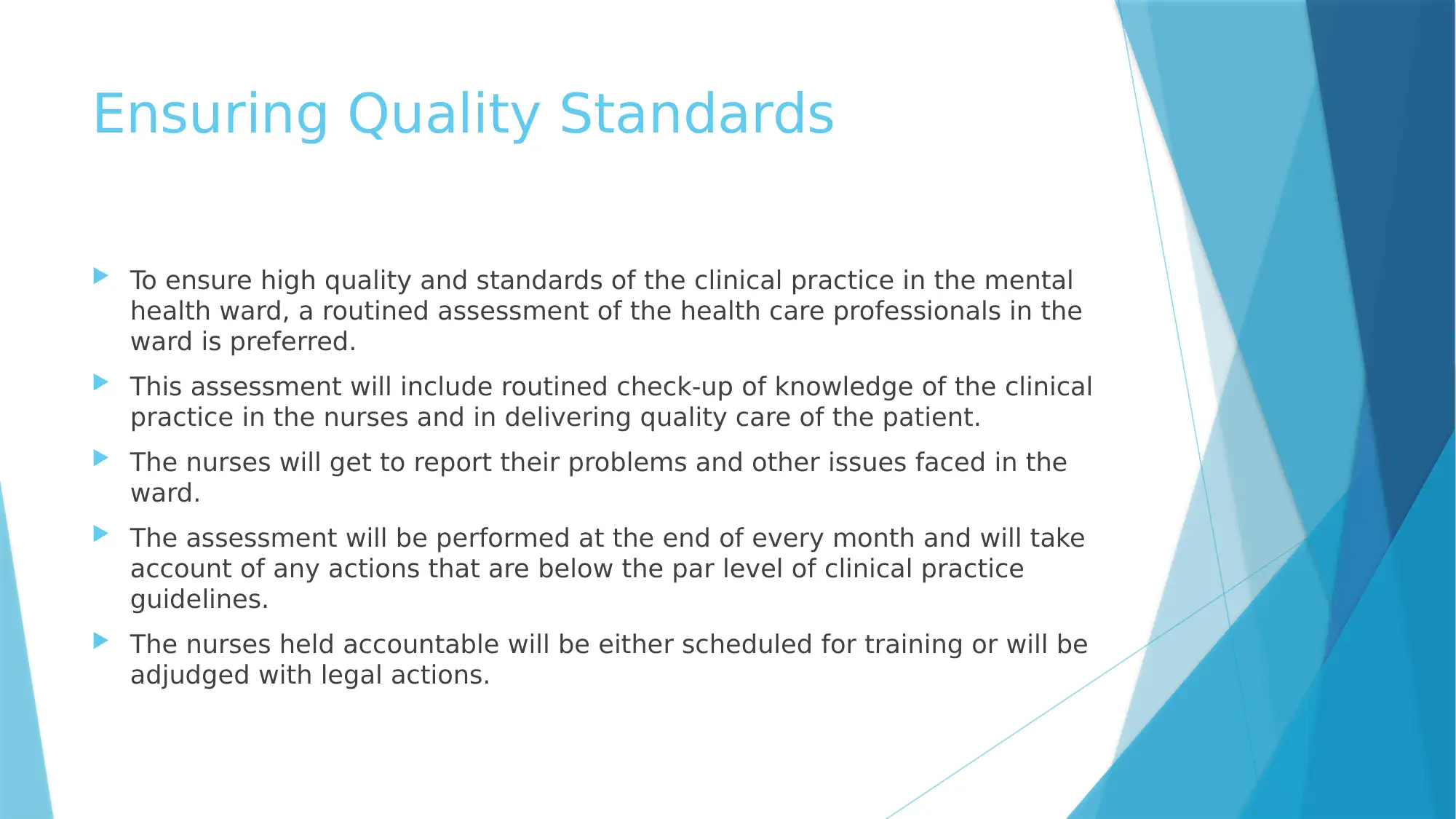
To ensure high quality and standards of the clinical practice in the mental
health ward, a routined assessment of the health care professionals in the
ward is preferred.
This assessment will include routined check-up of knowledge of the clinical
practice in the nurses and in delivering quality care of the patient.
The nurses will get to report their problems and other issues faced in the
ward.
The assessment will be performed at the end of every month and will take
account of any actions that are below the par level of clinical practice
guidelines.
The nurses held accountable will be either scheduled for training or will be
adjudged with legal actions.
To ensure high quality and standards of the clinical practice in the mental
health ward, a routined assessment of the health care professionals in the
ward is preferred.
This assessment will include routined check-up of knowledge of the clinical
practice in the nurses and in delivering quality care of the patient.
The nurses will get to report their problems and other issues faced in the
ward.
The assessment will be performed at the end of every month and will take
account of any actions that are below the par level of clinical practice
guidelines.
The nurses held accountable will be either scheduled for training or will be
adjudged with legal actions.
Paraphrase This Document
Need a fresh take? Get an instant paraphrase of this document with our AI Paraphraser

Creation of Steering Committee
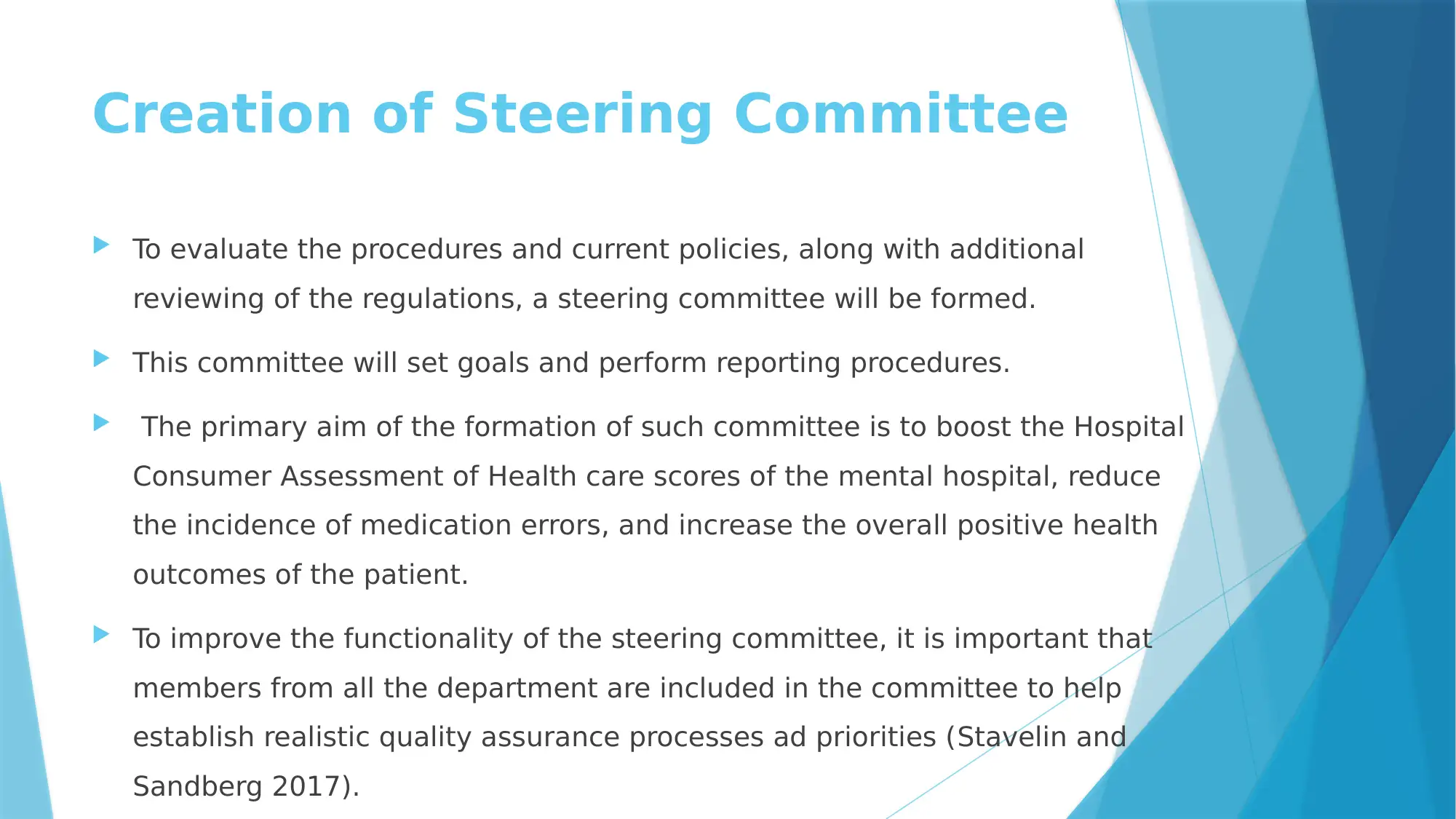
To evaluate the procedures and current policies, along with additional
reviewing of the regulations, a steering committee will be formed.
This committee will set goals and perform reporting procedures.
The primary aim of the formation of such committee is to boost the Hospital
Consumer Assessment of Health care scores of the mental hospital, reduce
the incidence of medication errors, and increase the overall positive health
outcomes of the patient.
To improve the functionality of the steering committee, it is important that
members from all the department are included in the committee to help
establish realistic quality assurance processes ad priorities (Stavelin and
Sandberg 2017).
To evaluate the procedures and current policies, along with additional
reviewing of the regulations, a steering committee will be formed.
This committee will set goals and perform reporting procedures.
The primary aim of the formation of such committee is to boost the Hospital
Consumer Assessment of Health care scores of the mental hospital, reduce
the incidence of medication errors, and increase the overall positive health
outcomes of the patient.
To improve the functionality of the steering committee, it is important that
members from all the department are included in the committee to help
establish realistic quality assurance processes ad priorities (Stavelin and
Sandberg 2017).

Implementation of Corrective
Strategies
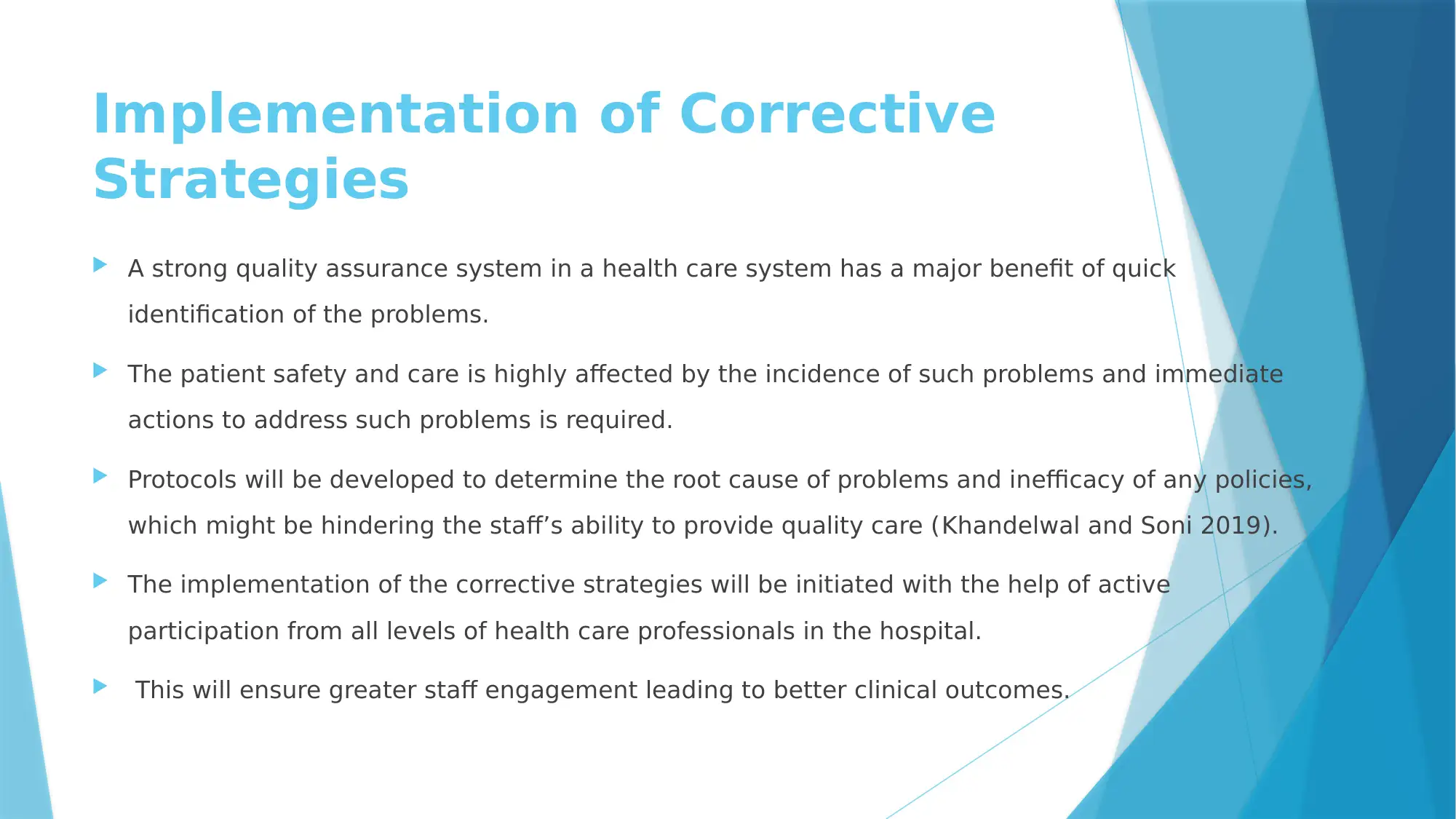
A strong quality assurance system in a health care system has a major benefit of quick
identification of the problems.
The patient safety and care is highly affected by the incidence of such problems and immediate
actions to address such problems is required.
Protocols will be developed to determine the root cause of problems and inefficacy of any policies,
which might be hindering the staff’s ability to provide quality care (Khandelwal and Soni 2019).
The implementation of the corrective strategies will be initiated with the help of active
participation from all levels of health care professionals in the hospital.
This will ensure greater staff engagement leading to better clinical outcomes.
Strategies
A strong quality assurance system in a health care system has a major benefit of quick
identification of the problems.
The patient safety and care is highly affected by the incidence of such problems and immediate
actions to address such problems is required.
Protocols will be developed to determine the root cause of problems and inefficacy of any policies,
which might be hindering the staff’s ability to provide quality care (Khandelwal and Soni 2019).
The implementation of the corrective strategies will be initiated with the help of active
participation from all levels of health care professionals in the hospital.
This will ensure greater staff engagement leading to better clinical outcomes.
⊘ This is a preview!⊘
Do you want full access?
Subscribe today to unlock all pages.

Trusted by 1+ million students worldwide

Seeking Continuous
Improvement
To seek continuous improvement, it is important that regular evaluation of
the quality assurance program is performed.
Weekly monitoring involving the evaluation of reports and other inputs
provided by the staffs and patients will be conducted.
To improve the efficacy of such quality assurance programs, it is important
that the results of the report are made available to the concerned
stakeholders.
Weekly evaluation of the quality assurance program will include reviewing of
the performance indicators and will ensure targets such as zero medications
errors, increase in patient satisfaction and quality healthcare delivery is met.
Improvement
To seek continuous improvement, it is important that regular evaluation of
the quality assurance program is performed.
Weekly monitoring involving the evaluation of reports and other inputs
provided by the staffs and patients will be conducted.
To improve the efficacy of such quality assurance programs, it is important
that the results of the report are made available to the concerned
stakeholders.
Weekly evaluation of the quality assurance program will include reviewing of
the performance indicators and will ensure targets such as zero medications
errors, increase in patient satisfaction and quality healthcare delivery is met.
Paraphrase This Document
Need a fresh take? Get an instant paraphrase of this document with our AI Paraphraser

Conclusion
As the head nurse of the mental health ward, it is my responsibility to
ensure the highest standards of health care delivery to the patients
admitted in the ward.
However, several issues such as lack of a bed, lack of clinical
competency among the nursing professionals, and lack of preparedness
for critical or emergency cases are disrupting the standards of health
care delivery in the ward.
It is requested that the concerned authorities look after the matter and
take necessary actions in compliance with the provided considerations
to address the issue.
As the head nurse of the mental health ward, it is my responsibility to
ensure the highest standards of health care delivery to the patients
admitted in the ward.
However, several issues such as lack of a bed, lack of clinical
competency among the nursing professionals, and lack of preparedness
for critical or emergency cases are disrupting the standards of health
care delivery in the ward.
It is requested that the concerned authorities look after the matter and
take necessary actions in compliance with the provided considerations
to address the issue.

References
Drake, R.E. and Wallach, M.A., 2019. Assessing the Optimal Number of Psychiatric Beds for a
Region. Administration and Policy in Mental Health and Mental Health Services Research, 46(6), pp.696-
700.
Haddad, L.M. and Toney-Butler, T.J., 2019. Nursing shortage. In StatPearls [Internet]. StatPearls
Publishing.
Khandelwal, S. and Soni, P.M., 2019. Prerequisites of Quality Assurance in Health Sector: A Literary
Review. Available at SSRN 3446664.
Sands, N., Elsom, S., Corbett, R., Keppich‐Arnold, S., Prematunga, R., Berk, M. and Considine, J., 2017.
Predictors for clinical deterioration of mental state in patients assessed by telephone‐based mental
health triage. International journal of mental health nursing, 26(3), pp.226-237.
Stavelin, A. and Sandberg, S., 2017. Essential aspects of external quality assurance for point-of-care
Drake, R.E. and Wallach, M.A., 2019. Assessing the Optimal Number of Psychiatric Beds for a
Region. Administration and Policy in Mental Health and Mental Health Services Research, 46(6), pp.696-
700.
Haddad, L.M. and Toney-Butler, T.J., 2019. Nursing shortage. In StatPearls [Internet]. StatPearls
Publishing.
Khandelwal, S. and Soni, P.M., 2019. Prerequisites of Quality Assurance in Health Sector: A Literary
Review. Available at SSRN 3446664.
Sands, N., Elsom, S., Corbett, R., Keppich‐Arnold, S., Prematunga, R., Berk, M. and Considine, J., 2017.
Predictors for clinical deterioration of mental state in patients assessed by telephone‐based mental
health triage. International journal of mental health nursing, 26(3), pp.226-237.
Stavelin, A. and Sandberg, S., 2017. Essential aspects of external quality assurance for point-of-care
⊘ This is a preview!⊘
Do you want full access?
Subscribe today to unlock all pages.

Trusted by 1+ million students worldwide
1 out of 12
Related Documents
Your All-in-One AI-Powered Toolkit for Academic Success.
+13062052269
info@desklib.com
Available 24*7 on WhatsApp / Email
Unlock your academic potential
Copyright © 2020–2025 A2Z Services. All Rights Reserved. Developed and managed by ZUCOL.