Production & Operations Management Assignment Solution, MGMT2026

Verified

Added on  2022/08/28

|9
|473
|17
Homework Assignment
AI Summary
This document presents a comprehensive solution to a Production & Operations Management assignment for the MGMT2026 course at the University of the West Indies Open Campus. The assignment addresses key concepts including demand forecasting, capacity strategy, and facilities planning (location and layout). The solution includes detailed answers to questions on assembly line balancing, cycle time calculation, and workstation allocation. It further explores location strategy by analyzing different location options based on cost factors and layout strategy, differentiating between various layout types and applying layout analysis techniques. The document provides step-by-step calculations and explanations, along with relevant formulas and references to enhance understanding of the core principles of operations management. The assignment covers topics from Unit 3, Unit 5 and Unit 6.
Document Page
Running head: PRODUCTION & OPERATIONS MANAGEMENT
Production & Operations Management
Name of the Student:
Name of the University:
Author note:
tabler-icon-diamond-filled.svg

Paraphrase This Document

Need a fresh take? Get an instant paraphrase of this document with our AI Paraphraser
Document Page
1PRODUCTION & OPERATIONS MANAGEMENT
Table of Contents
Answer to the question 1............................................................................................................2
Part (a)....................................................................................................................................2
Part (b)....................................................................................................................................2
Part (c)....................................................................................................................................2
Part (d)....................................................................................................................................2
Part (e)....................................................................................................................................3
Part (f)....................................................................................................................................3
Answer to the question 2............................................................................................................3
Part (a)....................................................................................................................................3
Part (b)....................................................................................................................................3
Part (c)....................................................................................................................................4
Answer to the question 3............................................................................................................5
Part (a)....................................................................................................................................5
Part (b)....................................................................................................................................5
Part (c)....................................................................................................................................6
Bibliography...............................................................................................................................7
Answer to the question 1
Document Page
2PRODUCTION & OPERATIONS MANAGEMENT
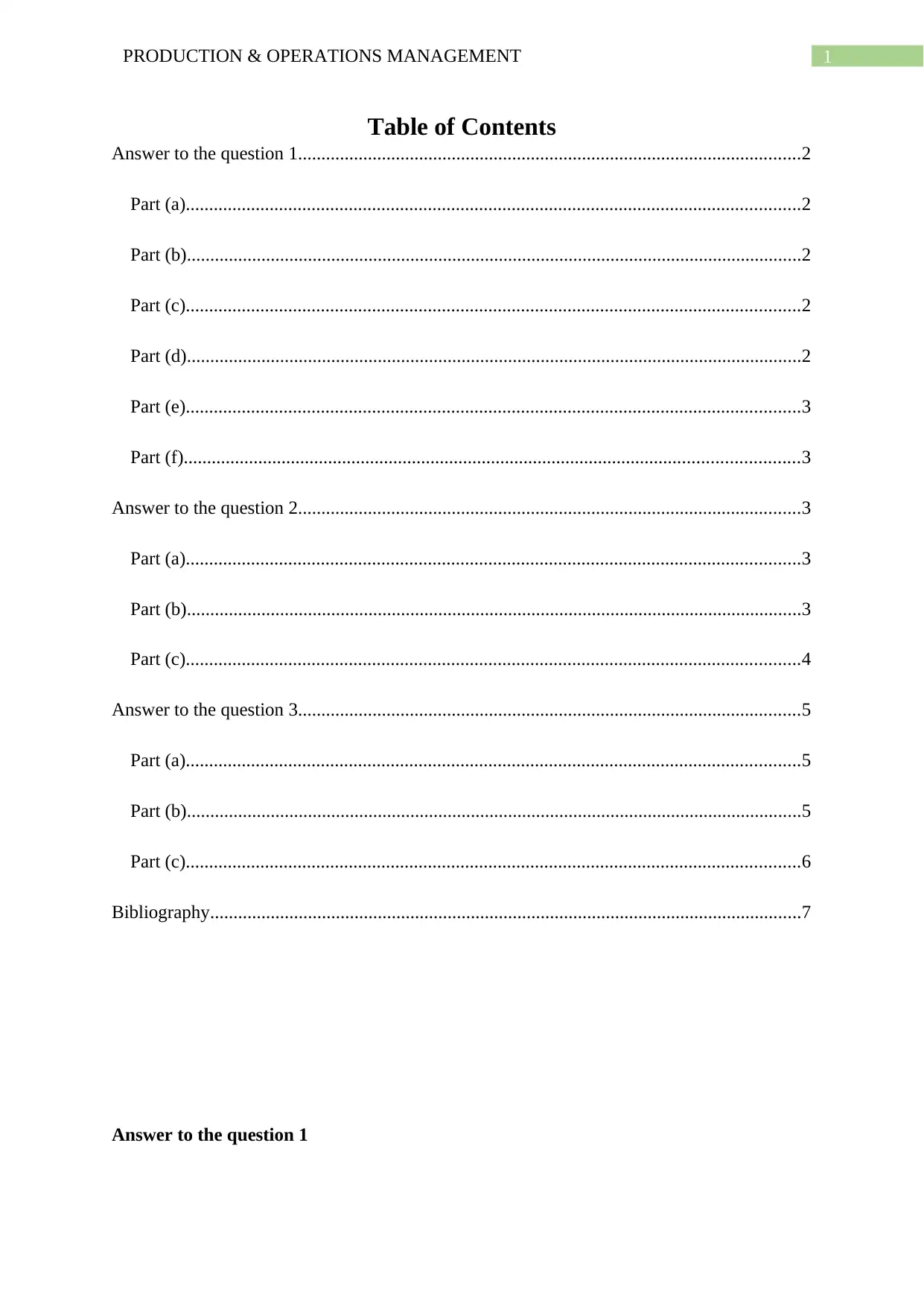
Part (a)
Part (b)
Cycle time for this operation= (9*60)/60
= 9 minutes.
Part (c)
Theoretical minimum number of work station = 40/9
= 4.4
= 4
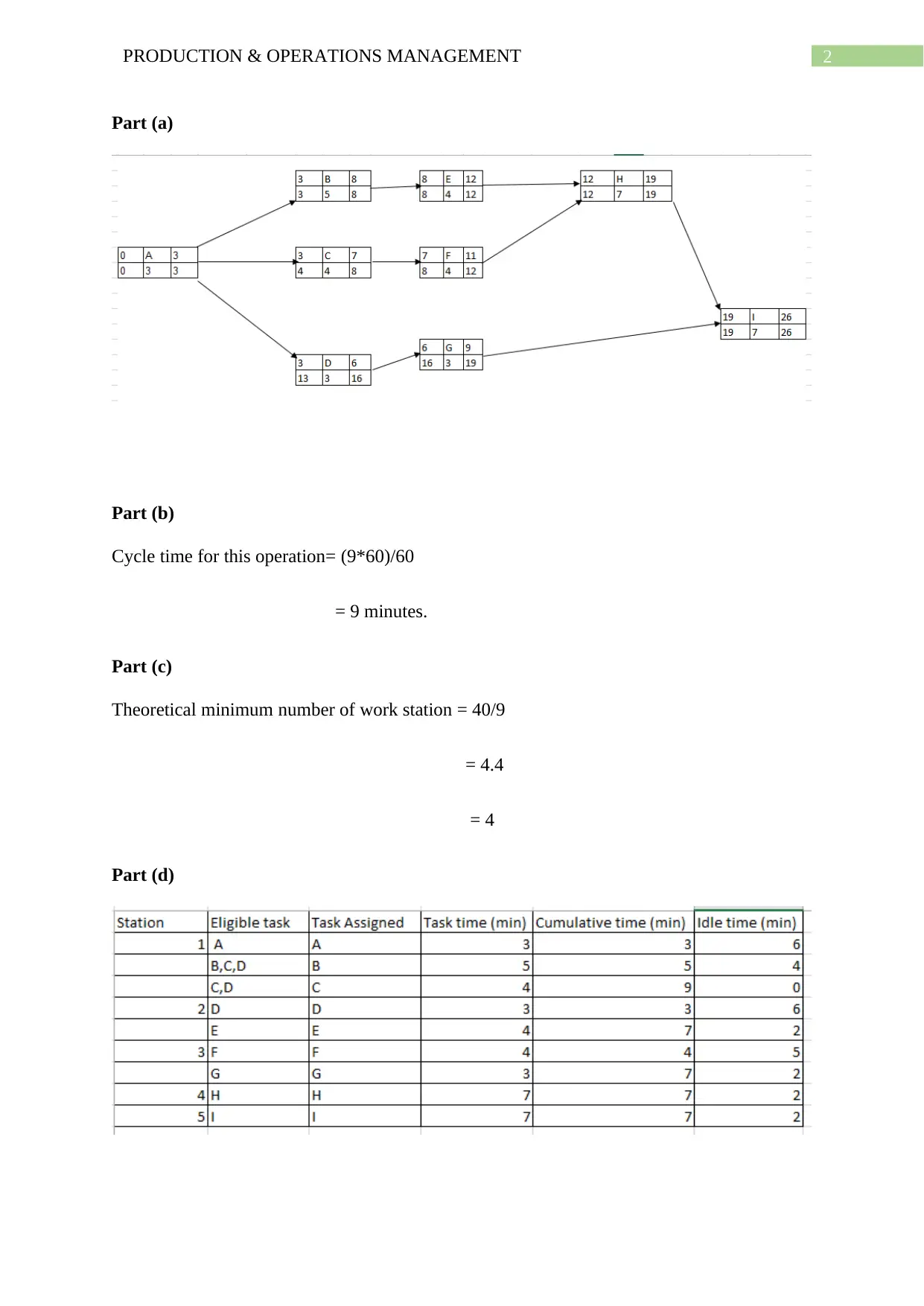
Part (d)
Document Page
3PRODUCTION & OPERATIONS MANAGEMENT
Part (e)
Idle time = 45-45 = 5 minute
Part (f)
Efficiency= (40/ (5*9)) *100%
= 88.9%
Answer to the question 2
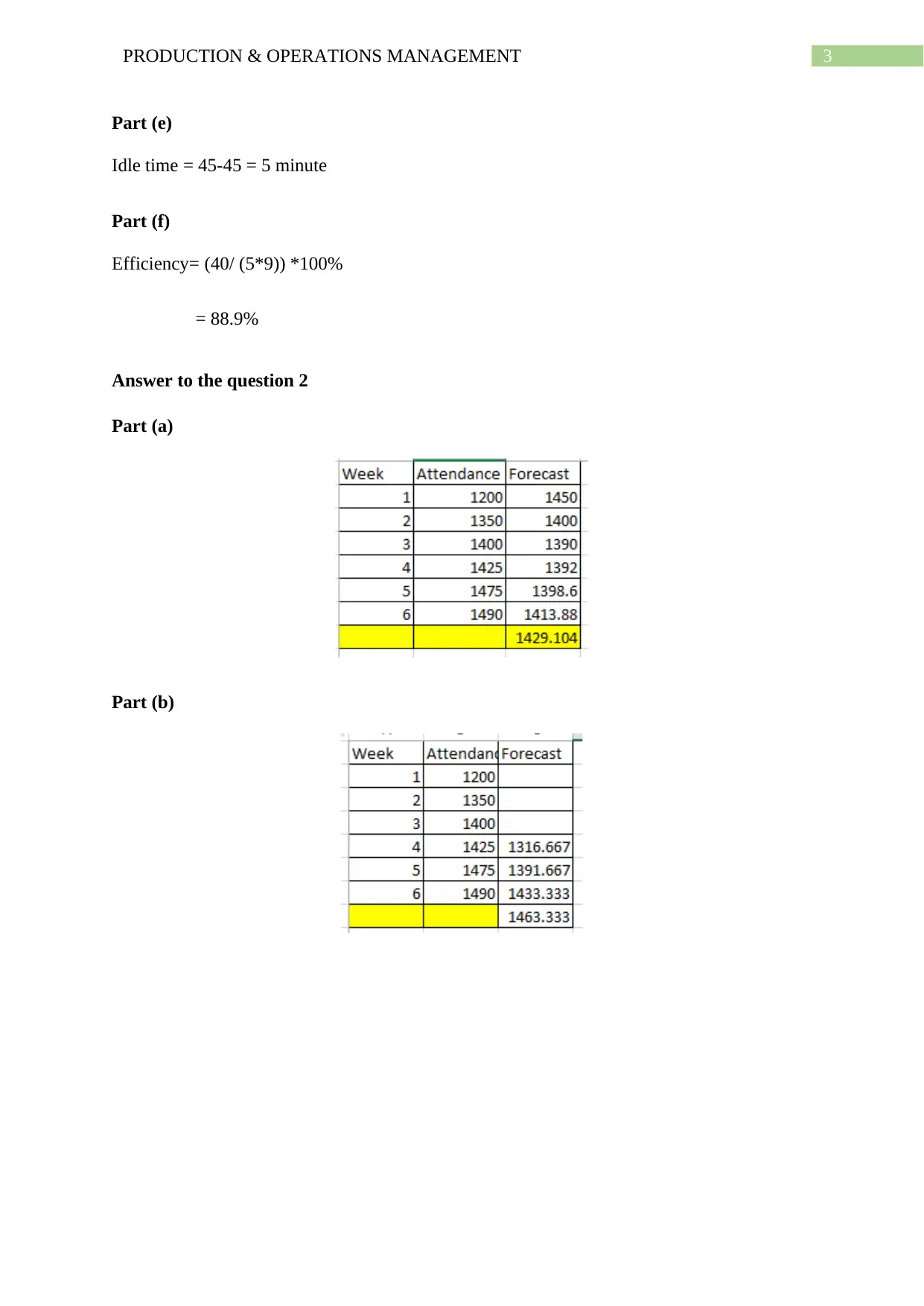
Part (a)
Part (b)
tabler-icon-diamond-filled.svg

Paraphrase This Document

Need a fresh take? Get an instant paraphrase of this document with our AI Paraphraser
Document Page
4PRODUCTION & OPERATIONS MANAGEMENT
Part (c)
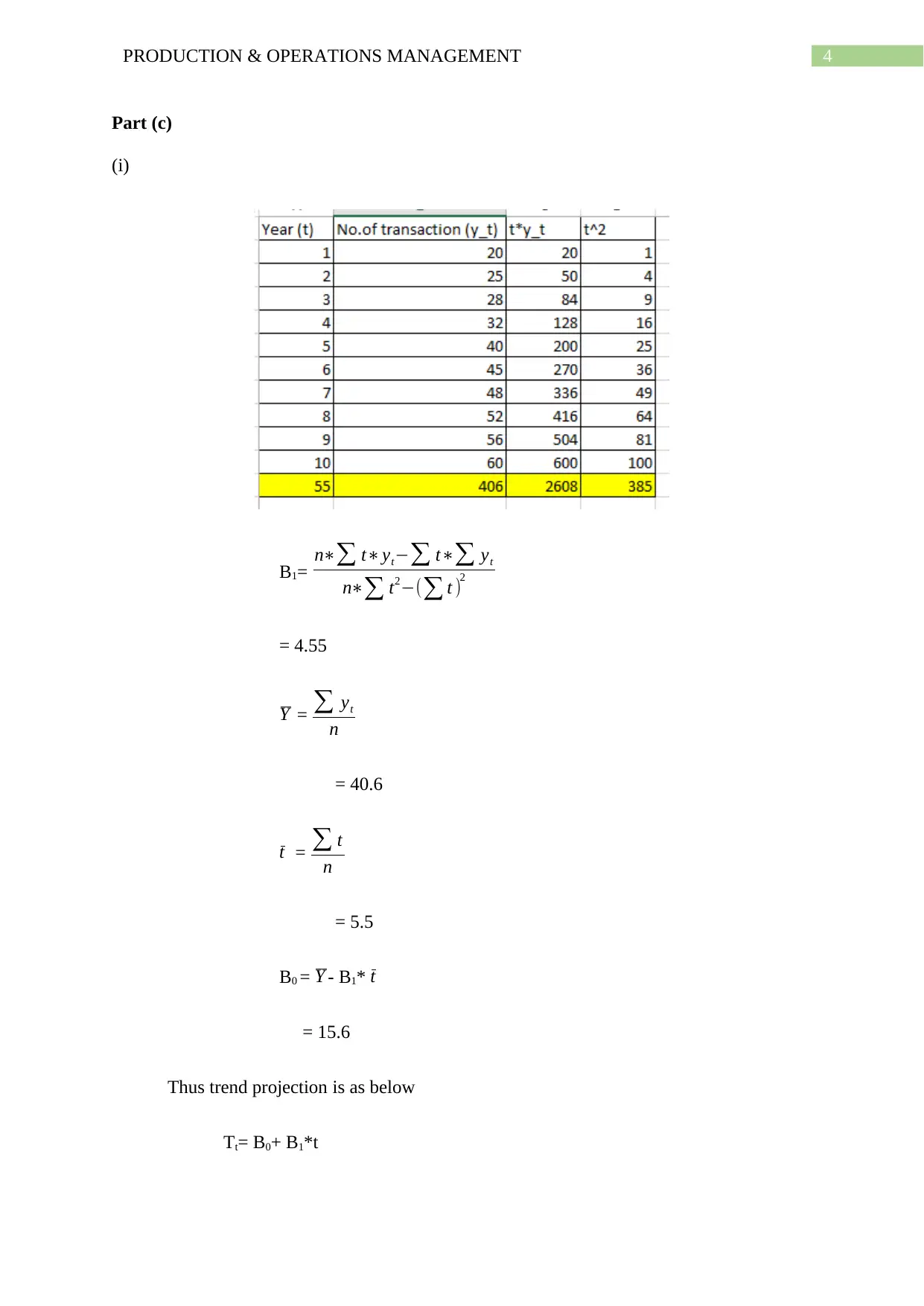
(i)
B1= n tyt t yt
n t2( t )2
= 4.55
Y = yt
n
= 40.6
t = t
n
= 5.5
B0 = Y - B1* t
= 15.6
Thus trend projection is as below
Tt= B0+ B1*t
Document Page
5PRODUCTION & OPERATIONS MANAGEMENT
= 15.6+4.55*t
(ii)
T11= B0+ B1*11
= 15.6+ (4.55*11)
=65.6
T12= B0+ B1*12
= 15.6+ (4.55*12)
=70.145
Answer to the question 3
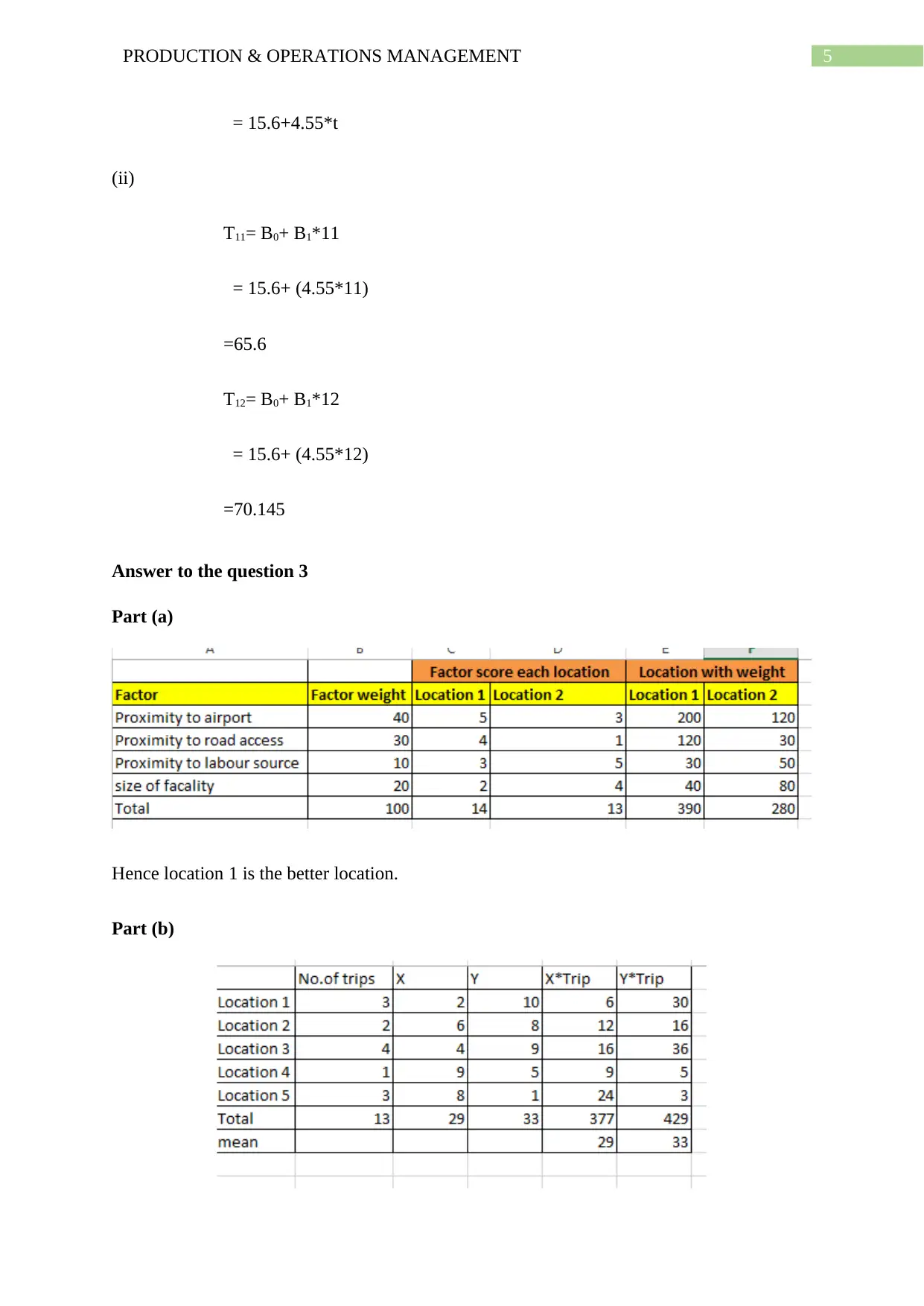
Part (a)
Hence location 1 is the better location.
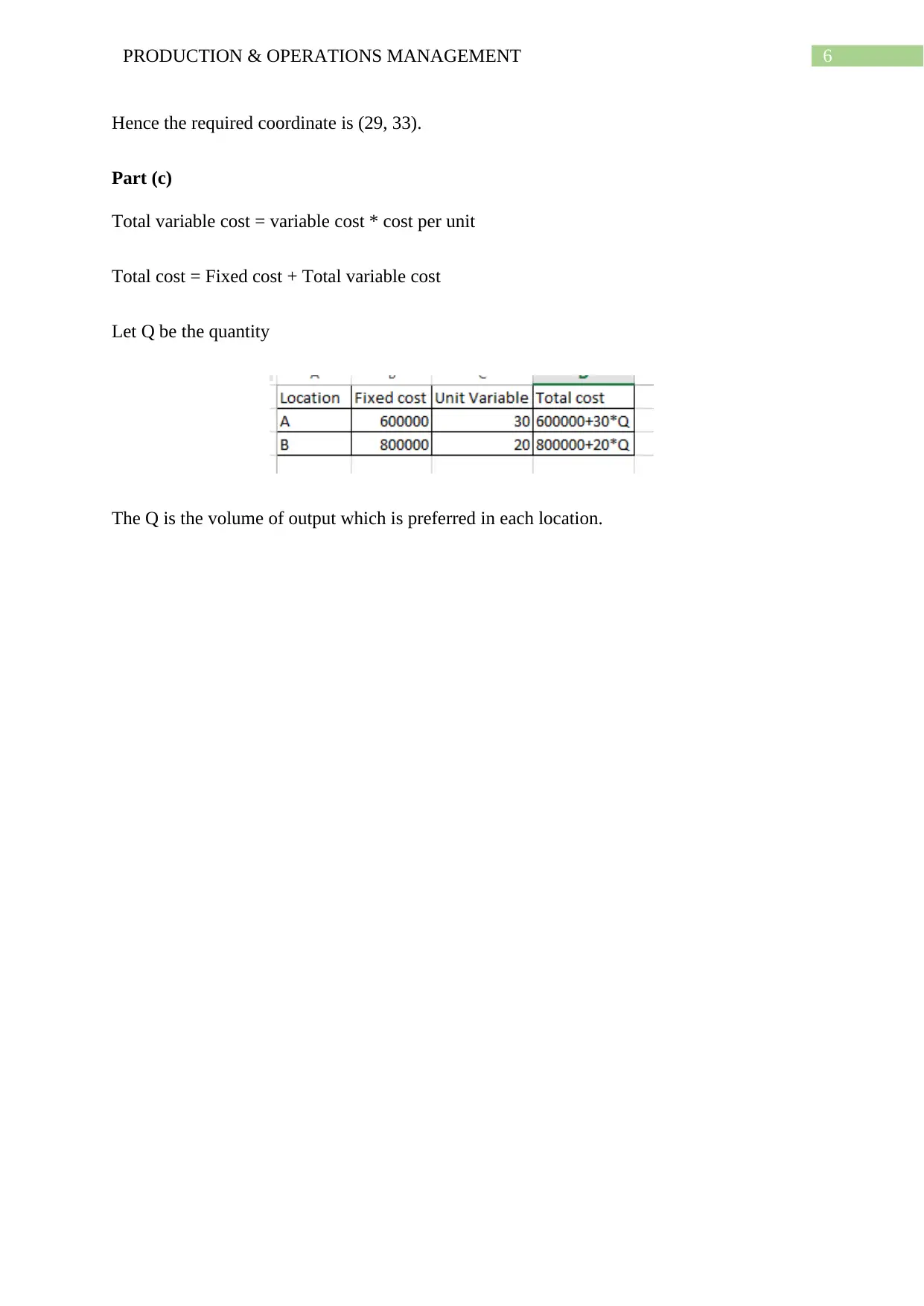
Part (b)
Document Page
6PRODUCTION & OPERATIONS MANAGEMENT
Hence the required coordinate is (29, 33).
Part (c)
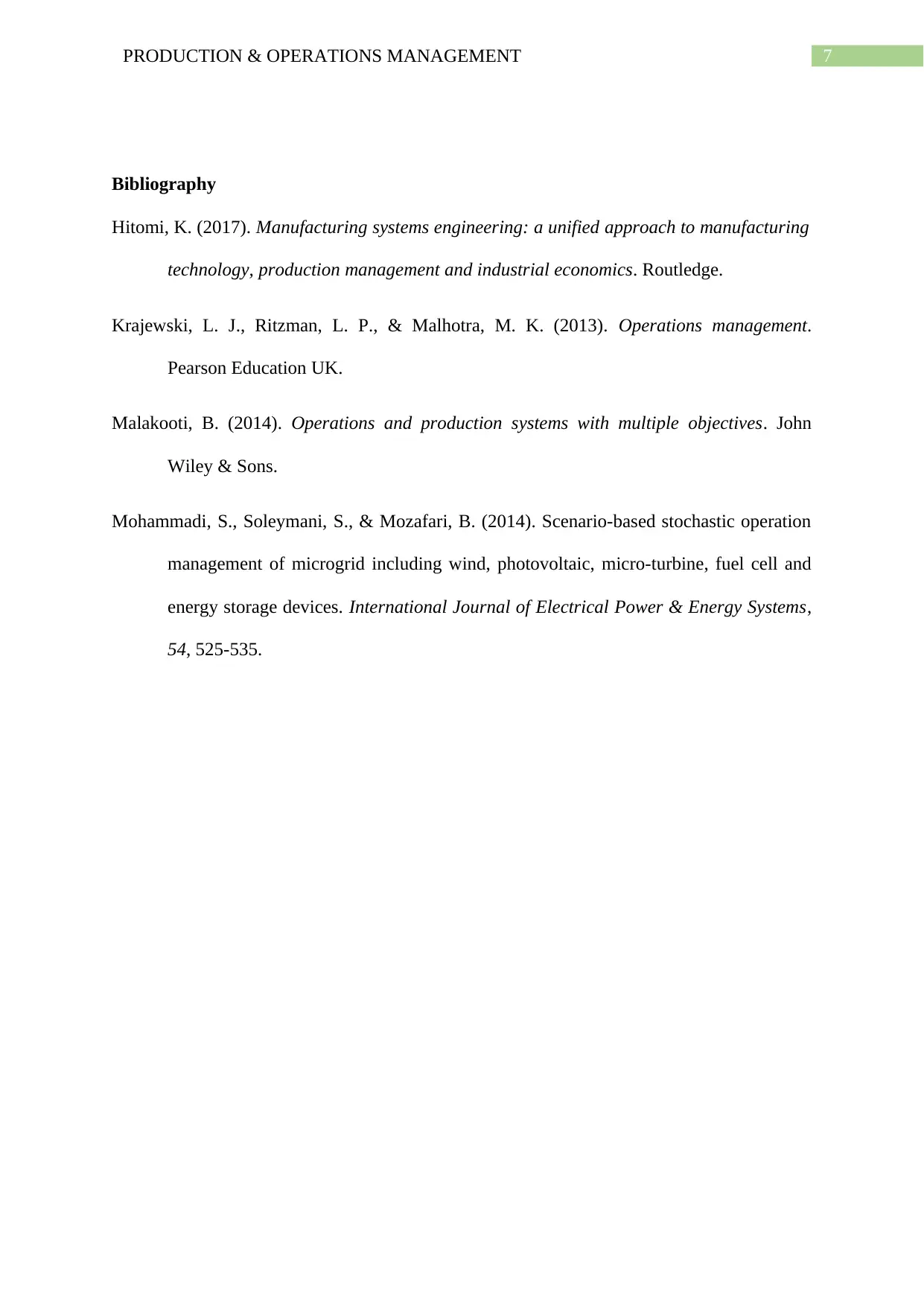
Total variable cost = variable cost * cost per unit
Total cost = Fixed cost + Total variable cost
Let Q be the quantity
The Q is the volume of output which is preferred in each location.
tabler-icon-diamond-filled.svg

Paraphrase This Document

Need a fresh take? Get an instant paraphrase of this document with our AI Paraphraser
Document Page
7PRODUCTION & OPERATIONS MANAGEMENT
Bibliography
Hitomi, K. (2017). Manufacturing systems engineering: a unified approach to manufacturing
technology, production management and industrial economics. Routledge.
Krajewski, L. J., Ritzman, L. P., & Malhotra, M. K. (2013). Operations management.
Pearson Education UK.
Malakooti, B. (2014). Operations and production systems with multiple objectives. John
Wiley & Sons.
Mohammadi, S., Soleymani, S., & Mozafari, B. (2014). Scenario-based stochastic operation
management of microgrid including wind, photovoltaic, micro-turbine, fuel cell and
energy storage devices. International Journal of Electrical Power & Energy Systems,
54, 525-535.
Document Page
8PRODUCTION & OPERATIONS MANAGEMENT
chevron_up_icon
1 out of 9
circle_padding
hide_on_mobile
zoom_out_icon
[object Object]