MGT 410: Homework Set 3: Problem Solving, Flowcharts, and Charts

Verified

Added on  2023/01/11

|4
|452
|33
Homework Assignment
AI Summary
This homework assignment provides solutions to problems outlined in MGT 410 Homework Set 3, focusing on problem-solving and data analysis techniques. The solution addresses the creation of a cause-and-effect diagram to identify potential causes for failure, lateness, and equipment malfunction. A flowchart is developed to analyze the process of getting to work or school, highlighting areas for improvement. Furthermore, the assignment includes the construction and interpretation of a Pareto diagram based on customer feedback, a scatter diagram to investigate the relationship between overtime hours and rejects, and a run chart to analyze trends in the number of rejects over time. The solutions demonstrate the application of these tools to identify key issues and potential solutions in various scenarios, including examination performance, work processes, and customer satisfaction.
Document Page
Question 1
Challenges that a person faces to attaining something
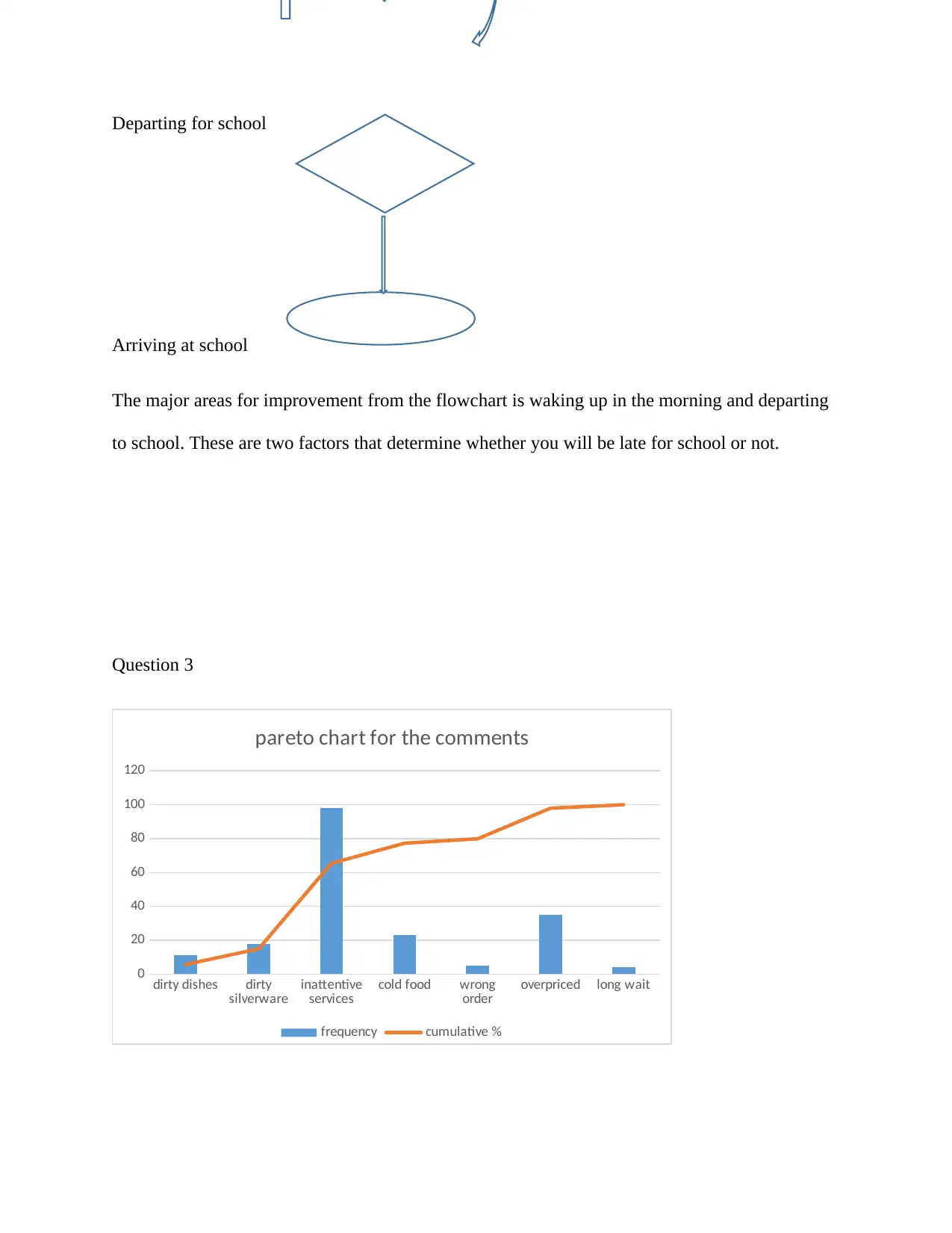
Failure of attending to classes
Influence from peer pressure Getting late for a job slicing when hitting the golf
ball with driver: traffic jam in the morning
The lamp may be defective; it may not be properly charged
Failure to get an A in exam lack of proper exercises
Frustration and last minute rashes fear of the opponent
The cause and effect diagram above indicated that one of the reasons for failing to get an A in
the examination is frustration and last minute rushes.
Question 2
Breakfast and
Other preparation
Waking up
tabler-icon-diamond-filled.svg

Paraphrase This Document

Need a fresh take? Get an instant paraphrase of this document with our AI Paraphraser
Document Page
Departing for school
Arriving at school
The major areas for improvement from the flowchart is waking up in the morning and departing
to school. These are two factors that determine whether you will be late for school or not.
Question 3
dirty dishes dirty
silverware inattentive
services cold food wrong
order overpriced long wait
0
20
40
60
80
100
120
pareto chart for the comments
frequency cumulative %
Arriving at
school/work
Document Page
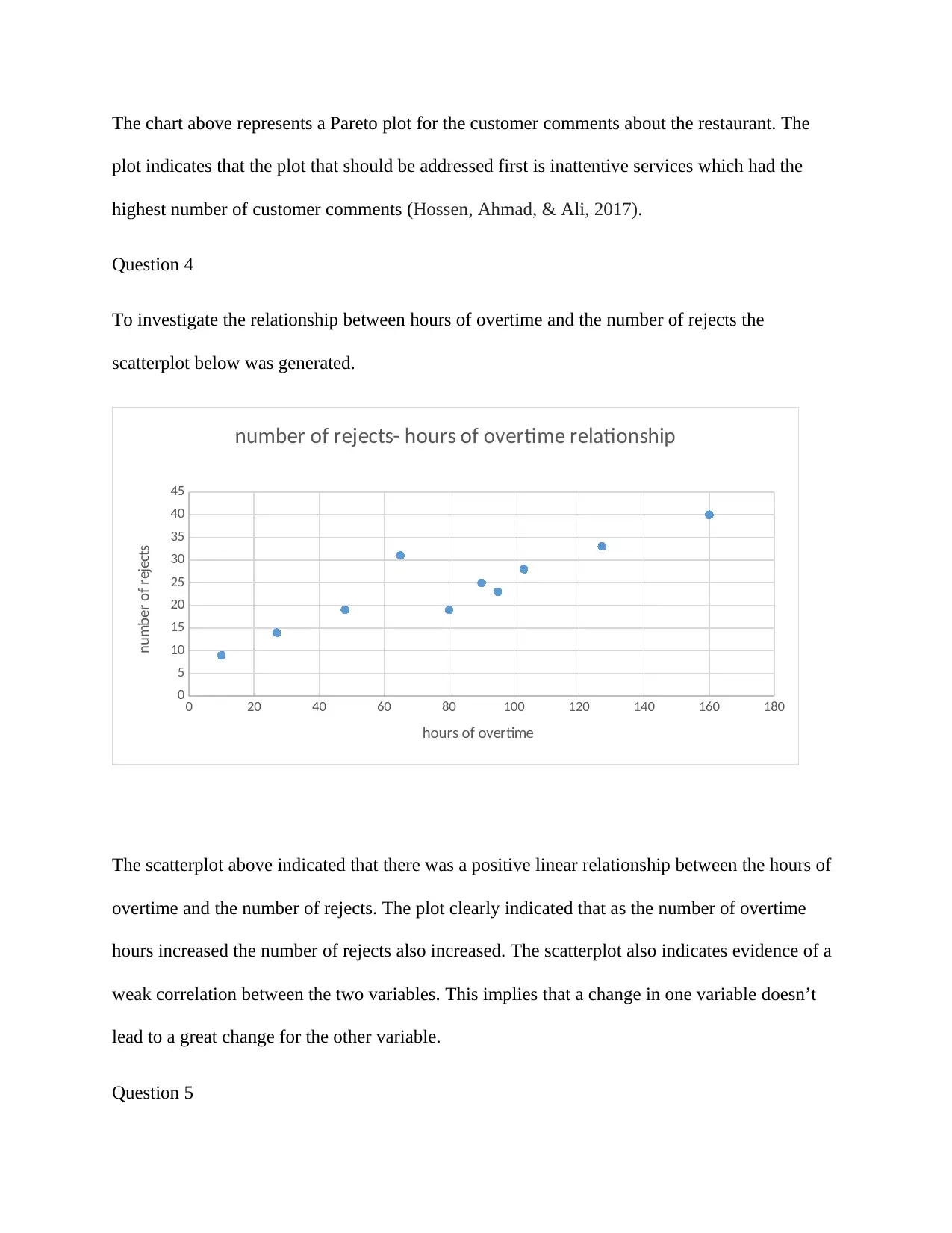
The chart above represents a Pareto plot for the customer comments about the restaurant. The
plot indicates that the plot that should be addressed first is inattentive services which had the
highest number of customer comments (Hossen, Ahmad, & Ali, 2017).
Question 4
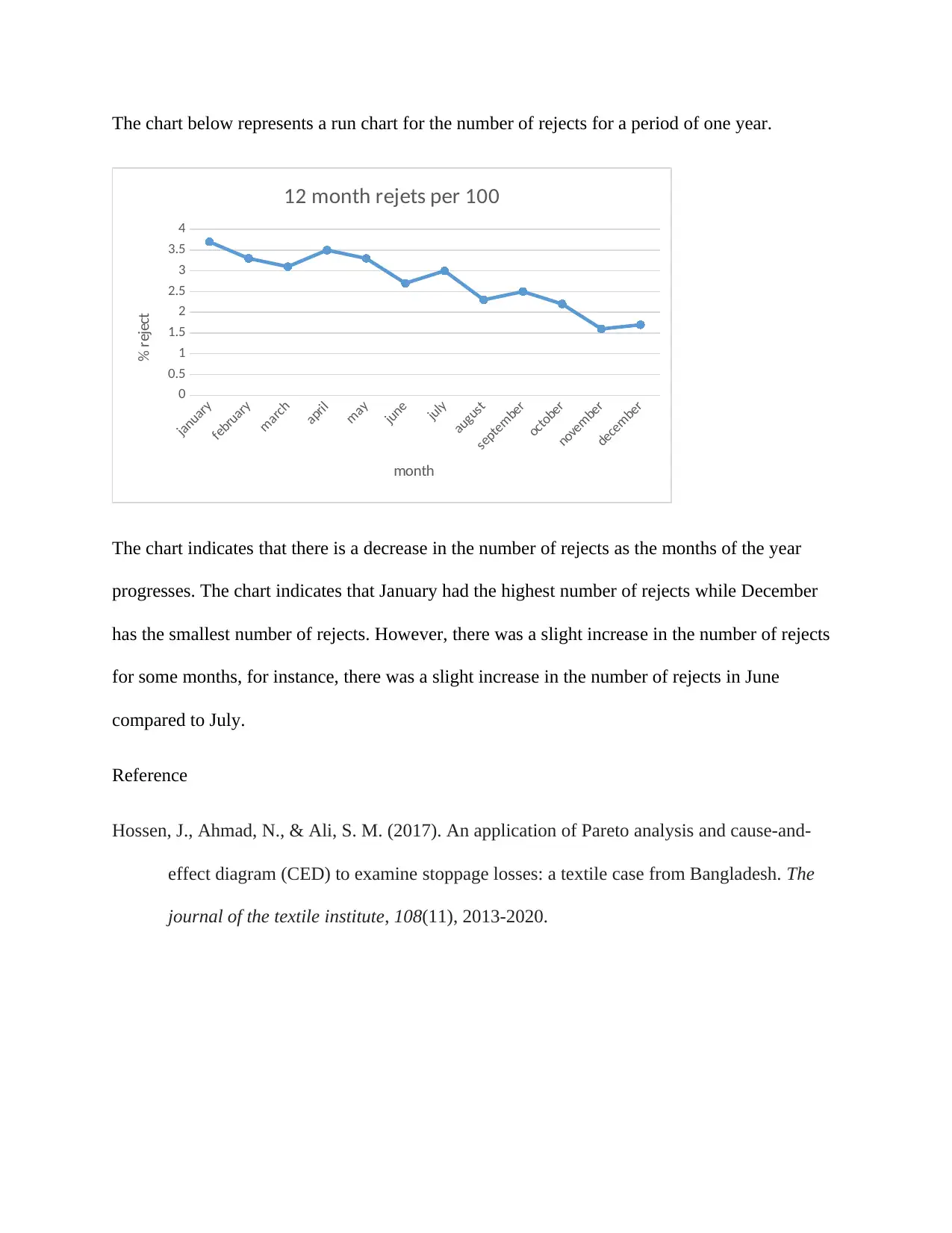
To investigate the relationship between hours of overtime and the number of rejects the
scatterplot below was generated.
0 20 40 60 80 100 120 140 160 180
0
5
10
15
20
25
30
35
40
45
number of rejects- hours of overtime relationship
hours of overtime
number of rejects
The scatterplot above indicated that there was a positive linear relationship between the hours of
overtime and the number of rejects. The plot clearly indicated that as the number of overtime
hours increased the number of rejects also increased. The scatterplot also indicates evidence of a
weak correlation between the two variables. This implies that a change in one variable doesn’t
lead to a great change for the other variable.
Question 5
Document Page
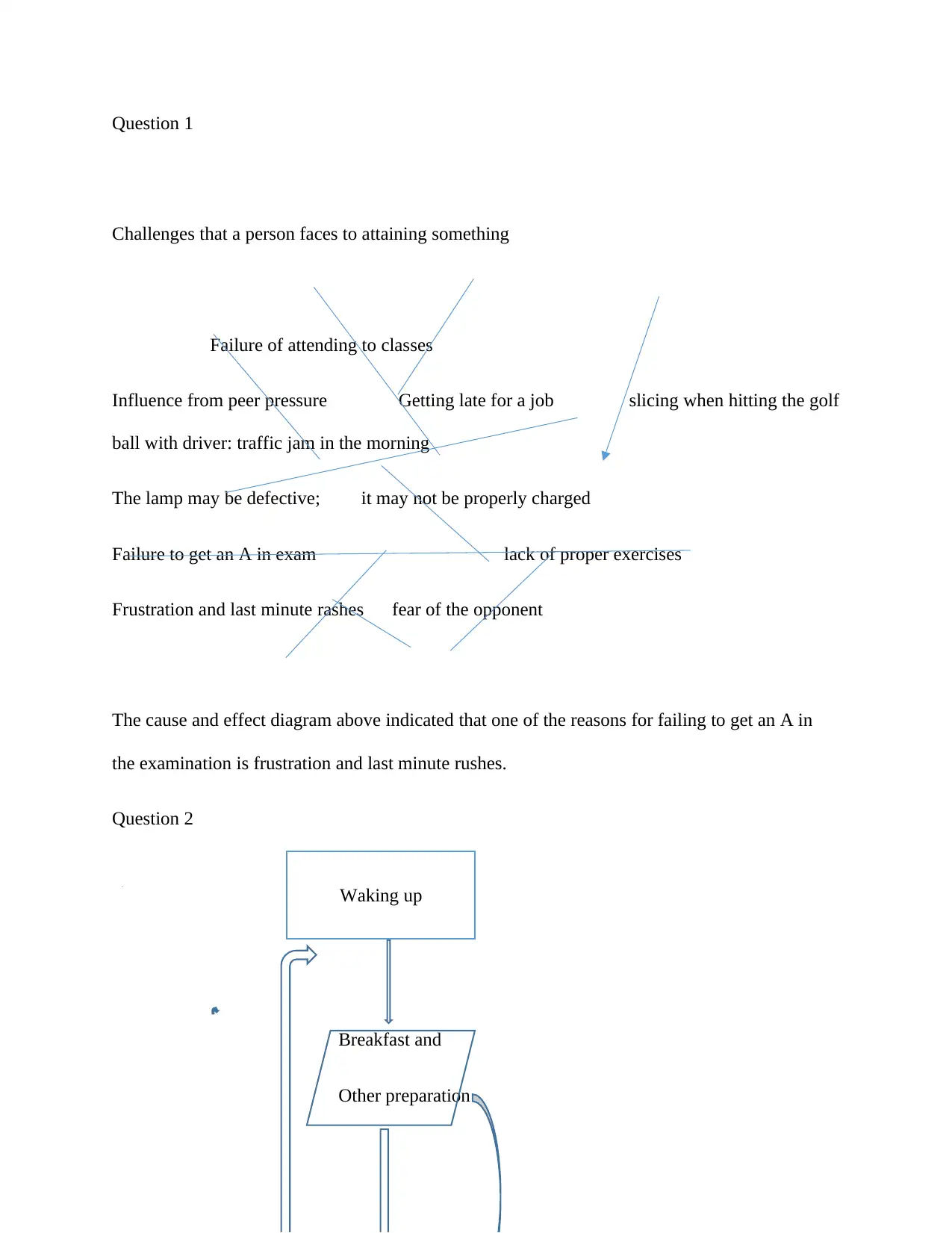
The chart below represents a run chart for the number of rejects for a period of one year.
january
february
march
april
may
june
july
august
september
october
november
december
0
0.5
1
1.5
2
2.5
3
3.5
4
12 month rejets per 100
month
% reject
The chart indicates that there is a decrease in the number of rejects as the months of the year
progresses. The chart indicates that January had the highest number of rejects while December
has the smallest number of rejects. However, there was a slight increase in the number of rejects
for some months, for instance, there was a slight increase in the number of rejects in June
compared to July.
Reference
Hossen, J., Ahmad, N., & Ali, S. M. (2017). An application of Pareto analysis and cause-and-
effect diagram (CED) to examine stoppage losses: a textile case from Bangladesh. The
journal of the textile institute, 108(11), 2013-2020.
chevron_up_icon
1 out of 4
circle_padding
hide_on_mobile
zoom_out_icon
[object Object]