MN610 Virtual Private Networks: Designing a VPN for SME Organizations

Verified

Added on  2023/06/04

|12
|552
|89
Report
AI Summary
This report presents a comprehensive VPN network design for small to medium-sized enterprises (SMEs), outlining a phased approach to implementation with a focus on client-to-site and site-to-site VPN technologies. It details the requirements, logical and physical designs, managed VPN technology topology, and an IP addressing scheme. Furthermore, the report emphasizes security features and policies, including the use of firewalls and IPsec, and provides a six-step VPN service implementation process encompassing assessment, design, testing, implementation, training, and project management. The design aims to provide reliable, secure, and scalable communication solutions for SME organizations.
Document Page
Assignment 2 VPN
NETWORK DESIGN
(Student’s Name)
(Professor’s Name)
(Course Title)
(Date of Submission)
tabler-icon-diamond-filled.svg

Paraphrase This Document

Need a fresh take? Get an instant paraphrase of this document with our AI Paraphraser
Document Page
Introduction
Communication is very vital in any business
Communication over the internet has become to much
insecure thus the introduction of VPN technology
VPN has enabled lots of companies to maintain
reliable, fast, and secure communication when
communicating via internet.
Other advantages of VPN are improved internet
security, extended geographic connectivity, cost
savings and scalability [1].
Document Page
Scope of the proposed VPN network
This proposal have two phases of the
implementation of VPN network for SME
organizations
Phase 1: client to site VPN technology
Phase 2: Site to Site VPN technology
Document Page
Two Linksys LRT224 Routers
VPN server
Firewall
Dedicated ISP
Requirements
tabler-icon-diamond-filled.svg

Paraphrase This Document

Need a fresh take? Get an instant paraphrase of this document with our AI Paraphraser
Document Page
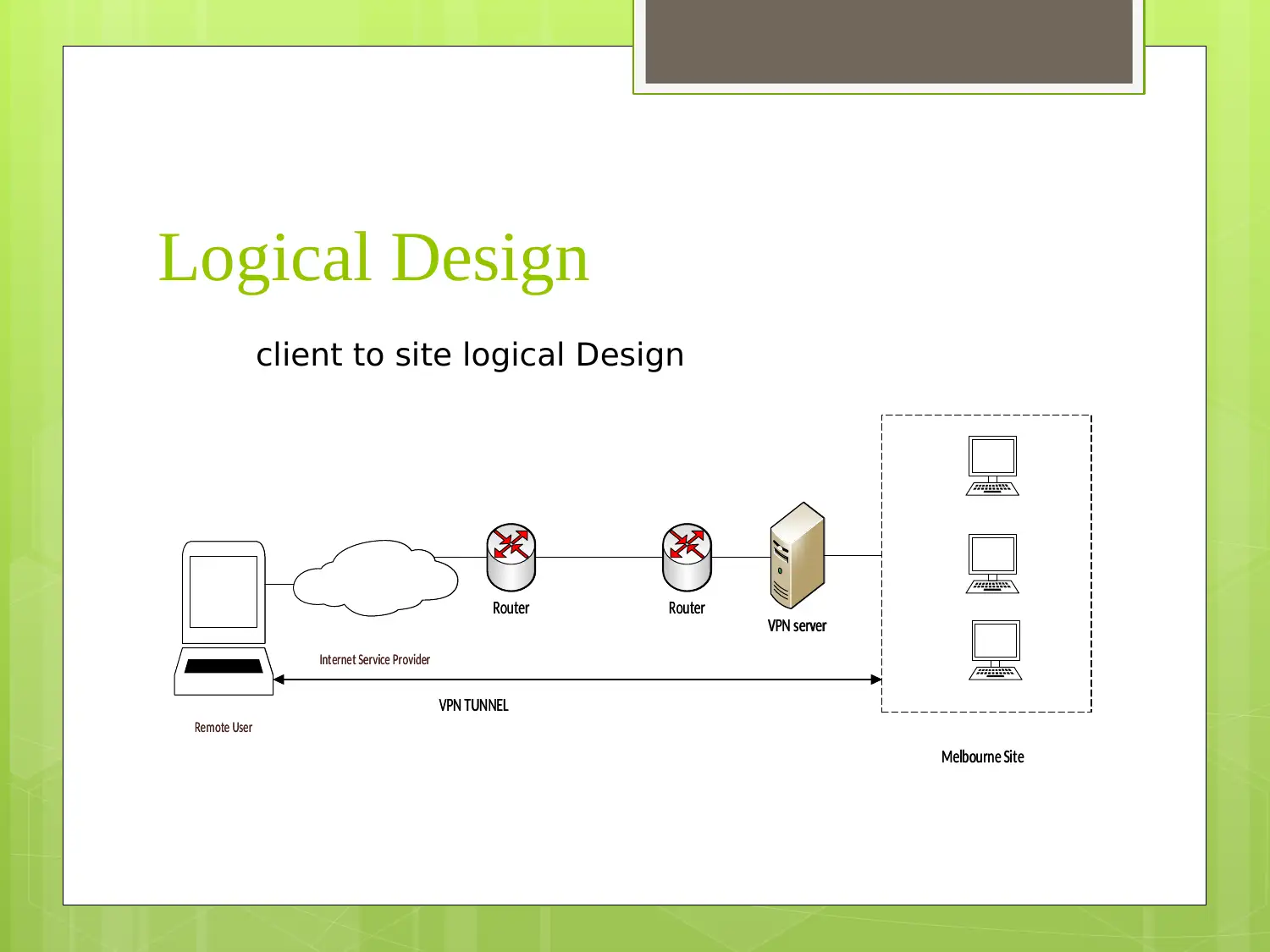
Logical Design
Remote User
Internet Service Provider
Router Router VPN server
Melbourne Site
VPN TUNNEL
client to site logical Design
Remote User
Internet Service Provider
Router Router VPN server
Melbourne Site
VPN TUNNEL
Document Page
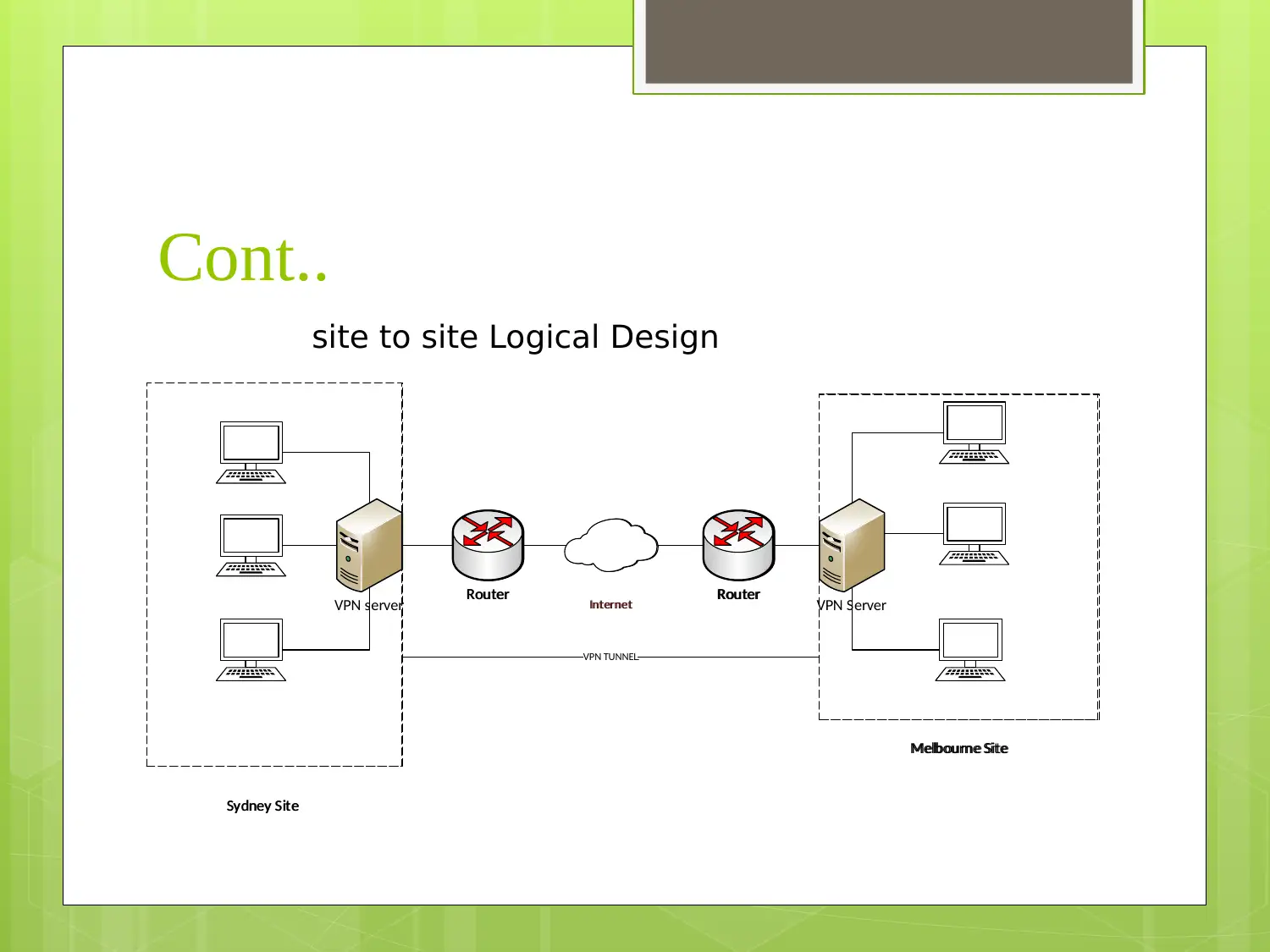
Cont..
VPN server Router Router VPN ServerInternet
Melbourne Site
Sydney Site
VPN TUNNEL
site to site Logical Design
VPN server Router Router VPN ServerInternet
Melbourne Site
Sydney Site
VPN TUNNEL
Document Page
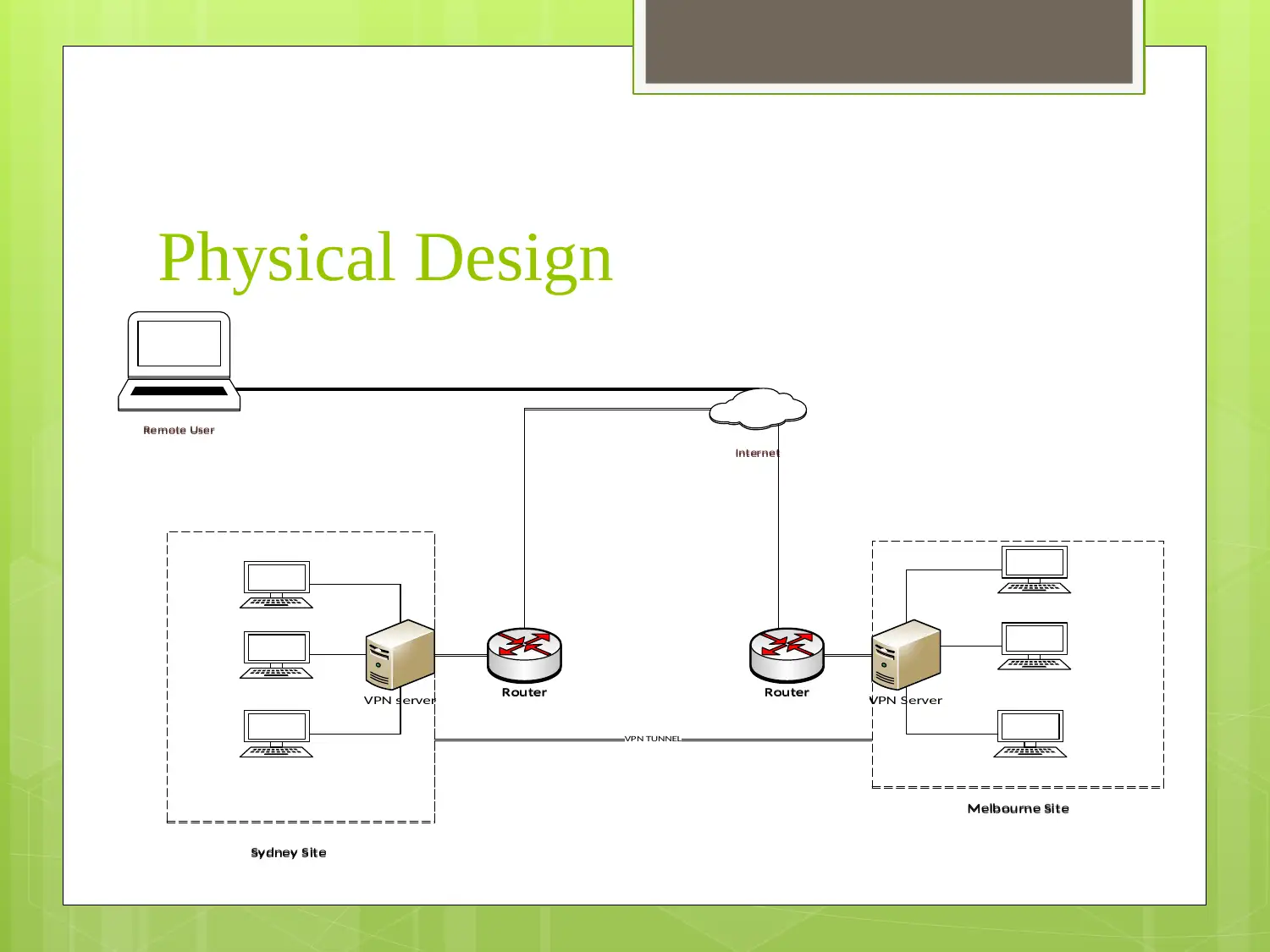
Physical Design
VPN server Router Router VPN Server
Internet
Melbourne Site
Sydney Site
VPN TUNNEL
Remote User
VPN server Router Router VPN Server
Internet
Melbourne Site
Sydney Site
VPN TUNNEL
Remote User
tabler-icon-diamond-filled.svg

Paraphrase This Document

Need a fresh take? Get an instant paraphrase of this document with our AI Paraphraser
Document Page
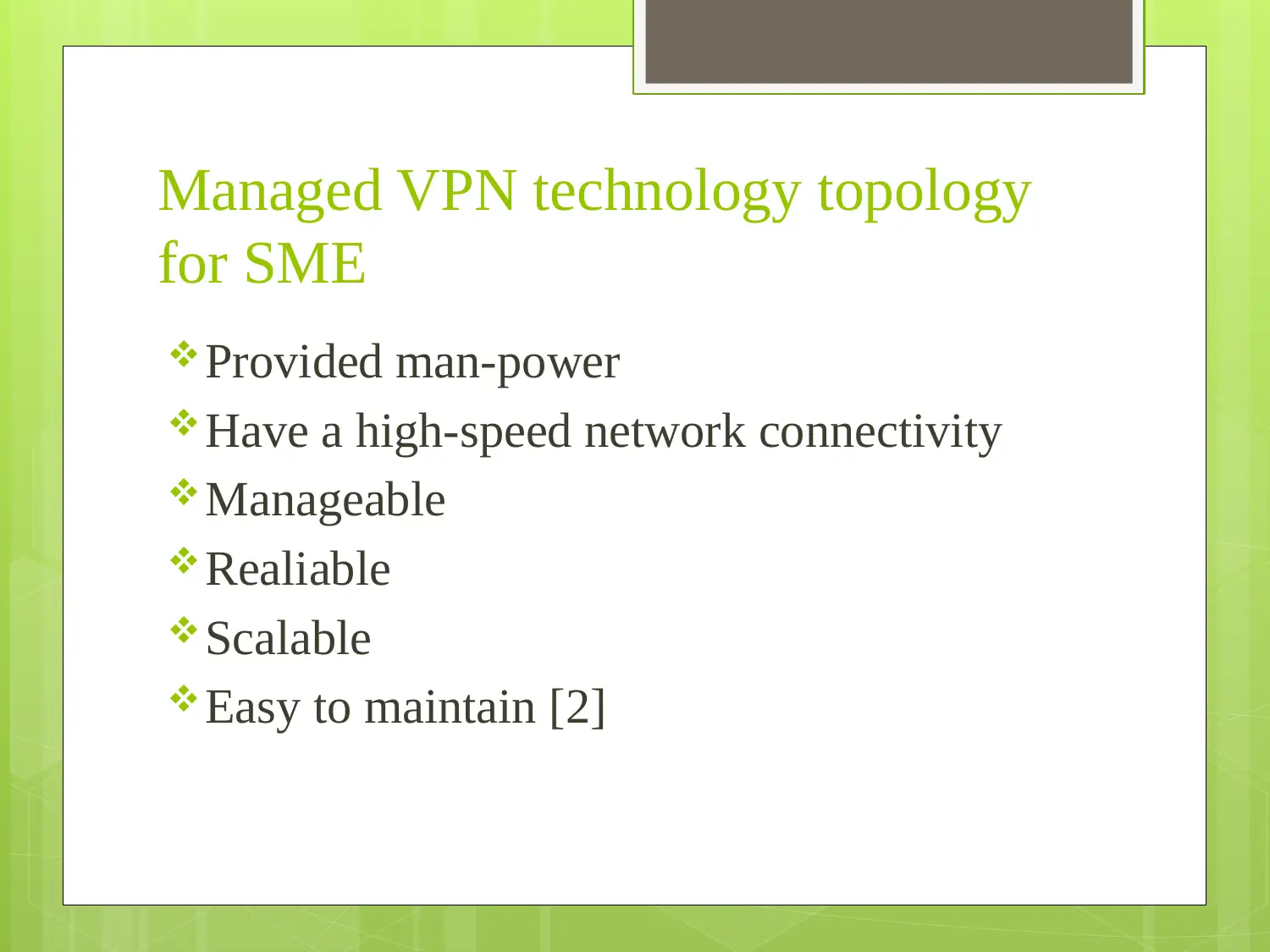
Managed VPN technology topology
for SME
Provided man-power
Have a high-speed network connectivity
Manageable
Realiable
Scalable
Easy to maintain [2]
Document Page
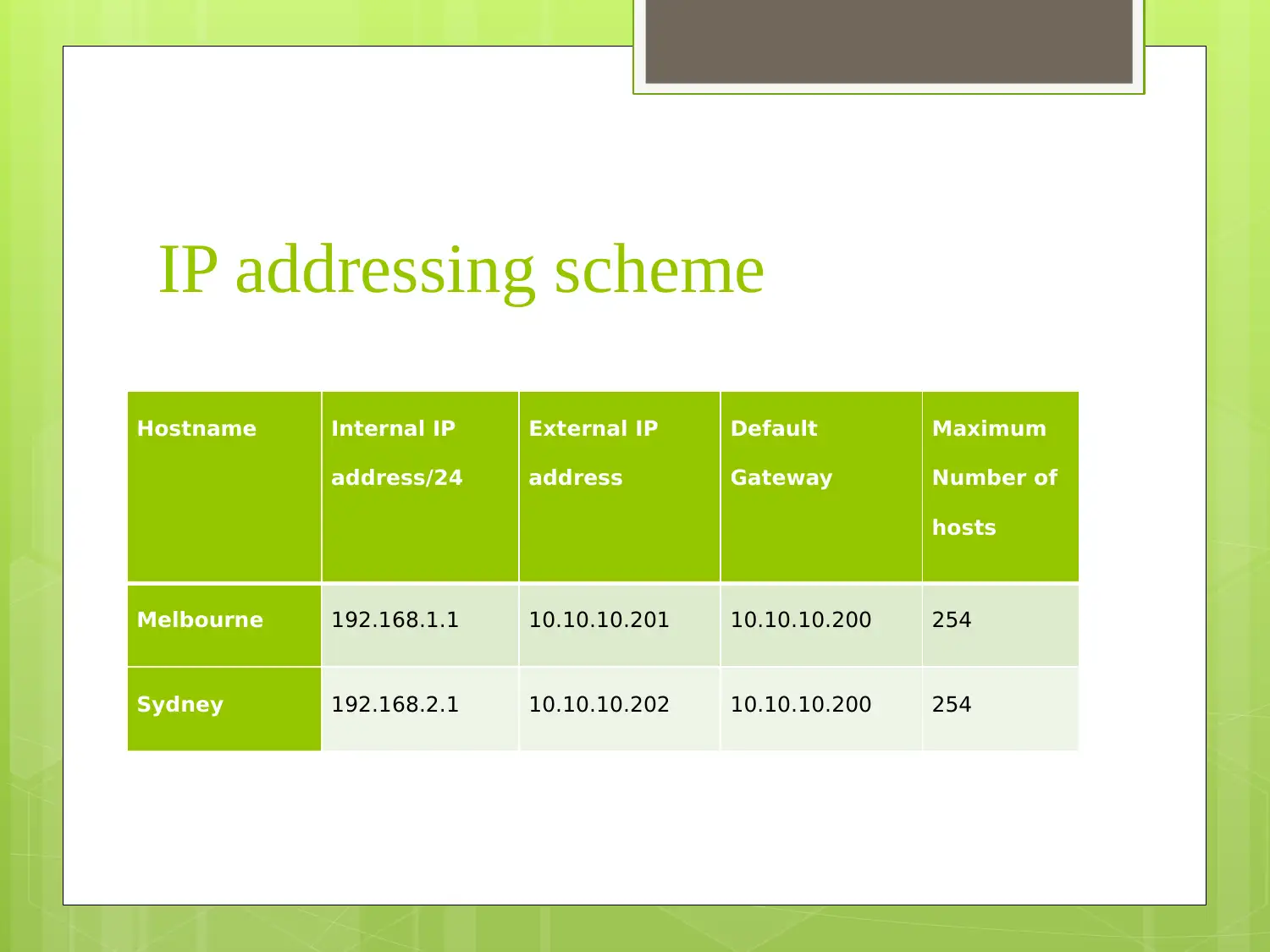
IP addressing scheme
Hostname Internal IP
address/24
External IP
address
Default
Gateway
Maximum
Number of
hosts
Melbourne 192.168.1.1 10.10.10.201 10.10.10.200 254
Sydney 192.168.2.1 10.10.10.202 10.10.10.200 254
Document Page
Security features and policies
Security polices in a VPN network allows IP to
pass between two or more interfaces
A policy-based VPN requires an IPsec type of
security policy
Another feature which is utilized in this is a
firewall which is in form of a software installed in
the VPN server
tabler-icon-diamond-filled.svg

Paraphrase This Document

Need a fresh take? Get an instant paraphrase of this document with our AI Paraphraser
Document Page
VPN service implementation
An SME business needs to utilize a phased
approach as indicated in the six steps
Assessment
Design
Testing
Implementation
Training
Project management [3]
Document Page
References
[1]D. L. Clark, "IT manager's guide to virtual private networks," Virtual
Private Networks, vol. 2, no. 1, pp. 334-378, 2009.
[2]D. R. Kosiur, "Building and managing virtual private networks,"
Virtual Private Networks, vol. III, no. 2, pp. 67-90, 2011
[3]M. S. J. D. &. Y. M. Pegrum, "U.S. Patent No. 6,516,417.," Virtual
Private Networks, vol. 3, no. 1, pp. 45-67, 2010.
[4]I. Pepelnjak and J. Guichard, "MPLS and VPN architectures by Ivan
Pepelnjak," Virtual Networks, vol. II, no. 3, pp. 47-59, 2015.
[5] A. Elahi and M. Elahi, "Data, network, and Internet communications
technology," Virtual Networks, vol. III, no. 2, pp. 45-78, 2996.
[6]D. Bigger, CompTIA Network+ 2014 : VPN Topologies, Oxford:
New Hampshire, 2014.
chevron_up_icon
1 out of 12
circle_padding
hide_on_mobile
zoom_out_icon
[object Object]