MN611 System Architecture: Cloud Smart Parking Application Design
VerifiedAdded on 2023/06/11
|30
|5012
|125
Report
AI Summary
This report details the system architecture for a cloud-based smart parking application, addressing the increasing challenges of urban traffic and parking management. It covers the motivation behind smart parking solutions, defines the problem of inefficient parking, and highlights the project's relevance in the context of smart city development. The report reviews related work, including RFID-based systems and SMS reservation systems, before outlining the functional and non-functional requirements of the proposed system. The suggested design includes a web application for administrators, mobile applications for parking operators and consumers, and a backend management system. Implementation aspects are discussed, along with the challenges of current systems and potential improvements using cloud products and services like IaaS, PaaS, and SaaS. The report also compares Amazon Web Services (AWS) and Google Cloud Providers (GCP), concluding with a discussion of advantages, disadvantages, and areas for future enhancement. Desklib provides this and other solved assignments for students.
SYSTEM ARCHITECTURE 1
System Architecture
Student name
Course Date
System Architecture
Student name
Course Date

Paraphrase This Document
Need a fresh take? Get an instant paraphrase of this document with our AI Paraphraser
SYSTEM ARCHITECTURE 2
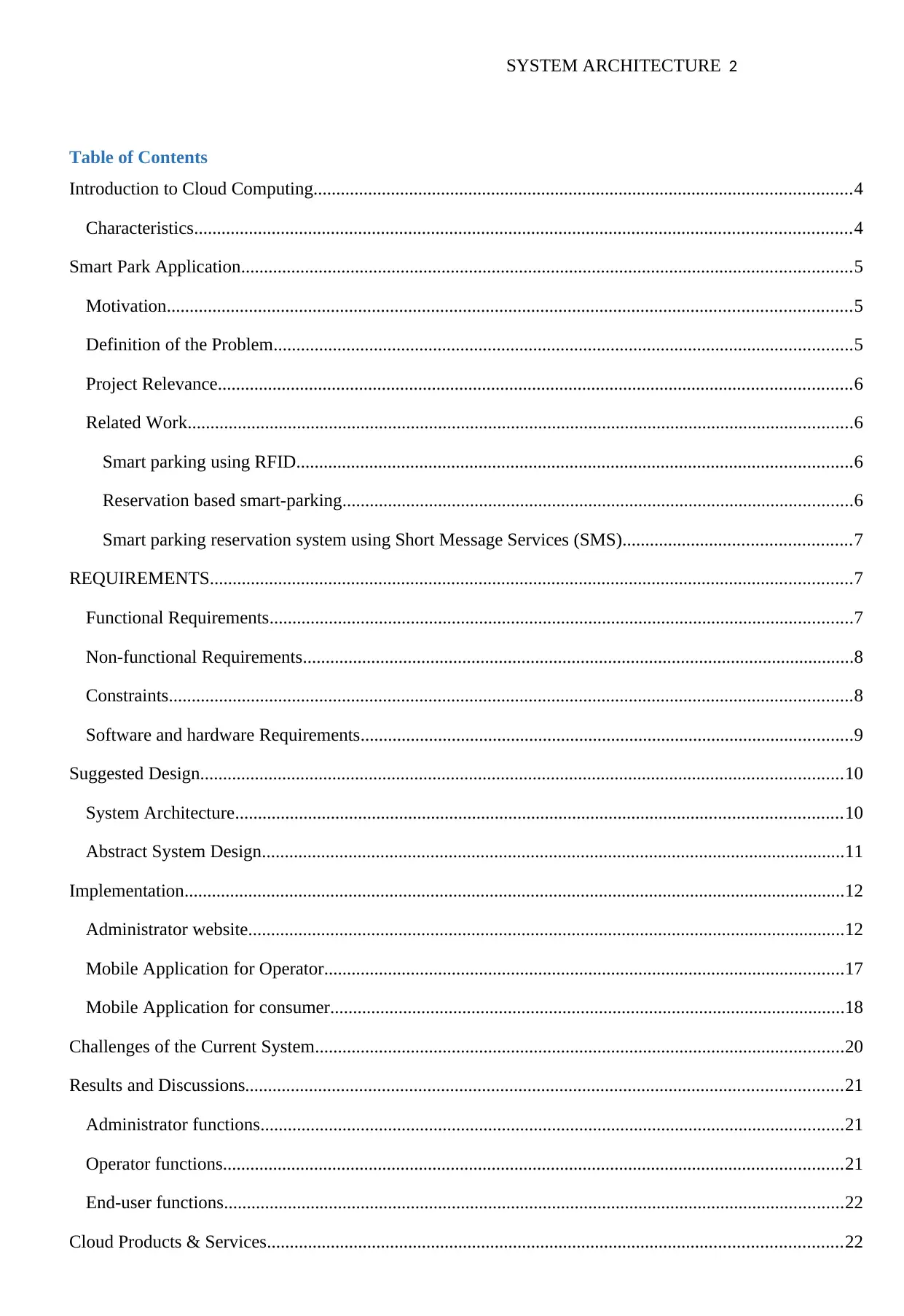
Table of Contents
Introduction to Cloud Computing......................................................................................................................4
Characteristics................................................................................................................................................4
Smart Park Application......................................................................................................................................5
Motivation......................................................................................................................................................5
Definition of the Problem...............................................................................................................................5
Project Relevance...........................................................................................................................................6
Related Work..................................................................................................................................................6
Smart parking using RFID..........................................................................................................................6
Reservation based smart-parking................................................................................................................6
Smart parking reservation system using Short Message Services (SMS)..................................................7
REQUIREMENTS.............................................................................................................................................7
Functional Requirements................................................................................................................................7
Non-functional Requirements.........................................................................................................................8
Constraints......................................................................................................................................................8
Software and hardware Requirements............................................................................................................9
Suggested Design.............................................................................................................................................10
System Architecture.....................................................................................................................................10
Abstract System Design................................................................................................................................11
Implementation.................................................................................................................................................12
Administrator website...................................................................................................................................12
Mobile Application for Operator..................................................................................................................17
Mobile Application for consumer.................................................................................................................18
Challenges of the Current System....................................................................................................................20
Results and Discussions...................................................................................................................................21
Administrator functions................................................................................................................................21
Operator functions........................................................................................................................................21
End-user functions........................................................................................................................................22
Cloud Products & Services..............................................................................................................................22
Table of Contents
Introduction to Cloud Computing......................................................................................................................4
Characteristics................................................................................................................................................4
Smart Park Application......................................................................................................................................5
Motivation......................................................................................................................................................5
Definition of the Problem...............................................................................................................................5
Project Relevance...........................................................................................................................................6
Related Work..................................................................................................................................................6
Smart parking using RFID..........................................................................................................................6
Reservation based smart-parking................................................................................................................6
Smart parking reservation system using Short Message Services (SMS)..................................................7
REQUIREMENTS.............................................................................................................................................7
Functional Requirements................................................................................................................................7
Non-functional Requirements.........................................................................................................................8
Constraints......................................................................................................................................................8
Software and hardware Requirements............................................................................................................9
Suggested Design.............................................................................................................................................10
System Architecture.....................................................................................................................................10
Abstract System Design................................................................................................................................11
Implementation.................................................................................................................................................12
Administrator website...................................................................................................................................12
Mobile Application for Operator..................................................................................................................17
Mobile Application for consumer.................................................................................................................18
Challenges of the Current System....................................................................................................................20
Results and Discussions...................................................................................................................................21
Administrator functions................................................................................................................................21
Operator functions........................................................................................................................................21
End-user functions........................................................................................................................................22
Cloud Products & Services..............................................................................................................................22
SYSTEM ARCHITECTURE 3
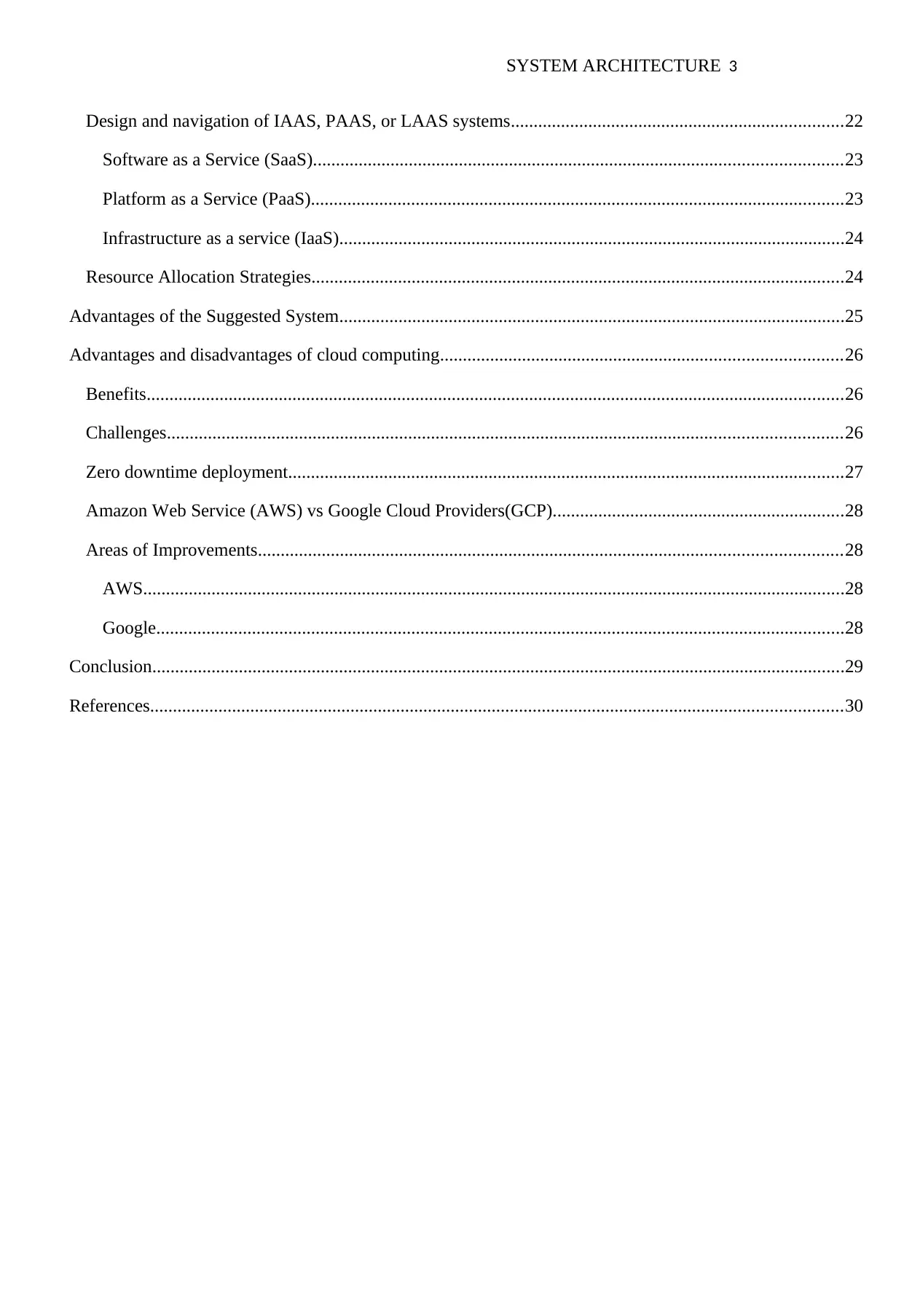
Design and navigation of IAAS, PAAS, or LAAS systems.........................................................................22
Software as a Service (SaaS)....................................................................................................................23
Platform as a Service (PaaS).....................................................................................................................23
Infrastructure as a service (IaaS)...............................................................................................................24
Resource Allocation Strategies.....................................................................................................................24
Advantages of the Suggested System...............................................................................................................25
Advantages and disadvantages of cloud computing........................................................................................26
Benefits.........................................................................................................................................................26
Challenges....................................................................................................................................................26
Zero downtime deployment..........................................................................................................................27
Amazon Web Service (AWS) vs Google Cloud Providers(GCP)................................................................28
Areas of Improvements................................................................................................................................28
AWS..........................................................................................................................................................28
Google.......................................................................................................................................................28
Conclusion........................................................................................................................................................29
References........................................................................................................................................................30
Design and navigation of IAAS, PAAS, or LAAS systems.........................................................................22
Software as a Service (SaaS)....................................................................................................................23
Platform as a Service (PaaS).....................................................................................................................23
Infrastructure as a service (IaaS)...............................................................................................................24
Resource Allocation Strategies.....................................................................................................................24
Advantages of the Suggested System...............................................................................................................25
Advantages and disadvantages of cloud computing........................................................................................26
Benefits.........................................................................................................................................................26
Challenges....................................................................................................................................................26
Zero downtime deployment..........................................................................................................................27
Amazon Web Service (AWS) vs Google Cloud Providers(GCP)................................................................28
Areas of Improvements................................................................................................................................28
AWS..........................................................................................................................................................28
Google.......................................................................................................................................................28
Conclusion........................................................................................................................................................29
References........................................................................................................................................................30
⊘ This is a preview!⊘
Do you want full access?
Subscribe today to unlock all pages.

Trusted by 1+ million students worldwide
SYSTEM ARCHITECTURE 4
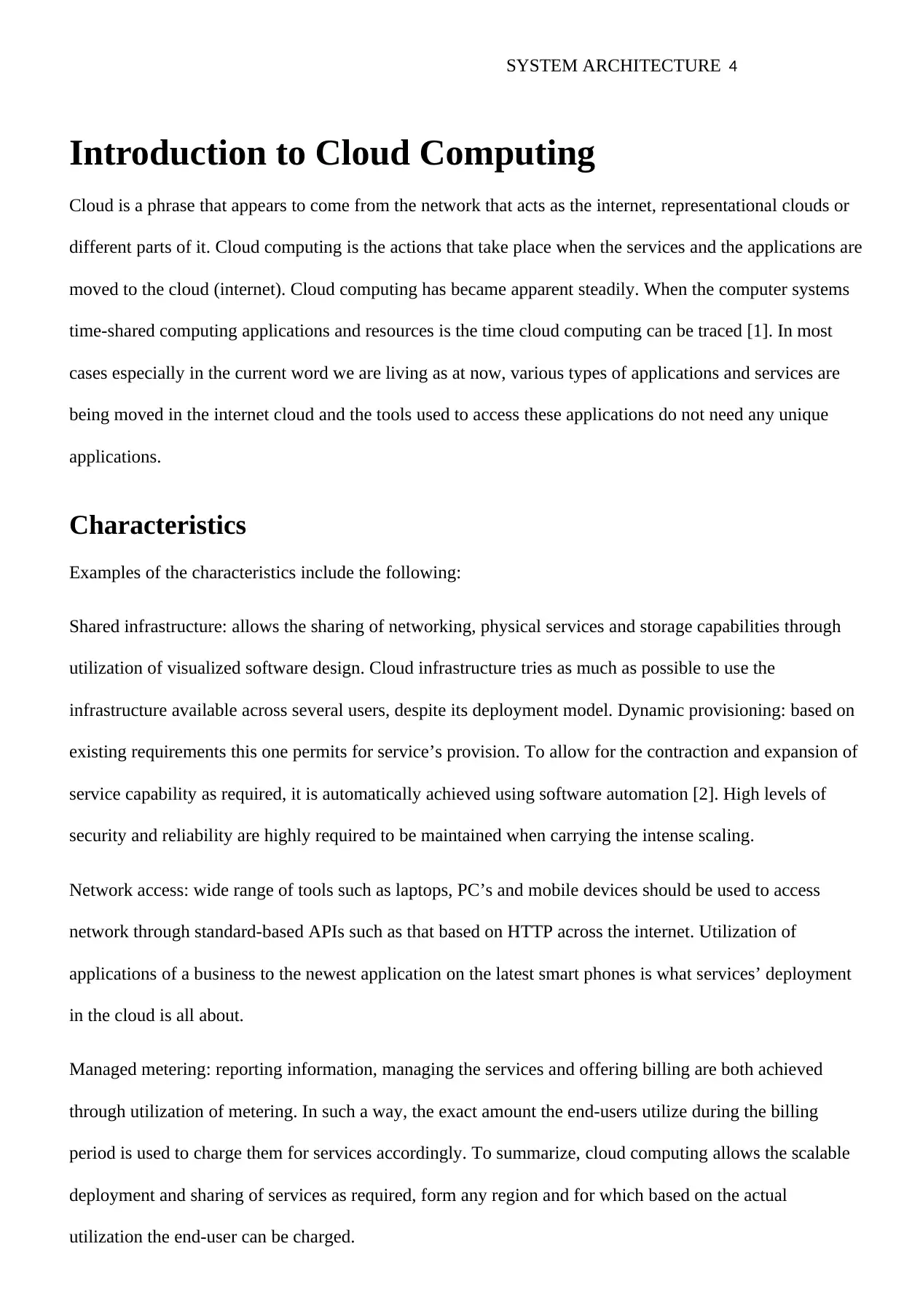
Introduction to Cloud Computing
Cloud is a phrase that appears to come from the network that acts as the internet, representational clouds or
different parts of it. Cloud computing is the actions that take place when the services and the applications are
moved to the cloud (internet). Cloud computing has became apparent steadily. When the computer systems
time-shared computing applications and resources is the time cloud computing can be traced [1]. In most
cases especially in the current word we are living as at now, various types of applications and services are
being moved in the internet cloud and the tools used to access these applications do not need any unique
applications.
Characteristics
Examples of the characteristics include the following:
Shared infrastructure: allows the sharing of networking, physical services and storage capabilities through
utilization of visualized software design. Cloud infrastructure tries as much as possible to use the
infrastructure available across several users, despite its deployment model. Dynamic provisioning: based on
existing requirements this one permits for service’s provision. To allow for the contraction and expansion of
service capability as required, it is automatically achieved using software automation [2]. High levels of
security and reliability are highly required to be maintained when carrying the intense scaling.
Network access: wide range of tools such as laptops, PC’s and mobile devices should be used to access
network through standard-based APIs such as that based on HTTP across the internet. Utilization of
applications of a business to the newest application on the latest smart phones is what services’ deployment
in the cloud is all about.
Managed metering: reporting information, managing the services and offering billing are both achieved
through utilization of metering. In such a way, the exact amount the end-users utilize during the billing
period is used to charge them for services accordingly. To summarize, cloud computing allows the scalable
deployment and sharing of services as required, form any region and for which based on the actual
utilization the end-user can be charged.
Introduction to Cloud Computing
Cloud is a phrase that appears to come from the network that acts as the internet, representational clouds or
different parts of it. Cloud computing is the actions that take place when the services and the applications are
moved to the cloud (internet). Cloud computing has became apparent steadily. When the computer systems
time-shared computing applications and resources is the time cloud computing can be traced [1]. In most
cases especially in the current word we are living as at now, various types of applications and services are
being moved in the internet cloud and the tools used to access these applications do not need any unique
applications.
Characteristics
Examples of the characteristics include the following:
Shared infrastructure: allows the sharing of networking, physical services and storage capabilities through
utilization of visualized software design. Cloud infrastructure tries as much as possible to use the
infrastructure available across several users, despite its deployment model. Dynamic provisioning: based on
existing requirements this one permits for service’s provision. To allow for the contraction and expansion of
service capability as required, it is automatically achieved using software automation [2]. High levels of
security and reliability are highly required to be maintained when carrying the intense scaling.
Network access: wide range of tools such as laptops, PC’s and mobile devices should be used to access
network through standard-based APIs such as that based on HTTP across the internet. Utilization of
applications of a business to the newest application on the latest smart phones is what services’ deployment
in the cloud is all about.
Managed metering: reporting information, managing the services and offering billing are both achieved
through utilization of metering. In such a way, the exact amount the end-users utilize during the billing
period is used to charge them for services accordingly. To summarize, cloud computing allows the scalable
deployment and sharing of services as required, form any region and for which based on the actual
utilization the end-user can be charged.
Paraphrase This Document
Need a fresh take? Get an instant paraphrase of this document with our AI Paraphraser
SYSTEM ARCHITECTURE 5
Smart Park Application
Due to the increase in population chaos are being witnessed in the city traffic. Looking for a place to park
your car is a tedious process since It is a task that is time consuming and is results to discomfort. This is one
the issues that has lead to the increase in fuel consumption. Increased vehicular traffic has negative impact
on the environment. The need for a smart solution has been propagated by the emergency of smart town era
[3]. To solve these problems and meet the growing need for the parking lots. Companies that manage the
parking are working hard technologically to come up better advanced solutions. Real time parking
availability can be achieved by using a smart parking application that is cloud-based. This will allow
monitoring the parking lots therefore offering better services to consumers and minimizing the tasks of the
parking manager.
Motivation
One of the great impacts of the ever increasing population in the urban areas is the growing traffic in the
towns. A lot of fuel is consumed and time wasted when a driver is going round looking for an empty lot to
park. As drivers keep on looking, it results to increase in traffic. High vehicle exhaust release affects the
environment negatively. Due to this there is need for a reservation based smart parking.
Definition of the Problem
To help users find the most appropriate section for parking, making reservation and if need be extend them
is the main goal of smart parking application. Smart parking application will helps the parking managers to
manage and define parking spaces and allow parking operators to verify against users’ reservations when
they enter the parking section. With the use of a mobile application, users get to access information for the
location and ask system services through the mobile then the parking administrator does validation of the
reservation through the application. Details of the parking area may be controlled by the packing managers
through the web application. The emphasis made by the smart parking application is the utilization of cloud
computing to enhance user services.
Smart Park Application
Due to the increase in population chaos are being witnessed in the city traffic. Looking for a place to park
your car is a tedious process since It is a task that is time consuming and is results to discomfort. This is one
the issues that has lead to the increase in fuel consumption. Increased vehicular traffic has negative impact
on the environment. The need for a smart solution has been propagated by the emergency of smart town era
[3]. To solve these problems and meet the growing need for the parking lots. Companies that manage the
parking are working hard technologically to come up better advanced solutions. Real time parking
availability can be achieved by using a smart parking application that is cloud-based. This will allow
monitoring the parking lots therefore offering better services to consumers and minimizing the tasks of the
parking manager.
Motivation
One of the great impacts of the ever increasing population in the urban areas is the growing traffic in the
towns. A lot of fuel is consumed and time wasted when a driver is going round looking for an empty lot to
park. As drivers keep on looking, it results to increase in traffic. High vehicle exhaust release affects the
environment negatively. Due to this there is need for a reservation based smart parking.
Definition of the Problem
To help users find the most appropriate section for parking, making reservation and if need be extend them
is the main goal of smart parking application. Smart parking application will helps the parking managers to
manage and define parking spaces and allow parking operators to verify against users’ reservations when
they enter the parking section. With the use of a mobile application, users get to access information for the
location and ask system services through the mobile then the parking administrator does validation of the
reservation through the application. Details of the parking area may be controlled by the packing managers
through the web application. The emphasis made by the smart parking application is the utilization of cloud
computing to enhance user services.
SYSTEM ARCHITECTURE 6
Project Relevance
Parking management firms are striving to implement technologically and better advanced solutions in order
to meet the growing need for parking lots. Different methods have been put in use to effect a wide
distribution of parking availability through different ways [4]. With the use of smart card parking
application, It will be easier for the managers to allow real time-reservations and the checking of parking
availability hence offering a calm parking solution to the users. With the implementation over the cloud, the
system is environment friendly, safe and reduces the work load of the parking administrators.
Related Work
Here are some of the current systems suggested for smart parking.
Smart parking using RFID
Smart parking using RIFD is an automation technology with major element as computers, software, labels,
barriers, RFID readers among others. The main task that will be played by the application is the controlling,
operation tasks, management and transaction reporting for areas parking. The RFID reader in the parking
area is used to collect information about a car from the database to validate if the car is checks into the
parking area or not [5]. The check information is used to when conducting the check-in information
especially when the car wants to leave. Alert will be communicated to the driver at the entrance of whether
there are free parking lots hence will save time and fuel consumption when searching for a parking lot.
Reservation based smart-parking
The aim of the system is to broadcast real time parking details to drivers through an application. The system
utilizes smart phone support and Zigbee sensors for deployment. The system allows the users to secure a
specific parking lot in advance by collecting availability details in particular parking region. Besides, it is
fitted with options of payment including different users’ pricing. Vibration and light sensors reveal whether
a car is present in the parking area. Communication between the sensor and user information is done through
Project Relevance
Parking management firms are striving to implement technologically and better advanced solutions in order
to meet the growing need for parking lots. Different methods have been put in use to effect a wide
distribution of parking availability through different ways [4]. With the use of smart card parking
application, It will be easier for the managers to allow real time-reservations and the checking of parking
availability hence offering a calm parking solution to the users. With the implementation over the cloud, the
system is environment friendly, safe and reduces the work load of the parking administrators.
Related Work
Here are some of the current systems suggested for smart parking.
Smart parking using RFID
Smart parking using RIFD is an automation technology with major element as computers, software, labels,
barriers, RFID readers among others. The main task that will be played by the application is the controlling,
operation tasks, management and transaction reporting for areas parking. The RFID reader in the parking
area is used to collect information about a car from the database to validate if the car is checks into the
parking area or not [5]. The check information is used to when conducting the check-in information
especially when the car wants to leave. Alert will be communicated to the driver at the entrance of whether
there are free parking lots hence will save time and fuel consumption when searching for a parking lot.
Reservation based smart-parking
The aim of the system is to broadcast real time parking details to drivers through an application. The system
utilizes smart phone support and Zigbee sensors for deployment. The system allows the users to secure a
specific parking lot in advance by collecting availability details in particular parking region. Besides, it is
fitted with options of payment including different users’ pricing. Vibration and light sensors reveal whether
a car is present in the parking area. Communication between the sensor and user information is done through
⊘ This is a preview!⊘
Do you want full access?
Subscribe today to unlock all pages.
Trusted by 1+ million students worldwide
SYSTEM ARCHITECTURE 7
Bluetooth module. The main challenge is that bottleneck situations and shorter Bluetooth range may emerge
in heavy traffic case.
Smart parking reservation system using Short Message Services (SMS)
The system allows users to secure their parking lots using SMS. Once the confirmation of reservation is
done, the users receive the OPT (one-time password) to enter the parking section and the area number for
parking. If they surpass the period to check-in the parking lot, the password expires and the reservation is
denied. The system has two parts: Access and Reservation system. Micro-Remote Terminal Unit (RTU) is
used to handle the reservation constructed with SSE OLE for process control (OPC) server. Microcontroller-
IC16F877 is used to handle the access system which calculates time periods for passwords validity, denying
or allowing access to the parking lot and provides or stores details on the parking spaces availability [6]. A
weight sensor is placed at the parking lot to sense the presence of a car.
REQUIREMENTS
Functional Requirements
The suggested system includes a web application for admins of parking area, mobile application for users
and a mobile application for parking area operators. The requirements for each application are discussed
below.
Web application for admins of parking area
Describe new parking lots, be specific about the number of parking areas, the cost of parking per
hour or minute and other information.
Adjust information of the current parking lots
Examine the information of all registered parking lots.
Mobile Application for parking operator
Send reservation password and plate number of the vehicle to central server for validation when
users enter the parking area.
Charges the users when they leave the parking area
Bluetooth module. The main challenge is that bottleneck situations and shorter Bluetooth range may emerge
in heavy traffic case.
Smart parking reservation system using Short Message Services (SMS)
The system allows users to secure their parking lots using SMS. Once the confirmation of reservation is
done, the users receive the OPT (one-time password) to enter the parking section and the area number for
parking. If they surpass the period to check-in the parking lot, the password expires and the reservation is
denied. The system has two parts: Access and Reservation system. Micro-Remote Terminal Unit (RTU) is
used to handle the reservation constructed with SSE OLE for process control (OPC) server. Microcontroller-
IC16F877 is used to handle the access system which calculates time periods for passwords validity, denying
or allowing access to the parking lot and provides or stores details on the parking spaces availability [6]. A
weight sensor is placed at the parking lot to sense the presence of a car.
REQUIREMENTS
Functional Requirements
The suggested system includes a web application for admins of parking area, mobile application for users
and a mobile application for parking area operators. The requirements for each application are discussed
below.
Web application for admins of parking area
Describe new parking lots, be specific about the number of parking areas, the cost of parking per
hour or minute and other information.
Adjust information of the current parking lots
Examine the information of all registered parking lots.
Mobile Application for parking operator
Send reservation password and plate number of the vehicle to central server for validation when
users enter the parking area.
Charges the users when they leave the parking area
Paraphrase This Document
Need a fresh take? Get an instant paraphrase of this document with our AI Paraphraser
SYSTEM ARCHITECTURE 8
Mobile Application for consumers
Enroll for the service and key in vehicle and personal details
Find a parking lot from the listed registered lots
Examine the information of a chosen parking lot such as the charges per hour, name, the number of
available parking areas.
Secure an available parking area and indicate reservation duration.
Backend Management System
Validate admins and users before changing any sensitive information
Accept parking lots reservation depending on availability
Create reservation password for user reservation and send it to each user
Permit change of status of parking lot by operators
Auto-deny reservations if users exceed the time needed for them to check –in.
Non-functional Requirements
The central warehouse should not depend on a platform so that it can store application information and be
accessible through the mobile app and web application [7].
The server should have the ability to handle simultaneous request from different users
The system should offer conceal user information using local encryption and database encryption to
safeguard information in case of a device theft such as a handheld device or a laptop
The android application offers high accuracy and high availability in discovering the locations.
Constraints
Stable internet connection
For effective operation, stable internet connection will be o great need. Internet disconnection will lead to
the system failure. Communication between the parking operators and the system is done using the web
Mobile Application for consumers
Enroll for the service and key in vehicle and personal details
Find a parking lot from the listed registered lots
Examine the information of a chosen parking lot such as the charges per hour, name, the number of
available parking areas.
Secure an available parking area and indicate reservation duration.
Backend Management System
Validate admins and users before changing any sensitive information
Accept parking lots reservation depending on availability
Create reservation password for user reservation and send it to each user
Permit change of status of parking lot by operators
Auto-deny reservations if users exceed the time needed for them to check –in.
Non-functional Requirements
The central warehouse should not depend on a platform so that it can store application information and be
accessible through the mobile app and web application [7].
The server should have the ability to handle simultaneous request from different users
The system should offer conceal user information using local encryption and database encryption to
safeguard information in case of a device theft such as a handheld device or a laptop
The android application offers high accuracy and high availability in discovering the locations.
Constraints
Stable internet connection
For effective operation, stable internet connection will be o great need. Internet disconnection will lead to
the system failure. Communication between the parking operators and the system is done using the web
SYSTEM ARCHITECTURE 9
application and mobile application through the internet as well as the parking administration of the [8]. Thus
one of the fundamental requirements of the system is internet connection that is stable.
Highly Scalable structure
Expansibility of the said smart parking application is of great requirement. The database can be kept in the
cloud and be expanded as needed hence the use of cloud services offers scalability.
Handling simultaneous access to the centralized database
Simultaneous accessing of the system is important hence the system should have the capability of handling
such by the user. The database is in the same place i.e. central place thus it is easy for different users to
concurrently access it and reserve same parking lot at the same time. The system should have the ability to
address such issues.
Availability
Availability means the existence of the system at all the times. The system should always be available for
the end user to access the services, that is, the end-users should be able to access the system easily. The
system should also respond faster to serve the user.
Software and hardware Requirements
The suggested systems can be put into effect using appropriate computing channel such as Google or AWS
(Amazon Web Services). The deployment requirements using AWS are discussed below.
Hardware Requirements
The hardware requirements for web application are database (MYSQL database) and web server
(AWS EC2 (elastic compute cloud))
The hardware requirements for mobile application are database (MYSQL database) and backend
server (AWS EC2)
Software Requirements
The software requirements for web application is XAMPP
application and mobile application through the internet as well as the parking administration of the [8]. Thus
one of the fundamental requirements of the system is internet connection that is stable.
Highly Scalable structure
Expansibility of the said smart parking application is of great requirement. The database can be kept in the
cloud and be expanded as needed hence the use of cloud services offers scalability.
Handling simultaneous access to the centralized database
Simultaneous accessing of the system is important hence the system should have the capability of handling
such by the user. The database is in the same place i.e. central place thus it is easy for different users to
concurrently access it and reserve same parking lot at the same time. The system should have the ability to
address such issues.
Availability
Availability means the existence of the system at all the times. The system should always be available for
the end user to access the services, that is, the end-users should be able to access the system easily. The
system should also respond faster to serve the user.
Software and hardware Requirements
The suggested systems can be put into effect using appropriate computing channel such as Google or AWS
(Amazon Web Services). The deployment requirements using AWS are discussed below.
Hardware Requirements
The hardware requirements for web application are database (MYSQL database) and web server
(AWS EC2 (elastic compute cloud))
The hardware requirements for mobile application are database (MYSQL database) and backend
server (AWS EC2)
Software Requirements
The software requirements for web application is XAMPP
⊘ This is a preview!⊘
Do you want full access?
Subscribe today to unlock all pages.
Trusted by 1+ million students worldwide
SYSTEM ARCHITECTURE 10
The software requirement for mobile application is Android Studio
The software requirement for database management is remote desktop connection
Suggested Design
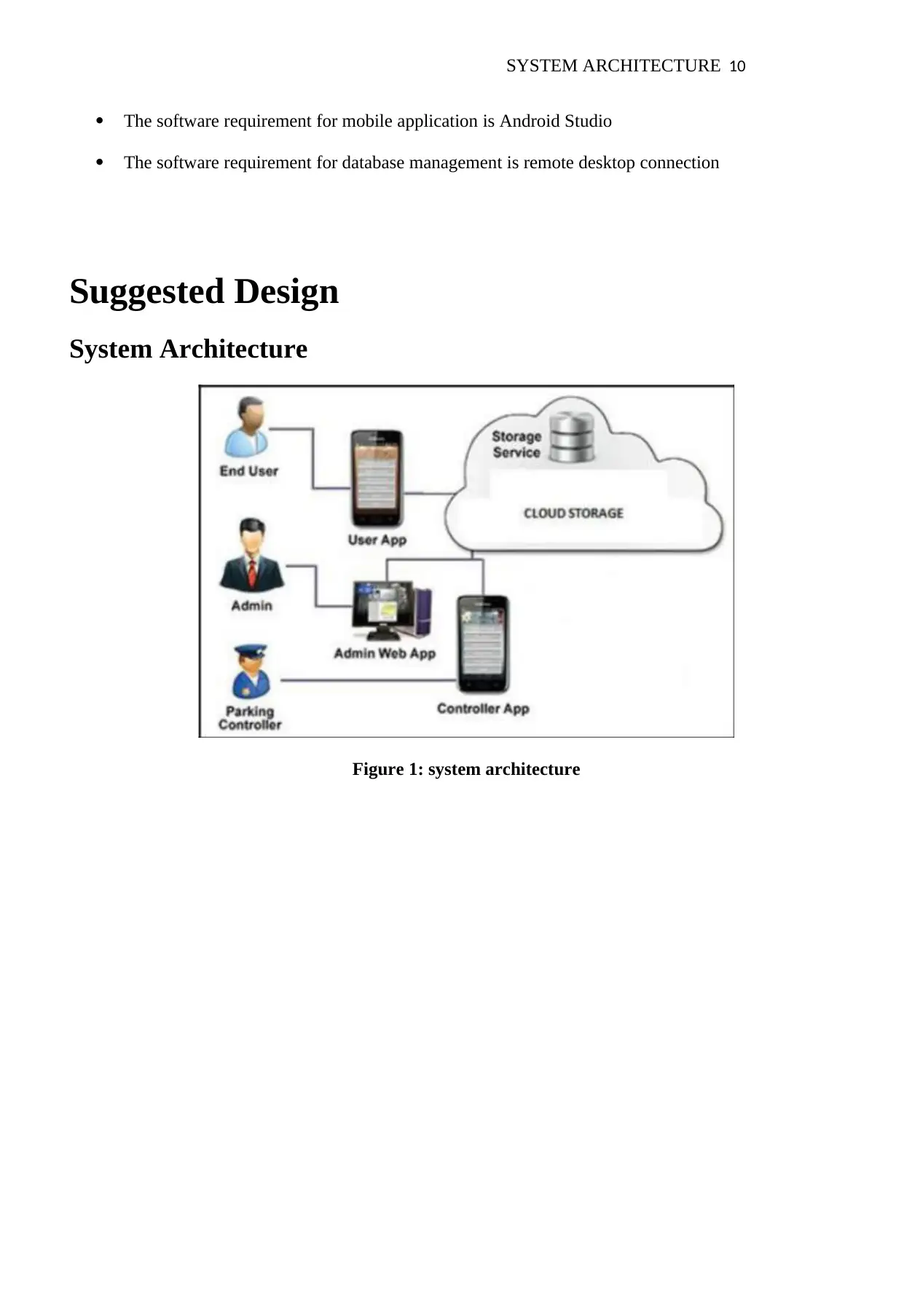
System Architecture
Figure 1: system architecture
The software requirement for mobile application is Android Studio
The software requirement for database management is remote desktop connection
Suggested Design
System Architecture
Figure 1: system architecture
Paraphrase This Document
Need a fresh take? Get an instant paraphrase of this document with our AI Paraphraser
SYSTEM ARCHITECTURE 11
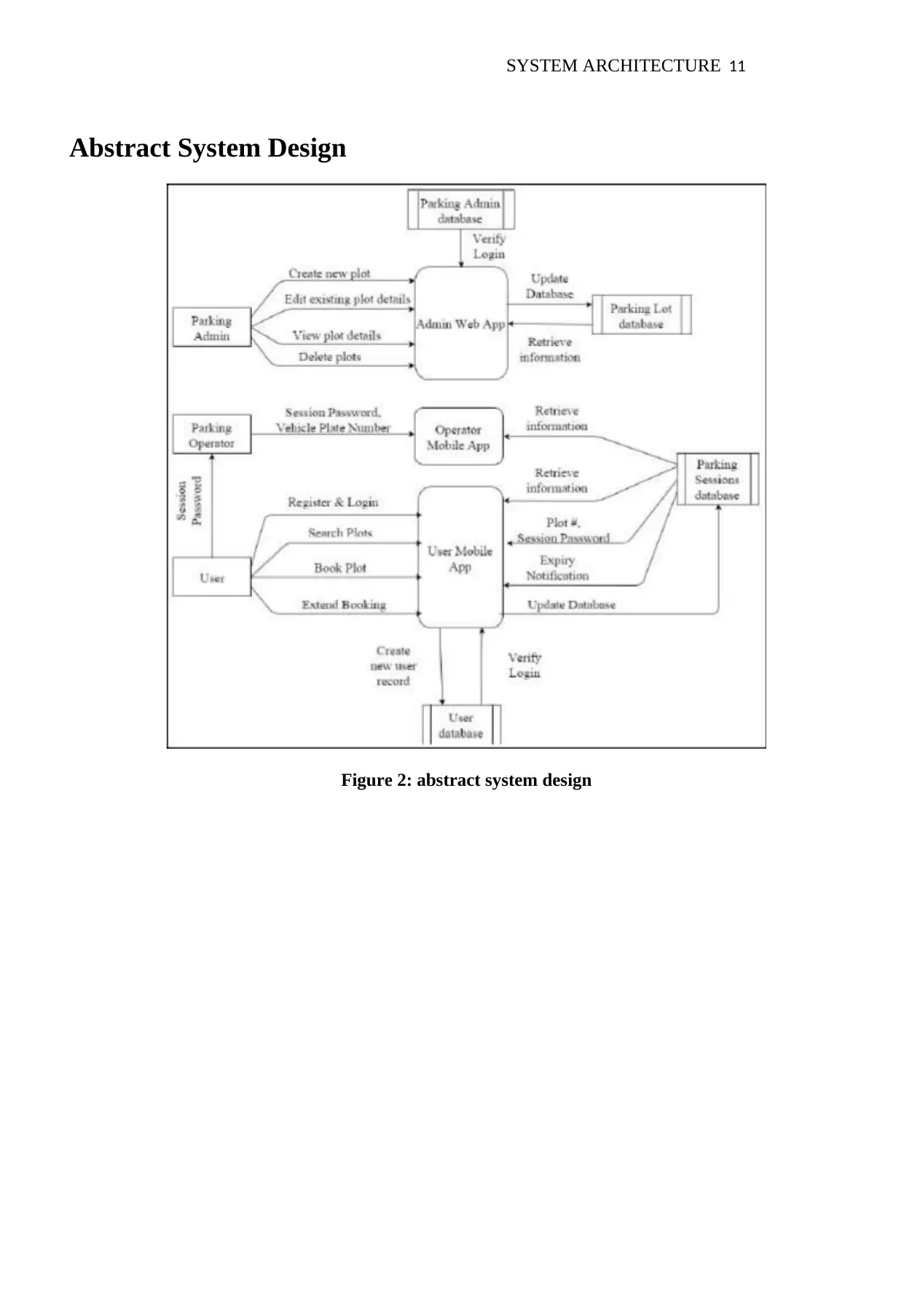
Abstract System Design
Figure 2: abstract system design
Abstract System Design
Figure 2: abstract system design
SYSTEM ARCHITECTURE 12
Implementation
The suggested system is put into effect in the following components:
Administrator website
Parking operator mobile application
End-user mobile application
One database keep data regarding users, parking lots and reservations made. The database comprises of
tables: operator, parkinglots, user, admin, parkingarea, parking session, users-cars
Administrator website
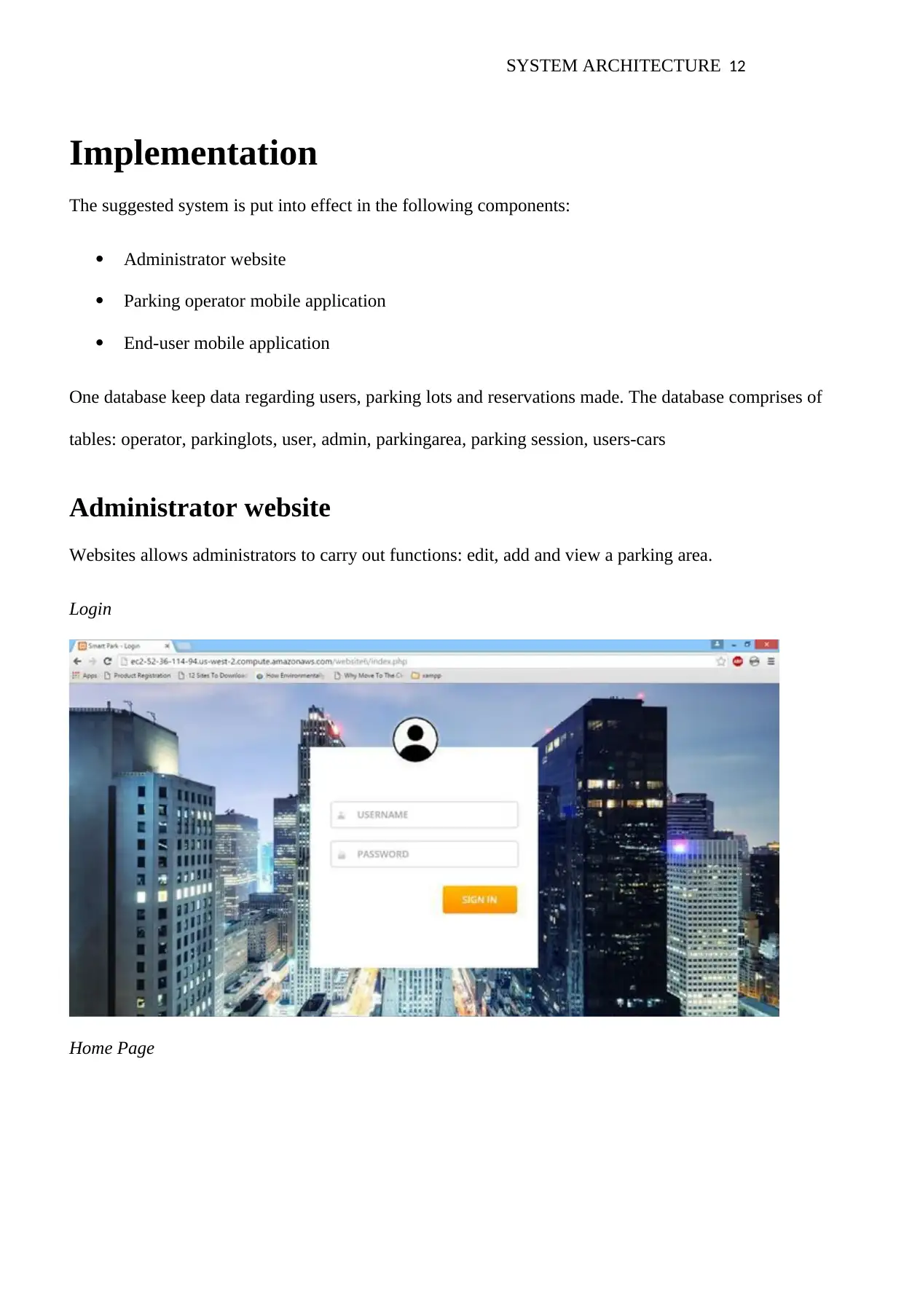
Websites allows administrators to carry out functions: edit, add and view a parking area.
Login
Home Page
Implementation
The suggested system is put into effect in the following components:
Administrator website
Parking operator mobile application
End-user mobile application
One database keep data regarding users, parking lots and reservations made. The database comprises of
tables: operator, parkinglots, user, admin, parkingarea, parking session, users-cars
Administrator website
Websites allows administrators to carry out functions: edit, add and view a parking area.
Login
Home Page
⊘ This is a preview!⊘
Do you want full access?
Subscribe today to unlock all pages.
Trusted by 1+ million students worldwide

1 out of 30


Related Documents


Your All-in-One AI-Powered Toolkit for Academic Success.
+13062052269
info@desklib.com
Available 24*7 on WhatsApp / Email
![[object Object]](/_next/static/media/star-bottom.7253800d.svg)
Unlock your academic potential
Copyright © 2020–2026 A2Z Services. All Rights Reserved. Developed and managed by ZUCOL.