An Analysis Report: Mobile Device Insecurities and Vulnerabilities

Verified

Added on  2021/04/21

|13
|854
|176
Report
AI Summary
This report delves into the critical topic of mobile device security, investigating the insecurities and vulnerabilities inherent in modern mobile devices. It begins by establishing the significance of mobile phones in both organizational and personal contexts, highlighting the rise in cyber-attacks and the financial implications of data breaches. The report aims to identify and analyze the various insecurities and vulnerabilities present in mobile devices, including data unencryption. It then explores the impact of these vulnerabilities on mobile users, considering potential risks to data privacy and security. The research employs a secondary data collection approach, drawing from online journals, books, and government databases, with thematic analysis used to interpret the collected information. The expected outcomes of this research include a better understanding of mobile device threats and the development of effective strategies to mitigate these risks, ultimately contributing to enhanced mobile security practices.
Document Page
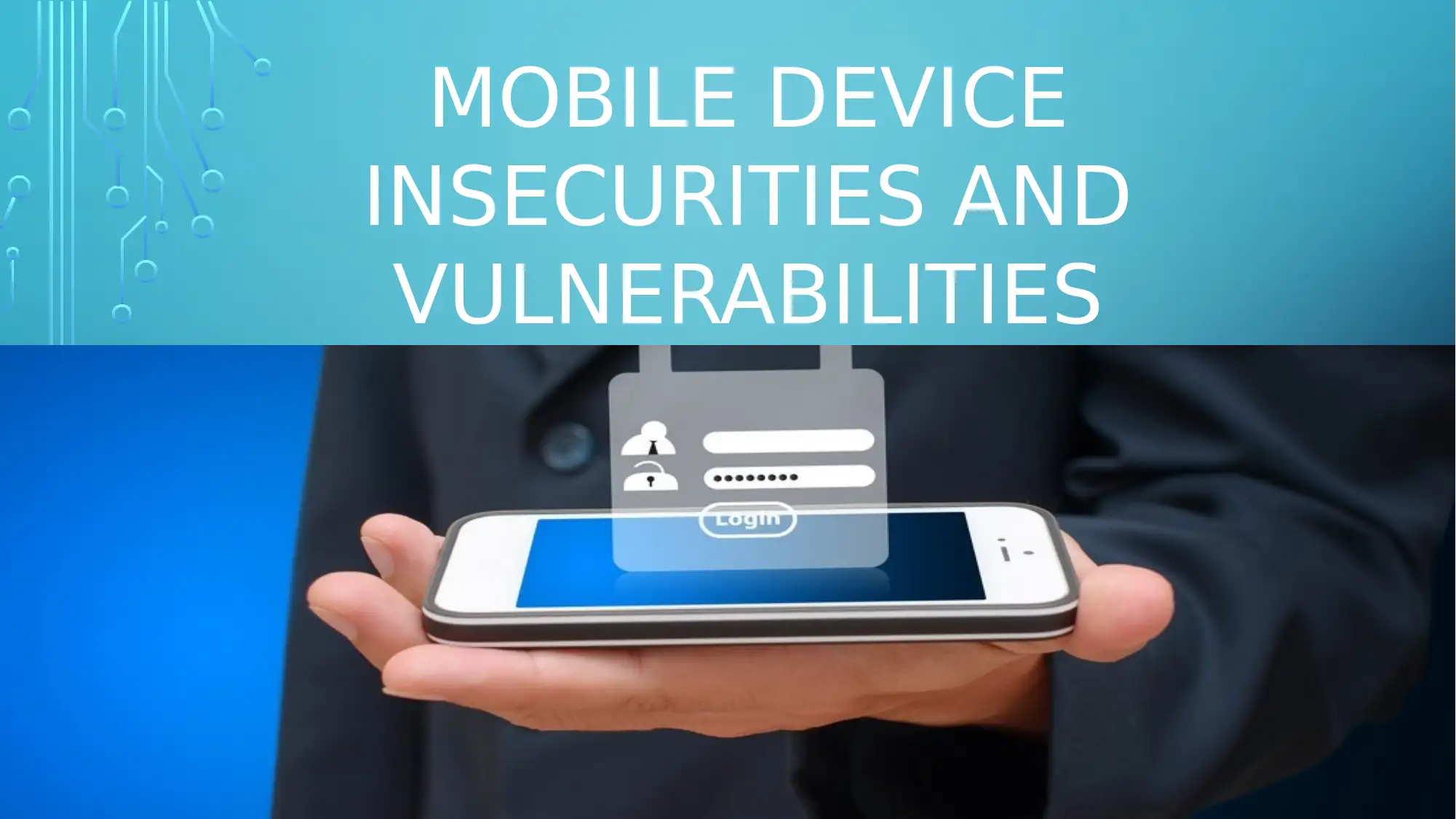
MOBILE DEVICE
INSECURITIES AND
VULNERABILITIES
tabler-icon-diamond-filled.svg

Paraphrase This Document

Need a fresh take? Get an instant paraphrase of this document with our AI Paraphraser
Document Page
CONTENTS
Introduction
Rationale
Aims and objectives
Research questions
Problem statement
Mobile security
Vulnerabilities in mobile devices
Research methodology
Expected outcomes
References
Document Page
INTRODUCTION
This research will identify the
use of mobile phones in the
organization and workplace.
There will be comparison
among different brands of
mobile phones in the market.
Document Page
RATIONALE
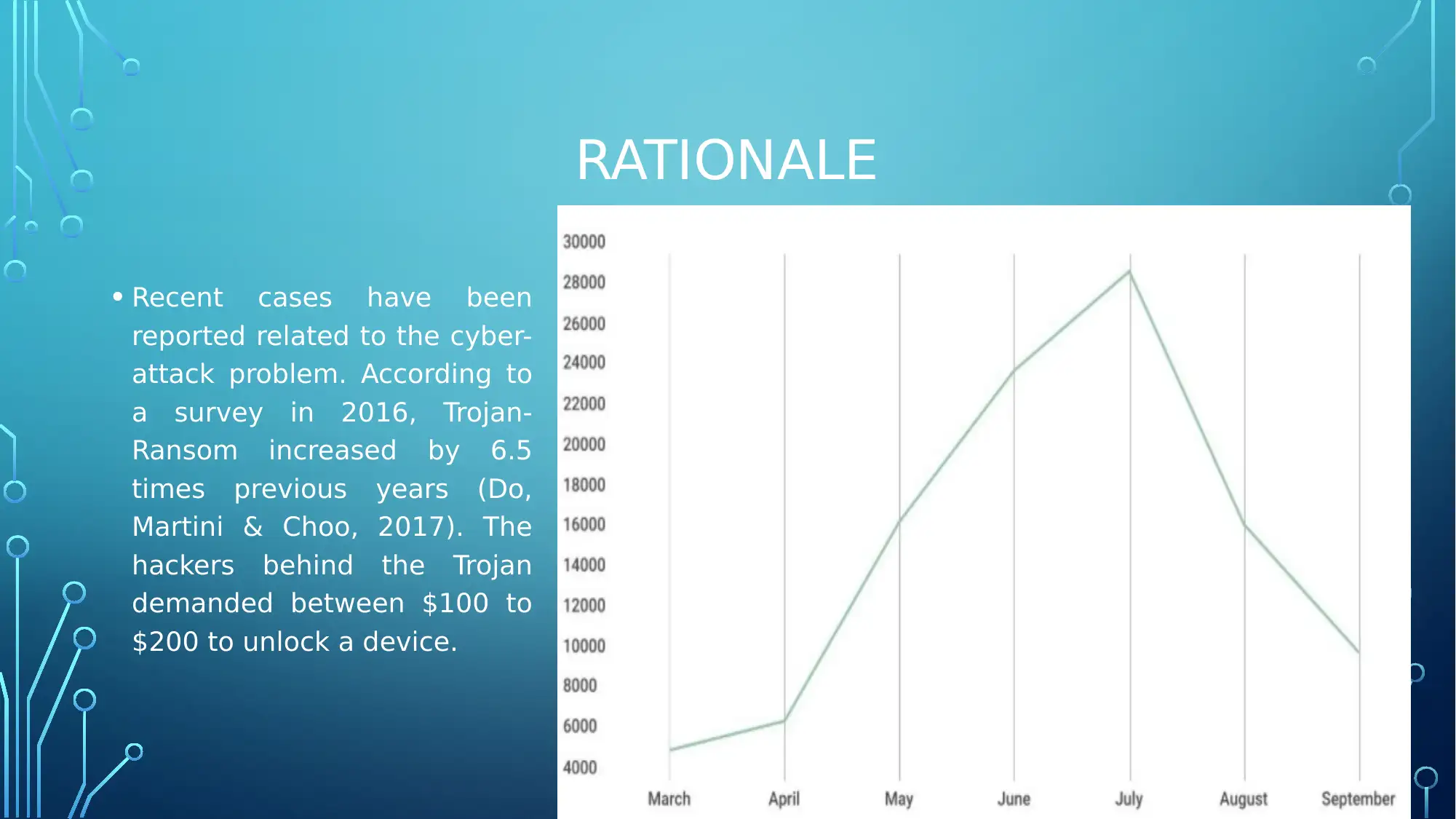
Recent cases have been
reported related to the cyber-
attack problem. According to
a survey in 2016, Trojan-
Ransom increased by 6.5
times previous years (Do,
Martini & Choo, 2017). The
hackers behind the Trojan
demanded between $100 to
$200 to unlock a device.
tabler-icon-diamond-filled.svg

Paraphrase This Document

Need a fresh take? Get an instant paraphrase of this document with our AI Paraphraser
Document Page
AIM AND OBJECTIVES
The aim of the research is to identify the insecurities and vulnerabilities in
mobile devices.
The objectives of the research are as follows:
To identify the insecurities and vulnerabilities in mobile devices
To analyze the impact of these vulnerabilities and insecurities on mobile
users
To recommend strategies for mitigating these challenges and
vulnerabilities in mobile users
Document Page
RESEARCH QUESTIONS
The research questions are as follows:
What are the insecurities and vulnerabilities in mobile
devices?
What is the impact of these vulnerabilities and insecurities on
mobile users?
How to mitigate these challenges and vulnerabilities in
mobile users?
Document Page
PROBLEM STATEMENT
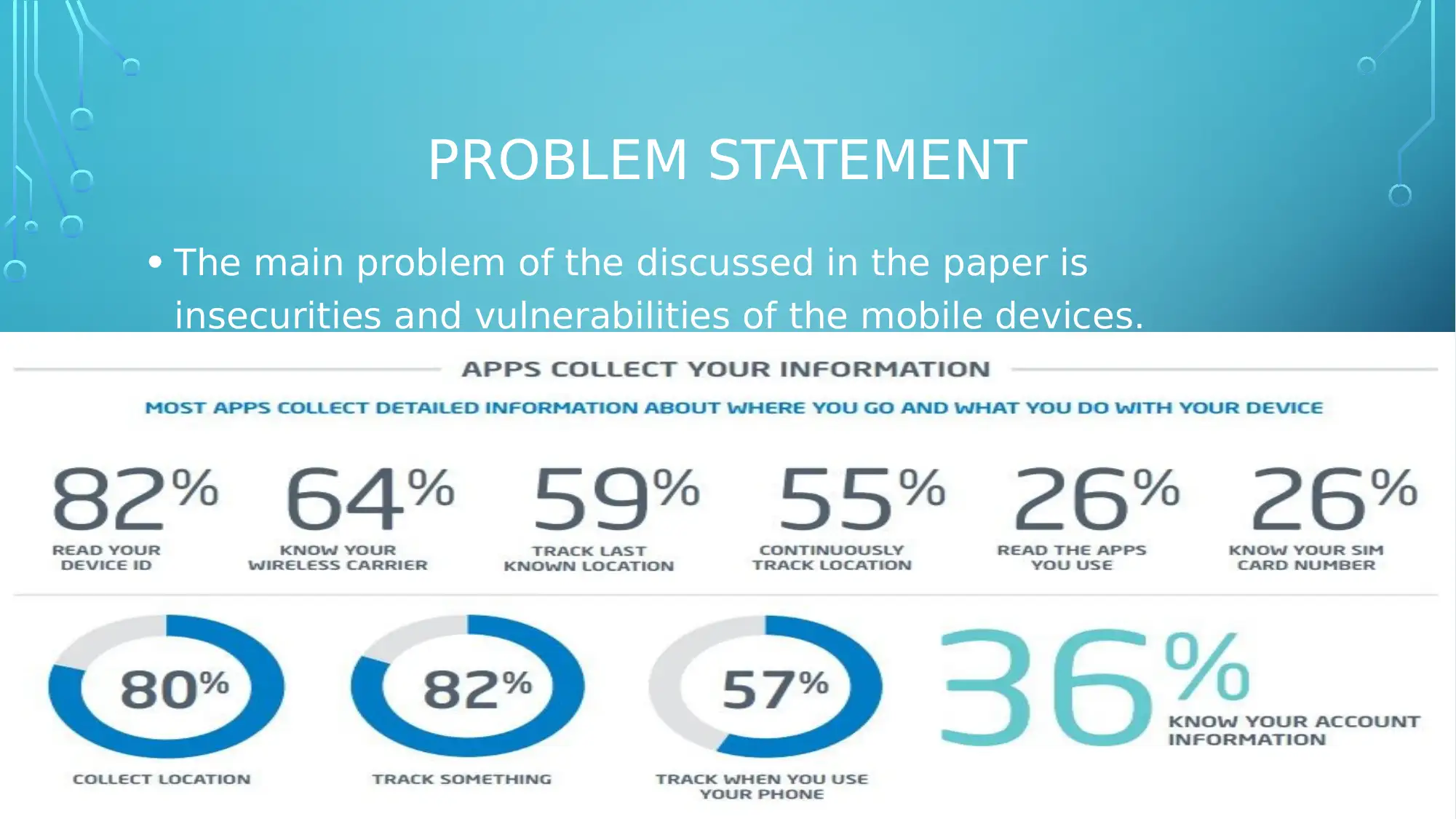
The main problem of the discussed in the paper is
insecurities and vulnerabilities of the mobile devices.
tabler-icon-diamond-filled.svg

Paraphrase This Document

Need a fresh take? Get an instant paraphrase of this document with our AI Paraphraser
Document Page
MOBILE SECURITY
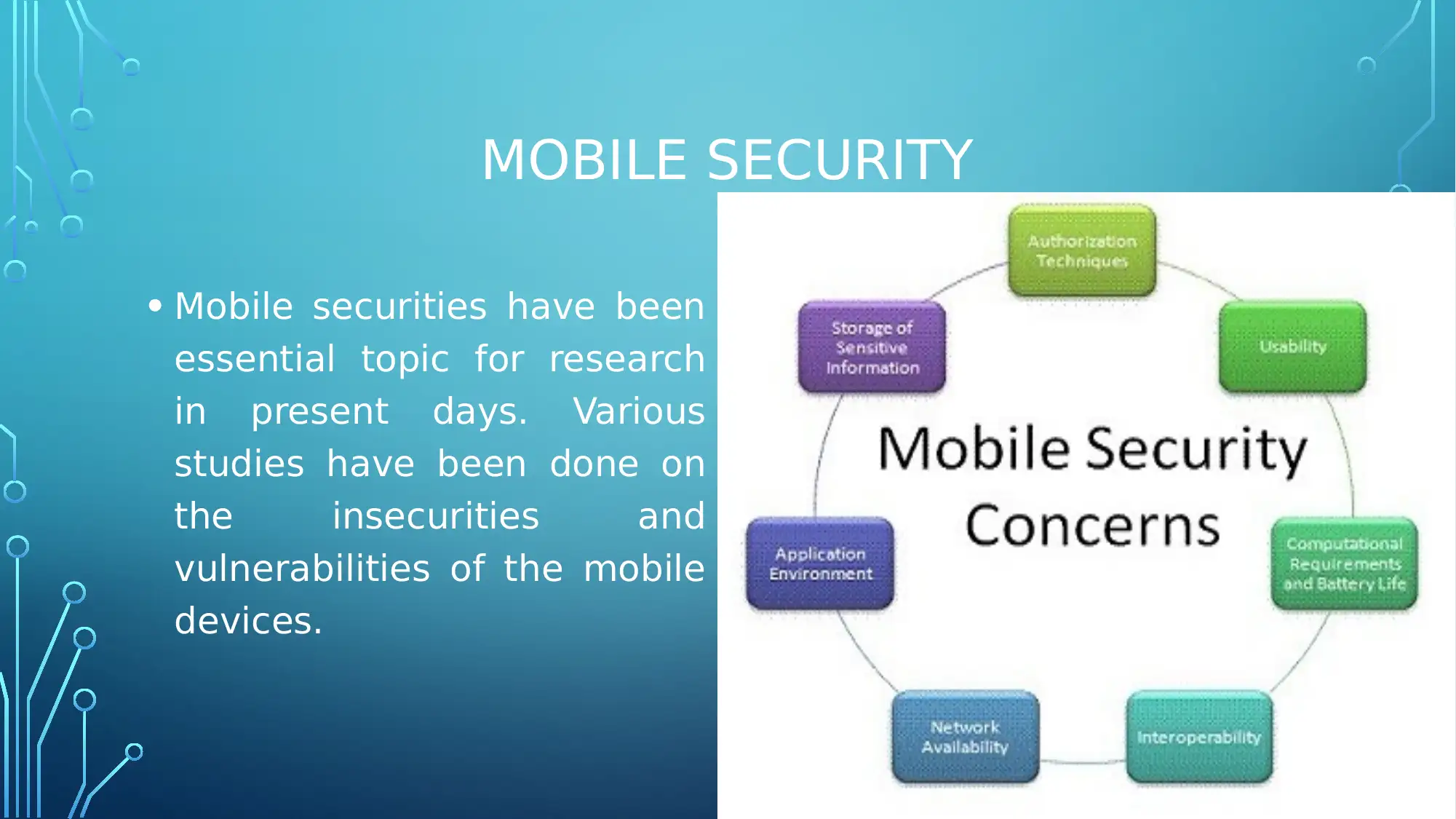
Mobile securities have been
essential topic for research
in present days. Various
studies have been done on
the insecurities and
vulnerabilities of the mobile
devices.
Document Page
VULNERABILITIES IN MOBILE DEVICES
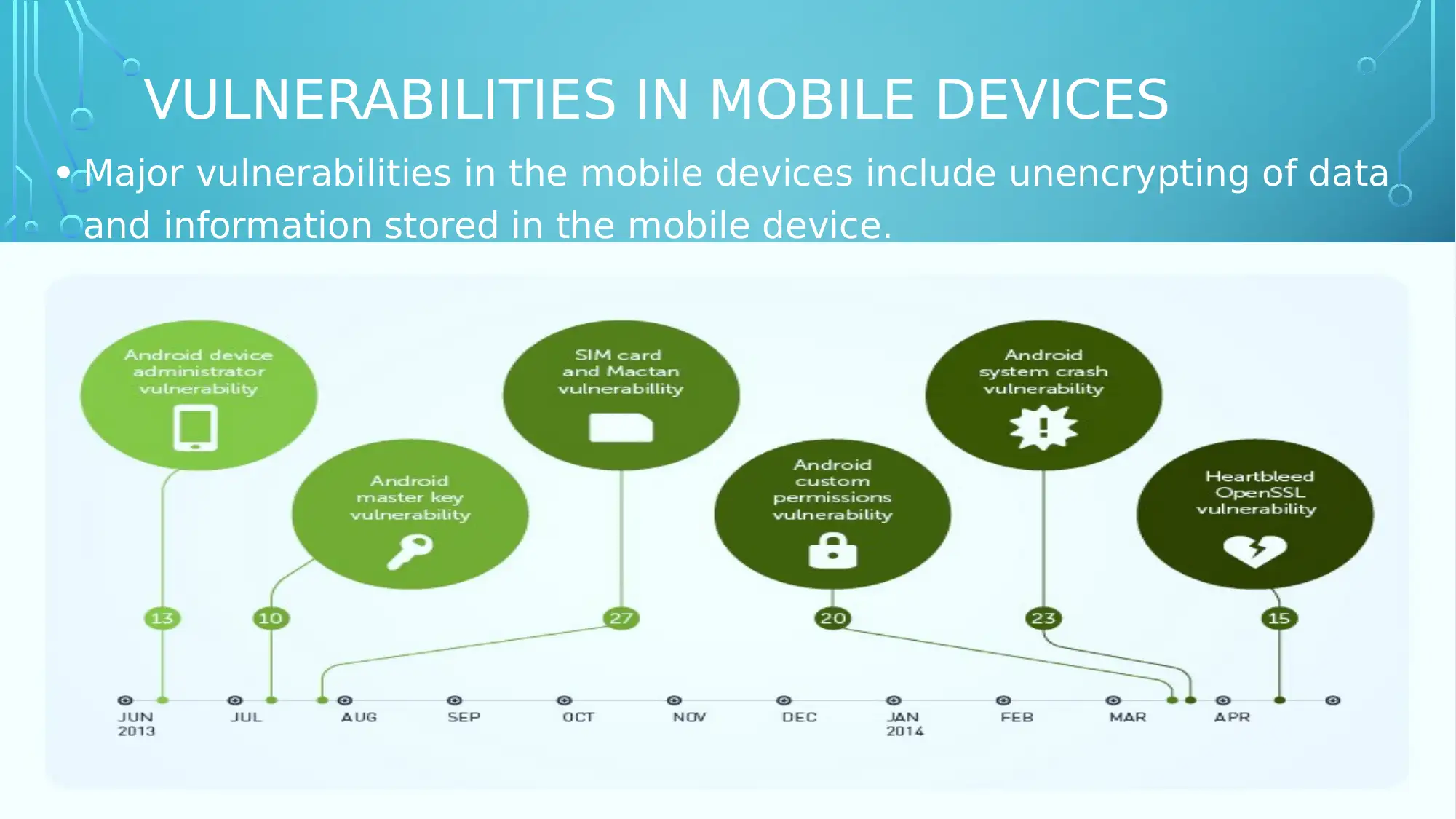
Major vulnerabilities in the mobile devices include unencrypting of data
and information stored in the mobile device.
Document Page
RESEARCH METHODOLOGY
The research will collect data from secondary data sources
including online journals, books, reports, articles and
government databases.
Thematic analysis will help in analyzing the data collected
from the online journals and government databases.
This research will follow the Data Protection Act 1998 and
personal information will not be shared with anyone
tabler-icon-diamond-filled.svg

Paraphrase This Document

Need a fresh take? Get an instant paraphrase of this document with our AI Paraphraser
Document Page
EXPECTED OUTCOMES
The analysis of the research will help in mitigating issues in
the mobile devices insecurities and vulnerabilities.
The expected outcomes of the research will manage risks
and threats involved in the mobile devices.
The outcomes will manage to satisfy the research objectives
and questions.
Document Page
REFERENCES
Ahmad, S., Haamid, A. L., Qazi, Z. A., Zhou, Z., Benson, T., & Qazi, I. A. (2016, November). A view from the other side:
Understanding mobile phone characteristics in the developing world. In Proceedings of the 2016 Internet Measurement
Conference (pp. 319-325). ACM.
Barcena, M. B., & Wueest, C. (2015). Insecurity in the Internet of Things. Security Response, Symantec.
Do, Q., Martini, B., & Choo, K. K. R. (2017). Is the data on your wearable device secure? An Android Wear smartwatch case
study. Software: Practice and Experience, 47(3), 391-403.
Flick, U. (2015). Introducing research methodology: A beginner's guide to doing a research project. Sage.
Jadhav, S., Oh, T., Kim, Y. H., & Kim, J. N. (2015, July). Mobile device penetration testing framework and platform for the
mobile device security course. In Advanced Communication Technology (ICACT), 2015 17th International Conference on(pp.
675-680). IEEE.
Khan, J., Abbas, H., & Al-Muhtadi, J. (2015). Survey on Mobile User's Data Privacy Threats and Defense
Mechanisms. Procedia Computer Science, 56, 376-383.
Lewis, S. (2015). Qualitative inquiry and research design: Choosing among five approaches. Health promotion
practice, 16(4), 473-475.
Mackey, A., & Gass, S. M. (2015). Second language research: Methodology and design. Routledge.
Raj, N., Bharti, P., & Thakur, S. (2015, April). Vulnerabilities, challenges and threats in securing mobile ad-hoc network.
In Communication Systems and Network Technologies (CSNT), 2015 Fifth International Conference on (pp. 771-775). IEEE.
Sinha, A. (2015). U.S. Patent No. 9,119,017. Washington, DC: U.S. Patent and Trademark Office.\
chevron_up_icon
1 out of 13
circle_padding
hide_on_mobile
zoom_out_icon
[object Object]