Research Project: Analyzing Mobile Tech Impact on Tourism Satisfaction
VerifiedAdded on 2024/05/31
|35
|7157
|245
Report
AI Summary
This research project investigates the impact of mobile technology on customer satisfaction within the tourism industry. It begins with a research proposal outlining the research problem, questions, hypotheses, aim, and objectives. The proposal includes a literature review, methodology for data collection and analysis, ethical considerations, limitations, and an action plan. The written report details the implementation of the research, data collection methods, and data analysis, interpreting the findings related to mobile technology's influence on tourist experiences and satisfaction levels. The evaluation section assesses the research outcomes, discusses future considerations, and provides recommendations. A poster presentation summarizes the key findings. The study employs both primary and secondary data collection methods to understand the level of mobile technology usage, its impact on customer satisfaction, and the attitudes of travelers towards mobile technology, highlighting its role in enhancing travel experiences.
RESEARCH PROJECT
An analysis on impact of mobile technology in boosting customer satisfaction in
tourism industry
An analysis on impact of mobile technology in boosting customer satisfaction in
tourism industry

Paraphrase This Document
Need a fresh take? Get an instant paraphrase of this document with our AI Paraphraser
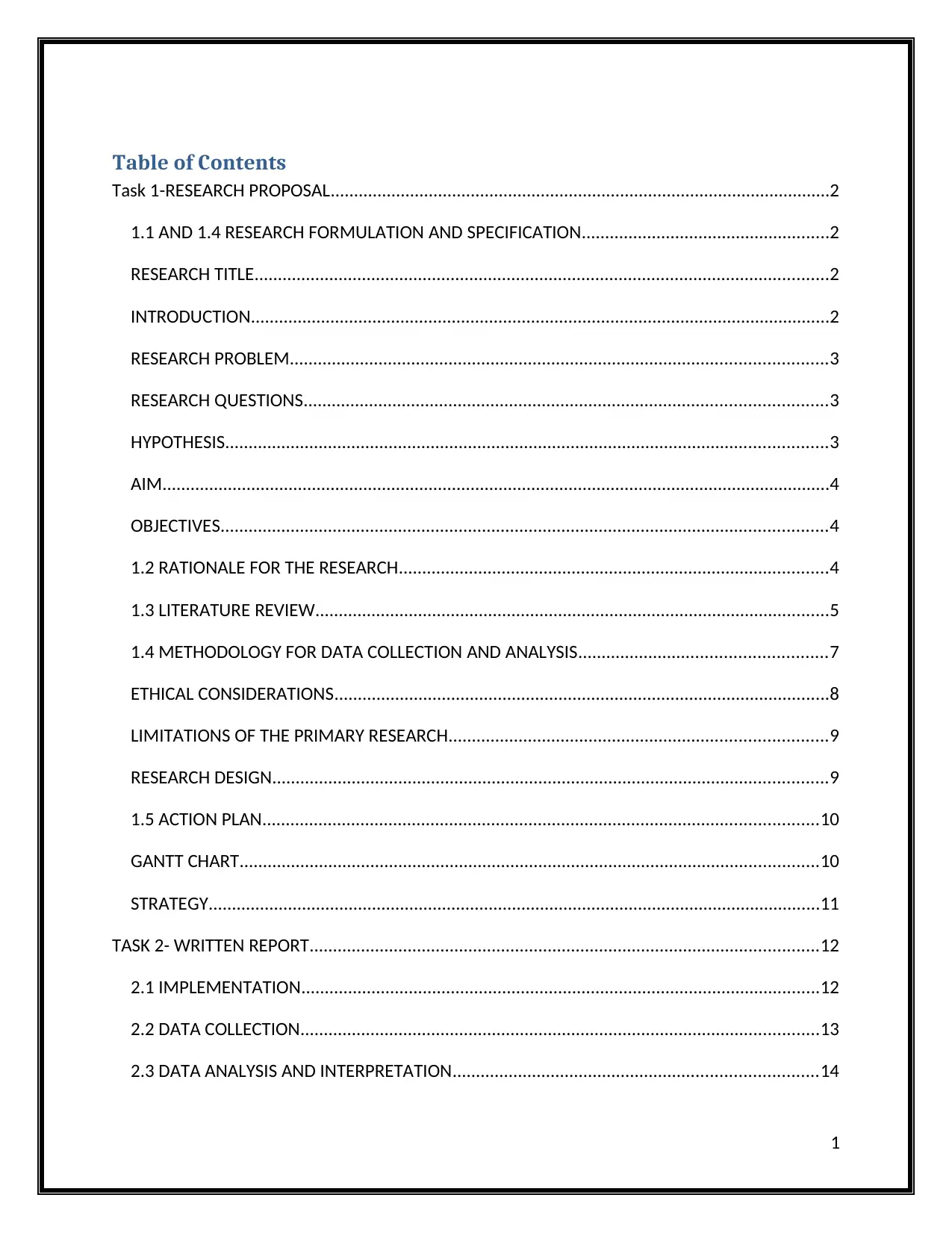
Table of Contents
Task 1-RESEARCH PROPOSAL...........................................................................................................2
1.1 AND 1.4 RESEARCH FORMULATION AND SPECIFICATION.....................................................2
RESEARCH TITLE...........................................................................................................................2
INTRODUCTION............................................................................................................................2
RESEARCH PROBLEM...................................................................................................................3
RESEARCH QUESTIONS................................................................................................................3
HYPOTHESIS.................................................................................................................................3
AIM...............................................................................................................................................4
OBJECTIVES..................................................................................................................................4
1.2 RATIONALE FOR THE RESEARCH............................................................................................4
1.3 LITERATURE REVIEW..............................................................................................................5
1.4 METHODOLOGY FOR DATA COLLECTION AND ANALYSIS.....................................................7
ETHICAL CONSIDERATIONS..........................................................................................................8
LIMITATIONS OF THE PRIMARY RESEARCH.................................................................................9
RESEARCH DESIGN.......................................................................................................................9
1.5 ACTION PLAN.......................................................................................................................10
GANTT CHART............................................................................................................................10
STRATEGY...................................................................................................................................11
TASK 2- WRITTEN REPORT.............................................................................................................12
2.1 IMPLEMENTATION...............................................................................................................12
2.2 DATA COLLECTION...............................................................................................................13
2.3 DATA ANALYSIS AND INTERPRETATION..............................................................................14
1
Task 1-RESEARCH PROPOSAL...........................................................................................................2
1.1 AND 1.4 RESEARCH FORMULATION AND SPECIFICATION.....................................................2
RESEARCH TITLE...........................................................................................................................2
INTRODUCTION............................................................................................................................2
RESEARCH PROBLEM...................................................................................................................3
RESEARCH QUESTIONS................................................................................................................3
HYPOTHESIS.................................................................................................................................3
AIM...............................................................................................................................................4
OBJECTIVES..................................................................................................................................4
1.2 RATIONALE FOR THE RESEARCH............................................................................................4
1.3 LITERATURE REVIEW..............................................................................................................5
1.4 METHODOLOGY FOR DATA COLLECTION AND ANALYSIS.....................................................7
ETHICAL CONSIDERATIONS..........................................................................................................8
LIMITATIONS OF THE PRIMARY RESEARCH.................................................................................9
RESEARCH DESIGN.......................................................................................................................9
1.5 ACTION PLAN.......................................................................................................................10
GANTT CHART............................................................................................................................10
STRATEGY...................................................................................................................................11
TASK 2- WRITTEN REPORT.............................................................................................................12
2.1 IMPLEMENTATION...............................................................................................................12
2.2 DATA COLLECTION...............................................................................................................13
2.3 DATA ANALYSIS AND INTERPRETATION..............................................................................14
1
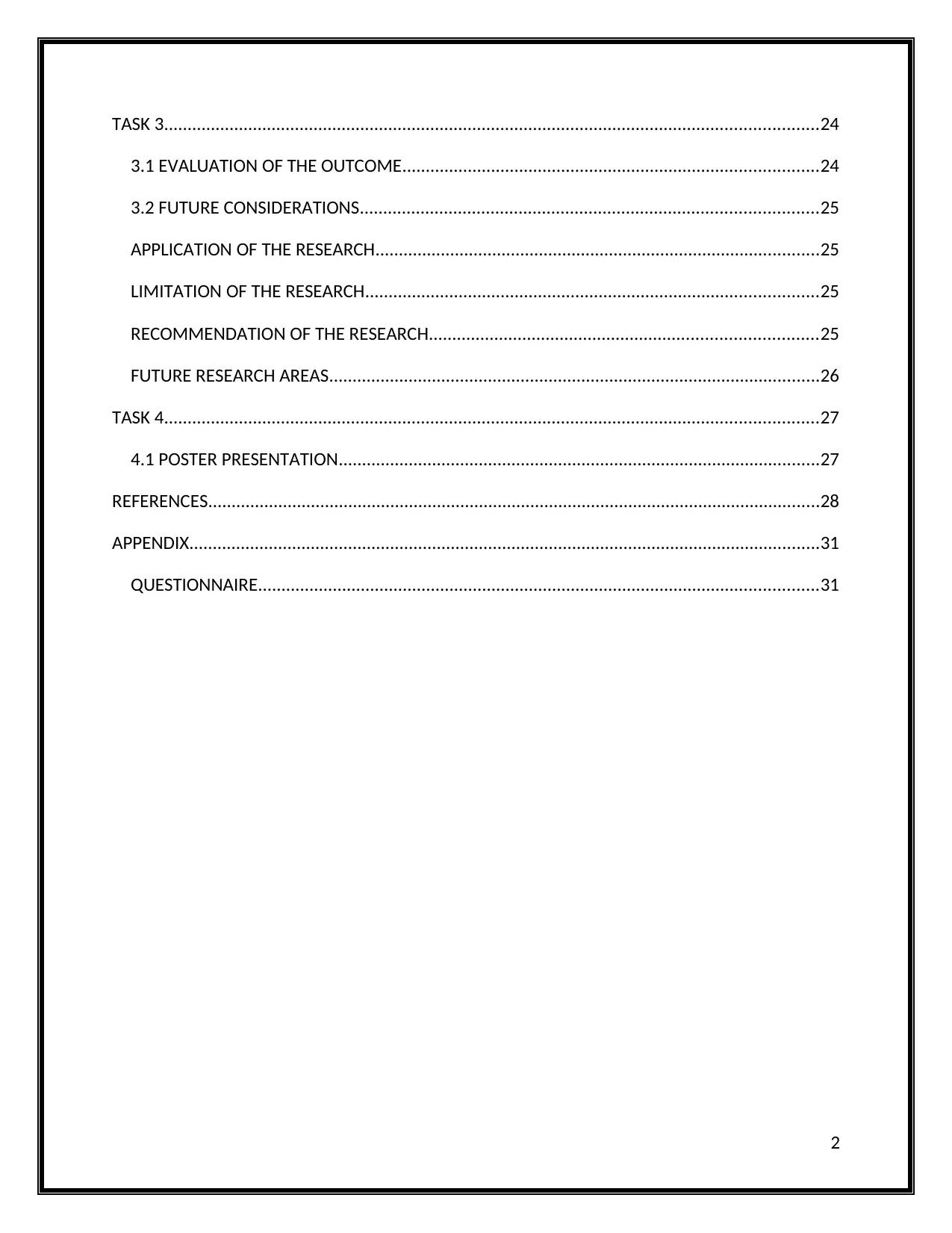
TASK 3............................................................................................................................................24
3.1 EVALUATION OF THE OUTCOME.........................................................................................24
3.2 FUTURE CONSIDERATIONS..................................................................................................25
APPLICATION OF THE RESEARCH...............................................................................................25
LIMITATION OF THE RESEARCH.................................................................................................25
RECOMMENDATION OF THE RESEARCH...................................................................................25
FUTURE RESEARCH AREAS.........................................................................................................26
TASK 4............................................................................................................................................27
4.1 POSTER PRESENTATION.......................................................................................................27
REFERENCES...................................................................................................................................28
APPENDIX.......................................................................................................................................31
QUESTIONNAIRE........................................................................................................................31
2
3.1 EVALUATION OF THE OUTCOME.........................................................................................24
3.2 FUTURE CONSIDERATIONS..................................................................................................25
APPLICATION OF THE RESEARCH...............................................................................................25
LIMITATION OF THE RESEARCH.................................................................................................25
RECOMMENDATION OF THE RESEARCH...................................................................................25
FUTURE RESEARCH AREAS.........................................................................................................26
TASK 4............................................................................................................................................27
4.1 POSTER PRESENTATION.......................................................................................................27
REFERENCES...................................................................................................................................28
APPENDIX.......................................................................................................................................31
QUESTIONNAIRE........................................................................................................................31
2
⊘ This is a preview!⊘
Do you want full access?
Subscribe today to unlock all pages.

Trusted by 1+ million students worldwide
Task 1-RESEARCH PROPOSAL
1.1 AND 1.4 RESEARCH FORMULATION AND SPECIFICATION
RESEARCH TITLE
"An analysis on the impact of mobile technology in boosting customer satisfaction in tourism
industry"
INTRODUCTION
It is observed that technology has changed and reshaped the day today's life since its
introduction. Due to the emergence of technology, significant changes have been observed in
travel and tourism industry as well (Emmanouilidis, et al. 2013). The role played by technology
resulted in economic growth thereby garnering the economic means to travel for consumers.
One of the significant contributions of technology in the field of travel plus tourism is the
development plus the contribution of air travel. New technologies have been applied in travel
and tourism industry in developing low-cost carriers.
Due to the development in e-commerce, the travel and tourism industry is further impacted by
the introduction and application of mobile technologies (Charitonos, et al. 2012). Mobile
phones are used by the customers to access the internet in order to view and select the
preferred option among the various tourism options. The emergence of new as well as high
tech mobiles in mobile technology has stirred the revolution in the tourism industry. Mobiles
and smartphones act as a single point of contact that can be used by the customer or
consumers to reserve airline tickets, hotel rooms and car rentals.
The expectation of the visitors and tourists is trending in not only to visit the places but also
experience them which are supported by the mobile technology. Mobile technology helps the
customers to connect with the destinations as well as attractions, who seek to engage for
authentic as well as truly memorable tourism experience (Tsai, 2010). Mobile devices act as
concierge, companion or guide to travellers and rely on them at different stages of their
journey. Tourists use different devices such as smartphones, tablets, I pad and so on that it
3
1.1 AND 1.4 RESEARCH FORMULATION AND SPECIFICATION
RESEARCH TITLE
"An analysis on the impact of mobile technology in boosting customer satisfaction in tourism
industry"
INTRODUCTION
It is observed that technology has changed and reshaped the day today's life since its
introduction. Due to the emergence of technology, significant changes have been observed in
travel and tourism industry as well (Emmanouilidis, et al. 2013). The role played by technology
resulted in economic growth thereby garnering the economic means to travel for consumers.
One of the significant contributions of technology in the field of travel plus tourism is the
development plus the contribution of air travel. New technologies have been applied in travel
and tourism industry in developing low-cost carriers.
Due to the development in e-commerce, the travel and tourism industry is further impacted by
the introduction and application of mobile technologies (Charitonos, et al. 2012). Mobile
phones are used by the customers to access the internet in order to view and select the
preferred option among the various tourism options. The emergence of new as well as high
tech mobiles in mobile technology has stirred the revolution in the tourism industry. Mobiles
and smartphones act as a single point of contact that can be used by the customer or
consumers to reserve airline tickets, hotel rooms and car rentals.
The expectation of the visitors and tourists is trending in not only to visit the places but also
experience them which are supported by the mobile technology. Mobile technology helps the
customers to connect with the destinations as well as attractions, who seek to engage for
authentic as well as truly memorable tourism experience (Tsai, 2010). Mobile devices act as
concierge, companion or guide to travellers and rely on them at different stages of their
journey. Tourists use different devices such as smartphones, tablets, I pad and so on that it
3
Paraphrase This Document
Need a fresh take? Get an instant paraphrase of this document with our AI Paraphraser
provides them with the flexibility, freedom and different options to explore various
destinations.
Mobile devices are user-friendly and portable so it is preferred by the people to make their own
travel arrangements. The mobile technology has benefitted tourism-based companies and also
improved the travel experience of the users. Mobile devices like smartphones, tablets, Android
and other such devices offers a convenient solution to fulfil the needs of the travellers for
accessing information anytime and anywhere (Rose, et al. 2011). The mobile applications are
used by the travellers on their mobile devices to book online tickets, access the details of
destinations, locate the food outlets and local attractive places, read the reviews and feedback
of other travellers, share photos and so on.
RESEARCH PROBLEM
The problem of the study is to ascertain the impact of mobile technology in boosting customer
satisfaction in the tourism industry.
RESEARCH QUESTIONS
1. What is the level of usage of mobile technology in the travel as well as tourism industry?
2. What is the level of impact of mobile technology on customer satisfaction in the tourism
industry?
3. What is the attitude of travellers and visitors towards the usage of mobile technology in
different stages of the journey?
4. How does the mobile technology increase the customer satisfaction among the
travellers and visitors?
HYPOTHESIS
1. The technology experiences of the travellers indicate the usefulness of mobile devices
being used for travel.
2. There is a noteworthy correlation between the increased customer experiences and use
of mobile technology.
4
destinations.
Mobile devices are user-friendly and portable so it is preferred by the people to make their own
travel arrangements. The mobile technology has benefitted tourism-based companies and also
improved the travel experience of the users. Mobile devices like smartphones, tablets, Android
and other such devices offers a convenient solution to fulfil the needs of the travellers for
accessing information anytime and anywhere (Rose, et al. 2011). The mobile applications are
used by the travellers on their mobile devices to book online tickets, access the details of
destinations, locate the food outlets and local attractive places, read the reviews and feedback
of other travellers, share photos and so on.
RESEARCH PROBLEM
The problem of the study is to ascertain the impact of mobile technology in boosting customer
satisfaction in the tourism industry.
RESEARCH QUESTIONS
1. What is the level of usage of mobile technology in the travel as well as tourism industry?
2. What is the level of impact of mobile technology on customer satisfaction in the tourism
industry?
3. What is the attitude of travellers and visitors towards the usage of mobile technology in
different stages of the journey?
4. How does the mobile technology increase the customer satisfaction among the
travellers and visitors?
HYPOTHESIS
1. The technology experiences of the travellers indicate the usefulness of mobile devices
being used for travel.
2. There is a noteworthy correlation between the increased customer experiences and use
of mobile technology.
4
3. The level of satisfaction of the customers depends on the usage of mobile technology in
accessing the information about the trends in the tourism industry.
4. The use of mobile technology results in flexibility in the taking decisions by travellers
and tourists during the trip.
AIM
The research aims to ascertain the impact of mobile technology in boosting customer
satisfaction in the tourism industry.
OBJECTIVES
Research objectives are:
1. To find the level of usage of mobile technology in the travel as well as tourism industry
2. To ascertain the extent of the impact of mobile technology on customer satisfaction in
the tourism industry.
3. To analyse the attitude and perceptions of the travellers and visitors in using mobile
technology in different stages of the journey.
4. To ascertain the significance of mobile technology in increasing the customer
satisfaction level among the travellers and tourists.
1.2 RATIONALE FOR THE RESEARCH
It is essential to comprehend the impact of mobile technology on the consumer satisfaction in
the travel tourism industry. The emergence of technology has given the tourism industry to
distribute its products and services using mobile technology. It also helps the tour operating
organizations to understand the perception and preferences of the customers in the tourism
industry (Rose, et al. 2011). Mobile devices are used by the travellers to not only search or book
the trips through mobile but also capture the entire detail of each tour package. Smartphones
and mobile devices are used by the travellers and tourists in travel processes such as from
initial research and inspiration to purchase as well as booking for the holiday or trip.
5
accessing the information about the trends in the tourism industry.
4. The use of mobile technology results in flexibility in the taking decisions by travellers
and tourists during the trip.
AIM
The research aims to ascertain the impact of mobile technology in boosting customer
satisfaction in the tourism industry.
OBJECTIVES
Research objectives are:
1. To find the level of usage of mobile technology in the travel as well as tourism industry
2. To ascertain the extent of the impact of mobile technology on customer satisfaction in
the tourism industry.
3. To analyse the attitude and perceptions of the travellers and visitors in using mobile
technology in different stages of the journey.
4. To ascertain the significance of mobile technology in increasing the customer
satisfaction level among the travellers and tourists.
1.2 RATIONALE FOR THE RESEARCH
It is essential to comprehend the impact of mobile technology on the consumer satisfaction in
the travel tourism industry. The emergence of technology has given the tourism industry to
distribute its products and services using mobile technology. It also helps the tour operating
organizations to understand the perception and preferences of the customers in the tourism
industry (Rose, et al. 2011). Mobile devices are used by the travellers to not only search or book
the trips through mobile but also capture the entire detail of each tour package. Smartphones
and mobile devices are used by the travellers and tourists in travel processes such as from
initial research and inspiration to purchase as well as booking for the holiday or trip.
5
⊘ This is a preview!⊘
Do you want full access?
Subscribe today to unlock all pages.
Trusted by 1+ million students worldwide
1.3 LITERATURE REVIEW
One of the important tools for travellers as it enables them to navigate the uncertain world is
mobile system (Wang, et al. 2014). A study was carried out to develop an insight on the use of a
smartphone for travel. It was found that the cognitive beliefs, everyday usage, previous
experiences and complex interactions between relative factors have shaped the usages of
smartphone for travelling. The tourist experience is transformed substantially due to enormous
potential in the usage of smartphones. This study acts as a framework by providing a basic
foundation for understanding the influence of mobile systems on the experiences of tourists.
In support of this, Wang, et al (2012) stated that the evolution of mobile phones to be
smartphones support in accessing a wide range of information services at any time and
anyplace. The tourist experiences are significantly impacted by the use of smartphones as large
number of people is using mobile devices. This study explores the understanding on the stories
provided by the travellers regarding the usage of smartphone for travelling purpose. It was
revealed that the behaviour, as well as emotional states of the tourists, can be altered through
the smartphone by addressing the different variety of needs of information. It also revealed
that different aspects of tourism business can be changed by using smartphones (Wang, et al.
2012).
According to Lamsfus, et al (2015), due to increasing use of mobile technologies, there is
increasing dynamic as well as social connectedness in the travel behaviour. This study signifies
the importance of the technology supported mobile environment in today's world in travel and
tourism industry. It was revealed that mobile technology environment has a substantial impact
on the travel behaviour in travel and tourism business. It also described that recent
technological development in a context-aware system aimed to define the notion related to the
mobile technology in the tourism business.
In addition to this, Wang and Fesenmaier, (2013) carried out the study to understand the use of
smartphones along with their impact on the travelling experiences. It was indicated that the
travelling experience is significantly transformed with the use of smartphones thereby changing
the travel planning, reconfiguring the relationships between places and tourists and also
6
One of the important tools for travellers as it enables them to navigate the uncertain world is
mobile system (Wang, et al. 2014). A study was carried out to develop an insight on the use of a
smartphone for travel. It was found that the cognitive beliefs, everyday usage, previous
experiences and complex interactions between relative factors have shaped the usages of
smartphone for travelling. The tourist experience is transformed substantially due to enormous
potential in the usage of smartphones. This study acts as a framework by providing a basic
foundation for understanding the influence of mobile systems on the experiences of tourists.
In support of this, Wang, et al (2012) stated that the evolution of mobile phones to be
smartphones support in accessing a wide range of information services at any time and
anyplace. The tourist experiences are significantly impacted by the use of smartphones as large
number of people is using mobile devices. This study explores the understanding on the stories
provided by the travellers regarding the usage of smartphone for travelling purpose. It was
revealed that the behaviour, as well as emotional states of the tourists, can be altered through
the smartphone by addressing the different variety of needs of information. It also revealed
that different aspects of tourism business can be changed by using smartphones (Wang, et al.
2012).
According to Lamsfus, et al (2015), due to increasing use of mobile technologies, there is
increasing dynamic as well as social connectedness in the travel behaviour. This study signifies
the importance of the technology supported mobile environment in today's world in travel and
tourism industry. It was revealed that mobile technology environment has a substantial impact
on the travel behaviour in travel and tourism business. It also described that recent
technological development in a context-aware system aimed to define the notion related to the
mobile technology in the tourism business.
In addition to this, Wang and Fesenmaier, (2013) carried out the study to understand the use of
smartphones along with their impact on the travelling experiences. It was indicated that the
travelling experience is significantly transformed with the use of smartphones thereby changing
the travel planning, reconfiguring the relationships between places and tourists and also
6
Paraphrase This Document
Need a fresh take? Get an instant paraphrase of this document with our AI Paraphraser
developing or destructing the sense of tourism. It was found that mobile technology has
reconceptualised the travelling experiences and implicate mobile marketing and destination
marketing.
As the smartphone is based on the advanced computing capabilities as well as ubiquity, it is
been rapidly adopted as a tool for travel and tourism. Transport network and tourism travel are
altered fundamentally due to a smartphone as there is an increase in a number of users as well
as the emergence of a wide variety of applications on a smartphone (Dickinson, et al. 2014). It
was found that role played by the smartphone in the dynamic travel decisions is to facilitate
sustainable travel and also mediated tourism travel.
Mobile devices comprise of a recommender system that is been used by the tourists to reduce
the information overload and offer travel recommendations. This helps in enriching the tourist
experiences (Gavalas, et al. 2014). New developments in wireless networking, social
networking, mobile computing and web technologies deliver massive opportunities to provide
effective tourist recommendations as per the different contextual parameters such as personal
preferences, social and environmental and personal factors and so on.
In support of this, Lamsfus, et al (2013) mentioned the context in travel as well as tourism that
bridges the gap between the specific need and fulfilling the necessary information. It is very
important for the mobile technologies such as smartphones and other devices that become
popular to support the decision making on the travelling. It was argued that the travel
experiences can be altered along with the travel behaviour with the use of mobile computing. It
offers context-awareness computing such as location-based services in travel and tourism.
According to Peres, et al (2011) a study was piloted to understand the acceptance level of the
tourists of the innovative information technologies that influence the use of mobile electronics
tourist guides. Technology acceptance model of Davis is used to examine the acceptance level
of tourist of mobile electronics tourist guides. It was found that the behavioural intentions of
the tourist can be raised towards using mobile electronic tourist guides thereby ensuring the
higher perception level for usefulness. It was also found that there is a correlation between
knowledge and behavioural intentions and suggests one condition that is a high level of
knowledge regarding high usage of mobile electronics tourist guides.
7
reconceptualised the travelling experiences and implicate mobile marketing and destination
marketing.
As the smartphone is based on the advanced computing capabilities as well as ubiquity, it is
been rapidly adopted as a tool for travel and tourism. Transport network and tourism travel are
altered fundamentally due to a smartphone as there is an increase in a number of users as well
as the emergence of a wide variety of applications on a smartphone (Dickinson, et al. 2014). It
was found that role played by the smartphone in the dynamic travel decisions is to facilitate
sustainable travel and also mediated tourism travel.
Mobile devices comprise of a recommender system that is been used by the tourists to reduce
the information overload and offer travel recommendations. This helps in enriching the tourist
experiences (Gavalas, et al. 2014). New developments in wireless networking, social
networking, mobile computing and web technologies deliver massive opportunities to provide
effective tourist recommendations as per the different contextual parameters such as personal
preferences, social and environmental and personal factors and so on.
In support of this, Lamsfus, et al (2013) mentioned the context in travel as well as tourism that
bridges the gap between the specific need and fulfilling the necessary information. It is very
important for the mobile technologies such as smartphones and other devices that become
popular to support the decision making on the travelling. It was argued that the travel
experiences can be altered along with the travel behaviour with the use of mobile computing. It
offers context-awareness computing such as location-based services in travel and tourism.
According to Peres, et al (2011) a study was piloted to understand the acceptance level of the
tourists of the innovative information technologies that influence the use of mobile electronics
tourist guides. Technology acceptance model of Davis is used to examine the acceptance level
of tourist of mobile electronics tourist guides. It was found that the behavioural intentions of
the tourist can be raised towards using mobile electronic tourist guides thereby ensuring the
higher perception level for usefulness. It was also found that there is a correlation between
knowledge and behavioural intentions and suggests one condition that is a high level of
knowledge regarding high usage of mobile electronics tourist guides.
7
Additionally, Lee and Mills (2010) stated that handheld devices provide portable access,
convenience and information to travellers. It was considered that the usage of new mobile
technologies increases the potential for tourism. A study was carried out to explore the
satisfaction level of the travellers towards using mobile technology in tourism with the aim to
gain competitive advantage. It was observed that the satisfaction level of the travellers is
affected by the key factors that are a degree of perception and perceived value through their
mobile experiences. The purpose to continue using mobile devices during the travel is
influenced by the satisfaction level.
In addition to this, Wang, et al (2016) stated that travellers are supported by the effective tools
that are connected mobile devices including smartphones and tablets. A study was carried out
to understand the association between usage of connected mobile devices as well as travel
experiences through the two-stage model. The first stage depicts the factors in everyday life of
people impacted by the utilisation of connected mobile devices and second stage defines the
influence of mobile device usage on various extents of travel experience. It was found that
there is a substantial correlation between the use of mobile devices in travel context and in
everyday life.
Thus it can be summarised that the travel experiences are highly swayed by the use of mobile
technology in travel tourism and this has resulted in customer satisfaction among the travellers
and tourist due to its portability, usefulness and convenience.
1.4 METHODOLOGY FOR DATA COLLECTION AND ANALYSIS
Both data collection methods that are primary as well as secondary data collection method are
used for this research. Primary and secondary data sources have been used to come to an
effective outcome of the research. The responses of the travellers and tourists are gathering
through structured questionnaire survey method in the primary data collection method
(Höpken, et al. 2010). It helps in analysing the impact of mobile technology in boosting
customer satisfaction in the tourism industry.
The opinions and viewpoints of the respondents of this research will be gathered to ascertain
the impact of mobile technology in increasing customer satisfaction in the tourism industry.
8
convenience and information to travellers. It was considered that the usage of new mobile
technologies increases the potential for tourism. A study was carried out to explore the
satisfaction level of the travellers towards using mobile technology in tourism with the aim to
gain competitive advantage. It was observed that the satisfaction level of the travellers is
affected by the key factors that are a degree of perception and perceived value through their
mobile experiences. The purpose to continue using mobile devices during the travel is
influenced by the satisfaction level.
In addition to this, Wang, et al (2016) stated that travellers are supported by the effective tools
that are connected mobile devices including smartphones and tablets. A study was carried out
to understand the association between usage of connected mobile devices as well as travel
experiences through the two-stage model. The first stage depicts the factors in everyday life of
people impacted by the utilisation of connected mobile devices and second stage defines the
influence of mobile device usage on various extents of travel experience. It was found that
there is a substantial correlation between the use of mobile devices in travel context and in
everyday life.
Thus it can be summarised that the travel experiences are highly swayed by the use of mobile
technology in travel tourism and this has resulted in customer satisfaction among the travellers
and tourist due to its portability, usefulness and convenience.
1.4 METHODOLOGY FOR DATA COLLECTION AND ANALYSIS
Both data collection methods that are primary as well as secondary data collection method are
used for this research. Primary and secondary data sources have been used to come to an
effective outcome of the research. The responses of the travellers and tourists are gathering
through structured questionnaire survey method in the primary data collection method
(Höpken, et al. 2010). It helps in analysing the impact of mobile technology in boosting
customer satisfaction in the tourism industry.
The opinions and viewpoints of the respondents of this research will be gathered to ascertain
the impact of mobile technology in increasing customer satisfaction in the tourism industry.
8
⊘ This is a preview!⊘
Do you want full access?
Subscribe today to unlock all pages.
Trusted by 1+ million students worldwide
Analytical tools were used to analyse the data gathered through primary data collection
method in order to draw suitable results along with the conclusion (Marimon, et al. 2010). A
questionnaire survey will be conducted through online mode thereby including travellers from
each segment as respondents in this research.
Various reliable sources such as articles, magazines, journals and online materials and sources
have been included to collect the data through secondary data collection methods. About 30
out of total 40 researches have been selected on the basis of suitability with the topic of the
research. These sources were selected by reading their abstracts that were relevant to the
present study. A literature review of this study comprises of the summaries of best probable
studies that will effectively drive the research to appropriate outcome through effective
analysis (Chan, 2012).
100 travellers or tourists were selected randomly through random sampling method in this
research. 10 structured questions were comprised in the questionnaire survey to be responded
by the travellers and tourists. Their responses were presented through pie charts, table and
graphs in a systematic manner (Etxeberria, et al. 2012). Through these tools, the data that was
collected for this research derived on the appropriate solutions. It helped in effective analysing
the responses of the respondents to comprehend the impact of mobile technology on the
customer satisfaction in tourism and reach out to the clear result of the survey.
ETHICAL CONSIDERATIONS
No compulsion was imposed on the respondents as their participation in this survey was
voluntary. The personal information of the respondents was maintained confidentially along
with its privacy (Gretzel, 2011). All the respondents were provided with the relevant
information about the research along with their confirmation of the participant consent form.
The respondents were free to complete the survey or withdraw at any point of the survey. The
assurance was given to all the respondents to use their responses primarily and solely for
academic purpose and will never be used for any commercial purpose. Privacy concerns were
maintained while gathering data and information through secondary data collection sources in
order to outline this research.
9
method in order to draw suitable results along with the conclusion (Marimon, et al. 2010). A
questionnaire survey will be conducted through online mode thereby including travellers from
each segment as respondents in this research.
Various reliable sources such as articles, magazines, journals and online materials and sources
have been included to collect the data through secondary data collection methods. About 30
out of total 40 researches have been selected on the basis of suitability with the topic of the
research. These sources were selected by reading their abstracts that were relevant to the
present study. A literature review of this study comprises of the summaries of best probable
studies that will effectively drive the research to appropriate outcome through effective
analysis (Chan, 2012).
100 travellers or tourists were selected randomly through random sampling method in this
research. 10 structured questions were comprised in the questionnaire survey to be responded
by the travellers and tourists. Their responses were presented through pie charts, table and
graphs in a systematic manner (Etxeberria, et al. 2012). Through these tools, the data that was
collected for this research derived on the appropriate solutions. It helped in effective analysing
the responses of the respondents to comprehend the impact of mobile technology on the
customer satisfaction in tourism and reach out to the clear result of the survey.
ETHICAL CONSIDERATIONS
No compulsion was imposed on the respondents as their participation in this survey was
voluntary. The personal information of the respondents was maintained confidentially along
with its privacy (Gretzel, 2011). All the respondents were provided with the relevant
information about the research along with their confirmation of the participant consent form.
The respondents were free to complete the survey or withdraw at any point of the survey. The
assurance was given to all the respondents to use their responses primarily and solely for
academic purpose and will never be used for any commercial purpose. Privacy concerns were
maintained while gathering data and information through secondary data collection sources in
order to outline this research.
9
Paraphrase This Document
Need a fresh take? Get an instant paraphrase of this document with our AI Paraphraser
LIMITATIONS OF THE PRIMARY RESEARCH
Time consumed in the gathering, analysing as well as interpreting the data using the primary
research methodology was the major limitation for this research. The limitations from the
secondary research shall be continued in this present research as the secondary research form
the basis for the present study (Neuhofer, et al. 2014). The variance in the responses of the
respondents could be due to the volatility in the perception and mindset of the respondents
and also depend on the then situation. It might result in the biasness of the outcome and might
not ensure validity or accuracy for the longer time period. Eligible human resources and
appropriate budget is the major requirement of this research that limits the primary research.
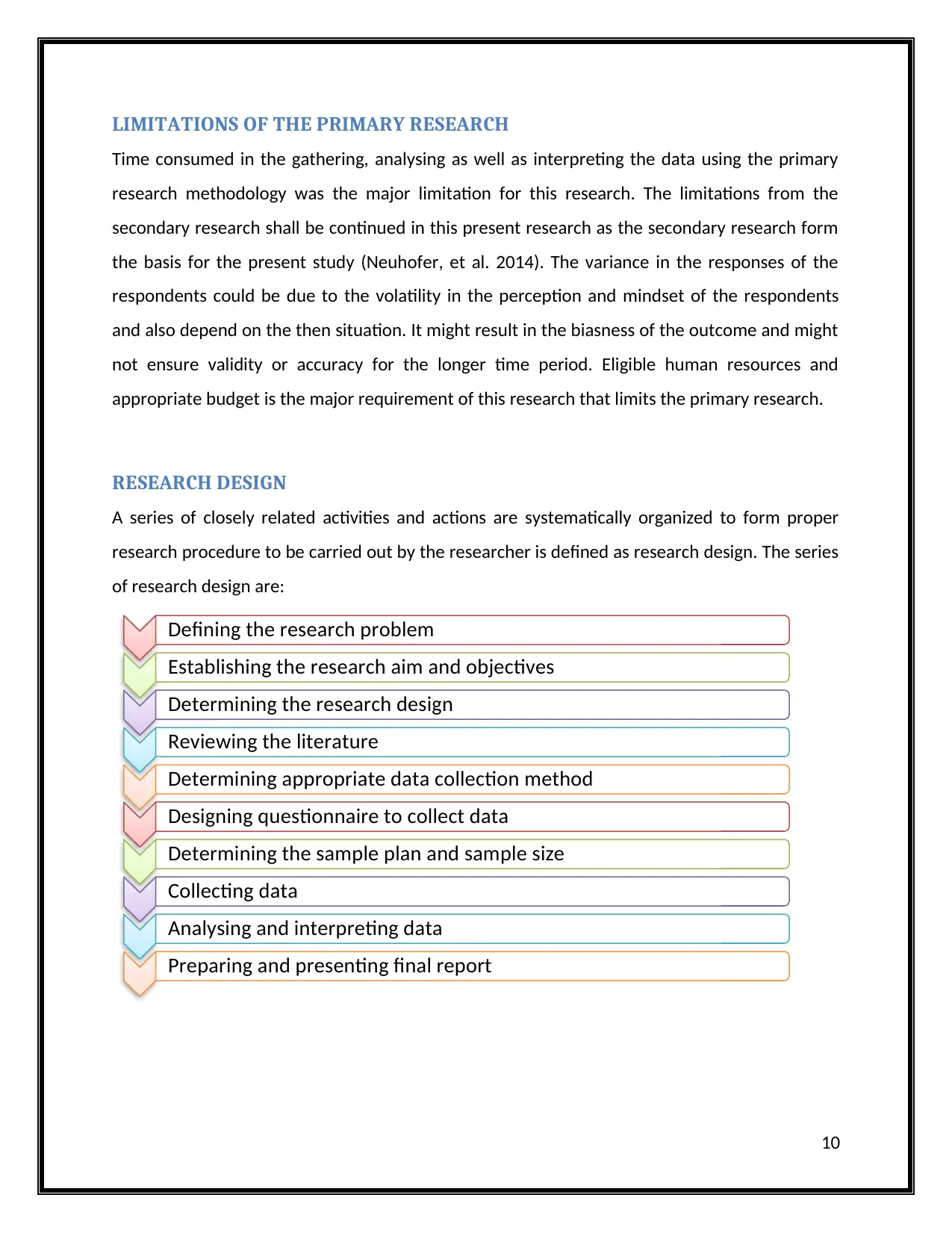
RESEARCH DESIGN
A series of closely related activities and actions are systematically organized to form proper
research procedure to be carried out by the researcher is defined as research design. The series
of research design are:
10
Defining the research problem
Establishing the research aim and objectives
Determining the research design
Reviewing the literature
Determining appropriate data collection method
Designing questionnaire to collect data
Determining the sample plan and sample size
Collecting data
Analysing and interpreting data
Preparing and presenting final report
Time consumed in the gathering, analysing as well as interpreting the data using the primary
research methodology was the major limitation for this research. The limitations from the
secondary research shall be continued in this present research as the secondary research form
the basis for the present study (Neuhofer, et al. 2014). The variance in the responses of the
respondents could be due to the volatility in the perception and mindset of the respondents
and also depend on the then situation. It might result in the biasness of the outcome and might
not ensure validity or accuracy for the longer time period. Eligible human resources and
appropriate budget is the major requirement of this research that limits the primary research.
RESEARCH DESIGN
A series of closely related activities and actions are systematically organized to form proper
research procedure to be carried out by the researcher is defined as research design. The series
of research design are:
10
Defining the research problem
Establishing the research aim and objectives
Determining the research design
Reviewing the literature
Determining appropriate data collection method
Designing questionnaire to collect data
Determining the sample plan and sample size
Collecting data
Analysing and interpreting data
Preparing and presenting final report
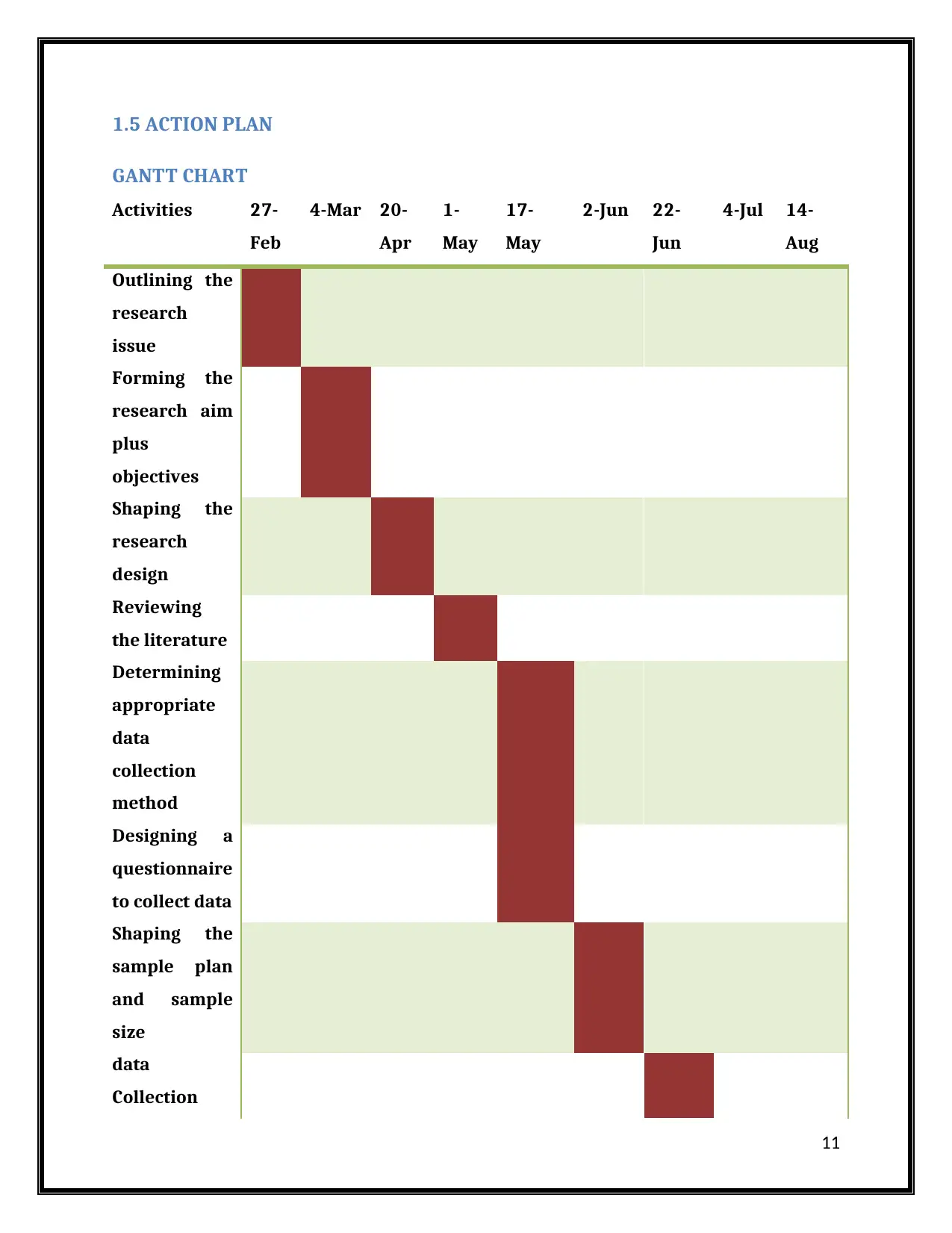
1.5 ACTION PLAN
GANTT CHART
Activities 27-
Feb
4-Mar 20-
Apr
1-
May
17-
May
2-Jun 22-
Jun
4-Jul 14-
Aug
Outlining the
research
issue
Forming the
research aim
plus
objectives
Shaping the
research
design
Reviewing
the literature
Determining
appropriate
data
collection
method
Designing a
questionnaire
to collect data
Shaping the
sample plan
and sample
size
data
Collection
11
GANTT CHART
Activities 27-
Feb
4-Mar 20-
Apr
1-
May
17-
May
2-Jun 22-
Jun
4-Jul 14-
Aug
Outlining the
research
issue
Forming the
research aim
plus
objectives
Shaping the
research
design
Reviewing
the literature
Determining
appropriate
data
collection
method
Designing a
questionnaire
to collect data
Shaping the
sample plan
and sample
size
data
Collection
11
⊘ This is a preview!⊘
Do you want full access?
Subscribe today to unlock all pages.
Trusted by 1+ million students worldwide

1 out of 35


Related Documents


Your All-in-One AI-Powered Toolkit for Academic Success.
+13062052269
info@desklib.com
Available 24*7 on WhatsApp / Email
![[object Object]](/_next/static/media/star-bottom.7253800d.svg)
Unlock your academic potential
Copyright © 2020–2026 A2Z Services. All Rights Reserved. Developed and managed by ZUCOL.