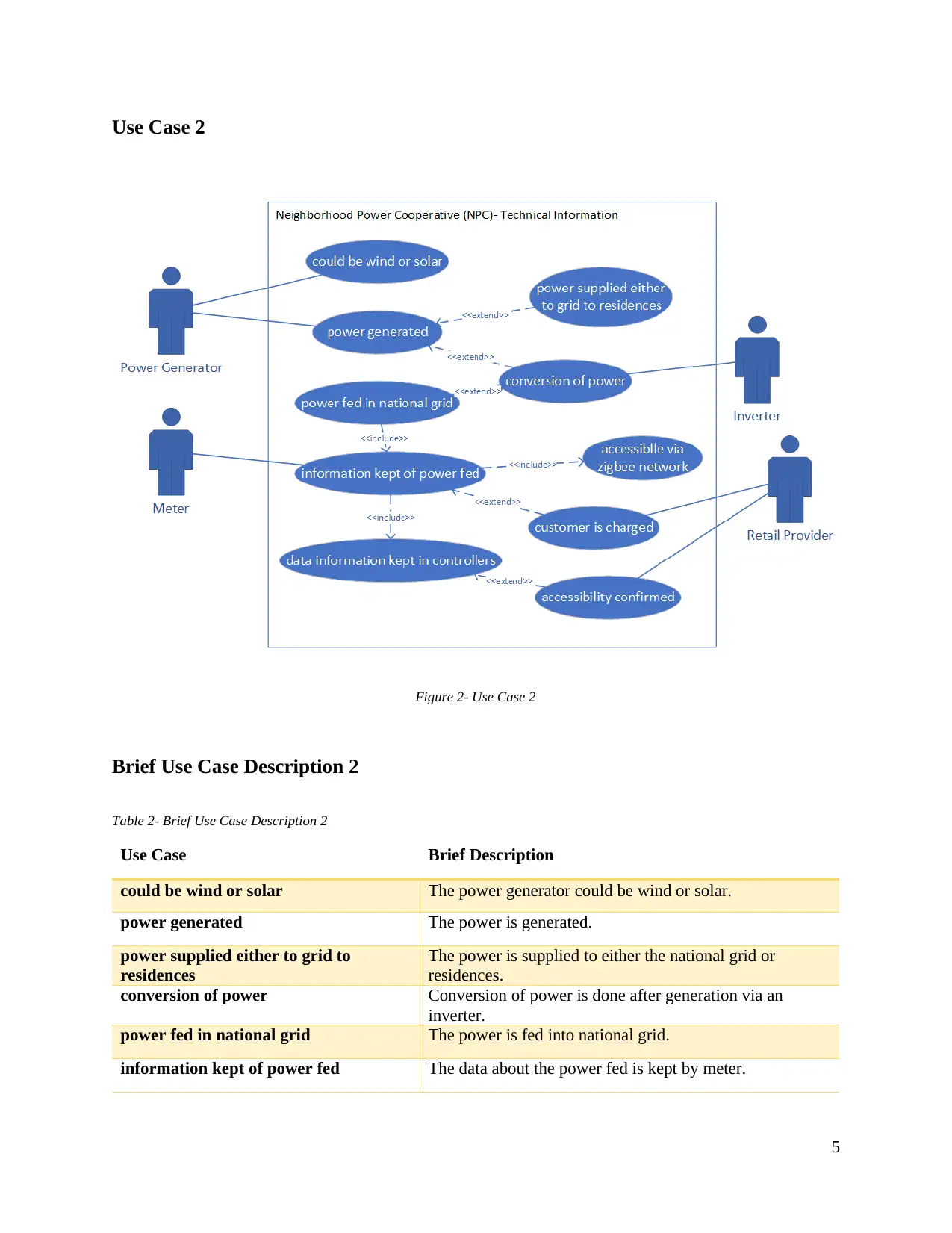
Business Requirements Modeling: Use Cases and Object Analysis
VerifiedAdded on 2024/06/03
|15
|1494
|489
Report
AI Summary
This report provides a detailed exploration of requirements modeling through the lens of a case study. It includes fully described use cases with brief descriptions, illustrating system functionalities and user interactions. An activity diagram visually represents the flow of processes, from power generation to data analysis, while a combined set of business objects identifies key entities, boundary elements, and control mechanisms. The report culminates in a domain class diagram, showcasing the relationships between classes and their attributes, thereby providing a comprehensive overview of the business flow and system architecture. Desklib offers a platform for students to access this and other solved assignments to aid in their studies.
Assessment 3 Requirements Modeling
Paraphrase This Document
Need a fresh take? Get an instant paraphrase of this document with our AI Paraphraser

Table of Contents
Introduction.................................................................................................................................................3
Set of Fully Described Use Cases................................................................................................................4
Use case 1................................................................................................................................................4
Brief Use Case Description 1...................................................................................................................5
Use Case 2...............................................................................................................................................6
Brief Use Case Description 2...................................................................................................................6
Full Use Case Description.......................................................................................................................7
Activity diagram..........................................................................................................................................9
Combined set of Business Objects.............................................................................................................10
Entity Objects........................................................................................................................................10
Boundary Objects..................................................................................................................................11
Control Objects......................................................................................................................................12
Domain Class Diagram..............................................................................................................................13
Conclusion.................................................................................................................................................14
References.................................................................................................................................................15
List of Figures
Figure 1- Use Case1....................................................................................................................................4
Figure 2- Use Case 2...................................................................................................................................6
Figure 3- Activity Diagram.........................................................................................................................9
Figure 4- Domain Class Diagram..............................................................................................................13
List of Tables
Table 1- Brief Use Case Description 1........................................................................................................5
Table 2- Brief Use Case Description 2........................................................................................................6
Table 3- Full Use Case Description.............................................................................................................7
1
Introduction.................................................................................................................................................3
Set of Fully Described Use Cases................................................................................................................4
Use case 1................................................................................................................................................4
Brief Use Case Description 1...................................................................................................................5
Use Case 2...............................................................................................................................................6
Brief Use Case Description 2...................................................................................................................6
Full Use Case Description.......................................................................................................................7
Activity diagram..........................................................................................................................................9
Combined set of Business Objects.............................................................................................................10
Entity Objects........................................................................................................................................10
Boundary Objects..................................................................................................................................11
Control Objects......................................................................................................................................12
Domain Class Diagram..............................................................................................................................13
Conclusion.................................................................................................................................................14
References.................................................................................................................................................15
List of Figures
Figure 1- Use Case1....................................................................................................................................4
Figure 2- Use Case 2...................................................................................................................................6
Figure 3- Activity Diagram.........................................................................................................................9
Figure 4- Domain Class Diagram..............................................................................................................13
List of Tables
Table 1- Brief Use Case Description 1........................................................................................................5
Table 2- Brief Use Case Description 2........................................................................................................6
Table 3- Full Use Case Description.............................................................................................................7
1

Introduction
This report discusses on the modelling on the given case study. The report will contain the use cases on
the case study along with the brief use case descriptions and a full use case description. The report will
also contain an activity diagram based on the flow of steps. The report also highlights the business objects
according to the case study. The report lastly contains a domain class diagram which represents the
classes and the connections.
2
This report discusses on the modelling on the given case study. The report will contain the use cases on
the case study along with the brief use case descriptions and a full use case description. The report will
also contain an activity diagram based on the flow of steps. The report also highlights the business objects
according to the case study. The report lastly contains a domain class diagram which represents the
classes and the connections.
2
⊘ This is a preview!⊘
Do you want full access?
Subscribe today to unlock all pages.

Trusted by 1+ million students worldwide

Set of Fully Described Use Cases
Use case 1
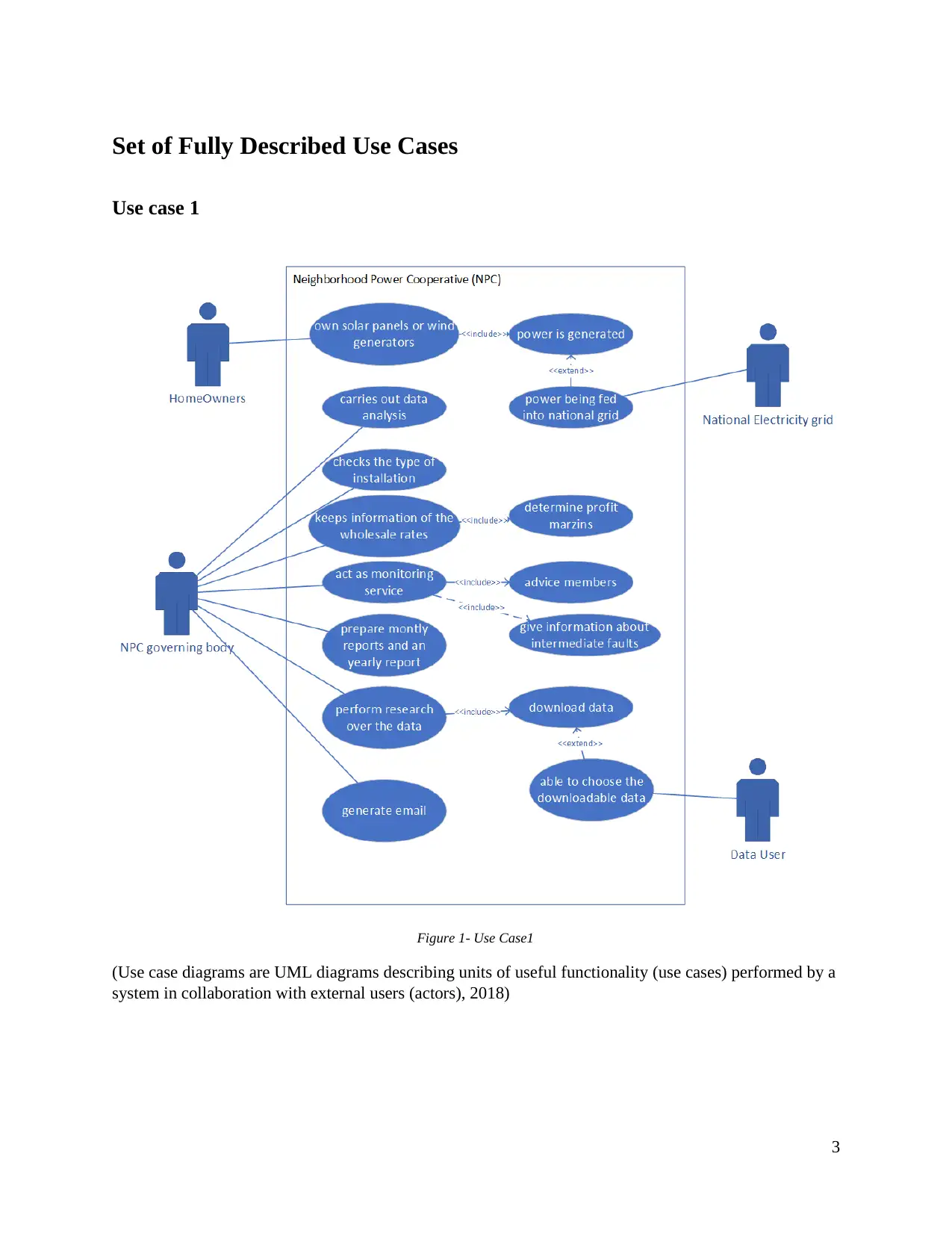
Figure 1- Use Case1
(Use case diagrams are UML diagrams describing units of useful functionality (use cases) performed by a
system in collaboration with external users (actors), 2018)
3
Use case 1
Figure 1- Use Case1
(Use case diagrams are UML diagrams describing units of useful functionality (use cases) performed by a
system in collaboration with external users (actors), 2018)
3
Paraphrase This Document
Need a fresh take? Get an instant paraphrase of this document with our AI Paraphraser

Brief Use Case Description 1
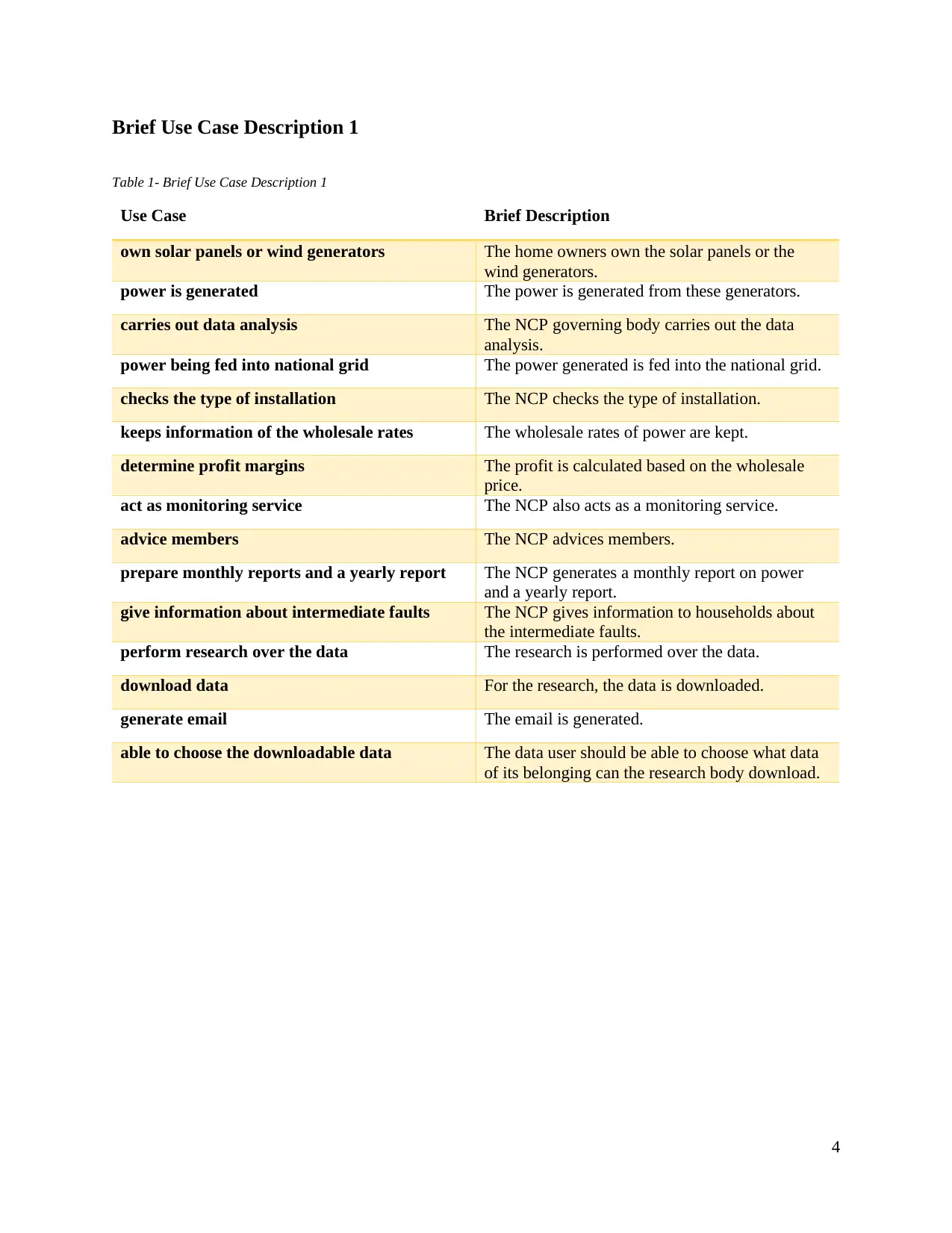
Table 1- Brief Use Case Description 1
Use Case Brief Description
own solar panels or wind generators The home owners own the solar panels or the
wind generators.
power is generated The power is generated from these generators.
carries out data analysis The NCP governing body carries out the data
analysis.
power being fed into national grid The power generated is fed into the national grid.
checks the type of installation The NCP checks the type of installation.
keeps information of the wholesale rates The wholesale rates of power are kept.
determine profit margins The profit is calculated based on the wholesale
price.
act as monitoring service The NCP also acts as a monitoring service.
advice members The NCP advices members.
prepare monthly reports and a yearly report The NCP generates a monthly report on power
and a yearly report.
give information about intermediate faults The NCP gives information to households about
the intermediate faults.
perform research over the data The research is performed over the data.
download data For the research, the data is downloaded.
generate email The email is generated.
able to choose the downloadable data The data user should be able to choose what data
of its belonging can the research body download.
4
Table 1- Brief Use Case Description 1
Use Case Brief Description
own solar panels or wind generators The home owners own the solar panels or the
wind generators.
power is generated The power is generated from these generators.
carries out data analysis The NCP governing body carries out the data
analysis.
power being fed into national grid The power generated is fed into the national grid.
checks the type of installation The NCP checks the type of installation.
keeps information of the wholesale rates The wholesale rates of power are kept.
determine profit margins The profit is calculated based on the wholesale
price.
act as monitoring service The NCP also acts as a monitoring service.
advice members The NCP advices members.
prepare monthly reports and a yearly report The NCP generates a monthly report on power
and a yearly report.
give information about intermediate faults The NCP gives information to households about
the intermediate faults.
perform research over the data The research is performed over the data.
download data For the research, the data is downloaded.
generate email The email is generated.
able to choose the downloadable data The data user should be able to choose what data
of its belonging can the research body download.
4

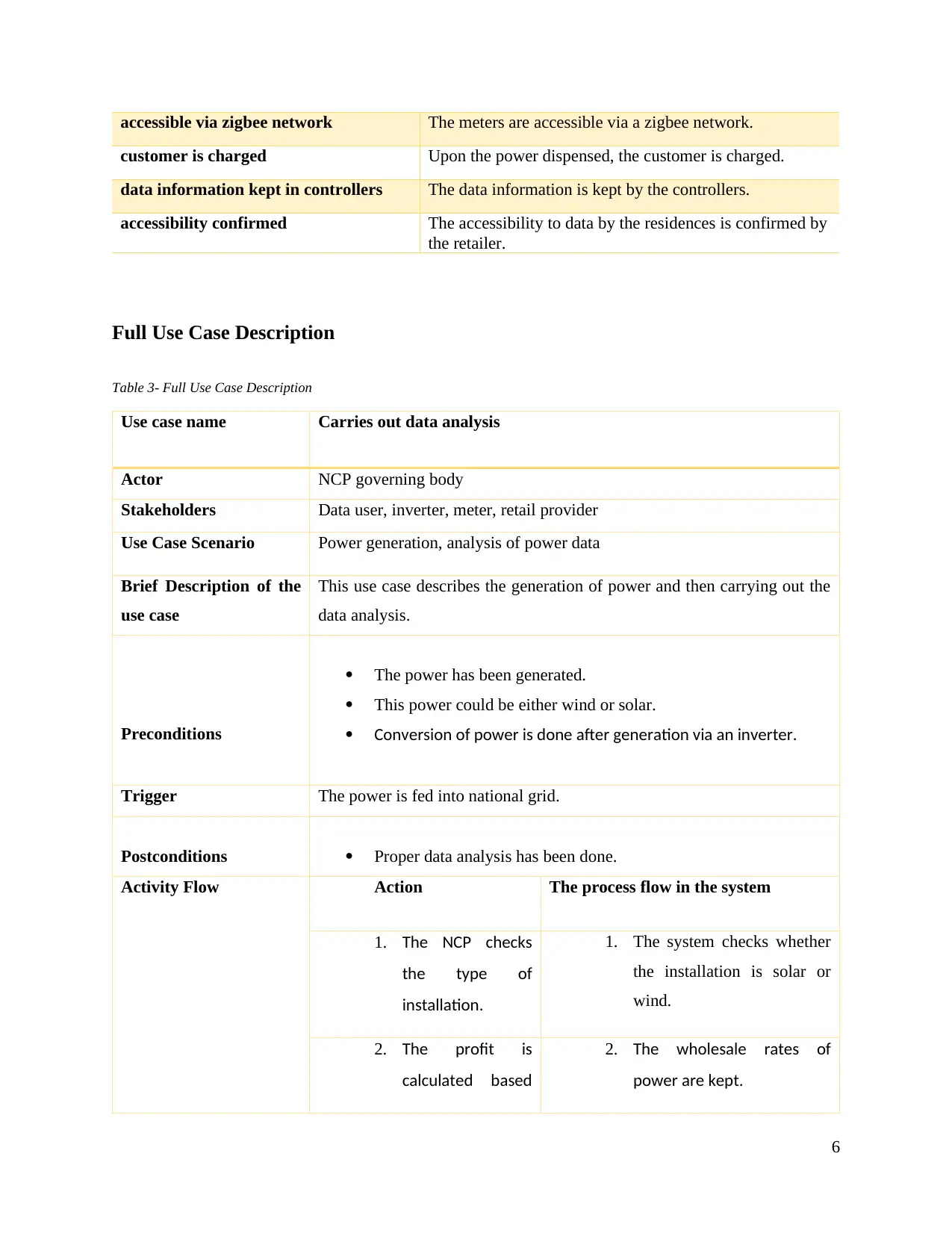
Use Case 2
Figure 2- Use Case 2
Brief Use Case Description 2
Table 2- Brief Use Case Description 2
Use Case Brief Description
could be wind or solar The power generator could be wind or solar.
power generated The power is generated.
power supplied either to grid to
residences
The power is supplied to either the national grid or
residences.
conversion of power Conversion of power is done after generation via an
inverter.
power fed in national grid The power is fed into national grid.
information kept of power fed The data about the power fed is kept by meter.
5
Figure 2- Use Case 2
Brief Use Case Description 2
Table 2- Brief Use Case Description 2
Use Case Brief Description
could be wind or solar The power generator could be wind or solar.
power generated The power is generated.
power supplied either to grid to
residences
The power is supplied to either the national grid or
residences.
conversion of power Conversion of power is done after generation via an
inverter.
power fed in national grid The power is fed into national grid.
information kept of power fed The data about the power fed is kept by meter.
5
⊘ This is a preview!⊘
Do you want full access?
Subscribe today to unlock all pages.

Trusted by 1+ million students worldwide

accessible via zigbee network The meters are accessible via a zigbee network.
customer is charged Upon the power dispensed, the customer is charged.
data information kept in controllers The data information is kept by the controllers.
accessibility confirmed The accessibility to data by the residences is confirmed by
the retailer.
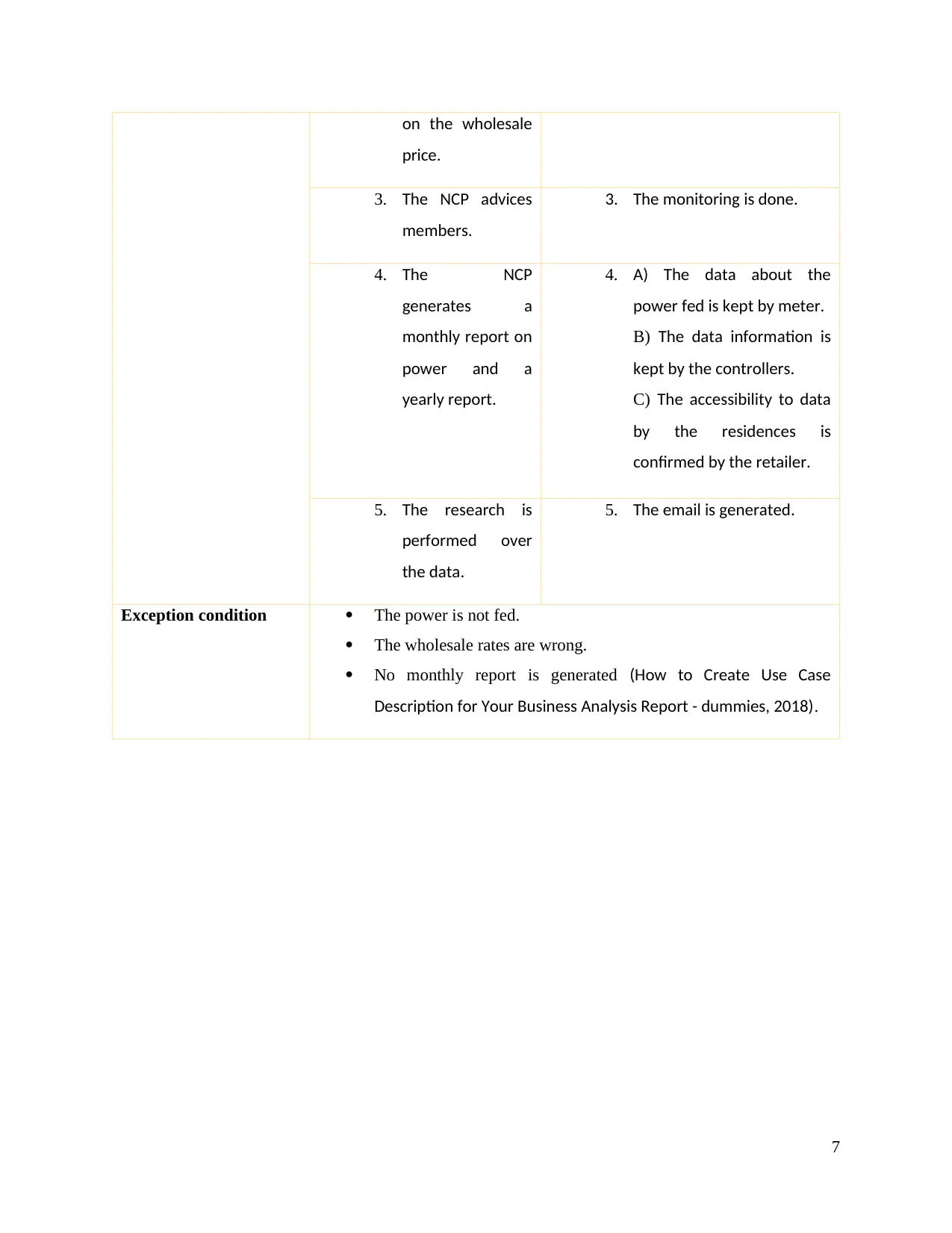
Full Use Case Description
Table 3- Full Use Case Description
Use case name Carries out data analysis
Actor NCP governing body
Stakeholders Data user, inverter, meter, retail provider
Use Case Scenario Power generation, analysis of power data
Brief Description of the
use case
This use case describes the generation of power and then carrying out the
data analysis.
Preconditions
The power has been generated.
This power could be either wind or solar.
Conversion of power is done after generation via an inverter.
Trigger The power is fed into national grid.
Postconditions Proper data analysis has been done.
Activity Flow Action The process flow in the system
1. The NCP checks
the type of
installation.
1. The system checks whether
the installation is solar or
wind.
2. The profit is
calculated based
2. The wholesale rates of
power are kept.
6
customer is charged Upon the power dispensed, the customer is charged.
data information kept in controllers The data information is kept by the controllers.
accessibility confirmed The accessibility to data by the residences is confirmed by
the retailer.
Full Use Case Description
Table 3- Full Use Case Description
Use case name Carries out data analysis
Actor NCP governing body
Stakeholders Data user, inverter, meter, retail provider
Use Case Scenario Power generation, analysis of power data
Brief Description of the
use case
This use case describes the generation of power and then carrying out the
data analysis.
Preconditions
The power has been generated.
This power could be either wind or solar.
Conversion of power is done after generation via an inverter.
Trigger The power is fed into national grid.
Postconditions Proper data analysis has been done.
Activity Flow Action The process flow in the system
1. The NCP checks
the type of
installation.
1. The system checks whether
the installation is solar or
wind.
2. The profit is
calculated based
2. The wholesale rates of
power are kept.
6
Paraphrase This Document
Need a fresh take? Get an instant paraphrase of this document with our AI Paraphraser

on the wholesale
price.
3. The NCP advices
members.
3. The monitoring is done.
4. The NCP
generates a
monthly report on
power and a
yearly report.
4. A) The data about the
power fed is kept by meter.
B) The data information is
kept by the controllers.
C) The accessibility to data
by the residences is
confirmed by the retailer.
5. The research is
performed over
the data.
5. The email is generated.
Exception condition The power is not fed.
The wholesale rates are wrong.
No monthly report is generated (How to Create Use Case
Description for Your Business Analysis Report - dummies, 2018).
7
price.
3. The NCP advices
members.
3. The monitoring is done.
4. The NCP
generates a
monthly report on
power and a
yearly report.
4. A) The data about the
power fed is kept by meter.
B) The data information is
kept by the controllers.
C) The accessibility to data
by the residences is
confirmed by the retailer.
5. The research is
performed over
the data.
5. The email is generated.
Exception condition The power is not fed.
The wholesale rates are wrong.
No monthly report is generated (How to Create Use Case
Description for Your Business Analysis Report - dummies, 2018).
7

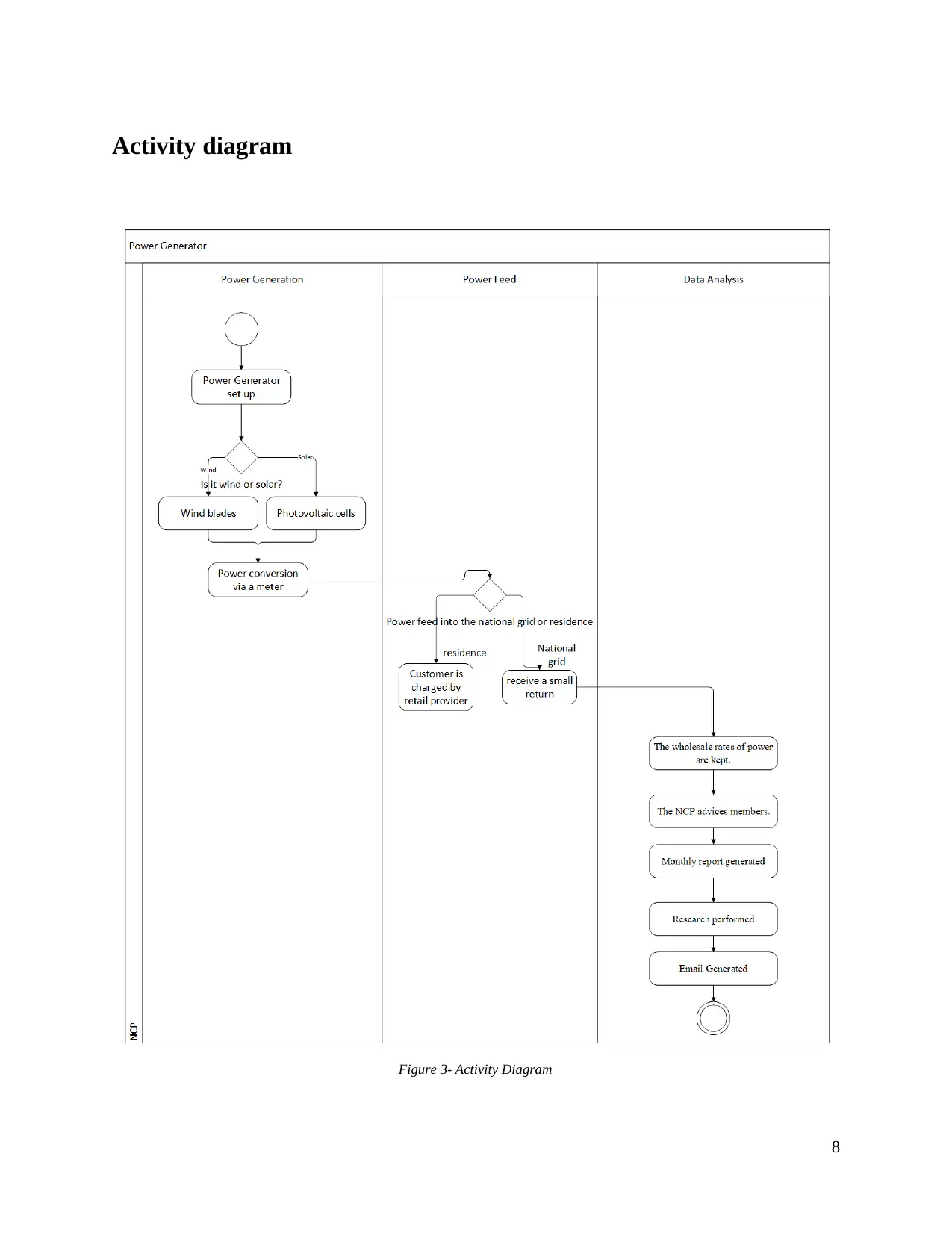
Activity diagram
Figure 3- Activity Diagram
8
Figure 3- Activity Diagram
8
⊘ This is a preview!⊘
Do you want full access?
Subscribe today to unlock all pages.

Trusted by 1+ million students worldwide

This activity diagram explains the flow of the case study from the power generation to data analysis.
There are three swimlanes in the diagram- power generation, power feed and data analysis. This diagram
covers all the use cases drawn in the two use case diagrams.
Combined set of Business Objects
The business objects that have been identified from the use case diagrams and the activity diagram are as
follows:
Entity Objects
1. HomeOwner
HomeOwner can be an entity object related to the Home Owner entity.
Attributes
HomeOwnerId
HomeOwnerName
HomeOwnerAddress
HomeOwnerContact
HomeOwnerEmail
2. DataUser
DataUser can be an entity object related to the Data User entity.
Attributes
DataUserId
DataUserName
DataUserAddress
DataUserEmail
3. PowerGenerator
9
There are three swimlanes in the diagram- power generation, power feed and data analysis. This diagram
covers all the use cases drawn in the two use case diagrams.
Combined set of Business Objects
The business objects that have been identified from the use case diagrams and the activity diagram are as
follows:
Entity Objects
1. HomeOwner
HomeOwner can be an entity object related to the Home Owner entity.
Attributes
HomeOwnerId
HomeOwnerName
HomeOwnerAddress
HomeOwnerContact
HomeOwnerEmail
2. DataUser
DataUser can be an entity object related to the Data User entity.
Attributes
DataUserId
DataUserName
DataUserAddress
DataUserEmail
3. PowerGenerator
9
Paraphrase This Document
Need a fresh take? Get an instant paraphrase of this document with our AI Paraphraser

PoweGenerator can be an entity object related to the Power Generator entity.
Attributes
PowerGeneratorId
PowerGeneratorType
4. RetailProvider
RetailProvider can be an entity object related to the Retail Provider entity.
Attributes
RetailProviderId
RetailProviderName
RetailProviderContact
RetailProviderEmail
Boundary Objects
1. Equipment
Equipment represents the interaction between the NCP and the user.
Attributes
EquipmentId
EquipmentName
EquipmentYType
EquipmentCost
2. Report
Attributes
ReportId
ReportType
ReportDescription
3. Email
10
Attributes
PowerGeneratorId
PowerGeneratorType
4. RetailProvider
RetailProvider can be an entity object related to the Retail Provider entity.
Attributes
RetailProviderId
RetailProviderName
RetailProviderContact
RetailProviderEmail
Boundary Objects
1. Equipment
Equipment represents the interaction between the NCP and the user.
Attributes
EquipmentId
EquipmentName
EquipmentYType
EquipmentCost
2. Report
Attributes
ReportId
ReportType
ReportDescription
3. Email
10

Attributes
EmailNo
EmailSubject
EmailBody
EmailAttachments
Control Objects
1. PowerConversion
PowerConversion object can be drawn out of power conversion activity.
Attributes
PowerConversionType
PowerConversionGrid (Reporting System - Business Objects ( Class Diagram (UML)) | Creately,
2018)
11
EmailNo
EmailSubject
EmailBody
EmailAttachments
Control Objects
1. PowerConversion
PowerConversion object can be drawn out of power conversion activity.
Attributes
PowerConversionType
PowerConversionGrid (Reporting System - Business Objects ( Class Diagram (UML)) | Creately,
2018)
11
⊘ This is a preview!⊘
Do you want full access?
Subscribe today to unlock all pages.

Trusted by 1+ million students worldwide
1 out of 15
Related Documents
Your All-in-One AI-Powered Toolkit for Academic Success.
+13062052269
info@desklib.com
Available 24*7 on WhatsApp / Email
Unlock your academic potential
Copyright © 2020–2026 A2Z Services. All Rights Reserved. Developed and managed by ZUCOL.