A Research Report on Moral Foundation Theory and Political Views
VerifiedAdded on  2023/06/07
|21
|4375
|326
Report
AI Summary
This research report investigates the relationship between moral foundations and political orientation, focusing on an Australian sample. The study administered questionnaires to assess participants' political affiliations and their alignment with the five moral foundations: Care/harm, Fairness/cheating, Loyalty/betrayal, Authority/subversion, and Sanctity/degradation. The method section details the questionnaires used, including a single-item political orientation question and the Moral Foundations Questionnaire. The results section presents the findings through tables and graphs, illustrating the mean and standard deviation of moral foundations across different political orientations. The data reveals that individuals leaning towards Strong Libertinism, advocating social rights and justice, exhibited a cynical approach to government authoritarianism. The report offers insights into how these moral foundations correlate with political viewpoints, contributing to a deeper understanding of the psychological underpinnings of political ideologies. The results indicate that fairness is highly valued by liberals, while conservatives value ingroup and authority more. The study uses a sample of 227 individuals between 18-55 years old.

Running head: A RESEARCH REPORT ON MORAL FOUNDATION THEORY
A Research Report on Moral Foundation Theory
Name of the Student
Name of the University
Author note
A Research Report on Moral Foundation Theory
Name of the Student
Name of the University
Author note
Paraphrase This Document
Need a fresh take? Get an instant paraphrase of this document with our AI Paraphraser

1A RESEARCH REPORT ON MORAL FOUNDATION THEORY
Abstract
The present report aims to find out the moral foundations as a function of political
orientation. To fulfil this purpose, a research sample comprising of a demographic ranging
between 18 to 55 years is considered who belong from Australia. They are administered with
two separate questionnaires, one dealing with response for political orientation and the other
consisting of the Moral Foundation Questionnaire. The results were obtained as a
combination of two responses, one serving as a function of the other. The results were further
iterated graphically to establish rationality and clear evidence for those accounting for highest
responses. It was observed that individuals were inclined more towards the political
orientation of Strong Libertinism advocating social rights and justice while having a cynical
approach to the authoritarian values of Government.
Abstract
The present report aims to find out the moral foundations as a function of political
orientation. To fulfil this purpose, a research sample comprising of a demographic ranging
between 18 to 55 years is considered who belong from Australia. They are administered with
two separate questionnaires, one dealing with response for political orientation and the other
consisting of the Moral Foundation Questionnaire. The results were obtained as a
combination of two responses, one serving as a function of the other. The results were further
iterated graphically to establish rationality and clear evidence for those accounting for highest
responses. It was observed that individuals were inclined more towards the political
orientation of Strong Libertinism advocating social rights and justice while having a cynical
approach to the authoritarian values of Government.

2A RESEARCH REPORT ON MORAL FOUNDATION THEORY
Introduction
Moral foundations play an extensive role in constructing the Liberal or Conservative
political orientations. According to the studies conducted (Graham, Haidt & Nosek, 2009),
the researcher constructed altered model to measure the moral systems. The authors
performed four studies using various approaches, presenting the facts that liberals
consistently shows greater endorsement towards the moral foundations of Fairness and Care.
Conservatives form their moral attributes based entirely on the following moral foundations
of Harm/care, Fairness/reciprocity, In group/loyalty, Authority/respect, and Purity/sanctity.
The authors (Graham, Haidt & Nosek, 2009) examined the connection concerning
political emphasis and moral foundations. In Australia, we have a general understanding of
the concepts of 'liberal' and 'conservative'. The authors also had a moderate consideration of
exactly how they were having a variance between the moral foundations. Four studies using
multiple approaches were utilised, foundations of In group/ loyalty, Authority/respect and
Purity/sanctity liberals constantly showed larger support for Harm/Care and
Fairness/reciprocity. In the first study variance was noticed in conceptual evaluations of the
significance of foundation of morality that concerned violence or loyalty. The second study
was based around the moral judgements of recorded statements and circumstances. The third
study related to purity responses to offensive/forbidden trade-offs. The last research study
examined the usage of foundation-associated verses in the moral text of spiritual readings.
The research was piloted by Day, Fiske, Downing & Trail (2014) to examine if MFT
has any effect on political outlooks of both political liberals and conservatives. The
researchers exhibited the attitudes of both Liberals and Conservatives can be affected, when
exposed to moral grounds that are significant to the relevant addresses. A research was
performed by researchers Day, Fiske, Downing & Trail (2014) to understand the cultural and
Introduction
Moral foundations play an extensive role in constructing the Liberal or Conservative
political orientations. According to the studies conducted (Graham, Haidt & Nosek, 2009),
the researcher constructed altered model to measure the moral systems. The authors
performed four studies using various approaches, presenting the facts that liberals
consistently shows greater endorsement towards the moral foundations of Fairness and Care.
Conservatives form their moral attributes based entirely on the following moral foundations
of Harm/care, Fairness/reciprocity, In group/loyalty, Authority/respect, and Purity/sanctity.
The authors (Graham, Haidt & Nosek, 2009) examined the connection concerning
political emphasis and moral foundations. In Australia, we have a general understanding of
the concepts of 'liberal' and 'conservative'. The authors also had a moderate consideration of
exactly how they were having a variance between the moral foundations. Four studies using
multiple approaches were utilised, foundations of In group/ loyalty, Authority/respect and
Purity/sanctity liberals constantly showed larger support for Harm/Care and
Fairness/reciprocity. In the first study variance was noticed in conceptual evaluations of the
significance of foundation of morality that concerned violence or loyalty. The second study
was based around the moral judgements of recorded statements and circumstances. The third
study related to purity responses to offensive/forbidden trade-offs. The last research study
examined the usage of foundation-associated verses in the moral text of spiritual readings.
The research was piloted by Day, Fiske, Downing & Trail (2014) to examine if MFT
has any effect on political outlooks of both political liberals and conservatives. The
researchers exhibited the attitudes of both Liberals and Conservatives can be affected, when
exposed to moral grounds that are significant to the relevant addresses. A research was
performed by researchers Day, Fiske, Downing & Trail (2014) to understand the cultural and
⊘ This is a preview!⊘
Do you want full access?
Subscribe today to unlock all pages.

Trusted by 1+ million students worldwide

3A RESEARCH REPORT ON MORAL FOUNDATION THEORY
political variations and how they are related to the theory of morality resulted in the Moral
Foundation Theory (MFT). The researchers instigated the research by examining the
historical data involving evolutionary psychology and anthropology, looking for connections
of how our moral evolution began and how we regulated our moral behaviours within
different cultural spectrum.
A theory developed by authors transformed the names of the foundations of Moral
foundations to the following: Care/harm: it’s associated to the sustained development as
humans with emotions as well as a capacity to sense the discomfort of other people.
Fairness/cheating: Self-sacrifice and unselfishness are directly related to this foundation. It
creates concepts of righteousness, integrity, fairness, and independence. Loyalty/betrayal: it is
linked to faithfulness and devotion as ancestral beings able to form variable alliance.
Authority/subversion: The foundation was moulded via the related extended primitive
records of classified community dealings. It motivates benefits of providing direction through
leading and following the command of the leader, incorporating respect to sincere authority
and respect for customs and traditions. Sanctity/degradation: Psychology of revulsion and
impurity re the major designers that shaped this foundation. It motivates spiritual beliefs that
inhabit a raised, excluded or minimised sensuous, moral way to reside in the society.
Researchers developed a questionnaire based on the five components of the MFT
(Graham et al., 2011). The three new findings about Morality emerged from their research
(a) Comparative model fitting of confirmatory factor analyses (b) convergent/discriminant
validity; and (c) establish pragmatic validity. The research study justifies that liberal morality
prioritise Harm and Fairness over the other three foundations of morality.
Lorr & Zea, (1977) aimed to evaluate the hypothesis to measure a liberal-conservative
attitude. It was then examined by the Survey of Ethical Attitudes, 81 men and women were
political variations and how they are related to the theory of morality resulted in the Moral
Foundation Theory (MFT). The researchers instigated the research by examining the
historical data involving evolutionary psychology and anthropology, looking for connections
of how our moral evolution began and how we regulated our moral behaviours within
different cultural spectrum.
A theory developed by authors transformed the names of the foundations of Moral
foundations to the following: Care/harm: it’s associated to the sustained development as
humans with emotions as well as a capacity to sense the discomfort of other people.
Fairness/cheating: Self-sacrifice and unselfishness are directly related to this foundation. It
creates concepts of righteousness, integrity, fairness, and independence. Loyalty/betrayal: it is
linked to faithfulness and devotion as ancestral beings able to form variable alliance.
Authority/subversion: The foundation was moulded via the related extended primitive
records of classified community dealings. It motivates benefits of providing direction through
leading and following the command of the leader, incorporating respect to sincere authority
and respect for customs and traditions. Sanctity/degradation: Psychology of revulsion and
impurity re the major designers that shaped this foundation. It motivates spiritual beliefs that
inhabit a raised, excluded or minimised sensuous, moral way to reside in the society.
Researchers developed a questionnaire based on the five components of the MFT
(Graham et al., 2011). The three new findings about Morality emerged from their research
(a) Comparative model fitting of confirmatory factor analyses (b) convergent/discriminant
validity; and (c) establish pragmatic validity. The research study justifies that liberal morality
prioritise Harm and Fairness over the other three foundations of morality.
Lorr & Zea, (1977) aimed to evaluate the hypothesis to measure a liberal-conservative
attitude. It was then examined by the Survey of Ethical Attitudes, 81 men and women were
Paraphrase This Document
Need a fresh take? Get an instant paraphrase of this document with our AI Paraphraser

4A RESEARCH REPORT ON MORAL FOUNDATION THEORY
sampled and managed for the study that evaluated social attitude, intransigence, and open-
mindedness. Participants who scored high on the survey, set for social responsibility ethic,
were described as dependable, resistant to change, helpful and conventional. Participants who
scored low were classed as innovative, independent, unconventional, and rebellious. The
study validated and confirmed the hypothesis, that the moral judgement as gauged by the
Survey can be understood as a measure of liberal-conservative attitude.
It is hypothesised that Political liberals believe in equality, openness freedom and
their concept is constructed on the moral foundations of Fairness/reciprocity and Harm/care.
They do not rate al the Moral Foundations equally. Political Liberals have traditionally
engaged in an enthusiastic sight of human nature, also they have unconstrained views.
According to Liberal views people should be free, should have openness to experiences
including diversity, variety and new ideas.
Conventionally, conservatives take a distrustful sight of human character, deeming
that humans are fundamentally self-centred (Frimer, Biesanz, Walker & MacKinlay, 2013).
Therefore they have constrained visualisation of others. Due to this fact, the conservatives
believe that humans need to have constrains of authority, traditions and customs to live by in
a society.
It is hypothesised that Political conservative people are traditionally believers of the
Moral Foundation Theory aspects including Fairness/reciprocity, Harm/Care, Purity/sanctity,
Authority/respect, and In group/loyalty. Political conservatives are normally inclined towards
more safety and dependability. They have right wing views and are mostly closed
individuals.
Method
In the course of human evolution, it was observed that human being are typically
sensitive to a number of issues that pertain to either treating other individuals properly or
sampled and managed for the study that evaluated social attitude, intransigence, and open-
mindedness. Participants who scored high on the survey, set for social responsibility ethic,
were described as dependable, resistant to change, helpful and conventional. Participants who
scored low were classed as innovative, independent, unconventional, and rebellious. The
study validated and confirmed the hypothesis, that the moral judgement as gauged by the
Survey can be understood as a measure of liberal-conservative attitude.
It is hypothesised that Political liberals believe in equality, openness freedom and
their concept is constructed on the moral foundations of Fairness/reciprocity and Harm/care.
They do not rate al the Moral Foundations equally. Political Liberals have traditionally
engaged in an enthusiastic sight of human nature, also they have unconstrained views.
According to Liberal views people should be free, should have openness to experiences
including diversity, variety and new ideas.
Conventionally, conservatives take a distrustful sight of human character, deeming
that humans are fundamentally self-centred (Frimer, Biesanz, Walker & MacKinlay, 2013).
Therefore they have constrained visualisation of others. Due to this fact, the conservatives
believe that humans need to have constrains of authority, traditions and customs to live by in
a society.
It is hypothesised that Political conservative people are traditionally believers of the
Moral Foundation Theory aspects including Fairness/reciprocity, Harm/Care, Purity/sanctity,
Authority/respect, and In group/loyalty. Political conservatives are normally inclined towards
more safety and dependability. They have right wing views and are mostly closed
individuals.
Method
In the course of human evolution, it was observed that human being are typically
sensitive to a number of issues that pertain to either treating other individuals properly or

5A RESEARCH REPORT ON MORAL FOUNDATION THEORY
being a well-mannered and adequately supportive individual oneself adhering to certain
social norms and traditions. The former aspect relates to the first two foundations and the
latter aspect relates to the last three foundations of in the Moral Foundation Theory. The aim
of the present study is to measure the extent of political affiliation of a sample population
based on the five psychological foundations of morality. The research is carried out by
administering the Single-Item Political Orientation Question along with the Moral
Foundations Questionnaire which was propounded in 2009 by Jesse Graham and Jonathan
Haidt (Graham, Haidt & Nosek, 2009).
The Single Item Political Orientation Questionnaire consists of the following
interrogatory element for investigation on a seven-point scale:
In terms of political inclination, individuals often consider themselves to be either
belonging to the category of liberals or Conservatives.
On such a scale, where do you want to place yourself?
1. Strongly Liberal
2. Moderately Liberal
3. Slightly Liberal
4. Neutral (Moderate)
5. Slightly Conservative
6. Moderately Conservative
7. Strongly Conservative
The Moral Foundation Questionnaire consists of two separate parts. The present research
has relevance with only Part 1 which poses the following investigative query:
being a well-mannered and adequately supportive individual oneself adhering to certain
social norms and traditions. The former aspect relates to the first two foundations and the
latter aspect relates to the last three foundations of in the Moral Foundation Theory. The aim
of the present study is to measure the extent of political affiliation of a sample population
based on the five psychological foundations of morality. The research is carried out by
administering the Single-Item Political Orientation Question along with the Moral
Foundations Questionnaire which was propounded in 2009 by Jesse Graham and Jonathan
Haidt (Graham, Haidt & Nosek, 2009).
The Single Item Political Orientation Questionnaire consists of the following
interrogatory element for investigation on a seven-point scale:
In terms of political inclination, individuals often consider themselves to be either
belonging to the category of liberals or Conservatives.
On such a scale, where do you want to place yourself?
1. Strongly Liberal
2. Moderately Liberal
3. Slightly Liberal
4. Neutral (Moderate)
5. Slightly Conservative
6. Moderately Conservative
7. Strongly Conservative
The Moral Foundation Questionnaire consists of two separate parts. The present research
has relevance with only Part 1 which poses the following investigative query:
⊘ This is a preview!⊘
Do you want full access?
Subscribe today to unlock all pages.

Trusted by 1+ million students worldwide

6A RESEARCH REPORT ON MORAL FOUNDATION THEORY
When you decide whether something is right or wrong, to what extent are the following
considerations are relevant to your thinking? Please rate each of the statement below
using the following scale:
Scale—
0 1 2 3 4 5
Not at all
Relevant
Not very
Relevant
Slightly
Relevant
Somewhat
Relevant
Very
Relevant
Extremely
Relevant
Statements—
1. Whether or not someone suffered emotionally
2. Whether or not some people were treated differently than others
3. Whether or not someone’s action showed love for his or her country
4. Whether or not someone showed a lack of respect for authority
5. Whether or not someone violated standards of purity and decency
6. Whether or not someone was good at math
7. Whether or not someone cared for someone weak or vulnerable
8. Whether or not someone acted unfairly
9. Whether or not someone did something to betray his her group
10. Whether or not someone conformed to the traditions of society
11. Whether or not someone did something disgusting
12. Whether or not someone was cruel
13. Whether or not someone was denied his or her rights
14. Whether or not someone showed a lack of loyalty
15. Whether or not an action caused chaos or disorder
16. Whether or not someone acted in a way that God would approve of
When you decide whether something is right or wrong, to what extent are the following
considerations are relevant to your thinking? Please rate each of the statement below
using the following scale:
Scale—
0 1 2 3 4 5
Not at all
Relevant
Not very
Relevant
Slightly
Relevant
Somewhat
Relevant
Very
Relevant
Extremely
Relevant
Statements—
1. Whether or not someone suffered emotionally
2. Whether or not some people were treated differently than others
3. Whether or not someone’s action showed love for his or her country
4. Whether or not someone showed a lack of respect for authority
5. Whether or not someone violated standards of purity and decency
6. Whether or not someone was good at math
7. Whether or not someone cared for someone weak or vulnerable
8. Whether or not someone acted unfairly
9. Whether or not someone did something to betray his her group
10. Whether or not someone conformed to the traditions of society
11. Whether or not someone did something disgusting
12. Whether or not someone was cruel
13. Whether or not someone was denied his or her rights
14. Whether or not someone showed a lack of loyalty
15. Whether or not an action caused chaos or disorder
16. Whether or not someone acted in a way that God would approve of
Paraphrase This Document
Need a fresh take? Get an instant paraphrase of this document with our AI Paraphraser

7A RESEARCH REPORT ON MORAL FOUNDATION THEORY
The above two surveys were carried out on a research sample of 227 individuals
which comprised of 59 men and 168 women. The respondents belonged to the age bracket of
18-55 years in which the average age of men was taken to be slightly higher than that of
women.
Results
The scores that were obtained from the conducted survey were tabulated to determine
the mean and standard deviation. Those aspects are further graphically represented.
Table 1: Moral Relevance Rating representing the Mean and Standard Deviation for each of
the five Moral Foundations shown as a function of Political Orientation
The above two surveys were carried out on a research sample of 227 individuals
which comprised of 59 men and 168 women. The respondents belonged to the age bracket of
18-55 years in which the average age of men was taken to be slightly higher than that of
women.
Results
The scores that were obtained from the conducted survey were tabulated to determine
the mean and standard deviation. Those aspects are further graphically represented.
Table 1: Moral Relevance Rating representing the Mean and Standard Deviation for each of
the five Moral Foundations shown as a function of Political Orientation

8A RESEARCH REPORT ON MORAL FOUNDATION THEORY
Graph 1: Representing the total number of respondents in each catergory of the seven-point
Scale of Political Orientation.
Strongly
Liberal Moderately
Liberal Slightly
Liberal Neutral/
Moderate Slightly
Conservative Moderately
Conservative Strongly
Conervative
0
10
20
30
40
50
60
70
80
8
71
40
73
20
14
1
Total no. of Respondents
From the above table it can be observed that the highest number of respondents belong to the
category who are Neutral in terms of their particular political orientation, which means that
their interest in political issues falls within a moderate range. The lowest constitute the
category addressing Strongly Conservative ideas in politics. The category comprising of
respondents who are Moderately Liberal with respect to their political affiliations is found to
be at the second highest level.
Graph 1: Representing the total number of respondents in each catergory of the seven-point
Scale of Political Orientation.
Strongly
Liberal Moderately
Liberal Slightly
Liberal Neutral/
Moderate Slightly
Conservative Moderately
Conservative Strongly
Conervative
0
10
20
30
40
50
60
70
80
8
71
40
73
20
14
1
Total no. of Respondents
From the above table it can be observed that the highest number of respondents belong to the
category who are Neutral in terms of their particular political orientation, which means that
their interest in political issues falls within a moderate range. The lowest constitute the
category addressing Strongly Conservative ideas in politics. The category comprising of
respondents who are Moderately Liberal with respect to their political affiliations is found to
be at the second highest level.
⊘ This is a preview!⊘
Do you want full access?
Subscribe today to unlock all pages.

Trusted by 1+ million students worldwide

9A RESEARCH REPORT ON MORAL FOUNDATION THEORY
Graph 2: Showing the Mean and Standard Deviation for the foundation, Fairness as a
Function of Political Orientation
Strongly
Liberal Moderately
Liberal Slightly
Liberal Neutral/
Moderate Slightly
Conservative Moderately
Conservative Strongly
Conservative All Political
Orientations
Combined
0
0.5
1
1.5
2
2.5
3
3.5
4
4.5
5
4.29
3.97 3.88 3.61 3.6 3.6 3.67 3.79
0.63 0.63 0.63 0.77 0.84 0.96
0
0.74
Fairness
Mean SD
From the above graphical representation it was observed that the mean score for the
foundation, Fairness, in political orientation function of Strongly Liberal was found to be at
the highest at 4.29 and lowest for Neutral/ Moderate function at 3.61. The standard deviation
was highest for Moderately Conservative and lowest for Strongly Conservative.
Graph 2: Showing the Mean and Standard Deviation for the foundation, Fairness as a
Function of Political Orientation
Strongly
Liberal Moderately
Liberal Slightly
Liberal Neutral/
Moderate Slightly
Conservative Moderately
Conservative Strongly
Conservative All Political
Orientations
Combined
0
0.5
1
1.5
2
2.5
3
3.5
4
4.5
5
4.29
3.97 3.88 3.61 3.6 3.6 3.67 3.79
0.63 0.63 0.63 0.77 0.84 0.96
0
0.74
Fairness
Mean SD
From the above graphical representation it was observed that the mean score for the
foundation, Fairness, in political orientation function of Strongly Liberal was found to be at
the highest at 4.29 and lowest for Neutral/ Moderate function at 3.61. The standard deviation
was highest for Moderately Conservative and lowest for Strongly Conservative.
Paraphrase This Document
Need a fresh take? Get an instant paraphrase of this document with our AI Paraphraser

10A RESEARCH REPORT ON MORAL FOUNDATION THEORY
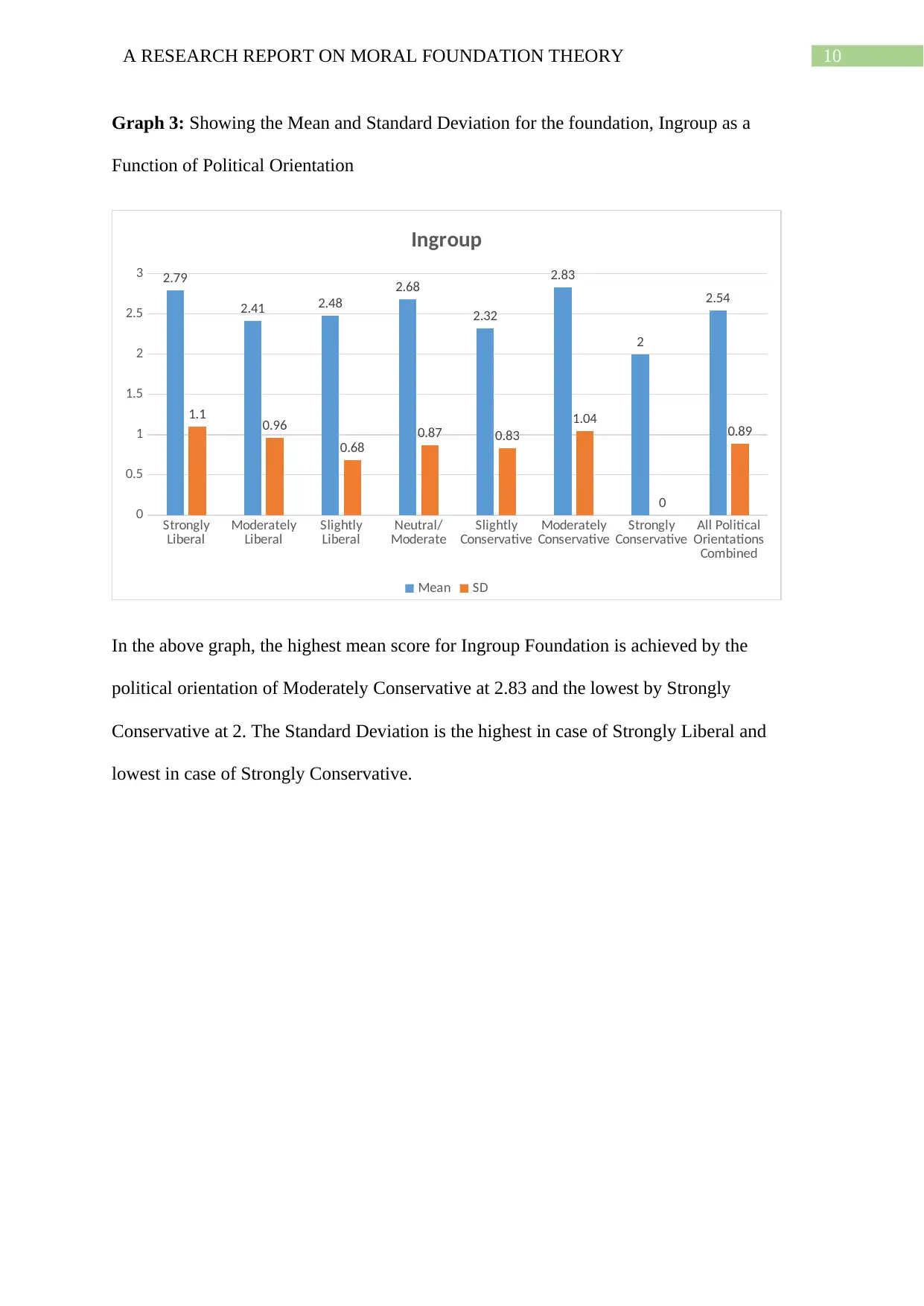
Graph 3: Showing the Mean and Standard Deviation for the foundation, Ingroup as a
Function of Political Orientation
Strongly
Liberal Moderately
Liberal Slightly
Liberal Neutral/
Moderate Slightly
Conservative Moderately
Conservative Strongly
Conservative All Political
Orientations
Combined
0
0.5
1
1.5
2
2.5
3 2.79
2.41 2.48
2.68
2.32
2.83
2
2.54
1.1 0.96
0.68
0.87 0.83
1.04
0
0.89
Ingroup
Mean SD
In the above graph, the highest mean score for Ingroup Foundation is achieved by the
political orientation of Moderately Conservative at 2.83 and the lowest by Strongly
Conservative at 2. The Standard Deviation is the highest in case of Strongly Liberal and
lowest in case of Strongly Conservative.
Graph 3: Showing the Mean and Standard Deviation for the foundation, Ingroup as a
Function of Political Orientation
Strongly
Liberal Moderately
Liberal Slightly
Liberal Neutral/
Moderate Slightly
Conservative Moderately
Conservative Strongly
Conservative All Political
Orientations
Combined
0
0.5
1
1.5
2
2.5
3 2.79
2.41 2.48
2.68
2.32
2.83
2
2.54
1.1 0.96
0.68
0.87 0.83
1.04
0
0.89
Ingroup
Mean SD
In the above graph, the highest mean score for Ingroup Foundation is achieved by the
political orientation of Moderately Conservative at 2.83 and the lowest by Strongly
Conservative at 2. The Standard Deviation is the highest in case of Strongly Liberal and
lowest in case of Strongly Conservative.

11A RESEARCH REPORT ON MORAL FOUNDATION THEORY
Graph 4: Showing the Mean and Standard Deviation for the foundation, Authority as a
Function of Political Orientation
Strongly
Liberal Moderately
Liberal Slightly
Liberal Neutral/
Moderate Slightly
Conservative Moderately
Conservative Strongly
Conservative All Political
Orientations
Combined
0
0.5
1
1.5
2
2.5
3
3.5
2.67
2.32 2.5
2.82 2.87 2.98
2.67 2.62
1.31
1.04
0.77 0.89
0.64
1.17
0
0.95
Authority
Mean SD
In the above Graph, the mean score for the third foundation, Authority is found to be the
highest for political orientation of Moderately Conservative, at 2.98 while it is the lowest for
Moderately Liberal, at 2.32. The Standard Deviation is heist in case of Strongly Liberal while
lowest in case of Strongly Conservative.
Graph 4: Showing the Mean and Standard Deviation for the foundation, Authority as a
Function of Political Orientation
Strongly
Liberal Moderately
Liberal Slightly
Liberal Neutral/
Moderate Slightly
Conservative Moderately
Conservative Strongly
Conservative All Political
Orientations
Combined
0
0.5
1
1.5
2
2.5
3
3.5
2.67
2.32 2.5
2.82 2.87 2.98
2.67 2.62
1.31
1.04
0.77 0.89
0.64
1.17
0
0.95
Authority
Mean SD
In the above Graph, the mean score for the third foundation, Authority is found to be the
highest for political orientation of Moderately Conservative, at 2.98 while it is the lowest for
Moderately Liberal, at 2.32. The Standard Deviation is heist in case of Strongly Liberal while
lowest in case of Strongly Conservative.
⊘ This is a preview!⊘
Do you want full access?
Subscribe today to unlock all pages.

Trusted by 1+ million students worldwide
1 out of 21
Related Documents
Your All-in-One AI-Powered Toolkit for Academic Success.
 +13062052269
info@desklib.com
Available 24*7 on WhatsApp / Email
Unlock your academic potential
Copyright © 2020–2025 A2Z Services. All Rights Reserved. Developed and managed by ZUCOL.