People Management: Motivational Theories, Coaching, and Development

Verified

Added on  2023/01/23

|10
|478
|56
Report
AI Summary
This report delves into the realm of people management, exploring key concepts such as motivational theories, coaching, and training and development. It examines Maslow's and Herzberg's theories, highlighting their applications in fostering employee engagement and productivity within organizations like Tesco plc. The report further discusses the utility of coaching and mentoring, emphasizing their roles in building strong management relationships and enhancing employee morale and productivity. Additionally, it underscores the importance of training and development programs in equipping employees with essential skills, improving performance, and integrating effective technologies. The report also explores the benefits of these programs for organizations, including increased productivity, the adoption of new strategies, and improved operational growth and efficiency. References to relevant literature are included to support the analysis.

Document Page
People Management
tabler-icon-diamond-filled.svg

Paraphrase This Document

Need a fresh take? Get an instant paraphrase of this document with our AI Paraphraser
Document Page
4.1 Motivational theories to develop employees in organization.
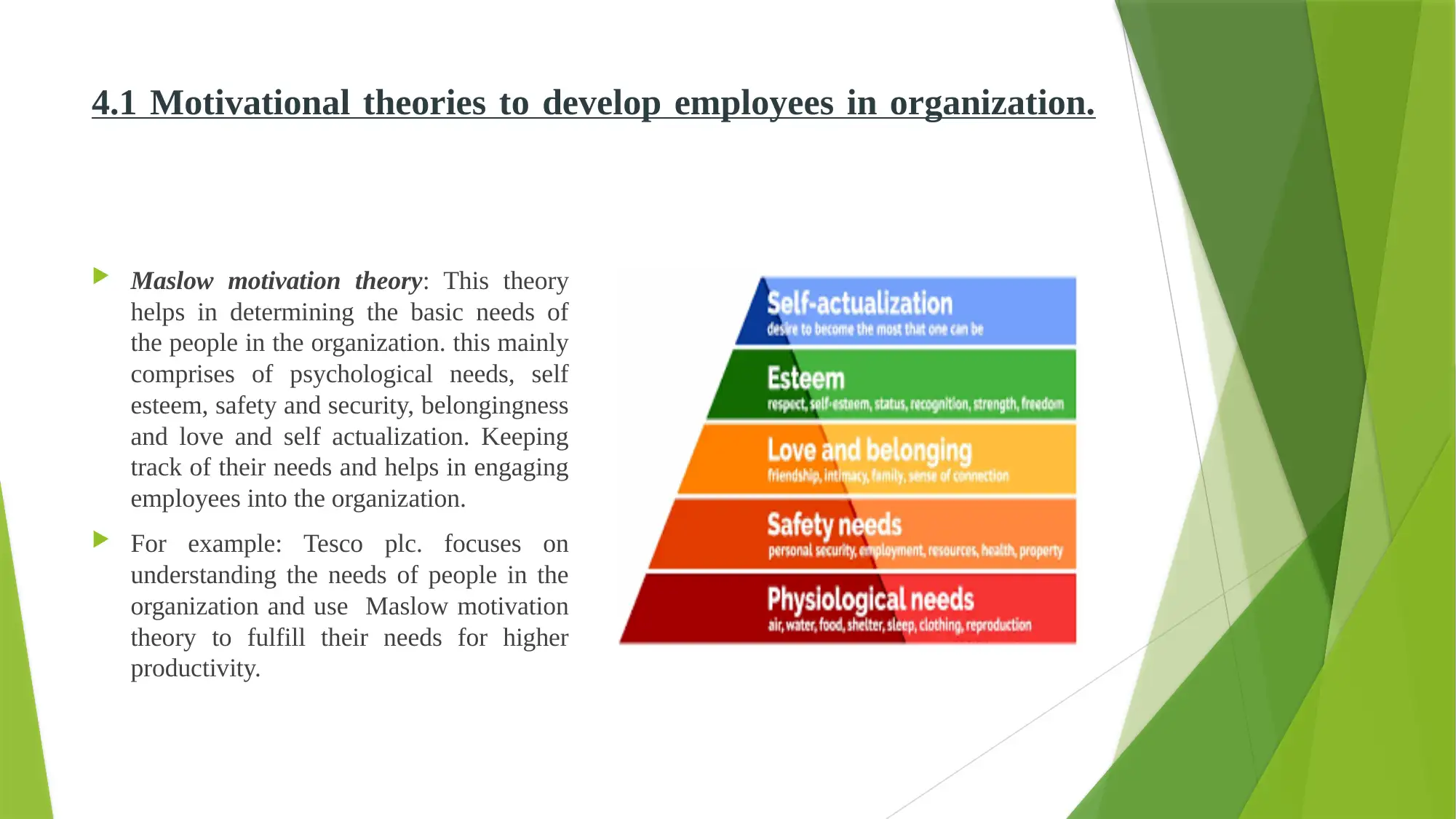
Maslow motivation theory: This theory
helps in determining the basic needs of
the people in the organization. this mainly
comprises of psychological needs, self
esteem, safety and security, belongingness
and love and self actualization. Keeping
track of their needs and helps in engaging
employees into the organization.
For example: Tesco plc. focuses on
understanding the needs of people in the
organization and use Maslow motivation
theory to fulfill their needs for higher
productivity.
Document Page
CONTD..
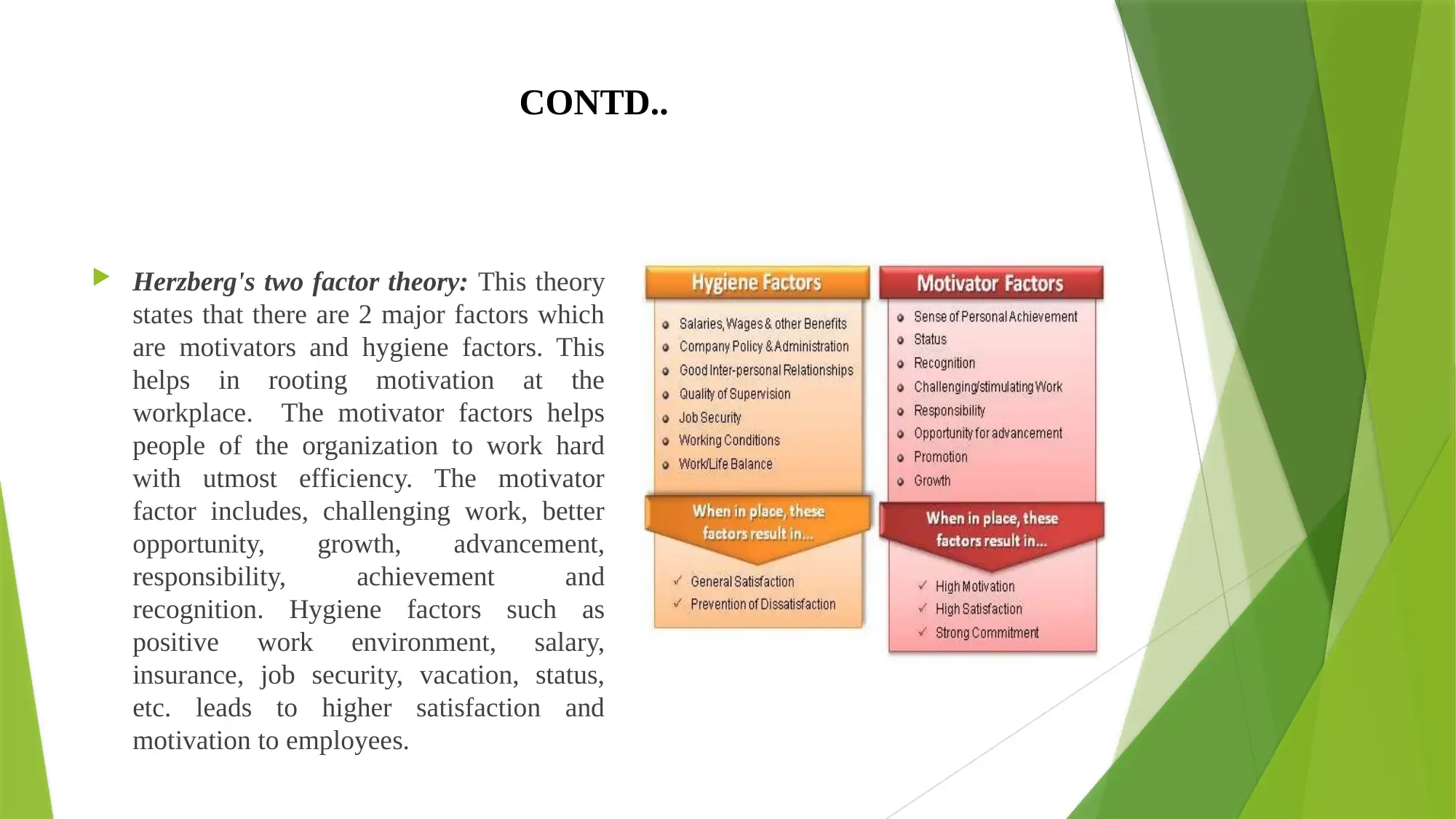
Herzberg's two factor theory: This theory
states that there are 2 major factors which
are motivators and hygiene factors. This
helps in rooting motivation at the
workplace. The motivator factors helps
people of the organization to work hard
with utmost efficiency. The motivator
factor includes, challenging work, better
opportunity, growth, advancement,
responsibility, achievement and
recognition. Hygiene factors such as
positive work environment, salary,
insurance, job security, vacation, status,
etc. leads to higher satisfaction and
motivation to employees.
Document Page
4.2 Utility of coaching and mentoring in company.
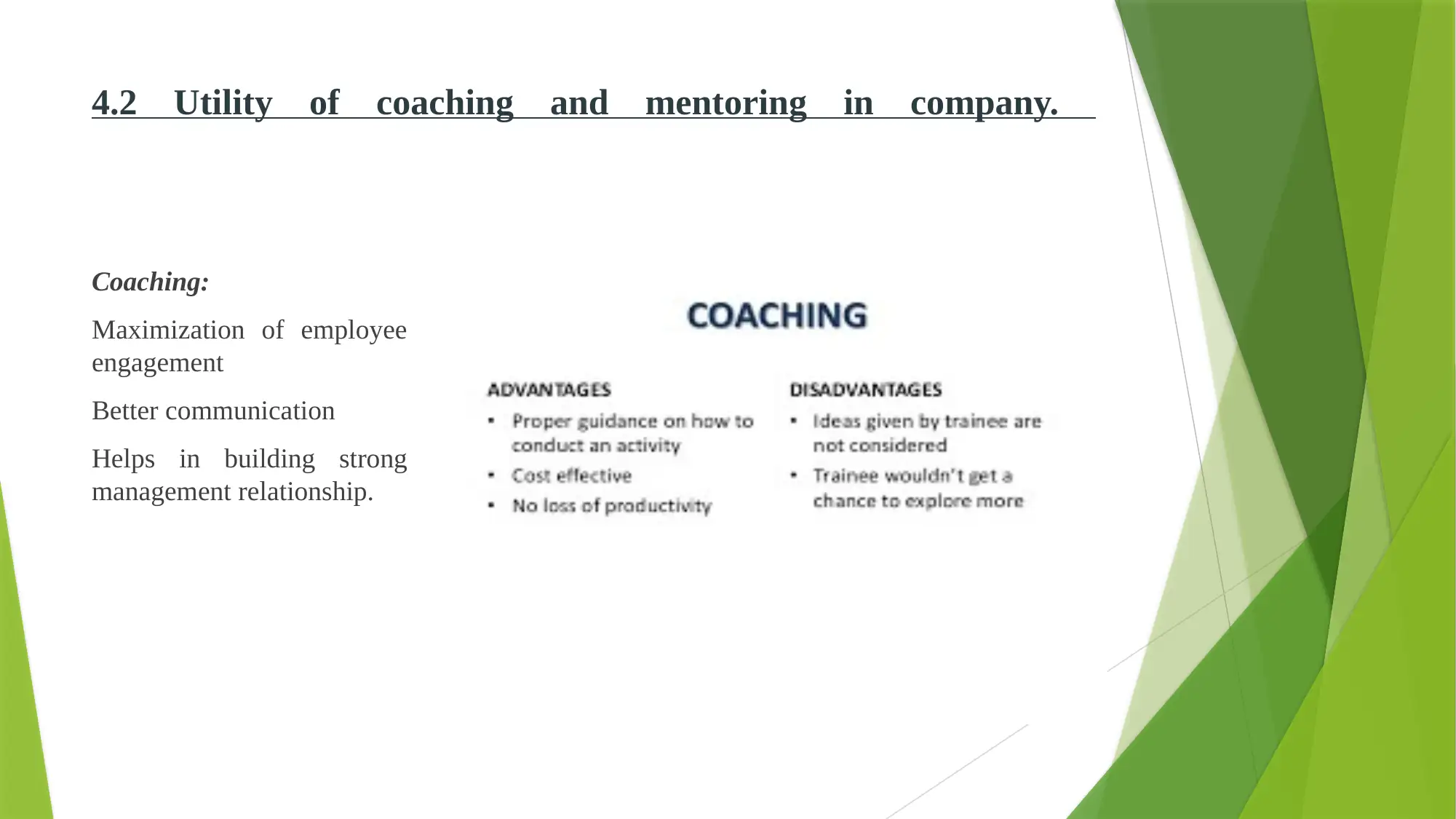
Coaching:
Maximization of employee
engagement
Better communication
Helps in building strong
management relationship.
tabler-icon-diamond-filled.svg

Paraphrase This Document

Need a fresh take? Get an instant paraphrase of this document with our AI Paraphraser
Document Page
CONTD..
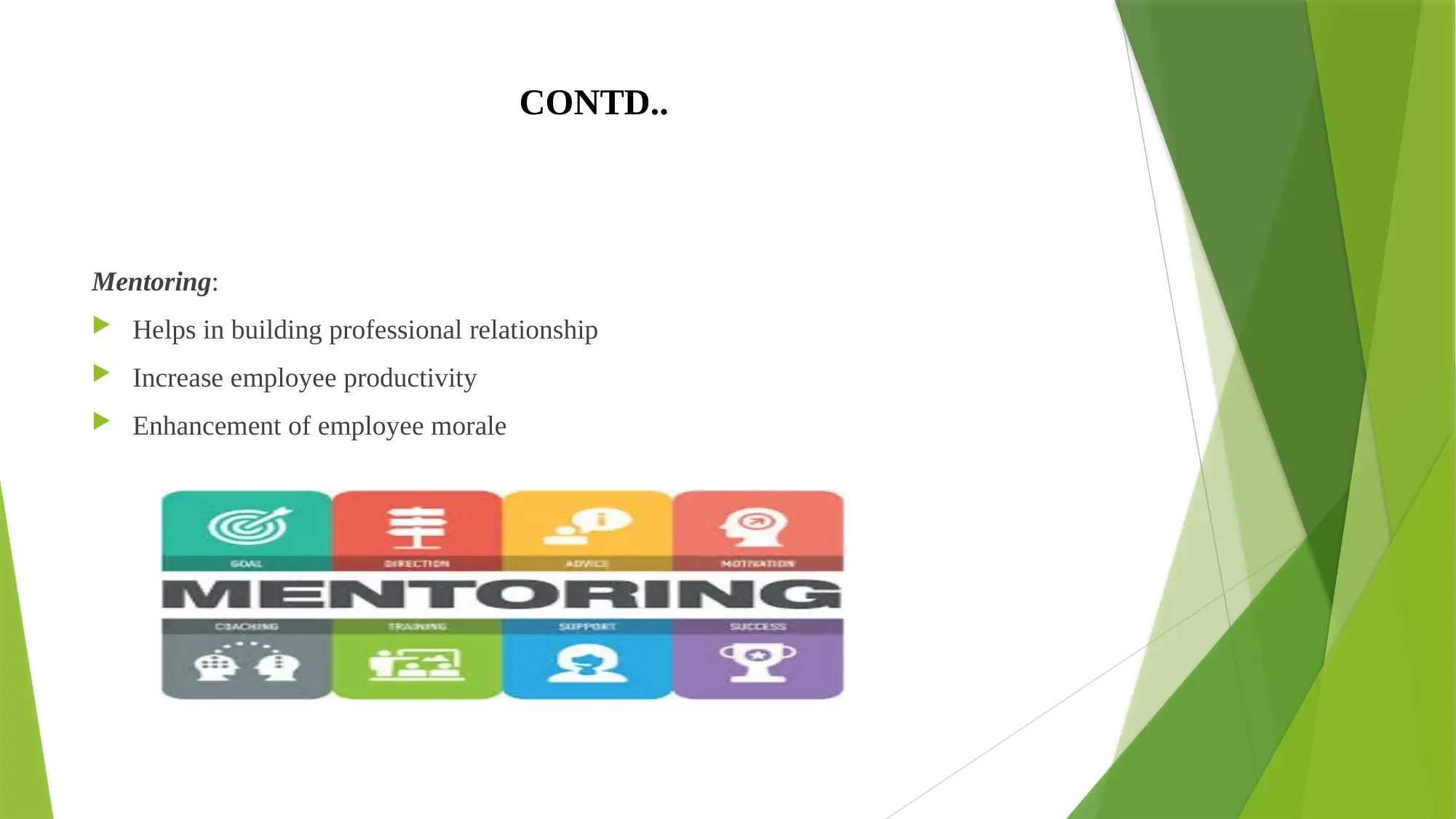
Mentoring:
Helps in building professional relationship
Increase employee productivity
Enhancement of employee morale
Document Page
4.3 Importance of training and development
Training and development is an effective process which helps individuals of the
organization in developing effective skills in order to achieve higher operational work
with utmost accuracy and efficiency.
Document Page
CONTD..
Importance of training and development to employees.
Training and development helps in building motivation for the employees to perform
the particular task.
It also helps in improving the performance of the employees and also integrates
effective technology into the organization.
This leads to higher employee job satisfaction.
tabler-icon-diamond-filled.svg

Paraphrase This Document

Need a fresh take? Get an instant paraphrase of this document with our AI Paraphraser
Document Page
CONTD..
Importance of training and development to organization
Training and development effectively improves the productivity of the employees and
helps in using new methods and strategies in order to achieve higher results.
Training and development helps in improving the future performance of the company
which result6s in higher operational growth and efficiency.
Document Page
REFERENCES
Hoffman, M. and Tadelis, S., 2018. People management skills, employee attrition, and
manager rewards: An empirical analysis (No. w24360). National Bureau of Economic
Research.
Wehrmeyer, W., 2017. Greening people: Human resources and environmental
management. Routledge.
Brewster, C. and Cerdin, J. L., 2018. The management of people in mission-driven
organizations. In HRM in Mission Driven Organizations (pp. 1-13). Palgrave Macmillan,
Cham.
Document Page
chevron_up_icon
1 out of 10
circle_padding
hide_on_mobile
zoom_out_icon
[object Object]