Motivational Theories Impact on Employee Productivity: A Study
VerifiedAdded on 2023/01/12
|11
|2472
|28
Project
AI Summary
This research proposal investigates the influence of motivational theories on employee performance within a business organization, specifically using the Hilton Hotel as a case study. The proposal outlines the background of the research topic, emphasizing the importance of employee motivation for organizational success and introduces various motivational theories like Maslow's Hierarchy of Needs, McClelland’s needs theory, and Herzberg’s motivator-hygiene theory. It presents the research rationale, questions, aims, and objectives, aiming to evaluate the role of motivation, determine the motivational theories used, and define their importance. The methodology section details the research philosophy, approach (positivism and deductive), and methodology (quantitative research using questionnaires). The research strategy involves questionnaires, and the research design is descriptive. Primary data will be collected through questionnaires from a sample size of 40 respondents. The proposal also includes a timescale and a list of resources, and references to support the research. The project aims to provide insights into how motivational theories can be applied to enhance employee productivity and contribute to the organization's goals.

Research Proposal

Paraphrase This Document
Need a fresh take? Get an instant paraphrase of this document with our AI Paraphraser
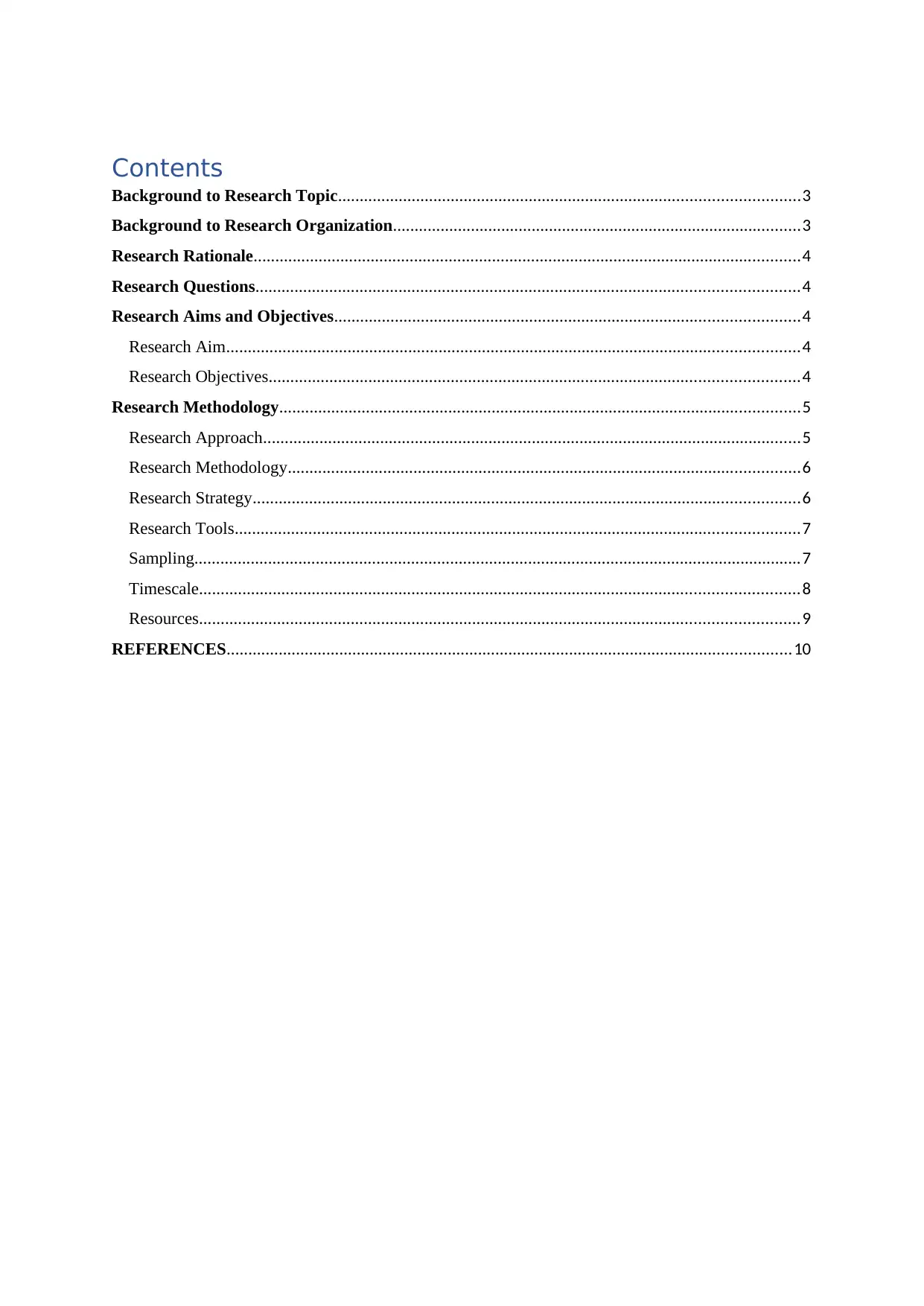
Contents
Background to Research Topic..........................................................................................................3
Background to Research Organization..............................................................................................3
Research Rationale..............................................................................................................................4
Research Questions.............................................................................................................................4
Research Aims and Objectives...........................................................................................................4
Research Aim....................................................................................................................................4
Research Objectives..........................................................................................................................4
Research Methodology........................................................................................................................5
Research Approach............................................................................................................................5
Research Methodology......................................................................................................................6
Research Strategy..............................................................................................................................6
Research Tools..................................................................................................................................7
Sampling............................................................................................................................................7
Timescale..........................................................................................................................................8
Resources..........................................................................................................................................9
REFERENCES..................................................................................................................................10
Background to Research Topic..........................................................................................................3
Background to Research Organization..............................................................................................3
Research Rationale..............................................................................................................................4
Research Questions.............................................................................................................................4
Research Aims and Objectives...........................................................................................................4
Research Aim....................................................................................................................................4
Research Objectives..........................................................................................................................4
Research Methodology........................................................................................................................5
Research Approach............................................................................................................................5
Research Methodology......................................................................................................................6
Research Strategy..............................................................................................................................6
Research Tools..................................................................................................................................7
Sampling............................................................................................................................................7
Timescale..........................................................................................................................................8
Resources..........................................................................................................................................9
REFERENCES..................................................................................................................................10
Title: Role of motivational theories in improving employee productivity within business
organization.
Background to Research Topic
Employee of a company plays a crucial role with his/her performance so, it is
essential that corporation motivates its workers on a regular basis. Every organisation
whether it is small, medium or large motivation always helps in driving them towards their
aspired goals and objectives (Ganta, 2014). In relation with theories there are many role
motivational theories such as Maslow’s Hierarchy of needs, McClelland’s needs theory,
Herzberg’s motivator-hygiene theory etc., Generally, motivational theory can be categorized
into two content and processed depends upon the nature. In context with company. this helps
them in understanding needs of workers so that by fulfilling them corporation can keeps them
motivating.
In a company there can be many reasons why employees should be kept motivated
because it has a close connection with the growth of the organisation. However, with the help
of motivated workers corporation can keep themselves in risky position in order to achieve
goals and objectives in a speculated time period. Therefore, motivational theory assists
workers in pushing their limits so as to obtain high level of outputs.
Background to Research Organization
Hilton Hotel is one of the prominent corporations in hospitality sector which is
providing its excellent services and facilities worldwide since its establishment in the year
near 1919. Conrad Hilton who was the owner of the company acquired the Mobley Hotel
situated in Cisco, Texas and made this his first Hilton Hotel. With a global expansion
company has around 586 Hilton Hotels and Properties with approximately 215,623 rooms in
across 85 countries. According to Fortune Magazine, company was ranked number One on
their Fortune List of the Top 100 Companies to work For and this was based on the survey
conducted on employees according to their satisfaction.
Most of their hotels are located in the centre of the cities so that more and more
customers can be attracted (Barrick and et. Al., 2015). Company is known for its best
services to the travellers whether travelling with the purpose of business or travelling for their
leisure activities.
organization.
Background to Research Topic
Employee of a company plays a crucial role with his/her performance so, it is
essential that corporation motivates its workers on a regular basis. Every organisation
whether it is small, medium or large motivation always helps in driving them towards their
aspired goals and objectives (Ganta, 2014). In relation with theories there are many role
motivational theories such as Maslow’s Hierarchy of needs, McClelland’s needs theory,
Herzberg’s motivator-hygiene theory etc., Generally, motivational theory can be categorized
into two content and processed depends upon the nature. In context with company. this helps
them in understanding needs of workers so that by fulfilling them corporation can keeps them
motivating.
In a company there can be many reasons why employees should be kept motivated
because it has a close connection with the growth of the organisation. However, with the help
of motivated workers corporation can keep themselves in risky position in order to achieve
goals and objectives in a speculated time period. Therefore, motivational theory assists
workers in pushing their limits so as to obtain high level of outputs.
Background to Research Organization
Hilton Hotel is one of the prominent corporations in hospitality sector which is
providing its excellent services and facilities worldwide since its establishment in the year
near 1919. Conrad Hilton who was the owner of the company acquired the Mobley Hotel
situated in Cisco, Texas and made this his first Hilton Hotel. With a global expansion
company has around 586 Hilton Hotels and Properties with approximately 215,623 rooms in
across 85 countries. According to Fortune Magazine, company was ranked number One on
their Fortune List of the Top 100 Companies to work For and this was based on the survey
conducted on employees according to their satisfaction.
Most of their hotels are located in the centre of the cities so that more and more
customers can be attracted (Barrick and et. Al., 2015). Company is known for its best
services to the travellers whether travelling with the purpose of business or travelling for their
leisure activities.
⊘ This is a preview!⊘
Do you want full access?
Subscribe today to unlock all pages.

Trusted by 1+ million students worldwide
Research Rationale
The main reason behind undertaking this research is to enhance the skills and
knowledge towards the specific research topic and area as well. Mainly, it is based on
evaluating the role of motivational theories in improving employee’s performance at working
area. By this research, researcher can analyse the actual impact of specified topic on overall
productivity of employees. Apart from this, it is also beneficial in improving professional
and personal interest towards the particular research topic (Cloutier and et. Al., 2015). This
will directly contribute in attaining positive and reliable decision within the study.
Research Questions
What is the role of motivation within the business organization?
What are the different motivational theories used by company to motivate their
employees towards the job roles?
What is the importance of motivational theories for employees within the company?
Research Aims and Objectives
Research Aim
“To investigate the influence of motivational theories in enhancing employee’s
performance within the business organization”. A study on Hilton hotel.
Research Objectives
To evaluate the role of motivation within the business organization.
To determine the different motivational theories used by company to motivate their
employees towards the job roles.
To define the importance of motivational theories for employees within the company.
The main reason behind undertaking this research is to enhance the skills and
knowledge towards the specific research topic and area as well. Mainly, it is based on
evaluating the role of motivational theories in improving employee’s performance at working
area. By this research, researcher can analyse the actual impact of specified topic on overall
productivity of employees. Apart from this, it is also beneficial in improving professional
and personal interest towards the particular research topic (Cloutier and et. Al., 2015). This
will directly contribute in attaining positive and reliable decision within the study.
Research Questions
What is the role of motivation within the business organization?
What are the different motivational theories used by company to motivate their
employees towards the job roles?
What is the importance of motivational theories for employees within the company?
Research Aims and Objectives
Research Aim
“To investigate the influence of motivational theories in enhancing employee’s
performance within the business organization”. A study on Hilton hotel.
Research Objectives
To evaluate the role of motivation within the business organization.
To determine the different motivational theories used by company to motivate their
employees towards the job roles.
To define the importance of motivational theories for employees within the company.
Paraphrase This Document
Need a fresh take? Get an instant paraphrase of this document with our AI Paraphraser
Research Methodology
Research is being conducted in order to enhance knowledge acquired by a person. It is
a scientific approach for gathering information with regards to a particular topic or an issue.
Hence, in order to achieve this, researcher uses various tools and methods considering
experience and knowledge they have. Research Methodology is one of the ways and with the
application of this scholar can come to a valid conclusion. It is determined as a systematic
technique which constitute methods of how a research is being conducted. Furthermore, it
can be said that Research Methodology provides guidance to researcher for validating facts or
to develop new theories.
Research Philosophy:
Entire research is based on assumption and later using different tools and methods
valid conclusion and outcomes are generated. Research philosophy is said to be a way
through which a researcher develops knowledge based on the assumption (Pinder, 2014).
With the help of this, researcher can decide which approach can be followed or adopted and
furthermore, it helps scholar in determining what kind of strategies will be appropriate for
better outcomes. In general terms, Research philosophy is of two types and these are as
follows:
Interpretivism is considered to be an approach with the help of which researcher
understands human nature and roles they are performing. It assists in interpretation social
roles of an individual within the set perspectives.
Positivism includes highly structured methodology and provides quantifiable data for
further statistical analysis. Large number of samples can be measured with the help of this.
In relation with this research, Positivism approach was used because it is based on the
social reality and help in determining results which are appropriate.
Research Approach
Research approach, is determined as a plan and procedure for research with the help
of which a researcher from a broader assumption can come to detailed method for collecting
data, analysing it and make interpretation on the basis of this. Selecting a proper research
approach generally depends upon the nature of research problem on which scholar is working
Research is being conducted in order to enhance knowledge acquired by a person. It is
a scientific approach for gathering information with regards to a particular topic or an issue.
Hence, in order to achieve this, researcher uses various tools and methods considering
experience and knowledge they have. Research Methodology is one of the ways and with the
application of this scholar can come to a valid conclusion. It is determined as a systematic
technique which constitute methods of how a research is being conducted. Furthermore, it
can be said that Research Methodology provides guidance to researcher for validating facts or
to develop new theories.
Research Philosophy:
Entire research is based on assumption and later using different tools and methods
valid conclusion and outcomes are generated. Research philosophy is said to be a way
through which a researcher develops knowledge based on the assumption (Pinder, 2014).
With the help of this, researcher can decide which approach can be followed or adopted and
furthermore, it helps scholar in determining what kind of strategies will be appropriate for
better outcomes. In general terms, Research philosophy is of two types and these are as
follows:
Interpretivism is considered to be an approach with the help of which researcher
understands human nature and roles they are performing. It assists in interpretation social
roles of an individual within the set perspectives.
Positivism includes highly structured methodology and provides quantifiable data for
further statistical analysis. Large number of samples can be measured with the help of this.
In relation with this research, Positivism approach was used because it is based on the
social reality and help in determining results which are appropriate.
Research Approach
Research approach, is determined as a plan and procedure for research with the help
of which a researcher from a broader assumption can come to detailed method for collecting
data, analysing it and make interpretation on the basis of this. Selecting a proper research
approach generally depends upon the nature of research problem on which scholar is working
(Osabiya, 2015). While doing a research, researcher usually uses deductive and inductive
approach.
Deductive approach helps in validating assumption so as to estimate a valid
conclusion. If a researcher has formulated a hypothesis and they want to know whether
formulated hypothesis must be included or rejected while conducting research than deductive
approach is best suitable for the same.
Inductive approach assist researcher in finding new theories that have not been
explored yet. Unlike deductive approach, inductive approach doesn’t have any formulated
hypothesis besides this, it has aims, objectives and research questions which can further be
used for attaining valid results and outcomes.
In context with this research, scholar has used deductive research approach because
this will help in generalising broad topic of research into specific one.
Research Methodology
Qualitative Research:
This approach mainly focusses on the humanistic and idealistic approach thus, it can
be said that qualitative approach is entirely based on human beliefs, experiences, attitudes
and behaviour. It is useful in identifying relationship between different variables and this is
the reason why qualitative research is considered as a primarily exploratory method of
research (Jayaweera, 2015). There are many trends that should be uncover in terms of
thoughts and opinions thus, qualitative research method helps in doing so. Furthermore, its
method can vary from unstructured or semi-structured techniques for collecting data and
information.
Quantitative Research:
There might be some situations when data and information collected are in numerical
form so, here quantitative research is being used in order to quantify the problems and later
can be represented in statistical form. If compared with qualitative research, this is more
systematic and well structured. This can include online surveys, face-to-face interviews,
telephonic conversations etc. Sample size can be comparatively small, medium or large.
approach.
Deductive approach helps in validating assumption so as to estimate a valid
conclusion. If a researcher has formulated a hypothesis and they want to know whether
formulated hypothesis must be included or rejected while conducting research than deductive
approach is best suitable for the same.
Inductive approach assist researcher in finding new theories that have not been
explored yet. Unlike deductive approach, inductive approach doesn’t have any formulated
hypothesis besides this, it has aims, objectives and research questions which can further be
used for attaining valid results and outcomes.
In context with this research, scholar has used deductive research approach because
this will help in generalising broad topic of research into specific one.
Research Methodology
Qualitative Research:
This approach mainly focusses on the humanistic and idealistic approach thus, it can
be said that qualitative approach is entirely based on human beliefs, experiences, attitudes
and behaviour. It is useful in identifying relationship between different variables and this is
the reason why qualitative research is considered as a primarily exploratory method of
research (Jayaweera, 2015). There are many trends that should be uncover in terms of
thoughts and opinions thus, qualitative research method helps in doing so. Furthermore, its
method can vary from unstructured or semi-structured techniques for collecting data and
information.
Quantitative Research:
There might be some situations when data and information collected are in numerical
form so, here quantitative research is being used in order to quantify the problems and later
can be represented in statistical form. If compared with qualitative research, this is more
systematic and well structured. This can include online surveys, face-to-face interviews,
telephonic conversations etc. Sample size can be comparatively small, medium or large.
⊘ This is a preview!⊘
Do you want full access?
Subscribe today to unlock all pages.
Trusted by 1+ million students worldwide
In order to conduct this research, quantitative research method was adopted because it
is basically comprising of various forms of structured questions which can further be
converted into numerical results. Furthermore, explaining and analysing becomes easier.
Research Strategy
Main components of a research are included in research strategy like methods to be used, area
which are to be focussed, what kind of research design should be chose etc., so that it can be
implemented while conducting research. Moreover, it is categorised into four main types and
these are case study, surveys, observation, questionnaires and action-oriented research.
Therefore, scholar can adopt one of them according to their needs and choices.
In relation with this research, researcher has chosen questionnaire because it cannot
be too longs and thus, investigator can save his/her time and may utilise it in other activities
(Kanfer, Frese and Johnson, 2017). Using a questionnaire helps in converting any data into
numerical and furthermore in a statistical way.
Research Design:
In order to conduct activities in an effective manner it is required that a systematic
structure is followed constituting different factors. Research Design, is determined as a
conceptual structure which includes elements such as collection, measurement and analysis of
information gathered and considering this entire research is being conducted. Thus, it can be
said that research design is like a master plan without which proper conduction of research is
not possible. Generally, Research design is categories under three sections exploration,
description and experimental.
In relation with this research, descriptive method is being used because it will help in
evaluating a relationship between different variables. Therefore, if researcher wants to get
appropriate and specific predictions regarding a group of people or an individual than
descriptive approach of research design is appropriate.
Research Tools
Study of research is completely based on data and information that are collected so it
is required that researcher gathers input in an effective manner. Basically¸ collection of data
depends upon sources of data which is being used as there are two of them primary source
and secondary source. In context with this research¸ scholar has adopted primary source of
data because it is considered to be authentic and information gathered are not been used in
is basically comprising of various forms of structured questions which can further be
converted into numerical results. Furthermore, explaining and analysing becomes easier.
Research Strategy
Main components of a research are included in research strategy like methods to be used, area
which are to be focussed, what kind of research design should be chose etc., so that it can be
implemented while conducting research. Moreover, it is categorised into four main types and
these are case study, surveys, observation, questionnaires and action-oriented research.
Therefore, scholar can adopt one of them according to their needs and choices.
In relation with this research, researcher has chosen questionnaire because it cannot
be too longs and thus, investigator can save his/her time and may utilise it in other activities
(Kanfer, Frese and Johnson, 2017). Using a questionnaire helps in converting any data into
numerical and furthermore in a statistical way.
Research Design:
In order to conduct activities in an effective manner it is required that a systematic
structure is followed constituting different factors. Research Design, is determined as a
conceptual structure which includes elements such as collection, measurement and analysis of
information gathered and considering this entire research is being conducted. Thus, it can be
said that research design is like a master plan without which proper conduction of research is
not possible. Generally, Research design is categories under three sections exploration,
description and experimental.
In relation with this research, descriptive method is being used because it will help in
evaluating a relationship between different variables. Therefore, if researcher wants to get
appropriate and specific predictions regarding a group of people or an individual than
descriptive approach of research design is appropriate.
Research Tools
Study of research is completely based on data and information that are collected so it
is required that researcher gathers input in an effective manner. Basically¸ collection of data
depends upon sources of data which is being used as there are two of them primary source
and secondary source. In context with this research¸ scholar has adopted primary source of
data because it is considered to be authentic and information gathered are not been used in
Paraphrase This Document
Need a fresh take? Get an instant paraphrase of this document with our AI Paraphraser
any of the research work. Furthermore, under this questionnaire method was adopted which
consisted of some open-ended questions (Malik, Butt and Choi, 2015). Most of the researcher
use this method as it is less time consuming and respondents feels free to answer any of their
questions according to the suitable options given.
Sampling
Sampling, is determined as an important aspect while conducting any kind of research
because it provides with an overview of people about what they think regarding a particular
topic. In terms of its definition sampling is considered as a process under which information
and data are gathered from predetermined number of population or subset of population.
Thus, it can be said that sampling is a selection process by respondents for gathering
information. In context with this research sample size will be 40 respondents which is
sufficient in order to get appropriate outcomes.
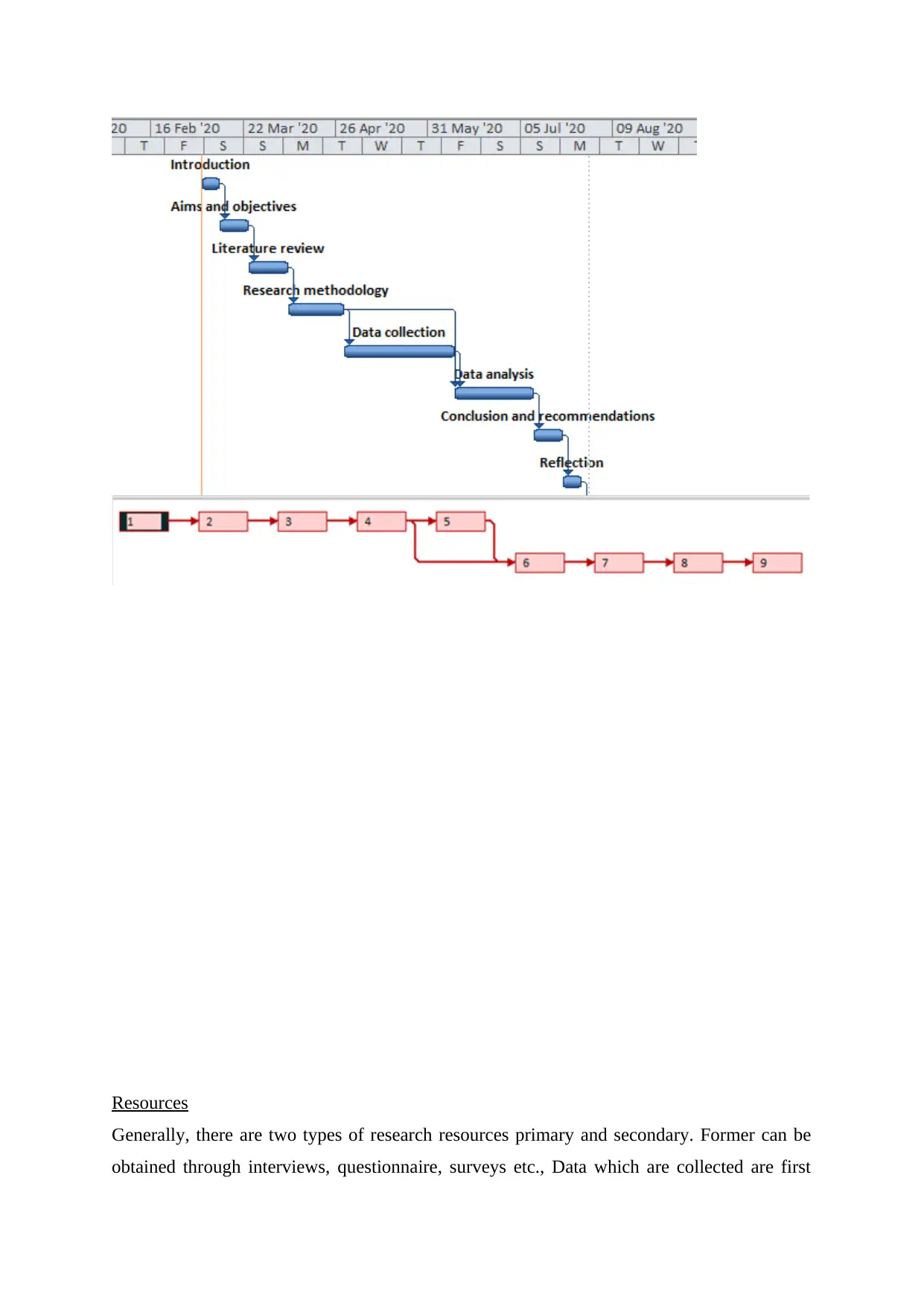
Timescale
consisted of some open-ended questions (Malik, Butt and Choi, 2015). Most of the researcher
use this method as it is less time consuming and respondents feels free to answer any of their
questions according to the suitable options given.
Sampling
Sampling, is determined as an important aspect while conducting any kind of research
because it provides with an overview of people about what they think regarding a particular
topic. In terms of its definition sampling is considered as a process under which information
and data are gathered from predetermined number of population or subset of population.
Thus, it can be said that sampling is a selection process by respondents for gathering
information. In context with this research sample size will be 40 respondents which is
sufficient in order to get appropriate outcomes.
Timescale
Resources
Generally, there are two types of research resources primary and secondary. Former can be
obtained through interviews, questionnaire, surveys etc., Data which are collected are first
Generally, there are two types of research resources primary and secondary. Former can be
obtained through interviews, questionnaire, surveys etc., Data which are collected are first
⊘ This is a preview!⊘
Do you want full access?
Subscribe today to unlock all pages.
Trusted by 1+ million students worldwide
hand and authentic and not been used by any other researcher (Birasnav, 2014). Whereas
secondary resources are acquired from books, journals, newspaper, internet etc., these are
used for making research knowledgeable. Therefore, researcher can use one of them depends
upon the research topic.
REFERENCES
Books and journals
Ganta, V.C., 2014. Motivation in the workplace to improve the employee
performance. International Journal of Engineering Technology, Management and Applied
Sciences. 2(6). pp.221-230.
Barrick, M. R. and et. Al., 2015. Collective organizational engagement: Linking motivational
antecedents, strategic implementation, and firm performance. Academy of Management
journal. 58(1). pp.111-135.
Cloutier, O., Felusiak, L., Hill, C. and Pemberton-Jones, E.J., 2015. The Importance of
Developing Strategies for Employee Retention. Journal of Leadership, Accountability &
Ethics, 12(2).
Pinder, C. C., 2014. Work motivation in organizational behavior. psychology press.
Osabiya, B. J., 2015. The effect of employees’ motivation on organizational
performance. Journal of public administration and policy research. 7(4). pp.62-75.
Jayaweera, T., 2015. Impact of work environmental factors on job performance, mediating
role of work motivation: A study of hotel sector in England. International journal of business
and management. 10(3). p.271.
Kanfer, R., Frese, M. and Johnson, R. E., 2017. Motivation related to work: A century of
progress. Journal of Applied Psychology. 102(3). p.338.
Malik, M. A. R., Butt, A. N. and Choi, J.N., 2015. Rewards and employee creative
performance: Moderating effects of creative self‐efficacy, reward importance, and locus of
control. Journal of Organizational Behavior. 36(1). pp.59-74.
secondary resources are acquired from books, journals, newspaper, internet etc., these are
used for making research knowledgeable. Therefore, researcher can use one of them depends
upon the research topic.
REFERENCES
Books and journals
Ganta, V.C., 2014. Motivation in the workplace to improve the employee
performance. International Journal of Engineering Technology, Management and Applied
Sciences. 2(6). pp.221-230.
Barrick, M. R. and et. Al., 2015. Collective organizational engagement: Linking motivational
antecedents, strategic implementation, and firm performance. Academy of Management
journal. 58(1). pp.111-135.
Cloutier, O., Felusiak, L., Hill, C. and Pemberton-Jones, E.J., 2015. The Importance of
Developing Strategies for Employee Retention. Journal of Leadership, Accountability &
Ethics, 12(2).
Pinder, C. C., 2014. Work motivation in organizational behavior. psychology press.
Osabiya, B. J., 2015. The effect of employees’ motivation on organizational
performance. Journal of public administration and policy research. 7(4). pp.62-75.
Jayaweera, T., 2015. Impact of work environmental factors on job performance, mediating
role of work motivation: A study of hotel sector in England. International journal of business
and management. 10(3). p.271.
Kanfer, R., Frese, M. and Johnson, R. E., 2017. Motivation related to work: A century of
progress. Journal of Applied Psychology. 102(3). p.338.
Malik, M. A. R., Butt, A. N. and Choi, J.N., 2015. Rewards and employee creative
performance: Moderating effects of creative self‐efficacy, reward importance, and locus of
control. Journal of Organizational Behavior. 36(1). pp.59-74.
Paraphrase This Document
Need a fresh take? Get an instant paraphrase of this document with our AI Paraphraser
Birasnav, M., 2014. Knowledge management and organizational performance in the service
industry: The role of transformational leadership beyond the effects of transactional
leadership. Journal of business research, 67(8), pp.1622-1629.
Khuong, M. N. and Hoang, D. T., 2015. The effects of leadership styles on employee
motivation in auditing companies in Ho Chi Minh City, Vietnam. International Journal of
trade, economics and finance. 6(4). p.210.
Kuranchie-Mensah, E. B. and Amponsah-Tawiah, K., 2016. Employee motivation and work
performance: A comparative study of mining companies in Ghana. Journal of Industrial
Engineering and Management (JIEM). 9(2). pp.255-309.
industry: The role of transformational leadership beyond the effects of transactional
leadership. Journal of business research, 67(8), pp.1622-1629.
Khuong, M. N. and Hoang, D. T., 2015. The effects of leadership styles on employee
motivation in auditing companies in Ho Chi Minh City, Vietnam. International Journal of
trade, economics and finance. 6(4). p.210.
Kuranchie-Mensah, E. B. and Amponsah-Tawiah, K., 2016. Employee motivation and work
performance: A comparative study of mining companies in Ghana. Journal of Industrial
Engineering and Management (JIEM). 9(2). pp.255-309.

1 out of 11


Related Documents


Your All-in-One AI-Powered Toolkit for Academic Success.
+13062052269
info@desklib.com
Available 24*7 on WhatsApp / Email
![[object Object]](/_next/static/media/star-bottom.7253800d.svg)
Unlock your academic potential
Copyright © 2020–2025 A2Z Services. All Rights Reserved. Developed and managed by ZUCOL.