Case Study: Diagnosis and Treatment of Mrs. Anderson's Anemia

Verified

Added on  2022/08/27

|8
|2245
|15
Case Study
AI Summary
This case study focuses on Mrs. Anderson, a 70-year-old patient diagnosed with pernicious anemia. The paper details her symptoms, including fatigue, weakness, and weight loss, along with abnormal blood test results such as low red blood cell count, high MCV, and low reticulocyte production rate, indicating a Vitamin B12 deficiency. Her medical history, including a prior small bowel obstruction and resection, is discussed as a potential cause. The diagnosis, treatment with Vitamin B12 injections, and the importance of monitoring her progress are highlighted. The case study also includes a review of relevant literature on pernicious anemia, covering its causes, diagnostic methods like the Schilling test, and treatment options. The paper concludes by summarizing the key findings and emphasizing the role of Vitamin B12 treatment in Mrs. Anderson's recovery and overall health improvement. This case study aims to provide a comprehensive overview of the diagnosis, treatment, and management of pernicious anemia in an elderly patient.
Document Page
Running head: CASE STUDY
CASE STUDY
Name of the Student
Name of the University
Author Note
tabler-icon-diamond-filled.svg

Paraphrase This Document

Need a fresh take? Get an instant paraphrase of this document with our AI Paraphraser
Document Page
1
CASE STUDY
INTRODUCTION
Health and wellbeing is extremely crucial to maintain, especially for an elderly patient
to keep them cheerful and at ease. However, the instances of contracting various diseases are
also common during older age (Steptoe, Deaton & Stone, 2015). In this case, Mrs Anderson
who is 70 years old is found to be quite sick with various anomalies in her vital. In this paper,
the case study of Mrs Anderson will be discussed in details and the probable reasons for the
initiation of her suffering. This paper will also contain the treatment procedures that can be
implemented further for treating Mrs Anderson.
ASSESSMENT
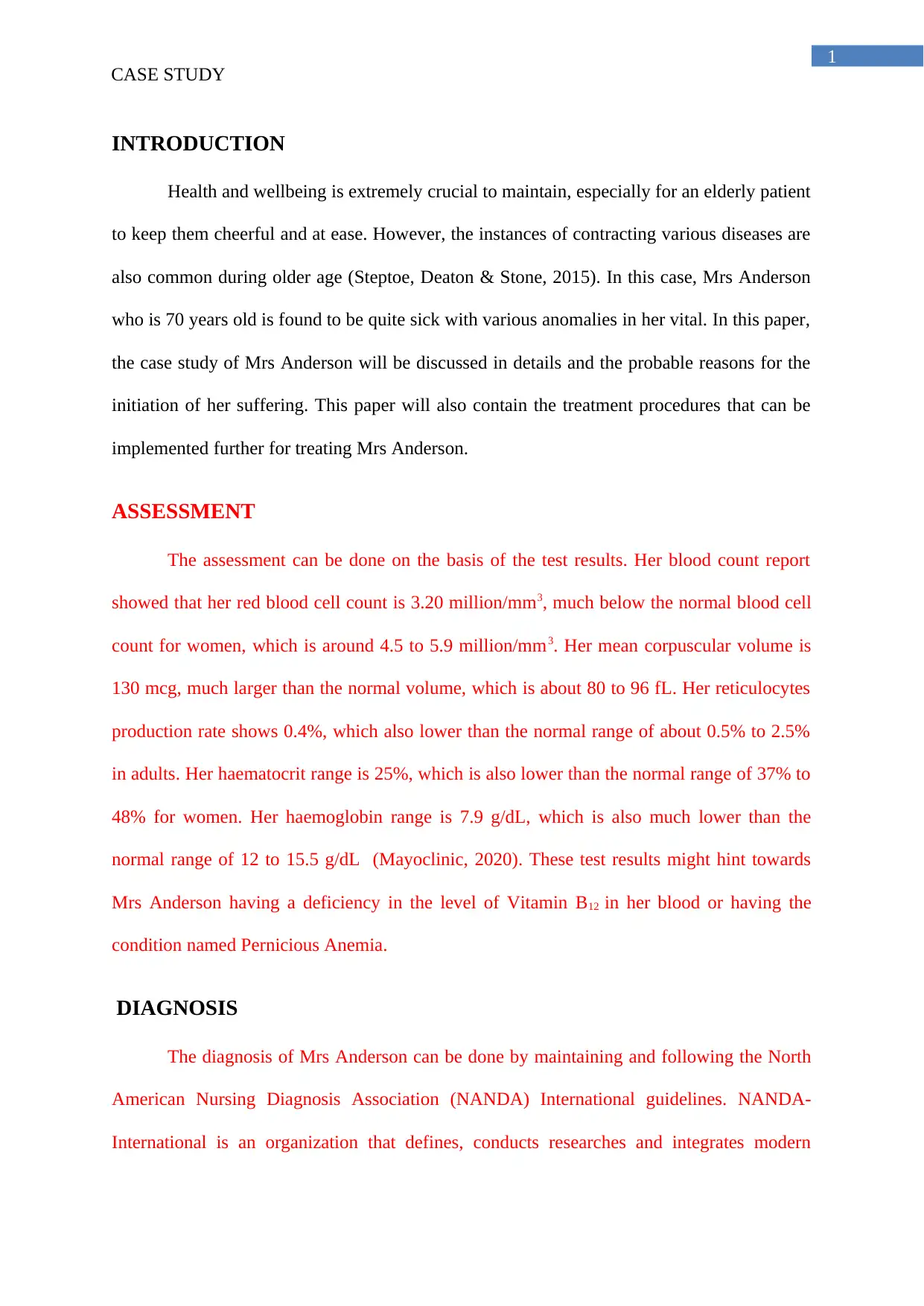
The assessment can be done on the basis of the test results. Her blood count report
showed that her red blood cell count is 3.20 million/mm3, much below the normal blood cell
count for women, which is around 4.5 to 5.9 million/mm3. Her mean corpuscular volume is
130 mcg, much larger than the normal volume, which is about 80 to 96 fL. Her reticulocytes
production rate shows 0.4%, which also lower than the normal range of about 0.5% to 2.5%
in adults. Her haematocrit range is 25%, which is also lower than the normal range of 37% to
48% for women. Her haemoglobin range is 7.9 g/dL, which is also much lower than the
normal range of 12 to 15.5 g/dL (Mayoclinic, 2020). These test results might hint towards
Mrs Anderson having a deficiency in the level of Vitamin B12 in her blood or having the
condition named Pernicious Anemia.
DIAGNOSIS
The diagnosis of Mrs Anderson can be done by maintaining and following the North
American Nursing Diagnosis Association (NANDA) International guidelines. NANDA-
International is an organization that defines, conducts researches and integrates modern
Document Page
2
CASE STUDY
innovative diagnosis procedure in a worldwide basis (Ubaldo et al., 2017). All the symptoms
that and report results that were derived from Mrs Anderson showed quite a lot of problems
that she was suffering from. It can be classified under the following categories:
RELATION OF HER CONDITIONS AND THE DIAGNOSIS REPORTS
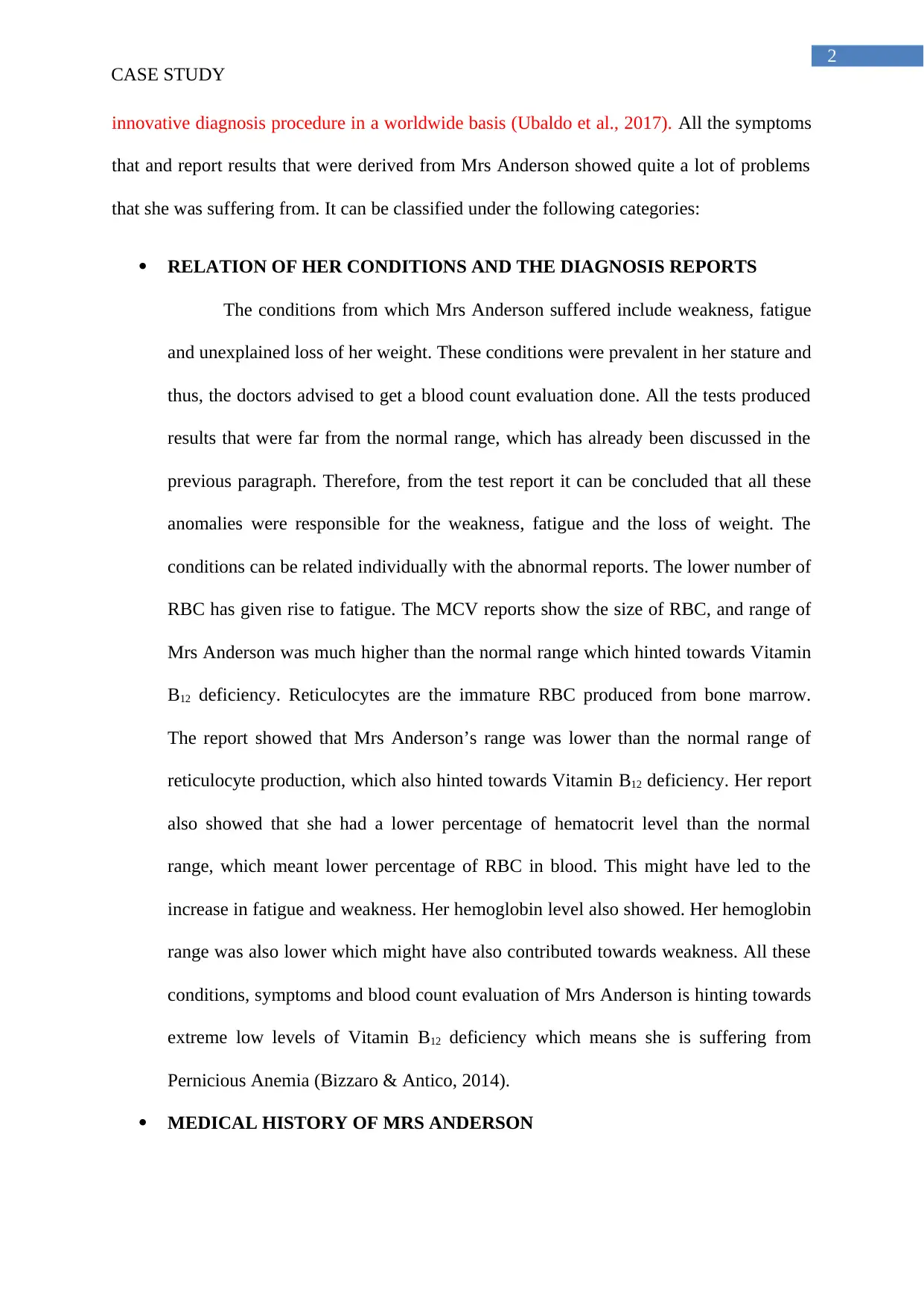
The conditions from which Mrs Anderson suffered include weakness, fatigue
and unexplained loss of her weight. These conditions were prevalent in her stature and
thus, the doctors advised to get a blood count evaluation done. All the tests produced
results that were far from the normal range, which has already been discussed in the
previous paragraph. Therefore, from the test report it can be concluded that all these
anomalies were responsible for the weakness, fatigue and the loss of weight. The
conditions can be related individually with the abnormal reports. The lower number of
RBC has given rise to fatigue. The MCV reports show the size of RBC, and range of
Mrs Anderson was much higher than the normal range which hinted towards Vitamin
B12 deficiency. Reticulocytes are the immature RBC produced from bone marrow.
The report showed that Mrs Anderson’s range was lower than the normal range of
reticulocyte production, which also hinted towards Vitamin B12 deficiency. Her report
also showed that she had a lower percentage of hematocrit level than the normal
range, which meant lower percentage of RBC in blood. This might have led to the
increase in fatigue and weakness. Her hemoglobin level also showed. Her hemoglobin
range was also lower which might have also contributed towards weakness. All these
conditions, symptoms and blood count evaluation of Mrs Anderson is hinting towards
extreme low levels of Vitamin B12 deficiency which means she is suffering from
Pernicious Anemia (Bizzaro & Antico, 2014).
MEDICAL HISTORY OF MRS ANDERSON
Document Page
3
CASE STUDY
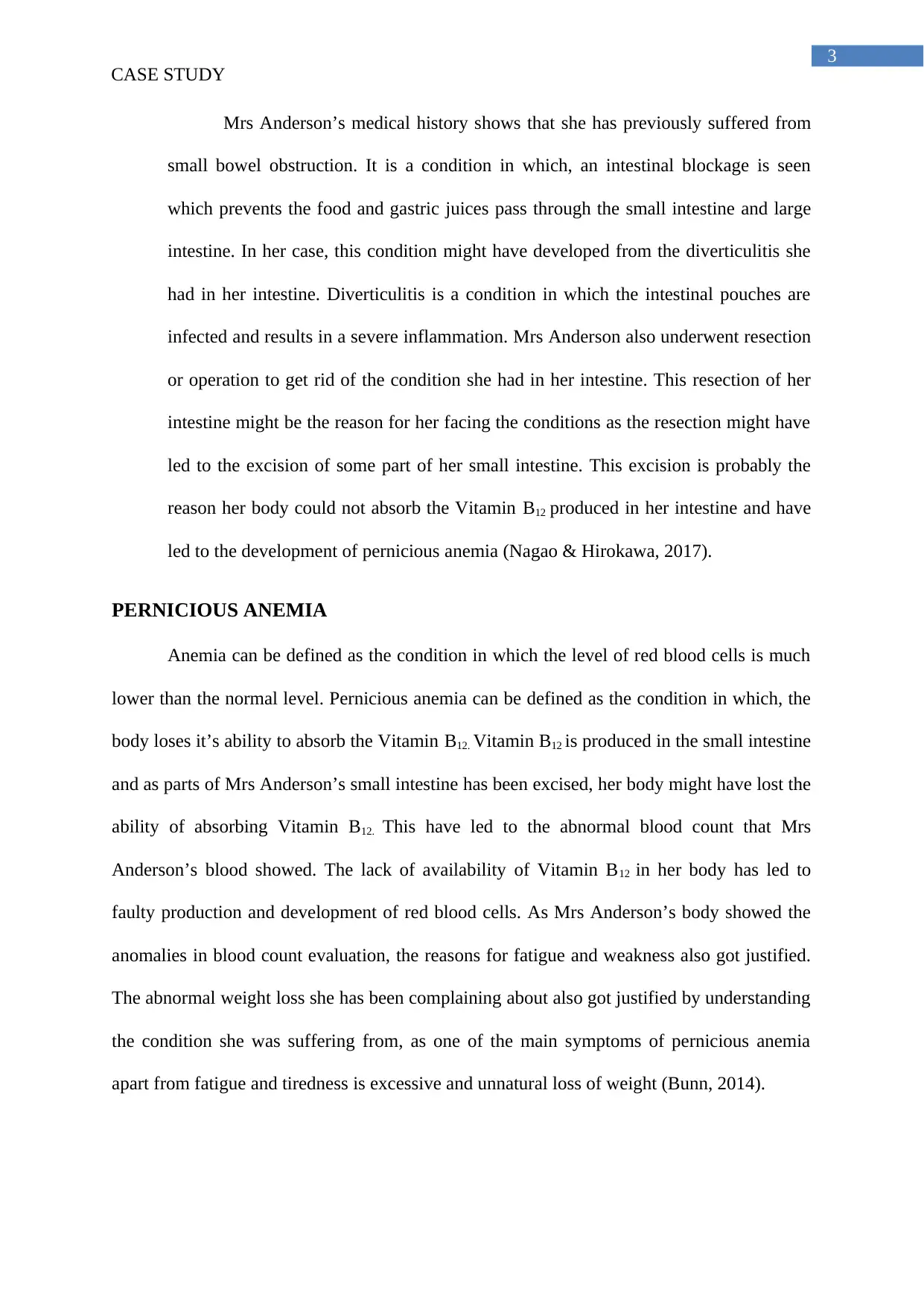
Mrs Anderson’s medical history shows that she has previously suffered from
small bowel obstruction. It is a condition in which, an intestinal blockage is seen
which prevents the food and gastric juices pass through the small intestine and large
intestine. In her case, this condition might have developed from the diverticulitis she
had in her intestine. Diverticulitis is a condition in which the intestinal pouches are
infected and results in a severe inflammation. Mrs Anderson also underwent resection
or operation to get rid of the condition she had in her intestine. This resection of her
intestine might be the reason for her facing the conditions as the resection might have
led to the excision of some part of her small intestine. This excision is probably the
reason her body could not absorb the Vitamin B12 produced in her intestine and have
led to the development of pernicious anemia (Nagao & Hirokawa, 2017).
PERNICIOUS ANEMIA
Anemia can be defined as the condition in which the level of red blood cells is much
lower than the normal level. Pernicious anemia can be defined as the condition in which, the
body loses it’s ability to absorb the Vitamin B12. Vitamin B12 is produced in the small intestine
and as parts of Mrs Anderson’s small intestine has been excised, her body might have lost the
ability of absorbing Vitamin B12. This have led to the abnormal blood count that Mrs
Anderson’s blood showed. The lack of availability of Vitamin B12 in her body has led to
faulty production and development of red blood cells. As Mrs Anderson’s body showed the
anomalies in blood count evaluation, the reasons for fatigue and weakness also got justified.
The abnormal weight loss she has been complaining about also got justified by understanding
the condition she was suffering from, as one of the main symptoms of pernicious anemia
apart from fatigue and tiredness is excessive and unnatural loss of weight (Bunn, 2014).
tabler-icon-diamond-filled.svg

Paraphrase This Document

Need a fresh take? Get an instant paraphrase of this document with our AI Paraphraser
Document Page
4
CASE STUDY
To confirm the condition, the doctors also advised her to undergo Schilling Test. This
test determines the rate at which the human body is absorbing Vitamin B12 from food and the
intestine (Ramphul & Mejias, 2019).
TREATMENT
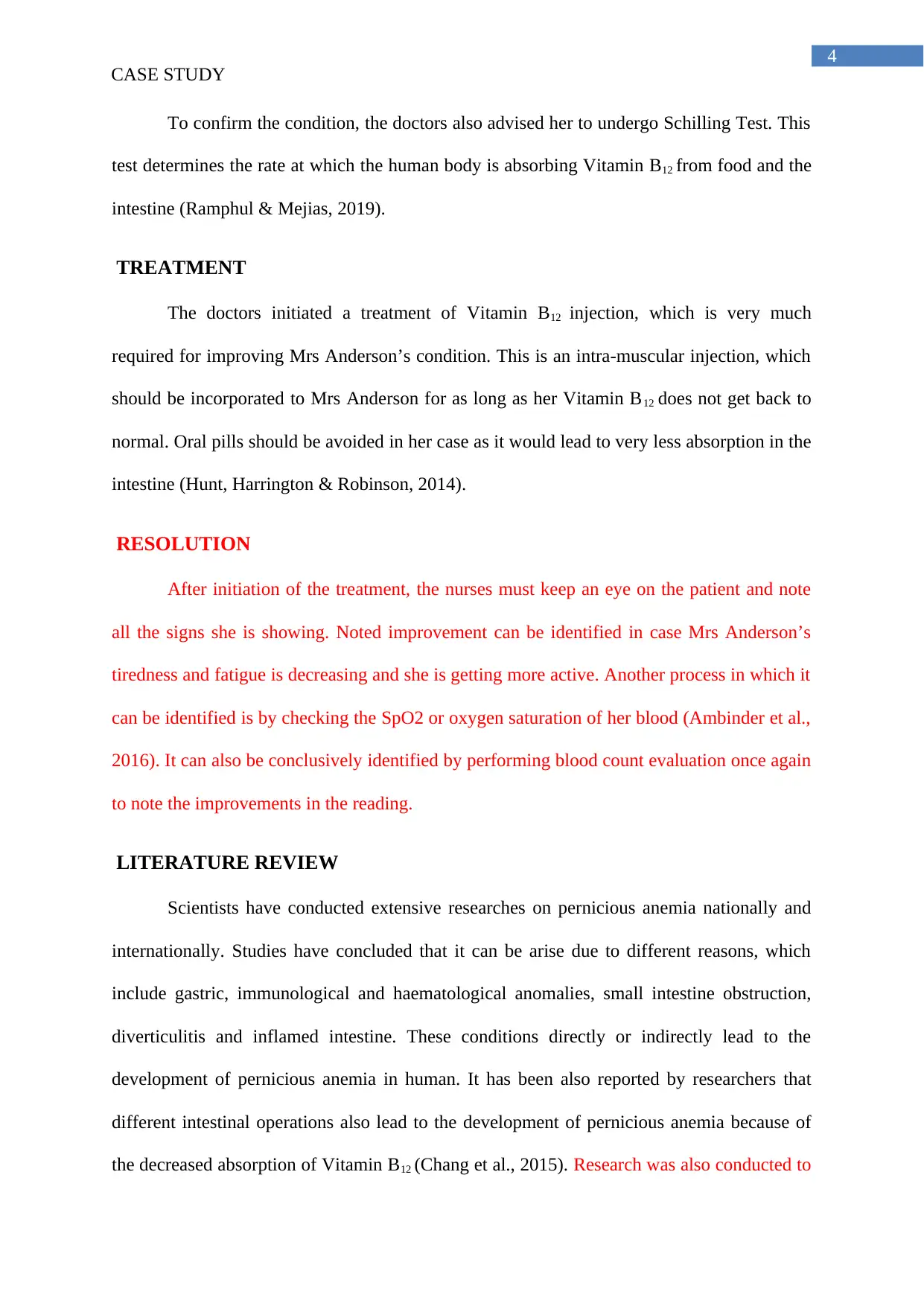
The doctors initiated a treatment of Vitamin B12 injection, which is very much
required for improving Mrs Anderson’s condition. This is an intra-muscular injection, which
should be incorporated to Mrs Anderson for as long as her Vitamin B12 does not get back to
normal. Oral pills should be avoided in her case as it would lead to very less absorption in the
intestine (Hunt, Harrington & Robinson, 2014).
RESOLUTION
After initiation of the treatment, the nurses must keep an eye on the patient and note
all the signs she is showing. Noted improvement can be identified in case Mrs Anderson’s
tiredness and fatigue is decreasing and she is getting more active. Another process in which it
can be identified is by checking the SpO2 or oxygen saturation of her blood (Ambinder et al.,
2016). It can also be conclusively identified by performing blood count evaluation once again
to note the improvements in the reading.
LITERATURE REVIEW
Scientists have conducted extensive researches on pernicious anemia nationally and
internationally. Studies have concluded that it can be arise due to different reasons, which
include gastric, immunological and haematological anomalies, small intestine obstruction,
diverticulitis and inflamed intestine. These conditions directly or indirectly lead to the
development of pernicious anemia in human. It has been also reported by researchers that
different intestinal operations also lead to the development of pernicious anemia because of
the decreased absorption of Vitamin B12 (Chang et al., 2015). Research was also conducted to
Document Page
5
CASE STUDY
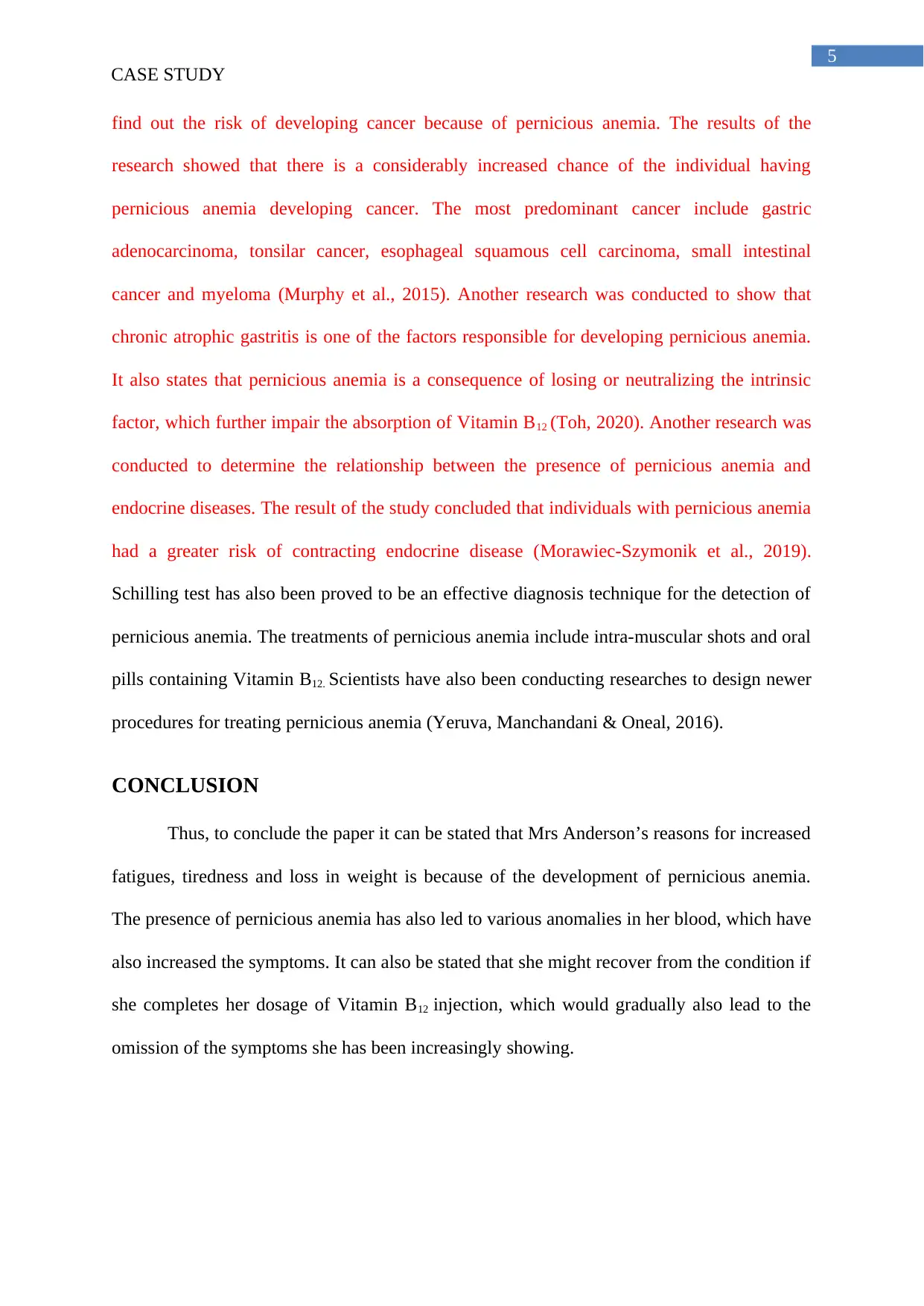
find out the risk of developing cancer because of pernicious anemia. The results of the
research showed that there is a considerably increased chance of the individual having
pernicious anemia developing cancer. The most predominant cancer include gastric
adenocarcinoma, tonsilar cancer, esophageal squamous cell carcinoma, small intestinal
cancer and myeloma (Murphy et al., 2015). Another research was conducted to show that
chronic atrophic gastritis is one of the factors responsible for developing pernicious anemia.
It also states that pernicious anemia is a consequence of losing or neutralizing the intrinsic
factor, which further impair the absorption of Vitamin B12 (Toh, 2020). Another research was
conducted to determine the relationship between the presence of pernicious anemia and
endocrine diseases. The result of the study concluded that individuals with pernicious anemia
had a greater risk of contracting endocrine disease (Morawiec-Szymonik et al., 2019).
Schilling test has also been proved to be an effective diagnosis technique for the detection of
pernicious anemia. The treatments of pernicious anemia include intra-muscular shots and oral
pills containing Vitamin B12. Scientists have also been conducting researches to design newer
procedures for treating pernicious anemia (Yeruva, Manchandani & Oneal, 2016).
CONCLUSION
Thus, to conclude the paper it can be stated that Mrs Anderson’s reasons for increased
fatigues, tiredness and loss in weight is because of the development of pernicious anemia.
The presence of pernicious anemia has also led to various anomalies in her blood, which have
also increased the symptoms. It can also be stated that she might recover from the condition if
she completes her dosage of Vitamin B12 injection, which would gradually also lead to the
omission of the symptoms she has been increasingly showing.
Document Page
6
CASE STUDY
REFERENCES
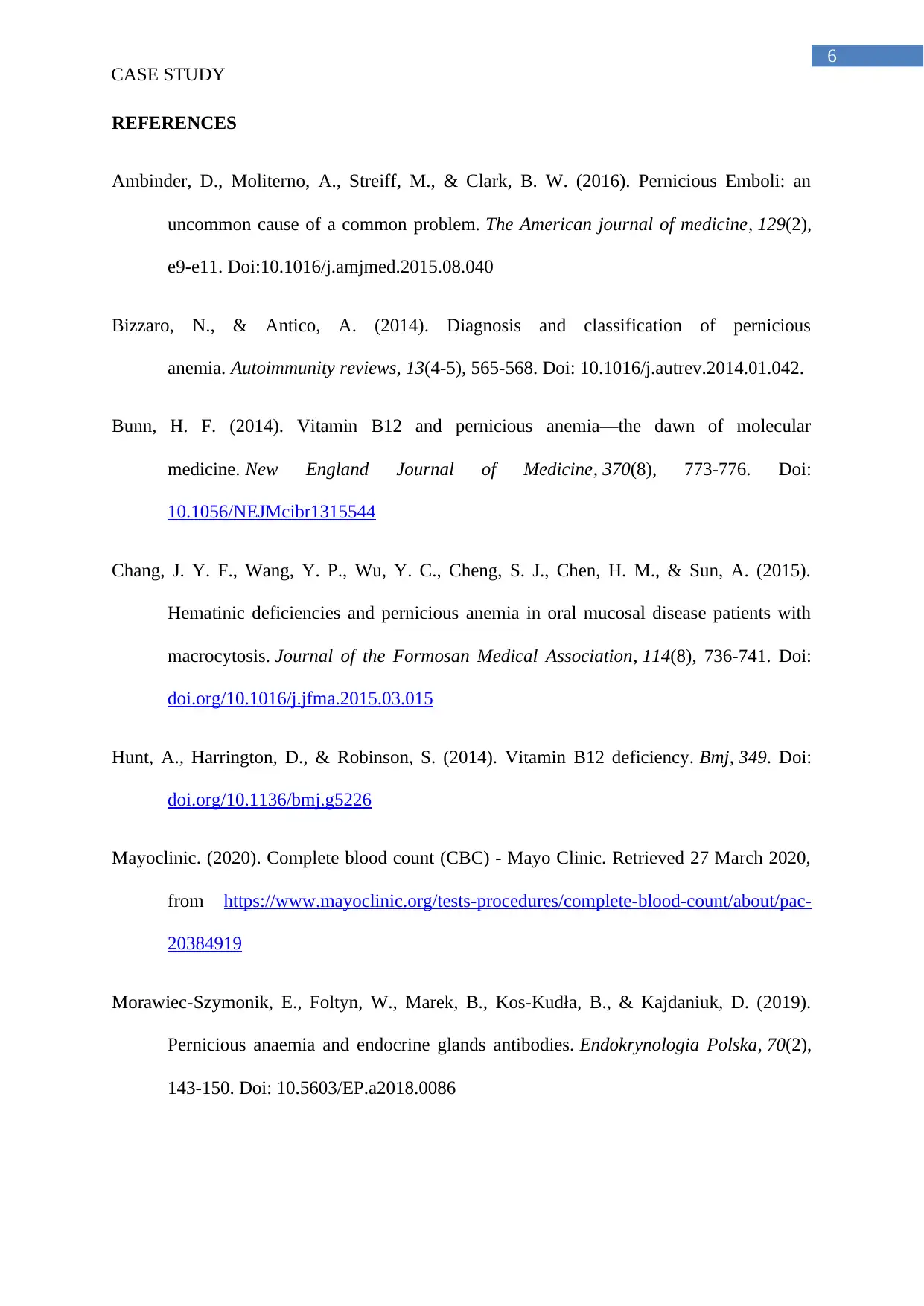
Ambinder, D., Moliterno, A., Streiff, M., & Clark, B. W. (2016). Pernicious Emboli: an
uncommon cause of a common problem. The American journal of medicine, 129(2),
e9-e11. Doi:10.1016/j.amjmed.2015.08.040
Bizzaro, N., & Antico, A. (2014). Diagnosis and classification of pernicious
anemia. Autoimmunity reviews, 13(4-5), 565-568. Doi: 10.1016/j.autrev.2014.01.042.
Bunn, H. F. (2014). Vitamin B12 and pernicious anemia—the dawn of molecular
medicine. New England Journal of Medicine, 370(8), 773-776. Doi:
10.1056/NEJMcibr1315544
Chang, J. Y. F., Wang, Y. P., Wu, Y. C., Cheng, S. J., Chen, H. M., & Sun, A. (2015).
Hematinic deficiencies and pernicious anemia in oral mucosal disease patients with
macrocytosis. Journal of the Formosan Medical Association, 114(8), 736-741. Doi:
doi.org/10.1016/j.jfma.2015.03.015
Hunt, A., Harrington, D., & Robinson, S. (2014). Vitamin B12 deficiency. Bmj, 349. Doi:
doi.org/10.1136/bmj.g5226
Mayoclinic. (2020). Complete blood count (CBC) - Mayo Clinic. Retrieved 27 March 2020,
from https://www.mayoclinic.org/tests-procedures/complete-blood-count/about/pac-
20384919
Morawiec-Szymonik, E., Foltyn, W., Marek, B., Kos-Kudła, B., & Kajdaniuk, D. (2019).
Pernicious anaemia and endocrine glands antibodies. Endokrynologia Polska, 70(2),
143-150. Doi: 10.5603/EP.a2018.0086
tabler-icon-diamond-filled.svg

Paraphrase This Document

Need a fresh take? Get an instant paraphrase of this document with our AI Paraphraser
Document Page
7
CASE STUDY
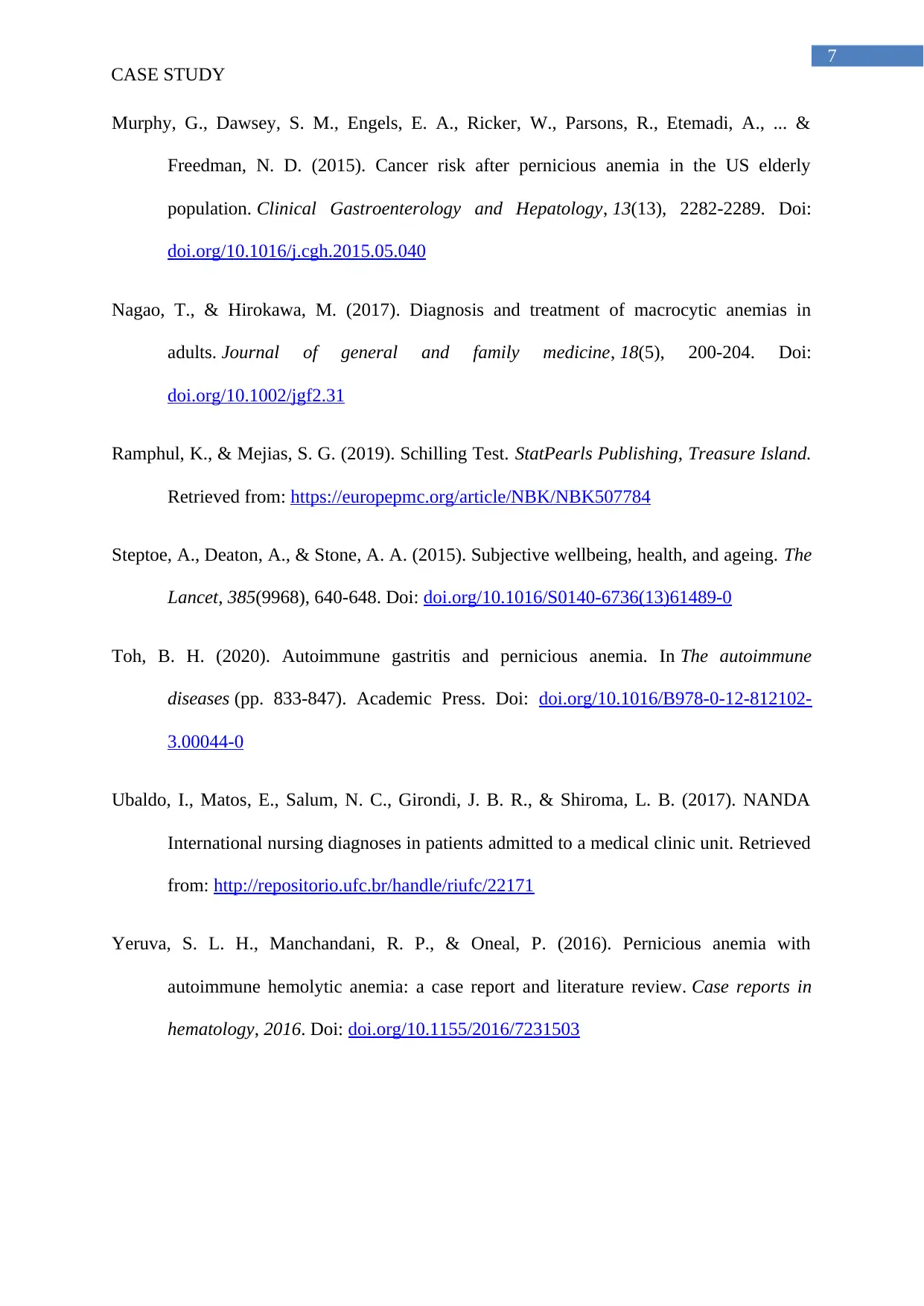
Murphy, G., Dawsey, S. M., Engels, E. A., Ricker, W., Parsons, R., Etemadi, A., ... &
Freedman, N. D. (2015). Cancer risk after pernicious anemia in the US elderly
population. Clinical Gastroenterology and Hepatology, 13(13), 2282-2289. Doi:
doi.org/10.1016/j.cgh.2015.05.040
Nagao, T., & Hirokawa, M. (2017). Diagnosis and treatment of macrocytic anemias in
adults. Journal of general and family medicine, 18(5), 200-204. Doi:
doi.org/10.1002/jgf2.31
Ramphul, K., & Mejias, S. G. (2019). Schilling Test. StatPearls Publishing, Treasure Island.
Retrieved from: https://europepmc.org/article/NBK/NBK507784
Steptoe, A., Deaton, A., & Stone, A. A. (2015). Subjective wellbeing, health, and ageing. The
Lancet, 385(9968), 640-648. Doi: doi.org/10.1016/S0140-6736(13)61489-0
Toh, B. H. (2020). Autoimmune gastritis and pernicious anemia. In The autoimmune
diseases (pp. 833-847). Academic Press. Doi: doi.org/10.1016/B978-0-12-812102-
3.00044-0
Ubaldo, I., Matos, E., Salum, N. C., Girondi, J. B. R., & Shiroma, L. B. (2017). NANDA
International nursing diagnoses in patients admitted to a medical clinic unit. Retrieved
from: http://repositorio.ufc.br/handle/riufc/22171
Yeruva, S. L. H., Manchandani, R. P., & Oneal, P. (2016). Pernicious anemia with
autoimmune hemolytic anemia: a case report and literature review. Case reports in
hematology, 2016. Doi: doi.org/10.1155/2016/7231503
chevron_up_icon
1 out of 8
circle_padding
hide_on_mobile
zoom_out_icon
[object Object]