The Nano-Eco-Toxicology: Health, Environmental Risks and Applications
VerifiedAdded on 2022/09/28
|15
|3310
|22
Report
AI Summary
This report on nano-toxicology provides a comprehensive overview of the field, detailing the introduction, history, and origin of nano-toxicology, emphasizing the unique characteristics of nanomaterials and their potential for human and environmental exposure. It discusses commercial applications, potential health and environmental risks, and how nano-toxicology addresses these issues, including routes of exposure like inhalation, dermal, injection, and oral. The report also highlights environmental risks in soil, air, and water, along with techniques that provide similar information as nano-toxicology such as nanomedicine, and various medical applications using nanotechnology. The report concludes by discussing the implications of nanotechnology and its role in various disciplines like energy, electronics, medicine, and consumer products, and the importance of understanding the behavior of nanomaterials in the environment.

RUNNING HEAD: NANO-TOCICOLOGY 1
THE NANO-ECO-TOXICOLOGY
Name
Institutional affiliation
THE NANO-ECO-TOXICOLOGY
Name
Institutional affiliation

Paraphrase This Document
Need a fresh take? Get an instant paraphrase of this document with our AI Paraphraser
Nano-toxicology 2
INTRODUCTION
With the fast innovation of nanotechnology, industries are presently involved in the activities
related to nanotechnology. It is know that nanostructure materials possess many characteristics
such as size effects, self-assembly, ultra-high reactivity, large surface area and quantum effects
since they are small and have unique structure. This large increase in production and demand
could lead to big exposure of human and some organisms to nanoparticles. Nano-toxicology is
defined as the study of nature and mechanism of toxic impacts of nanoscale materials on the
biological systems and living organisms. It deals with the quantitative assessment of frequency
and severity of antitoxic impacts in relation to the organism’s exposure. Scientists have assessed
the healthy impacts of exposure to nanoparticles that are airborne for many years and have
discovered some unexpected health impacts of Nano sized particles in vivo.
The investigations have realized the association of mortality and disease incidence with the
concentration and airborne particles sizes in the environment. Recently, toxicological effects of
produced nanomaterials have attracted more attention and been discussed seriously. Being that
the sizes of biological molecules and nanoparticles are comparable, one may think that
nanoparticles can invade system of natural defense of human body and enter easily to the cells o
affects functions of cells. When molecules are small, they can slip past the guardians in the
respiratory system, skip through the skin into unsuspected cells and sometimes through blood
brain barrier. at the initial stages or in any use of the research and development, these
nanomaterials enter easily into the environment through the Nano drug, oral exposure, indirect
routes like food chain.
Quick development of nanotechnology has become sources of environment and human hazards
through skin uptake, ingestion. Inhalation and application of the products. Researches has
INTRODUCTION
With the fast innovation of nanotechnology, industries are presently involved in the activities
related to nanotechnology. It is know that nanostructure materials possess many characteristics
such as size effects, self-assembly, ultra-high reactivity, large surface area and quantum effects
since they are small and have unique structure. This large increase in production and demand
could lead to big exposure of human and some organisms to nanoparticles. Nano-toxicology is
defined as the study of nature and mechanism of toxic impacts of nanoscale materials on the
biological systems and living organisms. It deals with the quantitative assessment of frequency
and severity of antitoxic impacts in relation to the organism’s exposure. Scientists have assessed
the healthy impacts of exposure to nanoparticles that are airborne for many years and have
discovered some unexpected health impacts of Nano sized particles in vivo.
The investigations have realized the association of mortality and disease incidence with the
concentration and airborne particles sizes in the environment. Recently, toxicological effects of
produced nanomaterials have attracted more attention and been discussed seriously. Being that
the sizes of biological molecules and nanoparticles are comparable, one may think that
nanoparticles can invade system of natural defense of human body and enter easily to the cells o
affects functions of cells. When molecules are small, they can slip past the guardians in the
respiratory system, skip through the skin into unsuspected cells and sometimes through blood
brain barrier. at the initial stages or in any use of the research and development, these
nanomaterials enter easily into the environment through the Nano drug, oral exposure, indirect
routes like food chain.
Quick development of nanotechnology has become sources of environment and human hazards
through skin uptake, ingestion. Inhalation and application of the products. Researches has
Nano-toxicology 3
discovered that nanomaterials can cause serious effects on human health at the entry portal which
display dissimilarity from the bulk molecules of the similar chemical composition. Using the
lungs as example, some of the nanoparticles may escape the normal defenses and moves from
their entry portal to cause series effects on other organs and sometimes stay in other organs for
long duration and not excreted from the body. Nano toxicology is intended to solve the
toxicological actions of nanoparticles and their products to define how they may cause a threat to
the human health and environment.
HISTORY AND ORIGIN OF NANO TOXICOLOGY
Although human exposure to nanoparticles occurred throughout the history of human, it
gradually increased during the period of industrial revolution. The concept of nanometer was
proposed by Richard and measured the size particles of gold colloids using microscope. 15 years
after, Japanese scientist used the term nanotechnology, to define the processes of semiconductor
that happen on the order of nanometer. He advocated that nanotechnology comprised of the
separation, processing, deformation and consolidation of materials by one molecule or atom.
This science was further developed when Japanese scientist developed and invented carbon
nanotubes (Hoet, 2010).
In 1959, the physicist used the term nanotechnology when describing the synthesis through direct
manipulation of atoms. In 1960 the Korean and Egyptian fabricated the first MOSFET. The
emergence of nanotechnology as a field in the year 1980 occurred through the convergence of
Drexler’s public and theoretical work. In 1981- there was invention of microscope for scanning
tunneling which was used to provide visualization of the bonds and atoms. The fullerenes were
invented in 1985 and were referred as carbon nanotubes. In 2000s the commercialization of the
products based on nanotechnology started to emerge. Government moves to start promoting
discovered that nanomaterials can cause serious effects on human health at the entry portal which
display dissimilarity from the bulk molecules of the similar chemical composition. Using the
lungs as example, some of the nanoparticles may escape the normal defenses and moves from
their entry portal to cause series effects on other organs and sometimes stay in other organs for
long duration and not excreted from the body. Nano toxicology is intended to solve the
toxicological actions of nanoparticles and their products to define how they may cause a threat to
the human health and environment.
HISTORY AND ORIGIN OF NANO TOXICOLOGY
Although human exposure to nanoparticles occurred throughout the history of human, it
gradually increased during the period of industrial revolution. The concept of nanometer was
proposed by Richard and measured the size particles of gold colloids using microscope. 15 years
after, Japanese scientist used the term nanotechnology, to define the processes of semiconductor
that happen on the order of nanometer. He advocated that nanotechnology comprised of the
separation, processing, deformation and consolidation of materials by one molecule or atom.
This science was further developed when Japanese scientist developed and invented carbon
nanotubes (Hoet, 2010).
In 1959, the physicist used the term nanotechnology when describing the synthesis through direct
manipulation of atoms. In 1960 the Korean and Egyptian fabricated the first MOSFET. The
emergence of nanotechnology as a field in the year 1980 occurred through the convergence of
Drexler’s public and theoretical work. In 1981- there was invention of microscope for scanning
tunneling which was used to provide visualization of the bonds and atoms. The fullerenes were
invented in 1985 and were referred as carbon nanotubes. In 2000s the commercialization of the
products based on nanotechnology started to emerge. Government moves to start promoting
⊘ This is a preview!⊘
Do you want full access?
Subscribe today to unlock all pages.

Trusted by 1+ million students worldwide
Nano-toxicology 4
research on nanotechnology. In the mid-2000s serious and new scientific attention stated to
flourish. Projects came up to produce the roadmaps of nanotechnology.in 2006, Korean
researchers developed 3nm MOSFET which was the global smallest device of nanotechnology.
More than 60 countries started producing nanotechnology development and research program.
The top five organization that filled intellectual patents were Samsung, Nippon steel, canon, IBM
and Toshiba (Demming, Multitasking in nanotechnology, 2013).
Nanotechnology has improved potential over the last decades, with nanoscale materials being
exploited in many application and many disciplines such as pharmacy, medicine, communication
and medicines. There was a report of 30 fold rising in the products of Nano based between the
year 2011 to 2015 and an approximated world market of more than one billion dollars in 2015.
Metal nanomaterials represent fastest and largest growing group of nanotechnology.
Environment and human exposure is happening and is predicted to dramatically increase (Gillett,
2010).
COMMERCIAL AVAILABLE NANO TOXICITY THAT CAN BE PURCHASED
As of 2008, the project on the emerging Nano toxicity estimates that more than 800 producers
and manufacturers identified nanotech products are available publicly, with new ones hitting the
market at the pace of 5 to 6 every week. The list of the project of all the products in publicly
accessible online database. Most of the use are limited to passive nanomaterials which are first
generation which includes titanium dioxide in the cosmetic, sunscreen, and surface coating and
food products. Allotropes of carbon are applied in producing gecko tape, silver in packing food,
disinfectants and clothing; zinc oxide in cosmetics and sunscreens and paints (Saini, 2011).
ISSUES FOLLOWING NANO- TOXICOLOGICAL EMPLOYMENT
research on nanotechnology. In the mid-2000s serious and new scientific attention stated to
flourish. Projects came up to produce the roadmaps of nanotechnology.in 2006, Korean
researchers developed 3nm MOSFET which was the global smallest device of nanotechnology.
More than 60 countries started producing nanotechnology development and research program.
The top five organization that filled intellectual patents were Samsung, Nippon steel, canon, IBM
and Toshiba (Demming, Multitasking in nanotechnology, 2013).
Nanotechnology has improved potential over the last decades, with nanoscale materials being
exploited in many application and many disciplines such as pharmacy, medicine, communication
and medicines. There was a report of 30 fold rising in the products of Nano based between the
year 2011 to 2015 and an approximated world market of more than one billion dollars in 2015.
Metal nanomaterials represent fastest and largest growing group of nanotechnology.
Environment and human exposure is happening and is predicted to dramatically increase (Gillett,
2010).
COMMERCIAL AVAILABLE NANO TOXICITY THAT CAN BE PURCHASED
As of 2008, the project on the emerging Nano toxicity estimates that more than 800 producers
and manufacturers identified nanotech products are available publicly, with new ones hitting the
market at the pace of 5 to 6 every week. The list of the project of all the products in publicly
accessible online database. Most of the use are limited to passive nanomaterials which are first
generation which includes titanium dioxide in the cosmetic, sunscreen, and surface coating and
food products. Allotropes of carbon are applied in producing gecko tape, silver in packing food,
disinfectants and clothing; zinc oxide in cosmetics and sunscreens and paints (Saini, 2011).
ISSUES FOLLOWING NANO- TOXICOLOGICAL EMPLOYMENT
Paraphrase This Document
Need a fresh take? Get an instant paraphrase of this document with our AI Paraphraser

Nano-toxicology 5
Despite the widespread application of nanomaterials, understanding of the potential and toxicity
health and environmental risks are linked with the use of nanomaterials. The toxicity issue
associated with nanomaterial applied in Nano medicine and remediation of environment are
usually ignored. Many Nano materials used in improving health, environmental remediation and
application in biomedical is now the leading to the exposure of nanoparticles to people and
releases to bodies of environment from the workplace.
Health risks
The small size of nanomaterial means they are taken more by the body since they have low
surface to volume ratio that raises chemical reactivity and biological action of the particles. They
enters the body by many dissimilar ways. The most important method is by inhalation, through
ingestion together with food, through the skin. Potential human exposure to nanoparticles include
workers exposed during the use and manufacture of nanomaterial. The routes of exposure are
through the skin, respiratory and gastrointestinal track.
Inhalation: the availability of nanoparticles in the atmosphere possess a risk. They are spread
easily by wind increasing their exposure to the individuals. The particles inhaled can be
deposited in the human system such as nasal, bronchial-trachea, alveolar depending on the size
of particles. Respiratory is the main portal of nanoparticles entry and it can be used to discuss
issues such as dose rate, dose, bio-kinetic and dose metrics. The particles may be translocated to
the lungs, livers, brain, fetus and spleen after being deposited. Non harmful materials may be
toxic when inhaled in form of nanoparticles. The nanomaterials may move through the mucous
membrane and also through olfactory nerves reach the brain, nerve, penetrate skin and reach
spleen, bone marrow and lymph nodes (Demming, An intelligent approach to nanotechnology,
2013).
Despite the widespread application of nanomaterials, understanding of the potential and toxicity
health and environmental risks are linked with the use of nanomaterials. The toxicity issue
associated with nanomaterial applied in Nano medicine and remediation of environment are
usually ignored. Many Nano materials used in improving health, environmental remediation and
application in biomedical is now the leading to the exposure of nanoparticles to people and
releases to bodies of environment from the workplace.
Health risks
The small size of nanomaterial means they are taken more by the body since they have low
surface to volume ratio that raises chemical reactivity and biological action of the particles. They
enters the body by many dissimilar ways. The most important method is by inhalation, through
ingestion together with food, through the skin. Potential human exposure to nanoparticles include
workers exposed during the use and manufacture of nanomaterial. The routes of exposure are
through the skin, respiratory and gastrointestinal track.
Inhalation: the availability of nanoparticles in the atmosphere possess a risk. They are spread
easily by wind increasing their exposure to the individuals. The particles inhaled can be
deposited in the human system such as nasal, bronchial-trachea, alveolar depending on the size
of particles. Respiratory is the main portal of nanoparticles entry and it can be used to discuss
issues such as dose rate, dose, bio-kinetic and dose metrics. The particles may be translocated to
the lungs, livers, brain, fetus and spleen after being deposited. Non harmful materials may be
toxic when inhaled in form of nanoparticles. The nanomaterials may move through the mucous
membrane and also through olfactory nerves reach the brain, nerve, penetrate skin and reach
spleen, bone marrow and lymph nodes (Demming, An intelligent approach to nanotechnology,
2013).
Nano-toxicology 6
Dermal: the skin function like a barrier to several substances that occur naturally. Penetration
through the skin happen when dealing with dissolved materials and liquid. Skin exposure to
nanomaterials have got more attention because of their introduction to drug products and
cosmetics. Nanomaterials have a high risks of being absorbed via the skin that large particles
since they can easily penetrate the epidermal layer (Cai, 2011).
Injection: this is administration of fluids into muscles, subcutaneous layers, body cavities and
blood vessels. The effects of injected nanomaterials are a function of particle charge and
chemistry. The common side effect is hypersensitivity. Nanoparticles may be found in colon,
bone marrow, lungs, liver and spleen.
Oral: after the exposure through oral, Nano particles are translocated to liver, kidney, lungs,
spleen and brain (Lee, 2016)
Dermal: the skin function like a barrier to several substances that occur naturally. Penetration
through the skin happen when dealing with dissolved materials and liquid. Skin exposure to
nanomaterials have got more attention because of their introduction to drug products and
cosmetics. Nanomaterials have a high risks of being absorbed via the skin that large particles
since they can easily penetrate the epidermal layer (Cai, 2011).
Injection: this is administration of fluids into muscles, subcutaneous layers, body cavities and
blood vessels. The effects of injected nanomaterials are a function of particle charge and
chemistry. The common side effect is hypersensitivity. Nanoparticles may be found in colon,
bone marrow, lungs, liver and spleen.
Oral: after the exposure through oral, Nano particles are translocated to liver, kidney, lungs,
spleen and brain (Lee, 2016)
⊘ This is a preview!⊘
Do you want full access?
Subscribe today to unlock all pages.
Trusted by 1+ million students worldwide
Nano-toxicology 7
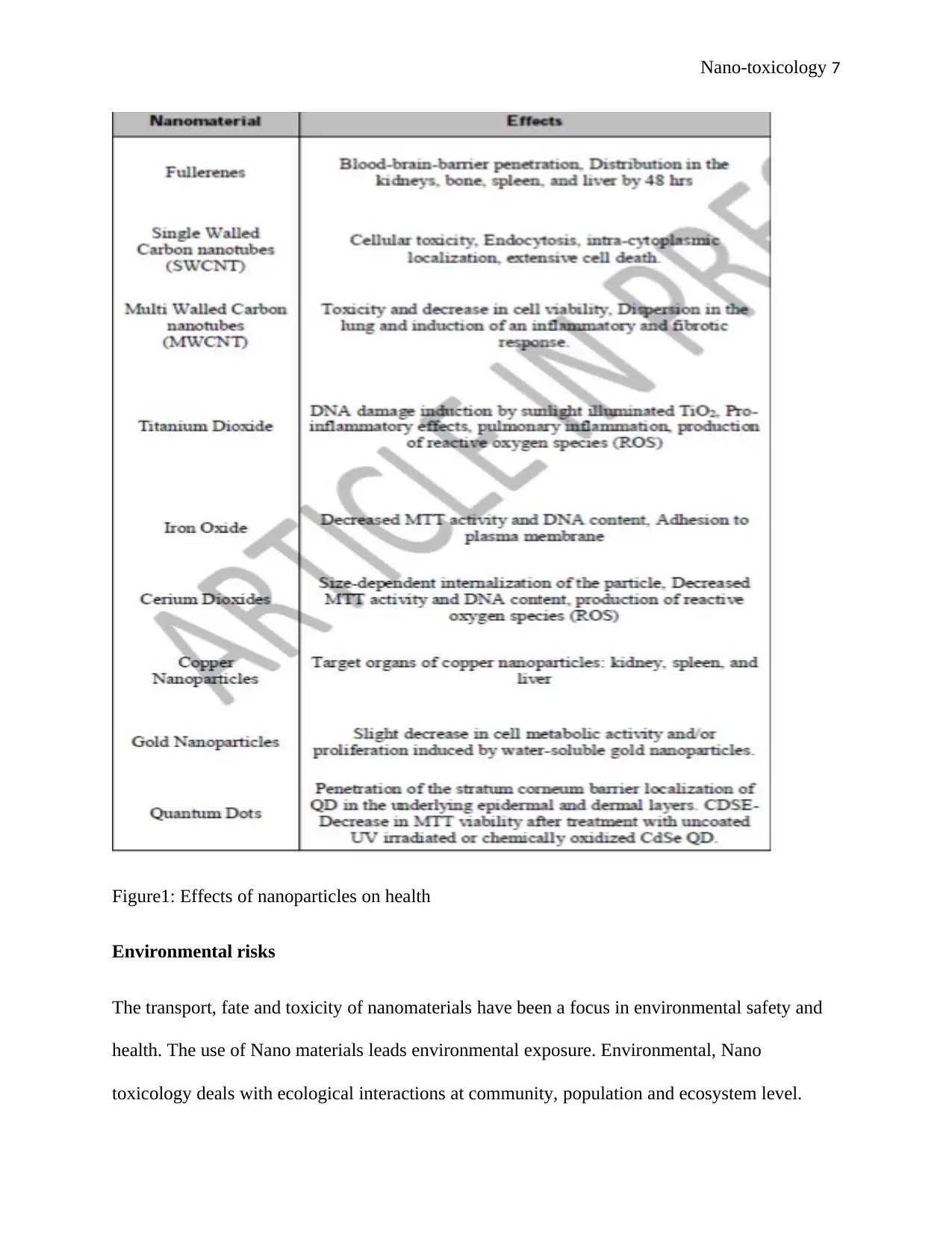
Figure1: Effects of nanoparticles on health
Environmental risks
The transport, fate and toxicity of nanomaterials have been a focus in environmental safety and
health. The use of Nano materials leads environmental exposure. Environmental, Nano
toxicology deals with ecological interactions at community, population and ecosystem level.
Figure1: Effects of nanoparticles on health
Environmental risks
The transport, fate and toxicity of nanomaterials have been a focus in environmental safety and
health. The use of Nano materials leads environmental exposure. Environmental, Nano
toxicology deals with ecological interactions at community, population and ecosystem level.
Paraphrase This Document
Need a fresh take? Get an instant paraphrase of this document with our AI Paraphraser
Nano-toxicology 8
Eco-Nano toxicology links the exposure and engineered materials such as chemicals
characteristics, ecological, biochemical and physical that regulates impacts and services.
Environmental technology applying nanotechnology lead to interactions of produced
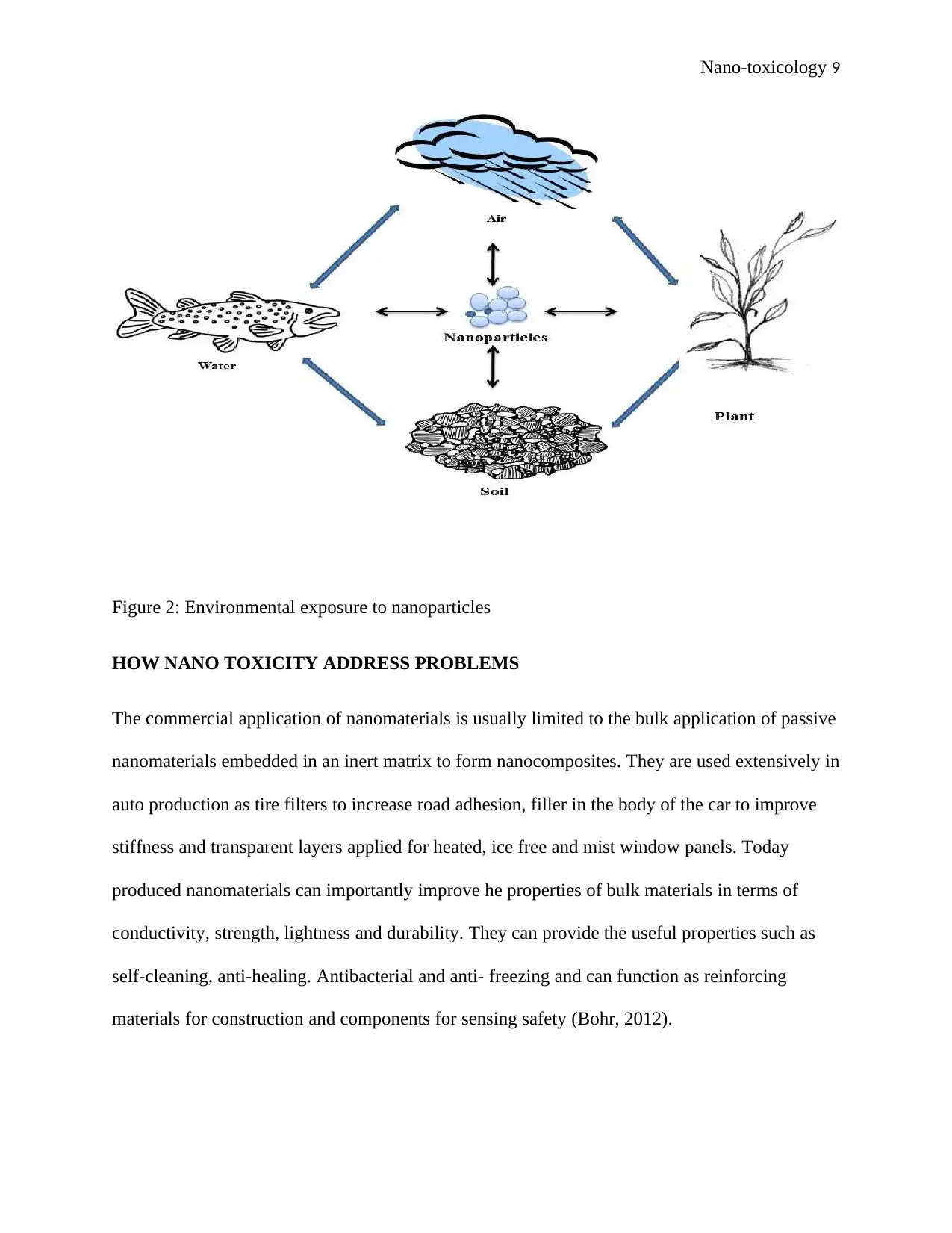
nanomaterials with many environmental media such as soil, air, water and combustion emissions
(Gardner, 2010).
Soil: it is characterized by the available terrestrial ecosystems the big part that make up
biodiversity. The behavior of nanomaterials as toxicants through their interactions with soil may
be different because of dissimilar physical and chemical form. Soil properties such as ionic
strength, pH, and soil texture dictates the fate of nanoparticles being released in the habitats
(Gee, 2013).
Air: in rural areas, nanoparticles usually results from the oxidation of volatile components or
anthropogenic and biogenic and also aerosols. In urban the sources are cars with problems and
diesel engines. They can travel by air through diffusion to great distances.
Water: The association of nanoparticles with water are important to define aquatic Nano toxicity.
Routes may be spills from manufacture, disposal and transport. Direct application of
nanomaterials for remediation of areas that are polluted is the exposure that may lead to
environmental exposure (Hughes, 2010).
Eco-Nano toxicology links the exposure and engineered materials such as chemicals
characteristics, ecological, biochemical and physical that regulates impacts and services.
Environmental technology applying nanotechnology lead to interactions of produced
nanomaterials with many environmental media such as soil, air, water and combustion emissions
(Gardner, 2010).
Soil: it is characterized by the available terrestrial ecosystems the big part that make up
biodiversity. The behavior of nanomaterials as toxicants through their interactions with soil may
be different because of dissimilar physical and chemical form. Soil properties such as ionic
strength, pH, and soil texture dictates the fate of nanoparticles being released in the habitats
(Gee, 2013).
Air: in rural areas, nanoparticles usually results from the oxidation of volatile components or
anthropogenic and biogenic and also aerosols. In urban the sources are cars with problems and
diesel engines. They can travel by air through diffusion to great distances.
Water: The association of nanoparticles with water are important to define aquatic Nano toxicity.
Routes may be spills from manufacture, disposal and transport. Direct application of
nanomaterials for remediation of areas that are polluted is the exposure that may lead to
environmental exposure (Hughes, 2010).
Nano-toxicology 9
Figure 2: Environmental exposure to nanoparticles
HOW NANO TOXICITY ADDRESS PROBLEMS
The commercial application of nanomaterials is usually limited to the bulk application of passive
nanomaterials embedded in an inert matrix to form nanocomposites. They are used extensively in
auto production as tire filters to increase road adhesion, filler in the body of the car to improve
stiffness and transparent layers applied for heated, ice free and mist window panels. Today
produced nanomaterials can importantly improve he properties of bulk materials in terms of
conductivity, strength, lightness and durability. They can provide the useful properties such as
self-cleaning, anti-healing. Antibacterial and anti- freezing and can function as reinforcing
materials for construction and components for sensing safety (Bohr, 2012).
Figure 2: Environmental exposure to nanoparticles
HOW NANO TOXICITY ADDRESS PROBLEMS
The commercial application of nanomaterials is usually limited to the bulk application of passive
nanomaterials embedded in an inert matrix to form nanocomposites. They are used extensively in
auto production as tire filters to increase road adhesion, filler in the body of the car to improve
stiffness and transparent layers applied for heated, ice free and mist window panels. Today
produced nanomaterials can importantly improve he properties of bulk materials in terms of
conductivity, strength, lightness and durability. They can provide the useful properties such as
self-cleaning, anti-healing. Antibacterial and anti- freezing and can function as reinforcing
materials for construction and components for sensing safety (Bohr, 2012).
⊘ This is a preview!⊘
Do you want full access?
Subscribe today to unlock all pages.
Trusted by 1+ million students worldwide
Nano-toxicology 10
Nano sized materials maybe found in food production and agriculture. Use may comprise release
of nutrients and fertilizers, specific targeted release of pesticides and nutrients to crops, treatment
of chemical and microbial soil contaminant, Nano sized sensors applied to monitor livestock and
crops and use of vaccines encapsulated for livestock (Ramsden, 2012).
The behavior of Nano toxicology in many matrix of environment is complex and involves many
process. They have unique properties such as optical, magnetic, mechanical, thermal, and
electrical properties which makes them good for many application such as production of energy,
electronics, medicine and many consumer products. They can penetrate cells easily and other
biological barriers into living organisms resulting to damage of cell. Morphology such as wires,
cubes, rods, spheres, particles, triangles and films affects the Nano particle kinetic and their
movement in the environment (Maffucci, 2015).
TECHNIQUES WHICH CAN PROVIDE THE SAME INFORMATION AS NANO-
TOXICOLOGY
Nanomedicine is the medical use of nanotechnology and ranges from the use of nanomaterials
and biological devices to Nano electronic biosensors and also future use such as biological
machines. Current issue in nanomedicine involves understanding factors related to
environmental impacts and toxicity. Nanomedicine deliver a valuable research tools which are
important clinically in future. Nanoparticles has high surface area to volume ratio and makes
them seek to bind to the cells of tumor. The small sizes of nanoparticles enables them to
accumulate in the sites of tumor (Hutton, 2010).
When nanoparticles are applied, imagine such as MRI and ultrasound have improved brightness
and ultrasound. Small sizes of nanoparticles make them useful in oncology especially imaging.
Nano sized materials maybe found in food production and agriculture. Use may comprise release
of nutrients and fertilizers, specific targeted release of pesticides and nutrients to crops, treatment
of chemical and microbial soil contaminant, Nano sized sensors applied to monitor livestock and
crops and use of vaccines encapsulated for livestock (Ramsden, 2012).
The behavior of Nano toxicology in many matrix of environment is complex and involves many
process. They have unique properties such as optical, magnetic, mechanical, thermal, and
electrical properties which makes them good for many application such as production of energy,
electronics, medicine and many consumer products. They can penetrate cells easily and other
biological barriers into living organisms resulting to damage of cell. Morphology such as wires,
cubes, rods, spheres, particles, triangles and films affects the Nano particle kinetic and their
movement in the environment (Maffucci, 2015).
TECHNIQUES WHICH CAN PROVIDE THE SAME INFORMATION AS NANO-
TOXICOLOGY
Nanomedicine is the medical use of nanotechnology and ranges from the use of nanomaterials
and biological devices to Nano electronic biosensors and also future use such as biological
machines. Current issue in nanomedicine involves understanding factors related to
environmental impacts and toxicity. Nanomedicine deliver a valuable research tools which are
important clinically in future. Nanoparticles has high surface area to volume ratio and makes
them seek to bind to the cells of tumor. The small sizes of nanoparticles enables them to
accumulate in the sites of tumor (Hutton, 2010).
When nanoparticles are applied, imagine such as MRI and ultrasound have improved brightness
and ultrasound. Small sizes of nanoparticles make them useful in oncology especially imaging.
Paraphrase This Document
Need a fresh take? Get an instant paraphrase of this document with our AI Paraphraser
Nano-toxicology 11
Magnetic micro particles are used to separate the proteins and cells from the media. They can be
used to remove pathogens, toxins and protein from the blood. The process of purification is
based on the carbon coated and iron oxide metal with nanoparticles. Nanotechnology can be used
as tissue engineering to repair and reproduce damaged cells and tissue using the best material. It
may replace treatments such as organ transplants and implants. Nanomedicine can make good
use of Nano robots, introduced into the body to repair, and detect the infection and damages
(Wesley, 2014).
Nanoparticles bound on a good antibody are applied to name specialized molecule
microorganisms and structures. Sensor chips with many nanowires are able to detect the proteins
and other left over cells of cancer and can also detect the diagnosis of cancer in early stages. It
also help in developing arthroscope which are machines applied in surgeries with cameras and
lights. The smaller the incision the higher the chances and faster the time of healing which is
good for the patients (Oye, 2013).
ADVANTAGES OF COMBINING OTHER TECHNIQUES
Nanotechnology have ability to make the available medical application cost effective and easier
to apply in offices and at home. Vehicles are being created with nanomaterials so that they
possess less metal and fuel to operate in future. Nanotechnology enables the balls of tennis to last
longer and balls of golf to move straight and also balls of bowling to be more long lasting with
hard surface. Socks and trousers infused with nanotechnology so that they become durable and
keep individuals cool in summer. Bandages are being incorporated with nanoparticles of silver to
heal cuts very fast. Nanotechnology also makes personal computers to be faster, cheaper with
large memory (Ghosh, 2018).
Magnetic micro particles are used to separate the proteins and cells from the media. They can be
used to remove pathogens, toxins and protein from the blood. The process of purification is
based on the carbon coated and iron oxide metal with nanoparticles. Nanotechnology can be used
as tissue engineering to repair and reproduce damaged cells and tissue using the best material. It
may replace treatments such as organ transplants and implants. Nanomedicine can make good
use of Nano robots, introduced into the body to repair, and detect the infection and damages
(Wesley, 2014).
Nanoparticles bound on a good antibody are applied to name specialized molecule
microorganisms and structures. Sensor chips with many nanowires are able to detect the proteins
and other left over cells of cancer and can also detect the diagnosis of cancer in early stages. It
also help in developing arthroscope which are machines applied in surgeries with cameras and
lights. The smaller the incision the higher the chances and faster the time of healing which is
good for the patients (Oye, 2013).
ADVANTAGES OF COMBINING OTHER TECHNIQUES
Nanotechnology have ability to make the available medical application cost effective and easier
to apply in offices and at home. Vehicles are being created with nanomaterials so that they
possess less metal and fuel to operate in future. Nanotechnology enables the balls of tennis to last
longer and balls of golf to move straight and also balls of bowling to be more long lasting with
hard surface. Socks and trousers infused with nanotechnology so that they become durable and
keep individuals cool in summer. Bandages are being incorporated with nanoparticles of silver to
heal cuts very fast. Nanotechnology also makes personal computers to be faster, cheaper with
large memory (Ghosh, 2018).
Nano-toxicology 12
Scientists are trying to use nanotechnology to develop diesel engines with green and clean
exhaust fumes. Platinum is used as a catalyst in this process to clean the particles of exhaust
fumes. The reduction catalyst is used to take nitrogen atoms from nitrogen oxide to free oxygen
(Arlett, 2011).
Nanotechnology also help in developing the field of tissue engineering. When creating the
scaffolds, scientist mimic the nanoscale property of cells microenvironment to direct its
dissimilarity to best lineage (Yeow, 2014).
Nano toxicology have the widespread use since it’s an area that is concerned with the effects
that industrial scale production and application of nanoparticles and nanomaterials have on
environment and human health. For these reasons nanotechnology should be monitored and
controlled by the government. Research agency of public health are conducting research on the
health impacts from the exposure of nanomaterials (Manago, 2011).
CONCLUSION
Nanotechnology is the property that makes nanoparticles important for new use. Care must be
maintained in nanomedicine because great exposure occur in this area. There is world debate on
the legal, ethical, and social aspects of nanotechnology and the risks they posed. Nanotechnology
is the main solution for the problems to solve the environmental and sustainability issues.
Nanotechnology has attracted more interest in present years because of its impacts on the fields’
such as agriculture, electronics, medicine and textiles. The potential benefits of nanoparticles to
the environment and human health is known such as sensors for monitoring environment, Nano
remediation, systems for delivering drugs, bio robots and the Nano implants un medicine. These
Nano products are new to the environment and have some serious impacts that causes particle
Scientists are trying to use nanotechnology to develop diesel engines with green and clean
exhaust fumes. Platinum is used as a catalyst in this process to clean the particles of exhaust
fumes. The reduction catalyst is used to take nitrogen atoms from nitrogen oxide to free oxygen
(Arlett, 2011).
Nanotechnology also help in developing the field of tissue engineering. When creating the
scaffolds, scientist mimic the nanoscale property of cells microenvironment to direct its
dissimilarity to best lineage (Yeow, 2014).
Nano toxicology have the widespread use since it’s an area that is concerned with the effects
that industrial scale production and application of nanoparticles and nanomaterials have on
environment and human health. For these reasons nanotechnology should be monitored and
controlled by the government. Research agency of public health are conducting research on the
health impacts from the exposure of nanomaterials (Manago, 2011).
CONCLUSION
Nanotechnology is the property that makes nanoparticles important for new use. Care must be
maintained in nanomedicine because great exposure occur in this area. There is world debate on
the legal, ethical, and social aspects of nanotechnology and the risks they posed. Nanotechnology
is the main solution for the problems to solve the environmental and sustainability issues.
Nanotechnology has attracted more interest in present years because of its impacts on the fields’
such as agriculture, electronics, medicine and textiles. The potential benefits of nanoparticles to
the environment and human health is known such as sensors for monitoring environment, Nano
remediation, systems for delivering drugs, bio robots and the Nano implants un medicine. These
Nano products are new to the environment and have some serious impacts that causes particle
⊘ This is a preview!⊘
Do you want full access?
Subscribe today to unlock all pages.
Trusted by 1+ million students worldwide

1 out of 15


Your All-in-One AI-Powered Toolkit for Academic Success.
+13062052269
info@desklib.com
Available 24*7 on WhatsApp / Email
![[object Object]](/_next/static/media/star-bottom.7253800d.svg)
Unlock your academic potential
Copyright © 2020–2026 A2Z Services. All Rights Reserved. Developed and managed by ZUCOL.