A Comparative Analysis of NASA's Moon and Mars Exploration
VerifiedAdded on 2023/04/21
|8
|1883
|220
Essay
AI Summary
This essay provides a comparative analysis of NASA's space exploration efforts, specifically focusing on the Apollo Moon missions and the planned Mars 2020 Rover mission. The essay begins by outlining the historical context of the Apollo missions, emphasizing the goal of landing humans on the Moon and the scientific data gathered. It then shifts to the Mars 2020 Rover mission, detailing its objectives, including the search for signs of past microbial life and the collection of rock samples. The essay highlights the similarities and differences between the missions, such as the common goal of scientific discovery and the use of robotic missions to gather crucial environmental data. It also discusses the technological advancements and challenges associated with each mission, including the importance of resource utilization and the complexities of landing on Mars. Ultimately, the essay concludes that both missions are critical demonstrations of scientific and technological progress, contributing to a deeper understanding of our solar system and paving the way for future human space exploration.
1A THIRST FOR EXPLORATION
Janis Innis
Topic Five
Comparison/Contrast Essay
13 Oct. 2013
A Thirst for Exploration
The National Aeronautics and Space Administration (NASA) is a form of independent
agency supported by United States Federal Government. This organisation is responsible for the
civilian space program. This also includes the research based on aerospace and aeronautics.
Since, the establishment of the agency, most of the efforts of US space explorations have been
led with the help of NASA (National Aeronautics and Space Administration). This had included
the missions of Apollo Moon landing and other missions. The unquenchable thirst for the
exploration of space would push the boundaries of science. Based on the statement by Neil
Armstrong during his first walk on the moon, it was stated that "That's one small step for a man;
one giant leap for mankind." (Neil Armstrong)
The primary missions based on the past explorations to the Moon and planned future
missions to Mars is based on exploring the intrinsic details of these planet.
The primary objective of the past Apollo missions were to make men to land on the lunar
surface and thus also make them to return to the Earth in a safe manner. With the primary
success of the Apollo 11, the primary objective to land men on to the Moon and thus make them
to return to the Earth in a safe manner had been accomplished (Wieczorek). The Apollo program
Janis Innis
Topic Five
Comparison/Contrast Essay
13 Oct. 2013
A Thirst for Exploration
The National Aeronautics and Space Administration (NASA) is a form of independent
agency supported by United States Federal Government. This organisation is responsible for the
civilian space program. This also includes the research based on aerospace and aeronautics.
Since, the establishment of the agency, most of the efforts of US space explorations have been
led with the help of NASA (National Aeronautics and Space Administration). This had included
the missions of Apollo Moon landing and other missions. The unquenchable thirst for the
exploration of space would push the boundaries of science. Based on the statement by Neil
Armstrong during his first walk on the moon, it was stated that "That's one small step for a man;
one giant leap for mankind." (Neil Armstrong)
The primary missions based on the past explorations to the Moon and planned future
missions to Mars is based on exploring the intrinsic details of these planet.
The primary objective of the past Apollo missions were to make men to land on the lunar
surface and thus also make them to return to the Earth in a safe manner. With the primary
success of the Apollo 11, the primary objective to land men on to the Moon and thus make them
to return to the Earth in a safe manner had been accomplished (Wieczorek). The Apollo program
Paraphrase This Document
Need a fresh take? Get an instant paraphrase of this document with our AI Paraphraser

2A THIRST FOR EXPLORATION
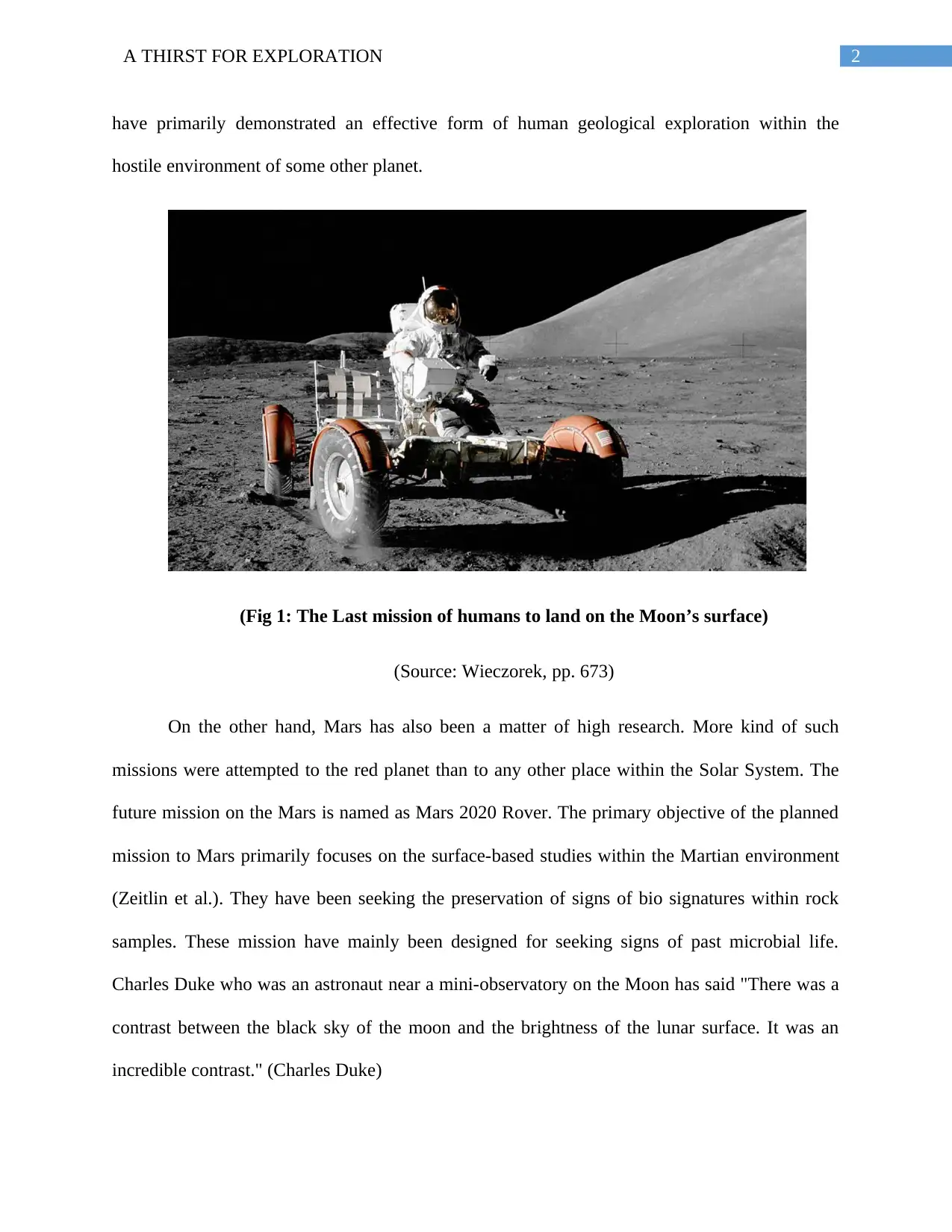
have primarily demonstrated an effective form of human geological exploration within the
hostile environment of some other planet.
(Fig 1: The Last mission of humans to land on the Moon’s surface)
(Source: Wieczorek, pp. 673)
On the other hand, Mars has also been a matter of high research. More kind of such
missions were attempted to the red planet than to any other place within the Solar System. The
future mission on the Mars is named as Mars 2020 Rover. The primary objective of the planned
mission to Mars primarily focuses on the surface-based studies within the Martian environment
(Zeitlin et al.). They have been seeking the preservation of signs of bio signatures within rock
samples. These mission have mainly been designed for seeking signs of past microbial life.
Charles Duke who was an astronaut near a mini-observatory on the Moon has said "There was a
contrast between the black sky of the moon and the brightness of the lunar surface. It was an
incredible contrast." (Charles Duke)
have primarily demonstrated an effective form of human geological exploration within the
hostile environment of some other planet.
(Fig 1: The Last mission of humans to land on the Moon’s surface)
(Source: Wieczorek, pp. 673)
On the other hand, Mars has also been a matter of high research. More kind of such
missions were attempted to the red planet than to any other place within the Solar System. The
future mission on the Mars is named as Mars 2020 Rover. The primary objective of the planned
mission to Mars primarily focuses on the surface-based studies within the Martian environment
(Zeitlin et al.). They have been seeking the preservation of signs of bio signatures within rock
samples. These mission have mainly been designed for seeking signs of past microbial life.
Charles Duke who was an astronaut near a mini-observatory on the Moon has said "There was a
contrast between the black sky of the moon and the brightness of the lunar surface. It was an
incredible contrast." (Charles Duke)

3A THIRST FOR EXPLORATION
The primary goal of the past exploring missions to the Moon and the future planned
mission to Mars have some kind of similarity between them. The primary goal of science mainly
relates to the national space policy based on sending of humans to the Mars in the future
(Cohen). Similar to the history based on the exploration to the moon, the different robotic
missions to Mars have also provided a crucial form of understanding of the environment.
The Apollo Missions were much unique based on travelling to the Moon and thus landing
back to the Earth. After the launch of the mission, there were several kind of tests that had to be
performed thoroughly in order to accomplish the mission. The six missions had achieved their
goal (Delp et al.). These missions were unique due to the fact that each of these missions had
different kinds of complications within them. The Apollo 7 and 9 were missions based on
orbiting the Earth in order to perform test on the Command and Lunar modules. They did not
also return lunar data. The Apollo also tested various components during the orbit around the
Moon. The Apollo 13 also could land on the surface of the moon based on malfunction but
eventually had returned photographs (Hui et al.). Each of the six missions that had landed on the
surface of the moon had mostly returned a huge wealth of scientific data. They had also returned
around 400 kilograms of lunar based samples. Some of the experiments conducted on the surface
of moon also included meteoroids, soil mechanics, heat flow, lunar ranging, solar wind
experiments and magnetic fields. The Apollo spacecraft that had landed on the surface of the
moon were mainly launched on top of a three-staged Saturn V rocket. Based on the last three
missions, the lunar module has carried a car, which was named as lunar rover. One of the most
unique thing about the Apollo mission is that before the launch of the rocket, the Saturn V had
suffered a sudden lightning strike. Within a few minutes, a second lighting strike had also wiped
off the electrical systems of the rocket (Hui et al.). Despite such kind of oppositions and troubles
The primary goal of the past exploring missions to the Moon and the future planned
mission to Mars have some kind of similarity between them. The primary goal of science mainly
relates to the national space policy based on sending of humans to the Mars in the future
(Cohen). Similar to the history based on the exploration to the moon, the different robotic
missions to Mars have also provided a crucial form of understanding of the environment.
The Apollo Missions were much unique based on travelling to the Moon and thus landing
back to the Earth. After the launch of the mission, there were several kind of tests that had to be
performed thoroughly in order to accomplish the mission. The six missions had achieved their
goal (Delp et al.). These missions were unique due to the fact that each of these missions had
different kinds of complications within them. The Apollo 7 and 9 were missions based on
orbiting the Earth in order to perform test on the Command and Lunar modules. They did not
also return lunar data. The Apollo also tested various components during the orbit around the
Moon. The Apollo 13 also could land on the surface of the moon based on malfunction but
eventually had returned photographs (Hui et al.). Each of the six missions that had landed on the
surface of the moon had mostly returned a huge wealth of scientific data. They had also returned
around 400 kilograms of lunar based samples. Some of the experiments conducted on the surface
of moon also included meteoroids, soil mechanics, heat flow, lunar ranging, solar wind
experiments and magnetic fields. The Apollo spacecraft that had landed on the surface of the
moon were mainly launched on top of a three-staged Saturn V rocket. Based on the last three
missions, the lunar module has carried a car, which was named as lunar rover. One of the most
unique thing about the Apollo mission is that before the launch of the rocket, the Saturn V had
suffered a sudden lightning strike. Within a few minutes, a second lighting strike had also wiped
off the electrical systems of the rocket (Hui et al.). Despite such kind of oppositions and troubles
⊘ This is a preview!⊘
Do you want full access?
Subscribe today to unlock all pages.

Trusted by 1+ million students worldwide

4A THIRST FOR EXPLORATION
before the beginning of the mission, the Apollo mission had made a successful landing on the
surface on the moon and thus had hugely helped for performing deep exploration on the surface
of Moon.
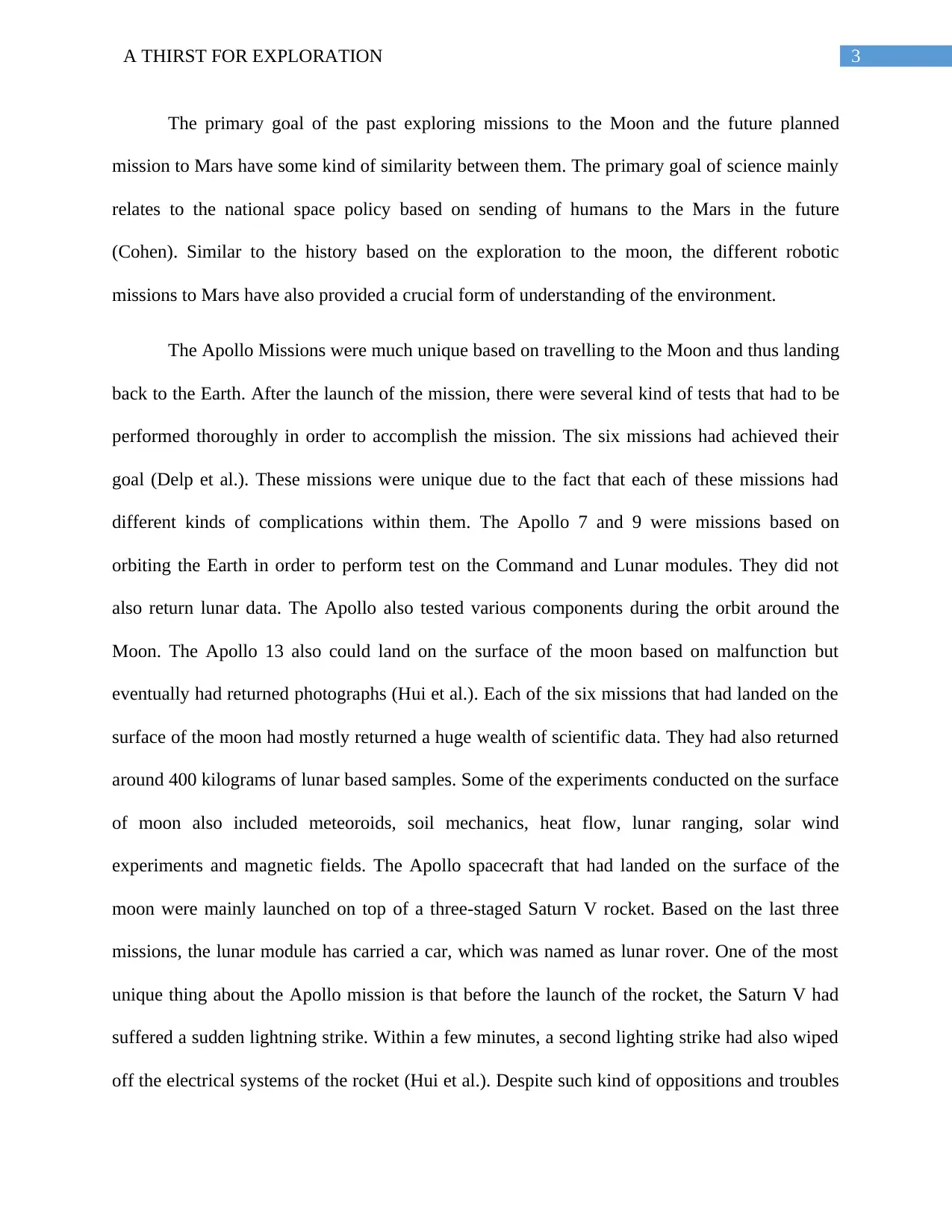
(Fig 2: Apollo 11 Moon Landing)
(Source: National Aeronautics and Space Administration)
On the other hand, the futuristic planned missions to Mars, which is known as the Mars
2020 rover mission is a subsidiary of the program of NASA’s Mars Exploration. This program
has been a long-term effort based on the exploration of the red planet. The mission of Mars 2020
have been able to address the higher priority based goals of science based on mars exploration
mission (Yingst et al.). These have included such kind of questions, which would be able to
address the potential kind of questions based on the existence of life on Mars. The futuristic
mission for exploration on Mars also took the next step based on not only seeking for signs of
habitable conditions on Mars. This also included signs based on existence of past microbial life.
before the beginning of the mission, the Apollo mission had made a successful landing on the
surface on the moon and thus had hugely helped for performing deep exploration on the surface
of Moon.
(Fig 2: Apollo 11 Moon Landing)
(Source: National Aeronautics and Space Administration)
On the other hand, the futuristic planned missions to Mars, which is known as the Mars
2020 rover mission is a subsidiary of the program of NASA’s Mars Exploration. This program
has been a long-term effort based on the exploration of the red planet. The mission of Mars 2020
have been able to address the higher priority based goals of science based on mars exploration
mission (Yingst et al.). These have included such kind of questions, which would be able to
address the potential kind of questions based on the existence of life on Mars. The futuristic
mission for exploration on Mars also took the next step based on not only seeking for signs of
habitable conditions on Mars. This also included signs based on existence of past microbial life.
Paraphrase This Document
Need a fresh take? Get an instant paraphrase of this document with our AI Paraphraser

5A THIRST FOR EXPLORATION
The mars 2020 rover would also include a drill, which would be able to collect the core samples
based on the most promising soils and rocks (Bridges et al.). The futuristic mission would also
help in providing opportunities in order to gather knowledge and thus also demonstrate the use of
technologies. This would eventually lead to addressing of challenges based on future human
expedition to Mars. The futuristic mission also included testing of methods based on producing
of oxygen within the Martian atmosphere (Hassler et al.). The mission also identifies various
resources based on the improvement of landing techniques and also characterizing dust, weather
and other kinds of potential environmental conditions,. This would also affect the works of future
astronauts who would live and work on the red planet.
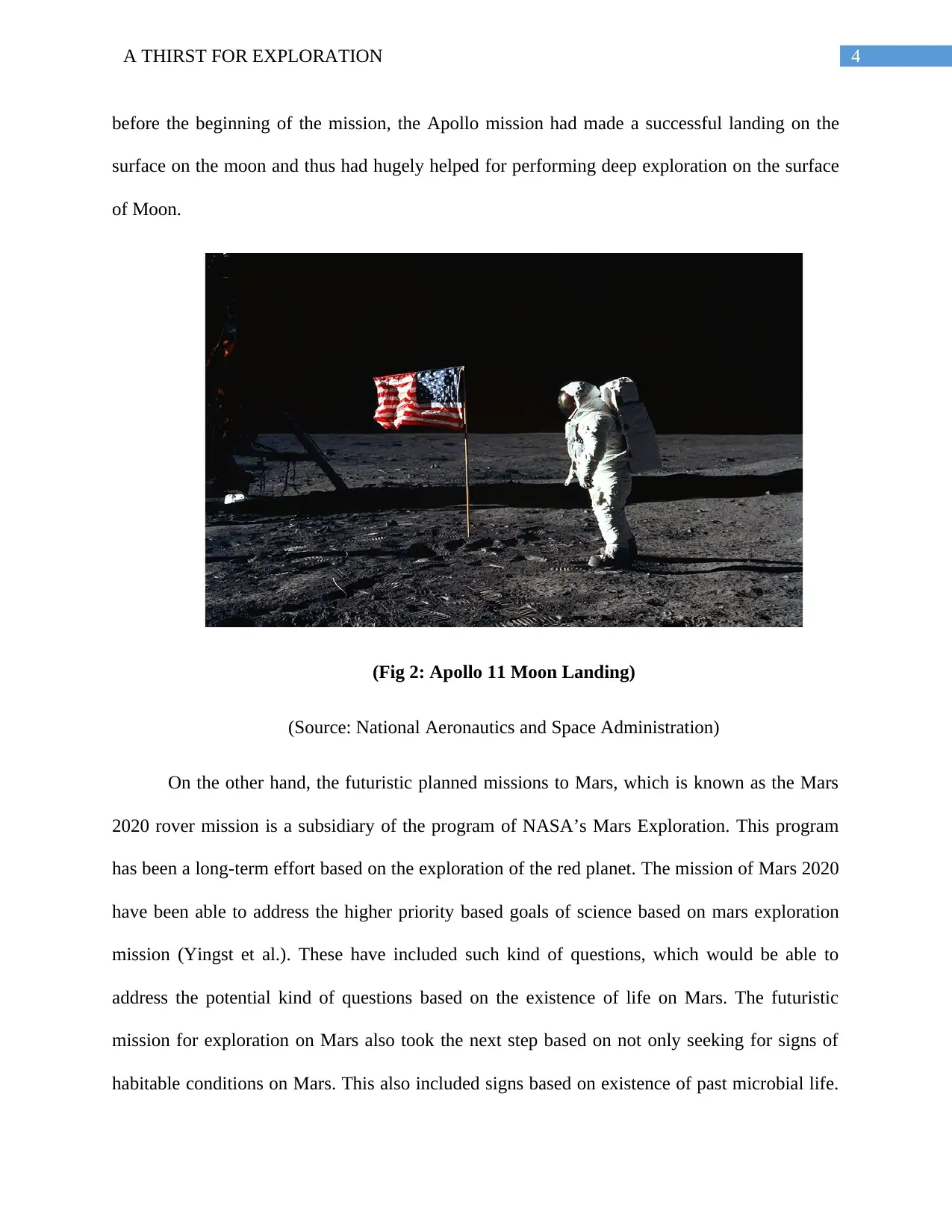
(Fig 3: Planned Mars 2020 Rover incorporating seven unique instruments)
(Source: Craig, Troutman and Herrmann, pp. 4409)
The mars 2020 rover would also include a drill, which would be able to collect the core samples
based on the most promising soils and rocks (Bridges et al.). The futuristic mission would also
help in providing opportunities in order to gather knowledge and thus also demonstrate the use of
technologies. This would eventually lead to addressing of challenges based on future human
expedition to Mars. The futuristic mission also included testing of methods based on producing
of oxygen within the Martian atmosphere (Hassler et al.). The mission also identifies various
resources based on the improvement of landing techniques and also characterizing dust, weather
and other kinds of potential environmental conditions,. This would also affect the works of future
astronauts who would live and work on the red planet.
(Fig 3: Planned Mars 2020 Rover incorporating seven unique instruments)
(Source: Craig, Troutman and Herrmann, pp. 4409)

6A THIRST FOR EXPLORATION
The mission to the red planet is mainly timed for a launch, which is proposed in July or
August in 2020. This would be the time when Mars and Earth would be in good positions and
would be relative to each other based on the landing on Mars. Based on keeping the risks and
costs of mission to be as low, the design of Mars would be based on a specially designed
architecture. The Mars 2020 rover has also been designed in order to study the conditions of the
rocks based on the processes of revealing of the geological patterns (Craig, Troutman and
Herrmann). The mission would also be needed to be accomplished based on the demonstration of
key technologies based on making use of natural resources within the Martian environment in
order to support life on the red planet.
Based on the discussions from the above topic, it could be concluded that both of these
explorations to Moon and Mars have been a major factor of demonstration of the progress of
science and technology. With the help of such kind of discoveries, it could be pictured that both
of these missions have a common form of objective. This would be based on finding various
kinds of samples of both of these terrestrial bodies. Based on the collection of different kinds of
samples such as soil and rock particles, it has been able to proceed further research on the planet.
Investments within such kind of future technologies based on exploring Mars and Moon would
be able to include contributions based on human exploration on the planet. This could be defined
as a part of the long term efforts based on the development of various future capabilities for the
major purpose of human space exploration.
The mission to the red planet is mainly timed for a launch, which is proposed in July or
August in 2020. This would be the time when Mars and Earth would be in good positions and
would be relative to each other based on the landing on Mars. Based on keeping the risks and
costs of mission to be as low, the design of Mars would be based on a specially designed
architecture. The Mars 2020 rover has also been designed in order to study the conditions of the
rocks based on the processes of revealing of the geological patterns (Craig, Troutman and
Herrmann). The mission would also be needed to be accomplished based on the demonstration of
key technologies based on making use of natural resources within the Martian environment in
order to support life on the red planet.
Based on the discussions from the above topic, it could be concluded that both of these
explorations to Moon and Mars have been a major factor of demonstration of the progress of
science and technology. With the help of such kind of discoveries, it could be pictured that both
of these missions have a common form of objective. This would be based on finding various
kinds of samples of both of these terrestrial bodies. Based on the collection of different kinds of
samples such as soil and rock particles, it has been able to proceed further research on the planet.
Investments within such kind of future technologies based on exploring Mars and Moon would
be able to include contributions based on human exploration on the planet. This could be defined
as a part of the long term efforts based on the development of various future capabilities for the
major purpose of human space exploration.
⊘ This is a preview!⊘
Do you want full access?
Subscribe today to unlock all pages.

Trusted by 1+ million students worldwide

7A THIRST FOR EXPLORATION
References
Bridges, Nathan, et al. "Bedform migration on Mars: Current results and future plans." Aeolian
Research 9 (2013): 133-151.
Cohen, Barbara A. "Lunar flashlight: mapping lunar surface volatiles using a CubeSat." (2015).
Craig, Douglas A., Patrick Troutman, and Nicole Herrmann. "Pioneering Space Through the
Evolvable Mars Campaign." AIAA Space 2015 Conference and Exposition. 2015.
Delp, Michael D., et al. "Apollo lunar astronauts show higher cardiovascular disease mortality:
possible deep space radiation effects on the vascular endothelium." Scientific reports 6 (2016):
29901.
Hassler, Donald M., et al. "Mars’ surface radiation environment measured with the Mars Science
Laboratory’s Curiosity rover." science 343.6169 (2014): 1244797.
Hui, Hejiu, et al. "Water in lunar anorthosites and evidence for a wet early Moon." Nature
Geoscience 6.3 (2013): 177.
"National Aeronautics And Space Administration". NASA, 2018, https://www.nasa.gov/.
Accessed 30 Dec 2018.
Wieczorek, Mark A., et al. "The crust of the Moon as seen by GRAIL." Science 339.6120
(2013): 671-675.
Yingst, R. A., et al. "Comparing Apollo and Mars Exploration Rover (MER)/phoenix operations
paradigms for human exploration during NASA Desert-RATS science operations." Acta
Astronautica 90.2 (2013): 311-317.
References
Bridges, Nathan, et al. "Bedform migration on Mars: Current results and future plans." Aeolian
Research 9 (2013): 133-151.
Cohen, Barbara A. "Lunar flashlight: mapping lunar surface volatiles using a CubeSat." (2015).
Craig, Douglas A., Patrick Troutman, and Nicole Herrmann. "Pioneering Space Through the
Evolvable Mars Campaign." AIAA Space 2015 Conference and Exposition. 2015.
Delp, Michael D., et al. "Apollo lunar astronauts show higher cardiovascular disease mortality:
possible deep space radiation effects on the vascular endothelium." Scientific reports 6 (2016):
29901.
Hassler, Donald M., et al. "Mars’ surface radiation environment measured with the Mars Science
Laboratory’s Curiosity rover." science 343.6169 (2014): 1244797.
Hui, Hejiu, et al. "Water in lunar anorthosites and evidence for a wet early Moon." Nature
Geoscience 6.3 (2013): 177.
"National Aeronautics And Space Administration". NASA, 2018, https://www.nasa.gov/.
Accessed 30 Dec 2018.
Wieczorek, Mark A., et al. "The crust of the Moon as seen by GRAIL." Science 339.6120
(2013): 671-675.
Yingst, R. A., et al. "Comparing Apollo and Mars Exploration Rover (MER)/phoenix operations
paradigms for human exploration during NASA Desert-RATS science operations." Acta
Astronautica 90.2 (2013): 311-317.
Paraphrase This Document
Need a fresh take? Get an instant paraphrase of this document with our AI Paraphraser

8A THIRST FOR EXPLORATION
Zeitlin, C., et al. "Measurements of energetic particle radiation in transit to Mars on the Mars
Science Laboratory." science340.6136 (2013): 1080-1084.
Zeitlin, C., et al. "Measurements of energetic particle radiation in transit to Mars on the Mars
Science Laboratory." science340.6136 (2013): 1080-1084.
1 out of 8
Your All-in-One AI-Powered Toolkit for Academic Success.
+13062052269
info@desklib.com
Available 24*7 on WhatsApp / Email
Unlock your academic potential
Copyright © 2020–2025 A2Z Services. All Rights Reserved. Developed and managed by ZUCOL.