Network Configuration and Testing: IBC Case Study Report - Semester 1
VerifiedAdded on 2022/08/20
|38
|2404
|18
Report
AI Summary
This report provides a comprehensive analysis of network configuration and testing, focusing on the implementation of OSPF and EIGRP routing protocols within a case study scenario. The report begins with an introduction to the protocols, their benefits, and best practices, followed by a detailed design section. The implementation section covers basic configurations, enabling OSPF and EIGRP on relevant routers, and configuring redistribution between the protocols. The core of the report involves rigorous testing, with detailed test cases, expected results, and screenshots to validate the network setup. The report concludes with a summary of the findings and a bibliography of cited resources. The report successfully describes use of ospf and eigrp routing protocols. The report begins by describing the protocols, lists the benefits, mentions the best practices and discusses the configuration. Next testing is conducted through test cases with screenshots. After this the report comes to an end.

Running head: NETWORK CONFIGURATION AND TESTING
Network Configuration and Testing
Name of the Student
Name of the University
Author Note
Network Configuration and Testing
Name of the Student
Name of the University
Author Note
Paraphrase This Document
Need a fresh take? Get an instant paraphrase of this document with our AI Paraphraser

1NETWORK CONFIGURATION AND TESTING
Table of Contents
Introduction................................................................................................................................2
Design Section Task I................................................................................................................2
1. What is OSPF in your own words and reference............................................................2
2. What is EIGRP in your word and reference....................................................................2
Benefits of using OSPF......................................................................................................2
Benefits of using EIGRP....................................................................................................3
Show why is these protocols are chosen and are feasible to use.......................................3
Best practice for OSPF.......................................................................................................3
Best practice for EIGRP.....................................................................................................4
Task 2 Implementation...............................................................................................................4
Basic Configuration...............................................................................................................4
Tasks 2 Enable OSPF on Relevant Routers...........................................................................7
Tasks 2 Configure Redistribution..........................................................................................8
Task 3 Testing........................................................................................................................9
Conclusion................................................................................................................................36
Bibliography.............................................................................................................................37
Table of Contents
Introduction................................................................................................................................2
Design Section Task I................................................................................................................2
1. What is OSPF in your own words and reference............................................................2
2. What is EIGRP in your word and reference....................................................................2
Benefits of using OSPF......................................................................................................2
Benefits of using EIGRP....................................................................................................3
Show why is these protocols are chosen and are feasible to use.......................................3
Best practice for OSPF.......................................................................................................3
Best practice for EIGRP.....................................................................................................4
Task 2 Implementation...............................................................................................................4
Basic Configuration...............................................................................................................4
Tasks 2 Enable OSPF on Relevant Routers...........................................................................7
Tasks 2 Configure Redistribution..........................................................................................8
Task 3 Testing........................................................................................................................9
Conclusion................................................................................................................................36
Bibliography.............................................................................................................................37

2NETWORK CONFIGURATION AND TESTING
Introduction
The task includes use of ospf and eigrp routing protocols. The report begins by
describing the protocols, lists the benefits, mentions the best practices and discusses the
configuration. Next testing is conducted through test cases with screenshots. After this the
report ends with conclusions.
Design Section Task I
1. What is OSPF in your own words and reference
OSPF stands for Open Shortest Path First and is a routing protocol for Internet Protocol
(IP) networks. This routing method makes use of LSR or Link State Routing algorithm that
corresponds to the Interior Gateway Protocol (IGP) and operates through a single
autonomous system (AS). The OSPF routing method supports Classless Inter-Domain
Routing (CIDR) model of IP addressing.
2. What is EIGRP in your word and reference
Benefits of using OSPF
OSPF is a true route-free loop routing protocol which is made possible thanks to the
efficiency of the algorithm used.
OSPF Fast Convergence: It is made possible to transmit the changes to the overall automated
system in shortest possible time.
In this routing the autonomous system gets divided to multiple regions, the routing
information summary can be adopted and that results in reduction of the amount of network
transmission
The routing uses multicast addresses instead of a broadcast address in the broadcast networks
to reduce interference of other network devices.
Introduction
The task includes use of ospf and eigrp routing protocols. The report begins by
describing the protocols, lists the benefits, mentions the best practices and discusses the
configuration. Next testing is conducted through test cases with screenshots. After this the
report ends with conclusions.
Design Section Task I
1. What is OSPF in your own words and reference
OSPF stands for Open Shortest Path First and is a routing protocol for Internet Protocol
(IP) networks. This routing method makes use of LSR or Link State Routing algorithm that
corresponds to the Interior Gateway Protocol (IGP) and operates through a single
autonomous system (AS). The OSPF routing method supports Classless Inter-Domain
Routing (CIDR) model of IP addressing.
2. What is EIGRP in your word and reference
Benefits of using OSPF
OSPF is a true route-free loop routing protocol which is made possible thanks to the
efficiency of the algorithm used.
OSPF Fast Convergence: It is made possible to transmit the changes to the overall automated
system in shortest possible time.
In this routing the autonomous system gets divided to multiple regions, the routing
information summary can be adopted and that results in reduction of the amount of network
transmission
The routing uses multicast addresses instead of a broadcast address in the broadcast networks
to reduce interference of other network devices.
⊘ This is a preview!⊘
Do you want full access?
Subscribe today to unlock all pages.

Trusted by 1+ million students worldwide

3NETWORK CONFIGURATION AND TESTING
Different network types can be accessed in multiple times through broadcast and NBMA by
election of DR and number of route exchanges.
OSPF offers interface-based plaintext and MD5 authentication.
Benefits of using EIGRP
Convergence of EIGRP is observed at fast and rapid response times for network topology
changes.
EIGRP makes more effective use of links through Equal Cost Multi Path or ECMP and
unequal cost load sharing techniques.
Easier transition is performed by means of multi-address family.
Both IPv4 and IPv6 network connections are supported by the routing method.
Network traffic gets reduced by EIGRP via use of need based updates
Show why is these protocols are chosen and are feasible to use
Both the routing methods EIGRP and OSPF are interior routing protocols that help
organizations like International Banking Corp (IBC) to appropriately configure the different
segments of their network. Additionally the routing protocols help in choosing best routes for
data transfer between routers and offers better performance than say RIP routing.
Best practice for OSPF
The best practices for configuring OSPF routing involves the following:
Setting Router IDs
Accurate defining of networks
Default configuration of passive interfaces
Use of different OSPF authentication for every neighbour
Different network types can be accessed in multiple times through broadcast and NBMA by
election of DR and number of route exchanges.
OSPF offers interface-based plaintext and MD5 authentication.
Benefits of using EIGRP
Convergence of EIGRP is observed at fast and rapid response times for network topology
changes.
EIGRP makes more effective use of links through Equal Cost Multi Path or ECMP and
unequal cost load sharing techniques.
Easier transition is performed by means of multi-address family.
Both IPv4 and IPv6 network connections are supported by the routing method.
Network traffic gets reduced by EIGRP via use of need based updates
Show why is these protocols are chosen and are feasible to use
Both the routing methods EIGRP and OSPF are interior routing protocols that help
organizations like International Banking Corp (IBC) to appropriately configure the different
segments of their network. Additionally the routing protocols help in choosing best routes for
data transfer between routers and offers better performance than say RIP routing.
Best practice for OSPF
The best practices for configuring OSPF routing involves the following:
Setting Router IDs
Accurate defining of networks
Default configuration of passive interfaces
Use of different OSPF authentication for every neighbour
Paraphrase This Document
Need a fresh take? Get an instant paraphrase of this document with our AI Paraphraser

4NETWORK CONFIGURATION AND TESTING
Ensuring redistribution of route maps and static routes
Best practice for EIGRP
Use of different AS number than what is being used on IGP
Use of stub routing concept offered by EIGRP
Configuring appropriate IP addressing scheme and summarizing of networks
Use of on-demand libraries provided by vendors like Cisco
Task 2 Implementation
Basic Configuration
The configuration of routers of IBC involves specifying the IP addresses on all the
respective interfaces being used. Then the networks used by these interfaces need to be added
to the routing protocol being applied EIGRP or OSPF. The serial interface IP addresses of
two routers must be specified interchangeably as the remote interface for BGP configuration
on a specific router.
The IP addresses must be specified in order to uniquely identify the router interface in
the network. After that the networks in use need to be added to the routing protocol to ensure
connectivity throughout the network segment. BGP neighbour interfaces need to be
configured to ensure working of the Border Gateway Protocol.
These configurations are applied by entering specific commands in the CLI terminal of the
router. Some of the commands are as follows:
#R8
int s0/2/0
Ensuring redistribution of route maps and static routes
Best practice for EIGRP
Use of different AS number than what is being used on IGP
Use of stub routing concept offered by EIGRP
Configuring appropriate IP addressing scheme and summarizing of networks
Use of on-demand libraries provided by vendors like Cisco
Task 2 Implementation
Basic Configuration
The configuration of routers of IBC involves specifying the IP addresses on all the
respective interfaces being used. Then the networks used by these interfaces need to be added
to the routing protocol being applied EIGRP or OSPF. The serial interface IP addresses of
two routers must be specified interchangeably as the remote interface for BGP configuration
on a specific router.
The IP addresses must be specified in order to uniquely identify the router interface in
the network. After that the networks in use need to be added to the routing protocol to ensure
connectivity throughout the network segment. BGP neighbour interfaces need to be
configured to ensure working of the Border Gateway Protocol.
These configurations are applied by entering specific commands in the CLI terminal of the
router. Some of the commands are as follows:
#R8
int s0/2/0

5NETWORK CONFIGURATION AND TESTING
ip address 10.10.48.2 255.255.255.0
router eigrp 150
network 10.10.48.0 255.255.255.0
#R4
int s0/2/0
ip address 10.10.48.1 255.255.255.0
router eigrp 150
network 10.10.48.0 area 0
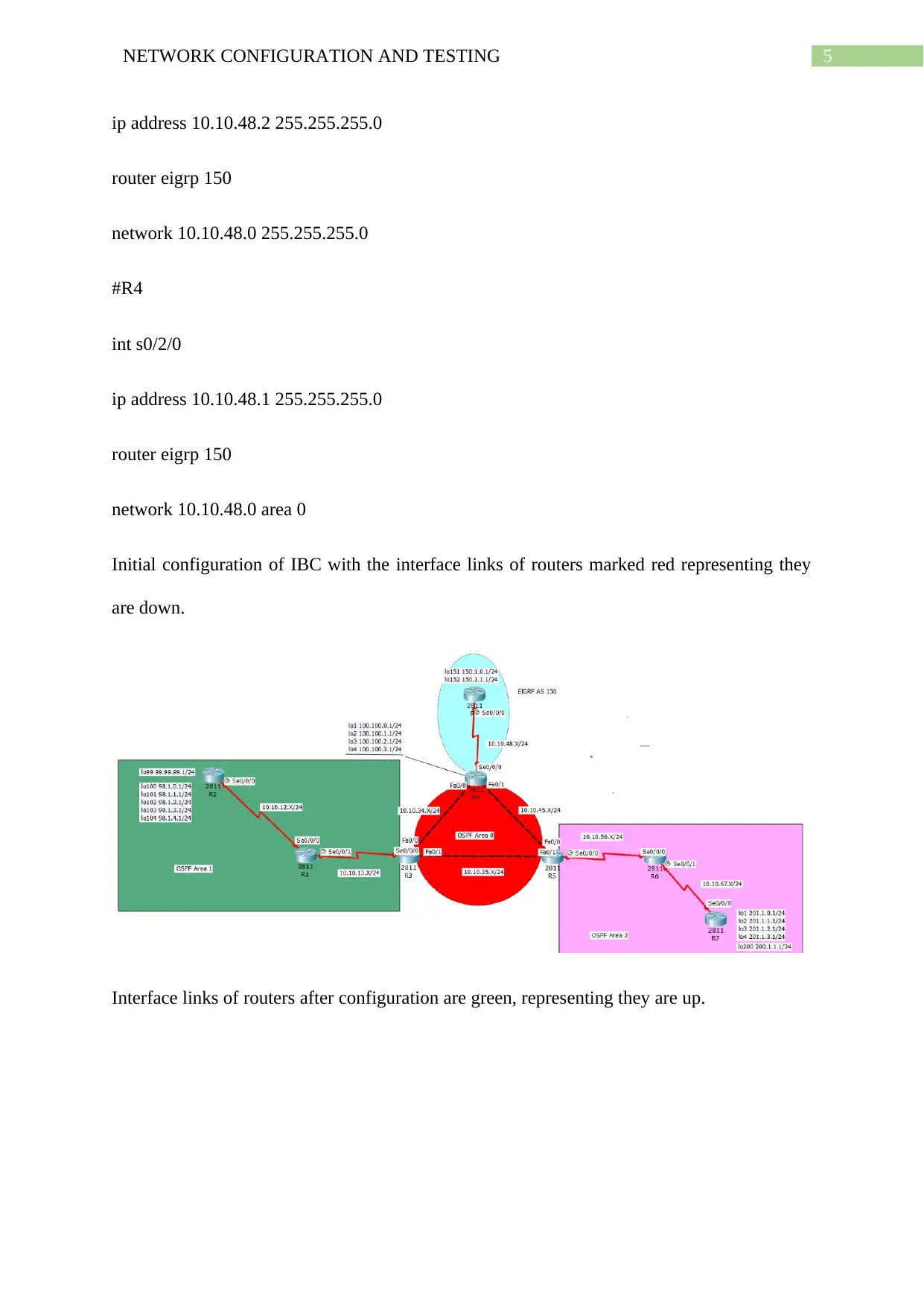
Initial configuration of IBC with the interface links of routers marked red representing they
are down.
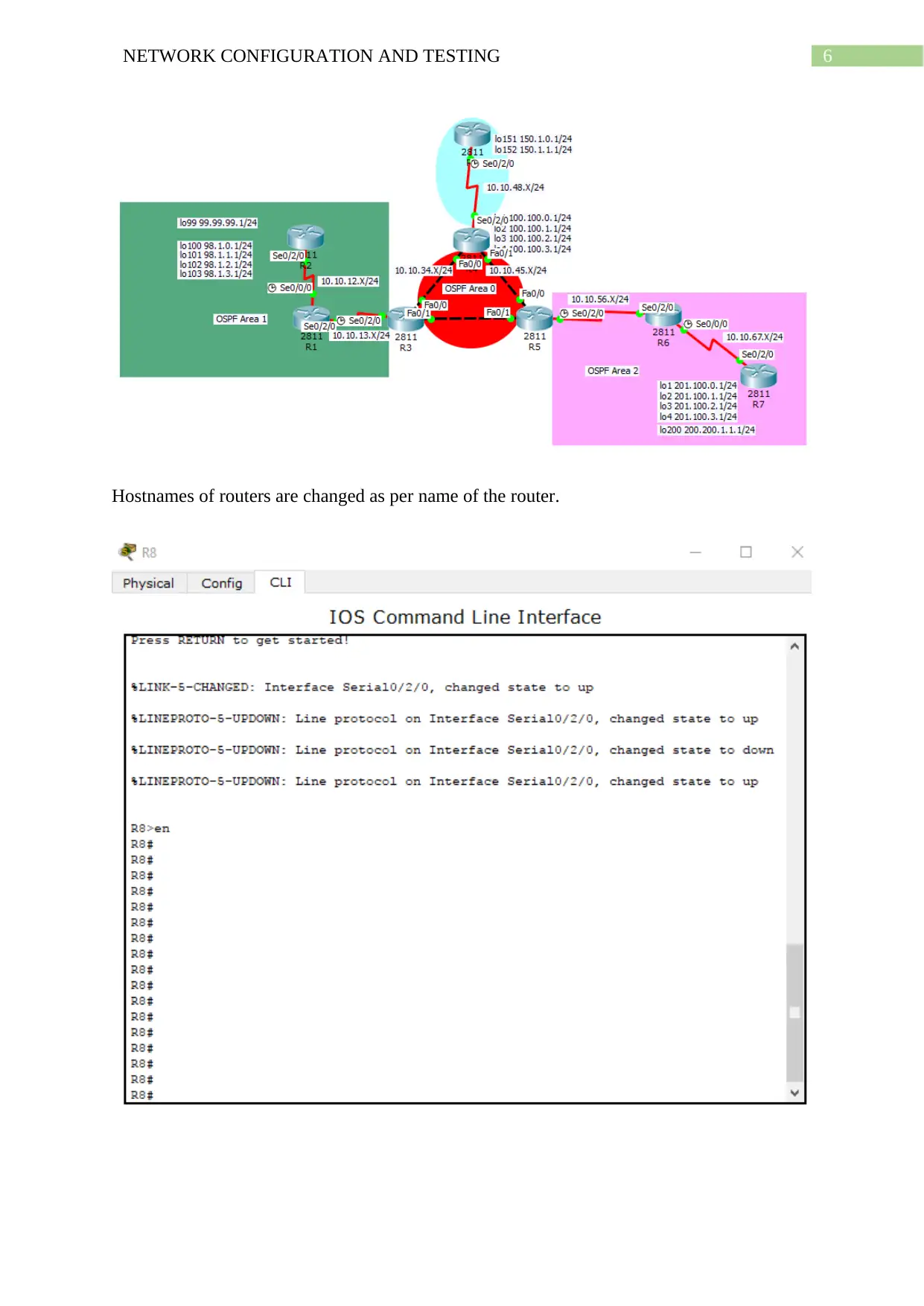
Interface links of routers after configuration are green, representing they are up.
ip address 10.10.48.2 255.255.255.0
router eigrp 150
network 10.10.48.0 255.255.255.0
#R4
int s0/2/0
ip address 10.10.48.1 255.255.255.0
router eigrp 150
network 10.10.48.0 area 0
Initial configuration of IBC with the interface links of routers marked red representing they
are down.
Interface links of routers after configuration are green, representing they are up.
⊘ This is a preview!⊘
Do you want full access?
Subscribe today to unlock all pages.

Trusted by 1+ million students worldwide

6NETWORK CONFIGURATION AND TESTING
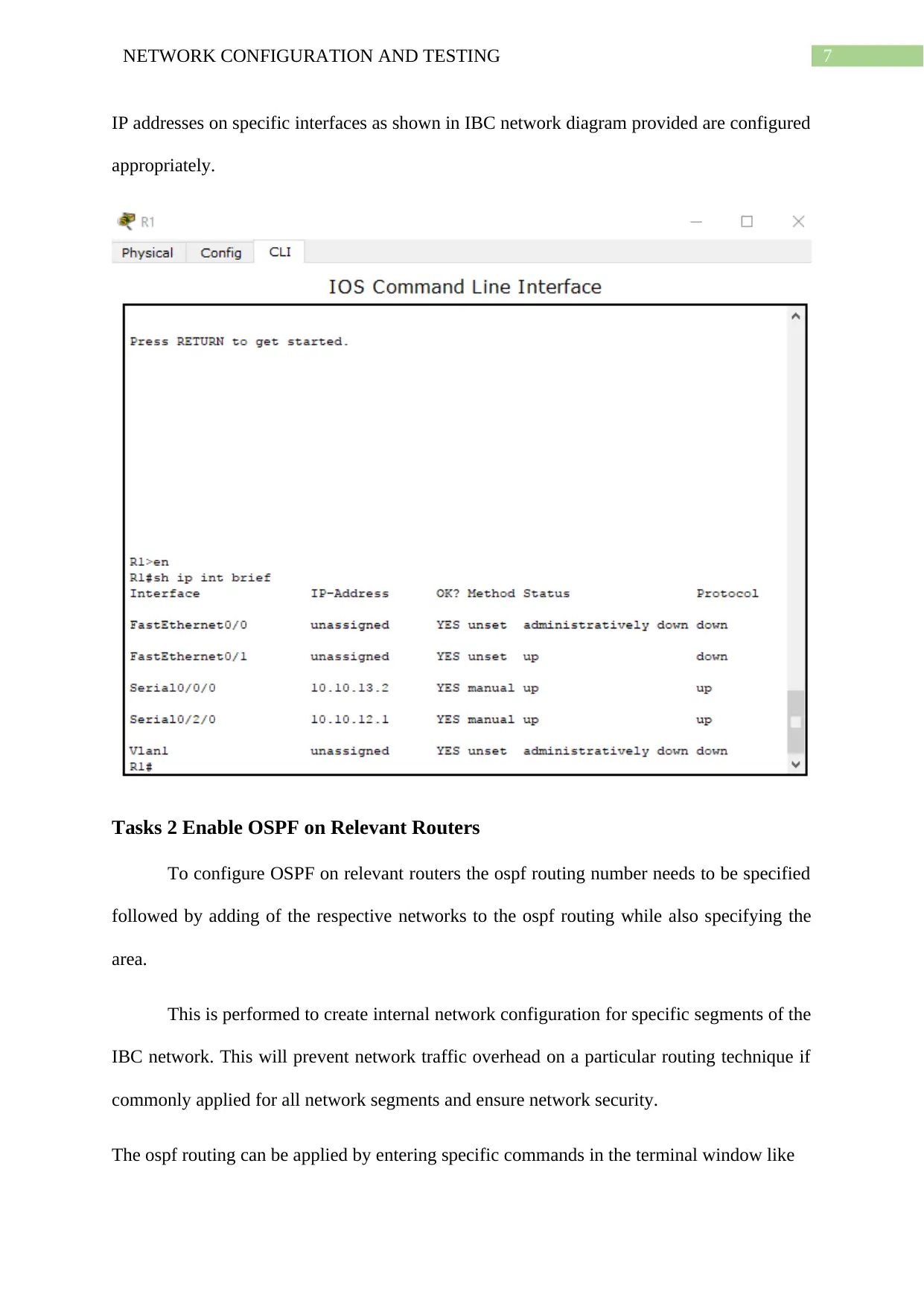
Hostnames of routers are changed as per name of the router.
Paraphrase This Document
Need a fresh take? Get an instant paraphrase of this document with our AI Paraphraser

7NETWORK CONFIGURATION AND TESTING
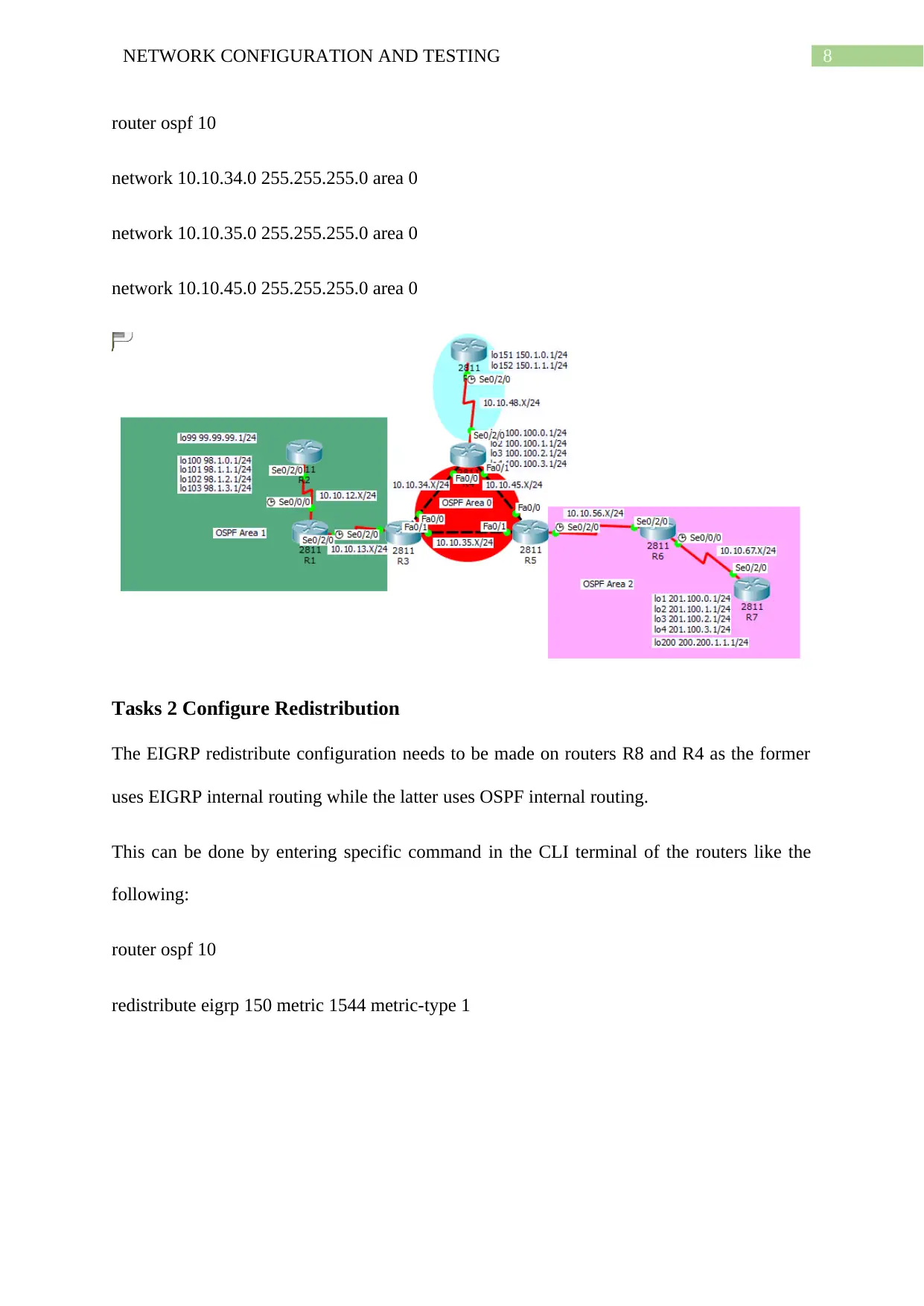
IP addresses on specific interfaces as shown in IBC network diagram provided are configured
appropriately.
Tasks 2 Enable OSPF on Relevant Routers
To configure OSPF on relevant routers the ospf routing number needs to be specified
followed by adding of the respective networks to the ospf routing while also specifying the
area.
This is performed to create internal network configuration for specific segments of the
IBC network. This will prevent network traffic overhead on a particular routing technique if
commonly applied for all network segments and ensure network security.
The ospf routing can be applied by entering specific commands in the terminal window like
IP addresses on specific interfaces as shown in IBC network diagram provided are configured
appropriately.
Tasks 2 Enable OSPF on Relevant Routers
To configure OSPF on relevant routers the ospf routing number needs to be specified
followed by adding of the respective networks to the ospf routing while also specifying the
area.
This is performed to create internal network configuration for specific segments of the
IBC network. This will prevent network traffic overhead on a particular routing technique if
commonly applied for all network segments and ensure network security.
The ospf routing can be applied by entering specific commands in the terminal window like

8NETWORK CONFIGURATION AND TESTING
router ospf 10
network 10.10.34.0 255.255.255.0 area 0
network 10.10.35.0 255.255.255.0 area 0
network 10.10.45.0 255.255.255.0 area 0
Tasks 2 Configure Redistribution
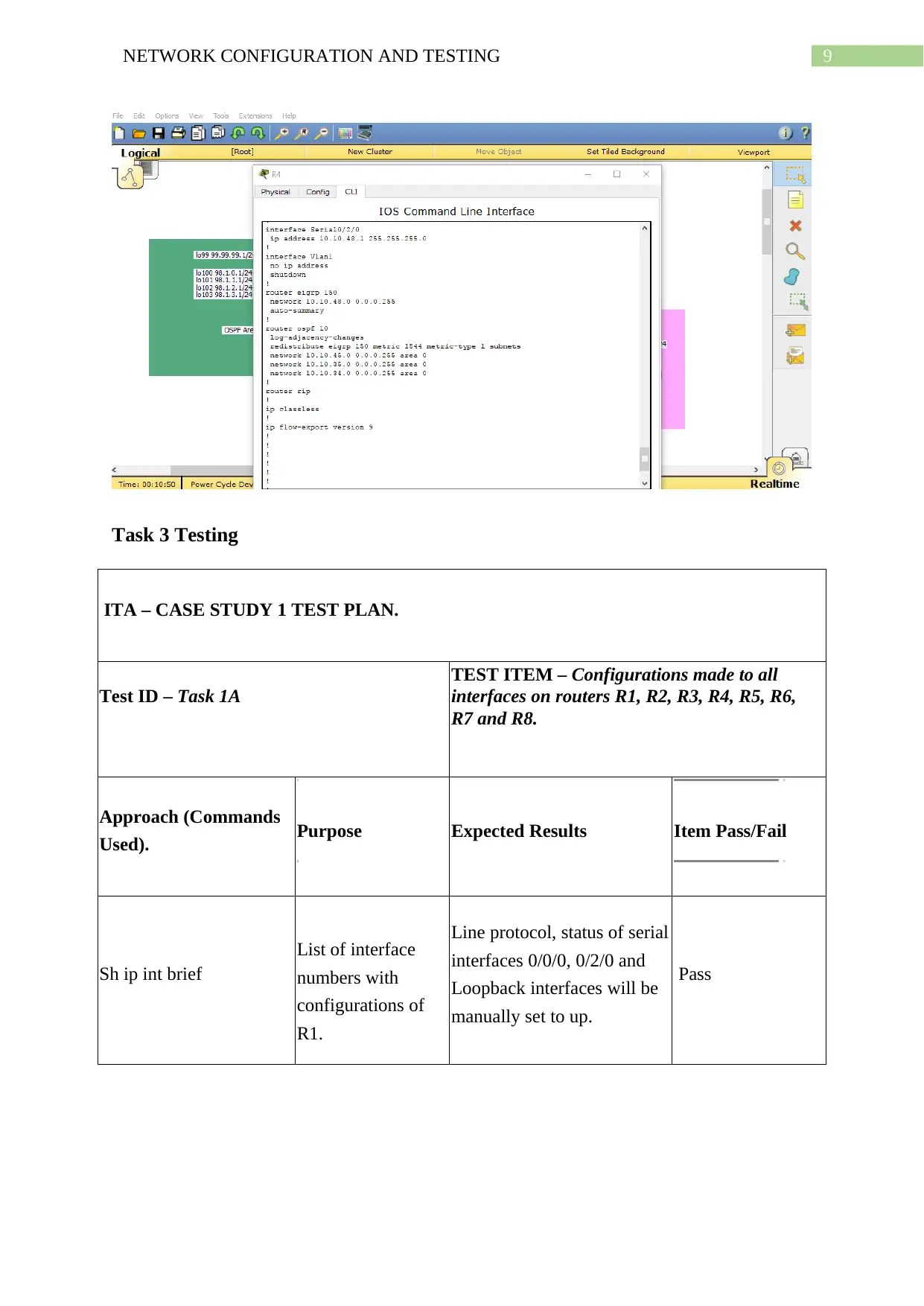
The EIGRP redistribute configuration needs to be made on routers R8 and R4 as the former
uses EIGRP internal routing while the latter uses OSPF internal routing.
This can be done by entering specific command in the CLI terminal of the routers like the
following:
router ospf 10
redistribute eigrp 150 metric 1544 metric-type 1
router ospf 10
network 10.10.34.0 255.255.255.0 area 0
network 10.10.35.0 255.255.255.0 area 0
network 10.10.45.0 255.255.255.0 area 0
Tasks 2 Configure Redistribution
The EIGRP redistribute configuration needs to be made on routers R8 and R4 as the former
uses EIGRP internal routing while the latter uses OSPF internal routing.
This can be done by entering specific command in the CLI terminal of the routers like the
following:
router ospf 10
redistribute eigrp 150 metric 1544 metric-type 1
⊘ This is a preview!⊘
Do you want full access?
Subscribe today to unlock all pages.

Trusted by 1+ million students worldwide

9NETWORK CONFIGURATION AND TESTING
Task 3 Testing
ITA – CASE STUDY 1 TEST PLAN.
Test ID – Task 1A
TEST ITEM – Configurations made to all
interfaces on routers R1, R2, R3, R4, R5, R6,
R7 and R8.
Approach (Commands
Used). Purpose Expected Results Item Pass/Fail
Sh ip int brief
List of interface
numbers with
configurations of
R1.
Line protocol, status of serial
interfaces 0/0/0, 0/2/0 and
Loopback interfaces will be
manually set to up.
Pass
Task 3 Testing
ITA – CASE STUDY 1 TEST PLAN.
Test ID – Task 1A
TEST ITEM – Configurations made to all
interfaces on routers R1, R2, R3, R4, R5, R6,
R7 and R8.
Approach (Commands
Used). Purpose Expected Results Item Pass/Fail
Sh ip int brief
List of interface
numbers with
configurations of
R1.
Line protocol, status of serial
interfaces 0/0/0, 0/2/0 and
Loopback interfaces will be
manually set to up.
Pass
Paraphrase This Document
Need a fresh take? Get an instant paraphrase of this document with our AI Paraphraser

10NETWORK CONFIGURATION AND TESTING
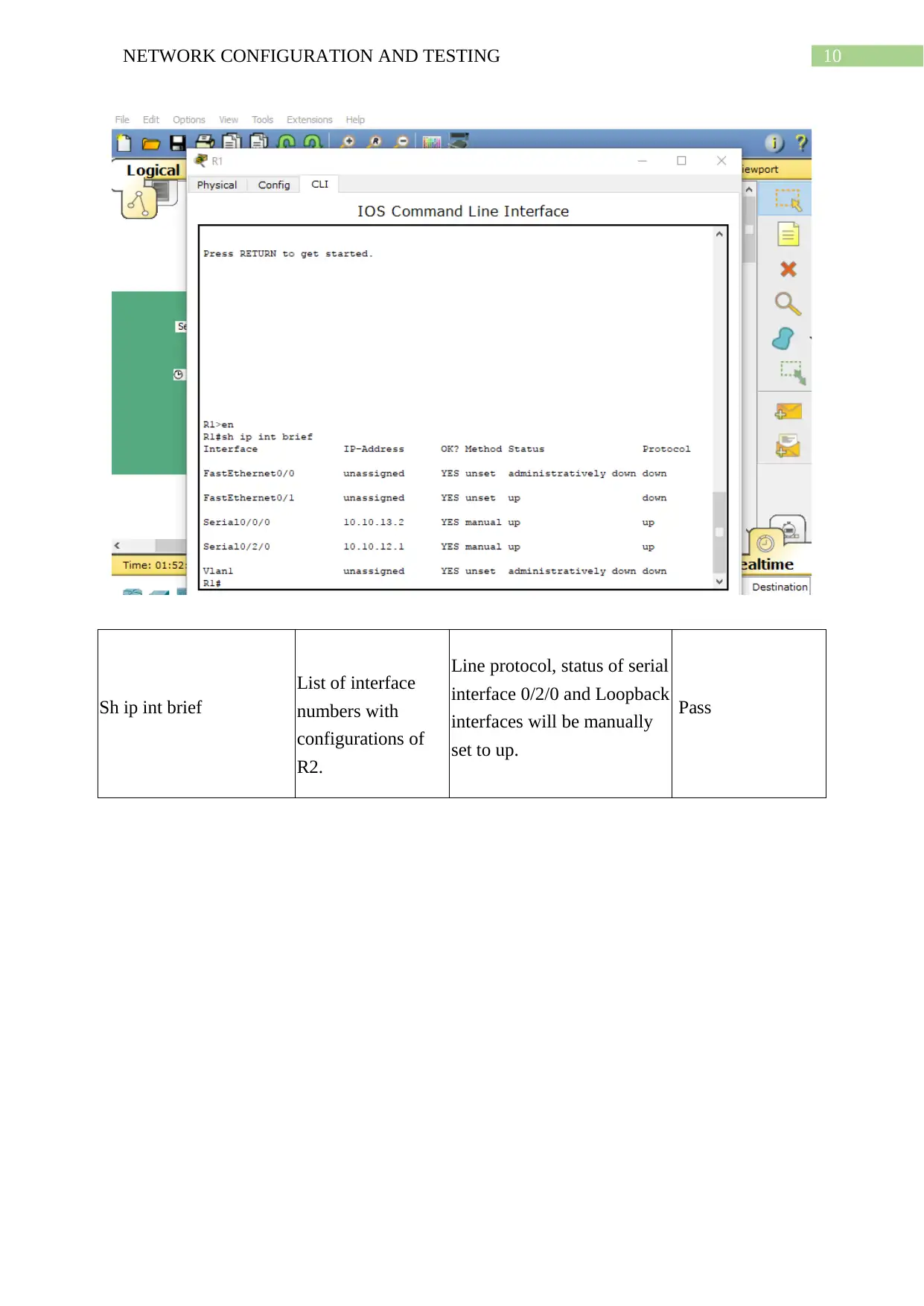
Sh ip int brief
List of interface
numbers with
configurations of
R2.
Line protocol, status of serial
interface 0/2/0 and Loopback
interfaces will be manually
set to up.
Pass
Sh ip int brief
List of interface
numbers with
configurations of
R2.
Line protocol, status of serial
interface 0/2/0 and Loopback
interfaces will be manually
set to up.
Pass

11NETWORK CONFIGURATION AND TESTING
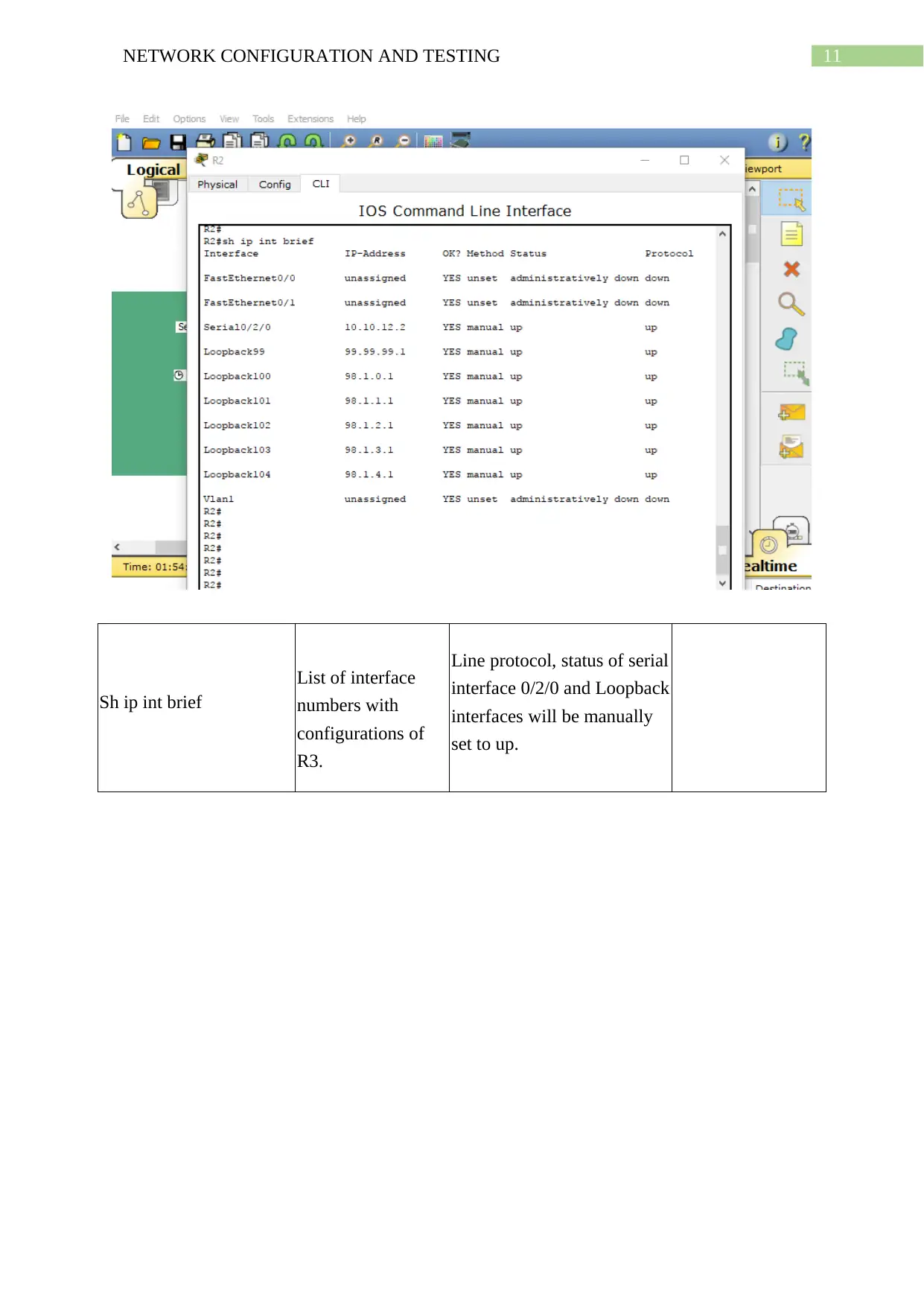
Sh ip int brief
List of interface
numbers with
configurations of
R3.
Line protocol, status of serial
interface 0/2/0 and Loopback
interfaces will be manually
set to up.
Sh ip int brief
List of interface
numbers with
configurations of
R3.
Line protocol, status of serial
interface 0/2/0 and Loopback
interfaces will be manually
set to up.
⊘ This is a preview!⊘
Do you want full access?
Subscribe today to unlock all pages.

Trusted by 1+ million students worldwide
1 out of 38
Related Documents
Your All-in-One AI-Powered Toolkit for Academic Success.
+13062052269
info@desklib.com
Available 24*7 on WhatsApp / Email
Unlock your academic potential
Copyright © 2020–2025 A2Z Services. All Rights Reserved. Developed and managed by ZUCOL.