National Health Strategy: Strategies for NZ Health Challenges
VerifiedAdded on 2022/11/10
|29
|5473
|407
Report
AI Summary
This report provides a comprehensive overview of the National Health Strategy in New Zealand, addressing critical health issues such as childhood obesity, diabetes, disability, arthritis, and oral health. It examines the prevalence of each disease, the challenges faced, and the country's strategies to mitigate their effects. The report outlines specific objectives, challenges, key indicators, and rationales for each strategy, including proposed interventions like improving nutrition, maternal health, and physical activity. It also includes an assessment of the likelihood of success for each strategy and a timeline for implementation, including progress milestones over a 10-year period. The report also highlights the importance of addressing lifestyle factors contributing to these health problems, emphasizing the need for awareness, skills, and resource development to improve health outcomes and reduce premature deaths in New Zealand.
Running head: NATIONAL HEALTH STRATEGY
NATIONAL HEALTH STRATEGY
Name of the student
Name of the university
Author’s name
NATIONAL HEALTH STRATEGY
Name of the student
Name of the university
Author’s name

Paraphrase This Document
Need a fresh take? Get an instant paraphrase of this document with our AI Paraphraser
1NATIONAL HEALTH STRATEGY
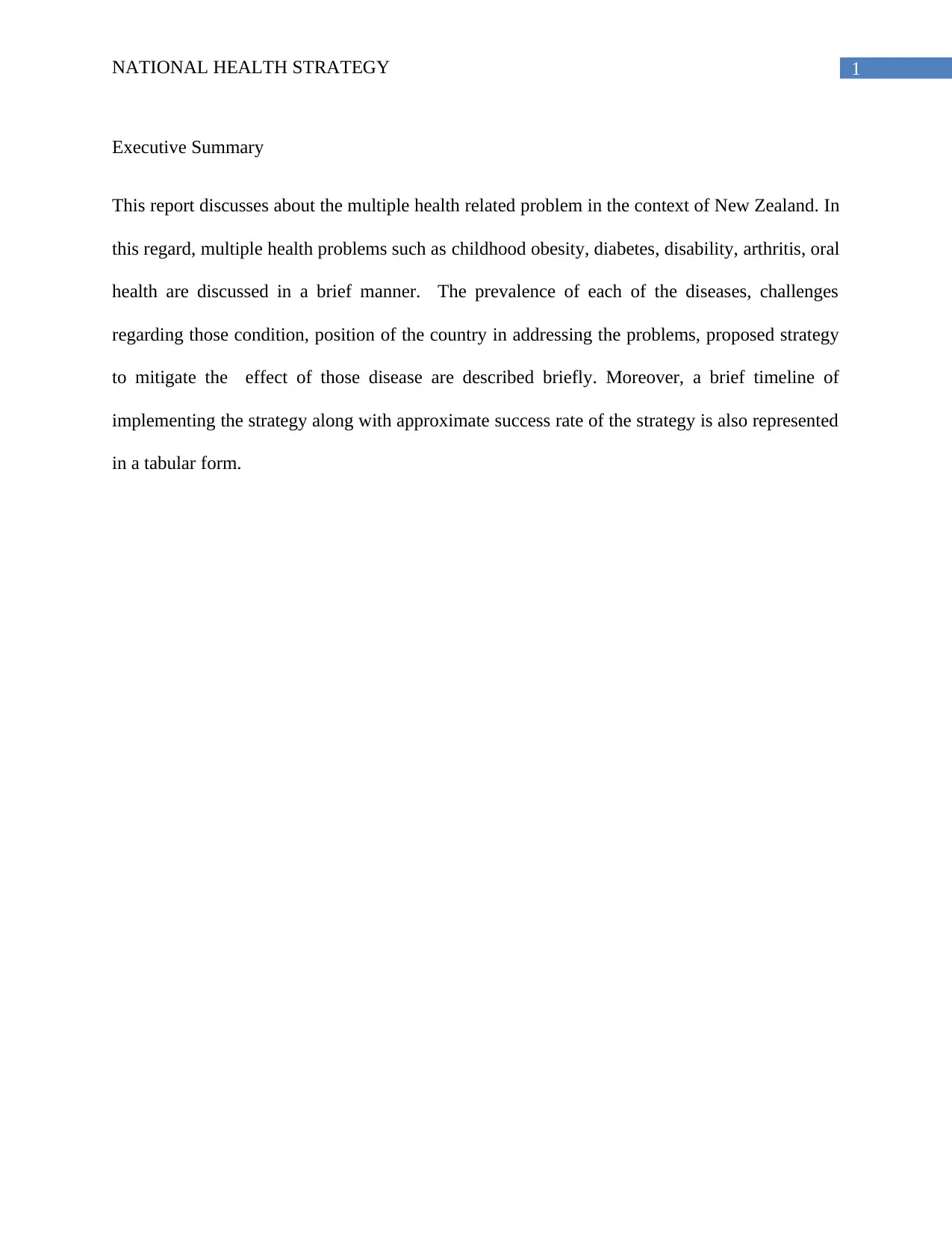
Executive Summary
This report discusses about the multiple health related problem in the context of New Zealand. In
this regard, multiple health problems such as childhood obesity, diabetes, disability, arthritis, oral
health are discussed in a brief manner. The prevalence of each of the diseases, challenges
regarding those condition, position of the country in addressing the problems, proposed strategy
to mitigate the effect of those disease are described briefly. Moreover, a brief timeline of
implementing the strategy along with approximate success rate of the strategy is also represented
in a tabular form.
Executive Summary
This report discusses about the multiple health related problem in the context of New Zealand. In
this regard, multiple health problems such as childhood obesity, diabetes, disability, arthritis, oral
health are discussed in a brief manner. The prevalence of each of the diseases, challenges
regarding those condition, position of the country in addressing the problems, proposed strategy
to mitigate the effect of those disease are described briefly. Moreover, a brief timeline of
implementing the strategy along with approximate success rate of the strategy is also represented
in a tabular form.
2NATIONAL HEALTH STRATEGY
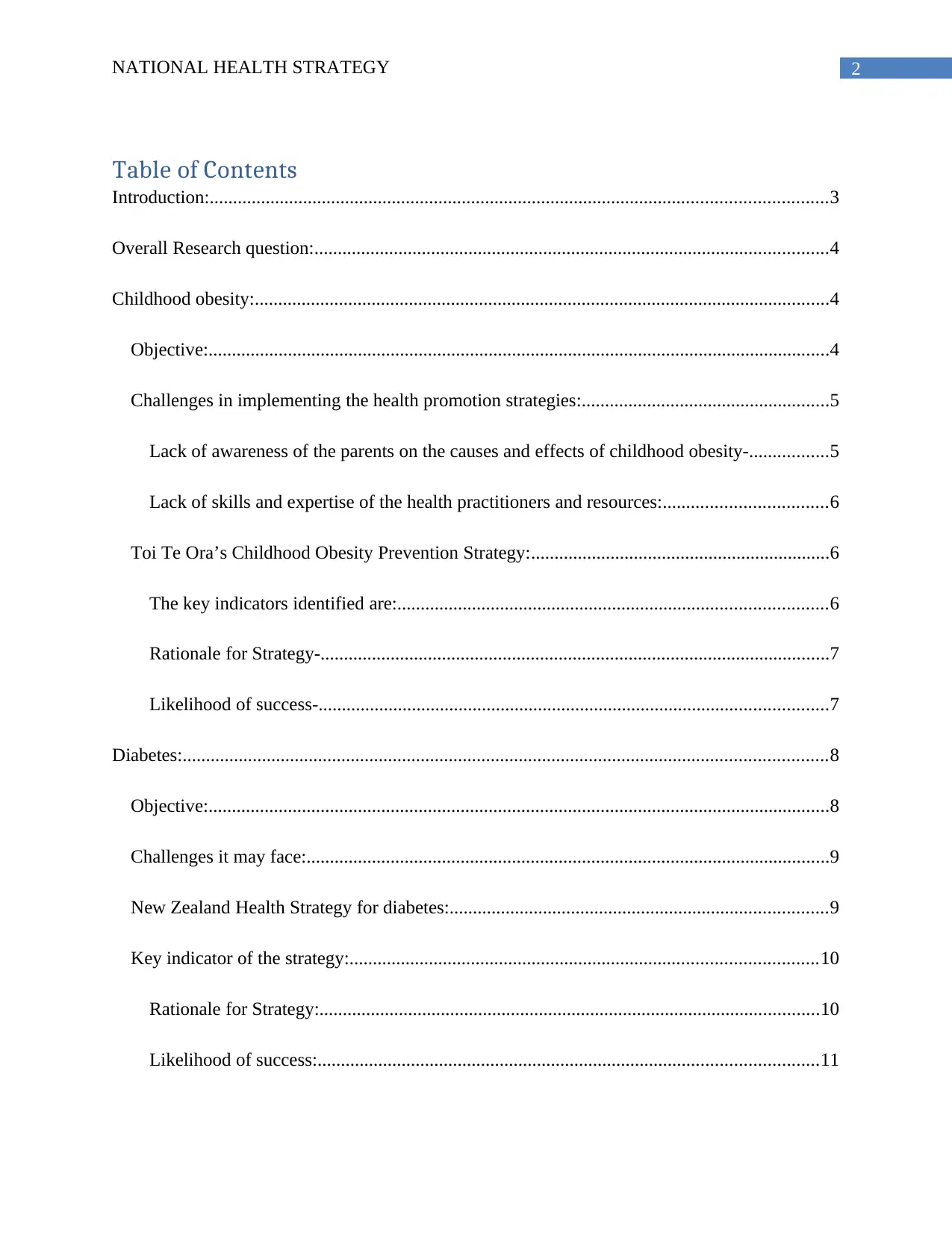
Table of Contents
Introduction:....................................................................................................................................3
Overall Research question:..............................................................................................................4
Childhood obesity:...........................................................................................................................4
Objective:.....................................................................................................................................4
Challenges in implementing the health promotion strategies:.....................................................5
Lack of awareness of the parents on the causes and effects of childhood obesity-.................5
Lack of skills and expertise of the health practitioners and resources:...................................6
Toi Te Ora’s Childhood Obesity Prevention Strategy:................................................................6
The key indicators identified are:............................................................................................6
Rationale for Strategy-.............................................................................................................7
Likelihood of success-.............................................................................................................7
Diabetes:..........................................................................................................................................8
Objective:.....................................................................................................................................8
Challenges it may face:................................................................................................................9
New Zealand Health Strategy for diabetes:.................................................................................9
Key indicator of the strategy:....................................................................................................10
Rationale for Strategy:...........................................................................................................10
Likelihood of success:...........................................................................................................11
Table of Contents
Introduction:....................................................................................................................................3
Overall Research question:..............................................................................................................4
Childhood obesity:...........................................................................................................................4
Objective:.....................................................................................................................................4
Challenges in implementing the health promotion strategies:.....................................................5
Lack of awareness of the parents on the causes and effects of childhood obesity-.................5
Lack of skills and expertise of the health practitioners and resources:...................................6
Toi Te Ora’s Childhood Obesity Prevention Strategy:................................................................6
The key indicators identified are:............................................................................................6
Rationale for Strategy-.............................................................................................................7
Likelihood of success-.............................................................................................................7
Diabetes:..........................................................................................................................................8
Objective:.....................................................................................................................................8
Challenges it may face:................................................................................................................9
New Zealand Health Strategy for diabetes:.................................................................................9
Key indicator of the strategy:....................................................................................................10
Rationale for Strategy:...........................................................................................................10
Likelihood of success:...........................................................................................................11
⊘ This is a preview!⊘
Do you want full access?
Subscribe today to unlock all pages.

Trusted by 1+ million students worldwide
3NATIONAL HEALTH STRATEGY
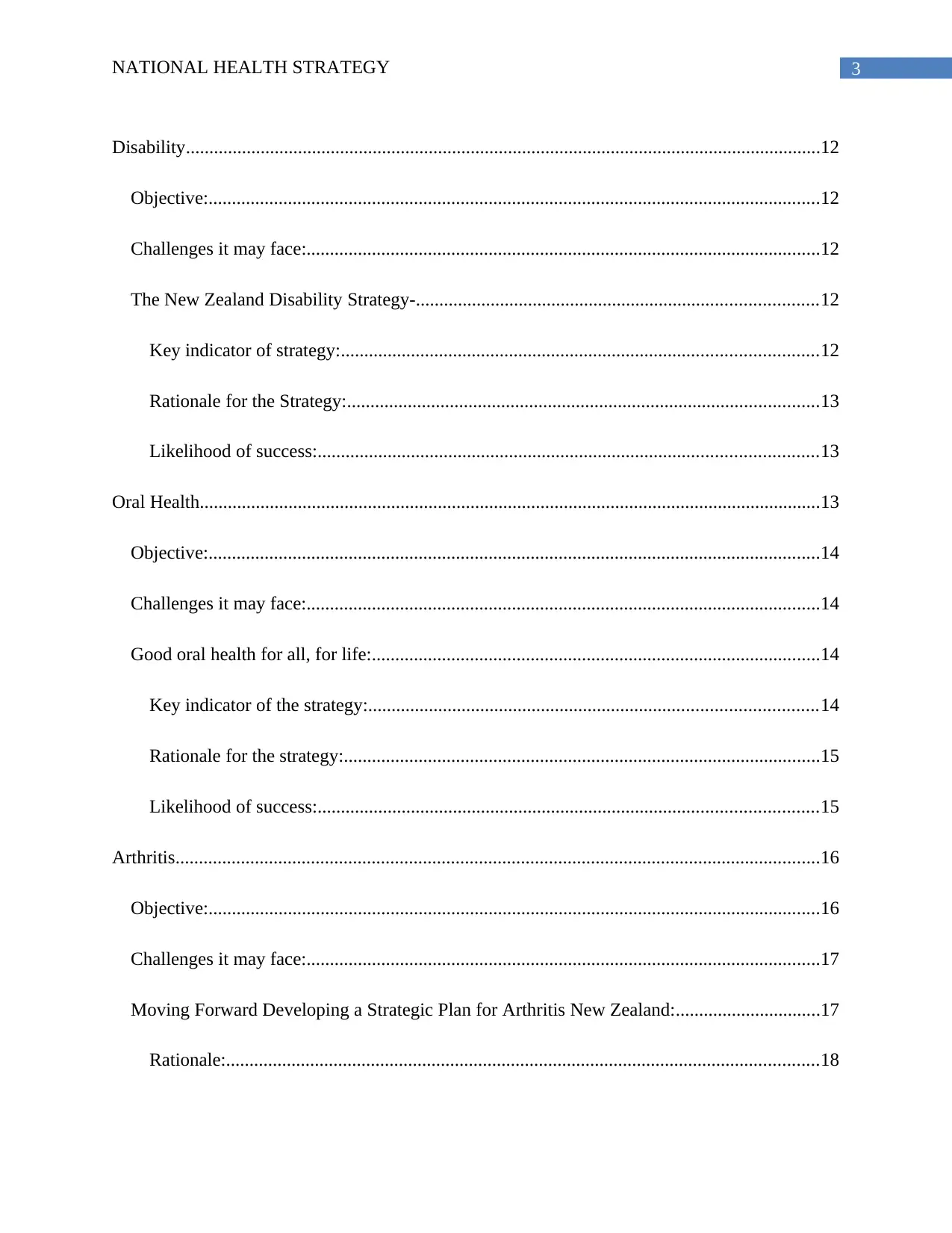
Disability........................................................................................................................................12
Objective:...................................................................................................................................12
Challenges it may face:..............................................................................................................12
The New Zealand Disability Strategy-......................................................................................12
Key indicator of strategy:......................................................................................................12
Rationale for the Strategy:.....................................................................................................13
Likelihood of success:...........................................................................................................13
Oral Health.....................................................................................................................................13
Objective:...................................................................................................................................14
Challenges it may face:..............................................................................................................14
Good oral health for all, for life:................................................................................................14
Key indicator of the strategy:................................................................................................14
Rationale for the strategy:......................................................................................................15
Likelihood of success:...........................................................................................................15
Arthritis..........................................................................................................................................16
Objective:...................................................................................................................................16
Challenges it may face:..............................................................................................................17
Moving Forward Developing a Strategic Plan for Arthritis New Zealand:...............................17
Rationale:...............................................................................................................................18
Disability........................................................................................................................................12
Objective:...................................................................................................................................12
Challenges it may face:..............................................................................................................12
The New Zealand Disability Strategy-......................................................................................12
Key indicator of strategy:......................................................................................................12
Rationale for the Strategy:.....................................................................................................13
Likelihood of success:...........................................................................................................13
Oral Health.....................................................................................................................................13
Objective:...................................................................................................................................14
Challenges it may face:..............................................................................................................14
Good oral health for all, for life:................................................................................................14
Key indicator of the strategy:................................................................................................14
Rationale for the strategy:......................................................................................................15
Likelihood of success:...........................................................................................................15
Arthritis..........................................................................................................................................16
Objective:...................................................................................................................................16
Challenges it may face:..............................................................................................................17
Moving Forward Developing a Strategic Plan for Arthritis New Zealand:...............................17
Rationale:...............................................................................................................................18
Paraphrase This Document
Need a fresh take? Get an instant paraphrase of this document with our AI Paraphraser
4NATIONAL HEALTH STRATEGY
Key Indicators:.......................................................................................................................18
Likelihood of success:...........................................................................................................19
Conclusion:....................................................................................................................................19
Progress milestones overall of all 5 strategies in the timeline of 10 years (2019 to 2029 years):.20
References:....................................................................................................................................22
Key Indicators:.......................................................................................................................18
Likelihood of success:...........................................................................................................19
Conclusion:....................................................................................................................................19
Progress milestones overall of all 5 strategies in the timeline of 10 years (2019 to 2029 years):.20
References:....................................................................................................................................22
5NATIONAL HEALTH STRATEGY
Introduction:
With the growing prevalence of non-communicable disease, diabetes, obesity, arthritis,
oral health and disabilities are the primary cause of death in men and women in New Zealand.
Approximately, 89% of the population is dying every year due to non-communicable diseases,
whereas estimated 7,000 of the population between the ages of 30 and 70 experienced premature
death due to the non-communicable disease (Www.nzma.org.nz, 2019). The most prominent
cause behind the high prevalence of the non-communicable disease includes preventable ethnic
and socioeconomic health inequalities in New Zealand which further impacted more than
thousand years every year (Bullen et al., 2016). The stigmatized behavior, lack of proper skills
and expertise, improper cultural and personal beliefs are also major contributors behind rapid
increase of the non-communicable disease. A large portion of these diseases can be prevented or
reduced with the help of cost-effective, evidence-based interventions. While National health
system targets have established for addressing these impact of the non-communicable disease,
proper health promotional strategies are required to develop for increasing awareness and
addressing the unique need. This paper aims to discuss such non-communicable diseases
(diabetes, obesity, arthritis, oral health, and disabilities ) where One Objective, Challenges that
may face, Ten-year national strategy (one), Key indicator of strategy, Rationale for Strategy
(Reason behind the Strategy), Likelihood of success.
Introduction:
With the growing prevalence of non-communicable disease, diabetes, obesity, arthritis,
oral health and disabilities are the primary cause of death in men and women in New Zealand.
Approximately, 89% of the population is dying every year due to non-communicable diseases,
whereas estimated 7,000 of the population between the ages of 30 and 70 experienced premature
death due to the non-communicable disease (Www.nzma.org.nz, 2019). The most prominent
cause behind the high prevalence of the non-communicable disease includes preventable ethnic
and socioeconomic health inequalities in New Zealand which further impacted more than
thousand years every year (Bullen et al., 2016). The stigmatized behavior, lack of proper skills
and expertise, improper cultural and personal beliefs are also major contributors behind rapid
increase of the non-communicable disease. A large portion of these diseases can be prevented or
reduced with the help of cost-effective, evidence-based interventions. While National health
system targets have established for addressing these impact of the non-communicable disease,
proper health promotional strategies are required to develop for increasing awareness and
addressing the unique need. This paper aims to discuss such non-communicable diseases
(diabetes, obesity, arthritis, oral health, and disabilities ) where One Objective, Challenges that
may face, Ten-year national strategy (one), Key indicator of strategy, Rationale for Strategy
(Reason behind the Strategy), Likelihood of success.
⊘ This is a preview!⊘
Do you want full access?
Subscribe today to unlock all pages.
Trusted by 1+ million students worldwide
6NATIONAL HEALTH STRATEGY
Overall Research question:
How lifestyle factors contribute to the onset of childhood obesity and thereby cause poor
oral health condition, diabetes, arthritis and disability?
Childhood obesity:
The incidence of childhood obesity in both developed as well as in developing countries
has become a major concern affecting both physical and psychological health of the children.
Obese children are more susceptible towards developing non communicable and chronic diseases
like diabetes and cardiovascular disorders. A number of factors contribute to increase the
occurrence of obesity and overweight among children including environmental and lifestyle
factors. Obesity is mainly caused when there is an imbalance between the body’s energy intake
and expenditure associated with lifestyle and dietary intake (Sahoo et al., 2015). However,
evidences have also shown that genetic background contributes to determining the risk of obesity
in the children. Genetic factors have been found to be one of the important factors for obesity in
addition to the environmental and lifestyle factors (Cdc.gov, 2019).
Objective:
The contemporary world is witnessing a rapid nutritional and epidemiological transitions
through change in dietary preferences and nutritional availability that has led to significant
nutrition deficiencies in the body causing disorders that are detrimental to human health. The
prevalence of childhood obesity has reached to epidemic levels and children have found to be
suffering from severe diseases.
Overall Research question:
How lifestyle factors contribute to the onset of childhood obesity and thereby cause poor
oral health condition, diabetes, arthritis and disability?
Childhood obesity:
The incidence of childhood obesity in both developed as well as in developing countries
has become a major concern affecting both physical and psychological health of the children.
Obese children are more susceptible towards developing non communicable and chronic diseases
like diabetes and cardiovascular disorders. A number of factors contribute to increase the
occurrence of obesity and overweight among children including environmental and lifestyle
factors. Obesity is mainly caused when there is an imbalance between the body’s energy intake
and expenditure associated with lifestyle and dietary intake (Sahoo et al., 2015). However,
evidences have also shown that genetic background contributes to determining the risk of obesity
in the children. Genetic factors have been found to be one of the important factors for obesity in
addition to the environmental and lifestyle factors (Cdc.gov, 2019).
Objective:
The contemporary world is witnessing a rapid nutritional and epidemiological transitions
through change in dietary preferences and nutritional availability that has led to significant
nutrition deficiencies in the body causing disorders that are detrimental to human health. The
prevalence of childhood obesity has reached to epidemic levels and children have found to be
suffering from severe diseases.
Paraphrase This Document
Need a fresh take? Get an instant paraphrase of this document with our AI Paraphraser
7NATIONAL HEALTH STRATEGY
Therefore, the main objective is- to plan, develop and implement an effective strategy that aims
at promoting adoption of a healthy lifestyle by consumption of healthy foods and involving in
regular physical exercise to manage and prevent obesity in children by 2029.
Challenges in implementing the health promotion strategies:
In order to implement effective health promotion strategies, a multidisciplinary approach
is needed with the involvement of various stakeholders to facilitate childhood obesity prevention
programme. Therefore, Challenges have been found to exist while implementing the strategies
since it requires a comprehensive sociological awareness and a collaborative cooperation that can
influence lifestyle decisions and choices in the individuals.
The common barriers or challenges identified in this area may include:
Lack of awareness of the parents on the causes and effects of childhood obesity-
There are evidences showing that parents are not aware of the fact that “obesity’ is a
major problem and it has detrimental effect on health. Instead, they perceives obesity as a
physical characteristic of children indicating they are healthy and adorable (Suprawoto et al.,
2019). The study by Suprawoto et al., 2019, shows that parents considers their overweight
children to be healthy and normal since they do not complain about any issues they are facing
and have sufficient body weight. The children are also allowed for taking excessive meals and
are given any kind of food including junk foods. The parents generally do not find any
connection between diet, calories, lack of physical activity and overweight. Therefore, lack of
parental awareness plays an important role in implementing the strategies since they will not
acknowledge and understand the importance of carrying out the strategies.
Therefore, the main objective is- to plan, develop and implement an effective strategy that aims
at promoting adoption of a healthy lifestyle by consumption of healthy foods and involving in
regular physical exercise to manage and prevent obesity in children by 2029.
Challenges in implementing the health promotion strategies:
In order to implement effective health promotion strategies, a multidisciplinary approach
is needed with the involvement of various stakeholders to facilitate childhood obesity prevention
programme. Therefore, Challenges have been found to exist while implementing the strategies
since it requires a comprehensive sociological awareness and a collaborative cooperation that can
influence lifestyle decisions and choices in the individuals.
The common barriers or challenges identified in this area may include:
Lack of awareness of the parents on the causes and effects of childhood obesity-
There are evidences showing that parents are not aware of the fact that “obesity’ is a
major problem and it has detrimental effect on health. Instead, they perceives obesity as a
physical characteristic of children indicating they are healthy and adorable (Suprawoto et al.,
2019). The study by Suprawoto et al., 2019, shows that parents considers their overweight
children to be healthy and normal since they do not complain about any issues they are facing
and have sufficient body weight. The children are also allowed for taking excessive meals and
are given any kind of food including junk foods. The parents generally do not find any
connection between diet, calories, lack of physical activity and overweight. Therefore, lack of
parental awareness plays an important role in implementing the strategies since they will not
acknowledge and understand the importance of carrying out the strategies.
8NATIONAL HEALTH STRATEGY
Lack of skills and expertise of the health practitioners and resources:
Healthcare professionals often find it challenging to engage with the parents of the
children suffering from obesity. They perceive it as a difficult job to make the parents aware of
their child’s issue and often ignore their primary responsibility which is educating the patients
and their family. Health professionals are not well equipped to address the issue. Owing to
groundless assumptions and biases of parents about children with obesity, lack of training and
preparation on behavior changing strategies and limited experience and knowledge among the
health care professionals impairs care and treatment of patients with obesity (Dietz et al., 2015).
Toi Te Ora’s Childhood Obesity Prevention Strategy:
Toi Te Ora- Public Health Policy provides an evidence based strategies and resources to
inform the public health programme and intervention development in order to reduce childhood
obesity by one third within the selected timeline.
Key indicator of strategy-
The key indicators identified are:
Indicator 1: Improve children’s nutrition-
Ensure that children are getting adequate amount of nutrition.
Reduce consumption of saturated fats.
Reduce the consumption of processed or junk foods.
Reduce the consumption of added sugar or sweet beverages.
Indicator 2: Improving maternal and infant health-
Lack of skills and expertise of the health practitioners and resources:
Healthcare professionals often find it challenging to engage with the parents of the
children suffering from obesity. They perceive it as a difficult job to make the parents aware of
their child’s issue and often ignore their primary responsibility which is educating the patients
and their family. Health professionals are not well equipped to address the issue. Owing to
groundless assumptions and biases of parents about children with obesity, lack of training and
preparation on behavior changing strategies and limited experience and knowledge among the
health care professionals impairs care and treatment of patients with obesity (Dietz et al., 2015).
Toi Te Ora’s Childhood Obesity Prevention Strategy:
Toi Te Ora- Public Health Policy provides an evidence based strategies and resources to
inform the public health programme and intervention development in order to reduce childhood
obesity by one third within the selected timeline.
Key indicator of strategy-
The key indicators identified are:
Indicator 1: Improve children’s nutrition-
Ensure that children are getting adequate amount of nutrition.
Reduce consumption of saturated fats.
Reduce the consumption of processed or junk foods.
Reduce the consumption of added sugar or sweet beverages.
Indicator 2: Improving maternal and infant health-
⊘ This is a preview!⊘
Do you want full access?
Subscribe today to unlock all pages.
Trusted by 1+ million students worldwide
9NATIONAL HEALTH STRATEGY
Improving maternal nutrition.
Reducing the cigarette smoking during pregnancy.
Increasing breastfeed so that the right amount of nutrition is passed to the child’s body.
Indicator 3: Ensuring that the children are getting right amount of sleep appropriate for their
age.
Indicator 4: Increase physical activity-
Increase involvement in physical exercise and activities.
Decrease screen time.
Rationale for Strategy-
The rationale for developing the 2013-2023 strategic plan for reducing childhood obesity
includes:
The increasing frequency of childhood obesity in local, national and global context.
Obesity acts as a risk factor in developing chronic illnesses like diabetes, cardiovascular
diseases, muscle and joint problems and other related comorbidities.
Obesity can have lifelong implications in children affecting both physical and
psychological health.
Obesity prevention can improve the standard of life as well as benefits economy by
decreasing the demand on healthcare services thereby providing future health cost
savings.
Improving maternal nutrition.
Reducing the cigarette smoking during pregnancy.
Increasing breastfeed so that the right amount of nutrition is passed to the child’s body.
Indicator 3: Ensuring that the children are getting right amount of sleep appropriate for their
age.
Indicator 4: Increase physical activity-
Increase involvement in physical exercise and activities.
Decrease screen time.
Rationale for Strategy-
The rationale for developing the 2013-2023 strategic plan for reducing childhood obesity
includes:
The increasing frequency of childhood obesity in local, national and global context.
Obesity acts as a risk factor in developing chronic illnesses like diabetes, cardiovascular
diseases, muscle and joint problems and other related comorbidities.
Obesity can have lifelong implications in children affecting both physical and
psychological health.
Obesity prevention can improve the standard of life as well as benefits economy by
decreasing the demand on healthcare services thereby providing future health cost
savings.
Paraphrase This Document
Need a fresh take? Get an instant paraphrase of this document with our AI Paraphraser
10NATIONAL HEALTH STRATEGY
Likelihood of success-
From the New Zealand health survey 2017-18 data, it has been reported that around 1 in
8 children aged between 2-14 years are obese (12%) (Health.govt.nz, 2019). With the increase in
prevalence of childhood obesity which has become a major global concern, the urgency of
developing health promotion strategies in this area can be determined and therefore, these
intervention strategies must be accepted and prioritized. Consumption of healthy and nutritious
food will help to prevent obesity in children. Evidences have shown that in adequate sleep
contributes to developing obesity. Therefore ensuring that the children are getting age
appropriate sleep is important (Chaput & Dutil, 2016).
Diabetes:
Diabetes is a chronic metabolic disorder which is characterised by hyperglycemia
resulting from the defects in insulin action or insulin secretion or both. Depending on the
etiology, diabetes can be classified mainly into two broad categories, Type 1 and Type 2
diabetes. The chronic hyperglycemia is associated with severe diseases that has lifelong
implications including kidney failure, cardiac failure and also affects various organs like eyes,
nerves and blood vessels. The main mechanism of diabetes involves autoimmune destruction of
pancreatic Beta cells associated with insulin deficiency increasing the risk of developing
polyuria, polydipsia, weight loss, and blurred vision and also increasing the susceptibility of
developing infections. It is estimated that more than 200,000 people are affected with diabetes in
New Zealand (Health.govt.nz, 2019).
Likelihood of success-
From the New Zealand health survey 2017-18 data, it has been reported that around 1 in
8 children aged between 2-14 years are obese (12%) (Health.govt.nz, 2019). With the increase in
prevalence of childhood obesity which has become a major global concern, the urgency of
developing health promotion strategies in this area can be determined and therefore, these
intervention strategies must be accepted and prioritized. Consumption of healthy and nutritious
food will help to prevent obesity in children. Evidences have shown that in adequate sleep
contributes to developing obesity. Therefore ensuring that the children are getting age
appropriate sleep is important (Chaput & Dutil, 2016).
Diabetes:
Diabetes is a chronic metabolic disorder which is characterised by hyperglycemia
resulting from the defects in insulin action or insulin secretion or both. Depending on the
etiology, diabetes can be classified mainly into two broad categories, Type 1 and Type 2
diabetes. The chronic hyperglycemia is associated with severe diseases that has lifelong
implications including kidney failure, cardiac failure and also affects various organs like eyes,
nerves and blood vessels. The main mechanism of diabetes involves autoimmune destruction of
pancreatic Beta cells associated with insulin deficiency increasing the risk of developing
polyuria, polydipsia, weight loss, and blurred vision and also increasing the susceptibility of
developing infections. It is estimated that more than 200,000 people are affected with diabetes in
New Zealand (Health.govt.nz, 2019).
11NATIONAL HEALTH STRATEGY
Objective:
The main objective of the health promotion strategy is to promote health among the
individuals by encouraging them in making a healthy lifestyle choice to promote their health and
support them in attaining a high quality of life.
Challenges it may face:
o Considering the aging population in New Zealand it is difficult or the health system to
include specific actions to manage the demographic change. To keep an older person
healthy and promote healthy aging requires the involvement of more health and social
services than younger people to support them to live longer and be healthy. This implies
that the social and health services will need to adapt the health services that are still
available and affordable to promote heath of the people suffering from a chronic disease
like diabetes.
o The cost of delivering health services that meets the current public demand is turning out
to be too expensive. The treasury has estimated that government health spending would
rise from 7 percent of GDP now and then it will increase to around 11 percent GDP in
future, by 2060, if the health services are delivered this way.
o Lack of skills, expertise and training among the healthcare professionals is one of the
important challenges faced in New Zealand. It has been found that the healthcare
professionals are aged and have limited access to seminar and trainings.
Objective:
The main objective of the health promotion strategy is to promote health among the
individuals by encouraging them in making a healthy lifestyle choice to promote their health and
support them in attaining a high quality of life.
Challenges it may face:
o Considering the aging population in New Zealand it is difficult or the health system to
include specific actions to manage the demographic change. To keep an older person
healthy and promote healthy aging requires the involvement of more health and social
services than younger people to support them to live longer and be healthy. This implies
that the social and health services will need to adapt the health services that are still
available and affordable to promote heath of the people suffering from a chronic disease
like diabetes.
o The cost of delivering health services that meets the current public demand is turning out
to be too expensive. The treasury has estimated that government health spending would
rise from 7 percent of GDP now and then it will increase to around 11 percent GDP in
future, by 2060, if the health services are delivered this way.
o Lack of skills, expertise and training among the healthcare professionals is one of the
important challenges faced in New Zealand. It has been found that the healthcare
professionals are aged and have limited access to seminar and trainings.
⊘ This is a preview!⊘
Do you want full access?
Subscribe today to unlock all pages.
Trusted by 1+ million students worldwide

1 out of 29


Related Documents


Your All-in-One AI-Powered Toolkit for Academic Success.
+13062052269
info@desklib.com
Available 24*7 on WhatsApp / Email
![[object Object]](/_next/static/media/star-bottom.7253800d.svg)
Unlock your academic potential
Copyright © 2020–2026 A2Z Services. All Rights Reserved. Developed and managed by ZUCOL.