FY028 Inquiry Based Learning Report: NHS Waiting Time Analysis
VerifiedAdded on 2023/01/11
|14
|2858
|83
Report
AI Summary
This report analyzes the impact of waiting times on the quality of care services within the National Health Service (NHS). The study investigates the concept of waiting times in care services, examines the current levels of waiting times in the NHS, and assesses their effects on the quality of care provided to patients. The research employs a literature review to identify gaps in existing studies, focusing on the impact of waiting times on service quality. The methodology includes both qualitative and quantitative data collection methods, utilizing questionnaires to gather primary data from 30 NHS respondents. The results section presents findings through frequency tables and interpretations, while the discussion section analyzes the impact of high waiting times on the NHS's care image and explores ways to resolve the issue. The report concludes with recommendations to reduce waiting times and improve the overall quality of care services, addressing challenges such as staffing, resource allocation, and patient experience. The report also includes an introduction, literature review, methodology, results and discussion, and conclusion and recommendations.

Inquiry Based Learning

Paraphrase This Document
Need a fresh take? Get an instant paraphrase of this document with our AI Paraphraser
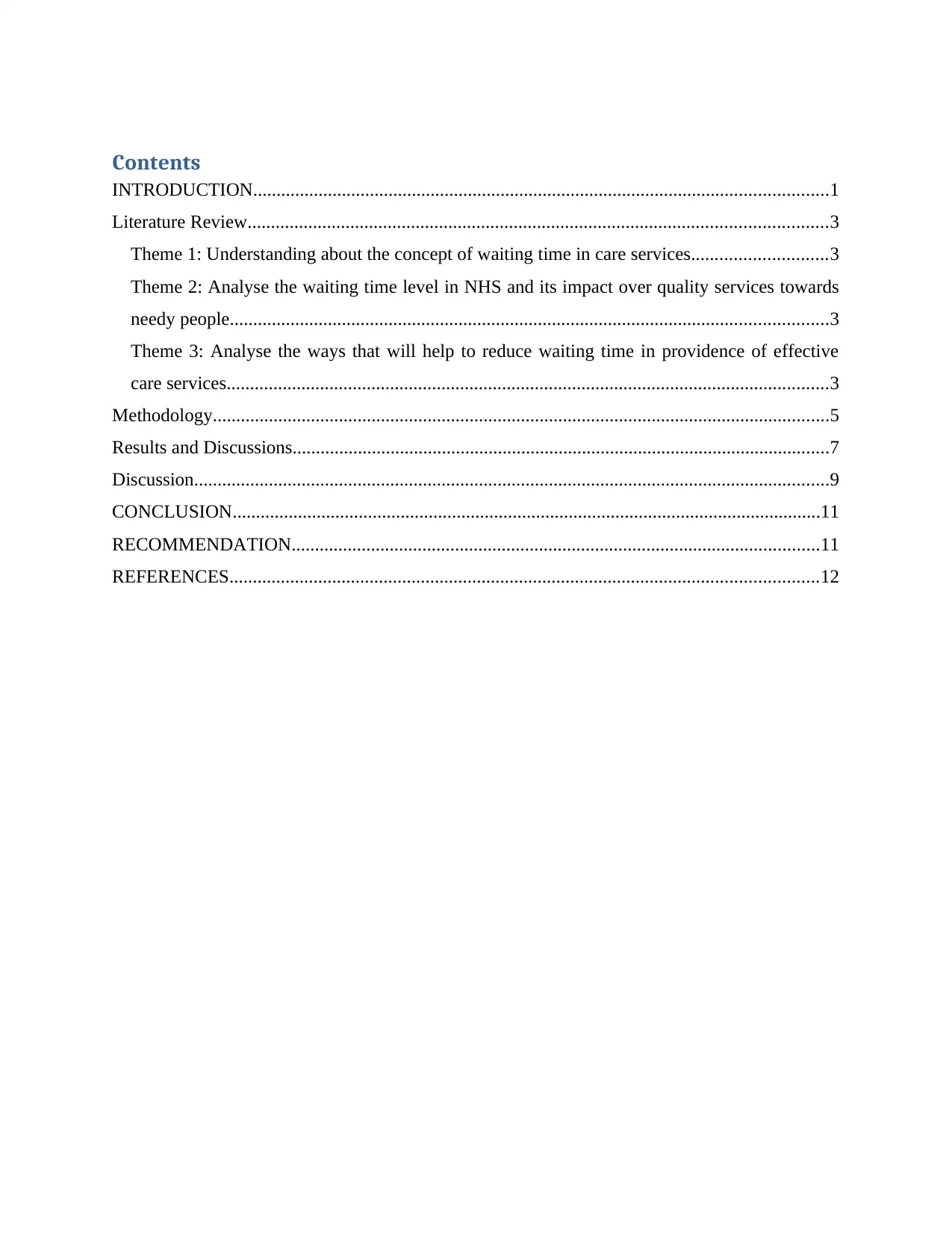
Contents
INTRODUCTION...........................................................................................................................1
Literature Review............................................................................................................................3
Theme 1: Understanding about the concept of waiting time in care services.............................3
Theme 2: Analyse the waiting time level in NHS and its impact over quality services towards
needy people................................................................................................................................3
Theme 3: Analyse the ways that will help to reduce waiting time in providence of effective
care services.................................................................................................................................3
Methodology....................................................................................................................................5
Results and Discussions...................................................................................................................7
Discussion........................................................................................................................................9
CONCLUSION..............................................................................................................................11
RECOMMENDATION.................................................................................................................11
REFERENCES..............................................................................................................................12
INTRODUCTION...........................................................................................................................1
Literature Review............................................................................................................................3
Theme 1: Understanding about the concept of waiting time in care services.............................3
Theme 2: Analyse the waiting time level in NHS and its impact over quality services towards
needy people................................................................................................................................3
Theme 3: Analyse the ways that will help to reduce waiting time in providence of effective
care services.................................................................................................................................3
Methodology....................................................................................................................................5
Results and Discussions...................................................................................................................7
Discussion........................................................................................................................................9
CONCLUSION..............................................................................................................................11
RECOMMENDATION.................................................................................................................11
REFERENCES..............................................................................................................................12
INTRODUCTION
Timely care is important for safeguarding the health of all people lives in society. This will
help prevent the cause of serious disease that must be life threatening in future. It is the duty
upon all care homes that they must attend all the patients timely according to the nature of issues.
This approach has large number of importances like trust of patients upon services, optimum
safety of patient’s health, high public image, fulfilment of society needs, adherence of
government standards etc. All the care homes irrespective of the nature and size of services
required to adhere or implement this system (Appleby, 2017).
This contributes in future as improved level of care services where everyone recovered with
rapid rate. The issue of timely care is basically arising within big hospitals and care homes where
large number of public reaches for treatment. The main reason this time consumption is ratio of
medical professional availability against the number of people live in society. This would be the
reason that after having the support of large number of employees, staff and medical
professionals the level of waiting time in NHS is high. This has negative impact over perception
of patients where they negatively judge the current services of institution. The main aim of this
report is to analyse waiting time and its impact upon quality care services to needy people
(Baker, 2018).
The aspects cover in report includes Literature review, methodology, results and discussions
and conclusion & recommendations for the purpose of ascertaining effective amount of data and
information upon topic of waiting time in NHS.
Aim: To analyse the impact of waiting time on quality services towards the needy people of
society. A case study on NHS.
Research Objectives
To understand about the concept of waiting time in care services.
To analyse the waiting time level in NHS and its impact over quality services towards
needy people.
To analyse the ways that will help to reduce waiting time in providence of effective care
services.
Research Questions
What do you mean by the concept of waiting time in care services?
1
Timely care is important for safeguarding the health of all people lives in society. This will
help prevent the cause of serious disease that must be life threatening in future. It is the duty
upon all care homes that they must attend all the patients timely according to the nature of issues.
This approach has large number of importances like trust of patients upon services, optimum
safety of patient’s health, high public image, fulfilment of society needs, adherence of
government standards etc. All the care homes irrespective of the nature and size of services
required to adhere or implement this system (Appleby, 2017).
This contributes in future as improved level of care services where everyone recovered with
rapid rate. The issue of timely care is basically arising within big hospitals and care homes where
large number of public reaches for treatment. The main reason this time consumption is ratio of
medical professional availability against the number of people live in society. This would be the
reason that after having the support of large number of employees, staff and medical
professionals the level of waiting time in NHS is high. This has negative impact over perception
of patients where they negatively judge the current services of institution. The main aim of this
report is to analyse waiting time and its impact upon quality care services to needy people
(Baker, 2018).
The aspects cover in report includes Literature review, methodology, results and discussions
and conclusion & recommendations for the purpose of ascertaining effective amount of data and
information upon topic of waiting time in NHS.
Aim: To analyse the impact of waiting time on quality services towards the needy people of
society. A case study on NHS.
Research Objectives
To understand about the concept of waiting time in care services.
To analyse the waiting time level in NHS and its impact over quality services towards
needy people.
To analyse the ways that will help to reduce waiting time in providence of effective care
services.
Research Questions
What do you mean by the concept of waiting time in care services?
1
⊘ This is a preview!⊘
Do you want full access?
Subscribe today to unlock all pages.

Trusted by 1+ million students worldwide

What level of waiting time exists in NHS and its impact over quality services towards
needy people?
What will be the ways to reduce the waiting time level within NHS?
2
needy people?
What will be the ways to reduce the waiting time level within NHS?
2
Paraphrase This Document
Need a fresh take? Get an instant paraphrase of this document with our AI Paraphraser
Literature Review
Literature review is the process of gathering secondary data from several sources i.e. books,
magazines, journals, articles etc. Main purpose of literature review within an investigation is to
identify the gaps in past study. According to the current topic, main research gap is the impact of
waiting time on quality service. In previous study, there is information about the impact of
service time but there is lack of data about its impact over quality services towards needy people.
In order to fulfil this gap, research questions will be followed (Dowling, 2017). This will be
essential in attainment of research aim and objectives and fulfilling literature gap effectively.
Research questions of this project will be explained as below:
Theme 1: Understanding about the concept of waiting time in care services
According to the Thorlby and Gardner (2019), Waiting time in care service is refers as the
time a patient holds up in the centre before being seen by one of the facility clinical staff. The
measure of time a patient holds back to be seen is one factor which influences upon optimum use
of health care services. Patients see long holding up times as an obstruction to really getting
services. This has been done because of the staff lacking in institution against the number of
population reside in society.
Theme 2: Analyse the waiting time level in NHS and its impact over quality services towards
needy people
According to the Giuntella Nicodemo and Vargas-Silva (2018), The waiting time level in
NHS is high because large number of people daily reach for the care services. The main reason is
the providence of free care services to needy people. This creates the situation where patients
have to wait for long time for their turn. This has direct negative impact over the quality care
service. As, medical professionals not able to provide the sufficient to all and this resultant into
inappropriate treatment. At time of serious cases, it becomes life threatening where patient can
lose life due to not ascertaining acre on time.
Theme 3: Analyse the ways that will help to reduce waiting time in providence of effective care
services
According to the Jordan (2019), In the current period of time the level of waiting is high for
the attainment of effective care services. There are many ways that can be used to resolve this
issue which are defined below:
3
Literature review is the process of gathering secondary data from several sources i.e. books,
magazines, journals, articles etc. Main purpose of literature review within an investigation is to
identify the gaps in past study. According to the current topic, main research gap is the impact of
waiting time on quality service. In previous study, there is information about the impact of
service time but there is lack of data about its impact over quality services towards needy people.
In order to fulfil this gap, research questions will be followed (Dowling, 2017). This will be
essential in attainment of research aim and objectives and fulfilling literature gap effectively.
Research questions of this project will be explained as below:
Theme 1: Understanding about the concept of waiting time in care services
According to the Thorlby and Gardner (2019), Waiting time in care service is refers as the
time a patient holds up in the centre before being seen by one of the facility clinical staff. The
measure of time a patient holds back to be seen is one factor which influences upon optimum use
of health care services. Patients see long holding up times as an obstruction to really getting
services. This has been done because of the staff lacking in institution against the number of
population reside in society.
Theme 2: Analyse the waiting time level in NHS and its impact over quality services towards
needy people
According to the Giuntella Nicodemo and Vargas-Silva (2018), The waiting time level in
NHS is high because large number of people daily reach for the care services. The main reason is
the providence of free care services to needy people. This creates the situation where patients
have to wait for long time for their turn. This has direct negative impact over the quality care
service. As, medical professionals not able to provide the sufficient to all and this resultant into
inappropriate treatment. At time of serious cases, it becomes life threatening where patient can
lose life due to not ascertaining acre on time.
Theme 3: Analyse the ways that will help to reduce waiting time in providence of effective care
services
According to the Jordan (2019), In the current period of time the level of waiting is high for
the attainment of effective care services. There are many ways that can be used to resolve this
issue which are defined below:
3

Understand the difference between supply and demand: Healthcare experts can diminish
hold up times by estimating the harmony among flexibly and request and making it a point to
abstain from pushing the present every day undertakings onto tomorrow. This is perhaps the
simplest ways for care suppliers to smooth out the progression of the day.
Hiring of professional and hardworking front office staff members: Rather than
anticipating that one staff part should shuffle and parity the entirety of the front office
assignments, employ a solid gathering of people to designate the obligations.
Reconsideration of staff start times: Consider the time staff begins appearing at work
versus the time the main patient strolls into the lounge area. This help to match the time of both
along with fulfilment of needs.
4
hold up times by estimating the harmony among flexibly and request and making it a point to
abstain from pushing the present every day undertakings onto tomorrow. This is perhaps the
simplest ways for care suppliers to smooth out the progression of the day.
Hiring of professional and hardworking front office staff members: Rather than
anticipating that one staff part should shuffle and parity the entirety of the front office
assignments, employ a solid gathering of people to designate the obligations.
Reconsideration of staff start times: Consider the time staff begins appearing at work
versus the time the main patient strolls into the lounge area. This help to match the time of both
along with fulfilment of needs.
4
⊘ This is a preview!⊘
Do you want full access?
Subscribe today to unlock all pages.
Trusted by 1+ million students worldwide
Methodology
Research methodology is significant of study because it will facilitate in collecting as well
as analysing of information about the topic. This section includes different methods that will be
explained as under in detailed manner:
Data collection approaches: There are two different types of approaches that will be used in
collecting of data about the specific area of study. These approaches are qualitative and
quantitative. For collecting information regarding the impact of waiting time on quality services
towards the needy people of society, quantitative approach will be applied. This approach helps
in collection of numerical information within lesser time period (Giuntella, Nicodemo and
Vargas-Silva, 2018).
Sources of data collection: This is an important section of research methodology that has
two types which are primary and secondary. For doing current study both sources of data
collection has been applied. For collecting primary type of information, questionnaire will be
followed as it support in collecting of quantitative data in minimum time. On the other hand,
there are varieties of secondary sources that will also use for literature review in order to collect
secondary data. These sources are books, articles, magazines, publication research etc.
Therefore, within a current study, both sources such as primary and secondary will be following
for collecting reliable and in-depth data about the NHS waiting time (Gulland and Iacobucci,
2017).
Resources used to collect data: There are different resources that will be applied by
researcher for collecting information regarding the topic. These resources are time, cost,
communication etc. All these are effective in collecting of data and conducting of research in
effective manner. Along with this, NHS website, publication research etc. sources will also used
for gathering secondary data regarding the topic (Gutacker, Siciliani and Cookson, 2016).
Way to elaborate the data: For this section, questionnaire is more effective and essential
way for elaborating data about the existing topic. By using this method, research need to select
sample size which is 30 respondents of NHS (Guven-Uslu, 2017). Along with this, elaborating
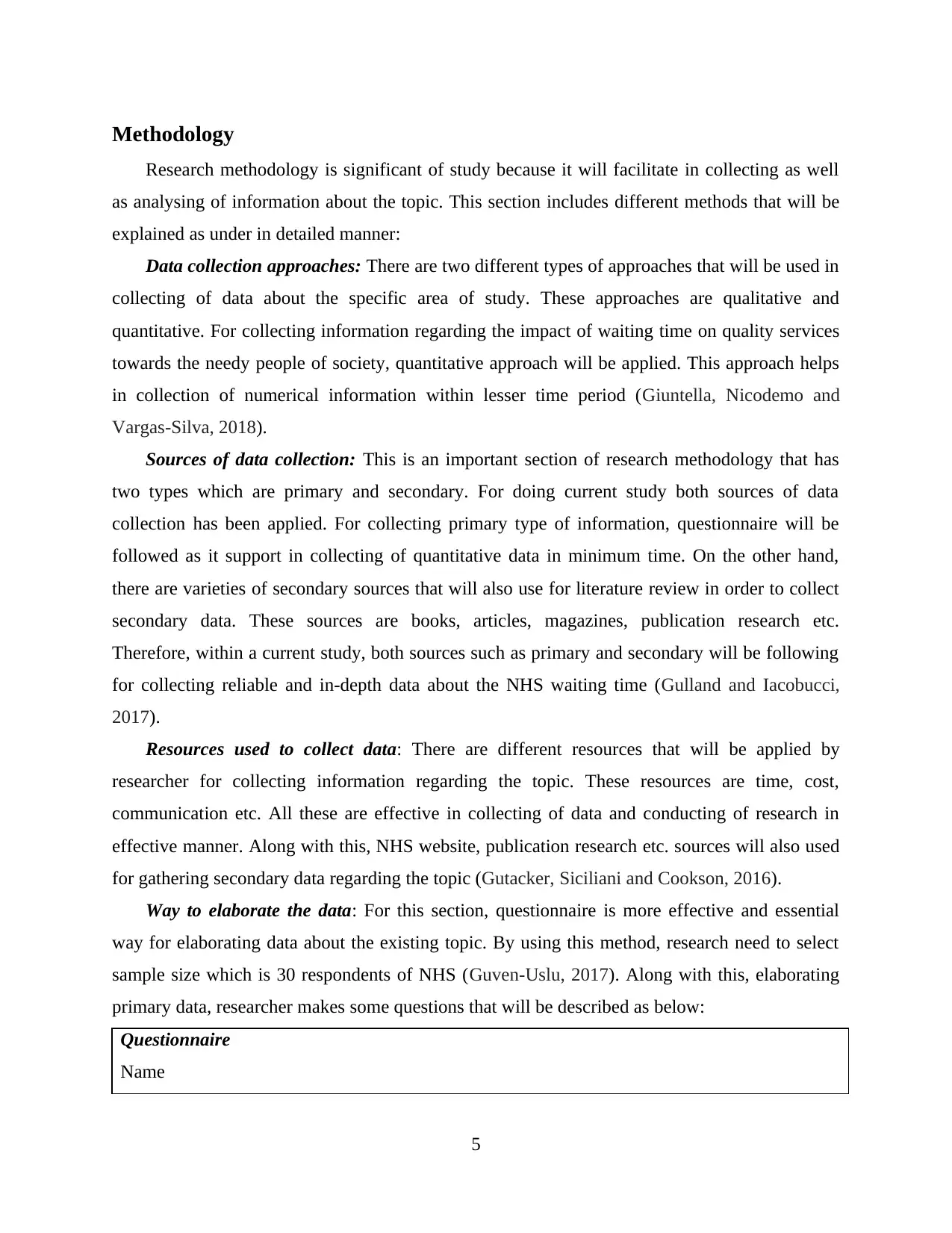
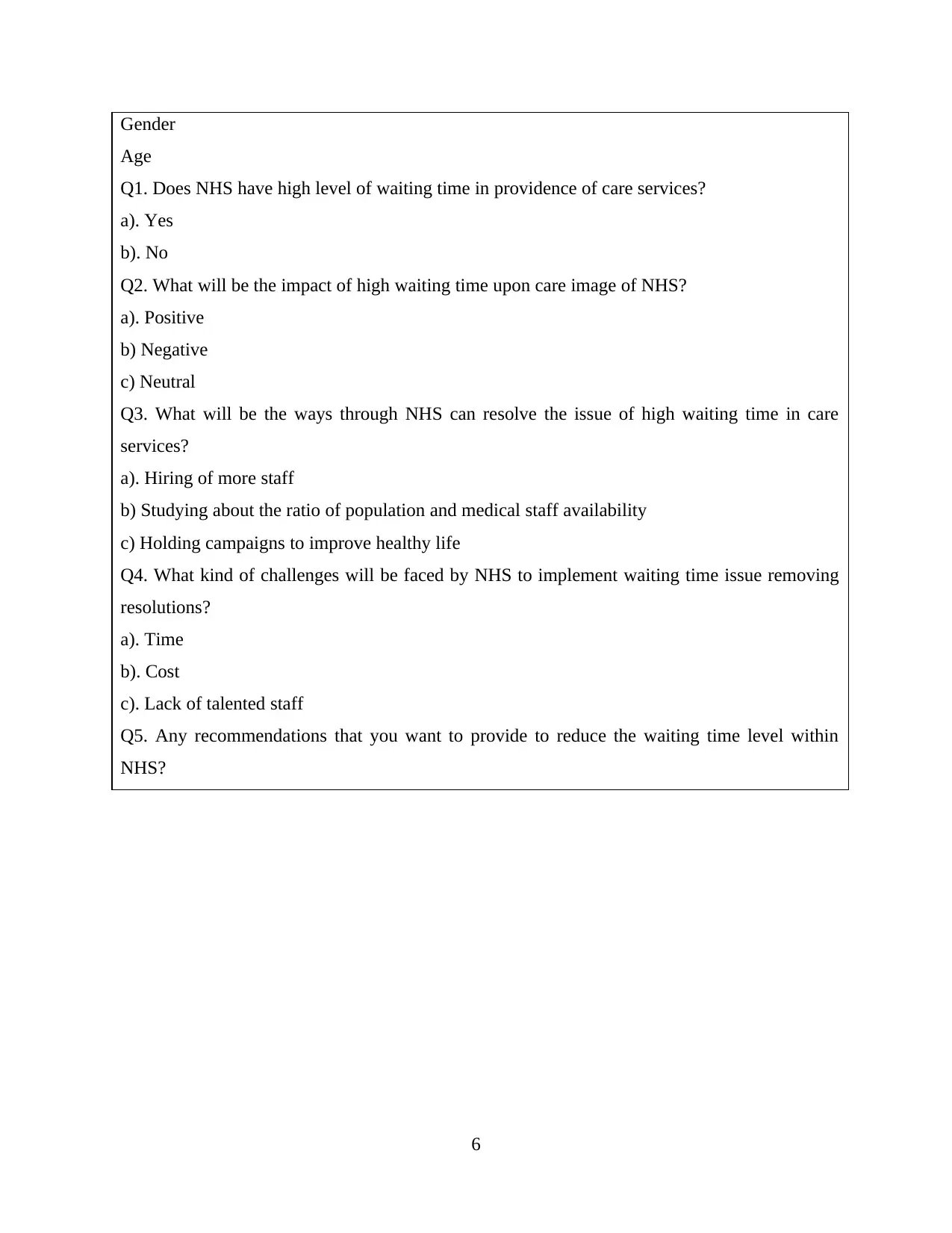
primary data, researcher makes some questions that will be described as below:
Questionnaire
Name
5
Research methodology is significant of study because it will facilitate in collecting as well
as analysing of information about the topic. This section includes different methods that will be
explained as under in detailed manner:
Data collection approaches: There are two different types of approaches that will be used in
collecting of data about the specific area of study. These approaches are qualitative and
quantitative. For collecting information regarding the impact of waiting time on quality services
towards the needy people of society, quantitative approach will be applied. This approach helps
in collection of numerical information within lesser time period (Giuntella, Nicodemo and
Vargas-Silva, 2018).
Sources of data collection: This is an important section of research methodology that has
two types which are primary and secondary. For doing current study both sources of data
collection has been applied. For collecting primary type of information, questionnaire will be
followed as it support in collecting of quantitative data in minimum time. On the other hand,
there are varieties of secondary sources that will also use for literature review in order to collect
secondary data. These sources are books, articles, magazines, publication research etc.
Therefore, within a current study, both sources such as primary and secondary will be following
for collecting reliable and in-depth data about the NHS waiting time (Gulland and Iacobucci,
2017).
Resources used to collect data: There are different resources that will be applied by
researcher for collecting information regarding the topic. These resources are time, cost,
communication etc. All these are effective in collecting of data and conducting of research in
effective manner. Along with this, NHS website, publication research etc. sources will also used
for gathering secondary data regarding the topic (Gutacker, Siciliani and Cookson, 2016).
Way to elaborate the data: For this section, questionnaire is more effective and essential
way for elaborating data about the existing topic. By using this method, research need to select
sample size which is 30 respondents of NHS (Guven-Uslu, 2017). Along with this, elaborating
primary data, researcher makes some questions that will be described as below:
Questionnaire
Name
5
Paraphrase This Document
Need a fresh take? Get an instant paraphrase of this document with our AI Paraphraser
Gender
Age
Q1. Does NHS have high level of waiting time in providence of care services?
a). Yes
b). No
Q2. What will be the impact of high waiting time upon care image of NHS?
a). Positive
b) Negative
c) Neutral
Q3. What will be the ways through NHS can resolve the issue of high waiting time in care
services?
a). Hiring of more staff
b) Studying about the ratio of population and medical staff availability
c) Holding campaigns to improve healthy life
Q4. What kind of challenges will be faced by NHS to implement waiting time issue removing
resolutions?
a). Time
b). Cost
c). Lack of talented staff
Q5. Any recommendations that you want to provide to reduce the waiting time level within
NHS?
6
Age
Q1. Does NHS have high level of waiting time in providence of care services?
a). Yes
b). No
Q2. What will be the impact of high waiting time upon care image of NHS?
a). Positive
b) Negative
c) Neutral
Q3. What will be the ways through NHS can resolve the issue of high waiting time in care
services?
a). Hiring of more staff
b) Studying about the ratio of population and medical staff availability
c) Holding campaigns to improve healthy life
Q4. What kind of challenges will be faced by NHS to implement waiting time issue removing
resolutions?
a). Time
b). Cost
c). Lack of talented staff
Q5. Any recommendations that you want to provide to reduce the waiting time level within
NHS?
6
Results and Discussions
Results: For analysing the results of quantitative information, there are some steps that will
be applied by researcher. These steps are making of frequency table, presenting graphs and
interpreting information about the topic (Iacobucci, 2019). These steps will be explained as
below:
Q1. Does NHS have high level of waiting time in providence of care services? Frequency
a). Yes 15
b). No 15
Q2. What will be the impact of high waiting time upon care image of NHS? Frequency
a). Positive 4
b) Negative 20
c) Neutral 6
Q3. What will be the ways through NHS can resolve the issue of high waiting
time in care services?
Frequency
a). Hiring of more staff 15
b). Studying about the ratio of population and medical staff availability 8
c). Holding campaigns to improve healthy life 7
Q4. What kind of challenges will be faced by NHS to implement waiting time
issue removing resolutions?
Frequency
a). Time 10
b). Cost 10
c). Lack of talented staff 10
Q1. Does NHS have high level of waiting time in providence of care services? Frequency
a). Yes 15
b). No 15
7
Results: For analysing the results of quantitative information, there are some steps that will
be applied by researcher. These steps are making of frequency table, presenting graphs and
interpreting information about the topic (Iacobucci, 2019). These steps will be explained as
below:
Q1. Does NHS have high level of waiting time in providence of care services? Frequency
a). Yes 15
b). No 15
Q2. What will be the impact of high waiting time upon care image of NHS? Frequency
a). Positive 4
b) Negative 20
c) Neutral 6
Q3. What will be the ways through NHS can resolve the issue of high waiting
time in care services?
Frequency
a). Hiring of more staff 15
b). Studying about the ratio of population and medical staff availability 8
c). Holding campaigns to improve healthy life 7
Q4. What kind of challenges will be faced by NHS to implement waiting time
issue removing resolutions?
Frequency
a). Time 10
b). Cost 10
c). Lack of talented staff 10
Q1. Does NHS have high level of waiting time in providence of care services? Frequency
a). Yes 15
b). No 15
7
⊘ This is a preview!⊘
Do you want full access?
Subscribe today to unlock all pages.
Trusted by 1+ million students worldwide
Q2. What will be the impact of high waiting time upon care image of NHS? Frequency
a). Positive 4
b) Negative 20
c) Neutral 6
Q3. What will be the ways through NHS can resolve the issue of high waiting
time in care services?
Frequency
a). Hiring of more staff 15
b). Studying about the ratio of population and medical staff availability 8
8
a). Positive 4
b) Negative 20
c) Neutral 6
Q3. What will be the ways through NHS can resolve the issue of high waiting
time in care services?
Frequency
a). Hiring of more staff 15
b). Studying about the ratio of population and medical staff availability 8
8
Paraphrase This Document
Need a fresh take? Get an instant paraphrase of this document with our AI Paraphraser
c). Holding campaigns to improve healthy life 7
Q4. What kind of challenges will be faced by NHS to implement waiting time
issue removing resolutions?
Frequency
a). Time 10
b). Cost 10
c). Lack of talented staff 10
Discussion
Theme 1: High level of waiting time
9
Q4. What kind of challenges will be faced by NHS to implement waiting time
issue removing resolutions?
Frequency
a). Time 10
b). Cost 10
c). Lack of talented staff 10
Discussion
Theme 1: High level of waiting time
9
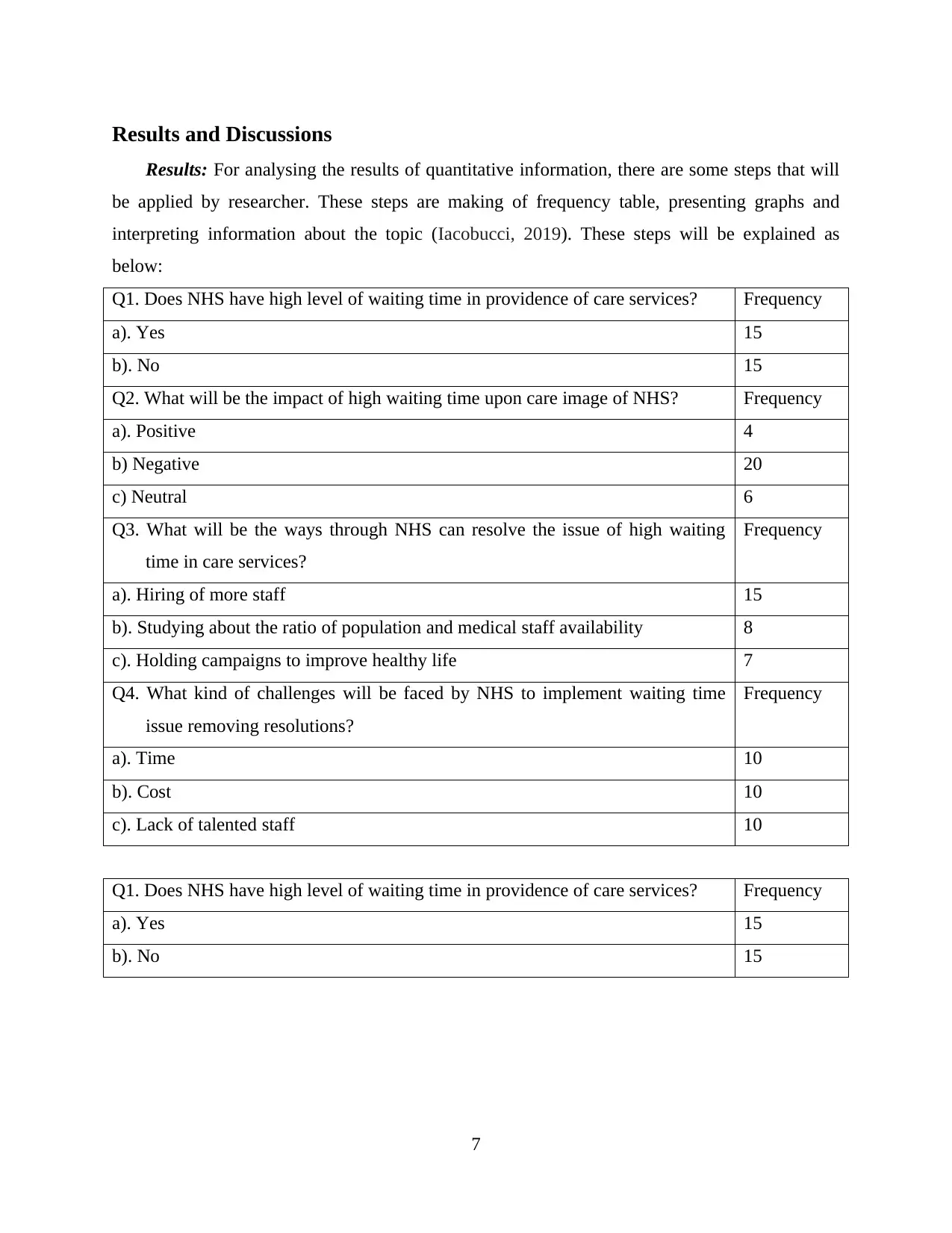
Interpretation: 15 out of 30 respondemnt have knolwerdge as NHS has high level of
waiting time in providing care services. Remaining 15 respondents said no about the same
concept.
From the above collected secondary data it has been determined that NHS need more
waiting time in providence of care service to the users (Mahase, 2019).
Theme 2: Impact of high waiting time
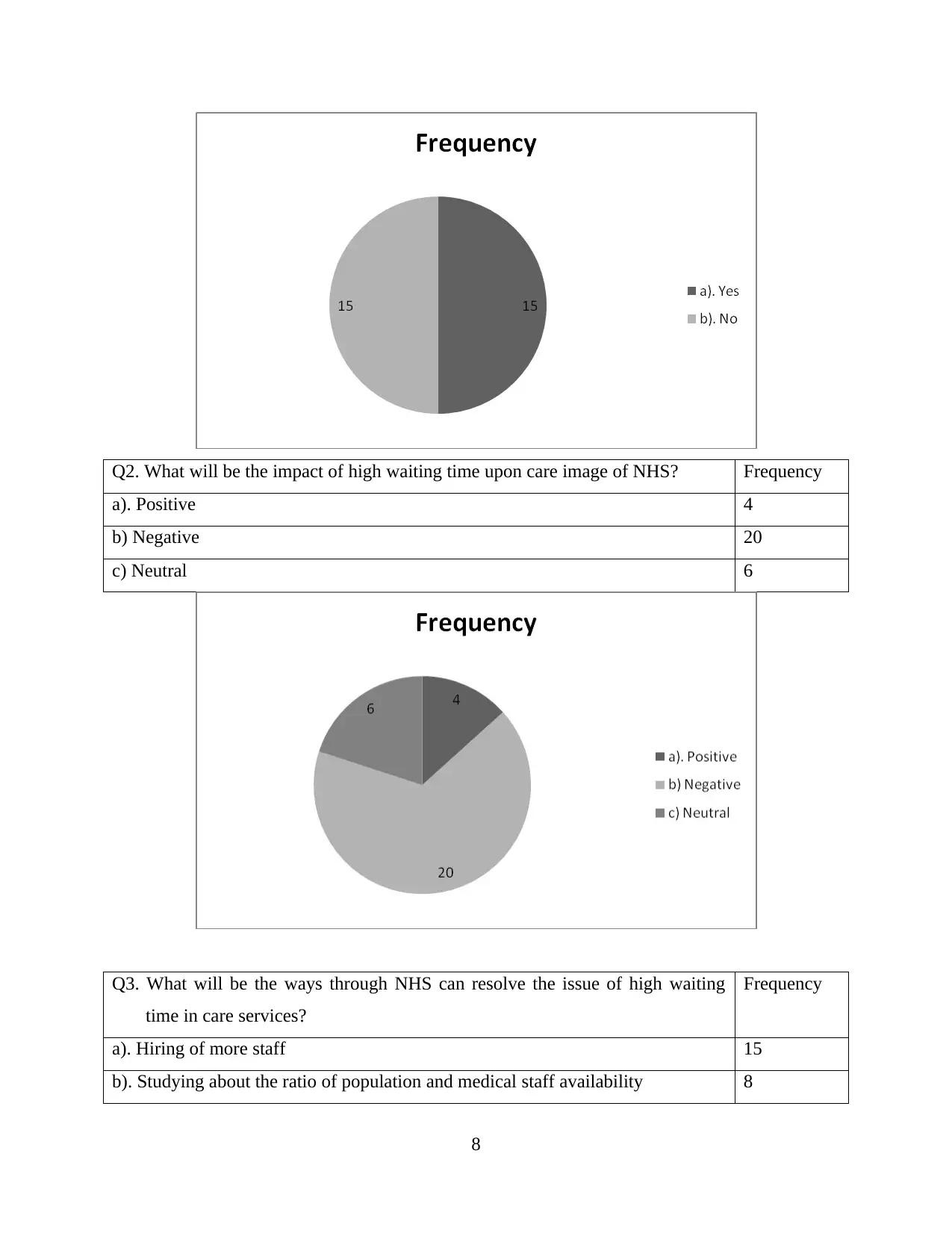
Interpretation: Most of the respondents have knolwedge as high waiting time in
providence of care servuice hasd negative impact over business performance and growth of
NHS.
This information is related with secondary data that has been gathered from different
number of sources such as magzinbes, articls etc. In this, authors have opinion as high waiting
time has negative or unfavorable effect upon business reputation (Sheard, 2018).
Theme 3: Ways for resolving the issue of high waiting time in care services
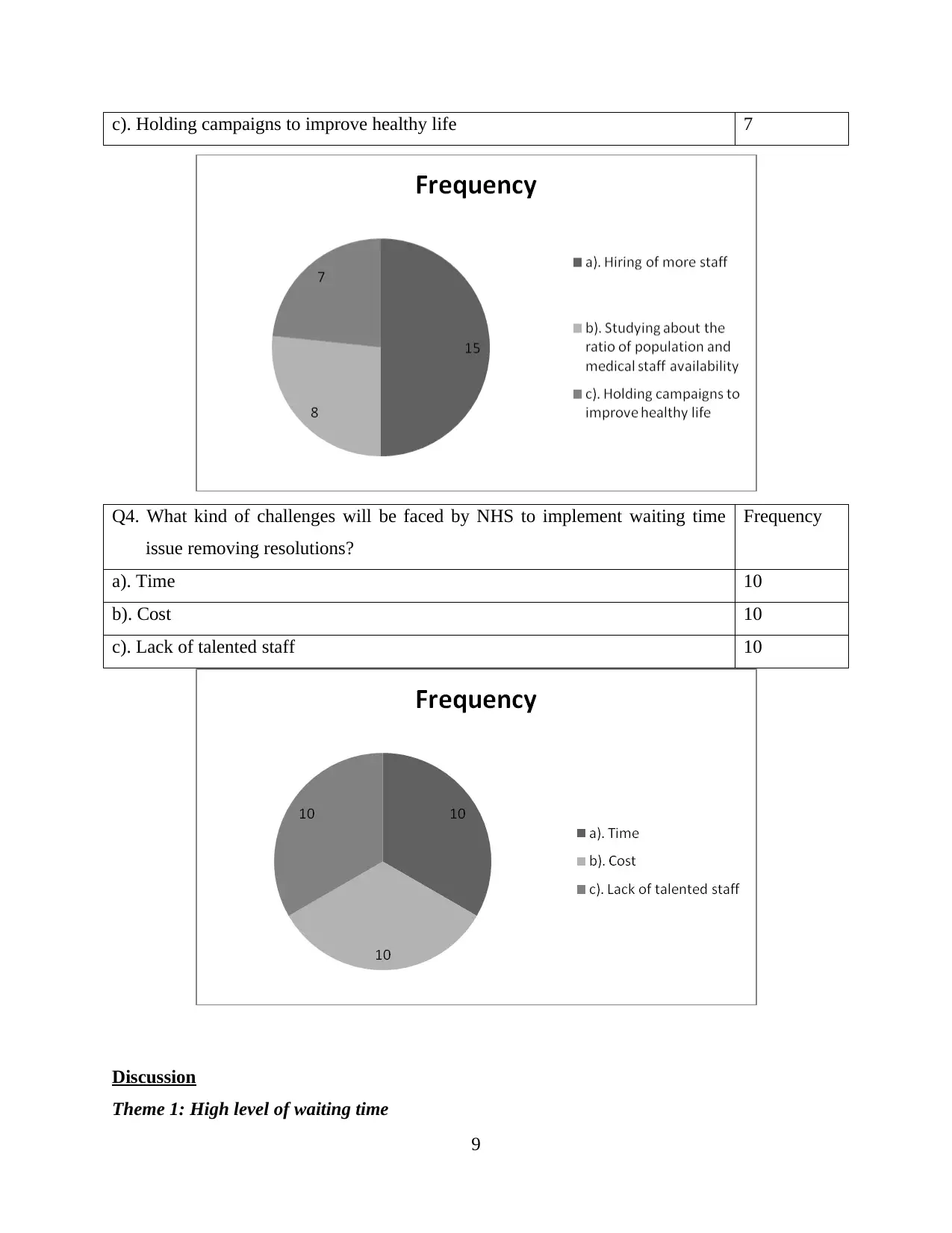
Interpretation: There are different ways that may be use by NHS for resolving the issue of
high waiting time within an organbisation. 15 out of 30 respondents have opinion as staff
training is best way because trained employees work activly and effectively. 8 respondents have
idea as studying about the ratio of population and medical staff availability is also essential
because it reduce the high time of waiting. Remaining 7 respondents have view as holding
campaigns is important way because it improves healthy life of people and also reduce the
impact of higher waiting.
This information is also linked with the secondary data collected for literature review
because it this author have opinion as staff training is one of the best way for reducing the issue
of high waiting (Viner, 2018).
Theme 4: Kind of challenges will be faced by NHS
Interpretation: There are various types of challenges that will be faced by company while
implementing ways for reducing the waiting tie issues. These challenges are time, cost and lack
of talented staff.
10
waiting time in providing care services. Remaining 15 respondents said no about the same
concept.
From the above collected secondary data it has been determined that NHS need more
waiting time in providence of care service to the users (Mahase, 2019).
Theme 2: Impact of high waiting time
Interpretation: Most of the respondents have knolwedge as high waiting time in
providence of care servuice hasd negative impact over business performance and growth of
NHS.
This information is related with secondary data that has been gathered from different
number of sources such as magzinbes, articls etc. In this, authors have opinion as high waiting
time has negative or unfavorable effect upon business reputation (Sheard, 2018).
Theme 3: Ways for resolving the issue of high waiting time in care services
Interpretation: There are different ways that may be use by NHS for resolving the issue of
high waiting time within an organbisation. 15 out of 30 respondents have opinion as staff
training is best way because trained employees work activly and effectively. 8 respondents have
idea as studying about the ratio of population and medical staff availability is also essential
because it reduce the high time of waiting. Remaining 7 respondents have view as holding
campaigns is important way because it improves healthy life of people and also reduce the
impact of higher waiting.
This information is also linked with the secondary data collected for literature review
because it this author have opinion as staff training is one of the best way for reducing the issue
of high waiting (Viner, 2018).
Theme 4: Kind of challenges will be faced by NHS
Interpretation: There are various types of challenges that will be faced by company while
implementing ways for reducing the waiting tie issues. These challenges are time, cost and lack
of talented staff.
10
⊘ This is a preview!⊘
Do you want full access?
Subscribe today to unlock all pages.
Trusted by 1+ million students worldwide

1 out of 14


Related Documents


Your All-in-One AI-Powered Toolkit for Academic Success.
+13062052269
info@desklib.com
Available 24*7 on WhatsApp / Email
![[object Object]](/_next/static/media/star-bottom.7253800d.svg)
Unlock your academic potential
Copyright © 2020–2026 A2Z Services. All Rights Reserved. Developed and managed by ZUCOL.