A Comprehensive Presentation on Mussorgsky's 'Night on Bald Mountain'

Verified

Added on  2022/09/09

|16
|745
|47
Presentation
AI Summary
This presentation delves into Modest Mussorgsky's 'Night on Bald Mountain,' providing a comprehensive analysis of the composition. It begins with an introduction to the piece, its background, and the circumstances surrounding its creation in 1867, including its inspiration from St. John’s Eve on Bald Mountain. The presentation explores the composer's background, placing him within the Romantic period and highlighting his association with 'The Five.' It examines the composition's structure, including its multiple themes, transitions, and instrumentation. Furthermore, the presentation discusses the reactions to the piece, notable performances, and its numerous pop culture references, such as its use in Fantasia. The document concludes with a personal opinion on the piece's impact on music and the composer's legacy, supported by references to various sources like Britannica.com and Utahsymphony.org.
Document Page
Classical Music Presentation
Mussorgsky: Night On Bald Mountain
tabler-icon-diamond-filled.svg

Paraphrase This Document

Need a fresh take? Get an instant paraphrase of this document with our AI Paraphraser
Document Page
Introduction
Background of the Piece
Recording and Reasoning
Composer and timeline
Composer background
Circumstances
Reason Behind Composition
Reaction
Notable performances
Instruments, Composition and Pop culture references
Opinion
Document Page
Background of the Piece
Night on Bald Mountain a.k.a. Night on the Bare Mountain
Composed in 1867 (Utahsymphony.org)
The composition is considered as an innovative harmony
Has a dark, grim feel to it.
Instantly recognisable for the transitions
Document Page
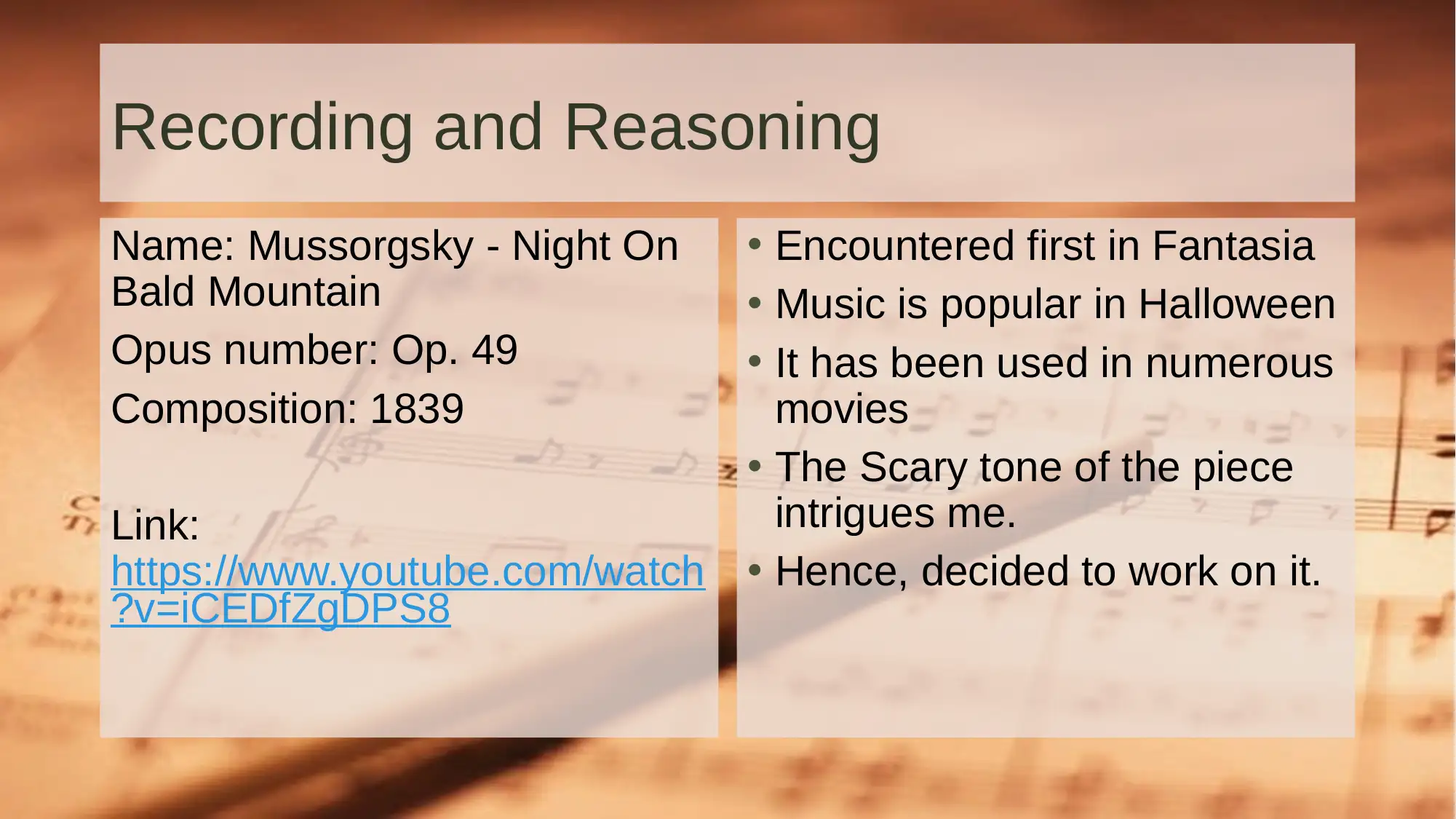
Recording and Reasoning
Encountered first in Fantasia
Music is popular in Halloween
It has been used in numerous
movies
The Scary tone of the piece
intrigues me.
Hence, decided to work on it.
Name: Mussorgsky - Night On
Bald Mountain
Opus number: Op. 49
Composition: 1839
Link:
https://www.youtube.com/watch
?v=iCEDfZgDPS8
tabler-icon-diamond-filled.svg

Paraphrase This Document

Need a fresh take? Get an instant paraphrase of this document with our AI Paraphraser
Document Page
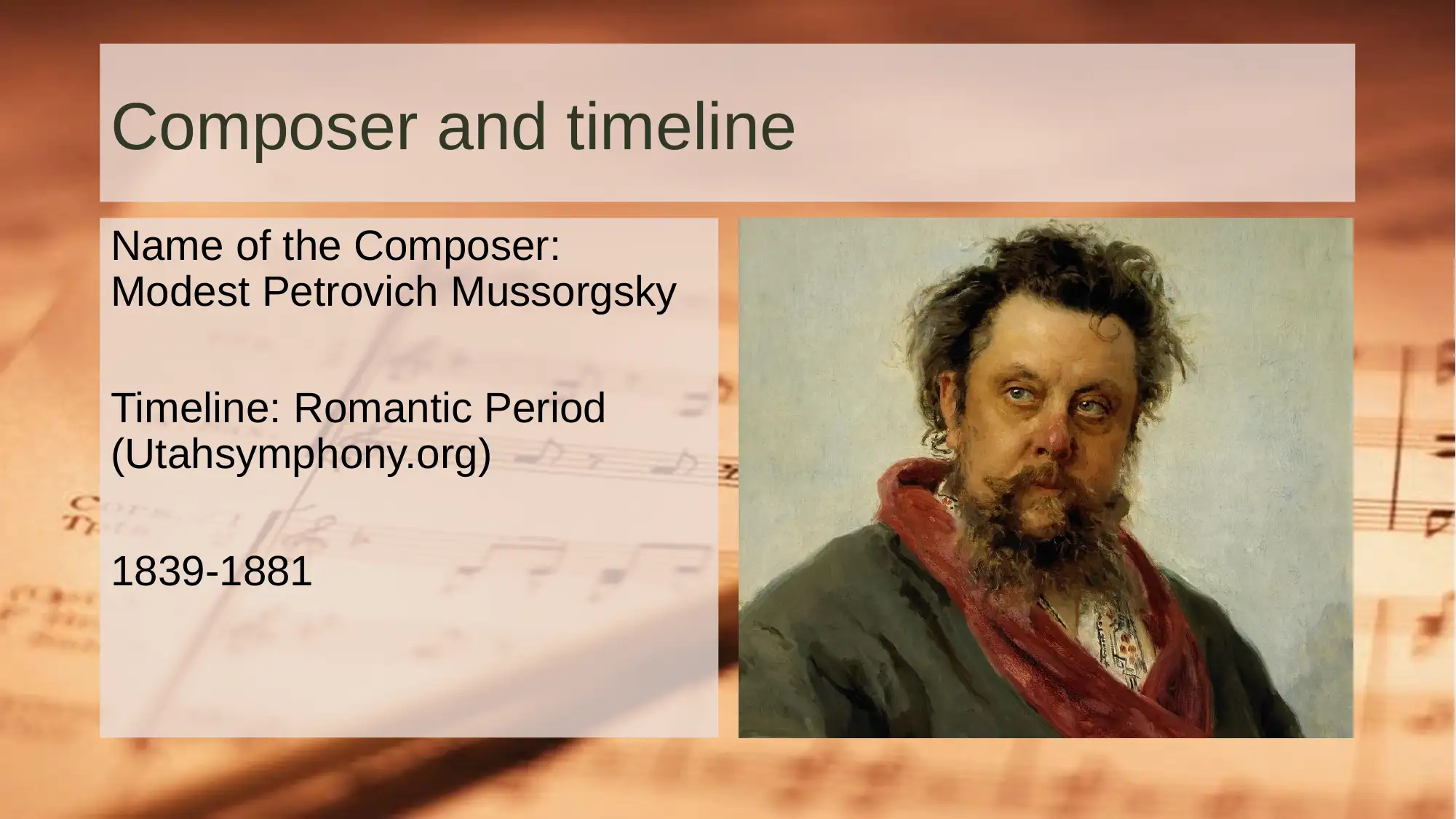
Composer and timeline
Name of the Composer:
Modest Petrovich Mussorgsky
Timeline: Romantic Period
(Utahsymphony.org)
1839-1881
Document Page
Composer Background
Composer from Russia
Part of a group known as “The Five” (Utahsymphony.org)
He was a composer from the Romantic Period
Many of his works have been inspired by the Russian History
Many of his works has been highlighted in many classical pieces
He was considered as an extremist by the then Emperor of
Russia (Charlottesymphony.org).
He died with numerous works unfinished.
Document Page
Circumstances
The work was completed in June of 1867.
Inspiration from St. John’s Eve on Bald Mountain
(Britannica.com).
Still the work was not performed publicly.
Performed for the for the first time after the death of the
composer.
First Performance in 1881 (Britannica.com).
tabler-icon-diamond-filled.svg

Paraphrase This Document

Need a fresh take? Get an instant paraphrase of this document with our AI Paraphraser
Document Page
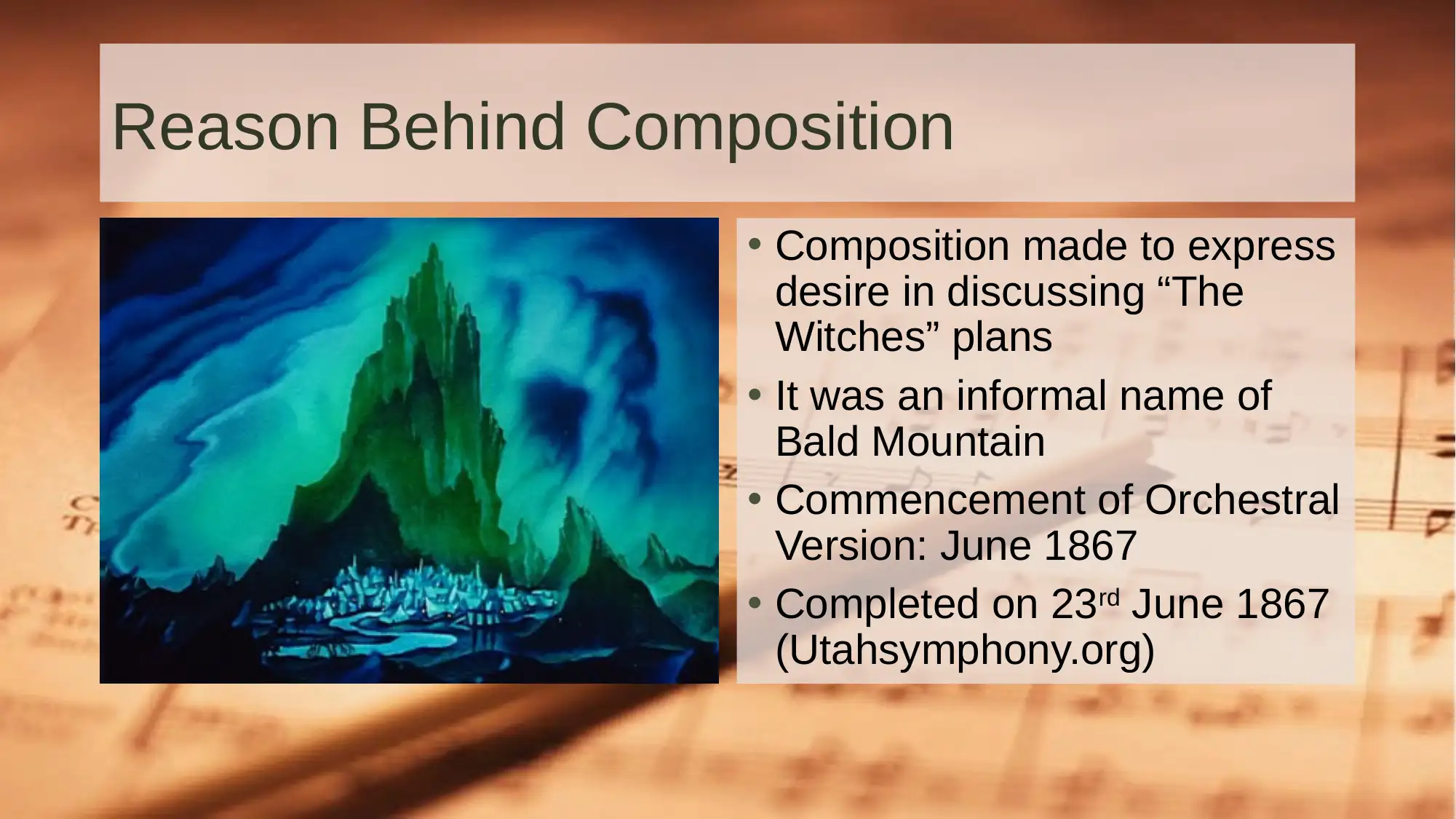
Reason Behind Composition
Composition made to express
desire in discussing “The
Witches” plans
It was an informal name of
Bald Mountain
Commencement of Orchestral
Version: June 1867
Completed on 23rd June 1867
(Utahsymphony.org)
Document Page
Reaction
Not perceived well by Mussorgsky’s mentor Mily Balakirev.
Was possibly due to the experimental type of composition
(Charlottesymphony.org).
Other works such as Sadka, Mlada and The Fair at Sorochyntsi
were received well (Charlottesymphony.org).
However, not performed till the death of the composer.
Became popular after inclusion in Fantasia by Disney.
Document Page
Notable
performances
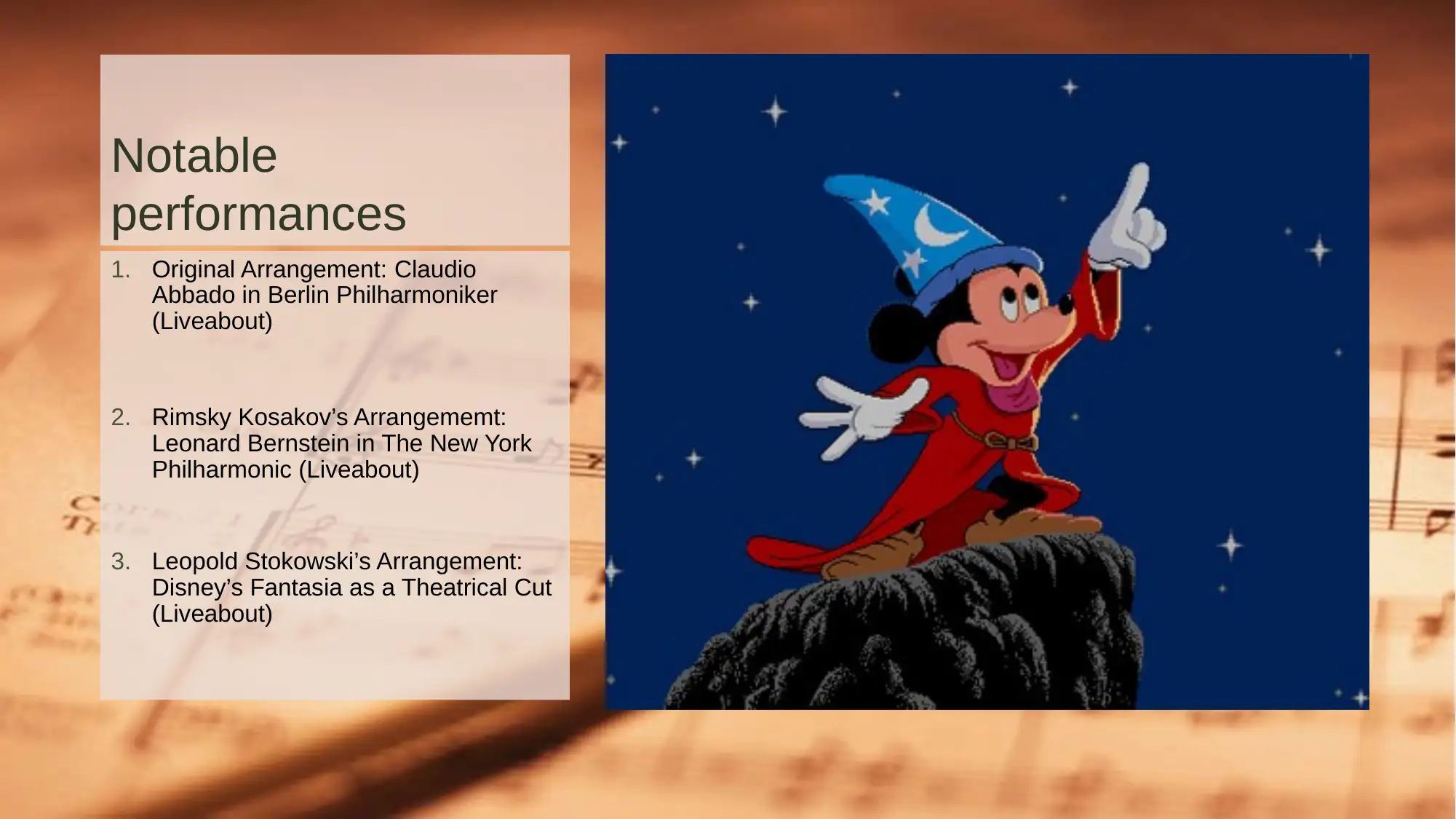
1. Original Arrangement: Claudio
Abbado in Berlin Philharmoniker
(Liveabout)
2. Rimsky Kosakov’s Arrangememt:
Leonard Bernstein in The New York
Philharmonic (Liveabout)
3. Leopold Stokowski’s Arrangement:
Disney’s Fantasia as a Theatrical Cut
(Liveabout)
tabler-icon-diamond-filled.svg

Paraphrase This Document

Need a fresh take? Get an instant paraphrase of this document with our AI Paraphraser
Document Page
Instrumentation
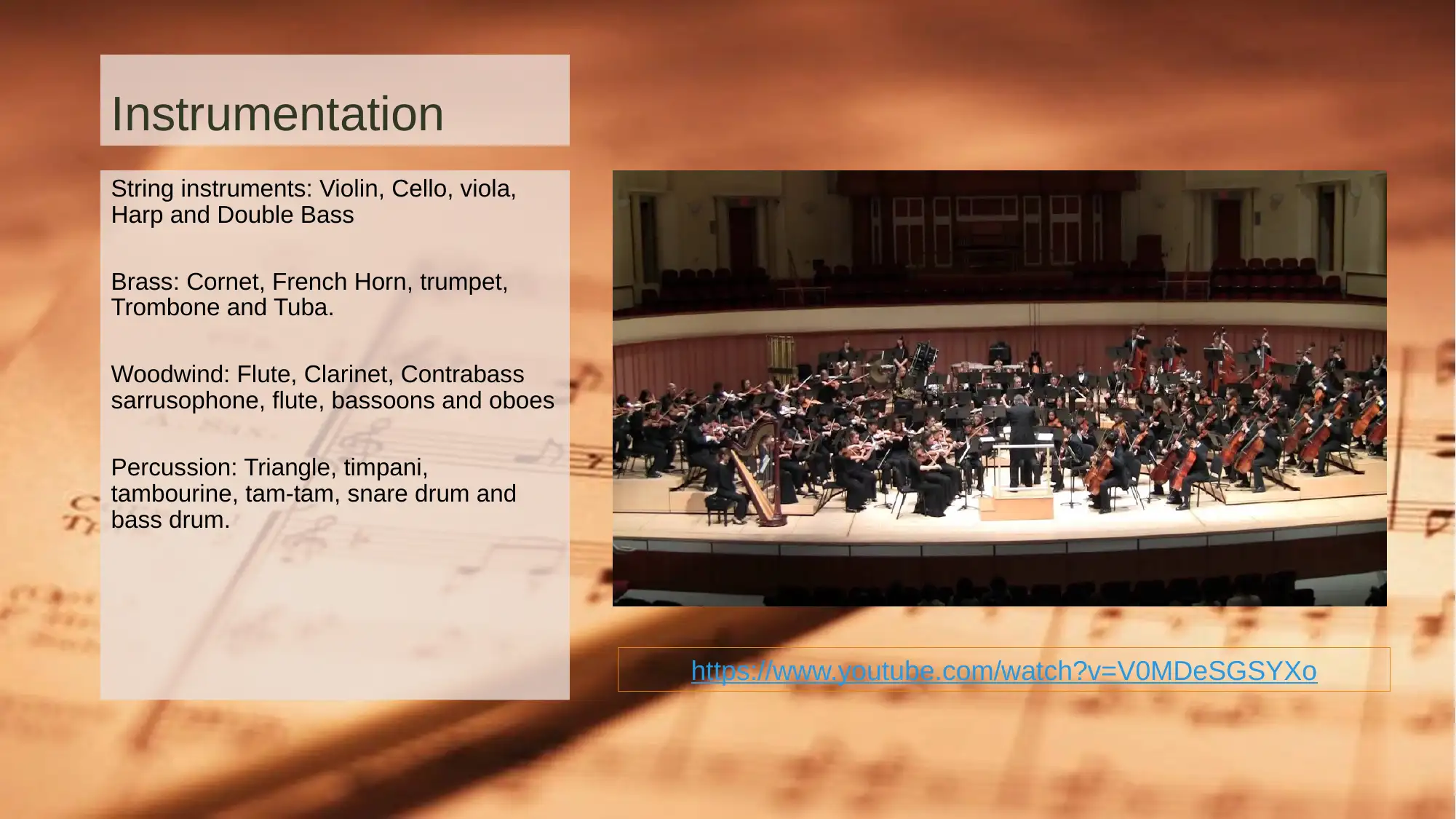
String instruments: Violin, Cello, viola,
Harp and Double Bass
Brass: Cornet, French Horn, trumpet,
Trombone and Tuba.
Woodwind: Flute, Clarinet, Contrabass
sarrusophone, flute, bassoons and oboes
Percussion: Triangle, timpani,
tambourine, tam-tam, snare drum and
bass drum.
https://www.youtube.com/watch?v=V0MDeSGSYXo
Document Page
Composition
Divided into multiple themes
Fanfare theme after the first two themes, followed by the return
of the first theme (Charlottesymphony.org)
Church bells chimes to next to solos in clarinet and flute
respectively (Charlottesymphony.org).
Transitions of tempo throughout
Follow no specific rhythm
However, mood is maintained with dark tone
Minor scales brings out grim and darkness.
chevron_up_icon
1 out of 16
circle_padding
hide_on_mobile
zoom_out_icon
[object Object]