Nike: Business Environment and Strategy Analysis Report, Apex College
VerifiedAdded on 2022/03/26
|20
|5409
|489
Report
AI Summary
This report provides a comprehensive analysis of Nike, a leading company in the sports apparel and footwear industry. It begins with an introduction to the sports industry, outlining its sectors and market size, followed by a background on Nike, including its products, affiliate brands, and market statistics. The report delves into Nike's stakeholders, organizational and legal structure, and organizational hierarchy, using a matrix-type structure. A critical analysis is provided, evaluating Nike's expansion strategy and its integration of regional variances into corporate strategy. The report also includes PESTEL and SWOT analyses, examining the political, economic, social, technological, environmental, and legal factors impacting Nike, along with its strengths, weaknesses, opportunities, and threats. Finally, the report concludes with a critical analysis of Nike's expansion strategy, drawing on multiple sources to support its findings.
Apex College London
Tomas
UNIT 1 BUSINESS AND BUSINES
ENVIRONMENT
A report on Nike
Tomas
UNIT 1 BUSINESS AND BUSINES
ENVIRONMENT
A report on Nike

Paraphrase This Document
Need a fresh take? Get an instant paraphrase of this document with our AI Paraphraser
Table of Contents
Introduction to Organization Sectors in Sports Industry ................................................................... 2
Market Size and Growth .................................................................................................................. 3
Background On Nike Inc. ................................................................................................................. 4
Fact Sheet .................................................................................................................................... 4
PRODUCTS/SERVICES .............................................................................................................. 5
AFFILIATE BRANDS .................................................................................................................... 5
Nike’s Stakeholders ...................................................................................................................... 7
Nike’s Organizational and Legal Structure ................................................................................... 7
Nike’s Organizational Hierarchy ................................................................................................... 8
Critical Analysis .............................................................................................................................. 10
PESTEL analysis of Nike ............................................................................................................... 11
SWOT Analysis of Nike .................................................................................................................. 14
Critical Analysis of Nike’s Expansion Strategy ............................................................................... 16
References ..................................................................................................................................... 17
Introduction to Organization Sectors in Sports Industry ................................................................... 2
Market Size and Growth .................................................................................................................. 3
Background On Nike Inc. ................................................................................................................. 4
Fact Sheet .................................................................................................................................... 4
PRODUCTS/SERVICES .............................................................................................................. 5
AFFILIATE BRANDS .................................................................................................................... 5
Nike’s Stakeholders ...................................................................................................................... 7
Nike’s Organizational and Legal Structure ................................................................................... 7
Nike’s Organizational Hierarchy ................................................................................................... 8
Critical Analysis .............................................................................................................................. 10
PESTEL analysis of Nike ............................................................................................................... 11
SWOT Analysis of Nike .................................................................................................................. 14
Critical Analysis of Nike’s Expansion Strategy ............................................................................... 16
References ..................................................................................................................................... 17
Task 1
Introduction to Organization Sectors in Sports Industry
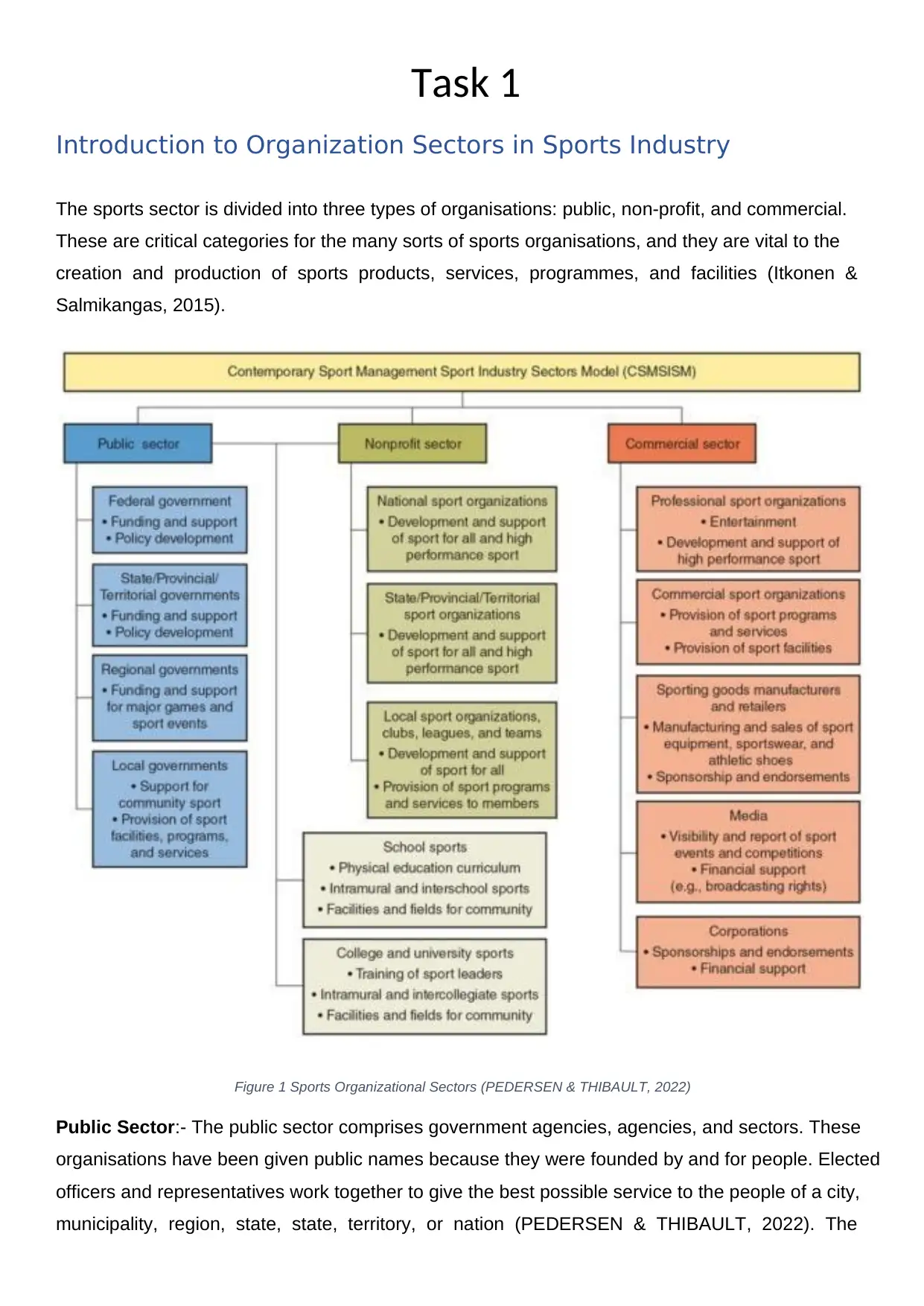
The sports sector is divided into three types of organisations: public, non-profit, and commercial.
These are critical categories for the many sorts of sports organisations, and they are vital to the
creation and production of sports products, services, programmes, and facilities (Itkonen &
Salmikangas, 2015).
Figure 1 Sports Organizational Sectors (PEDERSEN & THIBAULT, 2022)
Public Sector:- The public sector comprises government agencies, agencies, and sectors. These
organisations have been given public names because they were founded by and for people. Elected
officers and representatives work together to give the best possible service to the people of a city,
municipality, region, state, state, territory, or nation (PEDERSEN & THIBAULT, 2022). The
Introduction to Organization Sectors in Sports Industry
The sports sector is divided into three types of organisations: public, non-profit, and commercial.
These are critical categories for the many sorts of sports organisations, and they are vital to the
creation and production of sports products, services, programmes, and facilities (Itkonen &
Salmikangas, 2015).
Figure 1 Sports Organizational Sectors (PEDERSEN & THIBAULT, 2022)
Public Sector:- The public sector comprises government agencies, agencies, and sectors. These
organisations have been given public names because they were founded by and for people. Elected
officers and representatives work together to give the best possible service to the people of a city,
municipality, region, state, state, territory, or nation (PEDERSEN & THIBAULT, 2022). The
⊘ This is a preview!⊘
Do you want full access?
Subscribe today to unlock all pages.

Trusted by 1+ million students worldwide
government offers inhabitants amenities such as parking spaces, leisure centres, sports fields, and
sports and recreation activities for all residents, including children, youth, adults, and the elderly.
Most municipal governments, for example, have park and recreation departments that provide
people with sports programmes, services, and facilities (PEDERSEN & THIBAULT, 2022).
Non-Profit Sector:- Non-profit organisations whose major goal is to address social reasons,
particular interests, and member needs, rather than to make a profit, are included in the non-profit
sector. Non-profit organisations are frequently those that focus on education, culture, religion, work,
or public services (PEDERSEN & THIBAULT, 2022). Many sports and recreation groups are not-
for-profit. The activities of non-profits will benefit no one financially. Members of these organisations
elect persons to serve on the Board of Directors and the Board of Directors, which establish the
organization's strategic direction and carry out its tasks (PEDERSEN & THIBAULT, 2022).
Commercial Sector:- Commercial departments comprise an organisation that finalises the goal
and generates outcomes. Many sporting groups and their trailers are involved in this field.
Professional sports franchises, leagues, and other sports societies are examples of sports
commercial organisations (eg Sky Blue FC, Ska Saint Petersburg, Los Angeles Sparks, the ultimate
battle championship) (PEDERSEN & THIBAULT, 2022). a sportsperson (Example: Downhill Ski
Resort, Golf, Fitness Club, Bungee Jumping Facilities, Zoring Facilities, Event Management
Companies, Sports Marketing Organizations, Sports Facilities Contractors, Operators).
Manufacturer and retailer of sporting goods (for example, Nike, Russell, New Balance, and Head)
(Dick Sporting Goods, Foottractor) (PEDERSEN & THIBAULT, 2022). Sports media (ESPN, NBC
Sports, NFL Network, Hockey News); and a firm that promotes and rewards athletes (for example,
Coca-Cola, Visa, McDonald's, and Budweiser). Commercially available organisations are critical to
the overall running of sports.
Market Size and Growth
After expanding at a compound annual growth rate (CAGR) of 3.4 per cent since 2015, the global
sports industry was valued at around $ 388.3 billion in 2020. From $ 458.8 billion in 2019 to $ 388.3
billion in 2020, the market shrank by 15.4 per cent (Smith, 2022). In 2021, the global sportswear
market is produced roughly US $ 193 billion in sales. Sales are expected to increase further,
reaching around the US $ 270 billion by 2028 (Smith, 2022).
sports and recreation activities for all residents, including children, youth, adults, and the elderly.
Most municipal governments, for example, have park and recreation departments that provide
people with sports programmes, services, and facilities (PEDERSEN & THIBAULT, 2022).
Non-Profit Sector:- Non-profit organisations whose major goal is to address social reasons,
particular interests, and member needs, rather than to make a profit, are included in the non-profit
sector. Non-profit organisations are frequently those that focus on education, culture, religion, work,
or public services (PEDERSEN & THIBAULT, 2022). Many sports and recreation groups are not-
for-profit. The activities of non-profits will benefit no one financially. Members of these organisations
elect persons to serve on the Board of Directors and the Board of Directors, which establish the
organization's strategic direction and carry out its tasks (PEDERSEN & THIBAULT, 2022).
Commercial Sector:- Commercial departments comprise an organisation that finalises the goal
and generates outcomes. Many sporting groups and their trailers are involved in this field.
Professional sports franchises, leagues, and other sports societies are examples of sports
commercial organisations (eg Sky Blue FC, Ska Saint Petersburg, Los Angeles Sparks, the ultimate
battle championship) (PEDERSEN & THIBAULT, 2022). a sportsperson (Example: Downhill Ski
Resort, Golf, Fitness Club, Bungee Jumping Facilities, Zoring Facilities, Event Management
Companies, Sports Marketing Organizations, Sports Facilities Contractors, Operators).
Manufacturer and retailer of sporting goods (for example, Nike, Russell, New Balance, and Head)
(Dick Sporting Goods, Foottractor) (PEDERSEN & THIBAULT, 2022). Sports media (ESPN, NBC
Sports, NFL Network, Hockey News); and a firm that promotes and rewards athletes (for example,
Coca-Cola, Visa, McDonald's, and Budweiser). Commercially available organisations are critical to
the overall running of sports.
Market Size and Growth
After expanding at a compound annual growth rate (CAGR) of 3.4 per cent since 2015, the global
sports industry was valued at around $ 388.3 billion in 2020. From $ 458.8 billion in 2019 to $ 388.3
billion in 2020, the market shrank by 15.4 per cent (Smith, 2022). In 2021, the global sportswear
market is produced roughly US $ 193 billion in sales. Sales are expected to increase further,
reaching around the US $ 270 billion by 2028 (Smith, 2022).
Paraphrase This Document
Need a fresh take? Get an instant paraphrase of this document with our AI Paraphraser
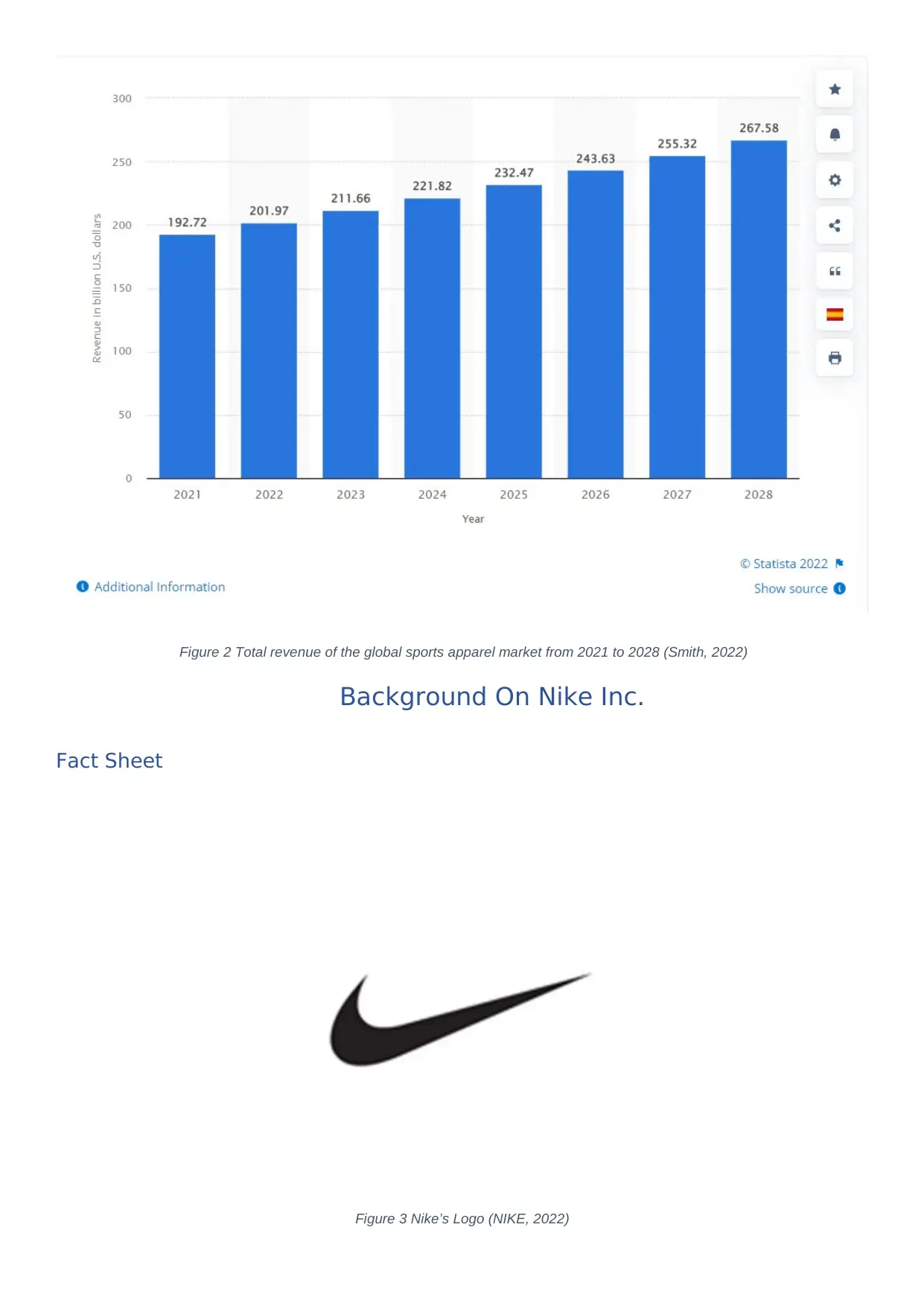
Figure 2 Total revenue of the global sports apparel market from 2021 to 2028 (Smith, 2022)
Background On Nike Inc.
Fact Sheet
Figure 3 Nike’s Logo (NIKE, 2022)
Background On Nike Inc.
Fact Sheet
Figure 3 Nike’s Logo (NIKE, 2022)
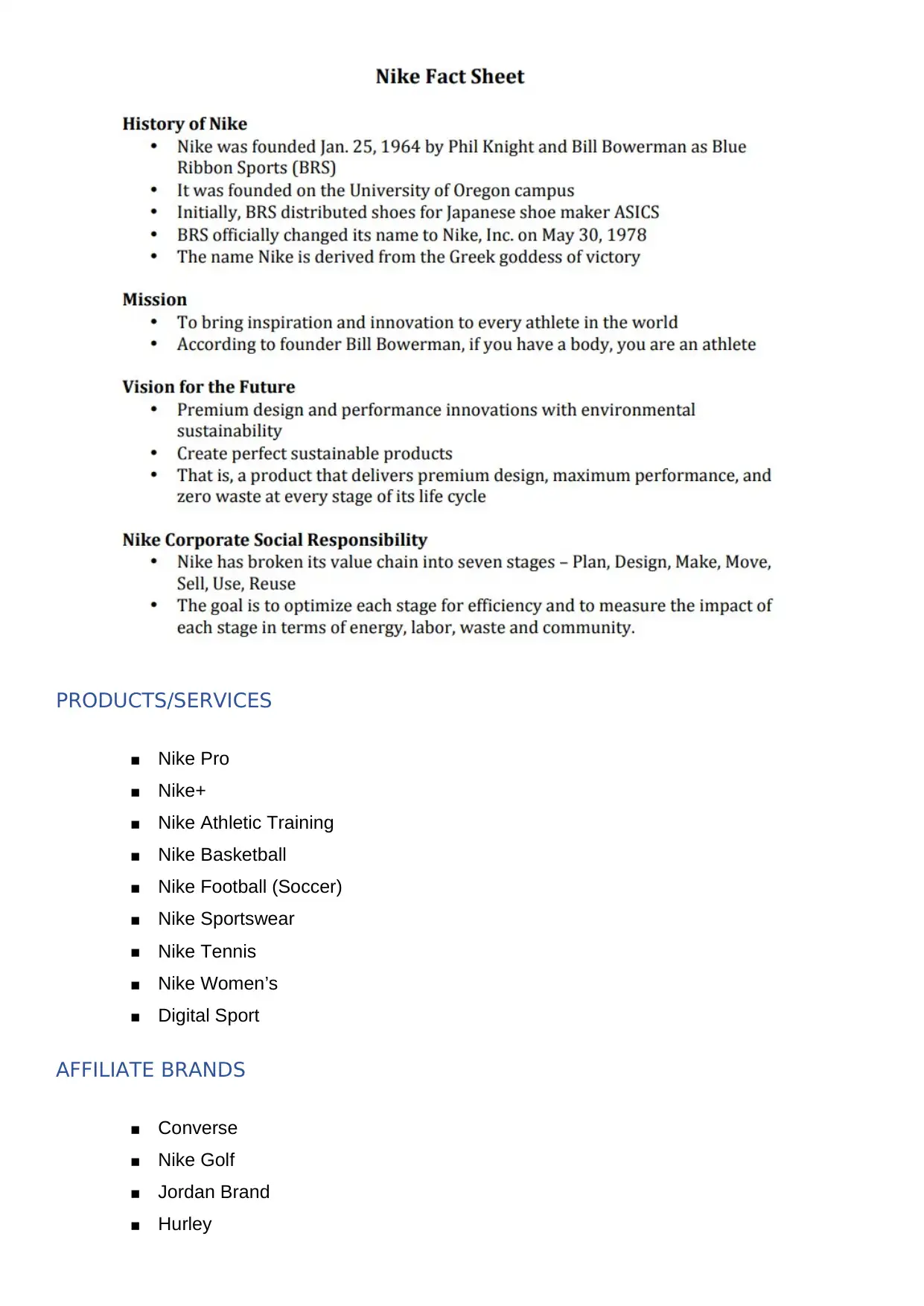
PRODUCTS/SERVICES
▪ Nike Pro
▪ Nike+
▪ Nike Athletic Training
▪ Nike Basketball
▪ Nike Football (Soccer)
▪ Nike Sportswear
▪ Nike Tennis
▪ Nike Women’s
▪ Digital Sport
AFFILIATE BRANDS
▪ Converse
▪ Nike Golf
▪ Jordan Brand
▪ Hurley
▪ Nike Pro
▪ Nike+
▪ Nike Athletic Training
▪ Nike Basketball
▪ Nike Football (Soccer)
▪ Nike Sportswear
▪ Nike Tennis
▪ Nike Women’s
▪ Digital Sport
AFFILIATE BRANDS
▪ Converse
▪ Nike Golf
▪ Jordan Brand
▪ Hurley
⊘ This is a preview!⊘
Do you want full access?
Subscribe today to unlock all pages.
Trusted by 1+ million students worldwide
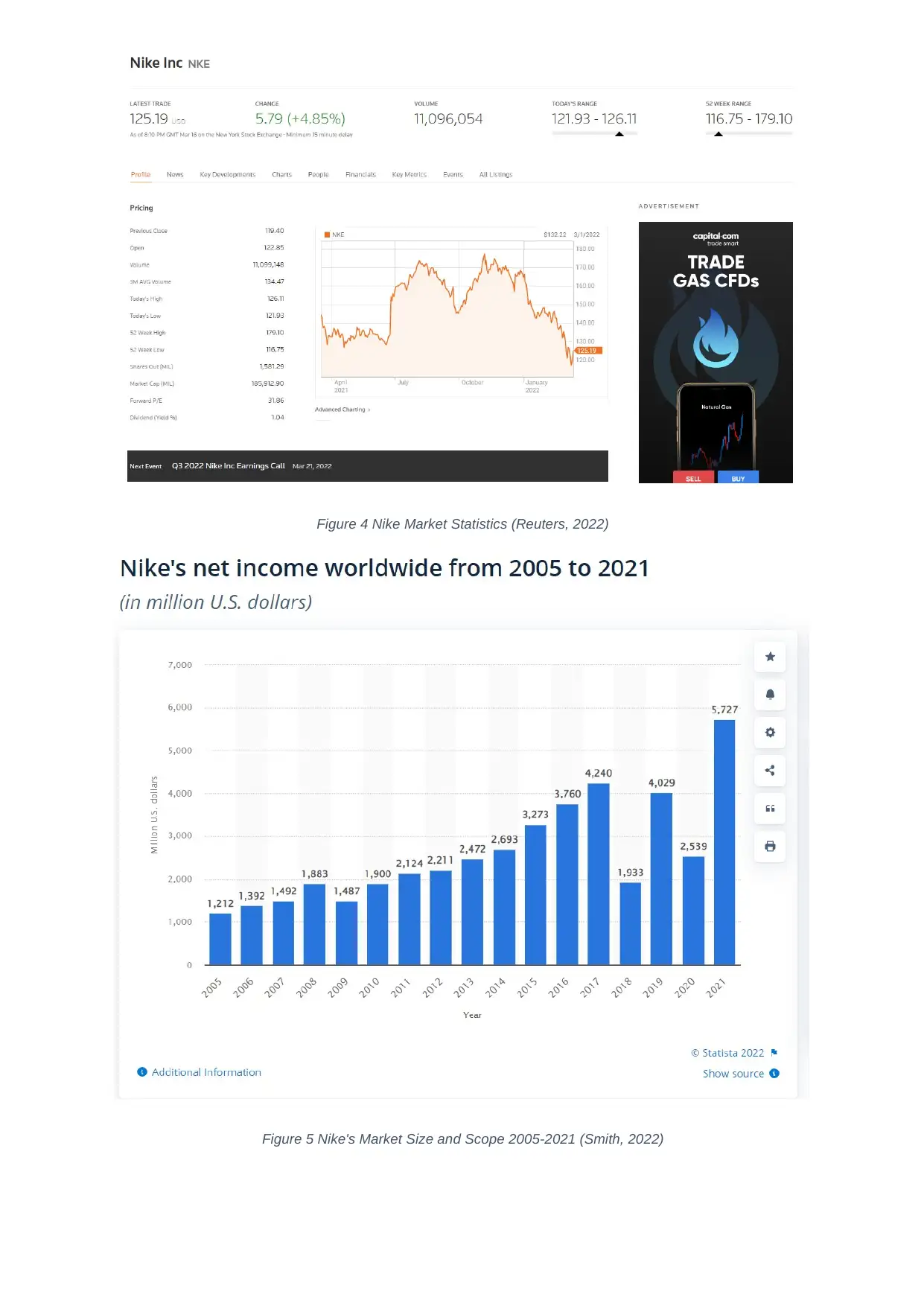
Figure 4 Nike Market Statistics (Reuters, 2022)
Figure 5 Nike's Market Size and Scope 2005-2021 (Smith, 2022)
Figure 5 Nike's Market Size and Scope 2005-2021 (Smith, 2022)
Paraphrase This Document
Need a fresh take? Get an instant paraphrase of this document with our AI Paraphraser
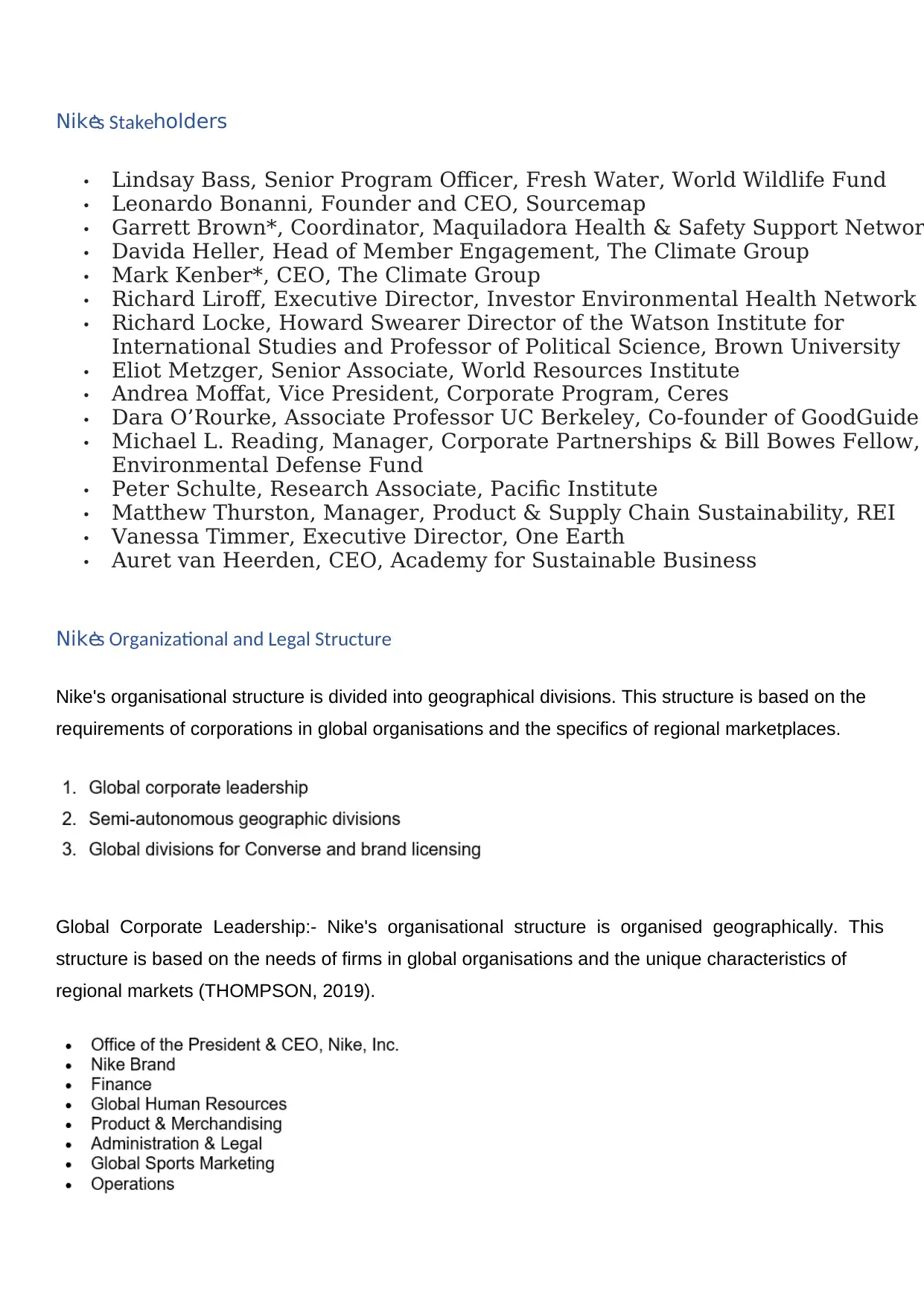
Nike’s Stakeholders
Nike’s Organizational and Legal Structure
Nike's organisational structure is divided into geographical divisions. This structure is based on the
requirements of corporations in global organisations and the specifics of regional marketplaces.
Global Corporate Leadership:- Nike's organisational structure is organised geographically. This
structure is based on the needs of firms in global organisations and the unique characteristics of
regional markets (THOMPSON, 2019).
• Lindsay Bass, Senior Program Officer, Fresh Water, World Wildlife Fund
• Leonardo Bonanni, Founder and CEO, Sourcemap
• Garrett Brown*, Coordinator, Maquiladora Health & Safety Support Networ
• Davida Heller, Head of Member Engagement, The Climate Group
• Mark Kenber*, CEO, The Climate Group
• Richard Liroff, Executive Director, Investor Environmental Health Network
• Richard Locke, Howard Swearer Director of the Watson Institute for
International Studies and Professor of Political Science, Brown University
• Eliot Metzger, Senior Associate, World Resources Institute
• Andrea Moffat, Vice President, Corporate Program, Ceres
• Dara O’Rourke, Associate Professor UC Berkeley, Co-founder of GoodGuide
• Michael L. Reading, Manager, Corporate Partnerships & Bill Bowes Fellow,
Environmental Defense Fund
• Peter Schulte, Research Associate, Pacific Institute
• Matthew Thurston, Manager, Product & Supply Chain Sustainability, REI
• Vanessa Timmer, Executive Director, One Earth
• Auret van Heerden, CEO, Academy for Sustainable Business
Nike’s Organizational and Legal Structure
Nike's organisational structure is divided into geographical divisions. This structure is based on the
requirements of corporations in global organisations and the specifics of regional marketplaces.
Global Corporate Leadership:- Nike's organisational structure is organised geographically. This
structure is based on the needs of firms in global organisations and the unique characteristics of
regional markets (THOMPSON, 2019).
• Lindsay Bass, Senior Program Officer, Fresh Water, World Wildlife Fund
• Leonardo Bonanni, Founder and CEO, Sourcemap
• Garrett Brown*, Coordinator, Maquiladora Health & Safety Support Networ
• Davida Heller, Head of Member Engagement, The Climate Group
• Mark Kenber*, CEO, The Climate Group
• Richard Liroff, Executive Director, Investor Environmental Health Network
• Richard Locke, Howard Swearer Director of the Watson Institute for
International Studies and Professor of Political Science, Brown University
• Eliot Metzger, Senior Associate, World Resources Institute
• Andrea Moffat, Vice President, Corporate Program, Ceres
• Dara O’Rourke, Associate Professor UC Berkeley, Co-founder of GoodGuide
• Michael L. Reading, Manager, Corporate Partnerships & Bill Bowes Fellow,
Environmental Defense Fund
• Peter Schulte, Research Associate, Pacific Institute
• Matthew Thurston, Manager, Product & Supply Chain Sustainability, REI
• Vanessa Timmer, Executive Director, One Earth
• Auret van Heerden, CEO, Academy for Sustainable Business
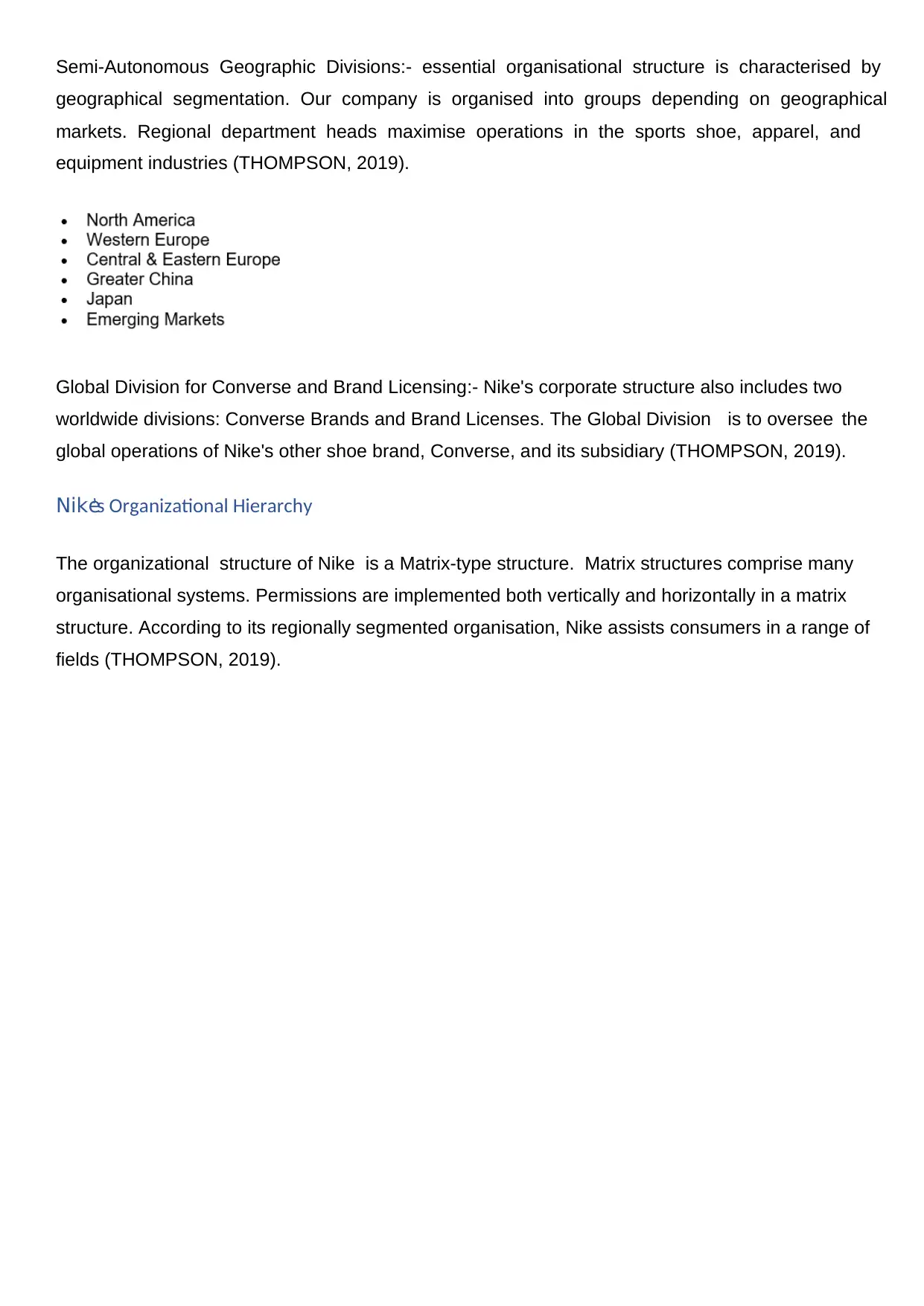
Semi-Autonomous Geographic Divisions:- essential organisational structure is characterised by
geographical segmentation. Our company is organised into groups depending on geographical
markets. Regional department heads maximise operations in the sports shoe, apparel, and
equipment industries (THOMPSON, 2019).
Global Division for Converse and Brand Licensing:- Nike's corporate structure also includes two
worldwide divisions: Converse Brands and Brand Licenses. The Global Division is to oversee the
global operations of Nike's other shoe brand, Converse, and its subsidiary (THOMPSON, 2019).
Nike’s Organizational Hierarchy
The organizational structure of Nike is a Matrix-type structure. Matrix structures comprise many
organisational systems. Permissions are implemented both vertically and horizontally in a matrix
structure. According to its regionally segmented organisation, Nike assists consumers in a range of
fields (THOMPSON, 2019).
geographical segmentation. Our company is organised into groups depending on geographical
markets. Regional department heads maximise operations in the sports shoe, apparel, and
equipment industries (THOMPSON, 2019).
Global Division for Converse and Brand Licensing:- Nike's corporate structure also includes two
worldwide divisions: Converse Brands and Brand Licenses. The Global Division is to oversee the
global operations of Nike's other shoe brand, Converse, and its subsidiary (THOMPSON, 2019).
Nike’s Organizational Hierarchy
The organizational structure of Nike is a Matrix-type structure. Matrix structures comprise many
organisational systems. Permissions are implemented both vertically and horizontally in a matrix
structure. According to its regionally segmented organisation, Nike assists consumers in a range of
fields (THOMPSON, 2019).
⊘ This is a preview!⊘
Do you want full access?
Subscribe today to unlock all pages.
Trusted by 1+ million students worldwide
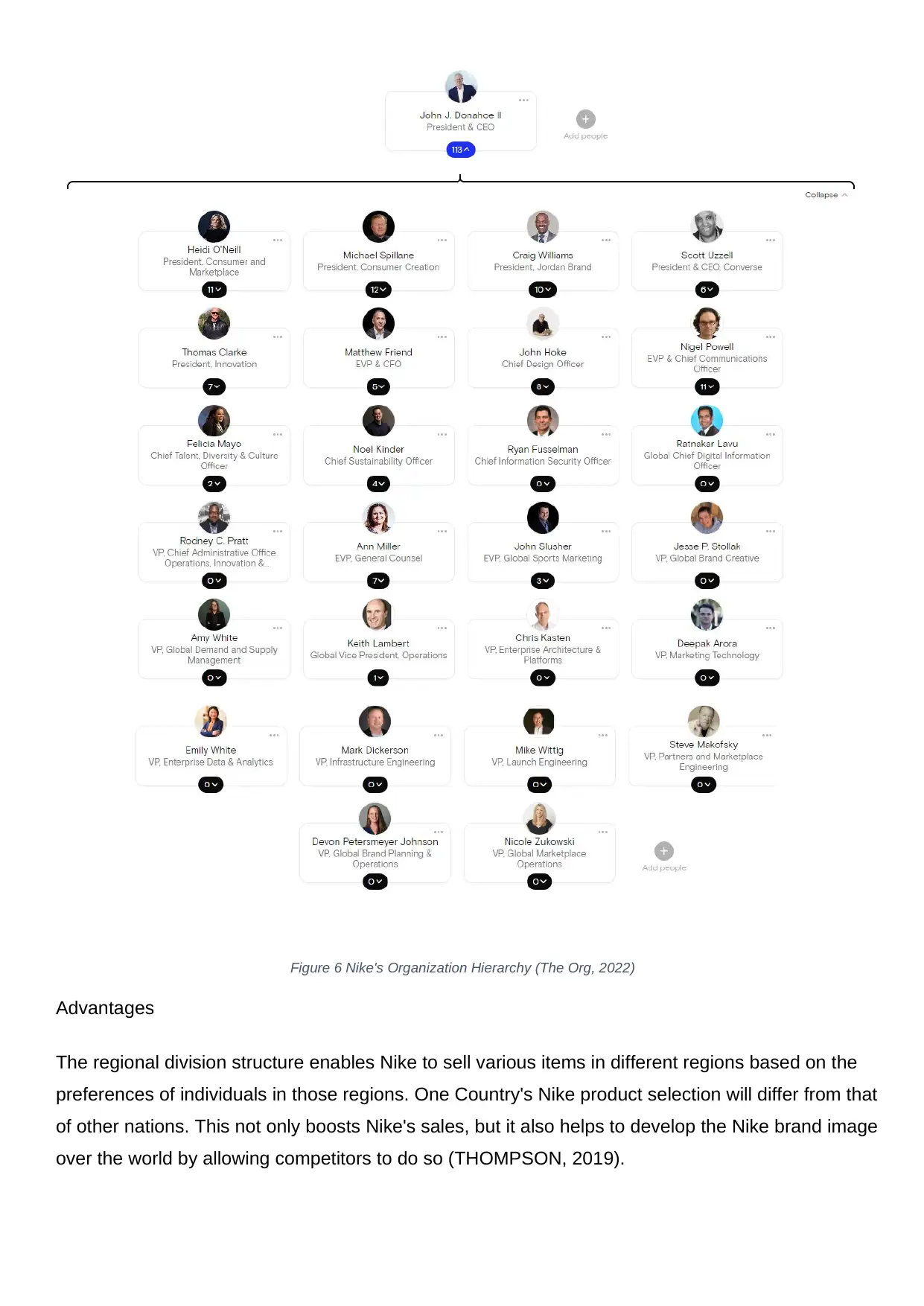
Figure 6 Nike's Organization Hierarchy (The Org, 2022)
Advantages
The regional division structure enables Nike to sell various items in different regions based on the
preferences of individuals in those regions. One Country's Nike product selection will differ from that
of other nations. This not only boosts Nike's sales, but it also helps to develop the Nike brand image
over the world by allowing competitors to do so (THOMPSON, 2019).
Advantages
The regional division structure enables Nike to sell various items in different regions based on the
preferences of individuals in those regions. One Country's Nike product selection will differ from that
of other nations. This not only boosts Nike's sales, but it also helps to develop the Nike brand image
over the world by allowing competitors to do so (THOMPSON, 2019).
Paraphrase This Document
Need a fresh take? Get an instant paraphrase of this document with our AI Paraphraser
Creating regional subgroups in various regions might aid in facilitation. The firm researches the
culture of the people who reside there and offers things according to their preferences. Because
employees in each department are solely focused on the product, the department for each product
assists the firm in developing the product. They are specialists in their respective disciplines and are
best equipped for their jobs (THOMPSON, 2019).
The functional structure promotes the optimal workforce. People with experience and flawless
talents are put in groups with others who share their interests. The activities in each feature group
are completed fast. It not only ensures efficiency but also decreases the possibility of erro
(THOMPSON, 2019)r.
Disadvantages
When a single individual performs many jobs, they are accountable to multiple managers. There is
misunderstanding and dispute about who should prioritise tasks. Unnecessary animosity and
disagreement may be detrimental to both the organisation and its personnel (THOMPSON, 2019)l.
Second, departmental arrangements result in overlapping duties inside the organisation.
Regardless of how tiny the departments are, the two departments have distinct departments for the
same function. This results in a waste of corporate funds and other resources. A lack of coordination
is highly likely to prove deadly to the organisation. This is because one department is uninformed of
another's plans (THOMPSON, 2019).
Critical Analysis
Nike has become synonymous with high-quality sportswear and footwear. Although the
organisational change model is various, all change initiatives should be founded on a thorough
examination of the external and internal variables specific to Nike's business. Nike Inc. and Nike
Inc.'s organisational structure as a key participant in the shoe, clothing, and sports goods industries
demonstrates how to incorporate regional variances into corporate strategy (Ramaswamy & Ozcan,
2016).
This element of Nike Inc.'s organisational structure allows you to handle Converse brand licencing
as well as Converse's global operations. Nike's organisational structure is based on the demands
of the worldwide organisation as well as the company's distinctive position in the regional market.
When this structural support is combined with Nike's organisational culture, the corporation can
endure the economic and commercial effects of competitors such as Adidas, ASICS, Puma, and
Under Armour (Jin, 2022). Nike stimulated creativity among corporate personnel and become an
industry leader by utilising work scheduling technologies, including an HR management system.
culture of the people who reside there and offers things according to their preferences. Because
employees in each department are solely focused on the product, the department for each product
assists the firm in developing the product. They are specialists in their respective disciplines and are
best equipped for their jobs (THOMPSON, 2019).
The functional structure promotes the optimal workforce. People with experience and flawless
talents are put in groups with others who share their interests. The activities in each feature group
are completed fast. It not only ensures efficiency but also decreases the possibility of erro
(THOMPSON, 2019)r.
Disadvantages
When a single individual performs many jobs, they are accountable to multiple managers. There is
misunderstanding and dispute about who should prioritise tasks. Unnecessary animosity and
disagreement may be detrimental to both the organisation and its personnel (THOMPSON, 2019)l.
Second, departmental arrangements result in overlapping duties inside the organisation.
Regardless of how tiny the departments are, the two departments have distinct departments for the
same function. This results in a waste of corporate funds and other resources. A lack of coordination
is highly likely to prove deadly to the organisation. This is because one department is uninformed of
another's plans (THOMPSON, 2019).
Critical Analysis
Nike has become synonymous with high-quality sportswear and footwear. Although the
organisational change model is various, all change initiatives should be founded on a thorough
examination of the external and internal variables specific to Nike's business. Nike Inc. and Nike
Inc.'s organisational structure as a key participant in the shoe, clothing, and sports goods industries
demonstrates how to incorporate regional variances into corporate strategy (Ramaswamy & Ozcan,
2016).
This element of Nike Inc.'s organisational structure allows you to handle Converse brand licencing
as well as Converse's global operations. Nike's organisational structure is based on the demands
of the worldwide organisation as well as the company's distinctive position in the regional market.
When this structural support is combined with Nike's organisational culture, the corporation can
endure the economic and commercial effects of competitors such as Adidas, ASICS, Puma, and
Under Armour (Jin, 2022). Nike stimulated creativity among corporate personnel and become an
industry leader by utilising work scheduling technologies, including an HR management system.
Nike Inc. is one of the multinational corporations that regards Human Resources Development (HR)
as a vital instrument in accomplishing its mission. This is for Nike. Nike Inc.'s organisational structure
stresses the need to remove regional market variances. Nike has picked the ideal organisational
structure for him out of a multitude of options (Rizvi & Garg, 2021).
The organisation is divided into functional sections overseen by global corporate governance and a
command structure. Nike's Global Business Leadership, which includes executives, ensures that
policies are communicated throughout the organisation throughout all departments. Nike, being a
huge and varied organisation, has a broad set of internal and external stakeholders (Jin, 2022).
Nike is one organisation that has successfully integrated procurement strategy and supply chain
management. That Nike's procurement strategy considers supplier behaviour, consumer
expectations, and operational expenses ensure the company's long-term viability. Given that Nike
has been a successful corporation from its start, it is worthwhile to investigate Nike's organisational
structure (Choi, et al., 2021).
Nike is familiar with the people that live there and their customs and distributes items based on their
cultural preferences. Nike, as an organisation stakeholder, supports the Global Reporting Initiative
(GRI) and works to build a uniform reporting and assurance structure and system to track the
development of a company's corporate responsibility. Aids in actual progress. Through GRI, Nike is
also collaborating with other stakeholders to help establish industry-wide reporting frameworks and
industry applications (Cicerchia, et al., 2021).
Task 2
PESTEL analysis of Nike
Political
Government and politics may appear to be non-business entities, yet we all know that everything
depends on the government in place. Nike benefits from open governance and a stable political
climate in terms of business and growth. However, the business climate differs from one country to
the next and from one market to the next. This is why brands do not perform equally well in various
markets. Some marketplaces are still closed to foreign brands. Entering the Asian market is
challenging without a local partner. Aside from that, government laws and taxes are significant
elements influencing a brand's profitability (Neureiter & Bhattacharya, 2021).
Global brands spend a lot of money on lobbying for a reason. According to an Open secrets report,
Nike spent $750,000 on lobbying in 2016. This is a substantial sum of money spent on influencing
as a vital instrument in accomplishing its mission. This is for Nike. Nike Inc.'s organisational structure
stresses the need to remove regional market variances. Nike has picked the ideal organisational
structure for him out of a multitude of options (Rizvi & Garg, 2021).
The organisation is divided into functional sections overseen by global corporate governance and a
command structure. Nike's Global Business Leadership, which includes executives, ensures that
policies are communicated throughout the organisation throughout all departments. Nike, being a
huge and varied organisation, has a broad set of internal and external stakeholders (Jin, 2022).
Nike is one organisation that has successfully integrated procurement strategy and supply chain
management. That Nike's procurement strategy considers supplier behaviour, consumer
expectations, and operational expenses ensure the company's long-term viability. Given that Nike
has been a successful corporation from its start, it is worthwhile to investigate Nike's organisational
structure (Choi, et al., 2021).
Nike is familiar with the people that live there and their customs and distributes items based on their
cultural preferences. Nike, as an organisation stakeholder, supports the Global Reporting Initiative
(GRI) and works to build a uniform reporting and assurance structure and system to track the
development of a company's corporate responsibility. Aids in actual progress. Through GRI, Nike is
also collaborating with other stakeholders to help establish industry-wide reporting frameworks and
industry applications (Cicerchia, et al., 2021).
Task 2
PESTEL analysis of Nike
Political
Government and politics may appear to be non-business entities, yet we all know that everything
depends on the government in place. Nike benefits from open governance and a stable political
climate in terms of business and growth. However, the business climate differs from one country to
the next and from one market to the next. This is why brands do not perform equally well in various
markets. Some marketplaces are still closed to foreign brands. Entering the Asian market is
challenging without a local partner. Aside from that, government laws and taxes are significant
elements influencing a brand's profitability (Neureiter & Bhattacharya, 2021).
Global brands spend a lot of money on lobbying for a reason. According to an Open secrets report,
Nike spent $750,000 on lobbying in 2016. This is a substantial sum of money spent on influencing
⊘ This is a preview!⊘
Do you want full access?
Subscribe today to unlock all pages.
Trusted by 1+ million students worldwide

1 out of 20


Related Documents


Your All-in-One AI-Powered Toolkit for Academic Success.
+13062052269
info@desklib.com
Available 24*7 on WhatsApp / Email
![[object Object]](/_next/static/media/star-bottom.7253800d.svg)
Unlock your academic potential
Copyright © 2020–2026 A2Z Services. All Rights Reserved. Developed and managed by ZUCOL.