Analysis of Healthcare Outsourcing Practices: A Detailed Report
VerifiedAdded on 2020/06/06
|27
|10675
|62
Report
AI Summary
This report investigates the practice of outsourcing non-core services within the healthcare sector, particularly in the post-Soviet region, with a focus on Russia. The study reviews existing literature on outsourcing in hospital environments, exploring potential practices for efficient resource management. It examines areas such as human resources, cleaning services, IT, and more, comparing them against a hospital's 2016 budget to visualize potential financial benefits. The research considers legal and financial limitations within the Russian healthcare system, alongside ethical considerations. While outsourcing is common in other countries, it is not well-developed in Russia. The analysis suggests that implementing common outsourcing practices could increase hospital efficiency, but further empirical research is required. The report provides a detailed analysis of different outsourcing opportunities within human resources, including recruitment, training, and compensation, evaluating their potential for cost-effectiveness and impact on service quality. The study also includes a literature review, existing practices, and a discussion of barriers, limitations, and potential future analysis.

HEALTH CARE

Paraphrase This Document
Need a fresh take? Get an instant paraphrase of this document with our AI Paraphraser
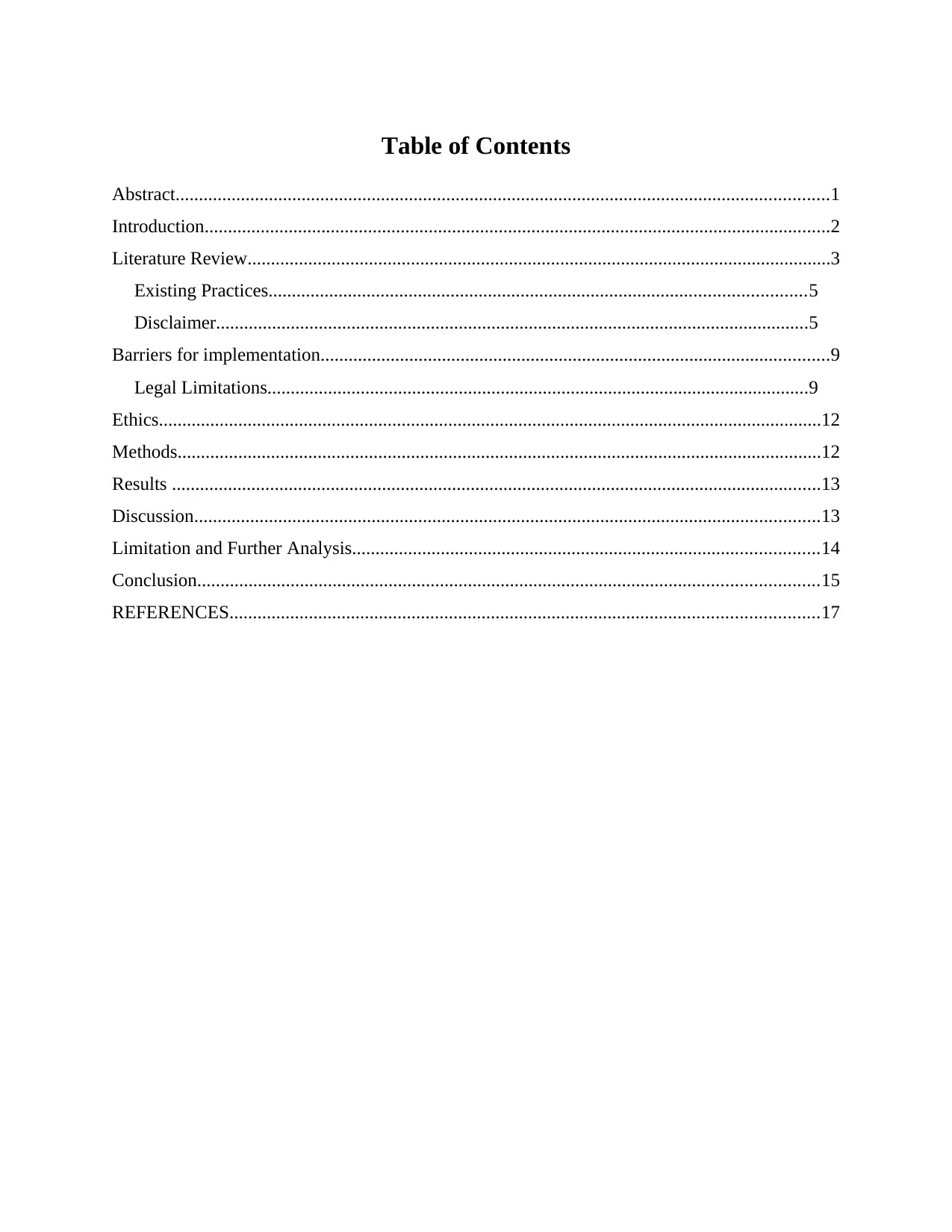
Table of Contents
Abstract............................................................................................................................................1
Introduction......................................................................................................................................2
Literature Review.............................................................................................................................3
Existing Practices...................................................................................................................5
Disclaimer...............................................................................................................................5
Barriers for implementation.............................................................................................................9
Legal Limitations....................................................................................................................9
Ethics..............................................................................................................................................12
Methods..........................................................................................................................................12
Results ...........................................................................................................................................13
Discussion......................................................................................................................................13
Limitation and Further Analysis....................................................................................................14
Conclusion.....................................................................................................................................15
REFERENCES..............................................................................................................................17
Abstract............................................................................................................................................1
Introduction......................................................................................................................................2
Literature Review.............................................................................................................................3
Existing Practices...................................................................................................................5
Disclaimer...............................................................................................................................5
Barriers for implementation.............................................................................................................9
Legal Limitations....................................................................................................................9
Ethics..............................................................................................................................................12
Methods..........................................................................................................................................12
Results ...........................................................................................................................................13
Discussion......................................................................................................................................13
Limitation and Further Analysis....................................................................................................14
Conclusion.....................................................................................................................................15
REFERENCES..............................................................................................................................17
1 Abstract
● Background
The utility of outsourcing in health care services has been a highly debatable topic in the
last few decades for a lot of reasons, however, this practice seem to be not adopted within
post-Soviet region, or adopted in negative manner (Asafyev, 2016).
The research aims to review existing literature on outsourcing of non-core services in
hospital environment towards the private sector, in order to learn what kinds of practices
could be taken into account for more efficient management of resources within healthcare
system of the given region. Another objective is to highlight zones of possible interest
such as human resource, accounting, leasing of equipments etc within hospital budget of
a given region and compare outcomes of two parts of this research for possible
intervention methods to be chosen and proposed.
● Methods
Analysis of the legal and financial background of Russian health care system was
conducted for establishment of limitations within the chosen setting. Furthermore,
research of existing literature regarding outsourcing of non-core services was performed
and a list of possible practices for adoption was created. Practices which were chosen as
acceptable were applied to a previous year’s budget, that is 2016 of a single hospital for
visualization of a possible profit for a hospital.
● Results
Chosen practices work within areas of Human Resources, Cleaning Services,
Informational Technologies, Maintenance, Food Services, Audit, Laundry and Security.
During analysis of literature, most of these practices shown mixed outcomes or indirect
confounding by different drivers. However, while being applied to a hospital budget most
of them have shown an increase in hospital’s profit without a loss of quality of services.
● Conclusion
While being an effective tool in many countries, outsourcing of non-core services of the
hospital seems to be almost not developed in the Russian region at all. Usage of most
1
● Background
The utility of outsourcing in health care services has been a highly debatable topic in the
last few decades for a lot of reasons, however, this practice seem to be not adopted within
post-Soviet region, or adopted in negative manner (Asafyev, 2016).
The research aims to review existing literature on outsourcing of non-core services in
hospital environment towards the private sector, in order to learn what kinds of practices
could be taken into account for more efficient management of resources within healthcare
system of the given region. Another objective is to highlight zones of possible interest
such as human resource, accounting, leasing of equipments etc within hospital budget of
a given region and compare outcomes of two parts of this research for possible
intervention methods to be chosen and proposed.
● Methods
Analysis of the legal and financial background of Russian health care system was
conducted for establishment of limitations within the chosen setting. Furthermore,
research of existing literature regarding outsourcing of non-core services was performed
and a list of possible practices for adoption was created. Practices which were chosen as
acceptable were applied to a previous year’s budget, that is 2016 of a single hospital for
visualization of a possible profit for a hospital.
● Results
Chosen practices work within areas of Human Resources, Cleaning Services,
Informational Technologies, Maintenance, Food Services, Audit, Laundry and Security.
During analysis of literature, most of these practices shown mixed outcomes or indirect
confounding by different drivers. However, while being applied to a hospital budget most
of them have shown an increase in hospital’s profit without a loss of quality of services.
● Conclusion
While being an effective tool in many countries, outsourcing of non-core services of the
hospital seems to be almost not developed in the Russian region at all. Usage of most
1
⊘ This is a preview!⊘
Do you want full access?
Subscribe today to unlock all pages.

Trusted by 1+ million students worldwide
common and effective practices on a model shows a raise in efficiency of a hospital.
However, a further research and empirical research is required for further discussion.
● Keywords
Non-Core Services, Hospital, Outsourcing, Russian Healthcare Study
Introduction
After the end of Soviet Union in
1991, all of former Soviet republics had to deal with development of completely new system of
governance. That included establishment of health care systems. Due to complexity of this
objective, the short time frame of the transition, and existing legal, administrative and resource
bases, all countries built their health care system on system that existed in the Soviet Union
(USAID, 2010). While being most obvious and appropriate decision, it denied the main concept
of capitalism and markets– competition. The decision was logical as it was difficult to keep the
old health care centres functioning. It rose the requirement of developing new health care centres
which can be functioned through new rules and regulations. All the health care services,
including non-core services, were offered by government controlled structures such as health
care ministries and locally authorized hospitals etc. Non-core health services include applying
the principles of organizational development such as planning, development and implementation
which helps in fulfilling the objective of health care services. . In return, lack of competition
caused inefficient spread of resources and poor quality of services, along with lack of budgeting
in most of the cases (Hartmut and Egger, 2003.). This research will concentrate its efforts on
Russian Federation as an example of a post-soviet healthcare system due to lack of time and
resources. These services do not contribute directly to the services given to the patient but it acts
as a tool that can make those services easily adaptable and comfortable such as car parking,
infrastructure etc. The research will provide reliable and authenticated results through working
upon non-core services that are provided in health care centers after abolition of Soviet Union
(WHO, 1998).
Post-Soviet Healthcare systems require serious reforming toward competitive
performance, which prove resource and time costly. Unfortunately, the planned budget for next
2
However, a further research and empirical research is required for further discussion.
● Keywords
Non-Core Services, Hospital, Outsourcing, Russian Healthcare Study
Introduction
After the end of Soviet Union in
1991, all of former Soviet republics had to deal with development of completely new system of
governance. That included establishment of health care systems. Due to complexity of this
objective, the short time frame of the transition, and existing legal, administrative and resource
bases, all countries built their health care system on system that existed in the Soviet Union
(USAID, 2010). While being most obvious and appropriate decision, it denied the main concept
of capitalism and markets– competition. The decision was logical as it was difficult to keep the
old health care centres functioning. It rose the requirement of developing new health care centres
which can be functioned through new rules and regulations. All the health care services,
including non-core services, were offered by government controlled structures such as health
care ministries and locally authorized hospitals etc. Non-core health services include applying
the principles of organizational development such as planning, development and implementation
which helps in fulfilling the objective of health care services. . In return, lack of competition
caused inefficient spread of resources and poor quality of services, along with lack of budgeting
in most of the cases (Hartmut and Egger, 2003.). This research will concentrate its efforts on
Russian Federation as an example of a post-soviet healthcare system due to lack of time and
resources. These services do not contribute directly to the services given to the patient but it acts
as a tool that can make those services easily adaptable and comfortable such as car parking,
infrastructure etc. The research will provide reliable and authenticated results through working
upon non-core services that are provided in health care centers after abolition of Soviet Union
(WHO, 1998).
Post-Soviet Healthcare systems require serious reforming toward competitive
performance, which prove resource and time costly. Unfortunately, the planned budget for next
2
Paraphrase This Document
Need a fresh take? Get an instant paraphrase of this document with our AI Paraphraser
financial year (2017) in Russia puts healthcare (2.2%) sector below military spending (17.2%),
andthe legal system (7.7%). (Ministry Of Finance of Russian Federation, 2016)
In this particular area conditions any cost-effective change in performance of health care
units around the country might prove worthy of adoption. In the present scenario, conditions of
private sector business are on competitive level towards the most developed countries and it is
but only logical to use this as advantage for improvement of the public health care sphere.
Worldwide practice shows that outsourcing of secondary or non-core services might be
used for a better cost efficiency of a medical facility (some references). An evaluation of most
common practices will be conducted within this research along with evaluation of each one.
The present study set out to evaluate existing practices in outsourcing for possible usage
within setting of hospital in Russian Federation with respect to laws, political conditions and
financial situation within the country. In order to perform this function, a list of barriers was
previously developed and each of possible outsourcing spheres were evaluated. After being
qualitatively evaluated for adoption, practices which were positively evaluated would be applied
to a real hospital budget for a further quantitative evaluation of possible outcomes of adoption.
Hence, the main aim of the project is to review existing literature on outsourcing of non-
core services in hospital environment to the private sector. It will help in developing adequate
knowledge regarding what kinds of practices could be taken into account for more efficient
management of resources within health care system of the given region.
The objectives for the present study on health care systems can be framed in the
following manner:
● To highlight zones of possible interest for outsourcing within hospital budget of a given
region
● To compare outcomes of this research for possible intervention methods which can be
further chosen and proposed.
Literature Review
According to Bob Reiss, a major outsourcing specialist figure, outsourcing enables
companies and organizations to purchase a specific product or service from an outside party in
lieu of performing those functions thyself (R.L., 1997). While having extensive use in multiple
industries, outsourcing can be a “double-edged sword”, if it is not managed properly. Reiss
3
andthe legal system (7.7%). (Ministry Of Finance of Russian Federation, 2016)
In this particular area conditions any cost-effective change in performance of health care
units around the country might prove worthy of adoption. In the present scenario, conditions of
private sector business are on competitive level towards the most developed countries and it is
but only logical to use this as advantage for improvement of the public health care sphere.
Worldwide practice shows that outsourcing of secondary or non-core services might be
used for a better cost efficiency of a medical facility (some references). An evaluation of most
common practices will be conducted within this research along with evaluation of each one.
The present study set out to evaluate existing practices in outsourcing for possible usage
within setting of hospital in Russian Federation with respect to laws, political conditions and
financial situation within the country. In order to perform this function, a list of barriers was
previously developed and each of possible outsourcing spheres were evaluated. After being
qualitatively evaluated for adoption, practices which were positively evaluated would be applied
to a real hospital budget for a further quantitative evaluation of possible outcomes of adoption.
Hence, the main aim of the project is to review existing literature on outsourcing of non-
core services in hospital environment to the private sector. It will help in developing adequate
knowledge regarding what kinds of practices could be taken into account for more efficient
management of resources within health care system of the given region.
The objectives for the present study on health care systems can be framed in the
following manner:
● To highlight zones of possible interest for outsourcing within hospital budget of a given
region
● To compare outcomes of this research for possible intervention methods which can be
further chosen and proposed.
Literature Review
According to Bob Reiss, a major outsourcing specialist figure, outsourcing enables
companies and organizations to purchase a specific product or service from an outside party in
lieu of performing those functions thyself (R.L., 1997). While having extensive use in multiple
industries, outsourcing can be a “double-edged sword”, if it is not managed properly. Reiss
3
implies that outsourcing managers are required to monitor the benefits of the third party services
and economically evaluate the feasibility of certain outsourcing ventures (Reiss, 2015).
The decreasing trade barriers stimulate outsourcing to Central and Eastern Europe and the
former Soviet Union, which in turn, significantly shifts relative employment in favor of high‐
skilled labour. (Hartmut Egger, 2003). In order to achieve efficient outsourcing, health care
executives have to understand that outsourcing is for short-term cost reduction and it does not
yield much economic benefit for long-term. Some of its benefits include, increased quality of
secondary health care services, and creative solutions. As a result, organizations can expand their
own knowledge and physical investment capabilities by using the facilities and program funds of
the vendor. The organization also benefits from access to the latest technology without the
substantial yet prohibitive, investment otherwise required. (Reiss, 1999)
As pointed out by Velma Roberts in the Journal of Health care Management, outsourcing
greatly assists organizations in adapting to the change in environment. Change may bring
creative ideas, however, sometimes it may also bring instability, such as potential job loss and
job vulnerability due to the changing needs of the organisation. “Reassuring employees affected
by outsourcing that the change is not a reflection of their individual performance and changing
their perceptions of outsourcing is essential.” (Allen, 2000).
While the benefits of outsourcing are expertly exploited by many entrepreneurs, not all of
them can clearly observe the benefits. There are various examples of the health care centers
where outsourcing is poorly monitored; the organizational leaders may fail to engage in a
beneficial outsourcing relationship with an outside party because the outsourcing company is
ultimately held accountable for results. Management must strategically monitor all vendors.
Monitoring vendors means ensuring goal value and value congruence. This means that managers
must ensure that the vendors, outsourcing company's incentive structures, and value systems are
competitive enough to deal with the issues of the business (R.L., 1997)
Outsourcing relieves the entrepreneur from his or her knowledge deficiencies by shifting
this responsibility to the supplier. This allows the entrepreneur to adapt more efficiently to the
changing environment in their industry. (Roberts, 2001) Turning to the origin of outsourcing, it
appeared in the US in the 80s, and then got popular in many countries of Europe. In the post-
Soviet space, technology appeared to be developed in the second half of the 90s (B, 1999).
However, many scientists and experts in the field of labor relations argue that this mechanism
4
and economically evaluate the feasibility of certain outsourcing ventures (Reiss, 2015).
The decreasing trade barriers stimulate outsourcing to Central and Eastern Europe and the
former Soviet Union, which in turn, significantly shifts relative employment in favor of high‐
skilled labour. (Hartmut Egger, 2003). In order to achieve efficient outsourcing, health care
executives have to understand that outsourcing is for short-term cost reduction and it does not
yield much economic benefit for long-term. Some of its benefits include, increased quality of
secondary health care services, and creative solutions. As a result, organizations can expand their
own knowledge and physical investment capabilities by using the facilities and program funds of
the vendor. The organization also benefits from access to the latest technology without the
substantial yet prohibitive, investment otherwise required. (Reiss, 1999)
As pointed out by Velma Roberts in the Journal of Health care Management, outsourcing
greatly assists organizations in adapting to the change in environment. Change may bring
creative ideas, however, sometimes it may also bring instability, such as potential job loss and
job vulnerability due to the changing needs of the organisation. “Reassuring employees affected
by outsourcing that the change is not a reflection of their individual performance and changing
their perceptions of outsourcing is essential.” (Allen, 2000).
While the benefits of outsourcing are expertly exploited by many entrepreneurs, not all of
them can clearly observe the benefits. There are various examples of the health care centers
where outsourcing is poorly monitored; the organizational leaders may fail to engage in a
beneficial outsourcing relationship with an outside party because the outsourcing company is
ultimately held accountable for results. Management must strategically monitor all vendors.
Monitoring vendors means ensuring goal value and value congruence. This means that managers
must ensure that the vendors, outsourcing company's incentive structures, and value systems are
competitive enough to deal with the issues of the business (R.L., 1997)
Outsourcing relieves the entrepreneur from his or her knowledge deficiencies by shifting
this responsibility to the supplier. This allows the entrepreneur to adapt more efficiently to the
changing environment in their industry. (Roberts, 2001) Turning to the origin of outsourcing, it
appeared in the US in the 80s, and then got popular in many countries of Europe. In the post-
Soviet space, technology appeared to be developed in the second half of the 90s (B, 1999).
However, many scientists and experts in the field of labor relations argue that this mechanism
4
⊘ This is a preview!⊘
Do you want full access?
Subscribe today to unlock all pages.
Trusted by 1+ million students worldwide
does not carry in itself anything new, since the origins of outsourcing can be traced back to mid
years of 20th century. A vivid experience in the use of "outsourcing" technologies was in the days
of the Great Depression at giant Ford and General Motors plants. It took Henry Ford just 12
years to build a car giant with a turnover of 125,000 cars a year from a tiny office. (Bykadorov,
2006). The main advantage of taking the health care services from outside is that it will help the
management in focusing on core activities of the health care center. They can focus on getting
right kind of doctors and provide effective health care services to them. However, the major
disadvantage of outsourcing non core health care services is that the entity who have been
outsourced may not understand the needs of the center in the manner the management itself can
understand.
Existing Practices
Disclaimer
A brief discussion of different existing practices have been made to understand the requirement
of non core requirement of health care services. The content tends to highlight the most common
outsourcing spheres described in a scientific literature. This decision is based on the definition of
term “outsourcing” itself, because anything can be outsourced, even the whole facility, not just
its parts (McCarthey, 2011)
1. Human Resources (Brown, 2012)
HR services are highly important in health care sphere, because of specificity of services
and level of personal and overall responsibilities taken by each member of hospital staff (Davies,
2010). So it is worth mentioning that certain HR activities are not to be considered as a potential
outsourcing subject (Vahit Yigit, 2007). Within the HR section of a hospital 3 groups of
activities can be separated.
The first refers to general employment of working personnel, the assessment of
candidates’ skill and drug testing. Out of these set of activities, only selection of possible
candidates seems to be ineffective and inapplicable due to its complexity and specificity
of expertise required for decision making (Allen, 2000).
Second stands for training of employees. Within the orientation process, it is very
unlikely if it is not possible to recruit someone from outside of the hospital to actually
give specific information about it. However, process of training and evaluation of
potential training areas has a very high potential of being outsourced to a private
5
years of 20th century. A vivid experience in the use of "outsourcing" technologies was in the days
of the Great Depression at giant Ford and General Motors plants. It took Henry Ford just 12
years to build a car giant with a turnover of 125,000 cars a year from a tiny office. (Bykadorov,
2006). The main advantage of taking the health care services from outside is that it will help the
management in focusing on core activities of the health care center. They can focus on getting
right kind of doctors and provide effective health care services to them. However, the major
disadvantage of outsourcing non core health care services is that the entity who have been
outsourced may not understand the needs of the center in the manner the management itself can
understand.
Existing Practices
Disclaimer
A brief discussion of different existing practices have been made to understand the requirement
of non core requirement of health care services. The content tends to highlight the most common
outsourcing spheres described in a scientific literature. This decision is based on the definition of
term “outsourcing” itself, because anything can be outsourced, even the whole facility, not just
its parts (McCarthey, 2011)
1. Human Resources (Brown, 2012)
HR services are highly important in health care sphere, because of specificity of services
and level of personal and overall responsibilities taken by each member of hospital staff (Davies,
2010). So it is worth mentioning that certain HR activities are not to be considered as a potential
outsourcing subject (Vahit Yigit, 2007). Within the HR section of a hospital 3 groups of
activities can be separated.
The first refers to general employment of working personnel, the assessment of
candidates’ skill and drug testing. Out of these set of activities, only selection of possible
candidates seems to be ineffective and inapplicable due to its complexity and specificity
of expertise required for decision making (Allen, 2000).
Second stands for training of employees. Within the orientation process, it is very
unlikely if it is not possible to recruit someone from outside of the hospital to actually
give specific information about it. However, process of training and evaluation of
potential training areas has a very high potential of being outsourced to a private
5
Paraphrase This Document
Need a fresh take? Get an instant paraphrase of this document with our AI Paraphraser
company. Furthermore, planning within training area and performance appraisal has
some limited potential to be developed in the professionals (Bykadorov, 2006).
Last group of activities represents compensation actions within the facility. It can be
further separated on pay compensation and benefits in the form of outsourcing fees.
Administration of both of these actions gives a broad range of outsourcing opportunities
(Larisa Popovich, 2011).
Out of all represented hospital activities within non-core Human Resources, only few
have strong potential of outsourcing. However, even though there is space for redirection of
hospital duties to private sector, none of represented jobs is broad enough for outsourcing to be
cost effective, as it does not exclude necessity of hospital’s own HR section.
HR activity HR sub Activity Reason for Outsourcing
Strategic Cost Expertise
Staffi ng
Recruitment Depends Depends Yes
Selection No No Depends
Skill And Ability Testing Yes Yes Yes
Drug Testing Yes Yes Yes
Training
Orientation No No No
Training Needs Assesment and Evaluation Yes Yes Yes
On the Job Training Depends Depends Depends
Performance Appraisal
Design No No Yes
Administration No No Yes
Planning No` Yes Yes
Compensation
Pay
Design No No Yes
Administration Yes Yes Yes
Benefits
Design No No Yes
Administration Yes Yes Yes
Table 1 (Brown, 2012)
Given table represents possible opportunities for outsourcing within HR section of hospital.
According to Vahit Yigit (2007), human resource plays an important role in the hospital
as it becomes necessary for the hospital to employee right kind of doctors in the organization so
that best possible services can be extended to the patients. Further, human resource is responsible
6
some limited potential to be developed in the professionals (Bykadorov, 2006).
Last group of activities represents compensation actions within the facility. It can be
further separated on pay compensation and benefits in the form of outsourcing fees.
Administration of both of these actions gives a broad range of outsourcing opportunities
(Larisa Popovich, 2011).
Out of all represented hospital activities within non-core Human Resources, only few
have strong potential of outsourcing. However, even though there is space for redirection of
hospital duties to private sector, none of represented jobs is broad enough for outsourcing to be
cost effective, as it does not exclude necessity of hospital’s own HR section.
HR activity HR sub Activity Reason for Outsourcing
Strategic Cost Expertise
Staffi ng
Recruitment Depends Depends Yes
Selection No No Depends
Skill And Ability Testing Yes Yes Yes
Drug Testing Yes Yes Yes
Training
Orientation No No No
Training Needs Assesment and Evaluation Yes Yes Yes
On the Job Training Depends Depends Depends
Performance Appraisal
Design No No Yes
Administration No No Yes
Planning No` Yes Yes
Compensation
Pay
Design No No Yes
Administration Yes Yes Yes
Benefits
Design No No Yes
Administration Yes Yes Yes
Table 1 (Brown, 2012)
Given table represents possible opportunities for outsourcing within HR section of hospital.
According to Vahit Yigit (2007), human resource plays an important role in the hospital
as it becomes necessary for the hospital to employee right kind of doctors in the organization so
that best possible services can be extended to the patients. Further, human resource is responsible
6
to negotiate their compensation, provide them proper training and make them aware about the
administration of the hospital. In order to focus on core activities of the hospital, the
management can outsource this function from other companies which are basically made to
provide human resource management services. However, as per the views of Van Deursen,
Buchanan and Duff (2013), the service when outsourced may not prove to be fruitful as it may be
costly to take these services and organization may not be able to generate that much return. The
company who have been hired to perform the job may not be aware of the norms of the hospital.
Further, It may get difficult for it to understand the requirement of the hospital based on which
recruitment is to be made. Increased cost and decreased quality of services make them restrict the
outsourcing part of human resourcing. Other problems include, leakage of private information,
loss of control, reliance on other company etc.
2. Cleaning Services (Veronica Toffolutti, 2017)
Another non-core activity which can be outsourced towards private organization is
cleaning services. However, unlike HR section, there is a big discussion about appropriateness of
such decision. Main reason is the importance of sanitation within the hospital environment. A
good example of the discussion, is article by (Veronica Toffolutti, 2017), representing a
significant increase in incidence of MRSA in UK hospitals, that decided to outsource the
cleaning services. However, article also mentions that the cost effectiveness and amount of saved
resources increased after outsourcing this services to a private company. Given the previously
discussed limitations within legal system, it is very unlikely that any member of the hospital
management would decide to risk health conditions of patients for a certain amount of savings.
Furthermore, (Davies, 2010) criticize this practice because in many cases it has shown poor
results along with poor overseeing within the area of implementation. Author raises a problem of
actual switch in contractor and legal punishment for the low quality of services provided. It is
very hard to describe how clean the floor was and set any benchmark for it. This raises the
dilemma of necessity of outsourcing. On one hand, it surely saves a lot of money, leaving more
space for hospital to develop, but on the other hand it is ascertained that the quality of services is
falling down significantly. Hence, it is important to provide quality cleaning services in the
hospital as the major importance lies in providing healthy environment to the patients. However,
there is a requirement for the health-care centers to opt for right kind of contractor that can give
quality services to the hospital keeping all the important factors in mind.
7
administration of the hospital. In order to focus on core activities of the hospital, the
management can outsource this function from other companies which are basically made to
provide human resource management services. However, as per the views of Van Deursen,
Buchanan and Duff (2013), the service when outsourced may not prove to be fruitful as it may be
costly to take these services and organization may not be able to generate that much return. The
company who have been hired to perform the job may not be aware of the norms of the hospital.
Further, It may get difficult for it to understand the requirement of the hospital based on which
recruitment is to be made. Increased cost and decreased quality of services make them restrict the
outsourcing part of human resourcing. Other problems include, leakage of private information,
loss of control, reliance on other company etc.
2. Cleaning Services (Veronica Toffolutti, 2017)
Another non-core activity which can be outsourced towards private organization is
cleaning services. However, unlike HR section, there is a big discussion about appropriateness of
such decision. Main reason is the importance of sanitation within the hospital environment. A
good example of the discussion, is article by (Veronica Toffolutti, 2017), representing a
significant increase in incidence of MRSA in UK hospitals, that decided to outsource the
cleaning services. However, article also mentions that the cost effectiveness and amount of saved
resources increased after outsourcing this services to a private company. Given the previously
discussed limitations within legal system, it is very unlikely that any member of the hospital
management would decide to risk health conditions of patients for a certain amount of savings.
Furthermore, (Davies, 2010) criticize this practice because in many cases it has shown poor
results along with poor overseeing within the area of implementation. Author raises a problem of
actual switch in contractor and legal punishment for the low quality of services provided. It is
very hard to describe how clean the floor was and set any benchmark for it. This raises the
dilemma of necessity of outsourcing. On one hand, it surely saves a lot of money, leaving more
space for hospital to develop, but on the other hand it is ascertained that the quality of services is
falling down significantly. Hence, it is important to provide quality cleaning services in the
hospital as the major importance lies in providing healthy environment to the patients. However,
there is a requirement for the health-care centers to opt for right kind of contractor that can give
quality services to the hospital keeping all the important factors in mind.
7
⊘ This is a preview!⊘
Do you want full access?
Subscribe today to unlock all pages.
Trusted by 1+ million students worldwide
Cleaning is an important aspect of any hospital. It is necessary for every hospital to
maintain the cleanliness in the environment as the patient who visits the hospital lacks immunity.
Improper health and hygiene can bring them in contact with the other diseases as well.
Appropriate cleaning instruments are required in order to effectively perform this process.
Outsourcing cleaning services can help in reducing the burden of considering all the important
factor. Further, employing appropriate type of people for doing such job is also a difficult task.
Hence, it becomes easy to outsource the function in order to provide quality services to the
hospital.
However, in contrast to this, outsourcing such services can add up to the cost of the
hospital. It can also add up to the hidden cost as well for the organization which may not prove to
be fruitful. The services of the outsourced company may also decline if adequate profit is not
earned by it. They may not use quality products to perform the cleaning swervices. There may be
threat to the confidentiality of the hospital. Leakage of the clientele information may lead the
company into losses.
3. Information Services (Daniel P Lorence, 2004)
According to (Daniel P Lorence, 2004), Health care Information Management is very
different from any other type of information management as it is restricted by specificity of the
sphere. However, day by day services of Health care Information manager are not a necessity, so
they can be outsourced. However, there is not enough evidence to proclaim, that all the
information management that can be done by a worker of a private company, due to privacy
policy and legal obligations. However, such duties as transcription, microfilming and
information release can be performed via outsourcing methods and the incidence of such
behavior is very high in United States. However, this practice can also be described as a segment
of IT section. Within that section, a research conducted in United Stated by (Manachemi N,
2007), describes any outsourcing within IT sphere of Hospital as something which lacks in
correlation with hospital financial efficiency in terms of profits, revenue or expenses. However,
even while there might be a discussion about efficiency of this practice in terms of financial
profit, it is certainly very reliable and helpful in terms of planning and strategy development for
any hospital. The conclusion from the article analysis is that, the practice of outsourcing IT
services from the company will further help in concentrating on core activities of the hospital.
8
maintain the cleanliness in the environment as the patient who visits the hospital lacks immunity.
Improper health and hygiene can bring them in contact with the other diseases as well.
Appropriate cleaning instruments are required in order to effectively perform this process.
Outsourcing cleaning services can help in reducing the burden of considering all the important
factor. Further, employing appropriate type of people for doing such job is also a difficult task.
Hence, it becomes easy to outsource the function in order to provide quality services to the
hospital.
However, in contrast to this, outsourcing such services can add up to the cost of the
hospital. It can also add up to the hidden cost as well for the organization which may not prove to
be fruitful. The services of the outsourced company may also decline if adequate profit is not
earned by it. They may not use quality products to perform the cleaning swervices. There may be
threat to the confidentiality of the hospital. Leakage of the clientele information may lead the
company into losses.
3. Information Services (Daniel P Lorence, 2004)
According to (Daniel P Lorence, 2004), Health care Information Management is very
different from any other type of information management as it is restricted by specificity of the
sphere. However, day by day services of Health care Information manager are not a necessity, so
they can be outsourced. However, there is not enough evidence to proclaim, that all the
information management that can be done by a worker of a private company, due to privacy
policy and legal obligations. However, such duties as transcription, microfilming and
information release can be performed via outsourcing methods and the incidence of such
behavior is very high in United States. However, this practice can also be described as a segment
of IT section. Within that section, a research conducted in United Stated by (Manachemi N,
2007), describes any outsourcing within IT sphere of Hospital as something which lacks in
correlation with hospital financial efficiency in terms of profits, revenue or expenses. However,
even while there might be a discussion about efficiency of this practice in terms of financial
profit, it is certainly very reliable and helpful in terms of planning and strategy development for
any hospital. The conclusion from the article analysis is that, the practice of outsourcing IT
services from the company will further help in concentrating on core activities of the hospital.
8
Paraphrase This Document
Need a fresh take? Get an instant paraphrase of this document with our AI Paraphraser
Further, experts can be hired to perform this function further leading to efficiency and
effectiveness in work. However, he activity may not prove to be cost effective to every hospital.
It is the crucial aspect of any business and one of the most important tool to manage
clientele data. The benefit is obvious as it helps in making them updated about latest offers going
on in the hospital such as, free health check ups, discounted blood tests etc. It helps in employing
the organization which has expertise in this field and can perform this function effectively
without any hassle and barrier. The resources require performing this function may not be
available with the hospital and can be gathered by the outsourced entity.
However, the main issue related to outsourcing the information technology is that some
IT functions may not be outsourced as the main goal of the organization that is privacy may get
hampered. The overall control get lost if the information technology function is outsourced as all
the important data is required to be handed over to that company. Poor quality of work
performed by the entity can affect the whole existing unction of the hospital as any mistake
performed may not have any impact on the entity which have been outsourced. Some of the
hidden cost are also involved in this function such as, to and fro traveling from hospital to
organization with the aim to gather data can add up to the existing cost. Further, electricity
charges, maintenance of computers used etc.
4. Medical Equipment Leasing and Rent
Within the context of existing rapidly growing market boosted by high level of
technological progress in medical equipment is very expensive to own. Whether hospital decides
to let go the most innovative technologies or to sacrifice some of limited funds to have the
advantage of exclusive services brought by the most advantageous technologies, both methods
are ineffective in their own way. Growing average age of population increases the amount of
required screenings and expensive procedures as amount of chronically non-communicable
diseases is growing. According to the law of market economy, higher demand must create a
higher level of supply. However, this is not exactly the case with expensive medical equipment
as it is not a minor investment for a hospital or a health care system. The possible solution of this
problem is leasing or rent of medical gear, which is currently too expensive for health care
provider. The main advantages related to it are lowered burden, higher satisfaction of customers
and decreased maintenance costs. However, this practice puts certain limits on hospital, since, as
per the contract, it is usually obliged to use equipment manufactured by a single provider and use
9
effectiveness in work. However, he activity may not prove to be cost effective to every hospital.
It is the crucial aspect of any business and one of the most important tool to manage
clientele data. The benefit is obvious as it helps in making them updated about latest offers going
on in the hospital such as, free health check ups, discounted blood tests etc. It helps in employing
the organization which has expertise in this field and can perform this function effectively
without any hassle and barrier. The resources require performing this function may not be
available with the hospital and can be gathered by the outsourced entity.
However, the main issue related to outsourcing the information technology is that some
IT functions may not be outsourced as the main goal of the organization that is privacy may get
hampered. The overall control get lost if the information technology function is outsourced as all
the important data is required to be handed over to that company. Poor quality of work
performed by the entity can affect the whole existing unction of the hospital as any mistake
performed may not have any impact on the entity which have been outsourced. Some of the
hidden cost are also involved in this function such as, to and fro traveling from hospital to
organization with the aim to gather data can add up to the existing cost. Further, electricity
charges, maintenance of computers used etc.
4. Medical Equipment Leasing and Rent
Within the context of existing rapidly growing market boosted by high level of
technological progress in medical equipment is very expensive to own. Whether hospital decides
to let go the most innovative technologies or to sacrifice some of limited funds to have the
advantage of exclusive services brought by the most advantageous technologies, both methods
are ineffective in their own way. Growing average age of population increases the amount of
required screenings and expensive procedures as amount of chronically non-communicable
diseases is growing. According to the law of market economy, higher demand must create a
higher level of supply. However, this is not exactly the case with expensive medical equipment
as it is not a minor investment for a hospital or a health care system. The possible solution of this
problem is leasing or rent of medical gear, which is currently too expensive for health care
provider. The main advantages related to it are lowered burden, higher satisfaction of customers
and decreased maintenance costs. However, this practice puts certain limits on hospital, since, as
per the contract, it is usually obliged to use equipment manufactured by a single provider and use
9
it for a certain amount of time (Global Industry Analytics, 2017). Leasing out appropriate
material will help in reducing the cost involved further contributing to generating higher profits.
Hence, the practice will prove to be beneficial for health care center.
The overall cost involved in purchasing the medical equipment is quite high. It is difficult
for a small hospital to purchase these instruments at its very initial stage. Further, the instruments
are required to be present in the organization as diagnosis is the important part of treatment in the
hospitals. Further, there is constant up gradation in the prevailing technology. When the asset is
once purchased it is difficult to purchase the new up graded one as it arrives in the market.
Leasing is a less costly method through which the hospital can collect all the important
instruments in the campus without spending much on the instruments. The hospital can anytime
break the lease agreement can opt for upgraded technology. It makes the hospital to spend less
on medical equipment.
There are various incentives attached to leasing and renting of the medical instruments.
The ownership of the asset is not transferred and hence, if it goes out of order then the owner is
left responsible for it. There is a flexibility in the payments on of the lease and rent as it can be
pad monthly, once in three months, once in six months, once in a year as per the contract on
which lessor and lessee have agreed.
5. Logistics and Transportation
Any hospital receives a lot of deliveries and disposes massive amounts of waste on a
daily basis. It includes medical supplies, common usage goods, such as tissues, gloves, robes,
washing liquids, office supplies and many others. Such a large supply of goods requires a large
delivery and logistic units. Instead of hiring personnel, buying or leasing vehicles, scheduling
logistics, it might be smart to outsource those activities to a professional company which
specializes on this type of actions. However, to hire a third party company that will fulfill such a
contract, it has to follow numerous standards and have to possess a specific type of machinery as
well (USAID, 2010).
Furthermore, outsourcing of Bio-Medical Ware is also belongs in this section, but it is
more complicated than activities described above, as it is represented by Jindal (2013) as the
service provider supposed to be certified by government, in both their procedures and their
equipment and also unlike other practices in this section. It is an obligation to maintain this
process at its daily routine. In other words, there can be no pause between the change of
10
material will help in reducing the cost involved further contributing to generating higher profits.
Hence, the practice will prove to be beneficial for health care center.
The overall cost involved in purchasing the medical equipment is quite high. It is difficult
for a small hospital to purchase these instruments at its very initial stage. Further, the instruments
are required to be present in the organization as diagnosis is the important part of treatment in the
hospitals. Further, there is constant up gradation in the prevailing technology. When the asset is
once purchased it is difficult to purchase the new up graded one as it arrives in the market.
Leasing is a less costly method through which the hospital can collect all the important
instruments in the campus without spending much on the instruments. The hospital can anytime
break the lease agreement can opt for upgraded technology. It makes the hospital to spend less
on medical equipment.
There are various incentives attached to leasing and renting of the medical instruments.
The ownership of the asset is not transferred and hence, if it goes out of order then the owner is
left responsible for it. There is a flexibility in the payments on of the lease and rent as it can be
pad monthly, once in three months, once in six months, once in a year as per the contract on
which lessor and lessee have agreed.
5. Logistics and Transportation
Any hospital receives a lot of deliveries and disposes massive amounts of waste on a
daily basis. It includes medical supplies, common usage goods, such as tissues, gloves, robes,
washing liquids, office supplies and many others. Such a large supply of goods requires a large
delivery and logistic units. Instead of hiring personnel, buying or leasing vehicles, scheduling
logistics, it might be smart to outsource those activities to a professional company which
specializes on this type of actions. However, to hire a third party company that will fulfill such a
contract, it has to follow numerous standards and have to possess a specific type of machinery as
well (USAID, 2010).
Furthermore, outsourcing of Bio-Medical Ware is also belongs in this section, but it is
more complicated than activities described above, as it is represented by Jindal (2013) as the
service provider supposed to be certified by government, in both their procedures and their
equipment and also unlike other practices in this section. It is an obligation to maintain this
process at its daily routine. In other words, there can be no pause between the change of
10
⊘ This is a preview!⊘
Do you want full access?
Subscribe today to unlock all pages.
Trusted by 1+ million students worldwide

1 out of 27


Related Documents


Your All-in-One AI-Powered Toolkit for Academic Success.
+13062052269
info@desklib.com
Available 24*7 on WhatsApp / Email
![[object Object]](/_next/static/media/star-bottom.7253800d.svg)
Unlock your academic potential
Copyright © 2020–2026 A2Z Services. All Rights Reserved. Developed and managed by ZUCOL.