Nuclear Heart Scan: A Comprehensive Guide to the Diagnostic Test

Verified

Added on  2022/09/06

|11
|698
|20
Report
AI Summary
This report provides a comprehensive overview of the Nuclear Heart Scan, a diagnostic imaging test used to assess cardiovascular health. It details the test's purpose, which includes monitoring blood flow, detecting cardiac muscle damage, and evaluating heart function, especially in patients with existing conditions. The report outlines the three main stages of the procedure: the stress test (either exercise-based or chemically induced), the injection of a radioactive tracer, and the nuclear scan using a gamma camera. It also discusses the test's duration, the operative unit, and the role of the hospital unit clerk in providing information, assisting healthcare professionals, and documenting patient records. The conclusion emphasizes the effectiveness of the Nuclear Heart Scan in detecting cardiovascular diseases, despite the exposure to radioactive elements. References to relevant research and guidelines are also provided.
Document Page
Nuclear Heart Scan
- Lets know about our hearts a bit more
tabler-icon-diamond-filled.svg

Paraphrase This Document

Need a fresh take? Get an instant paraphrase of this document with our AI Paraphraser
Document Page
Purpose of Nuclear Heart Scan
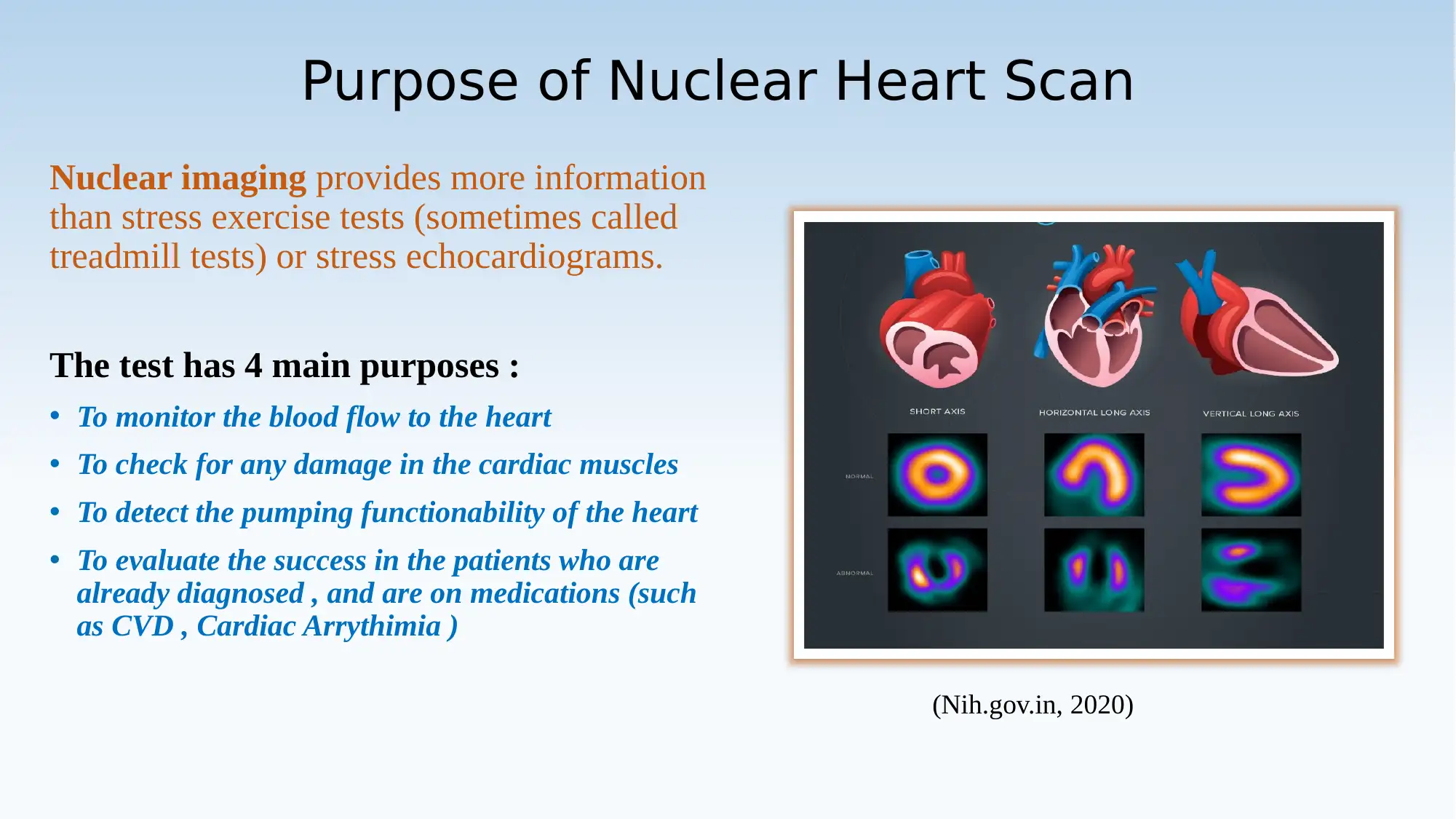
Nuclear imaging provides more information
than stress exercise tests (sometimes called
treadmill tests) or stress echocardiograms.
The test has 4 main purposes :
To monitor the blood flow to the heart
To check for any damage in the cardiac muscles
To detect the pumping functionability of the heart
To evaluate the success in the patients who are
already diagnosed , and are on medications (such
as CVD , Cardiac Arrythimia )
(Nih.gov.in, 2020)
Document Page
Introduction
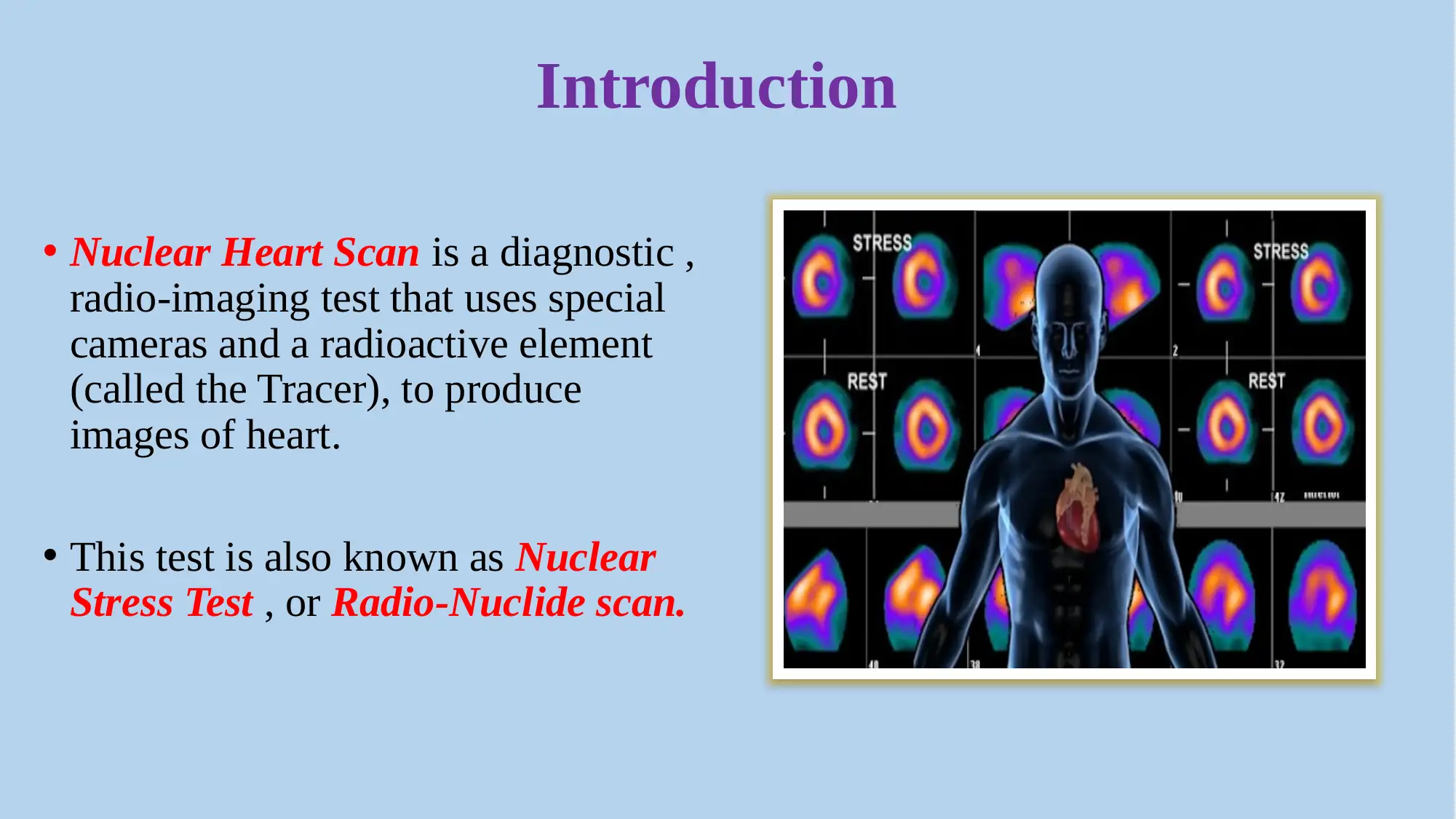
Nuclear Heart Scan is a diagnostic ,
radio-imaging test that uses special
cameras and a radioactive element
(called the Tracer), to produce
images of heart.
This test is also known as Nuclear
Stress Test , or Radio-Nuclide scan.
Document Page
Procedure of the Test
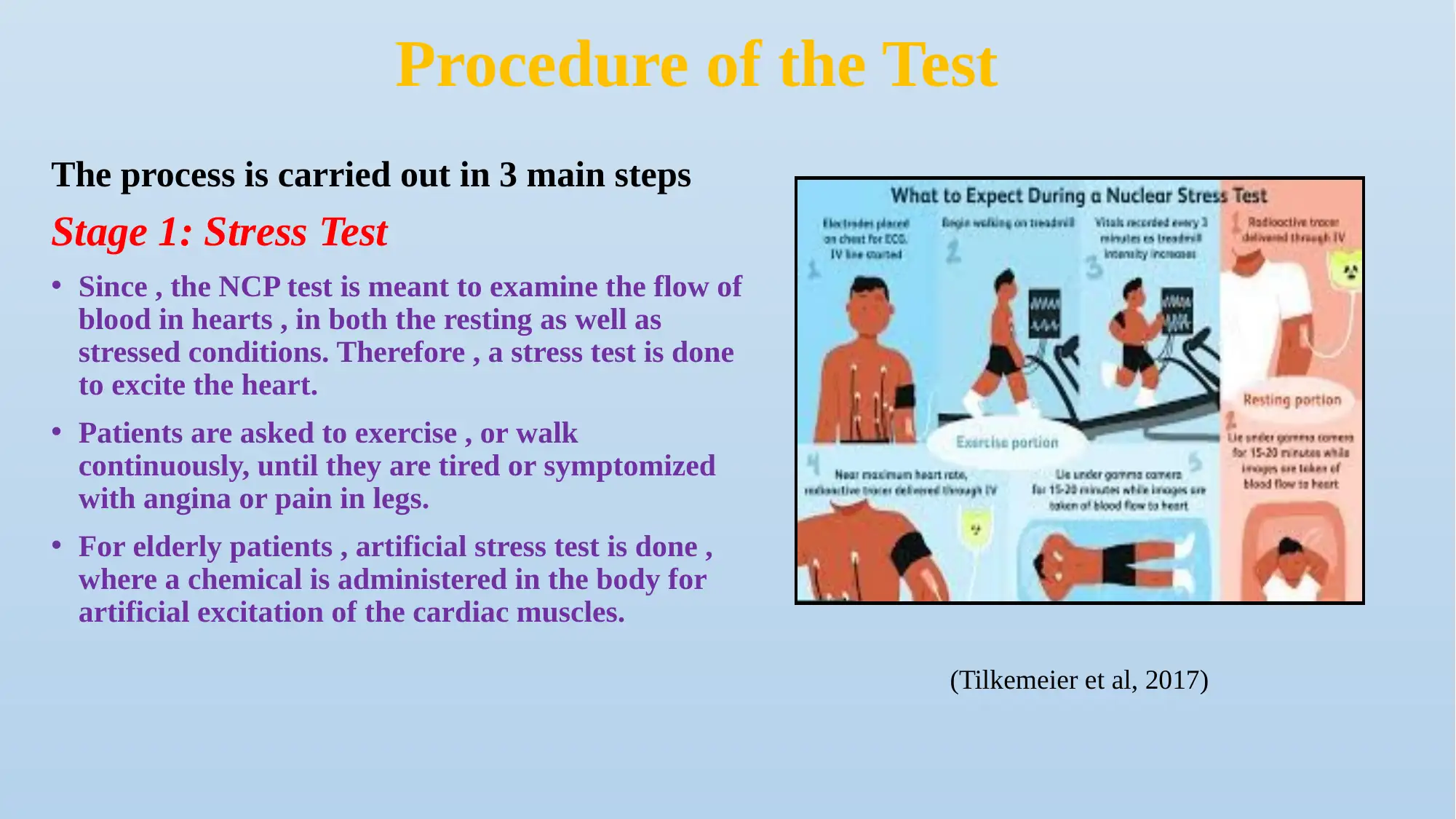
The process is carried out in 3 main steps
Stage 1: Stress Test
Since , the NCP test is meant to examine the flow of
blood in hearts , in both the resting as well as
stressed conditions. Therefore , a stress test is done
to excite the heart.
Patients are asked to exercise , or walk
continuously, until they are tired or symptomized
with angina or pain in legs.
For elderly patients , artificial stress test is done ,
where a chemical is administered in the body for
artificial excitation of the cardiac muscles.
(Tilkemeier et al, 2017)
tabler-icon-diamond-filled.svg

Paraphrase This Document

Need a fresh take? Get an instant paraphrase of this document with our AI Paraphraser
Document Page
Procedure of the Test
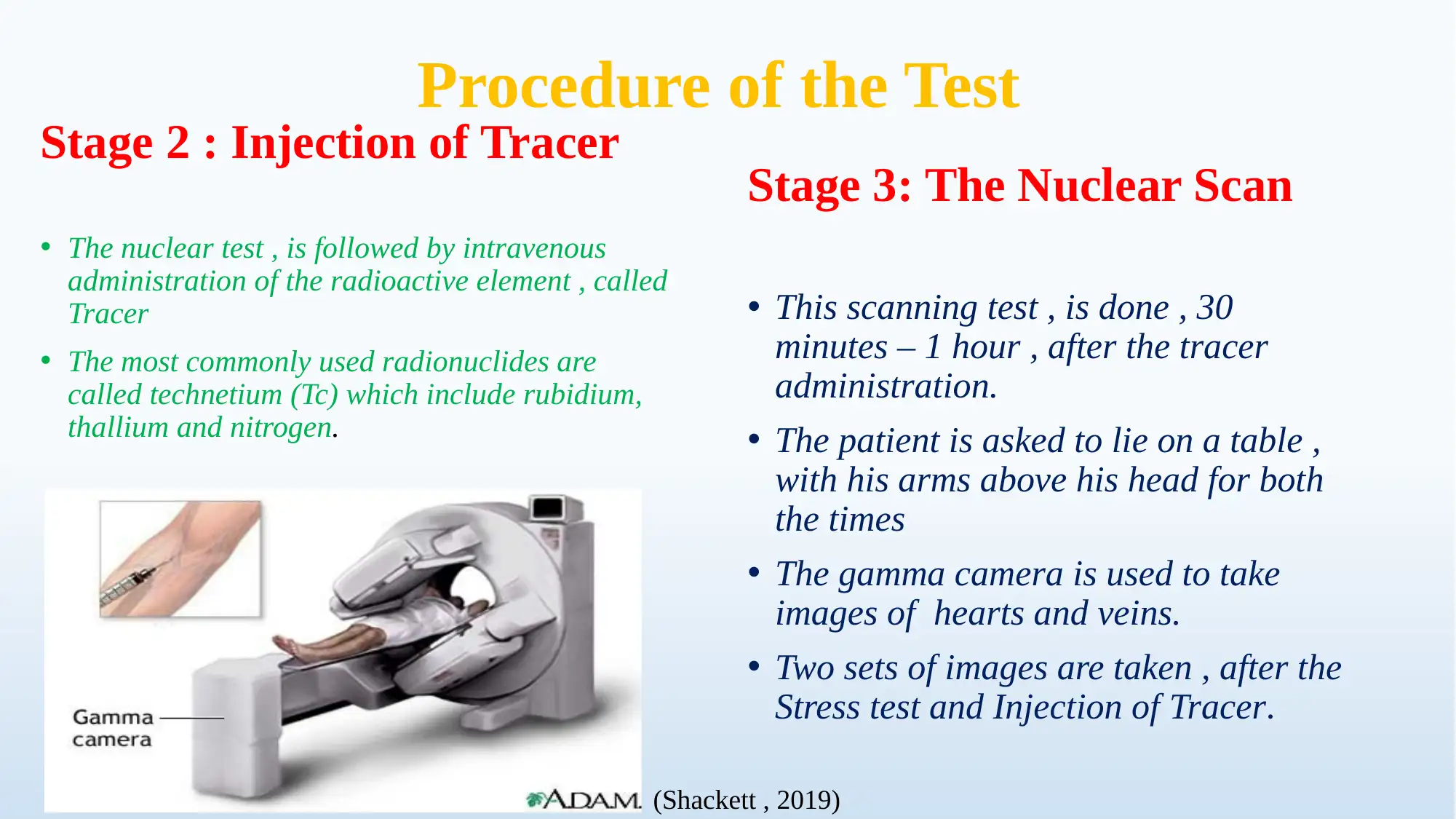
Stage 2 : Injection of Tracer
The nuclear test , is followed by intravenous
administration of the radioactive element , called
Tracer
The most commonly used radionuclides are
called technetium (Tc) which include rubidium,
thallium and nitrogen.
Stage 3: The Nuclear Scan
This scanning test , is done , 30
minutes – 1 hour , after the tracer
administration.
The patient is asked to lie on a table ,
with his arms above his head for both
the times
The gamma camera is used to take
images of hearts and veins.
Two sets of images are taken , after the
Stress test and Injection of Tracer.
(Shackett , 2019)
Document Page
More about the Test
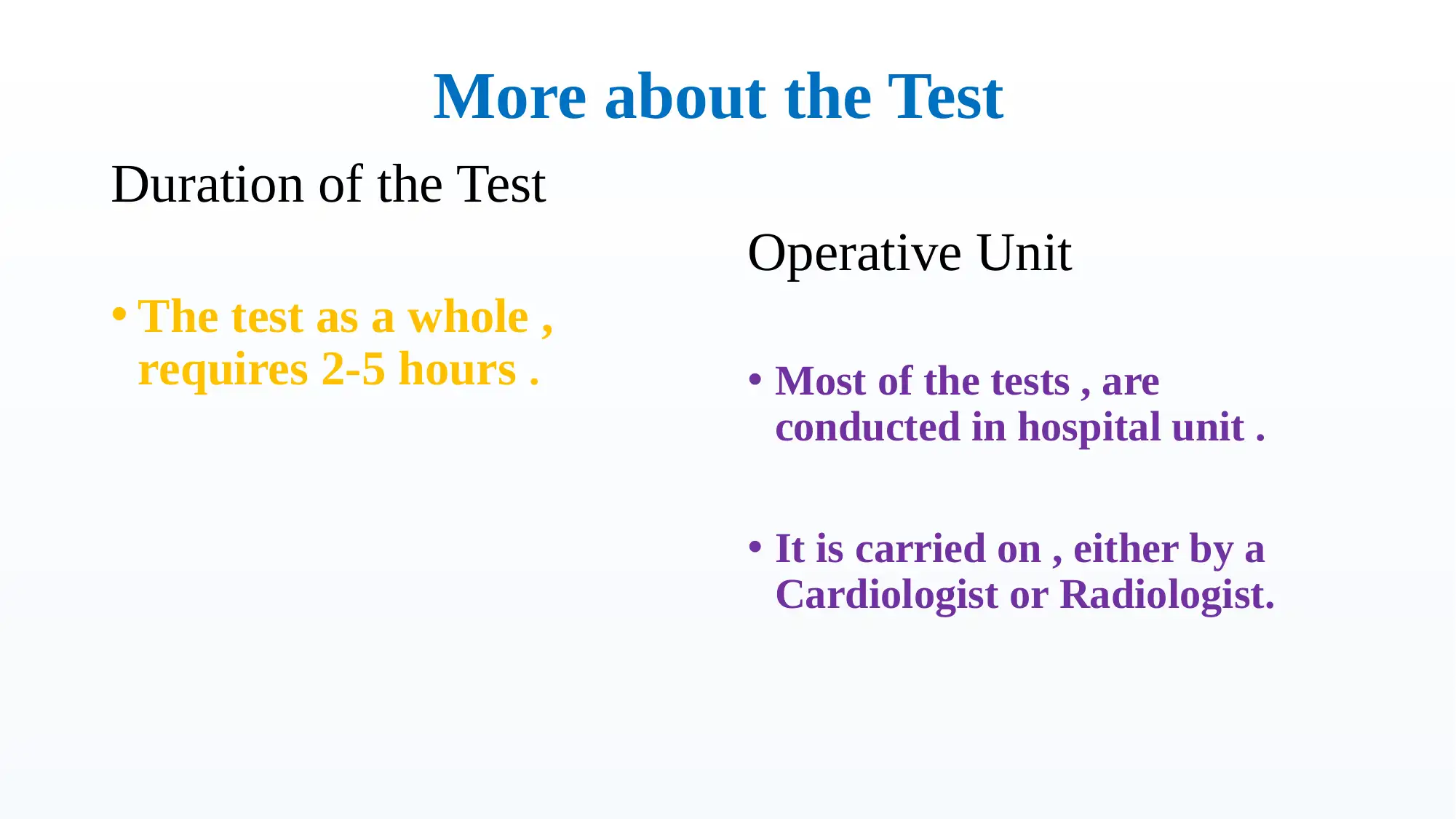
Duration of the Test
The test as a whole ,
requires 2-5 hours .
Operative Unit
Most of the tests , are
conducted in hospital unit .
It is carried on , either by a
Cardiologist or Radiologist.
Document Page
More about the Test
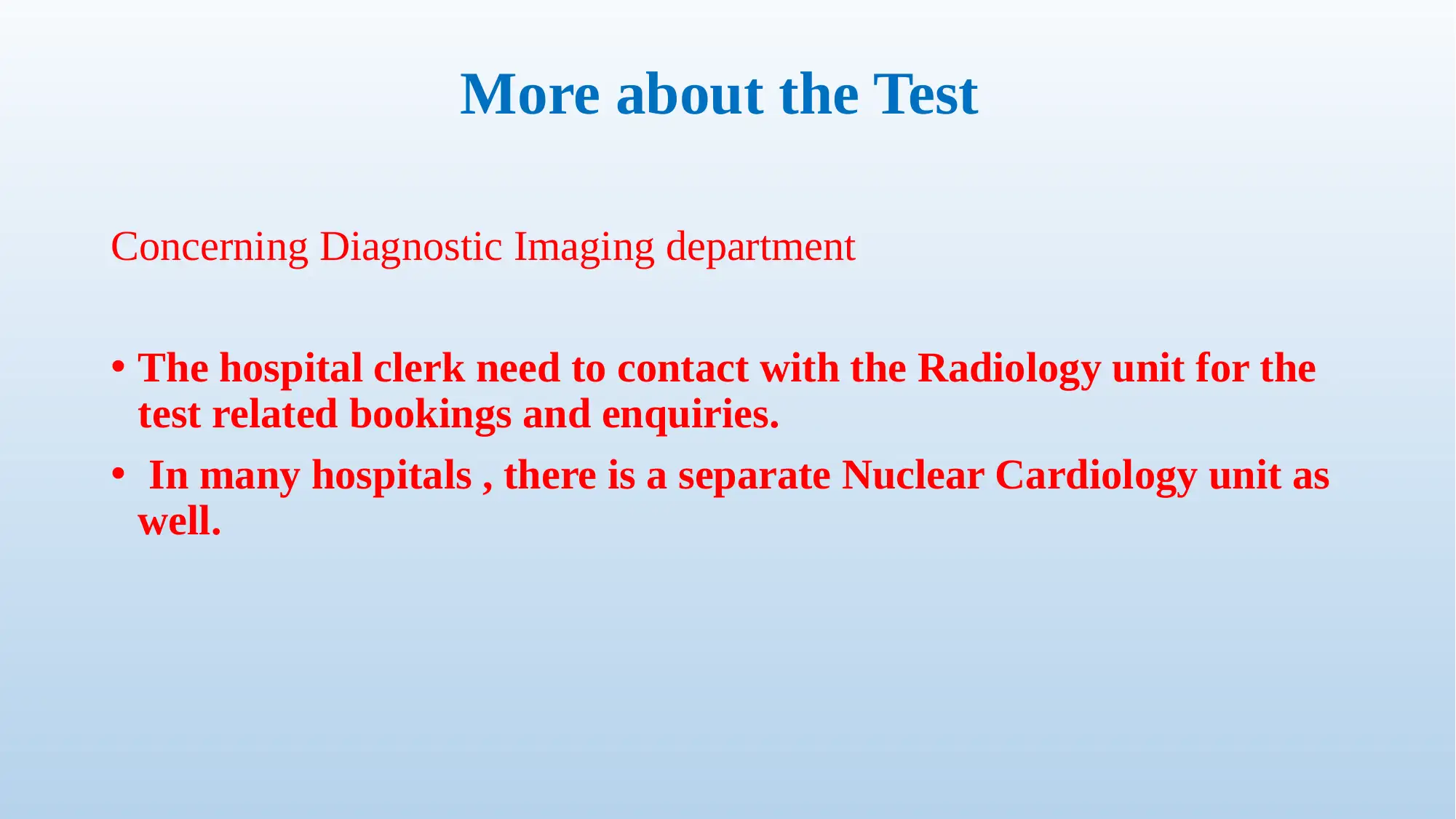
Concerning Diagnostic Imaging department
The hospital clerk need to contact with the Radiology unit for the
test related bookings and enquiries.
In many hospitals , there is a separate Nuclear Cardiology unit as
well.
tabler-icon-diamond-filled.svg

Paraphrase This Document

Need a fresh take? Get an instant paraphrase of this document with our AI Paraphraser
Document Page
Role of Hospital Unit Clerk
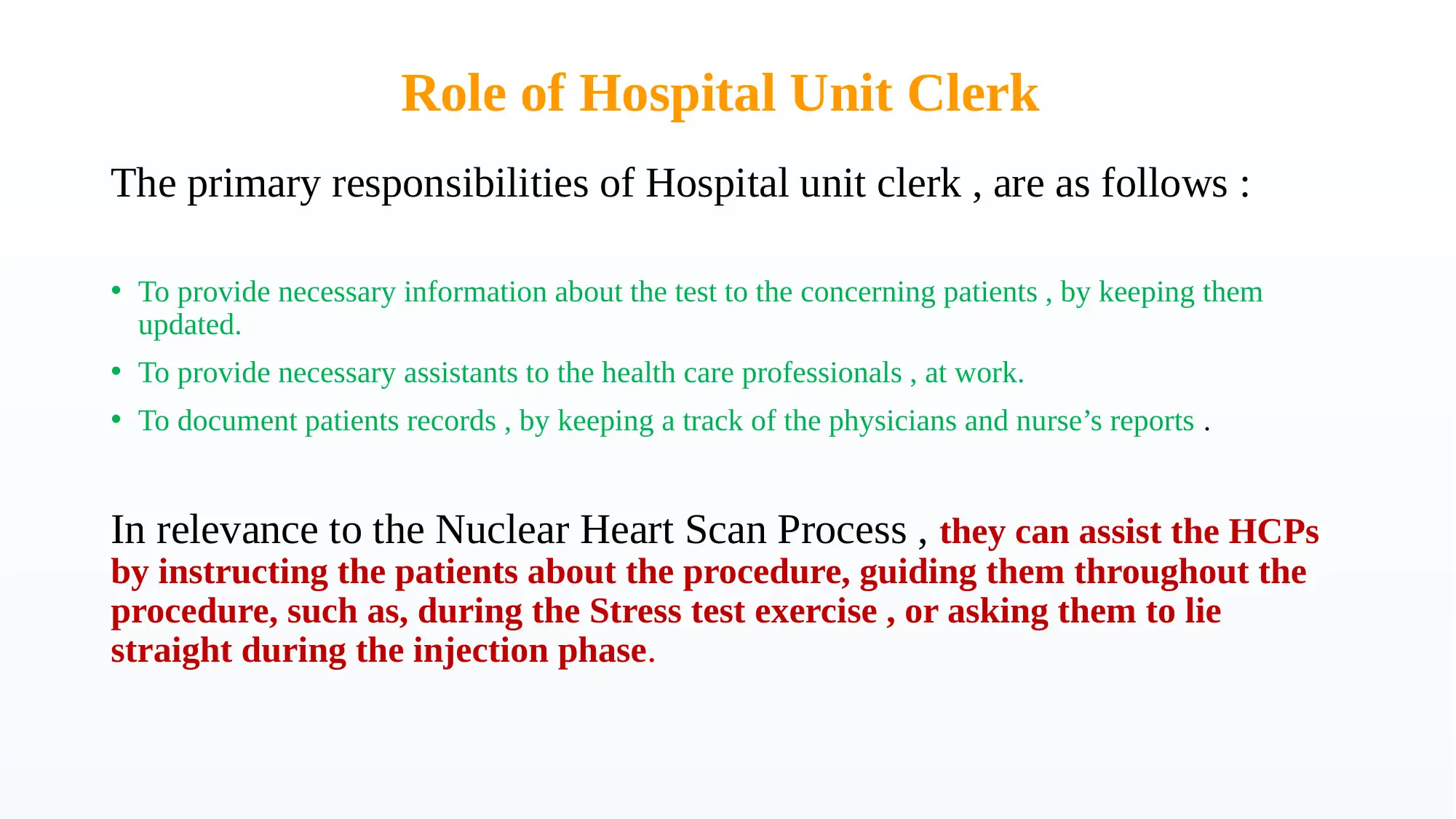
The primary responsibilities of Hospital unit clerk , are as follows :
To provide necessary information about the test to the concerning patients , by keeping them
updated.
To provide necessary assistants to the health care professionals , at work.
To document patients records , by keeping a track of the physicians and nurse’s reports .
In relevance to the Nuclear Heart Scan Process , they can assist the HCPs
by instructing the patients about the procedure, guiding them throughout the
procedure, such as, during the Stress test exercise , or asking them to lie
straight during the injection phase.
Document Page
Conclusion
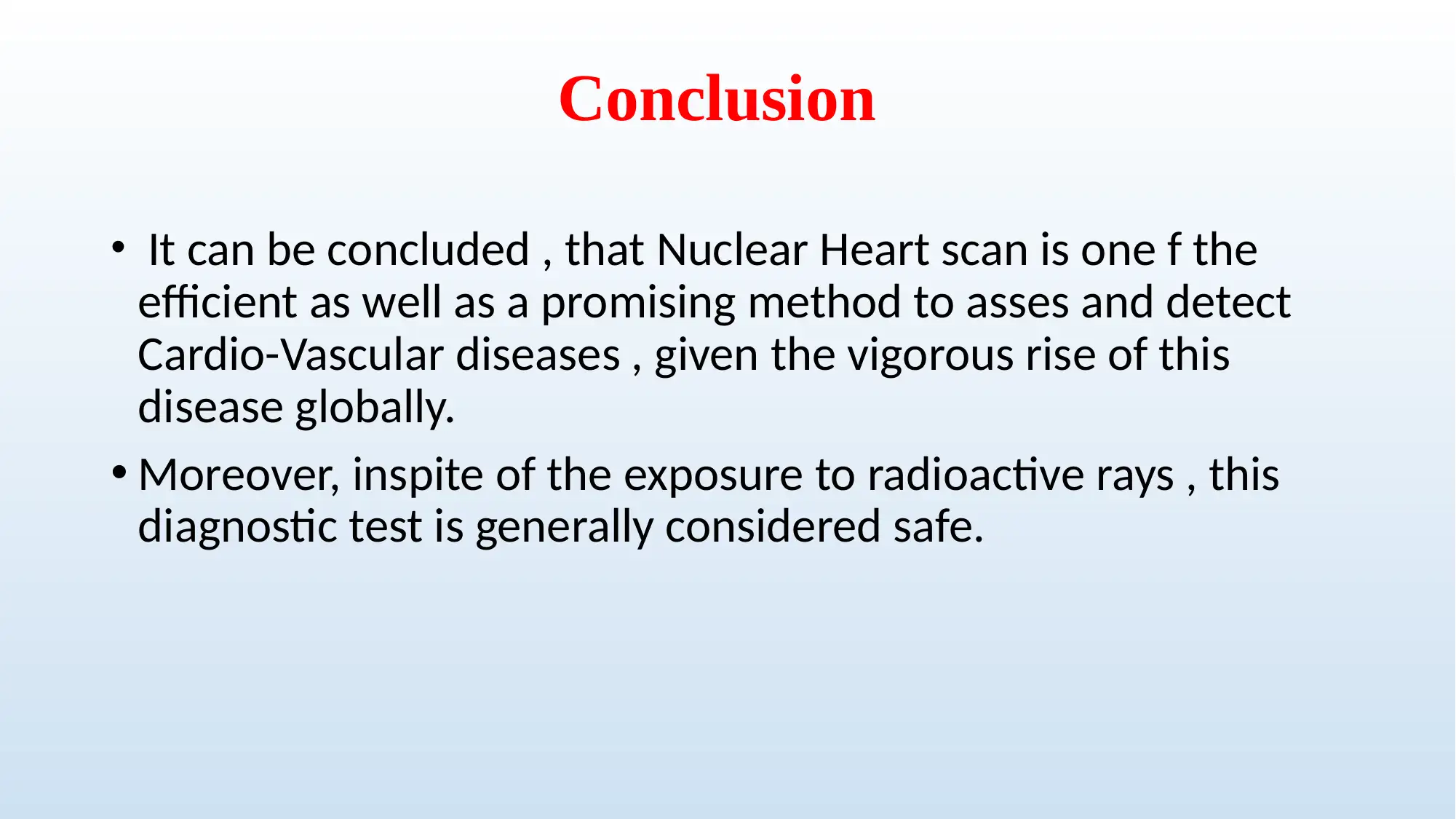
It can be concluded , that Nuclear Heart scan is one f the
efficient as well as a promising method to asses and detect
Cardio-Vascular diseases , given the vigorous rise of this
disease globally.
Moreover, inspite of the exposure to radioactive rays , this
diagnostic test is generally considered safe.
Document Page
References
https://www.nhlbi.nih.gov/health-topics/nuclear-heart-scan
Shackett, P. (2019). Nuclear medicine technology: procedures and quick
reference. Lippincott Williams & Wilkins.
Tilkemeier, P. L., Bourque, J., Doukky, R., Sanghani, R., & Weinberg, R. L.
(2017). ASNC imaging guidelines for nuclear cardiology procedures.
Journal of Nuclear cardiology, 24(6), 2064-2128.
tabler-icon-diamond-filled.svg

Paraphrase This Document

Need a fresh take? Get an instant paraphrase of this document with our AI Paraphraser
Document Page
chevron_up_icon
1 out of 11
circle_padding
hide_on_mobile
zoom_out_icon
[object Object]