Diabetes in Nursing: Clinical Topic, Relevance, and Importance

Verified

Added on  2023/01/16

|5
|929
|100
Discussion Board Post
AI Summary
This discussion post examines diabetes as a significant clinical topic within the nursing profession. It begins by providing background information on diabetes, including its causes, types (type 1, type 2, and gestational), and the role of insulin and blood glucose. The assignment then explores the importance of diabetes to nurses, emphasizing the need for effective management strategies due to the disease's widespread impact and potential complications such as blindness, cardiovascular disease, and kidney disease. The discussion highlights the need for nurses to closely monitor and manage patients with diabetes to prevent complications. The post also includes a personal reflection using the 5Rs framework (Reporting, Responding, Relating, Reasoning, and Reconstructing) to analyze a case of a patient with extremely high blood glucose levels. The assignment concludes by emphasizing the need for regular health checkups to monitor blood glucose levels and overall health. The references are not correctly formatted and need to be updated to the correct CDU APA reference style.
Document Page
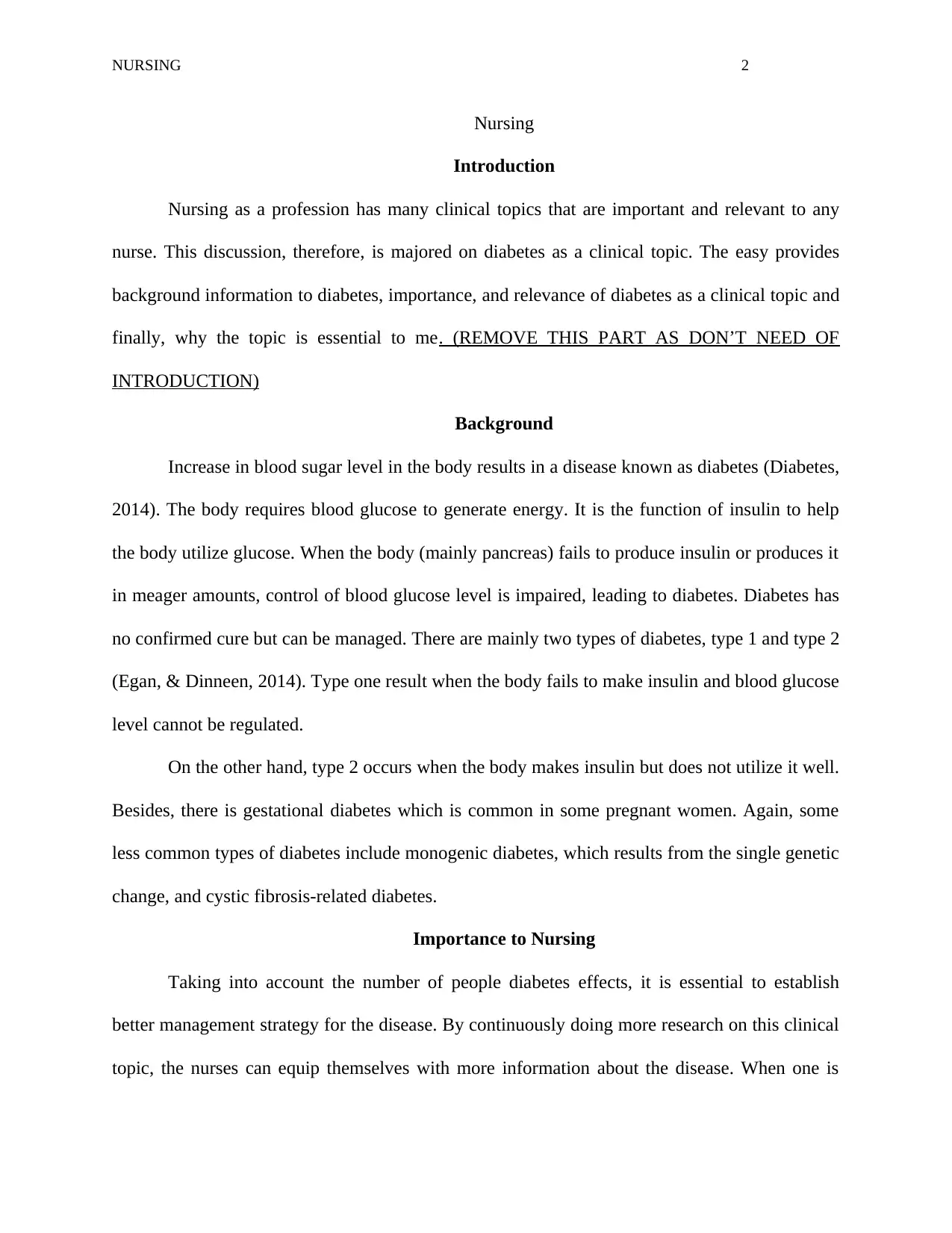
Running head: NURSING 1
Nursing
Student’s Name
Institutional Affiliation
tabler-icon-diamond-filled.svg

Paraphrase This Document

Need a fresh take? Get an instant paraphrase of this document with our AI Paraphraser
Document Page
NURSING 2
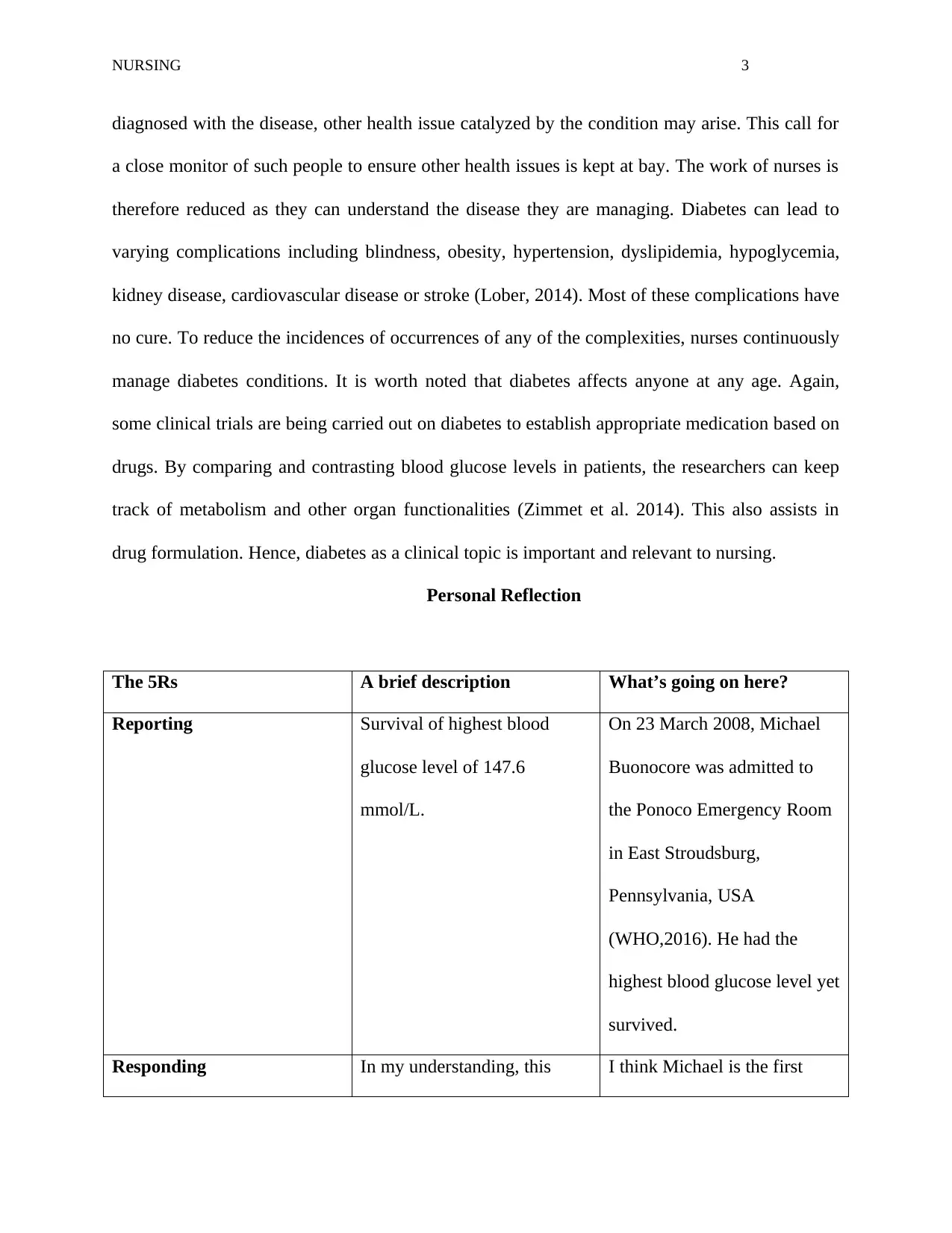
Nursing
Introduction
Nursing as a profession has many clinical topics that are important and relevant to any
nurse. This discussion, therefore, is majored on diabetes as a clinical topic. The easy provides
background information to diabetes, importance, and relevance of diabetes as a clinical topic and
finally, why the topic is essential to me. (REMOVE THIS PART AS DON’T NEED OF
INTRODUCTION)
Background
Increase in blood sugar level in the body results in a disease known as diabetes (Diabetes,
2014). The body requires blood glucose to generate energy. It is the function of insulin to help
the body utilize glucose. When the body (mainly pancreas) fails to produce insulin or produces it
in meager amounts, control of blood glucose level is impaired, leading to diabetes. Diabetes has
no confirmed cure but can be managed. There are mainly two types of diabetes, type 1 and type 2
(Egan, & Dinneen, 2014). Type one result when the body fails to make insulin and blood glucose
level cannot be regulated.
On the other hand, type 2 occurs when the body makes insulin but does not utilize it well.
Besides, there is gestational diabetes which is common in some pregnant women. Again, some
less common types of diabetes include monogenic diabetes, which results from the single genetic
change, and cystic fibrosis-related diabetes.
Importance to Nursing
Taking into account the number of people diabetes effects, it is essential to establish
better management strategy for the disease. By continuously doing more research on this clinical
topic, the nurses can equip themselves with more information about the disease. When one is
Document Page
NURSING 3
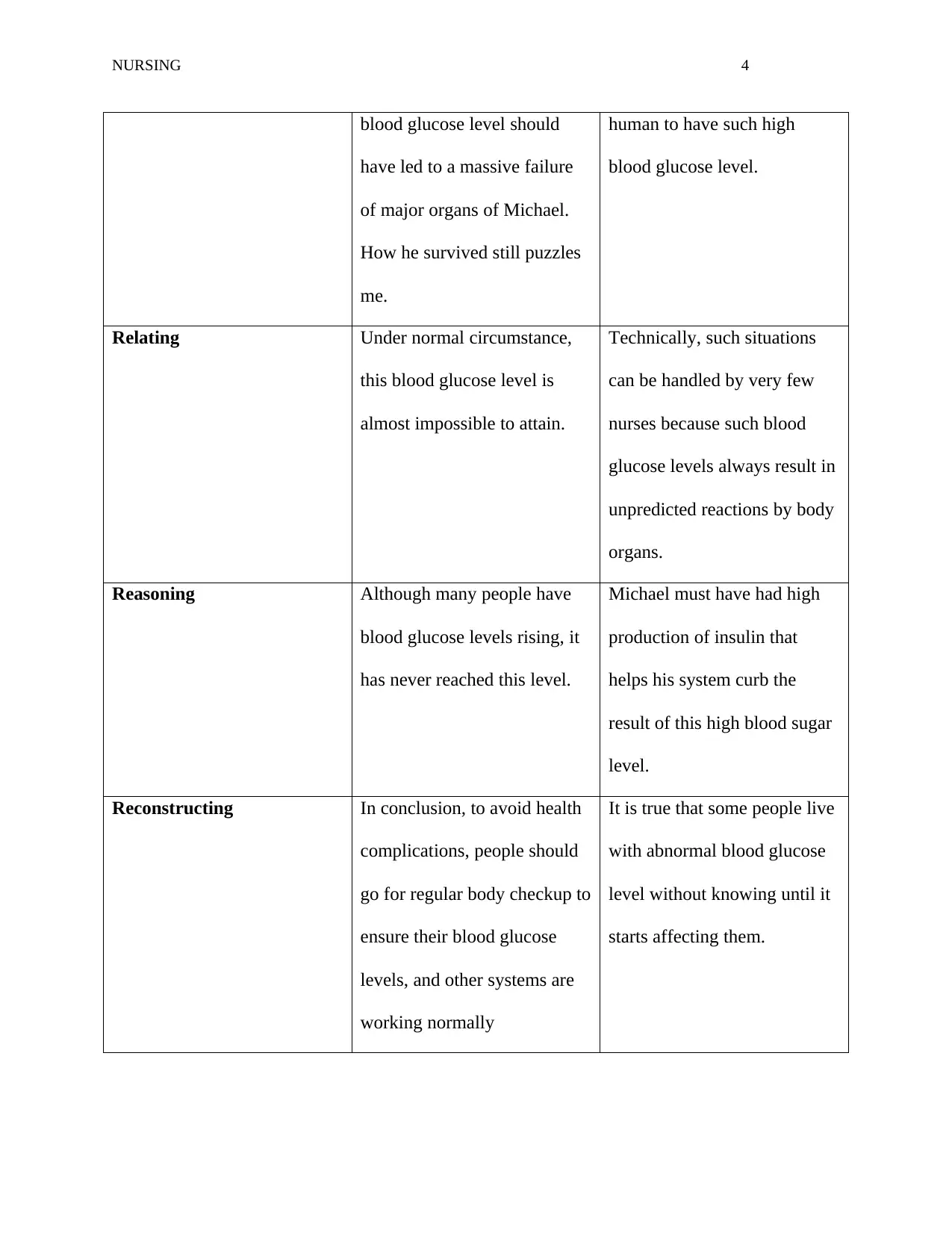
diagnosed with the disease, other health issue catalyzed by the condition may arise. This call for
a close monitor of such people to ensure other health issues is kept at bay. The work of nurses is
therefore reduced as they can understand the disease they are managing. Diabetes can lead to
varying complications including blindness, obesity, hypertension, dyslipidemia, hypoglycemia,
kidney disease, cardiovascular disease or stroke (Lober, 2014). Most of these complications have
no cure. To reduce the incidences of occurrences of any of the complexities, nurses continuously
manage diabetes conditions. It is worth noted that diabetes affects anyone at any age. Again,
some clinical trials are being carried out on diabetes to establish appropriate medication based on
drugs. By comparing and contrasting blood glucose levels in patients, the researchers can keep
track of metabolism and other organ functionalities (Zimmet et al. 2014). This also assists in
drug formulation. Hence, diabetes as a clinical topic is important and relevant to nursing.
Personal Reflection
The 5Rs A brief description What’s going on here?
Reporting Survival of highest blood
glucose level of 147.6
mmol/L.
On 23 March 2008, Michael
Buonocore was admitted to
the Ponoco Emergency Room
in East Stroudsburg,
Pennsylvania, USA
(WHO,2016). He had the
highest blood glucose level yet
survived.
Responding In my understanding, this I think Michael is the first
Document Page
NURSING 4
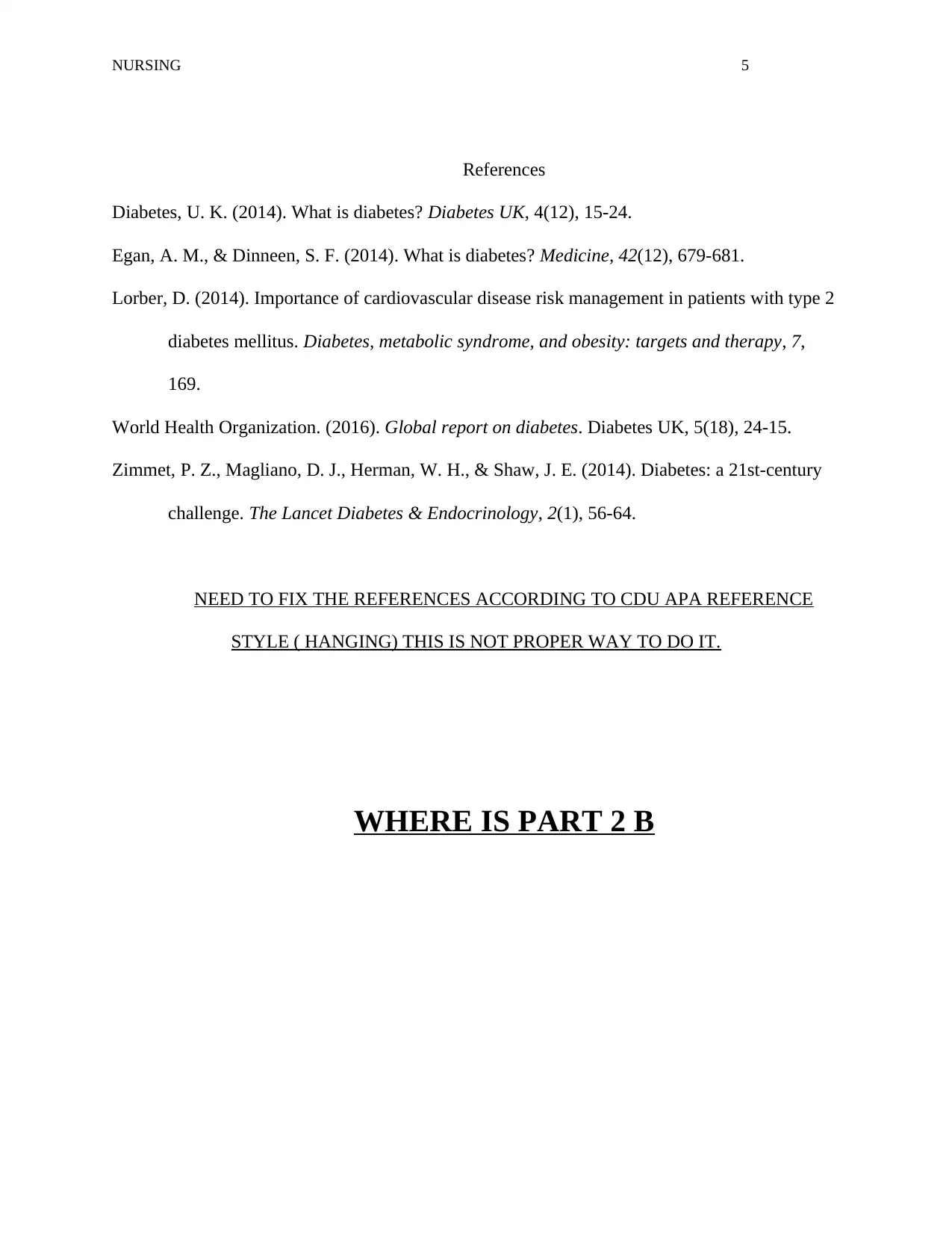
blood glucose level should
have led to a massive failure
of major organs of Michael.
How he survived still puzzles
me.
human to have such high
blood glucose level.
Relating Under normal circumstance,
this blood glucose level is
almost impossible to attain.
Technically, such situations
can be handled by very few
nurses because such blood
glucose levels always result in
unpredicted reactions by body
organs.
Reasoning Although many people have
blood glucose levels rising, it
has never reached this level.
Michael must have had high
production of insulin that
helps his system curb the
result of this high blood sugar
level.
Reconstructing In conclusion, to avoid health
complications, people should
go for regular body checkup to
ensure their blood glucose
levels, and other systems are
working normally
It is true that some people live
with abnormal blood glucose
level without knowing until it
starts affecting them.
tabler-icon-diamond-filled.svg

Paraphrase This Document

Need a fresh take? Get an instant paraphrase of this document with our AI Paraphraser
Document Page
NURSING 5
References
Diabetes, U. K. (2014). What is diabetes? Diabetes UK, 4(12), 15-24.
Egan, A. M., & Dinneen, S. F. (2014). What is diabetes? Medicine, 42(12), 679-681.
Lorber, D. (2014). Importance of cardiovascular disease risk management in patients with type 2
diabetes mellitus. Diabetes, metabolic syndrome, and obesity: targets and therapy, 7,
169.
World Health Organization. (2016). Global report on diabetes. Diabetes UK, 5(18), 24-15.
Zimmet, P. Z., Magliano, D. J., Herman, W. H., & Shaw, J. E. (2014). Diabetes: a 21st-century
challenge. The Lancet Diabetes & Endocrinology, 2(1), 56-64.
NEED TO FIX THE REFERENCES ACCORDING TO CDU APA REFERENCE
STYLE ( HANGING) THIS IS NOT PROPER WAY TO DO IT.
WHERE IS PART 2 B
chevron_up_icon
1 out of 5
circle_padding
hide_on_mobile
zoom_out_icon
[object Object]