Nursing Assignment: Evolution of Advanced Registered Nurse Roles
VerifiedAdded on 2023/06/03
|6
|1657
|410
Report
AI Summary
This assignment delves into the transformation of the advanced registered nurse's role, examining its evolution from the 20th to the 21st century, and projecting its future within the changing American healthcare system. It addresses the shifts in scope and expectations, emphasizing the need for nurses to adapt to complex challenges in chronic condition management, primary care, and patient wellness. The report further explores the concept of professionalism in nursing, comparing it to other professions and analyzing case studies to highlight ethical standards and responsibilities. The assignment also examines recommendations from the Institute of Medicine (IOM) regarding nursing education, advocating for changes to prepare nurses for leadership roles and collaborative practice. The author agrees with the IOM's perspective on evolving advanced practice registered nurse roles, emphasizing the importance of eliminating barriers to allow nurses to fully utilize their skills.
Running Head: NURSING ASSIGNMENT 0
Nursing Assignment
9/28/2018
Nursing Assignment
9/28/2018
Paraphrase This Document
Need a fresh take? Get an instant paraphrase of this document with our AI Paraphraser

NURSING ASSIGNMENT 1
Question 1
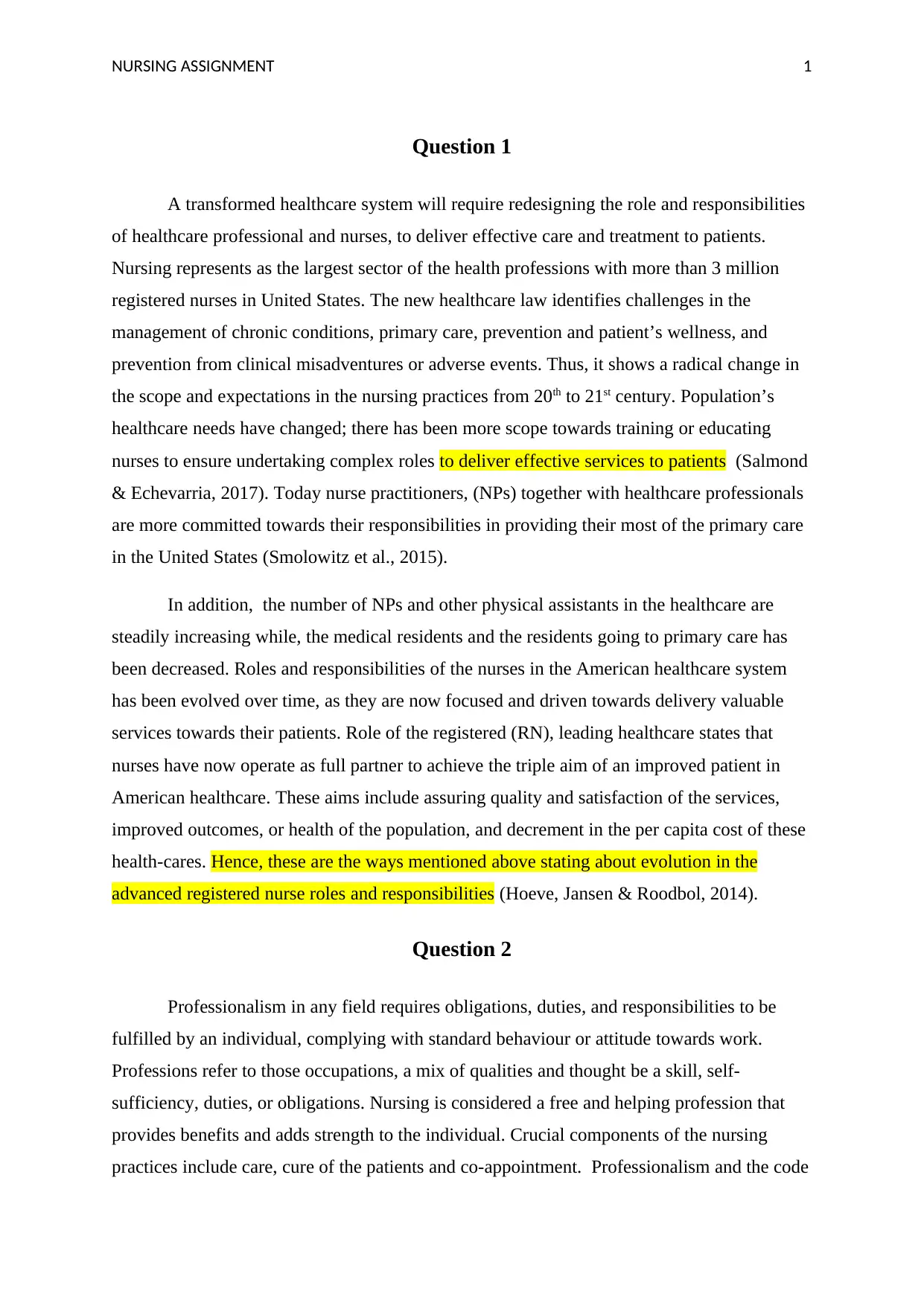
A transformed healthcare system will require redesigning the role and responsibilities
of healthcare professional and nurses, to deliver effective care and treatment to patients.
Nursing represents as the largest sector of the health professions with more than 3 million
registered nurses in United States. The new healthcare law identifies challenges in the
management of chronic conditions, primary care, prevention and patient’s wellness, and
prevention from clinical misadventures or adverse events. Thus, it shows a radical change in
the scope and expectations in the nursing practices from 20th to 21st century. Population’s
healthcare needs have changed; there has been more scope towards training or educating
nurses to ensure undertaking complex roles to deliver effective services to patients (Salmond
& Echevarria, 2017). Today nurse practitioners, (NPs) together with healthcare professionals
are more committed towards their responsibilities in providing their most of the primary care
in the United States (Smolowitz et al., 2015).
In addition, the number of NPs and other physical assistants in the healthcare are
steadily increasing while, the medical residents and the residents going to primary care has
been decreased. Roles and responsibilities of the nurses in the American healthcare system
has been evolved over time, as they are now focused and driven towards delivery valuable
services towards their patients. Role of the registered (RN), leading healthcare states that
nurses have now operate as full partner to achieve the triple aim of an improved patient in
American healthcare. These aims include assuring quality and satisfaction of the services,
improved outcomes, or health of the population, and decrement in the per capita cost of these
health-cares. Hence, these are the ways mentioned above stating about evolution in the
advanced registered nurse roles and responsibilities (Hoeve, Jansen & Roodbol, 2014).
Question 2
Professionalism in any field requires obligations, duties, and responsibilities to be
fulfilled by an individual, complying with standard behaviour or attitude towards work.
Professions refer to those occupations, a mix of qualities and thought be a skill, self-
sufficiency, duties, or obligations. Nursing is considered a free and helping profession that
provides benefits and adds strength to the individual. Crucial components of the nursing
practices include care, cure of the patients and co-appointment. Professionalism and the code
Question 1
A transformed healthcare system will require redesigning the role and responsibilities
of healthcare professional and nurses, to deliver effective care and treatment to patients.
Nursing represents as the largest sector of the health professions with more than 3 million
registered nurses in United States. The new healthcare law identifies challenges in the
management of chronic conditions, primary care, prevention and patient’s wellness, and
prevention from clinical misadventures or adverse events. Thus, it shows a radical change in
the scope and expectations in the nursing practices from 20th to 21st century. Population’s
healthcare needs have changed; there has been more scope towards training or educating
nurses to ensure undertaking complex roles to deliver effective services to patients (Salmond
& Echevarria, 2017). Today nurse practitioners, (NPs) together with healthcare professionals
are more committed towards their responsibilities in providing their most of the primary care
in the United States (Smolowitz et al., 2015).
In addition, the number of NPs and other physical assistants in the healthcare are
steadily increasing while, the medical residents and the residents going to primary care has
been decreased. Roles and responsibilities of the nurses in the American healthcare system
has been evolved over time, as they are now focused and driven towards delivery valuable
services towards their patients. Role of the registered (RN), leading healthcare states that
nurses have now operate as full partner to achieve the triple aim of an improved patient in
American healthcare. These aims include assuring quality and satisfaction of the services,
improved outcomes, or health of the population, and decrement in the per capita cost of these
health-cares. Hence, these are the ways mentioned above stating about evolution in the
advanced registered nurse roles and responsibilities (Hoeve, Jansen & Roodbol, 2014).
Question 2
Professionalism in any field requires obligations, duties, and responsibilities to be
fulfilled by an individual, complying with standard behaviour or attitude towards work.
Professions refer to those occupations, a mix of qualities and thought be a skill, self-
sufficiency, duties, or obligations. Nursing is considered a free and helping profession that
provides benefits and adds strength to the individual. Crucial components of the nursing
practices include care, cure of the patients and co-appointment. Professionalism and the code

NURSING ASSIGNMENT 2
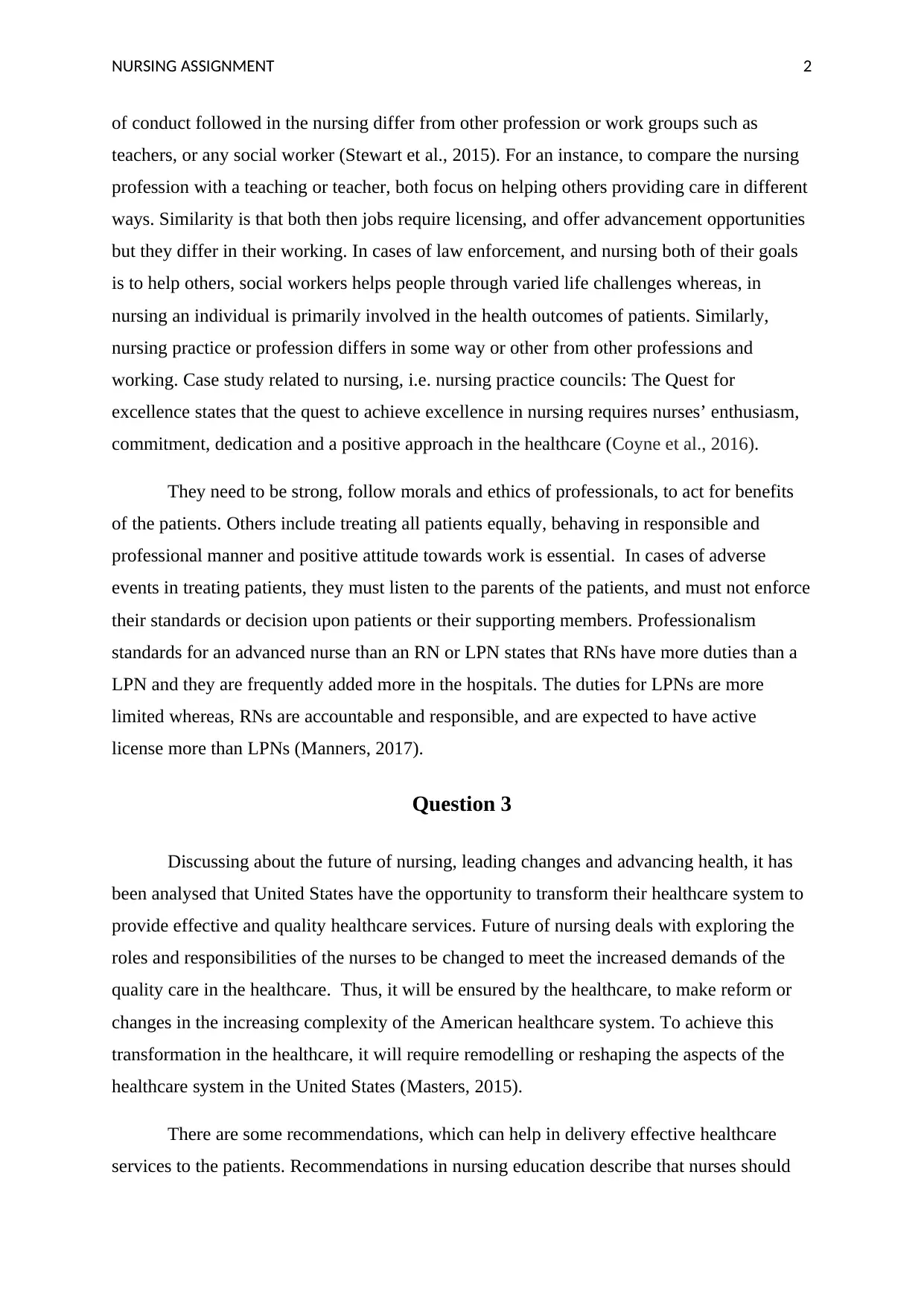
of conduct followed in the nursing differ from other profession or work groups such as
teachers, or any social worker (Stewart et al., 2015). For an instance, to compare the nursing
profession with a teaching or teacher, both focus on helping others providing care in different
ways. Similarity is that both then jobs require licensing, and offer advancement opportunities
but they differ in their working. In cases of law enforcement, and nursing both of their goals
is to help others, social workers helps people through varied life challenges whereas, in
nursing an individual is primarily involved in the health outcomes of patients. Similarly,
nursing practice or profession differs in some way or other from other professions and
working. Case study related to nursing, i.e. nursing practice councils: The Quest for
excellence states that the quest to achieve excellence in nursing requires nurses’ enthusiasm,
commitment, dedication and a positive approach in the healthcare (Coyne et al., 2016).
They need to be strong, follow morals and ethics of professionals, to act for benefits
of the patients. Others include treating all patients equally, behaving in responsible and
professional manner and positive attitude towards work is essential. In cases of adverse
events in treating patients, they must listen to the parents of the patients, and must not enforce
their standards or decision upon patients or their supporting members. Professionalism
standards for an advanced nurse than an RN or LPN states that RNs have more duties than a
LPN and they are frequently added more in the hospitals. The duties for LPNs are more
limited whereas, RNs are accountable and responsible, and are expected to have active
license more than LPNs (Manners, 2017).
Question 3
Discussing about the future of nursing, leading changes and advancing health, it has
been analysed that United States have the opportunity to transform their healthcare system to
provide effective and quality healthcare services. Future of nursing deals with exploring the
roles and responsibilities of the nurses to be changed to meet the increased demands of the
quality care in the healthcare. Thus, it will be ensured by the healthcare, to make reform or
changes in the increasing complexity of the American healthcare system. To achieve this
transformation in the healthcare, it will require remodelling or reshaping the aspects of the
healthcare system in the United States (Masters, 2015).
There are some recommendations, which can help in delivery effective healthcare
services to the patients. Recommendations in nursing education describe that nurses should
of conduct followed in the nursing differ from other profession or work groups such as
teachers, or any social worker (Stewart et al., 2015). For an instance, to compare the nursing
profession with a teaching or teacher, both focus on helping others providing care in different
ways. Similarity is that both then jobs require licensing, and offer advancement opportunities
but they differ in their working. In cases of law enforcement, and nursing both of their goals
is to help others, social workers helps people through varied life challenges whereas, in
nursing an individual is primarily involved in the health outcomes of patients. Similarly,
nursing practice or profession differs in some way or other from other professions and
working. Case study related to nursing, i.e. nursing practice councils: The Quest for
excellence states that the quest to achieve excellence in nursing requires nurses’ enthusiasm,
commitment, dedication and a positive approach in the healthcare (Coyne et al., 2016).
They need to be strong, follow morals and ethics of professionals, to act for benefits
of the patients. Others include treating all patients equally, behaving in responsible and
professional manner and positive attitude towards work is essential. In cases of adverse
events in treating patients, they must listen to the parents of the patients, and must not enforce
their standards or decision upon patients or their supporting members. Professionalism
standards for an advanced nurse than an RN or LPN states that RNs have more duties than a
LPN and they are frequently added more in the hospitals. The duties for LPNs are more
limited whereas, RNs are accountable and responsible, and are expected to have active
license more than LPNs (Manners, 2017).
Question 3
Discussing about the future of nursing, leading changes and advancing health, it has
been analysed that United States have the opportunity to transform their healthcare system to
provide effective and quality healthcare services. Future of nursing deals with exploring the
roles and responsibilities of the nurses to be changed to meet the increased demands of the
quality care in the healthcare. Thus, it will be ensured by the healthcare, to make reform or
changes in the increasing complexity of the American healthcare system. To achieve this
transformation in the healthcare, it will require remodelling or reshaping the aspects of the
healthcare system in the United States (Masters, 2015).
There are some recommendations, which can help in delivery effective healthcare
services to the patients. Recommendations in nursing education describe that nurses should
⊘ This is a preview!⊘
Do you want full access?
Subscribe today to unlock all pages.

Trusted by 1+ million students worldwide

NURSING ASSIGNMENT 3
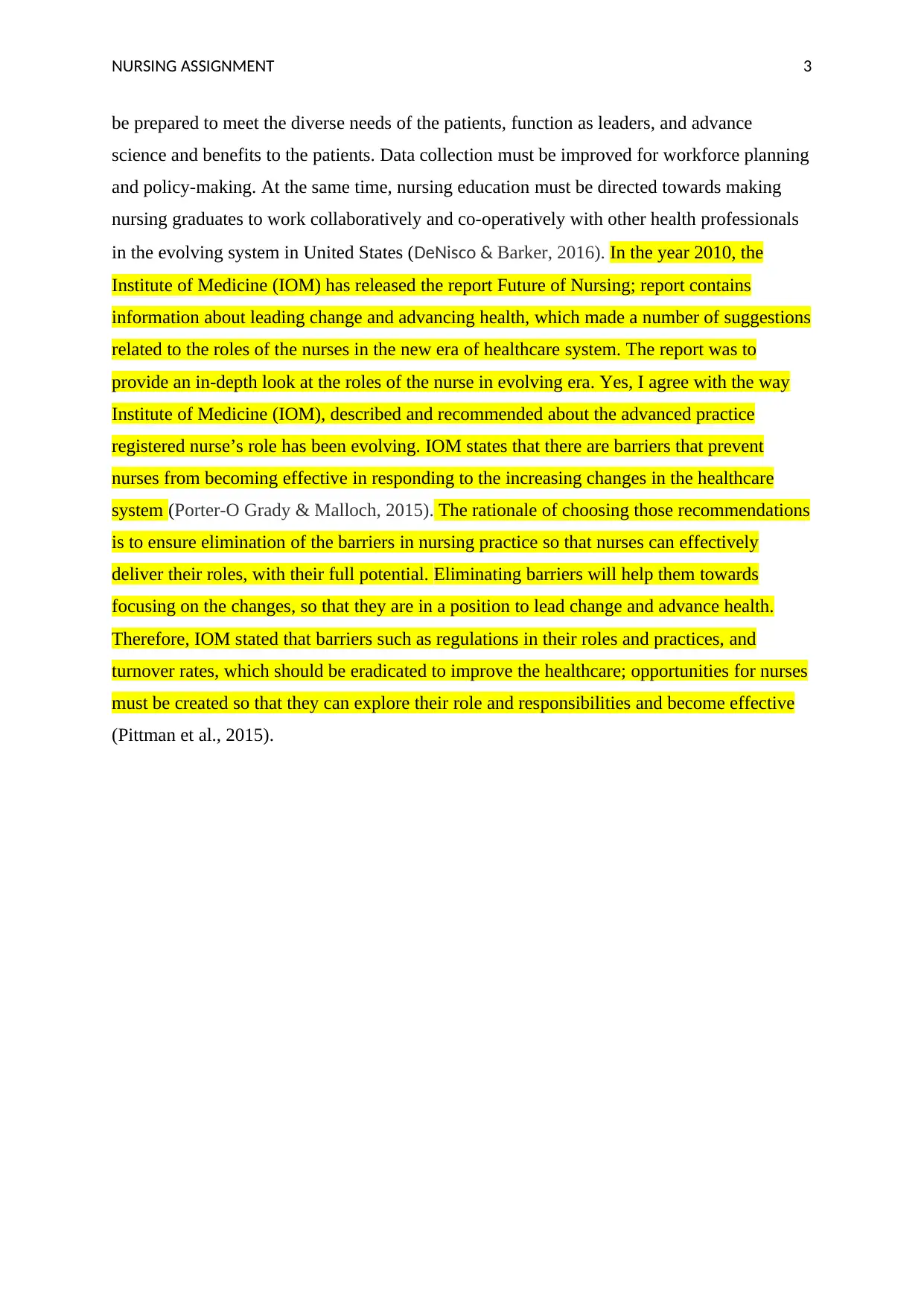
be prepared to meet the diverse needs of the patients, function as leaders, and advance
science and benefits to the patients. Data collection must be improved for workforce planning
and policy-making. At the same time, nursing education must be directed towards making
nursing graduates to work collaboratively and co-operatively with other health professionals
in the evolving system in United States (DeNisco & Barker, 2016). In the year 2010, the
Institute of Medicine (IOM) has released the report Future of Nursing; report contains
information about leading change and advancing health, which made a number of suggestions
related to the roles of the nurses in the new era of healthcare system. The report was to
provide an in-depth look at the roles of the nurse in evolving era. Yes, I agree with the way
Institute of Medicine (IOM), described and recommended about the advanced practice
registered nurse’s role has been evolving. IOM states that there are barriers that prevent
nurses from becoming effective in responding to the increasing changes in the healthcare
system (Porter-O Grady & Malloch, 2015). The rationale of choosing those recommendations
is to ensure elimination of the barriers in nursing practice so that nurses can effectively
deliver their roles, with their full potential. Eliminating barriers will help them towards
focusing on the changes, so that they are in a position to lead change and advance health.
Therefore, IOM stated that barriers such as regulations in their roles and practices, and
turnover rates, which should be eradicated to improve the healthcare; opportunities for nurses
must be created so that they can explore their role and responsibilities and become effective
(Pittman et al., 2015).
be prepared to meet the diverse needs of the patients, function as leaders, and advance
science and benefits to the patients. Data collection must be improved for workforce planning
and policy-making. At the same time, nursing education must be directed towards making
nursing graduates to work collaboratively and co-operatively with other health professionals
in the evolving system in United States (DeNisco & Barker, 2016). In the year 2010, the
Institute of Medicine (IOM) has released the report Future of Nursing; report contains
information about leading change and advancing health, which made a number of suggestions
related to the roles of the nurses in the new era of healthcare system. The report was to
provide an in-depth look at the roles of the nurse in evolving era. Yes, I agree with the way
Institute of Medicine (IOM), described and recommended about the advanced practice
registered nurse’s role has been evolving. IOM states that there are barriers that prevent
nurses from becoming effective in responding to the increasing changes in the healthcare
system (Porter-O Grady & Malloch, 2015). The rationale of choosing those recommendations
is to ensure elimination of the barriers in nursing practice so that nurses can effectively
deliver their roles, with their full potential. Eliminating barriers will help them towards
focusing on the changes, so that they are in a position to lead change and advance health.
Therefore, IOM stated that barriers such as regulations in their roles and practices, and
turnover rates, which should be eradicated to improve the healthcare; opportunities for nurses
must be created so that they can explore their role and responsibilities and become effective
(Pittman et al., 2015).
Paraphrase This Document
Need a fresh take? Get an instant paraphrase of this document with our AI Paraphraser

NURSING ASSIGNMENT 4
References
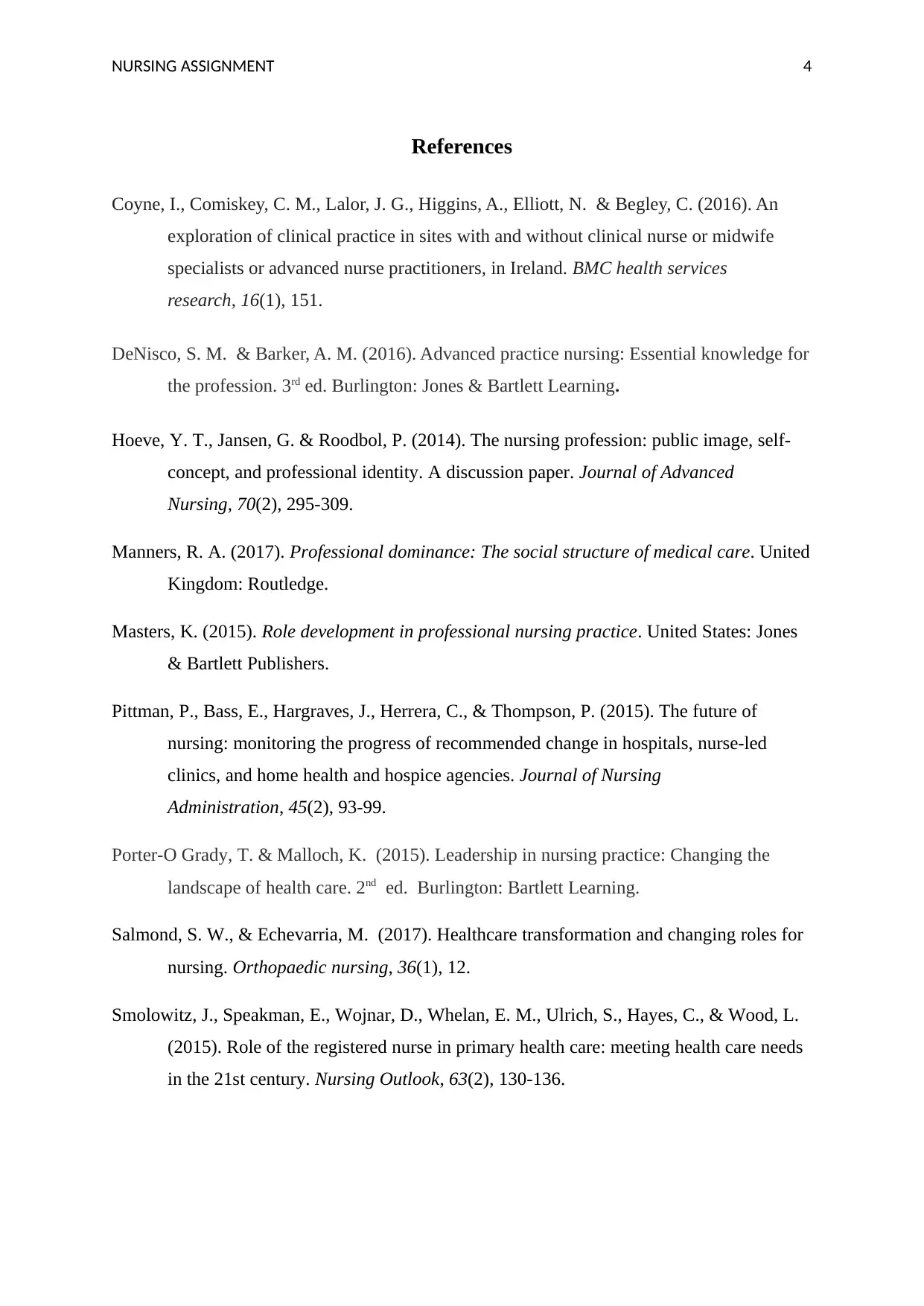
Coyne, I., Comiskey, C. M., Lalor, J. G., Higgins, A., Elliott, N. & Begley, C. (2016). An
exploration of clinical practice in sites with and without clinical nurse or midwife
specialists or advanced nurse practitioners, in Ireland. BMC health services
research, 16(1), 151.
DeNisco, S. M. & Barker, A. M. (2016). Advanced practice nursing: Essential knowledge for
the profession. 3rd ed. Burlington: Jones & Bartlett Learning.
Hoeve, Y. T., Jansen, G. & Roodbol, P. (2014). The nursing profession: public image, self‐
concept, and professional identity. A discussion paper. Journal of Advanced
Nursing, 70(2), 295-309.
Manners, R. A. (2017). Professional dominance: The social structure of medical care. United
Kingdom: Routledge.
Masters, K. (2015). Role development in professional nursing practice. United States: Jones
& Bartlett Publishers.
Pittman, P., Bass, E., Hargraves, J., Herrera, C., & Thompson, P. (2015). The future of
nursing: monitoring the progress of recommended change in hospitals, nurse-led
clinics, and home health and hospice agencies. Journal of Nursing
Administration, 45(2), 93-99.
Porter-O Grady, T. & Malloch, K. (2015). Leadership in nursing practice: Changing the
landscape of health care. 2nd ed. Burlington: Bartlett Learning.
Salmond, S. W., & Echevarria, M. (2017). Healthcare transformation and changing roles for
nursing. Orthopaedic nursing, 36(1), 12.
Smolowitz, J., Speakman, E., Wojnar, D., Whelan, E. M., Ulrich, S., Hayes, C., & Wood, L.
(2015). Role of the registered nurse in primary health care: meeting health care needs
in the 21st century. Nursing Outlook, 63(2), 130-136.
References
Coyne, I., Comiskey, C. M., Lalor, J. G., Higgins, A., Elliott, N. & Begley, C. (2016). An
exploration of clinical practice in sites with and without clinical nurse or midwife
specialists or advanced nurse practitioners, in Ireland. BMC health services
research, 16(1), 151.
DeNisco, S. M. & Barker, A. M. (2016). Advanced practice nursing: Essential knowledge for
the profession. 3rd ed. Burlington: Jones & Bartlett Learning.
Hoeve, Y. T., Jansen, G. & Roodbol, P. (2014). The nursing profession: public image, self‐
concept, and professional identity. A discussion paper. Journal of Advanced
Nursing, 70(2), 295-309.
Manners, R. A. (2017). Professional dominance: The social structure of medical care. United
Kingdom: Routledge.
Masters, K. (2015). Role development in professional nursing practice. United States: Jones
& Bartlett Publishers.
Pittman, P., Bass, E., Hargraves, J., Herrera, C., & Thompson, P. (2015). The future of
nursing: monitoring the progress of recommended change in hospitals, nurse-led
clinics, and home health and hospice agencies. Journal of Nursing
Administration, 45(2), 93-99.
Porter-O Grady, T. & Malloch, K. (2015). Leadership in nursing practice: Changing the
landscape of health care. 2nd ed. Burlington: Bartlett Learning.
Salmond, S. W., & Echevarria, M. (2017). Healthcare transformation and changing roles for
nursing. Orthopaedic nursing, 36(1), 12.
Smolowitz, J., Speakman, E., Wojnar, D., Whelan, E. M., Ulrich, S., Hayes, C., & Wood, L.
(2015). Role of the registered nurse in primary health care: meeting health care needs
in the 21st century. Nursing Outlook, 63(2), 130-136.

NURSING ASSIGNMENT 5
Stewart, K. R., Stewart, G. L., Lampman, M. M., Wakefield, B., Rosenthal, G., & Solimeo,
S. L. (2015). Implications of the patient centred medical home for nursing
practice. The Journal of nursing administration, 45(11), 569.
Stewart, K. R., Stewart, G. L., Lampman, M. M., Wakefield, B., Rosenthal, G., & Solimeo,
S. L. (2015). Implications of the patient centred medical home for nursing
practice. The Journal of nursing administration, 45(11), 569.
⊘ This is a preview!⊘
Do you want full access?
Subscribe today to unlock all pages.

Trusted by 1+ million students worldwide
1 out of 6
Related Documents
Your All-in-One AI-Powered Toolkit for Academic Success.
+13062052269
info@desklib.com
Available 24*7 on WhatsApp / Email
Unlock your academic potential
Copyright © 2020–2025 A2Z Services. All Rights Reserved. Developed and managed by ZUCOL.