Impact of Selection and Recruitment on Nursing Staff: A Review
VerifiedAdded on 2020/07/23
|9
|2731
|43
Literature Review
AI Summary
This literature review examines the critical processes of selection and recruitment within the nursing field, focusing on their strengths, weaknesses, and overall impact on nursing staff and healthcare organizations. The review explores the importance of these processes in ensuring a skilled and qualified workforce, capable of providing quality patient care. It delves into the methodologies used in research, including descriptive design, positivism philosophy, and qualitative strategies. The review highlights the benefits of effective selection and recruitment, such as maintaining high standards of human capital and ensuring staff competence. It also addresses the limitations, including the challenges of internal versus external recruitment, and the impact of these processes on nursing satisfaction. Furthermore, the review explores the relationship between these practices and related HR processes such as retention and turnover, providing a comprehensive overview of the key considerations for effective human resource management in nursing.

Literature Review

Paraphrase This Document
Need a fresh take? Get an instant paraphrase of this document with our AI Paraphraser
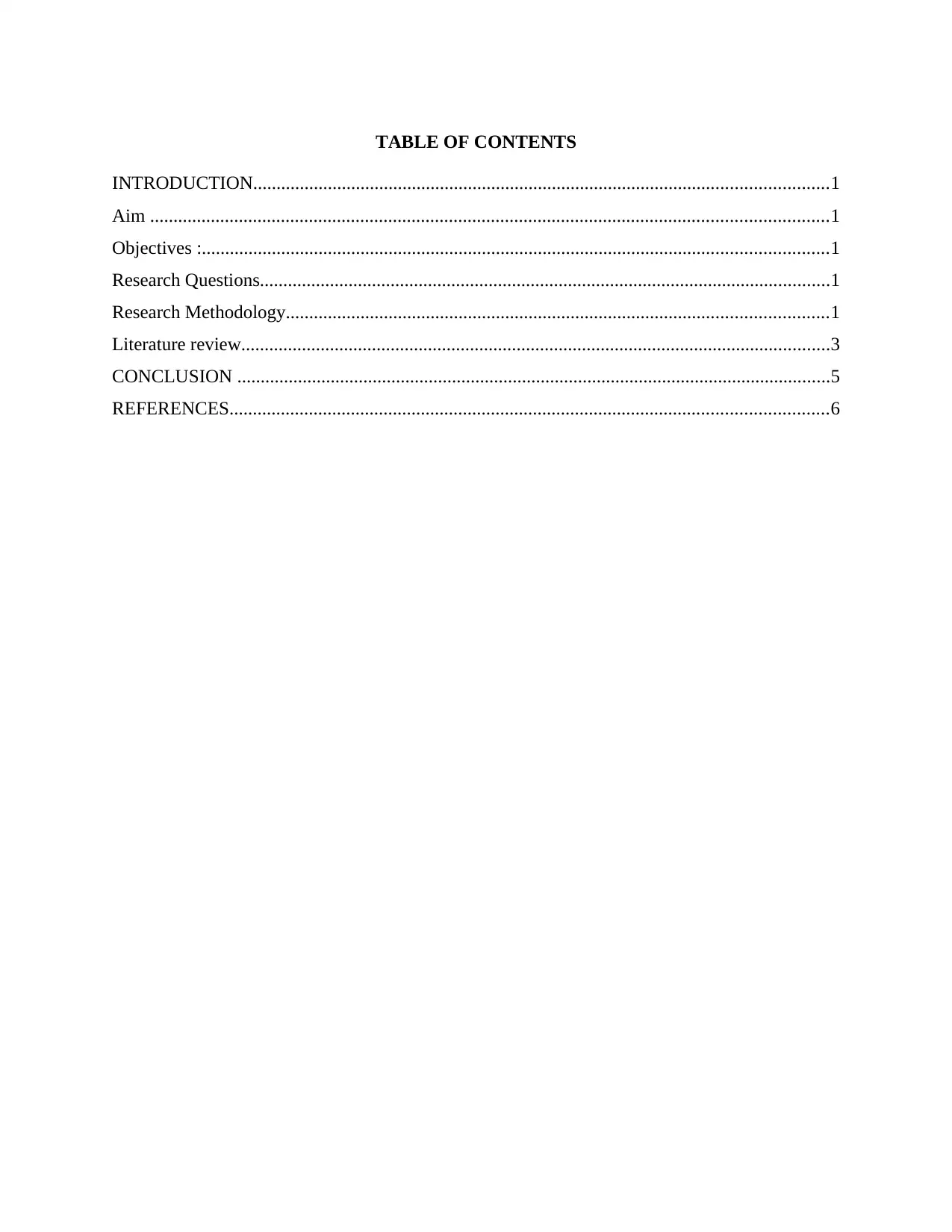
TABLE OF CONTENTS
INTRODUCTION...........................................................................................................................1
Aim .................................................................................................................................................1
Objectives :......................................................................................................................................1
Research Questions..........................................................................................................................1
Research Methodology....................................................................................................................1
Literature review..............................................................................................................................3
CONCLUSION ...............................................................................................................................5
REFERENCES................................................................................................................................6
INTRODUCTION...........................................................................................................................1
Aim .................................................................................................................................................1
Objectives :......................................................................................................................................1
Research Questions..........................................................................................................................1
Research Methodology....................................................................................................................1
Literature review..............................................................................................................................3
CONCLUSION ...............................................................................................................................5
REFERENCES................................................................................................................................6
INTRODUCTION
The human resource management is considered as the management of the human
resources. It involves various practices such as selecting, recruiting and then, providing proper
training and development to the nursing candidates in order to train them about the roles and
responsibilities, they have to undergo in the health care (Kanerva, Lammintakanen and Kivinen,
2010). There is a relationship between the selection and recruitment with the nursing staff.
These practices are a necessary for the skilled and qualified candidates as it helps in guiding
them various ways which they have to deal and interact with the patients. The review is about
understanding the strengths and weakness of the selection and recruiting and the ways it is being
done in nursing. Also, it covers an impact of these two aspects with the nursing employees and
staff.
Aim
To understand the strengths and weaknesses of the selection and recruitment processes in
nursing
Objectives :
To identify the strengths of the selection and recruitment process.
To analyse the weaknesses of the selection and recruitment process.
To evaluate the relationship between the selection and recruitment with the nursing.
To recommend ways of analysing the benefits and limitations of selection and
recruitment.
Research Questions
Q. What is the relationship between selection and recruitment with its impact on the nursing staff
and employees?
Research Methodology
Research
A research can be considered as a plan for investigating about the research and that is to
be done in a systematic way (Straughair, 2012). It can be classified on the basis of qualitative as
well as quantitative methodologies. It is further categorised in the following steps :
Research design
1
The human resource management is considered as the management of the human
resources. It involves various practices such as selecting, recruiting and then, providing proper
training and development to the nursing candidates in order to train them about the roles and
responsibilities, they have to undergo in the health care (Kanerva, Lammintakanen and Kivinen,
2010). There is a relationship between the selection and recruitment with the nursing staff.
These practices are a necessary for the skilled and qualified candidates as it helps in guiding
them various ways which they have to deal and interact with the patients. The review is about
understanding the strengths and weakness of the selection and recruiting and the ways it is being
done in nursing. Also, it covers an impact of these two aspects with the nursing employees and
staff.
Aim
To understand the strengths and weaknesses of the selection and recruitment processes in
nursing
Objectives :
To identify the strengths of the selection and recruitment process.
To analyse the weaknesses of the selection and recruitment process.
To evaluate the relationship between the selection and recruitment with the nursing.
To recommend ways of analysing the benefits and limitations of selection and
recruitment.
Research Questions
Q. What is the relationship between selection and recruitment with its impact on the nursing staff
and employees?
Research Methodology
Research
A research can be considered as a plan for investigating about the research and that is to
be done in a systematic way (Straughair, 2012). It can be classified on the basis of qualitative as
well as quantitative methodologies. It is further categorised in the following steps :
Research design
1
⊘ This is a preview!⊘
Do you want full access?
Subscribe today to unlock all pages.

Trusted by 1+ million students worldwide
The design of the research can be considered as an overall strategy that is being chosen
by the researcher for integrating various different types of components in a logical as well
coherent way. The design of a research can be classified in five types, descriptive, experimental,
semi experimental, review and the co relational. The researcher will make use of the descriptive
design as the understanding of the strengths and weakness of the selection and recruiting process
will be done on the survey or by means of a case study.
Research philosophy
The philosophy of the research is considered as a sort of belief about the way the data and
information has been collected and gathered for the research. The term has been classified in four
terms, namely pragmatism, positivism, realism and interpretivism (Shi, 2010). The pragmatism
deals with the mixed and multiple designing of the methods, positivism deals with the highly
structured, realism deals with the techniques that can fit the matter of the subject and
interpretivism deals with smaller samples. The researcher will take use of positivism as the topic
of evaluating the difference between the sampling and recruiting is highly structured.
Research strategy
Research strategy can be considered as a step by step plan which can help in giving
directions to the whole process (Keep and James, 2010). This can be classified in two ways,
qualitatively and quantitatively. The qualitative means the data and information that has been
collected by means like surveys, interviews etc., whereas the quantitative means the information
and data that has been collected by means of tabular data, graphs and statistics etc. The
researcher will make use of the qualitative strategy instead of the quantitative one as the topic of
identifying the strengths and weakness of selection and recruitment is lengthy enough that the
qualitative data can act efficient rather than the quantitative one.
Data Collection
The data collection can be considered as the gathering of data in a way that it is being
used in the research by the researcher. The collection of data can be done by two sources, either
the primary or the secondary. The primary data is the data that is being collected at the first time
and the sources for the primary data can be the surveys, interviews, focused groups etc. The
secondary data is the data and information that has already been collected by some external body
and different sources of it can be books, journals, online etc. In this research, the researcher will
2
by the researcher for integrating various different types of components in a logical as well
coherent way. The design of a research can be classified in five types, descriptive, experimental,
semi experimental, review and the co relational. The researcher will make use of the descriptive
design as the understanding of the strengths and weakness of the selection and recruiting process
will be done on the survey or by means of a case study.
Research philosophy
The philosophy of the research is considered as a sort of belief about the way the data and
information has been collected and gathered for the research. The term has been classified in four
terms, namely pragmatism, positivism, realism and interpretivism (Shi, 2010). The pragmatism
deals with the mixed and multiple designing of the methods, positivism deals with the highly
structured, realism deals with the techniques that can fit the matter of the subject and
interpretivism deals with smaller samples. The researcher will take use of positivism as the topic
of evaluating the difference between the sampling and recruiting is highly structured.
Research strategy
Research strategy can be considered as a step by step plan which can help in giving
directions to the whole process (Keep and James, 2010). This can be classified in two ways,
qualitatively and quantitatively. The qualitative means the data and information that has been
collected by means like surveys, interviews etc., whereas the quantitative means the information
and data that has been collected by means of tabular data, graphs and statistics etc. The
researcher will make use of the qualitative strategy instead of the quantitative one as the topic of
identifying the strengths and weakness of selection and recruitment is lengthy enough that the
qualitative data can act efficient rather than the quantitative one.
Data Collection
The data collection can be considered as the gathering of data in a way that it is being
used in the research by the researcher. The collection of data can be done by two sources, either
the primary or the secondary. The primary data is the data that is being collected at the first time
and the sources for the primary data can be the surveys, interviews, focused groups etc. The
secondary data is the data and information that has already been collected by some external body
and different sources of it can be books, journals, online etc. In this research, the researcher will
2
Paraphrase This Document
Need a fresh take? Get an instant paraphrase of this document with our AI Paraphraser
make use of the information from primary sources such as from interviews, surveys from the
nurses that how these processes have impacted on their processing as well as progressing.
Research limitations
Research limitations can be considered as the factors that can be considered as a sort of
limitation while doing the research. The researcher have to ensure that the research must be done
in the specific time because if it is not completed within the particular deadline, then more
resources will be used for the research which means more time consumption as well (O’Donnell,
2011). But if cost for the resources are not available, then it can be considered as limitations of
the research. So, the researcher have to ensure the completion of research within the particular
deadline, otherwise, cost and time will be considered as the limitations of the research.
Literature review
In human resource management, selecting, recruiting and providing the training and
development are considered as three main steps which are given to the candidate. The process of
selection is considered as when the candidates are being selected on the basis of their skills and
qualification. After the selection procedure, recruiting of the ones who are suitable for the
specific profiles is being done. In nursing as well, candidates are being selected on the basis of
the evaluation of their skills and qualification (McLaughlin, Moutray and Moore, 2010). Then,
the ones matching the profile are recruited. There are various benefits of these processes in the
field of nursing or of health and social care. The main advantage of the selection and recruitment
is that it helps in maintaining the quality and standards of the human capital and makes them able
enough to stand in the competition. These are categorised as the processes of human resource
management. In nursing, the actual benefit of these two processes is that the staff and employees
of the clinical organisation are being selected through selection and recruitment. It helps in
ensuring that the employees, nurses and the staff must be highly qualified so that they can be
aware of the operations and procedures of the following.(Wheeler, Halbesleben and Harris,
2012)
As both the process will make the person undergo a series of tests and interviews which
can check the ability of the person along with the information level . These are important
because in nursing, the person who is not aware of the basics and terms and also lack in skills
like communicating with others etc., that person as a staff or an employee can cause various
3
nurses that how these processes have impacted on their processing as well as progressing.
Research limitations
Research limitations can be considered as the factors that can be considered as a sort of
limitation while doing the research. The researcher have to ensure that the research must be done
in the specific time because if it is not completed within the particular deadline, then more
resources will be used for the research which means more time consumption as well (O’Donnell,
2011). But if cost for the resources are not available, then it can be considered as limitations of
the research. So, the researcher have to ensure the completion of research within the particular
deadline, otherwise, cost and time will be considered as the limitations of the research.
Literature review
In human resource management, selecting, recruiting and providing the training and
development are considered as three main steps which are given to the candidate. The process of
selection is considered as when the candidates are being selected on the basis of their skills and
qualification. After the selection procedure, recruiting of the ones who are suitable for the
specific profiles is being done. In nursing as well, candidates are being selected on the basis of
the evaluation of their skills and qualification (McLaughlin, Moutray and Moore, 2010). Then,
the ones matching the profile are recruited. There are various benefits of these processes in the
field of nursing or of health and social care. The main advantage of the selection and recruitment
is that it helps in maintaining the quality and standards of the human capital and makes them able
enough to stand in the competition. These are categorised as the processes of human resource
management. In nursing, the actual benefit of these two processes is that the staff and employees
of the clinical organisation are being selected through selection and recruitment. It helps in
ensuring that the employees, nurses and the staff must be highly qualified so that they can be
aware of the operations and procedures of the following.(Wheeler, Halbesleben and Harris,
2012)
As both the process will make the person undergo a series of tests and interviews which
can check the ability of the person along with the information level . These are important
because in nursing, the person who is not aware of the basics and terms and also lack in skills
like communicating with others etc., that person as a staff or an employee can cause various
3
issues as they might involve in some verbal fights with others in the hospital or health care. Also,
they can mis behave. So, such situations can cause troubles in the health care. It will also ensure
that the persons inside the health care should be efficient enough to deal with the patients and the
other co workers. Along with the basic knowledge, interacting with others members in the
health acre is important as well. In any organisation, including the health and social care, after
selecting and recruiting, proper training and orientation is given to the candidates in order to train
them about the work they have to do in the organisation. They are being guided by the specific
training. The efficient candidates are being selected and then recruited on specific basis and then
they are being provided efficient training, with the help of which they get aware of the processes
and procedures they have to do in the health and social care and also of the interpersonal skills
which they will be requiring for communicating with the patients and other co workers.
(O’Donnell, 2011)
As there are various advantages, there are some drawbacks as well. Like some recruiters
focus on some tools only for selecting and recruiting the candidates which costs nothing, but
wastage of time. There are various other ways also such as job fairs, cold calls through which
the company can invite candidates and applications for selected posts. There are more chances
than searching on some particular tool on the internet. In nursing as well, internal recruiting is
quite difficult in health and social care because the employees there in the care centre are already
specified for some specific positions only. So, it can be tough to allot them some other positions
instead of their actual position because in some other field, which they are less aware of, there
may be a possibility that they might take much time in learning that. So, such actions should be
done when there is a lesser work load in the health care organisation. Although in various centres
and organisations, the process of selection and recruitment has gone online but there are a few
people who are eligible for undergoing selection and recruitment and it may be because of their
academic qualification. Only who are eligible for those positions. On the other hand, external
recruitment is considered as a lengthy process and time consuming as well (Shi, 2010). Also, the
organisation may have to spend more on the external candidate rather than on the internal one. It
is because the organisation has to provide the training and development from starting to the new
one which is time consuming as well as cost effective. So, it is better to recruit some already
existing candidate but in that also, there are some limitations such as the employees of the health
and social care are already assigned to some specific positions and for them to move on some
4
they can mis behave. So, such situations can cause troubles in the health care. It will also ensure
that the persons inside the health care should be efficient enough to deal with the patients and the
other co workers. Along with the basic knowledge, interacting with others members in the
health acre is important as well. In any organisation, including the health and social care, after
selecting and recruiting, proper training and orientation is given to the candidates in order to train
them about the work they have to do in the organisation. They are being guided by the specific
training. The efficient candidates are being selected and then recruited on specific basis and then
they are being provided efficient training, with the help of which they get aware of the processes
and procedures they have to do in the health and social care and also of the interpersonal skills
which they will be requiring for communicating with the patients and other co workers.
(O’Donnell, 2011)
As there are various advantages, there are some drawbacks as well. Like some recruiters
focus on some tools only for selecting and recruiting the candidates which costs nothing, but
wastage of time. There are various other ways also such as job fairs, cold calls through which
the company can invite candidates and applications for selected posts. There are more chances
than searching on some particular tool on the internet. In nursing as well, internal recruiting is
quite difficult in health and social care because the employees there in the care centre are already
specified for some specific positions only. So, it can be tough to allot them some other positions
instead of their actual position because in some other field, which they are less aware of, there
may be a possibility that they might take much time in learning that. So, such actions should be
done when there is a lesser work load in the health care organisation. Although in various centres
and organisations, the process of selection and recruitment has gone online but there are a few
people who are eligible for undergoing selection and recruitment and it may be because of their
academic qualification. Only who are eligible for those positions. On the other hand, external
recruitment is considered as a lengthy process and time consuming as well (Shi, 2010). Also, the
organisation may have to spend more on the external candidate rather than on the internal one. It
is because the organisation has to provide the training and development from starting to the new
one which is time consuming as well as cost effective. So, it is better to recruit some already
existing candidate but in that also, there are some limitations such as the employees of the health
and social care are already assigned to some specific positions and for them to move on some
4
⊘ This is a preview!⊘
Do you want full access?
Subscribe today to unlock all pages.
Trusted by 1+ million students worldwide
new position can be a lengthy process. So, these can be considered as some drawbacks of the
selection and recruitment process.(Keep and James, 2010)
There is a relationship between these practices of the human resource management and
the nursing satisfaction. Along with the process of selecting and recruitment, there is some other
processes associated as well such as retention, attrition, turnover etc. The nursing staff is being
selected by selecting a number of candidates of the same field (Wheeler, Halbesleben and Harris,
2012). Then, for choosing the best and the efficient ones, recruitment is being performed that
which candidate can act better than others for the same role. On this basis, the nurses are being
recruited then. After the selection and recruitment, proper training, development and orientation
is being provided to the nursing students so that they can become aware of their roles and
responsibilities they have to perform in the health and social care or any related organisation.
The processes are essential because it ensures the entry of the appropriate member's in the
specific organisation. It will further help in the easy going of all the processes and procedures of
the health and social care so that every patient can be treated well and efficiently. Another
advantage of the selection and recruitment and the training that is being provided to the nursing
candidates is that the employees are efficient and skilled enough as they know how to interact
with the patients, how to deal with them very patiently, because may be sometimes, the mental
stability of the patient may not be right or the person may also be going through some tension in
their mind, so they can react over and sometimes bad also, in such situations, it is better to deal
with them very peacefully and in a friendly manner as well(Straughair, 2011)
Along with these two processes, there is retention and turnover as well which are also
associated with the nursing and the processes. Retention can be categorised as a practice that is
made by a health and social care or an organisation in order to provide support to the current
staff of the centre. The main focus behind it may be the enhancement of a feeling of job
satisfaction or for the minimization of the substantial costs that are being involved in selecting,
recruiting the staff and then in providing their training regard their roles and responsibilities of
the work they have to do in the health care. Another factor associated with it is the employee
turnover. The turnover of the nurses can be due to a few reasons such as excess work load being
provided to them as allotting a more number of patients than the routine, mis behaviour of the
patients or other employees, discrimination (MacKusick and Minick, 2010).
5
selection and recruitment process.(Keep and James, 2010)
There is a relationship between these practices of the human resource management and
the nursing satisfaction. Along with the process of selecting and recruitment, there is some other
processes associated as well such as retention, attrition, turnover etc. The nursing staff is being
selected by selecting a number of candidates of the same field (Wheeler, Halbesleben and Harris,
2012). Then, for choosing the best and the efficient ones, recruitment is being performed that
which candidate can act better than others for the same role. On this basis, the nurses are being
recruited then. After the selection and recruitment, proper training, development and orientation
is being provided to the nursing students so that they can become aware of their roles and
responsibilities they have to perform in the health and social care or any related organisation.
The processes are essential because it ensures the entry of the appropriate member's in the
specific organisation. It will further help in the easy going of all the processes and procedures of
the health and social care so that every patient can be treated well and efficiently. Another
advantage of the selection and recruitment and the training that is being provided to the nursing
candidates is that the employees are efficient and skilled enough as they know how to interact
with the patients, how to deal with them very patiently, because may be sometimes, the mental
stability of the patient may not be right or the person may also be going through some tension in
their mind, so they can react over and sometimes bad also, in such situations, it is better to deal
with them very peacefully and in a friendly manner as well(Straughair, 2011)
Along with these two processes, there is retention and turnover as well which are also
associated with the nursing and the processes. Retention can be categorised as a practice that is
made by a health and social care or an organisation in order to provide support to the current
staff of the centre. The main focus behind it may be the enhancement of a feeling of job
satisfaction or for the minimization of the substantial costs that are being involved in selecting,
recruiting the staff and then in providing their training regard their roles and responsibilities of
the work they have to do in the health care. Another factor associated with it is the employee
turnover. The turnover of the nurses can be due to a few reasons such as excess work load being
provided to them as allotting a more number of patients than the routine, mis behaviour of the
patients or other employees, discrimination (MacKusick and Minick, 2010).
5
Paraphrase This Document
Need a fresh take? Get an instant paraphrase of this document with our AI Paraphraser
CONCLUSION
It can be concluded from the report that selection and recruiting can be considered as two
essential processes of the human resource management after which efficient training and
orientation is being provided to the nursing candidates about their roles and responsibilities. A
proper research methodology has also been implemented to have a better and efficient analysed
data and information about the status of the nurses getting selected and recruited. There is a
relationship between the practices of HRM and nursing as these practices makes one able to
understand the efficient and appropriate requirements and ways of dealing with the patients and
various types of situations.
6
It can be concluded from the report that selection and recruiting can be considered as two
essential processes of the human resource management after which efficient training and
orientation is being provided to the nursing candidates about their roles and responsibilities. A
proper research methodology has also been implemented to have a better and efficient analysed
data and information about the status of the nurses getting selected and recruited. There is a
relationship between the practices of HRM and nursing as these practices makes one able to
understand the efficient and appropriate requirements and ways of dealing with the patients and
various types of situations.
6
REFERENCES
Books and Journals
Hutchinson, S. and Purcell, J., 2010. Managing ward managers for roles in HRM in the NHS:
overworked and under‐resourced. Human Resource Management Journal. 20(4). pp.357-
374.
Kanerva, A., Lammintakanen, J. and Kivinen, T., 2010. Experiences of the fairness of
recruitment from unsuccessful applicants in the field of nursing. Journal of Nursing
Management. vol.18, no. 3.. pp.293-301.
Keep, E. and James, S., 2010. Recruitment and selection-the great neglected topic.
MacKusick, C. I. and Minick, P., 2010. Why are nurses leaving? Findings from an initial
qualitative study on nursing attrition. Medsurg Nursing. 19(6). p.335.
McLaughlin, K., Moutray, M. and Moore, C., 2010. Career motivation in nursing students and
the perceived influence of significant others. Journal of Advanced Nursing. 66(2).
pp.404-412.
O’Donnell, H., 2011. Expectations and voluntary attrition in nursing students. Nurse Education
in Practice. 11(1). pp.54-63.
Rankin, B., 2013. Emotional intelligence: enhancing values‐based practice and compassionate
care in nursing. Journal of advanced nursing. 69(12). pp.2717-2725.
Shi, L., 2010. Managing human resources in health care organizations. Jones & Bartlett
Publishers.
Straughair, C., 2012. Exploring compassion: implications for contemporary nursing. Part 2.
British Journal of Nursing. 21(4).
Wheeler, A. R., Halbesleben, J. R. and Harris, K. J., 2012. How job-level HRM effectiveness
influences employee intent to turnover and workarounds in hospitals. Journal of Business
Research. 65(4). pp.547-554.
7
Books and Journals
Hutchinson, S. and Purcell, J., 2010. Managing ward managers for roles in HRM in the NHS:
overworked and under‐resourced. Human Resource Management Journal. 20(4). pp.357-
374.
Kanerva, A., Lammintakanen, J. and Kivinen, T., 2010. Experiences of the fairness of
recruitment from unsuccessful applicants in the field of nursing. Journal of Nursing
Management. vol.18, no. 3.. pp.293-301.
Keep, E. and James, S., 2010. Recruitment and selection-the great neglected topic.
MacKusick, C. I. and Minick, P., 2010. Why are nurses leaving? Findings from an initial
qualitative study on nursing attrition. Medsurg Nursing. 19(6). p.335.
McLaughlin, K., Moutray, M. and Moore, C., 2010. Career motivation in nursing students and
the perceived influence of significant others. Journal of Advanced Nursing. 66(2).
pp.404-412.
O’Donnell, H., 2011. Expectations and voluntary attrition in nursing students. Nurse Education
in Practice. 11(1). pp.54-63.
Rankin, B., 2013. Emotional intelligence: enhancing values‐based practice and compassionate
care in nursing. Journal of advanced nursing. 69(12). pp.2717-2725.
Shi, L., 2010. Managing human resources in health care organizations. Jones & Bartlett
Publishers.
Straughair, C., 2012. Exploring compassion: implications for contemporary nursing. Part 2.
British Journal of Nursing. 21(4).
Wheeler, A. R., Halbesleben, J. R. and Harris, K. J., 2012. How job-level HRM effectiveness
influences employee intent to turnover and workarounds in hospitals. Journal of Business
Research. 65(4). pp.547-554.
7
⊘ This is a preview!⊘
Do you want full access?
Subscribe today to unlock all pages.
Trusted by 1+ million students worldwide

1 out of 9


Related Documents


Your All-in-One AI-Powered Toolkit for Academic Success.
+13062052269
info@desklib.com
Available 24*7 on WhatsApp / Email
![[object Object]](/_next/static/media/star-bottom.7253800d.svg)
Unlock your academic potential
Copyright © 2020–2026 A2Z Services. All Rights Reserved. Developed and managed by ZUCOL.