HLTENN006 Wound Management Plan: Clinical Practice, Diploma Nursing

Verified

Added on  2023/06/11

|9
|1531
|422
Report
AI Summary
This wound management plan focuses on a 62-year-old male patient, Jason, confined to a wheelchair due to osteoarthritis, leading to pressure injuries. The plan details Jason's medical history, including hypertension, macular degeneration, and hypothyroidism, along with nutritional deficiencies exacerbating the wound development. It covers the evaluation of the wound, potential causes, and the physiology of the healing process. The plan includes a week-by-week nursing intervention strategy, focusing on dressing types, frequency of changes, and wound cleaning techniques. Furthermore, it addresses pain management strategies, such as anti-inflammatory drugs and repositioning techniques, referencing guidelines from organizations like NPUAP, EPUAP, and PPPIA. The document concludes with a wound care assessment plan.
Document Page
Running head: WOUND MANAGEMENT PLAN
Wound Management Plan
Name of the student
University name
Author’s note
tabler-icon-diamond-filled.svg

Paraphrase This Document

Need a fresh take? Get an instant paraphrase of this document with our AI Paraphraser
Document Page
1
WOUND MANAGEMENT PLAN
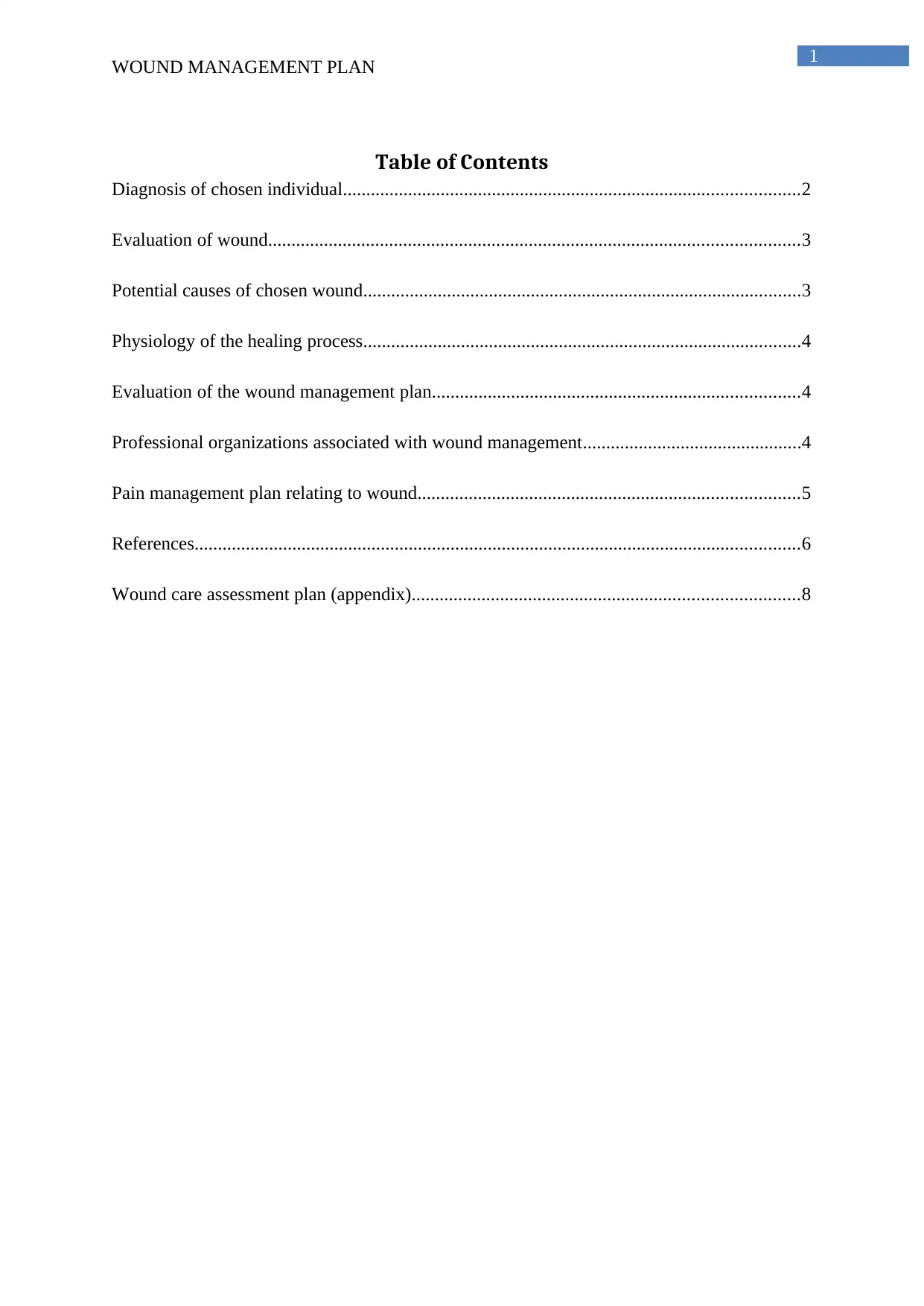
Table of Contents
Diagnosis of chosen individual..................................................................................................2
Evaluation of wound..................................................................................................................3
Potential causes of chosen wound..............................................................................................3
Physiology of the healing process..............................................................................................4
Evaluation of the wound management plan...............................................................................4
Professional organizations associated with wound management...............................................4
Pain management plan relating to wound..................................................................................5
References..................................................................................................................................6
Wound care assessment plan (appendix)...................................................................................8
Document Page
2
WOUND MANAGEMENT PLAN
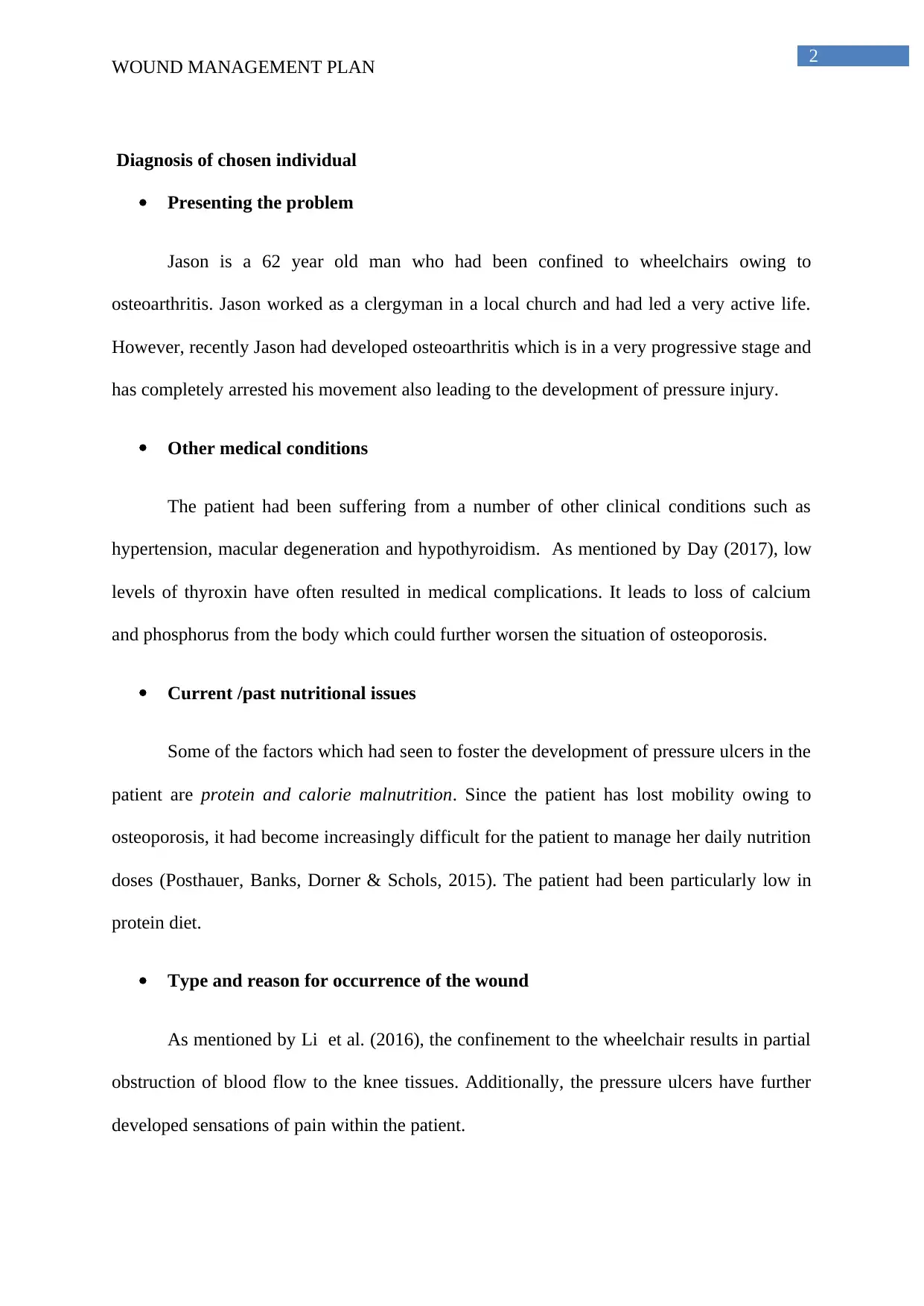
Diagnosis of chosen individual
Presenting the problem
Jason is a 62 year old man who had been confined to wheelchairs owing to
osteoarthritis. Jason worked as a clergyman in a local church and had led a very active life.
However, recently Jason had developed osteoarthritis which is in a very progressive stage and
has completely arrested his movement also leading to the development of pressure injury.
Other medical conditions
The patient had been suffering from a number of other clinical conditions such as
hypertension, macular degeneration and hypothyroidism. As mentioned by Day (2017), low
levels of thyroxin have often resulted in medical complications. It leads to loss of calcium
and phosphorus from the body which could further worsen the situation of osteoporosis.
Current /past nutritional issues
Some of the factors which had seen to foster the development of pressure ulcers in the
patient are protein and calorie malnutrition. Since the patient has lost mobility owing to
osteoporosis, it had become increasingly difficult for the patient to manage her daily nutrition
doses (Posthauer, Banks, Dorner & Schols, 2015). The patient had been particularly low in
protein diet.
Type and reason for occurrence of the wound
As mentioned by Li et al. (2016), the confinement to the wheelchair results in partial
obstruction of blood flow to the knee tissues. Additionally, the pressure ulcers have further
developed sensations of pain within the patient.
Document Page
3
WOUND MANAGEMENT PLAN
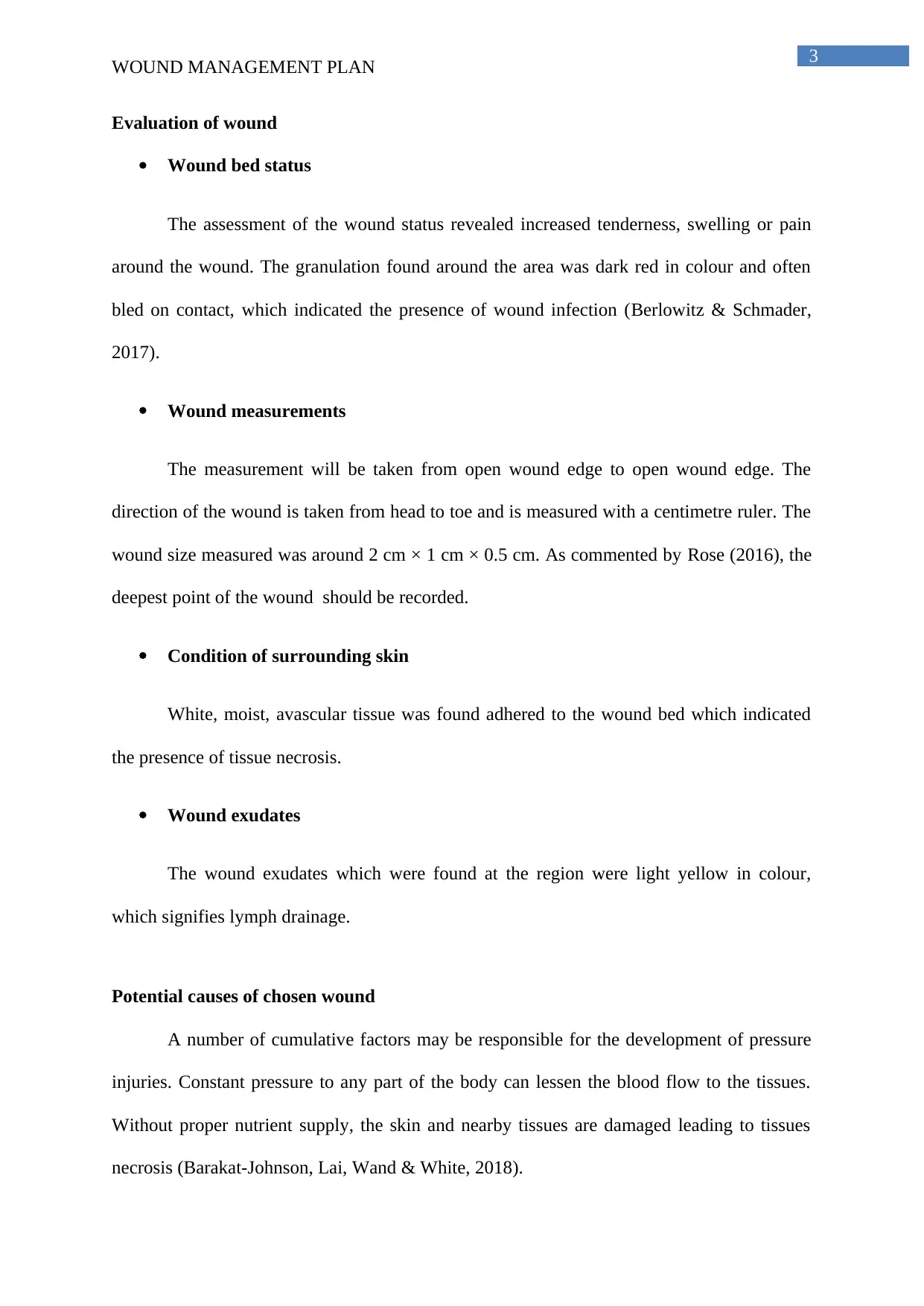
Evaluation of wound
Wound bed status
The assessment of the wound status revealed increased tenderness, swelling or pain
around the wound. The granulation found around the area was dark red in colour and often
bled on contact, which indicated the presence of wound infection (Berlowitz & Schmader,
2017).
Wound measurements
The measurement will be taken from open wound edge to open wound edge. The
direction of the wound is taken from head to toe and is measured with a centimetre ruler. The
wound size measured was around 2 cm × 1 cm × 0.5 cm. As commented by Rose (2016), the
deepest point of the wound should be recorded.
Condition of surrounding skin
White, moist, avascular tissue was found adhered to the wound bed which indicated
the presence of tissue necrosis.
Wound exudates
The wound exudates which were found at the region were light yellow in colour,
which signifies lymph drainage.
Potential causes of chosen wound
A number of cumulative factors may be responsible for the development of pressure
injuries. Constant pressure to any part of the body can lessen the blood flow to the tissues.
Without proper nutrient supply, the skin and nearby tissues are damaged leading to tissues
necrosis (Barakat-Johnson, Lai, Wand & White, 2018).
tabler-icon-diamond-filled.svg

Paraphrase This Document

Need a fresh take? Get an instant paraphrase of this document with our AI Paraphraser
Document Page
4
WOUND MANAGEMENT PLAN
Physiology of the healing process
The healing occurs predominantly through re-epthelization, which could be divided
into three stages such as – inflammation phase, proliferation phase and maturation phase.
During the inflammatory phase neutrophils and macrophages migrate to the wound site which
engulfs the bacteria (Brown, Edwards, Seaton & Buckley, 2017). The cytokines released
during the inflammatory stage promote cell proliferation and the synthesis of extracellular
matrix molecules promotes granulation and new tissue formation.
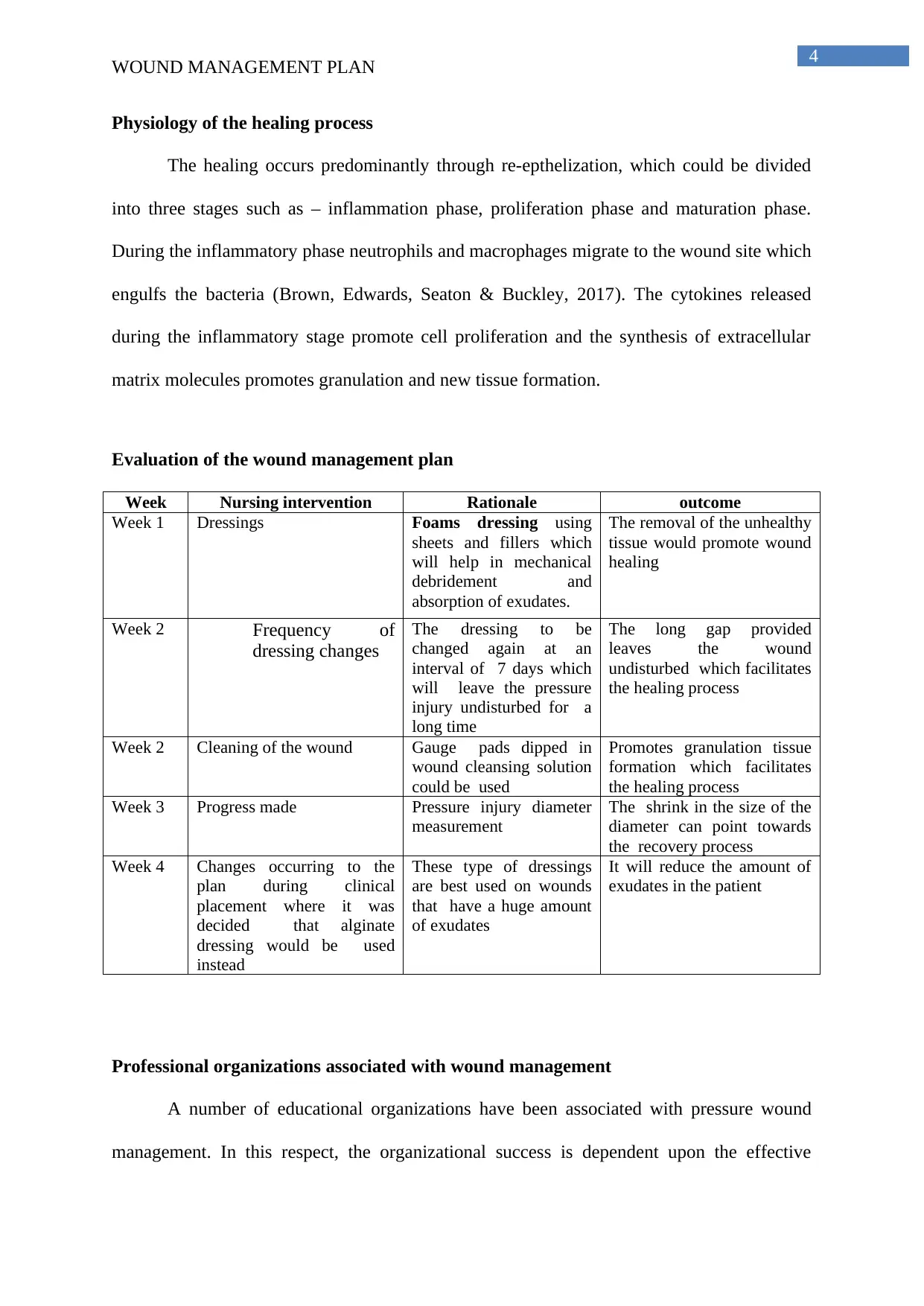
Evaluation of the wound management plan
Week Nursing intervention Rationale outcome
Week 1 Dressings Foams dressing using
sheets and fillers which
will help in mechanical
debridement and
absorption of exudates.
The removal of the unhealthy
tissue would promote wound
healing
Week 2 Frequency of
dressing changes
The dressing to be
changed again at an
interval of 7 days which
will leave the pressure
injury undisturbed for a
long time
The long gap provided
leaves the wound
undisturbed which facilitates
the healing process
Week 2 Cleaning of the wound Gauge pads dipped in
wound cleansing solution
could be used
Promotes granulation tissue
formation which facilitates
the healing process
Week 3 Progress made Pressure injury diameter
measurement
The shrink in the size of the
diameter can point towards
the recovery process
Week 4 Changes occurring to the
plan during clinical
placement where it was
decided that alginate
dressing would be used
instead
These type of dressings
are best used on wounds
that have a huge amount
of exudates
It will reduce the amount of
exudates in the patient
Professional organizations associated with wound management
A number of educational organizations have been associated with pressure wound
management. In this respect, the organizational success is dependent upon the effective
Document Page
5
WOUND MANAGEMENT PLAN
guidelines followed. The synthesized guidelines are a collaborative effect of National
Pressure Ulcer advisory panel (NPUAP), European pressure ulcer advisory panel (EPUAP)
and Pam Pacific Pressure injury alliance (PPPIA). The guidelines cover the following
pressure ulcer research topics such as – etiology, prevalence, incidence, risk assessment, skin
and tissue assessment, preventive skin care, prophylactic dressings (Lachenbruch, Ribble,
Emmons & VanGilder, 2016). The Queensland health pressure injury prevention suggests the
use of prevention and treatment of pressure ulcers using clinical practice guidelines.
Pain management plan relating to wound
In this respect, a number of pain management interventions could be applied. Some
of the anti-inflammatory non-steroidal drugs such as ibuprofen and naproxen sodium might
be used to reduce pain before and after repositioning. For instance, the application of
emerging therapies for management of pressure ulcers could be beneficial. Nutrition
management plays a pivotal role in pressure ulcer prevention. In this respect, some of the
emerging therapies could also be discussed, which are mainly based on repositioning the
patient. As mentioned under the PPIA guidelines, shifting the positioning on the wheelchair
with the help of slight tilt can result in less obstruction to blood flow. While planning the
repositioning position, it is necessary to determine that the pressure is actually relieved or
redistributed (Li et al., 2016). Additionally, positioning the individual directly onto medical
devices should be avoided.
Document Page
6
WOUND MANAGEMENT PLAN
References
Barakat-Johnson, M., Lai, M., Wand, T., & White, K. (2018). A qualitative study of the
thoughts and experiences of hospital nurses providing pressure injury prevention and
management. Collegian, 14-35.
Berlowitz, D., & Schmader, K. E. (2017). Clinical staging and management of pressure-
induced skin and soft tissue injury. UpToDate, 454-621.
Brown, D., Edwards, H., Seaton, L., & Buckley, T. (2017). Lewis's Medical-Surgical
Nursing: Assessment and Management of Clinical Problems. New Jersey: Elsevier
Health Sciences, 47-68.
Day, P. I. (2017). HealthCERT Work Programme 2016 and beyond: Pressure Injury
Prevention and Management (PIPM),55-65.
Lachenbruch, C., Ribble, D., Emmons, K., & VanGilder, C. (2016). Pressure ulcer risk in the
incontinent patient: analysis of incontinence and hospital-acquired pressure ulcers
from the International Pressure Ulcer Prevalence™ Survey. Journal of Wound
Ostomy & Continence Nursing, 43(3), 235-241.
Li, W. H. C., Smith, G. D., Jackson, D., Hutchinson, M., Barnason, S., Mannix, J., ... &
Usher, K. (2016). Towards a new agenda in pressure injury prevention: perspectives
on international pressure injury policy. In RCN International Nursing Research
Conference, 45-56.
Posthauer, M. E., Banks, M., Dorner, B., & Schols, J. M. (2015). The role of nutrition for
pressure ulcer management: national pressure ulcer advisory panel, European pressure
tabler-icon-diamond-filled.svg

Paraphrase This Document

Need a fresh take? Get an instant paraphrase of this document with our AI Paraphraser
Document Page
7
WOUND MANAGEMENT PLAN
ulcer advisory panel, and pan pacific pressure injury alliance white paper. Advances in
skin & wound care, 28(4), 175-188.
Rose, A. J. (2016). Pressure injury management: An exploration of current practice within
New South Wales and Victorian Health Services, 124-135.
Document Page
8
WOUND MANAGEMENT PLAN
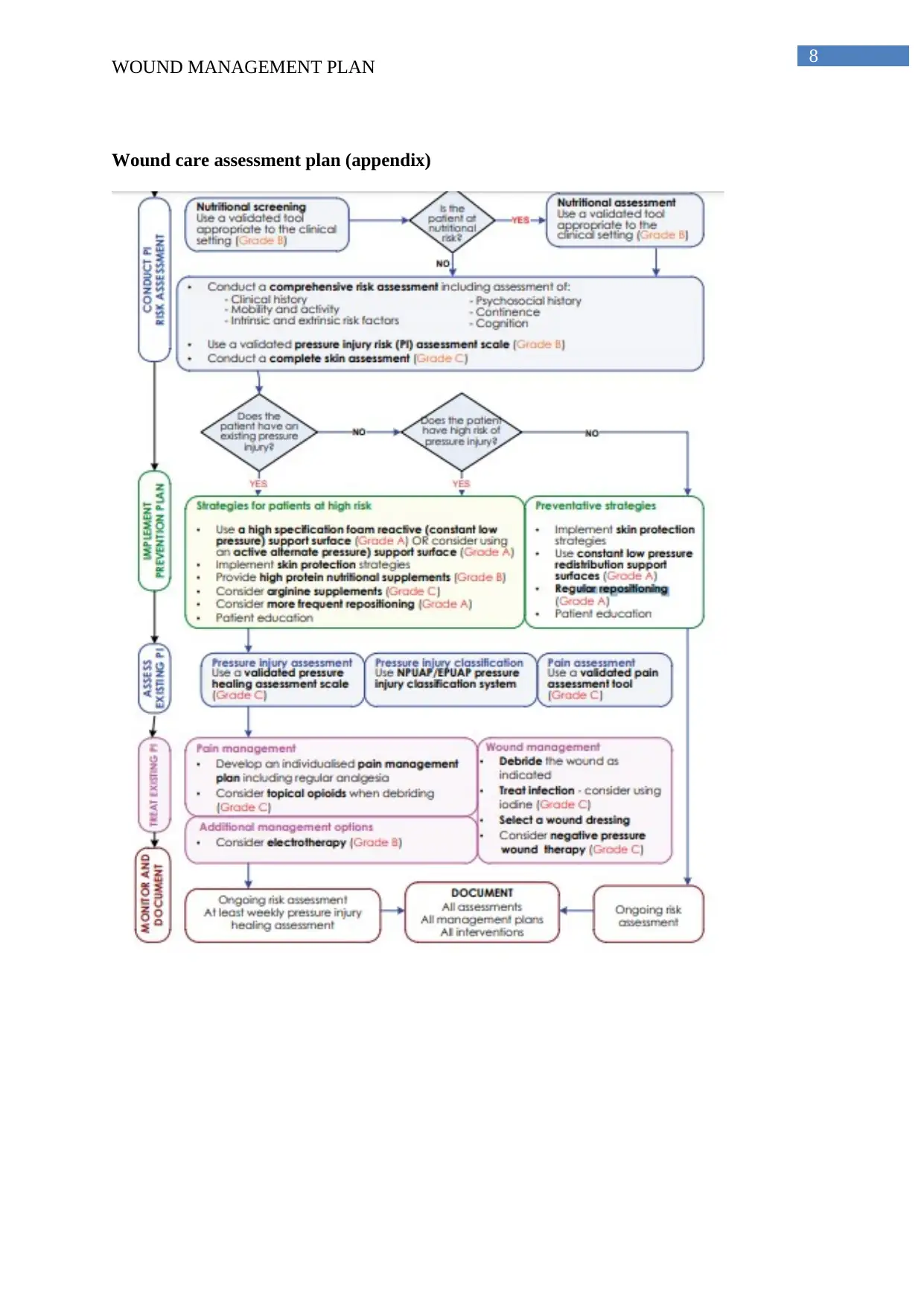
Wound care assessment plan (appendix)
chevron_up_icon
1 out of 9
circle_padding
hide_on_mobile
zoom_out_icon
[object Object]