NUTB 211: Detailed Report on Complementary Feeding: Guidelines & Foods
VerifiedAdded on 2023/01/31
|35
|2477
|27
Report
AI Summary
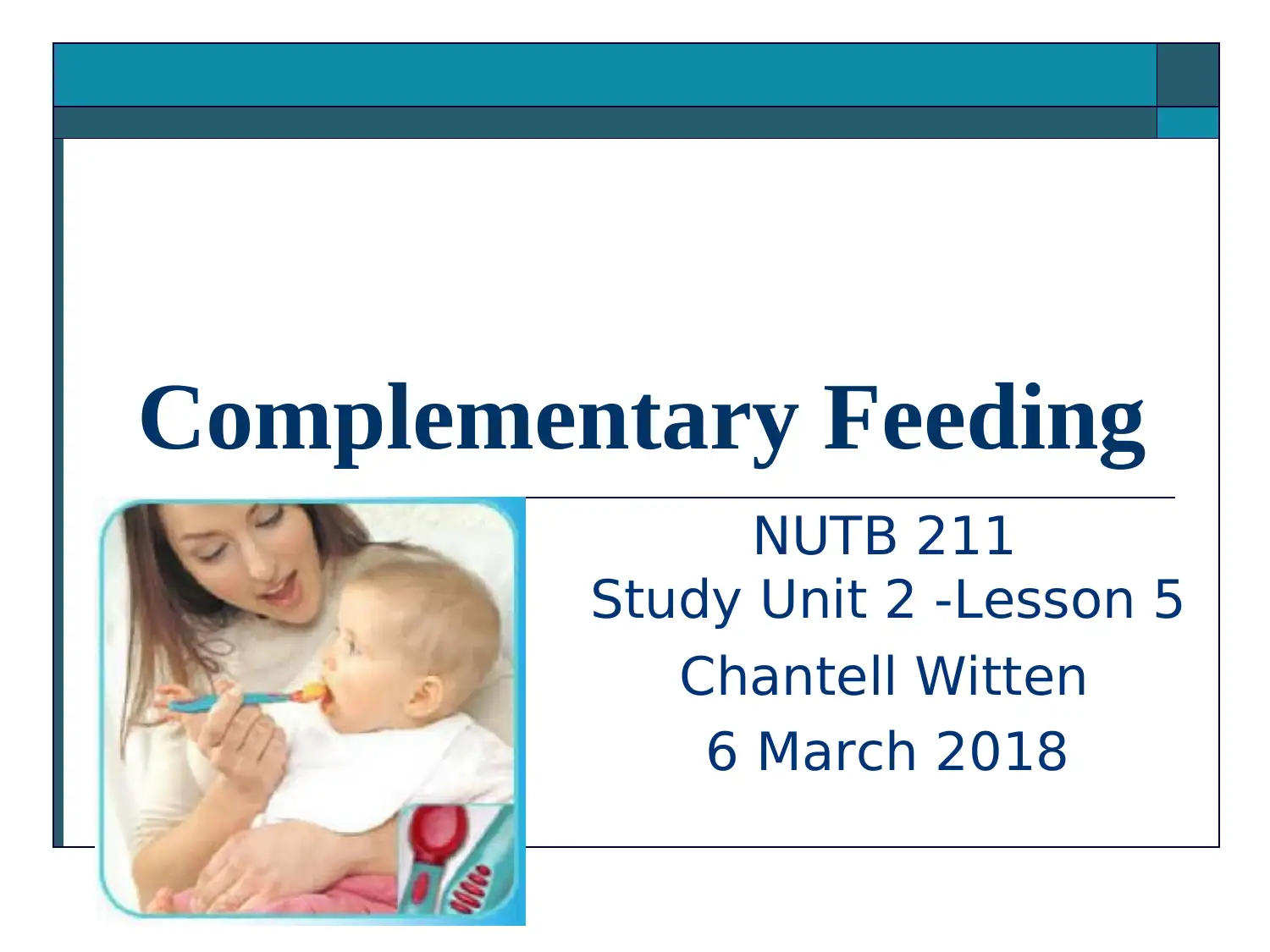
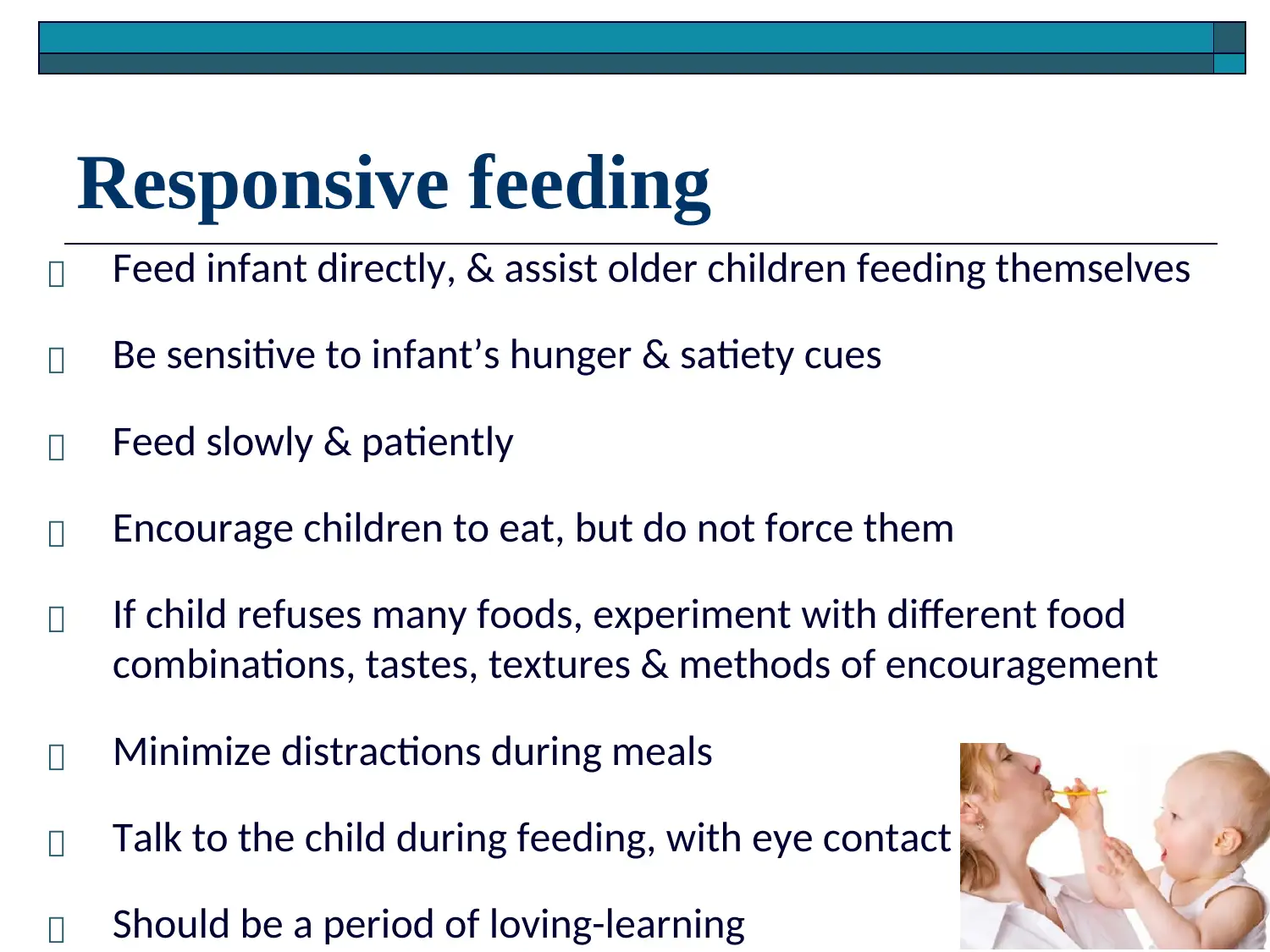
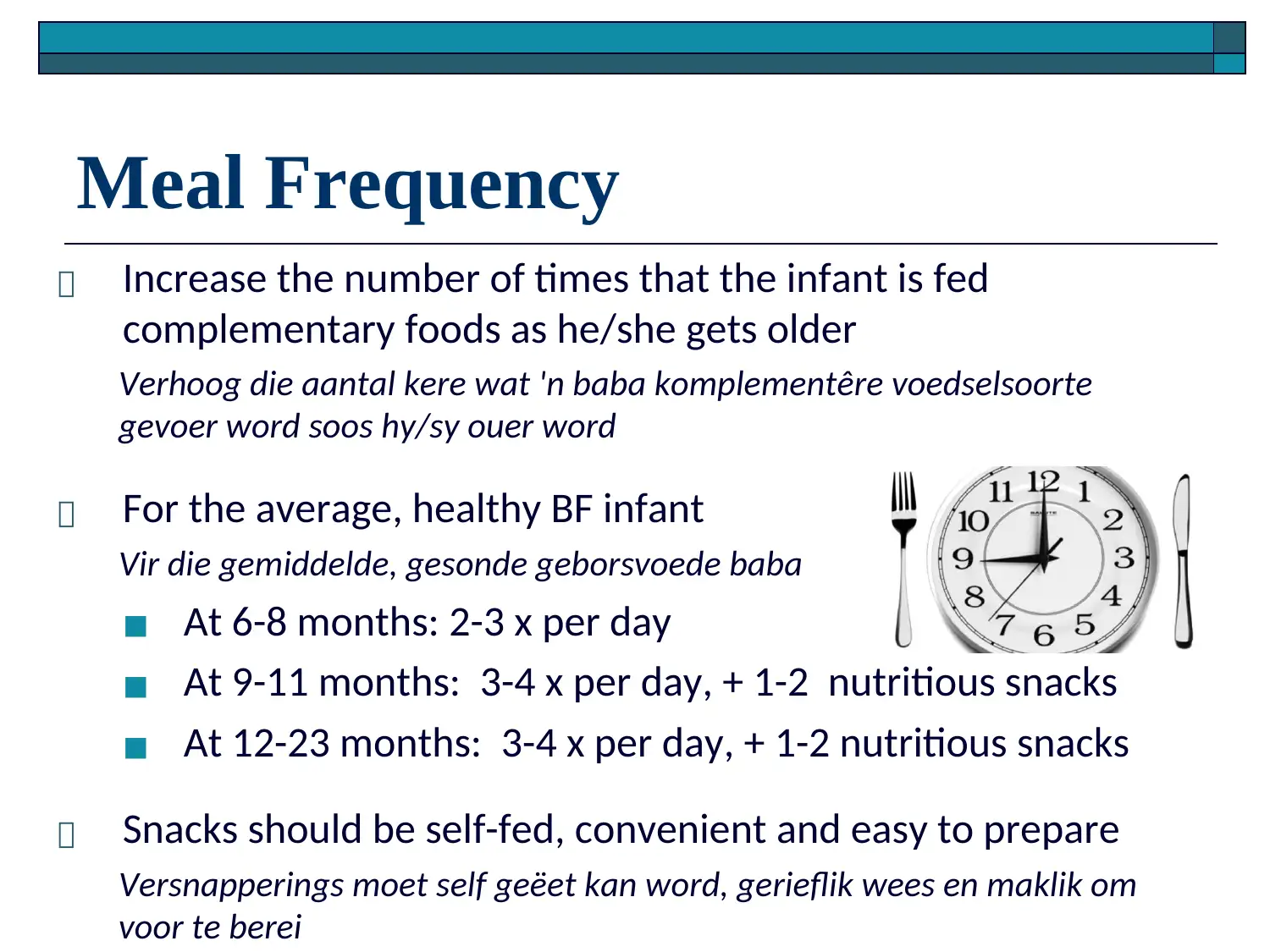
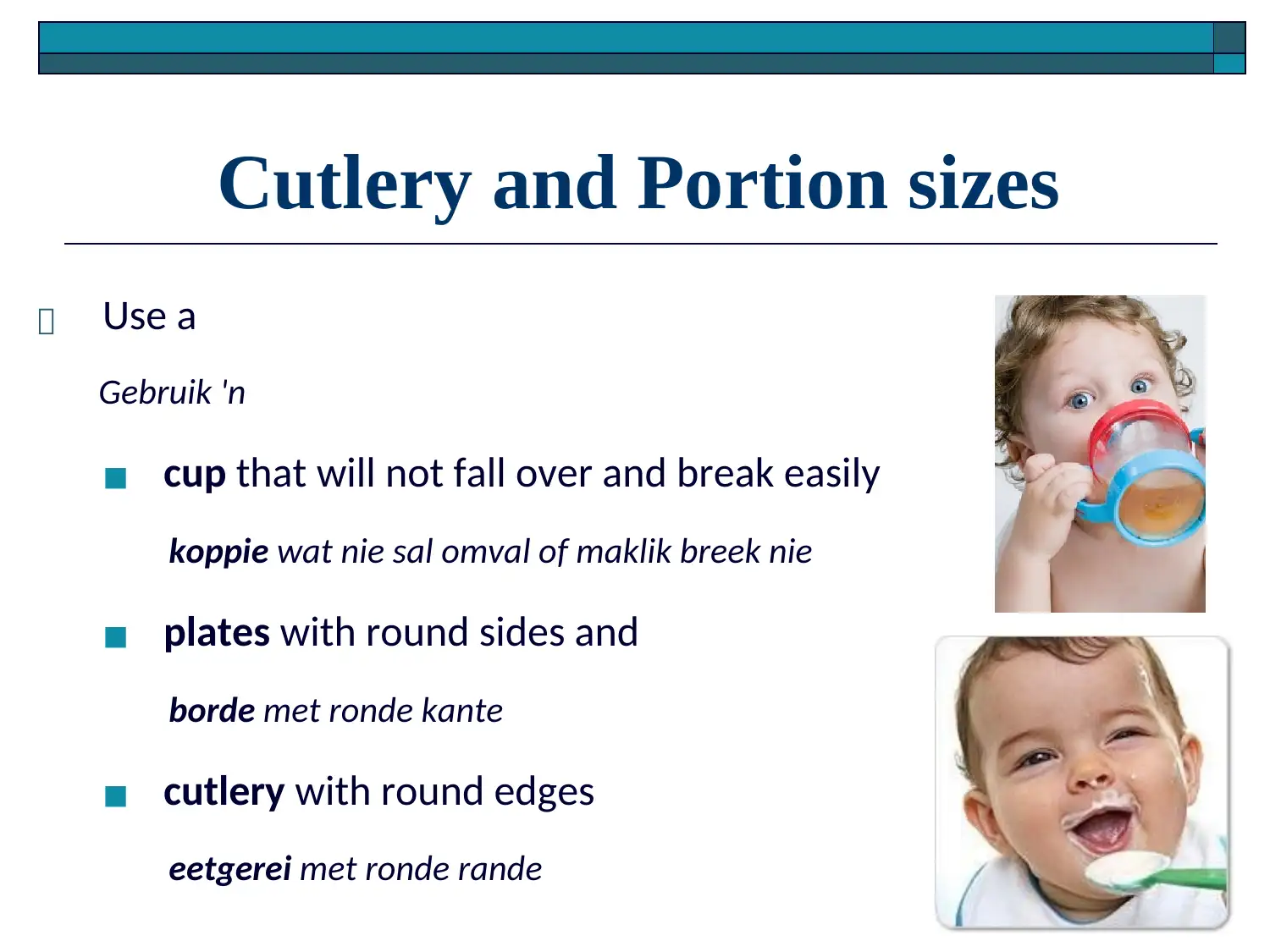
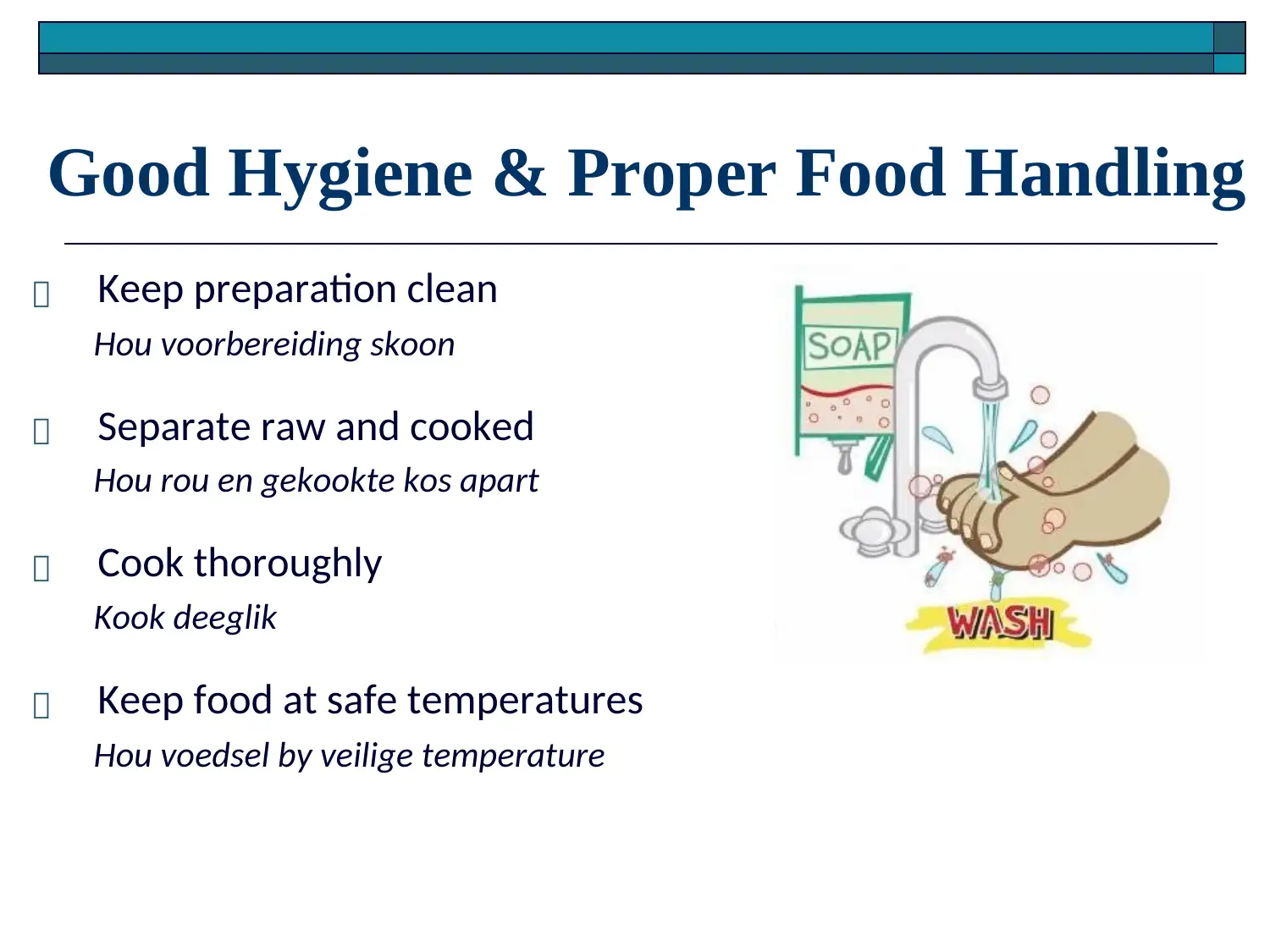
This report, based on NUTB 211 Study Unit 2, Lesson 5, provides a comprehensive overview of complementary feeding for infants. It outlines guidelines for introducing new foods, emphasizing the importance of holding the infant upright, introducing small amounts, and reintroducing rejected foods. The report covers responsive feeding techniques, meal frequency recommendations, and the use of appropriate cutlery and portion sizes. It also emphasizes good hygiene practices and proper food handling. The document discusses the development of taste and food preferences, including innate preferences and rejections, and explores possible reasons for refusal of solids. Detailed recommendations are provided for adding various foods, including cereals, starches, vegetables, fruits, fruit juices, eggs, and meat, fish, and poultry. The importance of iron in complementary feeding is highlighted, along with guidelines for avoiding allergies, including the timing of food introduction and the benefits of continued breastfeeding. The report also touches on the introduction of cow's milk and provides recommended complementary feeding options for low socio-economic areas.



1 out of 35


Your All-in-One AI-Powered Toolkit for Academic Success.
+13062052269
info@desklib.com
Available 24*7 on WhatsApp / Email
![[object Object]](/_next/static/media/star-bottom.7253800d.svg)
Copyright © 2020–2026 A2Z Services. All Rights Reserved. Developed and managed by ZUCOL.