BEO6600 Business Economics: oBike's Externalities & Global Trade
VerifiedAdded on 2023/06/04
|14
|2929
|317
Report
AI Summary
This report delves into the business economics of oBike's stationless bike-sharing system, examining both the positive and negative externalities it generates, particularly in the context of its operation in Melbourne. It analyzes the impact of government regulations and potential market-oriented policies, such as subsidies, to mitigate negative externalities. Furthermore, the report explores the effects of tariff imposition on international trade, using the example of trade relations between the USA and China, and discusses the implications of trade deficits and trade wars on the global economy, with specific reference to Australia's trade relationship with China. The analysis includes diagrams illustrating the impact of tariffs and subsidies on consumer surplus, producer surplus, and overall economic welfare.
Running head: BUSINESS ECONIMICS
Business economics
Name of the student
Name of the university
Author Note
Business economics
Name of the student
Name of the university
Author Note

Paraphrase This Document
Need a fresh take? Get an instant paraphrase of this document with our AI Paraphraser
1BUSINESS ECONIMICS
Table of Contents
Answer 1:...................................................................................................................................2
1.1:..........................................................................................................................................2
1.2...........................................................................................................................................3
1.3...........................................................................................................................................4
1.4...........................................................................................................................................6
Answer 2:...................................................................................................................................8
1.2.........................................................................................................................................10
1.3.........................................................................................................................................11
References:...............................................................................................................................12
Table of Contents
Answer 1:...................................................................................................................................2
1.1:..........................................................................................................................................2
1.2...........................................................................................................................................3
1.3...........................................................................................................................................4
1.4...........................................................................................................................................6
Answer 2:...................................................................................................................................8
1.2.........................................................................................................................................10
1.3.........................................................................................................................................11
References:...............................................................................................................................12
2BUSINESS ECONIMICS
Answer 1:
1.1:
The oBike stationless system of bike sharing intends to provide the society a pollution
free ride at any time through tracking them with the help of GPS (Global Positioning
System). Through this system, company expects that the society as well as economy will
gain positive externalities (Iossa and Martimort 2015). Through this form of externality, a
benefit is created that a third-party enjoys due to an economic transaction. This third party
means any organisation, individual or property owner that can affected directly or indirectly
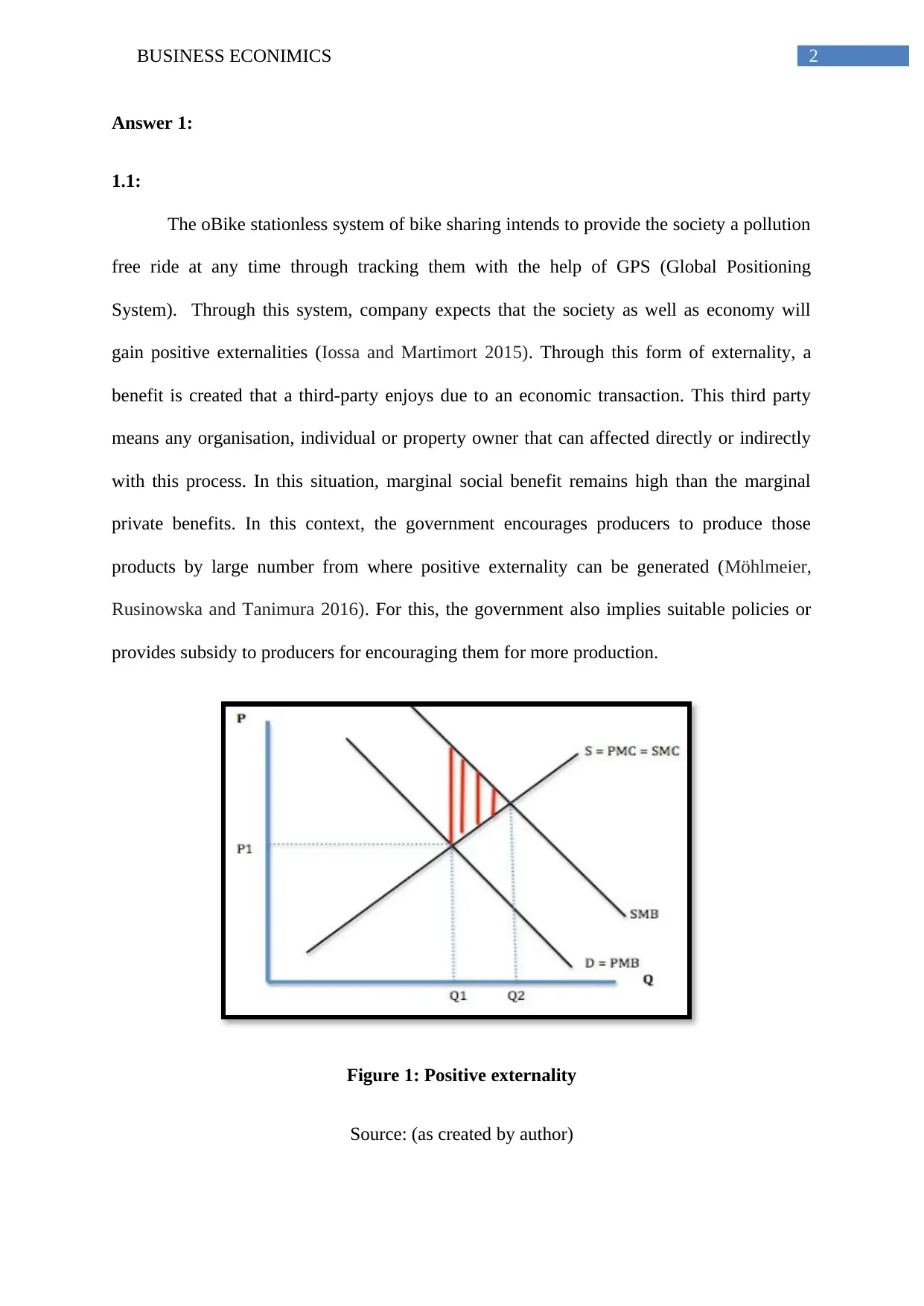
with this process. In this situation, marginal social benefit remains high than the marginal
private benefits. In this context, the government encourages producers to produce those
products by large number from where positive externality can be generated (Möhlmeier,
Rusinowska and Tanimura 2016). For this, the government also implies suitable policies or
provides subsidy to producers for encouraging them for more production.
Figure 1: Positive externality
Source: (as created by author)
Answer 1:
1.1:
The oBike stationless system of bike sharing intends to provide the society a pollution
free ride at any time through tracking them with the help of GPS (Global Positioning
System). Through this system, company expects that the society as well as economy will
gain positive externalities (Iossa and Martimort 2015). Through this form of externality, a
benefit is created that a third-party enjoys due to an economic transaction. This third party
means any organisation, individual or property owner that can affected directly or indirectly
with this process. In this situation, marginal social benefit remains high than the marginal
private benefits. In this context, the government encourages producers to produce those
products by large number from where positive externality can be generated (Möhlmeier,
Rusinowska and Tanimura 2016). For this, the government also implies suitable policies or
provides subsidy to producers for encouraging them for more production.
Figure 1: Positive externality
Source: (as created by author)
⊘ This is a preview!⊘
Do you want full access?
Subscribe today to unlock all pages.

Trusted by 1+ million students worldwide
3BUSINESS ECONIMICS
The company provides opportunity to passerby or any needy person to travel from one place
to other with the help of oBike if they do not possess any bike themselves. They can find
these bike anywhere of the city with the help of GPS and leave it anywhere as well. Hence,
this system intends that customers will not experience any difficulties to go in a near-by
station for hiring bike or leaving this in a particular area. Moreover, excessive use of these
bikes without purchasing one can reduce the tendency of car use and this further can help to
reduce the level of air pollution. This bike also provides physical fitness and consequently
this can provide positive externalities from various aspects.
1.2
The oBike intends to create positive externalities though it creates negative
externalities for society and economy as a whole. In a negative externality system, the third
party suffer a lot and pay cost for the economic transaction (Wood and Sullivan 2015). This
type of externalities occurs generally in case of property rights on resources or assets. In this
situation, production cost for the negative externality generated companies increase, as
marginal social cost (MSC) becomes higher than marginal private cost (MPC). As a result,
the society bears higher price than it actually pays.
The company provides opportunity to passerby or any needy person to travel from one place
to other with the help of oBike if they do not possess any bike themselves. They can find
these bike anywhere of the city with the help of GPS and leave it anywhere as well. Hence,
this system intends that customers will not experience any difficulties to go in a near-by
station for hiring bike or leaving this in a particular area. Moreover, excessive use of these
bikes without purchasing one can reduce the tendency of car use and this further can help to
reduce the level of air pollution. This bike also provides physical fitness and consequently
this can provide positive externalities from various aspects.
1.2
The oBike intends to create positive externalities though it creates negative
externalities for society and economy as a whole. In a negative externality system, the third
party suffer a lot and pay cost for the economic transaction (Wood and Sullivan 2015). This
type of externalities occurs generally in case of property rights on resources or assets. In this
situation, production cost for the negative externality generated companies increase, as
marginal social cost (MSC) becomes higher than marginal private cost (MPC). As a result,
the society bears higher price than it actually pays.
Paraphrase This Document
Need a fresh take? Get an instant paraphrase of this document with our AI Paraphraser
4BUSINESS ECONIMICS
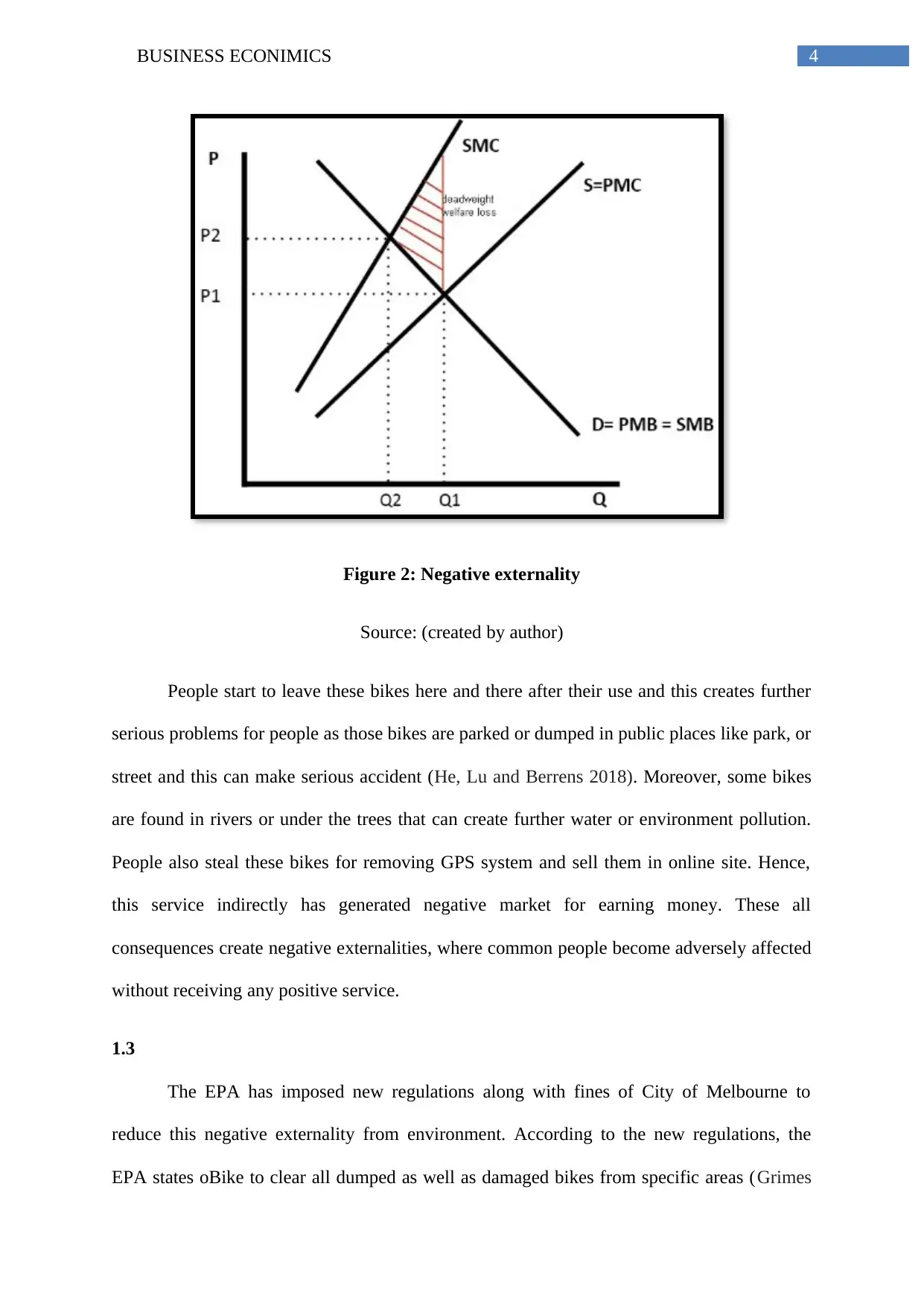
Figure 2: Negative externality
Source: (created by author)
People start to leave these bikes here and there after their use and this creates further
serious problems for people as those bikes are parked or dumped in public places like park, or
street and this can make serious accident (He, Lu and Berrens 2018). Moreover, some bikes
are found in rivers or under the trees that can create further water or environment pollution.
People also steal these bikes for removing GPS system and sell them in online site. Hence,
this service indirectly has generated negative market for earning money. These all
consequences create negative externalities, where common people become adversely affected
without receiving any positive service.
1.3
The EPA has imposed new regulations along with fines of City of Melbourne to
reduce this negative externality from environment. According to the new regulations, the
EPA states oBike to clear all dumped as well as damaged bikes from specific areas (Grimes
Figure 2: Negative externality
Source: (created by author)
People start to leave these bikes here and there after their use and this creates further
serious problems for people as those bikes are parked or dumped in public places like park, or
street and this can make serious accident (He, Lu and Berrens 2018). Moreover, some bikes
are found in rivers or under the trees that can create further water or environment pollution.
People also steal these bikes for removing GPS system and sell them in online site. Hence,
this service indirectly has generated negative market for earning money. These all
consequences create negative externalities, where common people become adversely affected
without receiving any positive service.
1.3
The EPA has imposed new regulations along with fines of City of Melbourne to
reduce this negative externality from environment. According to the new regulations, the
EPA states oBike to clear all dumped as well as damaged bikes from specific areas (Grimes
5BUSINESS ECONIMICS
Price
QuantityO
MSB= D
MPC
MSC
MPC + Fine
Welfare loss
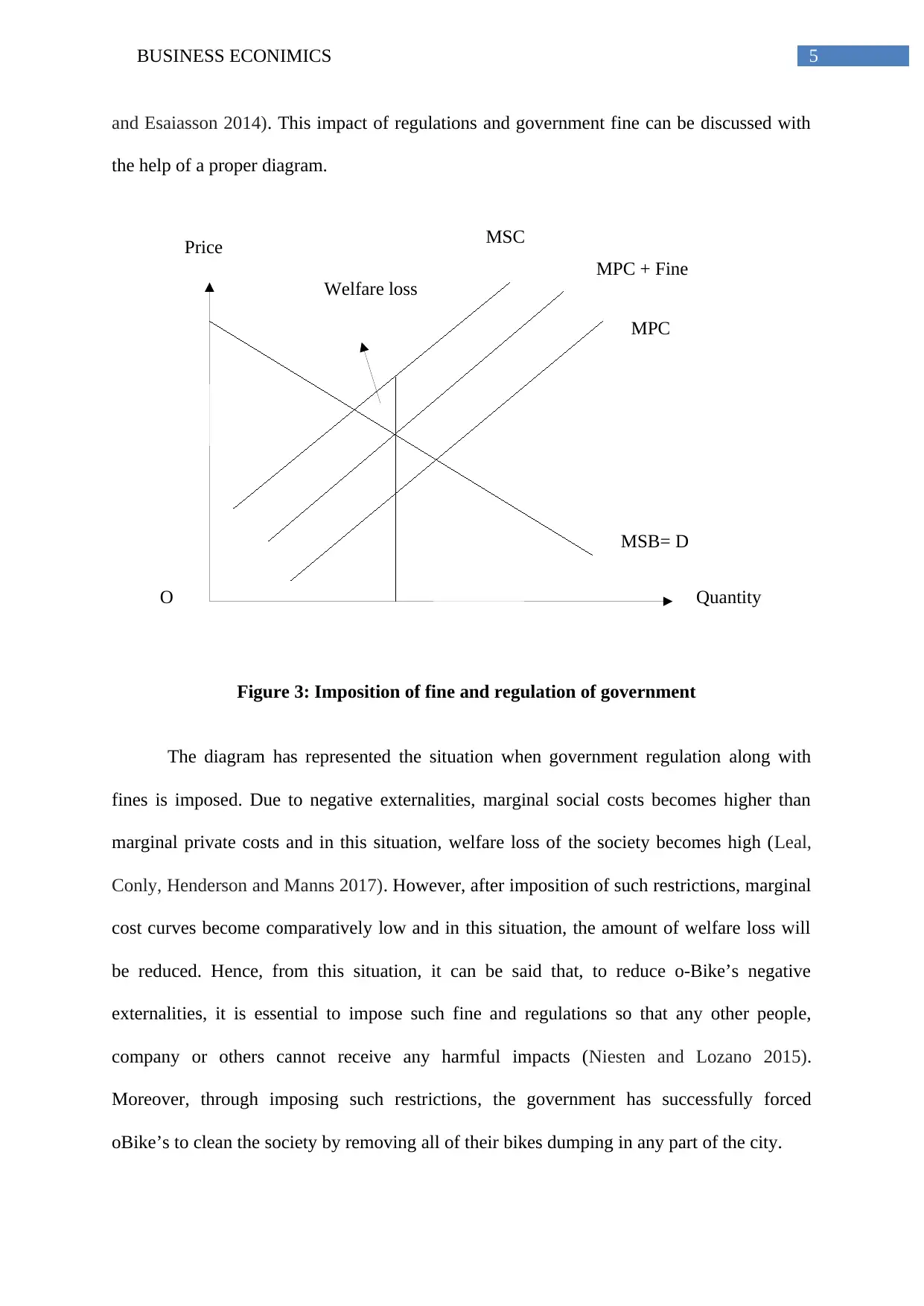
and Esaiasson 2014). This impact of regulations and government fine can be discussed with
the help of a proper diagram.
Source: (created by author)
The diagram has represented the situation when government regulation along with
fines is imposed. Due to negative externalities, marginal social costs becomes higher than
marginal private costs and in this situation, welfare loss of the society becomes high (Leal,
Conly, Henderson and Manns 2017). However, after imposition of such restrictions, marginal
cost curves become comparatively low and in this situation, the amount of welfare loss will
be reduced. Hence, from this situation, it can be said that, to reduce o-Bike’s negative
externalities, it is essential to impose such fine and regulations so that any other people,
company or others cannot receive any harmful impacts (Niesten and Lozano 2015).
Moreover, through imposing such restrictions, the government has successfully forced
oBike’s to clean the society by removing all of their bikes dumping in any part of the city.
Figure 3: Imposition of fine and regulation of government
Price
QuantityO
MSB= D
MPC
MSC
MPC + Fine
Welfare loss
and Esaiasson 2014). This impact of regulations and government fine can be discussed with
the help of a proper diagram.
Source: (created by author)
The diagram has represented the situation when government regulation along with
fines is imposed. Due to negative externalities, marginal social costs becomes higher than
marginal private costs and in this situation, welfare loss of the society becomes high (Leal,
Conly, Henderson and Manns 2017). However, after imposition of such restrictions, marginal
cost curves become comparatively low and in this situation, the amount of welfare loss will
be reduced. Hence, from this situation, it can be said that, to reduce o-Bike’s negative
externalities, it is essential to impose such fine and regulations so that any other people,
company or others cannot receive any harmful impacts (Niesten and Lozano 2015).
Moreover, through imposing such restrictions, the government has successfully forced
oBike’s to clean the society by removing all of their bikes dumping in any part of the city.
Figure 3: Imposition of fine and regulation of government
⊘ This is a preview!⊘
Do you want full access?
Subscribe today to unlock all pages.
Trusted by 1+ million students worldwide
6BUSINESS ECONIMICS
1.4
To reduce or control negative externalities, the government of Australia and can
impose various market-oriented policies. Market-based policy includes taxes or subsidies
from which people can receive incentives to take proper decisions in order to change their
behaviour. In this context, the government can impose subsidy so influence the company for
taking proper steps to manage and reduce these negative externalities (Mills 2017). For
instance, the government can provide subsidy to this oBike company stating that they need to
reward people, who will take initiatives to park bikes in proper areas in a proper way. By
receiving these incentives, people can be motivated to maintain these bikes properly, as they
can be tracked by the company at the time of using their bike. For this, the government can
motivate the specified company to improve its technological system through updating proper
software, so that they can easily track people, who recently are using bikes or who has
already used it.
Providing subsidy to oBike can be supported for its characteristic of positive
externalities. The company has genuinely intended to reduce air pollution by replacing cars
with this environment friendly bike. People can also be benefitted physically by riding this
type of bike. However, due to the nature of people, the vision of oBike has remained
unsuccessful. In this context, subsidy can be played a vital role, as it can reduce operating
costs of this company. Hence, in this situation, the company can provide sufficient amount of
incentives to people for influencing them to use these bikes carefully. After imposition of
subsidy, marginal social costs go below the marginal private cost. The following diagram has
represented this situation.
1.4
To reduce or control negative externalities, the government of Australia and can
impose various market-oriented policies. Market-based policy includes taxes or subsidies
from which people can receive incentives to take proper decisions in order to change their
behaviour. In this context, the government can impose subsidy so influence the company for
taking proper steps to manage and reduce these negative externalities (Mills 2017). For
instance, the government can provide subsidy to this oBike company stating that they need to
reward people, who will take initiatives to park bikes in proper areas in a proper way. By
receiving these incentives, people can be motivated to maintain these bikes properly, as they
can be tracked by the company at the time of using their bike. For this, the government can
motivate the specified company to improve its technological system through updating proper
software, so that they can easily track people, who recently are using bikes or who has
already used it.
Providing subsidy to oBike can be supported for its characteristic of positive
externalities. The company has genuinely intended to reduce air pollution by replacing cars
with this environment friendly bike. People can also be benefitted physically by riding this
type of bike. However, due to the nature of people, the vision of oBike has remained
unsuccessful. In this context, subsidy can be played a vital role, as it can reduce operating
costs of this company. Hence, in this situation, the company can provide sufficient amount of
incentives to people for influencing them to use these bikes carefully. After imposition of
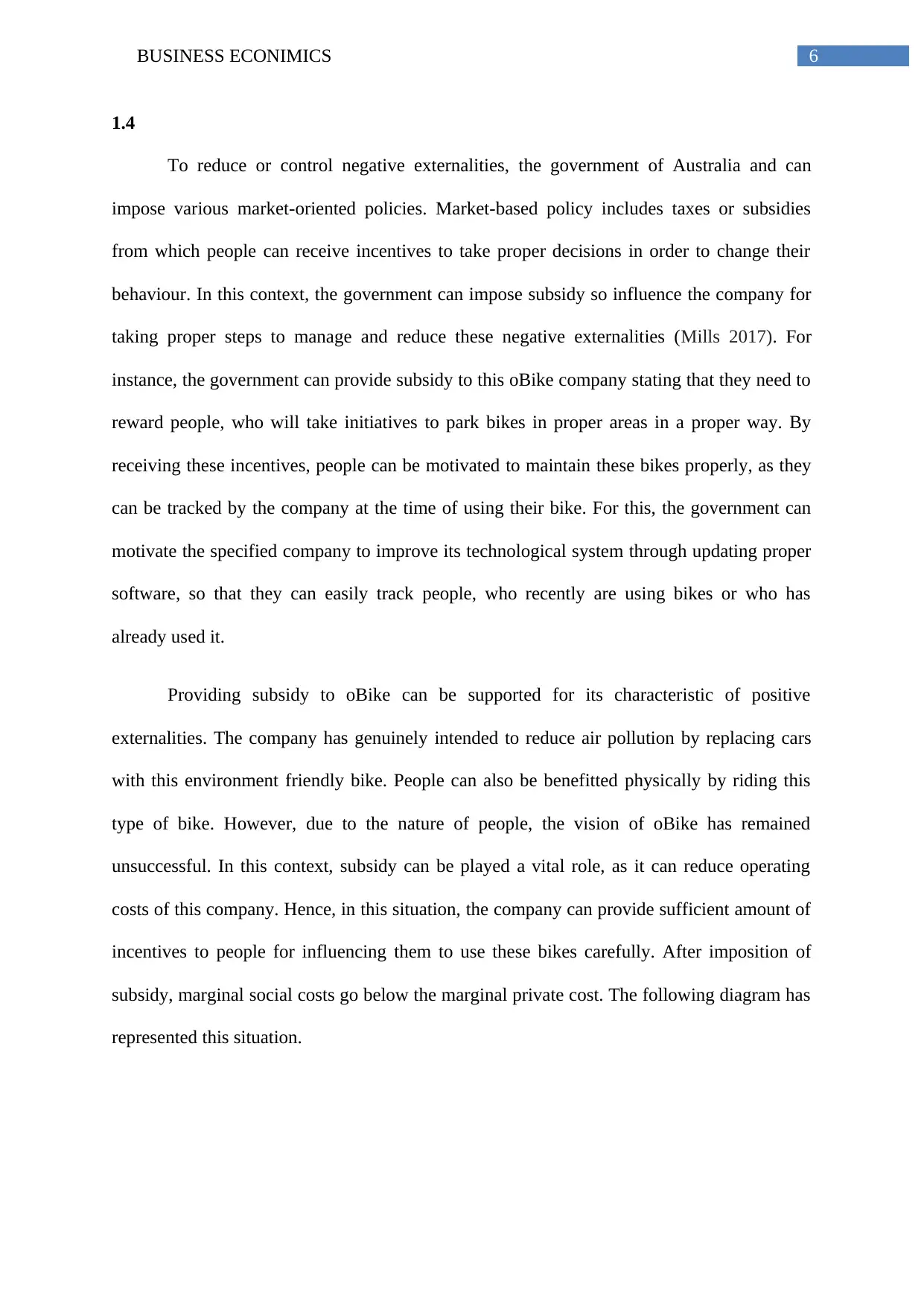
subsidy, marginal social costs go below the marginal private cost. The following diagram has
represented this situation.
Paraphrase This Document
Need a fresh take? Get an instant paraphrase of this document with our AI Paraphraser
7BUSINESS ECONIMICS
Price
QuantityO
MSB= D
MPC + subsidy
MSC
Q1 Q2
P1
P2
Source: (created by author)
In above figure, the government has imposed subsidy on government to highlight
positive externalities and reduce negative one. In this situation, total output production will
increase by Q1Q2 unit while market price reduces from P1 to P2. Hence, subsidy can
indirectly transfer negative externality into positive one.
Figure 4: Impact of subsidy under negative externalities
Price
QuantityO
MSB= D
MPC + subsidy
MSC
Q1 Q2
P1
P2
Source: (created by author)
In above figure, the government has imposed subsidy on government to highlight
positive externalities and reduce negative one. In this situation, total output production will
increase by Q1Q2 unit while market price reduces from P1 to P2. Hence, subsidy can
indirectly transfer negative externality into positive one.
Figure 4: Impact of subsidy under negative externalities
8BUSINESS ECONIMICS
Q
Price
O
SD
PEX
pFT
PIM
SIM DIM
A
B
C
E
F G I
H
Answer 2:
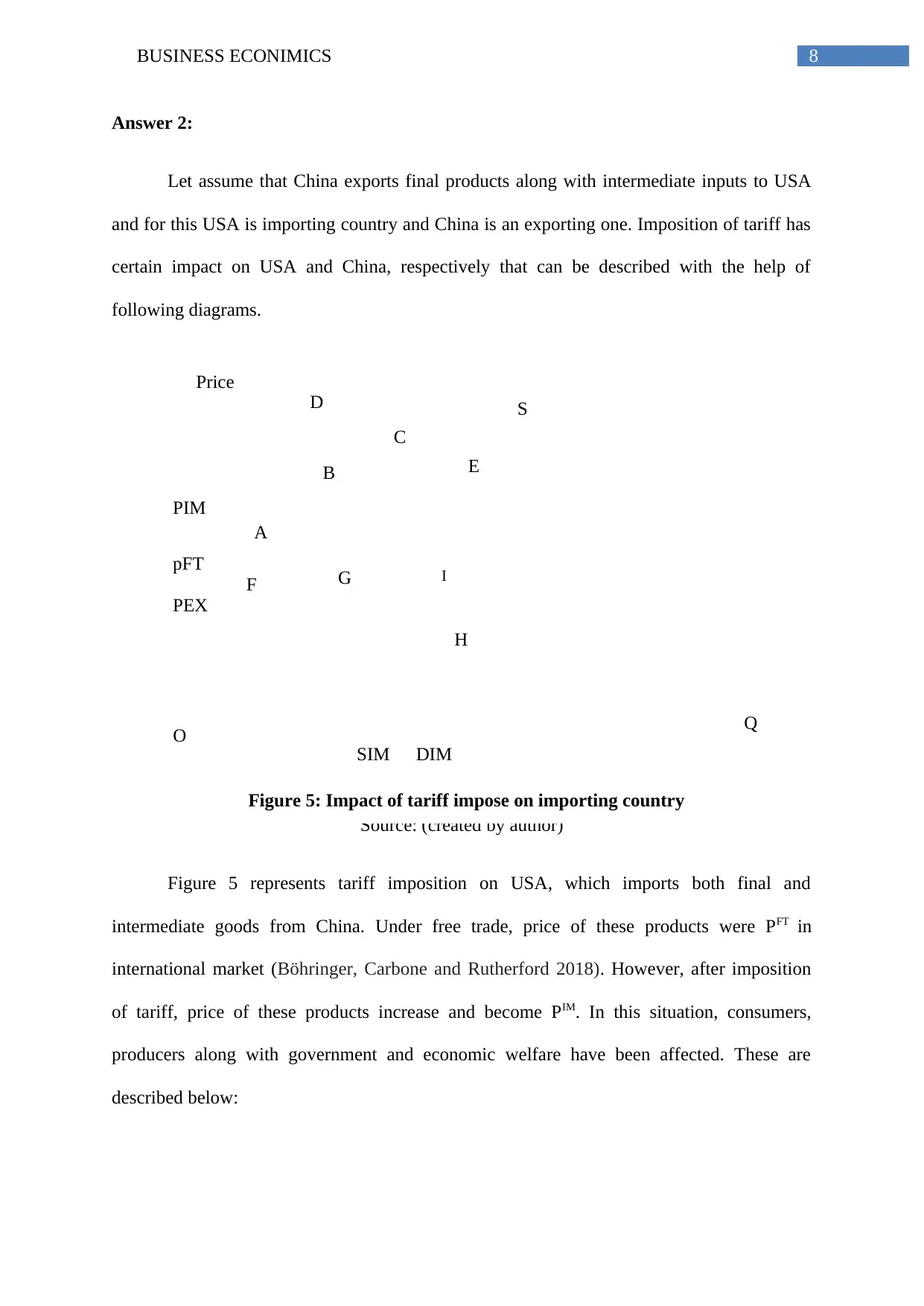
Let assume that China exports final products along with intermediate inputs to USA
and for this USA is importing country and China is an exporting one. Imposition of tariff has
certain impact on USA and China, respectively that can be described with the help of
following diagrams.
Source: (created by author)
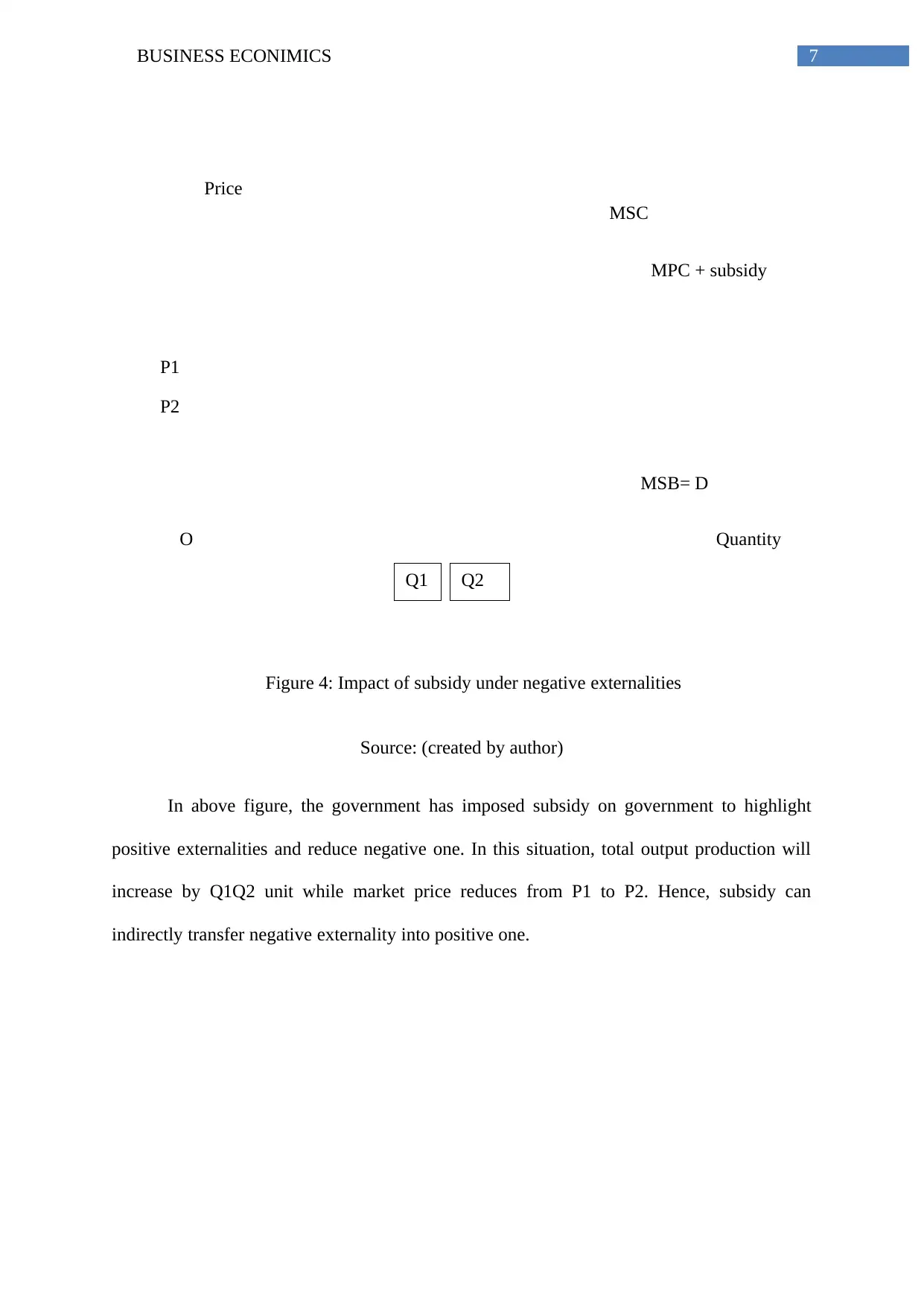
Figure 5 represents tariff imposition on USA, which imports both final and
intermediate goods from China. Under free trade, price of these products were PFT in
international market (Böhringer, Carbone and Rutherford 2018). However, after imposition
of tariff, price of these products increase and become PIM. In this situation, consumers,
producers along with government and economic welfare have been affected. These are
described below:
Figure 5: Impact of tariff impose on importing country
Q
Price
O
SD
PEX
pFT
PIM
SIM DIM
A
B
C
E
F G I
H
Answer 2:
Let assume that China exports final products along with intermediate inputs to USA
and for this USA is importing country and China is an exporting one. Imposition of tariff has
certain impact on USA and China, respectively that can be described with the help of
following diagrams.
Source: (created by author)
Figure 5 represents tariff imposition on USA, which imports both final and
intermediate goods from China. Under free trade, price of these products were PFT in
international market (Böhringer, Carbone and Rutherford 2018). However, after imposition
of tariff, price of these products increase and become PIM. In this situation, consumers,
producers along with government and economic welfare have been affected. These are
described below:
Figure 5: Impact of tariff impose on importing country
⊘ This is a preview!⊘
Do you want full access?
Subscribe today to unlock all pages.
Trusted by 1+ million students worldwide
9BUSINESS ECONIMICS
Q
Price
O
SD
PEX
pFT
PIM
DEX SEX
M
N
Q R
S
T
U
V
The consumer surplus in US has reduced by (A+B+C+E) while producer surplus has
increased by A. The amount of government revenue becomes (C+H), as after imposition of
tariff, the government can earn this amount of revenue. Moreover, the amount of US
economic welfare becomes H-(B+E). Hence, Consumer surplus will be affected adversely for
U.S people after imposition of tariff (Crowley, Meng and Song 2018). On the contrary, this
trade policy further helps producer and government positively.
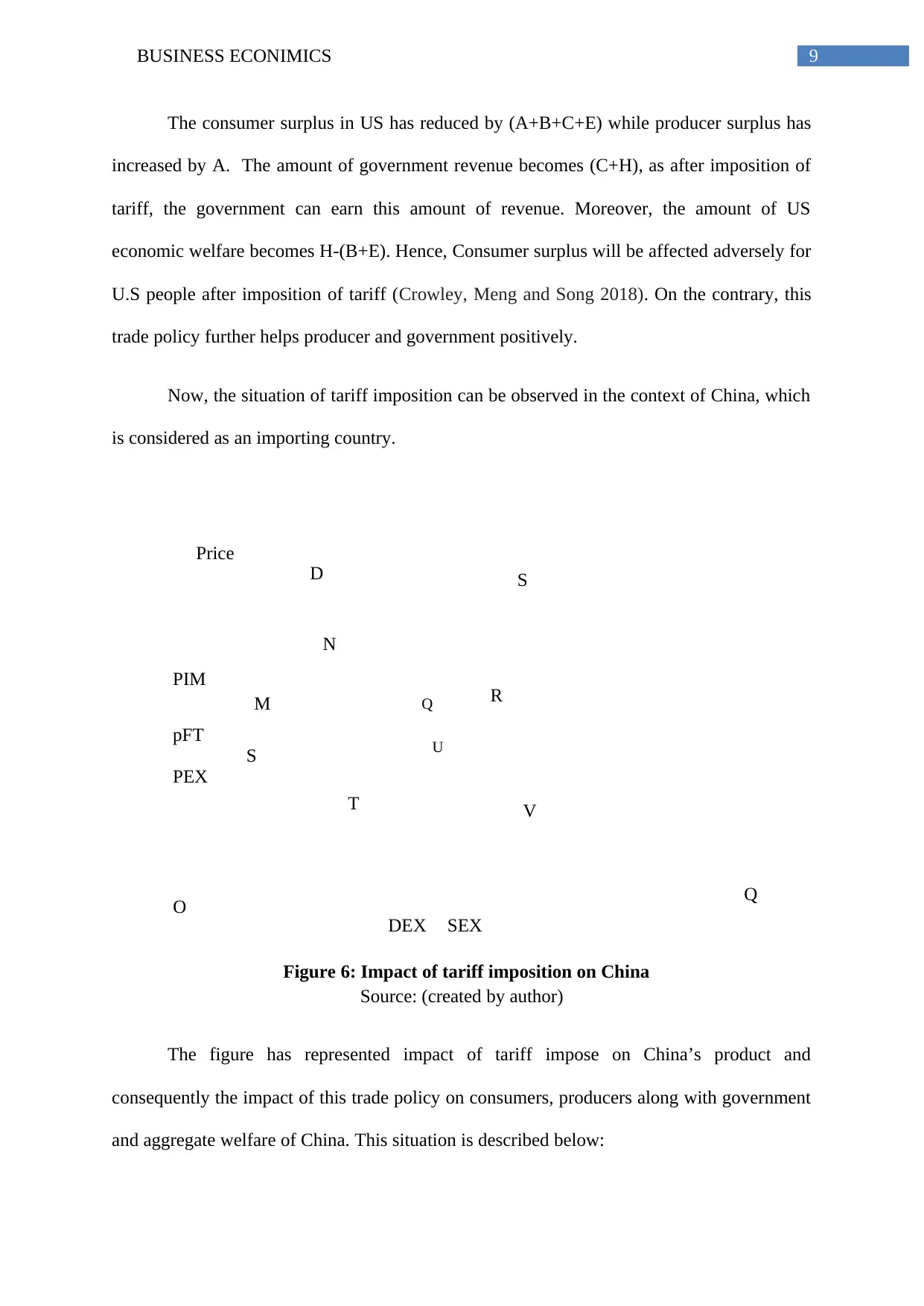
Now, the situation of tariff imposition can be observed in the context of China, which
is considered as an importing country.
Source: (created by author)
The figure has represented impact of tariff impose on China’s product and
consequently the impact of this trade policy on consumers, producers along with government
and aggregate welfare of China. This situation is described below:
Figure 6: Impact of tariff imposition on China
Q
Price
O
SD
PEX
pFT
PIM
DEX SEX
M
N
Q R
S
T
U
V
The consumer surplus in US has reduced by (A+B+C+E) while producer surplus has
increased by A. The amount of government revenue becomes (C+H), as after imposition of
tariff, the government can earn this amount of revenue. Moreover, the amount of US
economic welfare becomes H-(B+E). Hence, Consumer surplus will be affected adversely for
U.S people after imposition of tariff (Crowley, Meng and Song 2018). On the contrary, this
trade policy further helps producer and government positively.
Now, the situation of tariff imposition can be observed in the context of China, which
is considered as an importing country.
Source: (created by author)
The figure has represented impact of tariff impose on China’s product and
consequently the impact of this trade policy on consumers, producers along with government
and aggregate welfare of China. This situation is described below:
Figure 6: Impact of tariff imposition on China
Paraphrase This Document
Need a fresh take? Get an instant paraphrase of this document with our AI Paraphraser
10BUSINESS ECONIMICS
Consumer surplus in this country is going to increase by S while producer surplus of
this similar country reduces by (S+T+U+V). In this context, it needs to mention that
imposition of tariff by US, cannot influence government revenue of China. Moreover, the
country experiences a loss in national welfare by T+U+V unit. These impacts on consumer,
producer, and government along with national welfare of China will be same as Australia
(Crivelli and Gröschl 2016). This is because Australia also exports some products to US.
However, the impact will be less compare to that of China, as US has exempted this country
from tariff (Chow and Schoenbaum 2017). Considering the global economy, it can be
observed that the entire efficiency level of all countries have reduced significantly.
1.2
Trade deficit of a country implies that its imports exceed the amount of exports. In
this situation, domestic currency goes outside the home county to other foreign countries.
Under free trade, a country becomes specialised on some particular products and produces
these at comparatively lower prices (Wearden and Keneally 2018). In this situation,
international trade creates advantages for both exporting and importing countries to enjoy
lower opportunity costs. However, trade deficit can adversely affect the country from various
aspects and further hampers economic condition of the country. Firstly, due to huge amount
of cash outflow, economic growth of this country is going to reduce significsntly and this in
turn decreases total employment of the concerned country. In addition to this, currency value
in this context will reduce in terms of US dollar. Continuous trade deficit can adversely affect
interest rate of the country as well (Freund 2017). These are the main reasons for which US
is pressurising China to reduce the trade policy for keeping its economic condition stable.
Moreover, economic downfall of China can indirectly affect US economy in a negative way,
as China and the US have strong trade relationship. Moreover, increasing economy of China
has already occupied international market. In this situation, slow economic growth of China
Consumer surplus in this country is going to increase by S while producer surplus of
this similar country reduces by (S+T+U+V). In this context, it needs to mention that
imposition of tariff by US, cannot influence government revenue of China. Moreover, the
country experiences a loss in national welfare by T+U+V unit. These impacts on consumer,
producer, and government along with national welfare of China will be same as Australia
(Crivelli and Gröschl 2016). This is because Australia also exports some products to US.
However, the impact will be less compare to that of China, as US has exempted this country
from tariff (Chow and Schoenbaum 2017). Considering the global economy, it can be
observed that the entire efficiency level of all countries have reduced significantly.
1.2
Trade deficit of a country implies that its imports exceed the amount of exports. In
this situation, domestic currency goes outside the home county to other foreign countries.
Under free trade, a country becomes specialised on some particular products and produces
these at comparatively lower prices (Wearden and Keneally 2018). In this situation,
international trade creates advantages for both exporting and importing countries to enjoy
lower opportunity costs. However, trade deficit can adversely affect the country from various
aspects and further hampers economic condition of the country. Firstly, due to huge amount
of cash outflow, economic growth of this country is going to reduce significsntly and this in
turn decreases total employment of the concerned country. In addition to this, currency value
in this context will reduce in terms of US dollar. Continuous trade deficit can adversely affect
interest rate of the country as well (Freund 2017). These are the main reasons for which US
is pressurising China to reduce the trade policy for keeping its economic condition stable.
Moreover, economic downfall of China can indirectly affect US economy in a negative way,
as China and the US have strong trade relationship. Moreover, increasing economy of China
has already occupied international market. In this situation, slow economic growth of China
11BUSINESS ECONIMICS
can bring world recession in global market. As of 2017, the amount of trade deficit of the US
with Chin was $375 billion. This happened because US exported only $130 billion to China
while imported $506 billion.
1.3
Trade dispute implies trade war between two countries due to imposition of tariff. In
this given context, trade war between China and US can be observed. These two countries
have captured significant share in global economy through their dominating and enhancing
market. Each county has strong international trade relationship with others in terms of
imports and exports (Bartz 2018). However, trade war can further affect global trade, due to
economic decline of these two countries. This war can also affect Australiana market, as the
country has strong trade relationship with China (Leamer and Stern 2017). Trade war can
adversely affect economic growth of China and consequently exports and imports of
Australia with China can be decline. This situation will be true for other countries as well.
Hence this scenario clearly state that global trade is going to experience “dark day”.
In this situation, US have taken some initiatives to prevent trade war with China, as
this could destabilise the global economy. For this, US have postponed the idea of tariff
imposition of imported goods of China. The US has possessed various commitments from
officials of China and consequently this could reduce trade deficit between these two
countries. Hence, some effective measurements are required to consider for cutting this trade
deficit. China cannot reduce its product imports from US because of increasing consumption
along with economic development of higher quality. However, the US cannot reduce this
trade deficit by imposing tariffs on Chinese economy and for this, the US needs support from
other partners for convincing China to produce goods, such as steel, at a slower rate.
can bring world recession in global market. As of 2017, the amount of trade deficit of the US
with Chin was $375 billion. This happened because US exported only $130 billion to China
while imported $506 billion.
1.3
Trade dispute implies trade war between two countries due to imposition of tariff. In
this given context, trade war between China and US can be observed. These two countries
have captured significant share in global economy through their dominating and enhancing
market. Each county has strong international trade relationship with others in terms of
imports and exports (Bartz 2018). However, trade war can further affect global trade, due to
economic decline of these two countries. This war can also affect Australiana market, as the
country has strong trade relationship with China (Leamer and Stern 2017). Trade war can
adversely affect economic growth of China and consequently exports and imports of
Australia with China can be decline. This situation will be true for other countries as well.
Hence this scenario clearly state that global trade is going to experience “dark day”.
In this situation, US have taken some initiatives to prevent trade war with China, as
this could destabilise the global economy. For this, US have postponed the idea of tariff
imposition of imported goods of China. The US has possessed various commitments from
officials of China and consequently this could reduce trade deficit between these two
countries. Hence, some effective measurements are required to consider for cutting this trade
deficit. China cannot reduce its product imports from US because of increasing consumption
along with economic development of higher quality. However, the US cannot reduce this
trade deficit by imposing tariffs on Chinese economy and for this, the US needs support from
other partners for convincing China to produce goods, such as steel, at a slower rate.
⊘ This is a preview!⊘
Do you want full access?
Subscribe today to unlock all pages.
Trusted by 1+ million students worldwide

1 out of 14


Related Documents


Your All-in-One AI-Powered Toolkit for Academic Success.
+13062052269
info@desklib.com
Available 24*7 on WhatsApp / Email
![[object Object]](/_next/static/media/star-bottom.7253800d.svg)
Unlock your academic potential
Copyright © 2020–2026 A2Z Services. All Rights Reserved. Developed and managed by ZUCOL.