Oceania Unveiled: Geography, Population, and Ecosystems Summary

Verified

Added on  2023/06/10

|3
|648
|487
Summary
AI Summary
This document provides a summary of Oceania, defining it as a collective name for islands scattered throughout the Pacific Ocean, encompassing regions like Australia, Melanesia, Micronesia, and Polynesia. It highlights Oceania's vast geographical expanse, covering over a hundred million square kilometers, and its relatively small population of approximately 35 million, concentrated mainly in Australia and New Zealand. The summary also addresses the diverse ecosystems within Oceania, emphasizing their importance as primary sources of food, water, and income for the inhabitants. It notes the increasing pressures from population growth, industrial development, and infrastructure, which contribute to biodiversity loss. Furthermore, the summary touches upon the cultural distinctiveness of Oceania's people compared to Asia and pre-Columbian America, as well as the varying perspectives on Australia's continental status. The document references sources that provide further insights into Oceania's geography, development discourses, and its role in the Anthropocene.
Document Page
Reading notes
tabler-icon-diamond-filled.svg

Paraphrase This Document

Need a fresh take? Get an instant paraphrase of this document with our AI Paraphraser
Document Page
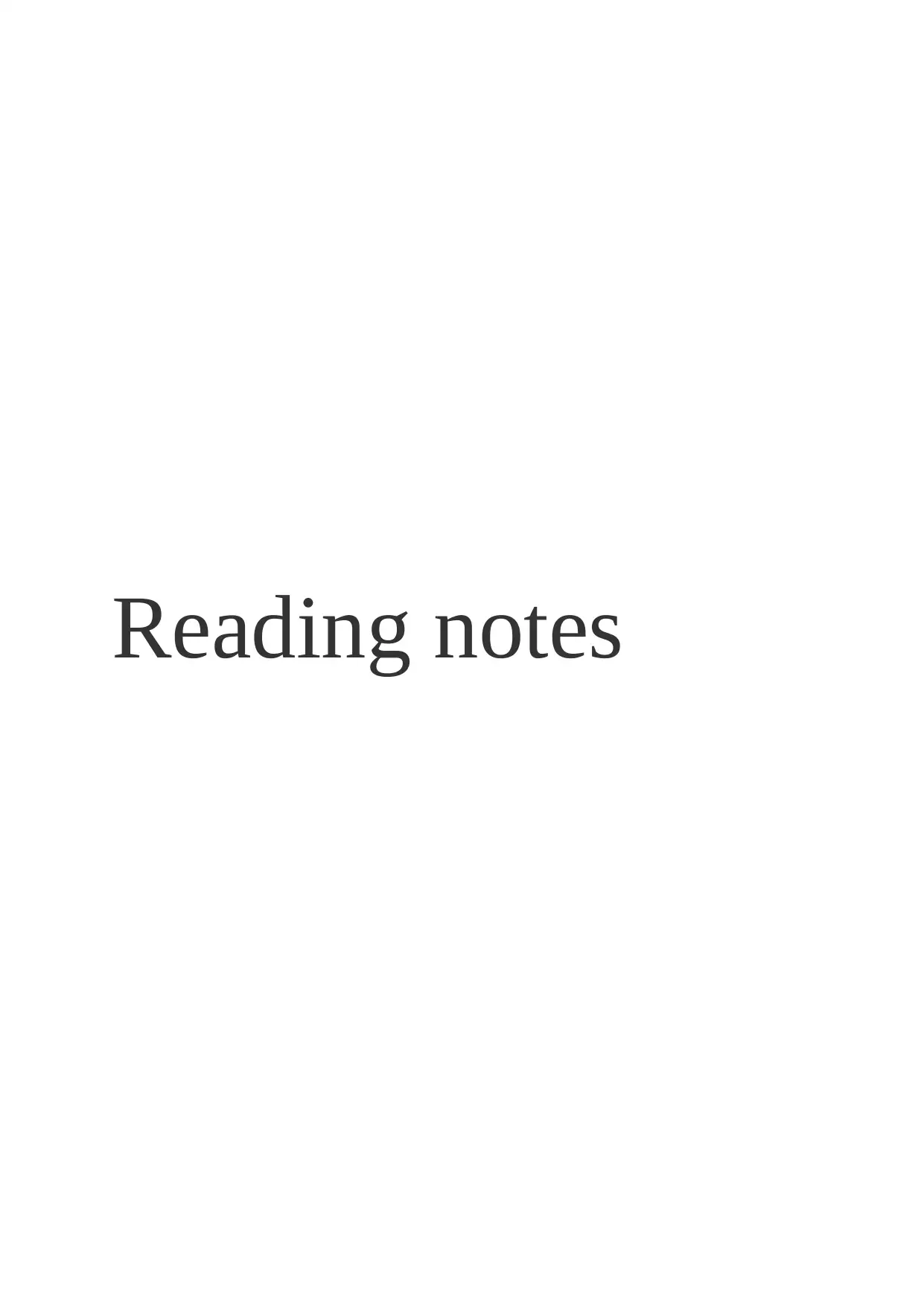
SUMMARY
The Oceania is defined as a collective name which is for the island scattered throughout the
most of the Pacific Ocean. It is the wider term which impress is the entire in secular region
which is between the Asia in the America. It is a type of island which is historically closely
related to the Asian mainland such as Indonesia, Taiwan and the Philippines. It is defined that
Oceania is most restricted meaning which includes more than 10,000 islands. It has a huge
land area of a crop sweetly approximately 317700 miles.( Lee, C.L., 2018) The ocean is
divided into the various regions which is into four parts that is Australia, Melanesia,
Micronesia and Polynesia. It is been defined as the geography one of the largest regional
programmes which is covering over hundred million square kilometres of the Pacific Ocean.
It is identified that the region stretches almost 12,000 km from east to west and 6000 km from
north to south. It is also observed that and identified that from the data that the total human
population which is approximately 35 million, which just over 25 million in Australia and 5
million in New Zealand. It is a big size of the country which is approximately 9 million
people inhabit the various Pacific Island countries and territories. It is also analysed that the
ocean also contains a diverse range of the ecosystems. (McLaughlin, J.M., 2018). The nature of
the island is very official and primary source of food water in income for the people living
over there. It is area which have increasing pressure from the growing population, industries,
infrastructure development and also there are increasing the risk of biodiversity loss in
various other countries. It is analysed that the Australia’s only piece of the land large which is
not enough to be considered as a continent De ocean is a continent where the culture of the
people who lived in these islands was very often distinct from that of Asia and pre-Columbus
America. In certain nations, for example, Brazil or Spain, Oceania is viewed as a mainland in
the feeling of "one of the areas of the planet", and the idea of Australia as a landmass doesn't
exist. Australia is an establishing individual from the Pacific Islands Forum, and on occasion
has been deciphered as the biggest Pacific Island. For instance, the Foreign Minister for the
Marshall Islands expressed in 2014 that he saw Australia as "a major island, however a
Pacific Island. Some geographers bunch the Australian mainland plate with different islands
in the Pacific into one semi landmass called Oceania. National Geographic believes the
district to be a legitimate landmass, and notes that the term Oceania "lays out the Pacific
Ocean as the principal trait of the continent. Others have marked it as the "fluid continent.
The Pacific Ocean itself has been named as a "mainland of islands", and contains roughly
25,000, which is more than the wide range of various significant seas combined. (Sklair, L.,
2020)
Document Page
References
Lee, C.L., 2018. Oceania. In The Routledge REITs Research Handbook (pp. 257-278). Routledge.
McLaughlin, J.M., 2018. Shifting boundaries and education development discourses: Implications for
comparative and international education in Oceania. Annual review of comparative and international
education 2017.
Sklair, L., 2020. Oceania: Big islands, small islands, and the Anthropocene. In The Anthropocene in
Global Media (pp. 202-214). Routledge.
chevron_up_icon
1 out of 3
circle_padding
hide_on_mobile
zoom_out_icon
[object Object]