University Office Hazard: Slippery Floor Risk Management Analysis
VerifiedAdded on 2023/04/21
|14
|4049
|449
Report
AI Summary
This report provides a comprehensive analysis of the hazards associated with slippery floors in office environments. It begins by outlining the common issues of slips, trips, and falls, detailing their causes, such as contaminants, floor surfaces, cleaning practices, obstacles, and employee behaviors, along with the role of footwear. The report then delves into effective strategies for managing these risks, emphasizing the importance of a risk management plan that includes identifying, assessing, controlling, and monitoring safety risks. The report includes a detailed risk management tool, and addresses how to identify and assess risks, and provides examples of risk control strategies, including eliminating, substituting, isolating, applying engineering controls, administrative controls, and personal protection measures. The report concludes by emphasizing the importance of monitoring and reviewing controls, employee training, and the availability of first aid to minimize workplace accidents and ensure a safer environment.
Running head: OFFICE HAZARD ON SLIPPERY FLOOR
Recognition of hazard in work place risk management of hazard slippery
floor
Name of the Student
Name of the University
Recognition of hazard in work place risk management of hazard slippery
floor
Name of the Student
Name of the University

Paraphrase This Document
Need a fresh take? Get an instant paraphrase of this document with our AI Paraphraser
2
OFFICE HAZARD ON SLIPPERY FLOOR
Table of Contents
Introduction......................................................................................................................................3
Slips, trips and falls..........................................................................................................................3
Causes of slips, falls and trips..........................................................................................................4
Managing slips, trips and fall risks..................................................................................................6
Risk Management Tool....................................................................................................................8
References......................................................................................................................................12
OFFICE HAZARD ON SLIPPERY FLOOR
Table of Contents
Introduction......................................................................................................................................3
Slips, trips and falls..........................................................................................................................3
Causes of slips, falls and trips..........................................................................................................4
Managing slips, trips and fall risks..................................................................................................6
Risk Management Tool....................................................................................................................8
References......................................................................................................................................12
3
OFFICE HAZARD ON SLIPPERY FLOOR
Introduction
Slips and fall have been the most common issue that causes injury at work. There have
been many cases of injury due to wet floor and slips. On an average, there have been 40% of all
the major reported injuries at workplace have been due to fall and slips over wet floor. This have
been creating major issues in the workplace over various companies worldwide. This report has
been focused on analyzing major issues faced due to wet floor at workplace. There have been
various strategies provided that might help in conducting risk assessment process in this context.
There have been various laws discussed in the report that have been utilizing proper health and
safety of employees at workplace.
Slips, trips and falls
Slips, trips and falls have been a common issue that have been frequently happening in
the many companies. These things can occur during entering into the office, kitchen, rooms,
loading heavy loads and various other places (Song et al. 2016). Therefore, this have been
creating issues rejected to health and safety of employees at work. Most of the major slips and
fall might cause serious health injury including breaking of bines, sprains, strains, back injury,
burns over hot surfaces and even death due to fall on sharp objects. Therefore, it has been
essential for every organizations to keep a look over these context. Many organization have been
helping in maintaining a keen approach towards wet floor concerns and falls. One of the major
cause of these slips and fall has been wet floor (Hopkin 2018). The cleaning and washing of floor
occurs wet floor. Whenever an employee walks over the wet floor, slips and fall might occur. It
depends on the way of fall over which impact of injury might happen. Therefore, cleaning and
washing of floors might be taken care. It need to checked whether any liquid material is not
OFFICE HAZARD ON SLIPPERY FLOOR
Introduction
Slips and fall have been the most common issue that causes injury at work. There have
been many cases of injury due to wet floor and slips. On an average, there have been 40% of all
the major reported injuries at workplace have been due to fall and slips over wet floor. This have
been creating major issues in the workplace over various companies worldwide. This report has
been focused on analyzing major issues faced due to wet floor at workplace. There have been
various strategies provided that might help in conducting risk assessment process in this context.
There have been various laws discussed in the report that have been utilizing proper health and
safety of employees at workplace.
Slips, trips and falls
Slips, trips and falls have been a common issue that have been frequently happening in
the many companies. These things can occur during entering into the office, kitchen, rooms,
loading heavy loads and various other places (Song et al. 2016). Therefore, this have been
creating issues rejected to health and safety of employees at work. Most of the major slips and
fall might cause serious health injury including breaking of bines, sprains, strains, back injury,
burns over hot surfaces and even death due to fall on sharp objects. Therefore, it has been
essential for every organizations to keep a look over these context. Many organization have been
helping in maintaining a keen approach towards wet floor concerns and falls. One of the major
cause of these slips and fall has been wet floor (Hopkin 2018). The cleaning and washing of floor
occurs wet floor. Whenever an employee walks over the wet floor, slips and fall might occur. It
depends on the way of fall over which impact of injury might happen. Therefore, cleaning and
washing of floors might be taken care. It need to checked whether any liquid material is not
⊘ This is a preview!⊘
Do you want full access?
Subscribe today to unlock all pages.

Trusted by 1+ million students worldwide
4
OFFICE HAZARD ON SLIPPERY FLOOR
flowing over the floor after cleaning and washing. There have been several cases reported of
slippery fall at workplace.
Causes of slips, falls and trips
There have been several factors responsible for falls, slips and trips. Slips occurs when
there has been a loss in grip between shoe and floor. This thing commonly occur when there has
been presence of contaminant between shoe and floor. Trips occur when an individual’s foot hits
a low obstacles and loses body balance and fall down. These low obstacles are generally not seen
and ignored by individual at workplace (Bodoque et al. 2016).
Contaminants: Contaminants have been considered as matter that ends up on a floor. It
can be wet including water, oil, lubricants or grease and dry matter including metal shavings,
dust, plastic bags or off-cuts. These materials have been major cause of slips, trips and fall at
workplace. Therefore, prevention from floor contamination have been one of the best strategies
to prevent or minimize falls, Slips and trips at workplace (Lavender et al., 2018).
Floor surfaces: Floor surfaces have been creating chances for slips, falls and trips by
being wet. The floor surfaces need to be slightly rough to increase friction between shoe and
floor. The floor have been main cause of slips and falls at workplace (Yang et al., 2017). A wet
floor causes slips and falls at workplace. Therefore, the rough surfaces of the floor need to be
constructed that increases slip resistance ability.
Cleaning: Cleaning have been affecting all workplace and organization. Cleaning and
washing of floors have been a necessary work for daily purposes. It helps in making workplace
neat and tidy. Therefore, cleaning purposes need to be done on daily basis. However, it has been
seen that poor cleaning has been the main cause of slips and falls at workplace. There have been
OFFICE HAZARD ON SLIPPERY FLOOR
flowing over the floor after cleaning and washing. There have been several cases reported of
slippery fall at workplace.
Causes of slips, falls and trips
There have been several factors responsible for falls, slips and trips. Slips occurs when
there has been a loss in grip between shoe and floor. This thing commonly occur when there has
been presence of contaminant between shoe and floor. Trips occur when an individual’s foot hits
a low obstacles and loses body balance and fall down. These low obstacles are generally not seen
and ignored by individual at workplace (Bodoque et al. 2016).
Contaminants: Contaminants have been considered as matter that ends up on a floor. It
can be wet including water, oil, lubricants or grease and dry matter including metal shavings,
dust, plastic bags or off-cuts. These materials have been major cause of slips, trips and fall at
workplace. Therefore, prevention from floor contamination have been one of the best strategies
to prevent or minimize falls, Slips and trips at workplace (Lavender et al., 2018).
Floor surfaces: Floor surfaces have been creating chances for slips, falls and trips by
being wet. The floor surfaces need to be slightly rough to increase friction between shoe and
floor. The floor have been main cause of slips and falls at workplace (Yang et al., 2017). A wet
floor causes slips and falls at workplace. Therefore, the rough surfaces of the floor need to be
constructed that increases slip resistance ability.
Cleaning: Cleaning have been affecting all workplace and organization. Cleaning and
washing of floors have been a necessary work for daily purposes. It helps in making workplace
neat and tidy. Therefore, cleaning purposes need to be done on daily basis. However, it has been
seen that poor cleaning has been the main cause of slips and falls at workplace. There have been
Paraphrase This Document
Need a fresh take? Get an instant paraphrase of this document with our AI Paraphraser
5
OFFICE HAZARD ON SLIPPERY FLOOR
many traces of contaminants over the floor. This causes slips and fall of employees at workplace.
Therefore, it needs to ensure that cleaning of floor has been done every day properly and
contaminants are efficiently removed from the floor (Kim, Ahn and Yang, 2016). Residual of
oily substances have been completely removed from the floor and ensuring that the floor is
completely dry and slippery less.
Obstacles and trip hazards: Trips have been occurring due to uneven of floor and
walkways will low obstacles. There have been many blow obstacles on the floor including
cables, uneven edges of floor, covers, loose mats and carpet tiles. These can be prevented by
proper housekeeping services at workplace, ensuring smooth floor surfaces and adequate storage
facilities. There have been various uneven holes present over the floor that needed to be filled up.
This steps might help in mining the trips and falls in the workplace (Van Eerd et al. 2018).
People and activity: Work activities have been an important part in the workplace.
Employees are busy in completing their work and are in rush at workplace. Therefore, they
usually ignore low obstacles present over the floor. They are in hurry in carrying large objects
and pushing high trolleys and talking to phone during work. Therefore, workers need to
maintain their balance during rush hours at workplace for minimizing slips and falls. Individuals
need to consider their physical attributes including balance, agility and vision.
Footwear: Footwear has been playing an important role in reducing slips and falls.
Slippery footwear usually causes falls and slips as there has been no friction between shoe and
floor. Therefore, employees need to use a quality footwear with proper friction on the ground.
Footwear design and quality need to be suitable with the workplace (Jeong and Park 2017).
There have been need of comfortable footwear with an adequate slip resistance feature.
OFFICE HAZARD ON SLIPPERY FLOOR
many traces of contaminants over the floor. This causes slips and fall of employees at workplace.
Therefore, it needs to ensure that cleaning of floor has been done every day properly and
contaminants are efficiently removed from the floor (Kim, Ahn and Yang, 2016). Residual of
oily substances have been completely removed from the floor and ensuring that the floor is
completely dry and slippery less.
Obstacles and trip hazards: Trips have been occurring due to uneven of floor and
walkways will low obstacles. There have been many blow obstacles on the floor including
cables, uneven edges of floor, covers, loose mats and carpet tiles. These can be prevented by
proper housekeeping services at workplace, ensuring smooth floor surfaces and adequate storage
facilities. There have been various uneven holes present over the floor that needed to be filled up.
This steps might help in mining the trips and falls in the workplace (Van Eerd et al. 2018).
People and activity: Work activities have been an important part in the workplace.
Employees are busy in completing their work and are in rush at workplace. Therefore, they
usually ignore low obstacles present over the floor. They are in hurry in carrying large objects
and pushing high trolleys and talking to phone during work. Therefore, workers need to
maintain their balance during rush hours at workplace for minimizing slips and falls. Individuals
need to consider their physical attributes including balance, agility and vision.
Footwear: Footwear has been playing an important role in reducing slips and falls.
Slippery footwear usually causes falls and slips as there has been no friction between shoe and
floor. Therefore, employees need to use a quality footwear with proper friction on the ground.
Footwear design and quality need to be suitable with the workplace (Jeong and Park 2017).
There have been need of comfortable footwear with an adequate slip resistance feature.
6
OFFICE HAZARD ON SLIPPERY FLOOR
Managing slips, trips and fall risks
The easiest way to manage slips, trips and fall risks at workplace is to develop a risk
management plan that helps in identifying, assessing, controlling and monitoring safety risks. A
risk assessment plan helps in minimizing the risks of falls and slips.
Identification of risks
The step of the risk management process is identifying the probable risks in the
workplace where slips and fall might occur. This can be done by collection information and
feedbacks from workers and employees at workplace (Brauer 2016). Identification of risks help
in creating an idea of minimizing these risks in the workplace. Therefore, the first step of the
risk management process has been an important step.
Assessing risk
The next step is to assess the risks at workplace due to slip and fall. Generally, it has been
combination of factors that have been creating risks factors in the workplace. Various risk
assessment queries have been created for assessing these factors. A risk register need to be
created for recording the risks in a table and assessing them properly (Lim et al. 2015).
Fixing the problem
After the assessment of risk, fixing strategies are required for minimizing these risks.
There have been six categories of risk control strategies for eliminating or reducing these risks at
workplace.
Hierarchy of controls Examples
Eliminating the risk Removing slip risks at design stage including
OFFICE HAZARD ON SLIPPERY FLOOR
Managing slips, trips and fall risks
The easiest way to manage slips, trips and fall risks at workplace is to develop a risk
management plan that helps in identifying, assessing, controlling and monitoring safety risks. A
risk assessment plan helps in minimizing the risks of falls and slips.
Identification of risks
The step of the risk management process is identifying the probable risks in the
workplace where slips and fall might occur. This can be done by collection information and
feedbacks from workers and employees at workplace (Brauer 2016). Identification of risks help
in creating an idea of minimizing these risks in the workplace. Therefore, the first step of the
risk management process has been an important step.
Assessing risk
The next step is to assess the risks at workplace due to slip and fall. Generally, it has been
combination of factors that have been creating risks factors in the workplace. Various risk
assessment queries have been created for assessing these factors. A risk register need to be
created for recording the risks in a table and assessing them properly (Lim et al. 2015).
Fixing the problem
After the assessment of risk, fixing strategies are required for minimizing these risks.
There have been six categories of risk control strategies for eliminating or reducing these risks at
workplace.
Hierarchy of controls Examples
Eliminating the risk Removing slip risks at design stage including
⊘ This is a preview!⊘
Do you want full access?
Subscribe today to unlock all pages.
Trusted by 1+ million students worldwide
7
OFFICE HAZARD ON SLIPPERY FLOOR
removing changes in floor levels,
implementing more power outlets overt the
floor and ceiling for avoiding trailing cords.
Substitution Resurfacing the floor. It need to checked
whether any liquid material is not flowing
over the floor after cleaning and washing.
Isolation Limiting access for high risk areas.
Reducing risk by redesigning Applying floor treatment for increasing slip
resistance, improving lightening, stopping
leaking from various equipment, providing
proper drainage for preventing pool of
contaminants, clearly marking edges of steps
and any modification in floor height.
Administrative controls Implementing proper housekeeping practices
including clear access ways, prompting spills
management, usage of barricades for wet and
slippery areas.
Personal protection Wearing proper footwear.
Table 1: Risk control strategies
(Source: Created by author)
Monitoring and reviewing controls
OFFICE HAZARD ON SLIPPERY FLOOR
removing changes in floor levels,
implementing more power outlets overt the
floor and ceiling for avoiding trailing cords.
Substitution Resurfacing the floor. It need to checked
whether any liquid material is not flowing
over the floor after cleaning and washing.
Isolation Limiting access for high risk areas.
Reducing risk by redesigning Applying floor treatment for increasing slip
resistance, improving lightening, stopping
leaking from various equipment, providing
proper drainage for preventing pool of
contaminants, clearly marking edges of steps
and any modification in floor height.
Administrative controls Implementing proper housekeeping practices
including clear access ways, prompting spills
management, usage of barricades for wet and
slippery areas.
Personal protection Wearing proper footwear.
Table 1: Risk control strategies
(Source: Created by author)
Monitoring and reviewing controls
Paraphrase This Document
Need a fresh take? Get an instant paraphrase of this document with our AI Paraphraser
8
OFFICE HAZARD ON SLIPPERY FLOOR
It becomes important to check the control efficiency on risks. This can be done by
communicating with employees and workers in the workplace. Several methods including online
surveys or face to face interview can be arranged for getting feedbacks related to efficiency of
risk control strategies.
The design of the workplace need to be proper and if required needed to be redesign
accordingly. During fitting out new extensions of floor, edges of the floor need to be smooth for
preventing any trips or falls of individuals. Maintaining the condition of ramps, floors, and stairs
need to be done properly (Yang et al. 2017). It depends on the way of fall over which impact of
injury might happen. Therefore, cleaning and washing of floors might be taken care. There have
been several cases reported of slippery fall at workplace. This help in creating a smart approach
in reducing risks of fall and slips at workplace. Training of employee has been an important
point for preventing risk of slips and falls on the floor. All employees and staffs must have
proper understanding about slips and trips in the workplace (Chang et al., 2016). The awareness
of employees and other staffs in the workplace has been the best way to minimize slips and falls
at workplace. The availability of first aid at workplace is necessary in an emergency case. A
proper database and record need to be done for all dangerous areas where slips and falls might
occur. Preventive measures and sign need to be implemented at proper place where sips and trips
may occur.
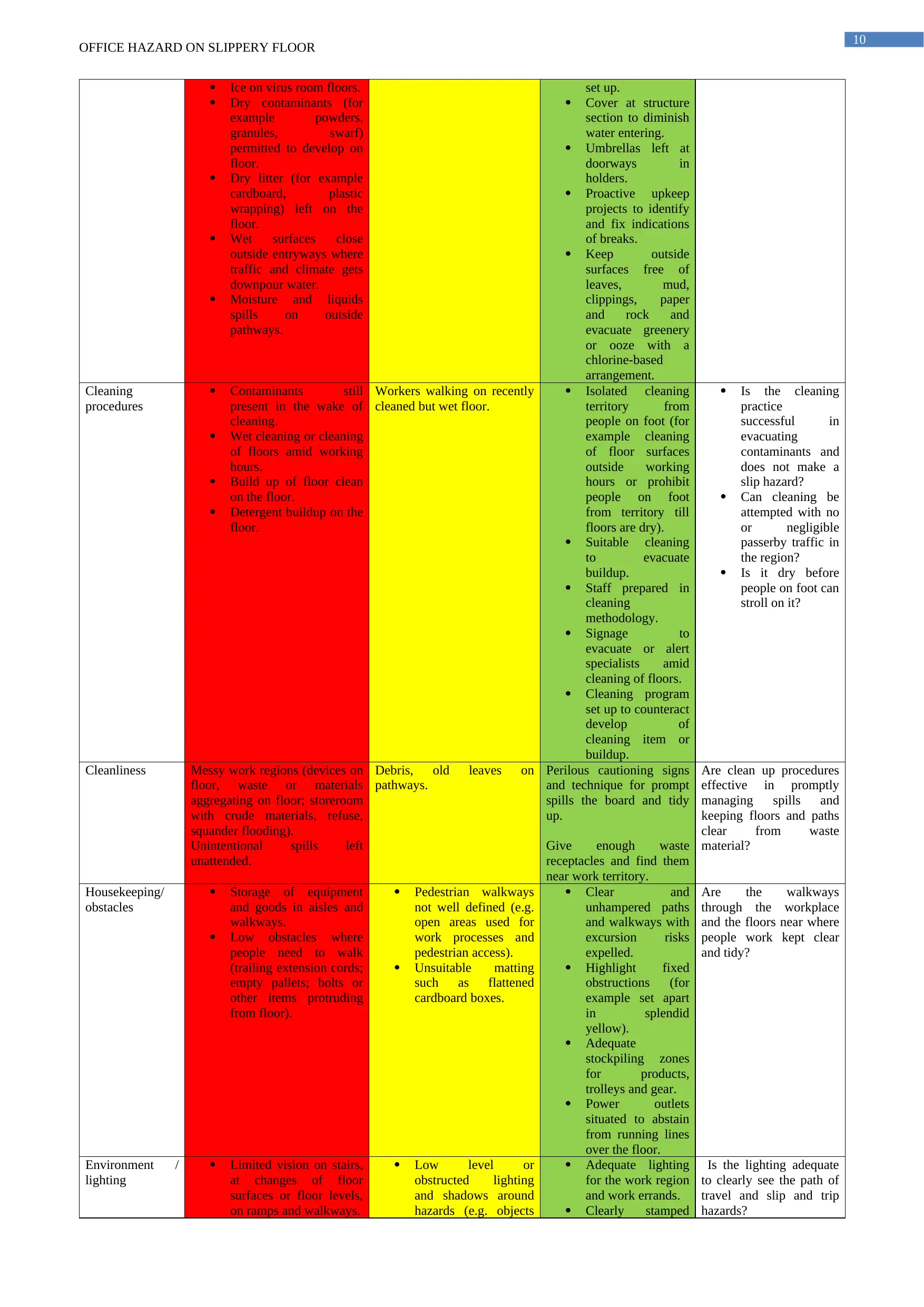
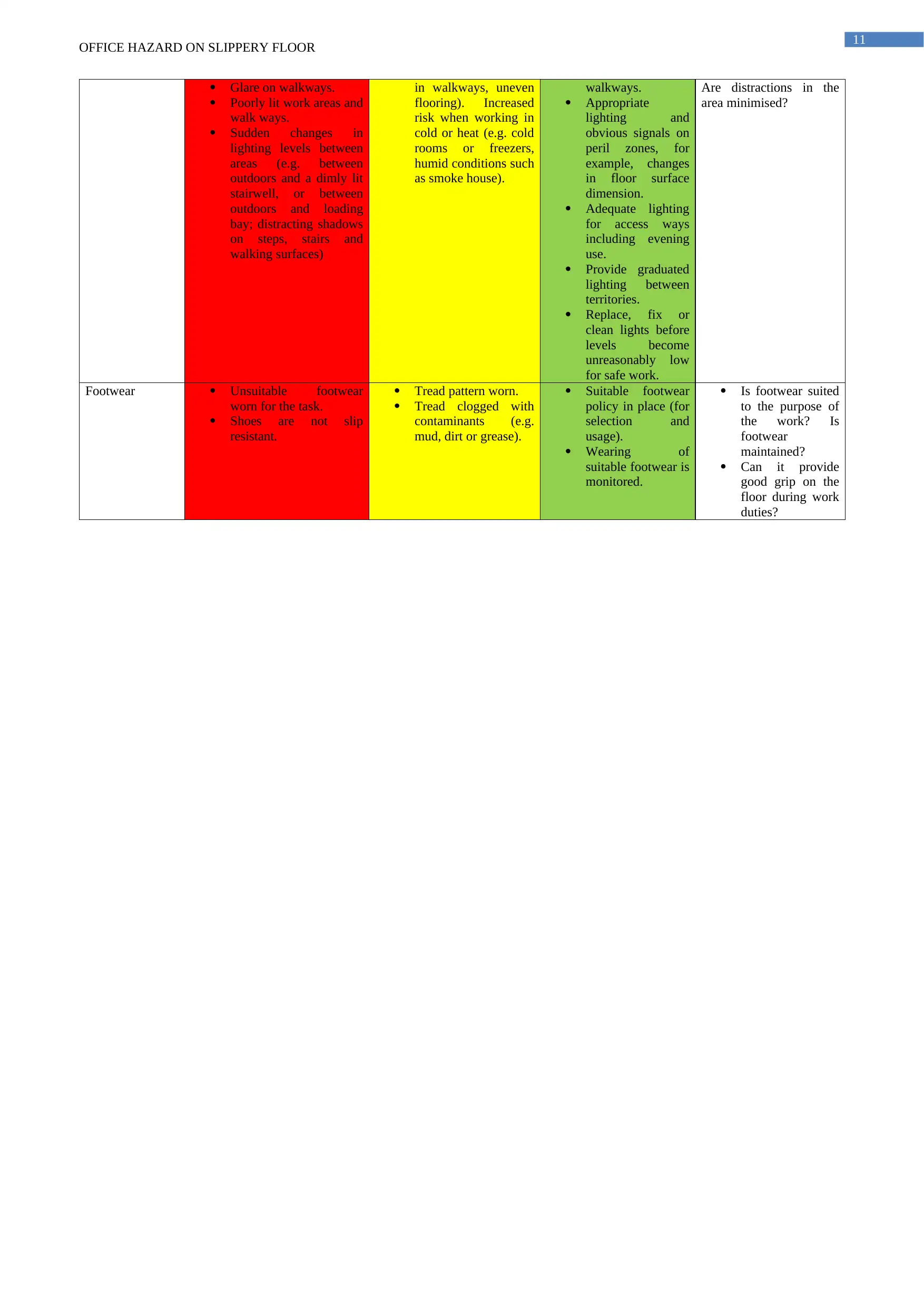
Risk Management Tool
OFFICE HAZARD ON SLIPPERY FLOOR
It becomes important to check the control efficiency on risks. This can be done by
communicating with employees and workers in the workplace. Several methods including online
surveys or face to face interview can be arranged for getting feedbacks related to efficiency of
risk control strategies.
The design of the workplace need to be proper and if required needed to be redesign
accordingly. During fitting out new extensions of floor, edges of the floor need to be smooth for
preventing any trips or falls of individuals. Maintaining the condition of ramps, floors, and stairs
need to be done properly (Yang et al. 2017). It depends on the way of fall over which impact of
injury might happen. Therefore, cleaning and washing of floors might be taken care. There have
been several cases reported of slippery fall at workplace. This help in creating a smart approach
in reducing risks of fall and slips at workplace. Training of employee has been an important
point for preventing risk of slips and falls on the floor. All employees and staffs must have
proper understanding about slips and trips in the workplace (Chang et al., 2016). The awareness
of employees and other staffs in the workplace has been the best way to minimize slips and falls
at workplace. The availability of first aid at workplace is necessary in an emergency case. A
proper database and record need to be done for all dangerous areas where slips and falls might
occur. Preventive measures and sign need to be implemented at proper place where sips and trips
may occur.
Risk Management Tool
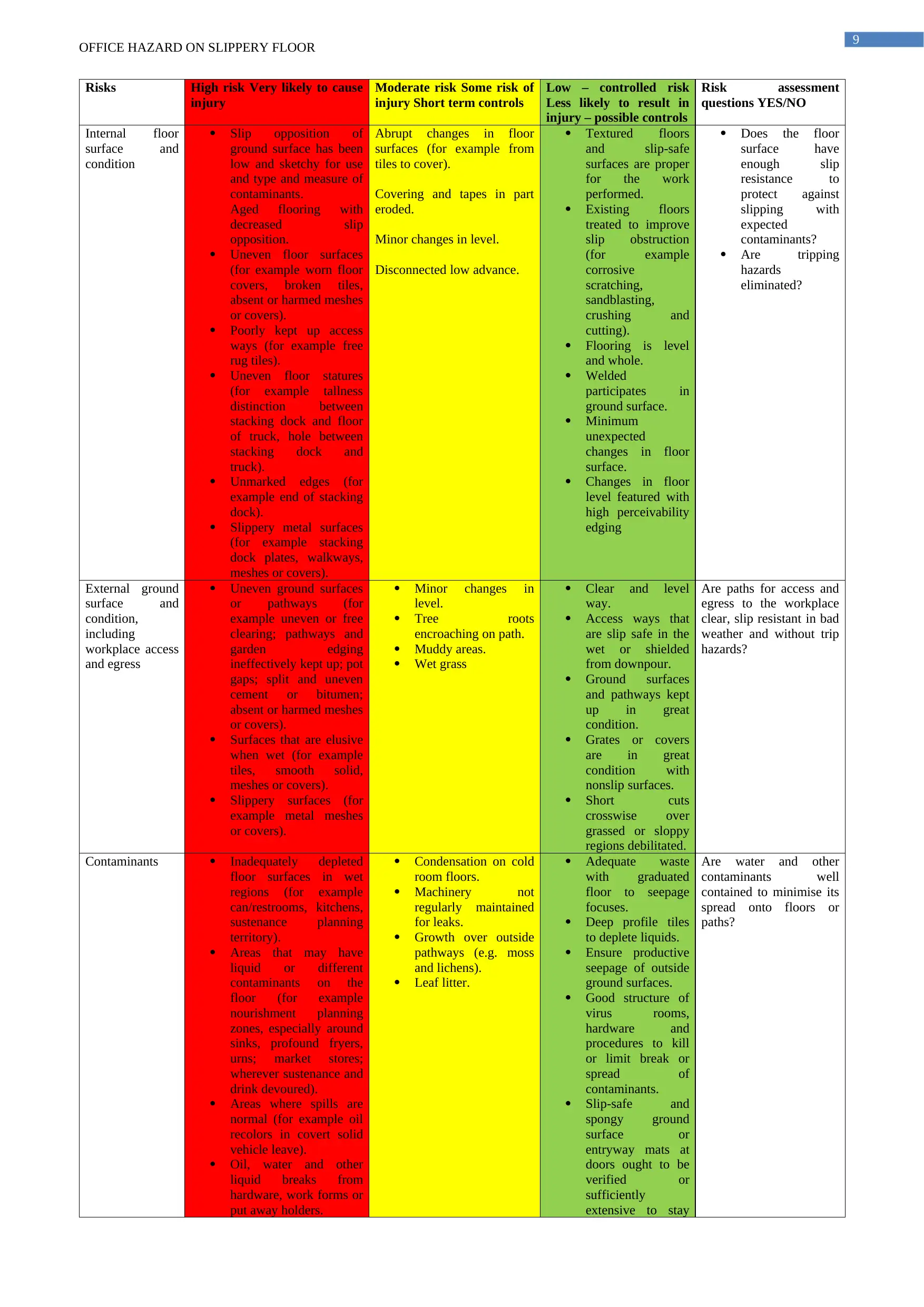
9
OFFICE HAZARD ON SLIPPERY FLOOR
Risks High risk Very likely to cause
injury
Moderate risk Some risk of
injury Short term controls
Low – controlled risk
Less likely to result in
injury – possible controls
Risk assessment
questions YES/NO
Internal floor
surface and
condition
Slip opposition of
ground surface has been
low and sketchy for use
and type and measure of
contaminants.
Aged flooring with
decreased slip
opposition.
Uneven floor surfaces
(for example worn floor
covers, broken tiles,
absent or harmed meshes
or covers).
Poorly kept up access
ways (for example free
rug tiles).
Uneven floor statures
(for example tallness
distinction between
stacking dock and floor
of truck, hole between
stacking dock and
truck).
Unmarked edges (for
example end of stacking
dock).
Slippery metal surfaces
(for example stacking
dock plates, walkways,
meshes or covers).
Abrupt changes in floor
surfaces (for example from
tiles to cover).
Covering and tapes in part
eroded.
Minor changes in level.
Disconnected low advance.
Textured floors
and slip-safe
surfaces are proper
for the work
performed.
Existing floors
treated to improve
slip obstruction
(for example
corrosive
scratching,
sandblasting,
crushing and
cutting).
Flooring is level
and whole.
Welded
participates in
ground surface.
Minimum
unexpected
changes in floor
surface.
Changes in floor
level featured with
high perceivability
edging
Does the floor
surface have
enough slip
resistance to
protect against
slipping with
expected
contaminants?
Are tripping
hazards
eliminated?
External ground
surface and
condition,
including
workplace access
and egress
Uneven ground surfaces
or pathways (for
example uneven or free
clearing; pathways and
garden edging
ineffectively kept up; pot
gaps; split and uneven
cement or bitumen;
absent or harmed meshes
or covers).
Surfaces that are elusive
when wet (for example
tiles, smooth solid,
meshes or covers).
Slippery surfaces (for
example metal meshes
or covers).
Minor changes in
level.
Tree roots
encroaching on path.
Muddy areas.
Wet grass
Clear and level
way.
Access ways that
are slip safe in the
wet or shielded
from downpour.
Ground surfaces
and pathways kept
up in great
condition.
Grates or covers
are in great
condition with
nonslip surfaces.
Short cuts
crosswise over
grassed or sloppy
regions debilitated.
Are paths for access and
egress to the workplace
clear, slip resistant in bad
weather and without trip
hazards?
Contaminants Inadequately depleted
floor surfaces in wet
regions (for example
can/restrooms, kitchens,
sustenance planning
territory).
Areas that may have
liquid or different
contaminants on the
floor (for example
nourishment planning
zones, especially around
sinks, profound fryers,
urns; market stores;
wherever sustenance and
drink devoured).
Areas where spills are
normal (for example oil
recolors in covert solid
vehicle leave).
Oil, water and other
liquid breaks from
hardware, work forms or
put away holders.
Condensation on cold
room floors.
Machinery not
regularly maintained
for leaks.
Growth over outside
pathways (e.g. moss
and lichens).
Leaf litter.
Adequate waste
with graduated
floor to seepage
focuses.
Deep profile tiles
to deplete liquids.
Ensure productive
seepage of outside
ground surfaces.
Good structure of
virus rooms,
hardware and
procedures to kill
or limit break or
spread of
contaminants.
Slip-safe and
spongy ground
surface or
entryway mats at
doors ought to be
verified or
sufficiently
extensive to stay
Are water and other
contaminants well
contained to minimise its
spread onto floors or
paths?
OFFICE HAZARD ON SLIPPERY FLOOR
Risks High risk Very likely to cause
injury
Moderate risk Some risk of
injury Short term controls
Low – controlled risk
Less likely to result in
injury – possible controls
Risk assessment
questions YES/NO
Internal floor
surface and
condition
Slip opposition of
ground surface has been
low and sketchy for use
and type and measure of
contaminants.
Aged flooring with
decreased slip
opposition.
Uneven floor surfaces
(for example worn floor
covers, broken tiles,
absent or harmed meshes
or covers).
Poorly kept up access
ways (for example free
rug tiles).
Uneven floor statures
(for example tallness
distinction between
stacking dock and floor
of truck, hole between
stacking dock and
truck).
Unmarked edges (for
example end of stacking
dock).
Slippery metal surfaces
(for example stacking
dock plates, walkways,
meshes or covers).
Abrupt changes in floor
surfaces (for example from
tiles to cover).
Covering and tapes in part
eroded.
Minor changes in level.
Disconnected low advance.
Textured floors
and slip-safe
surfaces are proper
for the work
performed.
Existing floors
treated to improve
slip obstruction
(for example
corrosive
scratching,
sandblasting,
crushing and
cutting).
Flooring is level
and whole.
Welded
participates in
ground surface.
Minimum
unexpected
changes in floor
surface.
Changes in floor
level featured with
high perceivability
edging
Does the floor
surface have
enough slip
resistance to
protect against
slipping with
expected
contaminants?
Are tripping
hazards
eliminated?
External ground
surface and
condition,
including
workplace access
and egress
Uneven ground surfaces
or pathways (for
example uneven or free
clearing; pathways and
garden edging
ineffectively kept up; pot
gaps; split and uneven
cement or bitumen;
absent or harmed meshes
or covers).
Surfaces that are elusive
when wet (for example
tiles, smooth solid,
meshes or covers).
Slippery surfaces (for
example metal meshes
or covers).
Minor changes in
level.
Tree roots
encroaching on path.
Muddy areas.
Wet grass
Clear and level
way.
Access ways that
are slip safe in the
wet or shielded
from downpour.
Ground surfaces
and pathways kept
up in great
condition.
Grates or covers
are in great
condition with
nonslip surfaces.
Short cuts
crosswise over
grassed or sloppy
regions debilitated.
Are paths for access and
egress to the workplace
clear, slip resistant in bad
weather and without trip
hazards?
Contaminants Inadequately depleted
floor surfaces in wet
regions (for example
can/restrooms, kitchens,
sustenance planning
territory).
Areas that may have
liquid or different
contaminants on the
floor (for example
nourishment planning
zones, especially around
sinks, profound fryers,
urns; market stores;
wherever sustenance and
drink devoured).
Areas where spills are
normal (for example oil
recolors in covert solid
vehicle leave).
Oil, water and other
liquid breaks from
hardware, work forms or
put away holders.
Condensation on cold
room floors.
Machinery not
regularly maintained
for leaks.
Growth over outside
pathways (e.g. moss
and lichens).
Leaf litter.
Adequate waste
with graduated
floor to seepage
focuses.
Deep profile tiles
to deplete liquids.
Ensure productive
seepage of outside
ground surfaces.
Good structure of
virus rooms,
hardware and
procedures to kill
or limit break or
spread of
contaminants.
Slip-safe and
spongy ground
surface or
entryway mats at
doors ought to be
verified or
sufficiently
extensive to stay
Are water and other
contaminants well
contained to minimise its
spread onto floors or
paths?
⊘ This is a preview!⊘
Do you want full access?
Subscribe today to unlock all pages.
Trusted by 1+ million students worldwide
10
OFFICE HAZARD ON SLIPPERY FLOOR
Ice on virus room floors.
Dry contaminants (for
example powders,
granules, swarf)
permitted to develop on
floor.
Dry litter (for example
cardboard, plastic
wrapping) left on the
floor.
Wet surfaces close
outside entryways where
traffic and climate gets
downpour water.
Moisture and liquids
spills on outside
pathways.
set up.
Cover at structure
section to diminish
water entering.
Umbrellas left at
doorways in
holders.
Proactive upkeep
projects to identify
and fix indications
of breaks.
Keep outside
surfaces free of
leaves, mud,
clippings, paper
and rock and
evacuate greenery
or ooze with a
chlorine-based
arrangement.
Cleaning
procedures
Contaminants still
present in the wake of
cleaning.
Wet cleaning or cleaning
of floors amid working
hours.
Build up of floor clean
on the floor.
Detergent buildup on the
floor.
Workers walking on recently
cleaned but wet floor.
Isolated cleaning
territory from
people on foot (for
example cleaning
of floor surfaces
outside working
hours or prohibit
people on foot
from territory till
floors are dry).
Suitable cleaning
to evacuate
buildup.
Staff prepared in
cleaning
methodology.
Signage to
evacuate or alert
specialists amid
cleaning of floors.
Cleaning program
set up to counteract
develop of
cleaning item or
buildup.
Is the cleaning
practice
successful in
evacuating
contaminants and
does not make a
slip hazard?
Can cleaning be
attempted with no
or negligible
passerby traffic in
the region?
Is it dry before
people on foot can
stroll on it?
Cleanliness Messy work regions (devices on
floor, waste or materials
aggregating on floor; storeroom
with crude materials, refuse,
squander flooding).
Unintentional spills left
unattended.
Debris, old leaves on
pathways.
Perilous cautioning signs
and technique for prompt
spills the board and tidy
up.
Give enough waste
receptacles and find them
near work territory.
Are clean up procedures
effective in promptly
managing spills and
keeping floors and paths
clear from waste
material?
Housekeeping/
obstacles
Storage of equipment
and goods in aisles and
walkways.
Low obstacles where
people need to walk
(trailing extension cords;
empty pallets; bolts or
other items protruding
from floor).
Pedestrian walkways
not well defined (e.g.
open areas used for
work processes and
pedestrian access).
Unsuitable matting
such as flattened
cardboard boxes.
Clear and
unhampered paths
and walkways with
excursion risks
expelled.
Highlight fixed
obstructions (for
example set apart
in splendid
yellow).
Adequate
stockpiling zones
for products,
trolleys and gear.
Power outlets
situated to abstain
from running lines
over the floor.
Are the walkways
through the workplace
and the floors near where
people work kept clear
and tidy?
Environment /
lighting
Limited vision on stairs,
at changes of floor
surfaces or floor levels,
on ramps and walkways.
Low level or
obstructed lighting
and shadows around
hazards (e.g. objects
Adequate lighting
for the work region
and work errands.
Clearly stamped
Is the lighting adequate
to clearly see the path of
travel and slip and trip
hazards?
OFFICE HAZARD ON SLIPPERY FLOOR
Ice on virus room floors.
Dry contaminants (for
example powders,
granules, swarf)
permitted to develop on
floor.
Dry litter (for example
cardboard, plastic
wrapping) left on the
floor.
Wet surfaces close
outside entryways where
traffic and climate gets
downpour water.
Moisture and liquids
spills on outside
pathways.
set up.
Cover at structure
section to diminish
water entering.
Umbrellas left at
doorways in
holders.
Proactive upkeep
projects to identify
and fix indications
of breaks.
Keep outside
surfaces free of
leaves, mud,
clippings, paper
and rock and
evacuate greenery
or ooze with a
chlorine-based
arrangement.
Cleaning
procedures
Contaminants still
present in the wake of
cleaning.
Wet cleaning or cleaning
of floors amid working
hours.
Build up of floor clean
on the floor.
Detergent buildup on the
floor.
Workers walking on recently
cleaned but wet floor.
Isolated cleaning
territory from
people on foot (for
example cleaning
of floor surfaces
outside working
hours or prohibit
people on foot
from territory till
floors are dry).
Suitable cleaning
to evacuate
buildup.
Staff prepared in
cleaning
methodology.
Signage to
evacuate or alert
specialists amid
cleaning of floors.
Cleaning program
set up to counteract
develop of
cleaning item or
buildup.
Is the cleaning
practice
successful in
evacuating
contaminants and
does not make a
slip hazard?
Can cleaning be
attempted with no
or negligible
passerby traffic in
the region?
Is it dry before
people on foot can
stroll on it?
Cleanliness Messy work regions (devices on
floor, waste or materials
aggregating on floor; storeroom
with crude materials, refuse,
squander flooding).
Unintentional spills left
unattended.
Debris, old leaves on
pathways.
Perilous cautioning signs
and technique for prompt
spills the board and tidy
up.
Give enough waste
receptacles and find them
near work territory.
Are clean up procedures
effective in promptly
managing spills and
keeping floors and paths
clear from waste
material?
Housekeeping/
obstacles
Storage of equipment
and goods in aisles and
walkways.
Low obstacles where
people need to walk
(trailing extension cords;
empty pallets; bolts or
other items protruding
from floor).
Pedestrian walkways
not well defined (e.g.
open areas used for
work processes and
pedestrian access).
Unsuitable matting
such as flattened
cardboard boxes.
Clear and
unhampered paths
and walkways with
excursion risks
expelled.
Highlight fixed
obstructions (for
example set apart
in splendid
yellow).
Adequate
stockpiling zones
for products,
trolleys and gear.
Power outlets
situated to abstain
from running lines
over the floor.
Are the walkways
through the workplace
and the floors near where
people work kept clear
and tidy?
Environment /
lighting
Limited vision on stairs,
at changes of floor
surfaces or floor levels,
on ramps and walkways.
Low level or
obstructed lighting
and shadows around
hazards (e.g. objects
Adequate lighting
for the work region
and work errands.
Clearly stamped
Is the lighting adequate
to clearly see the path of
travel and slip and trip
hazards?
Paraphrase This Document
Need a fresh take? Get an instant paraphrase of this document with our AI Paraphraser
11
OFFICE HAZARD ON SLIPPERY FLOOR
Glare on walkways.
Poorly lit work areas and
walk ways.
Sudden changes in
lighting levels between
areas (e.g. between
outdoors and a dimly lit
stairwell, or between
outdoors and loading
bay; distracting shadows
on steps, stairs and
walking surfaces)
in walkways, uneven
flooring). Increased
risk when working in
cold or heat (e.g. cold
rooms or freezers,
humid conditions such
as smoke house).
walkways.
Appropriate
lighting and
obvious signals on
peril zones, for
example, changes
in floor surface
dimension.
Adequate lighting
for access ways
including evening
use.
Provide graduated
lighting between
territories.
Replace, fix or
clean lights before
levels become
unreasonably low
for safe work.
Are distractions in the
area minimised?
Footwear Unsuitable footwear
worn for the task.
Shoes are not slip
resistant.
Tread pattern worn.
Tread clogged with
contaminants (e.g.
mud, dirt or grease).
Suitable footwear
policy in place (for
selection and
usage).
Wearing of
suitable footwear is
monitored.
Is footwear suited
to the purpose of
the work? Is
footwear
maintained?
Can it provide
good grip on the
floor during work
duties?
OFFICE HAZARD ON SLIPPERY FLOOR
Glare on walkways.
Poorly lit work areas and
walk ways.
Sudden changes in
lighting levels between
areas (e.g. between
outdoors and a dimly lit
stairwell, or between
outdoors and loading
bay; distracting shadows
on steps, stairs and
walking surfaces)
in walkways, uneven
flooring). Increased
risk when working in
cold or heat (e.g. cold
rooms or freezers,
humid conditions such
as smoke house).
walkways.
Appropriate
lighting and
obvious signals on
peril zones, for
example, changes
in floor surface
dimension.
Adequate lighting
for access ways
including evening
use.
Provide graduated
lighting between
territories.
Replace, fix or
clean lights before
levels become
unreasonably low
for safe work.
Are distractions in the
area minimised?
Footwear Unsuitable footwear
worn for the task.
Shoes are not slip
resistant.
Tread pattern worn.
Tread clogged with
contaminants (e.g.
mud, dirt or grease).
Suitable footwear
policy in place (for
selection and
usage).
Wearing of
suitable footwear is
monitored.
Is footwear suited
to the purpose of
the work? Is
footwear
maintained?
Can it provide
good grip on the
floor during work
duties?
12
OFFICE HAZARD ON SLIPPERY FLOOR
References
Bodoque, J., Guardiola-Albert, C., Aroca-Jiménez, E., Eguibar, M. and Martínez-Chenoll, M.,
2016. Flood damage analysis: first floor elevation uncertainty resulting from LiDAR-derived
digital surface models. Remote Sensing, 8(7), p.604.
Brauer, R.L., 2016. Safety and health for engineers. John Wiley & Sons.
Chang, W.R., Leclercq, S., Lockhart, T.E. and Haslam, R., 2016. State of science: occupational
slips, trips and falls on the same level. Ergonomics, 59(7), pp.861-883.
Fleming, M. and Fischer, B., 2017. Hazard recognition: Bridging knowledge & competency for
process & occupational safety. Professional Safety, 62(6), p.52.
Gupta, R. and Bisht, D., 2019. Awareness and incidents of occupational health hazards among
female workers of small scale food processing units of Punjab state. Journal of Applied and
Natural Science, 11(1), pp.42-47.
Hopkin, P., 2018. Fundamentals of risk management: understanding, evaluating and
implementing effective risk management. Kogan Page Publishers.
Jeong, B.Y. and Park, M.H., 2017. Risk assessment of parking lot management based on
occupational injuries data. Human Factors and Ergonomics in Manufacturing & Service
Industries, 27(3), pp.147-155.
Kim, H., Ahn, C.R. and Yang, K., 2016. Identifying safety hazards using collective bodily
responses of workers. Journal of Construction Engineering and Management, 143(2),
p.04016090.
OFFICE HAZARD ON SLIPPERY FLOOR
References
Bodoque, J., Guardiola-Albert, C., Aroca-Jiménez, E., Eguibar, M. and Martínez-Chenoll, M.,
2016. Flood damage analysis: first floor elevation uncertainty resulting from LiDAR-derived
digital surface models. Remote Sensing, 8(7), p.604.
Brauer, R.L., 2016. Safety and health for engineers. John Wiley & Sons.
Chang, W.R., Leclercq, S., Lockhart, T.E. and Haslam, R., 2016. State of science: occupational
slips, trips and falls on the same level. Ergonomics, 59(7), pp.861-883.
Fleming, M. and Fischer, B., 2017. Hazard recognition: Bridging knowledge & competency for
process & occupational safety. Professional Safety, 62(6), p.52.
Gupta, R. and Bisht, D., 2019. Awareness and incidents of occupational health hazards among
female workers of small scale food processing units of Punjab state. Journal of Applied and
Natural Science, 11(1), pp.42-47.
Hopkin, P., 2018. Fundamentals of risk management: understanding, evaluating and
implementing effective risk management. Kogan Page Publishers.
Jeong, B.Y. and Park, M.H., 2017. Risk assessment of parking lot management based on
occupational injuries data. Human Factors and Ergonomics in Manufacturing & Service
Industries, 27(3), pp.147-155.
Kim, H., Ahn, C.R. and Yang, K., 2016. Identifying safety hazards using collective bodily
responses of workers. Journal of Construction Engineering and Management, 143(2),
p.04016090.
⊘ This is a preview!⊘
Do you want full access?
Subscribe today to unlock all pages.
Trusted by 1+ million students worldwide

1 out of 14


Related Documents


Your All-in-One AI-Powered Toolkit for Academic Success.
+13062052269
info@desklib.com
Available 24*7 on WhatsApp / Email
![[object Object]](/_next/static/media/star-bottom.7253800d.svg)
Unlock your academic potential
Copyright © 2020–2026 A2Z Services. All Rights Reserved. Developed and managed by ZUCOL.