Commitment and Leadership in Developing Health & Safety Policies
VerifiedAdded on 2023/06/10
|28
|5371
|436
Report
AI Summary
This report investigates the role of senior management's commitment and leadership in developing effective health and safety policies within the oil and gas industry. It begins by highlighting the inherent risks and safety challenges present in the sector. The study employs primary data, gathering responses from employees, management, and supervisors to analyze the correlation between leadership commitment and the mitigation of health and safety issues. Factors affecting safety performance, such as human, behavioral, economic, psychological, and social elements, are explored. The research emphasizes the significance of management practices, including training, rewards, and, most importantly, management commitment, in fostering a strong safety culture. The findings suggest that strong leadership and a demonstrated commitment to safety from senior management are crucial for improving health and safety practices and reducing accidents and injuries in the oil and gas working environment. Desklib provides access to similar reports and solved assignments for students.
Running head: RESEARCH METHOD
Commitment and Leadership towards developed Health and Safety Policies in Oil and Gas
Industry from Senior Management
Name of the Student:
Name of the University:
Author’s Note:
Commitment and Leadership towards developed Health and Safety Policies in Oil and Gas
Industry from Senior Management
Name of the Student:
Name of the University:
Author’s Note:

Paraphrase This Document
Need a fresh take? Get an instant paraphrase of this document with our AI Paraphraser
1
RESEARCH METHOD
Abstract
This concerned topic has the intention of creating an understanding of how health and safety
issues can be developed with the help of the commitment and the leadership of the senior
management. The background of the study has highlighted the issues and the risks that are
related to the “oil and gas industry”. The aim and the objective of the study along with the
hypothesis have looked to discover the aspects that are essential for the construction of the paper.
The literature review has addressed the safety aspects and the measures that have been taken by
the management in order to improve these activities. Primary data has been used by the
researcher by taking the responses of the employees as well as the management and the
supervisors. The analysis that has been done with the help of the data explains that leadership
and commitment of the senior management is helpful in the mitigation of the “health and safety”
issues in the oil industry and the development of better “health and safety” practices within the
working environment.
RESEARCH METHOD
Abstract
This concerned topic has the intention of creating an understanding of how health and safety
issues can be developed with the help of the commitment and the leadership of the senior
management. The background of the study has highlighted the issues and the risks that are
related to the “oil and gas industry”. The aim and the objective of the study along with the
hypothesis have looked to discover the aspects that are essential for the construction of the paper.
The literature review has addressed the safety aspects and the measures that have been taken by
the management in order to improve these activities. Primary data has been used by the
researcher by taking the responses of the employees as well as the management and the
supervisors. The analysis that has been done with the help of the data explains that leadership
and commitment of the senior management is helpful in the mitigation of the “health and safety”
issues in the oil industry and the development of better “health and safety” practices within the
working environment.
2
RESEARCH METHOD
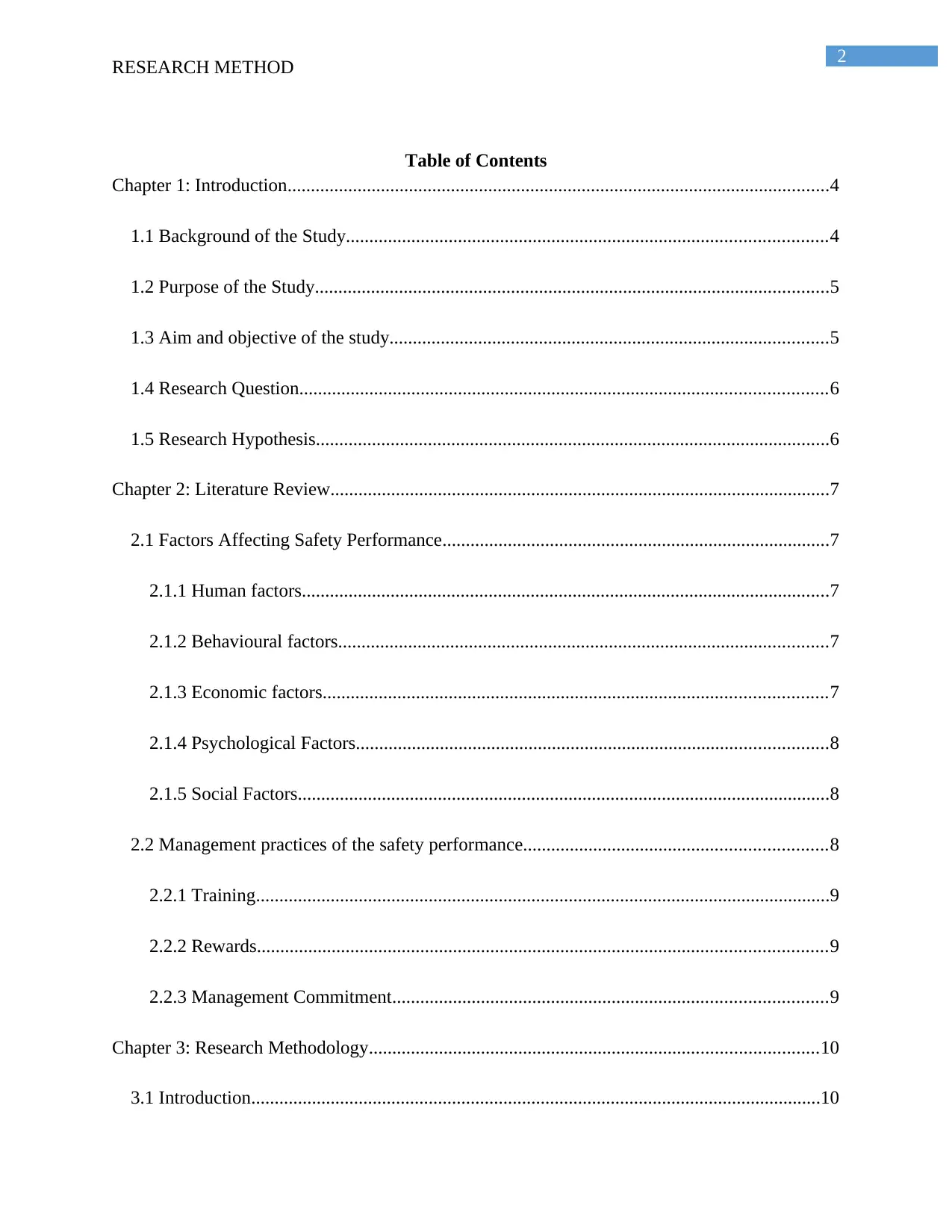
Table of Contents
Chapter 1: Introduction....................................................................................................................4
1.1 Background of the Study.......................................................................................................4
1.2 Purpose of the Study..............................................................................................................5
1.3 Aim and objective of the study..............................................................................................5
1.4 Research Question.................................................................................................................6
1.5 Research Hypothesis..............................................................................................................6
Chapter 2: Literature Review...........................................................................................................7
2.1 Factors Affecting Safety Performance...................................................................................7
2.1.1 Human factors.................................................................................................................7
2.1.2 Behavioural factors.........................................................................................................7
2.1.3 Economic factors............................................................................................................7
2.1.4 Psychological Factors.....................................................................................................8
2.1.5 Social Factors..................................................................................................................8
2.2 Management practices of the safety performance.................................................................8
2.2.1 Training...........................................................................................................................9
2.2.2 Rewards..........................................................................................................................9
2.2.3 Management Commitment.............................................................................................9
Chapter 3: Research Methodology................................................................................................10
3.1 Introduction..........................................................................................................................10
RESEARCH METHOD
Table of Contents
Chapter 1: Introduction....................................................................................................................4
1.1 Background of the Study.......................................................................................................4
1.2 Purpose of the Study..............................................................................................................5
1.3 Aim and objective of the study..............................................................................................5
1.4 Research Question.................................................................................................................6
1.5 Research Hypothesis..............................................................................................................6
Chapter 2: Literature Review...........................................................................................................7
2.1 Factors Affecting Safety Performance...................................................................................7
2.1.1 Human factors.................................................................................................................7
2.1.2 Behavioural factors.........................................................................................................7
2.1.3 Economic factors............................................................................................................7
2.1.4 Psychological Factors.....................................................................................................8
2.1.5 Social Factors..................................................................................................................8
2.2 Management practices of the safety performance.................................................................8
2.2.1 Training...........................................................................................................................9
2.2.2 Rewards..........................................................................................................................9
2.2.3 Management Commitment.............................................................................................9
Chapter 3: Research Methodology................................................................................................10
3.1 Introduction..........................................................................................................................10
⊘ This is a preview!⊘
Do you want full access?
Subscribe today to unlock all pages.

Trusted by 1+ million students worldwide
3
RESEARCH METHOD
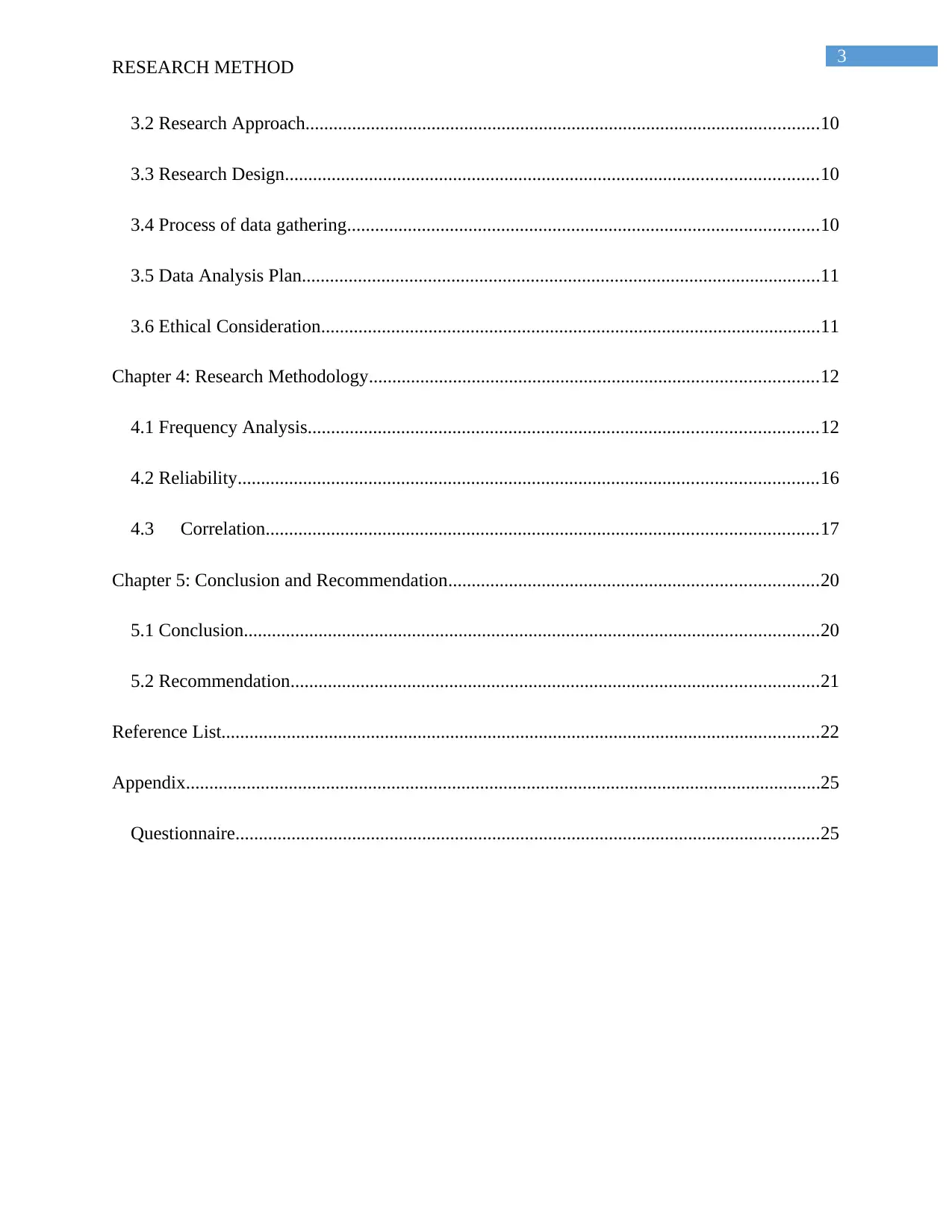
3.2 Research Approach..............................................................................................................10
3.3 Research Design..................................................................................................................10
3.4 Process of data gathering.....................................................................................................10
3.5 Data Analysis Plan...............................................................................................................11
3.6 Ethical Consideration...........................................................................................................11
Chapter 4: Research Methodology................................................................................................12
4.1 Frequency Analysis.............................................................................................................12
4.2 Reliability............................................................................................................................16
4.3 Correlation......................................................................................................................17
Chapter 5: Conclusion and Recommendation...............................................................................20
5.1 Conclusion...........................................................................................................................20
5.2 Recommendation.................................................................................................................21
Reference List................................................................................................................................22
Appendix........................................................................................................................................25
Questionnaire.............................................................................................................................25
RESEARCH METHOD
3.2 Research Approach..............................................................................................................10
3.3 Research Design..................................................................................................................10
3.4 Process of data gathering.....................................................................................................10
3.5 Data Analysis Plan...............................................................................................................11
3.6 Ethical Consideration...........................................................................................................11
Chapter 4: Research Methodology................................................................................................12
4.1 Frequency Analysis.............................................................................................................12
4.2 Reliability............................................................................................................................16
4.3 Correlation......................................................................................................................17
Chapter 5: Conclusion and Recommendation...............................................................................20
5.1 Conclusion...........................................................................................................................20
5.2 Recommendation.................................................................................................................21
Reference List................................................................................................................................22
Appendix........................................................................................................................................25
Questionnaire.............................................................................................................................25
Paraphrase This Document
Need a fresh take? Get an instant paraphrase of this document with our AI Paraphraser
4
RESEARCH METHOD
Chapter 1: Introduction
The global environment is sustainably making progress towards modernization and it is
seen that they have been facing various kinds of challenges. The fast development in the global
industries has led to the rise in the concerns on the health and the safety issues at the work
environment as it is seen that more and more injuries and accidents have been becoming the
news headline worldwide. The safety at the work environment is complex and difficult
phenomenon and the subject of the safety activities among all the industries has been hard and
very complex to attain (Silvestre and Gimenes 2017). It is in need of a lot of policies and
measures that needs to be incorporated. Furthermore, safety performance is very much sensitive
and complicated issue for the companies to handle as it is seen to be associated with the live and
safety of the employees who are working in a project.
Ahmad et al. (2016) explained that occupational risks and hazards have been increasing
mainly due to the absence of attention that is provided to the activities related to safety, safety
processes and the developments of the procedures in order to restrict the injuries and accidents.
On the other hand, the occupational accidents that take place have been either due to the
absence of knowledge, lack of supervision, training and the rules that are associated to the
incorporation of these procedures. Furthermore, human errors have led to the carelessness of the
employees, negligence and lack of controlling and monitoring (Klettner, Clarke and Boersma
2014). All these factors have an impact on the safety measures and performance and thereby
increased the rate of accidents.
RESEARCH METHOD
Chapter 1: Introduction
The global environment is sustainably making progress towards modernization and it is
seen that they have been facing various kinds of challenges. The fast development in the global
industries has led to the rise in the concerns on the health and the safety issues at the work
environment as it is seen that more and more injuries and accidents have been becoming the
news headline worldwide. The safety at the work environment is complex and difficult
phenomenon and the subject of the safety activities among all the industries has been hard and
very complex to attain (Silvestre and Gimenes 2017). It is in need of a lot of policies and
measures that needs to be incorporated. Furthermore, safety performance is very much sensitive
and complicated issue for the companies to handle as it is seen to be associated with the live and
safety of the employees who are working in a project.
Ahmad et al. (2016) explained that occupational risks and hazards have been increasing
mainly due to the absence of attention that is provided to the activities related to safety, safety
processes and the developments of the procedures in order to restrict the injuries and accidents.
On the other hand, the occupational accidents that take place have been either due to the
absence of knowledge, lack of supervision, training and the rules that are associated to the
incorporation of these procedures. Furthermore, human errors have led to the carelessness of the
employees, negligence and lack of controlling and monitoring (Klettner, Clarke and Boersma
2014). All these factors have an impact on the safety measures and performance and thereby
increased the rate of accidents.
5
RESEARCH METHOD
1.1 Background of the Study
The extent of safety and health issues has been a major concern in the current time period
as it is seen that the safety of the employees working in the companies have been significant
issues. The development of the plans and policies in accordance to the safety and health issues
are dependent on the level of leadership. The responsibility and the accountability of the leaders
and the managers have a key function to play with the help of which they create an
understanding in accordance to the activities the company performs (Zohar 2014). The activities
that are performed in the “oil and gas industry” are associated with a lot of risks and therefore it
is the responsibility of the management to undertake measures with the help of which safety and
health issues can be maintained. The extent of leadership plays a significant role and
commitment among the leaders is helpful in the understanding of the risks and hazards
associated with the industry with the help of which these issues can be mitigated (Hofmann,
Burke and Zohar 2017). This has been the factor that has led to the development of this topic and
thereby better understanding of impact of leadership and commitment in the development of the
risk and safety issues in the oil industry can be known.
1.2 Purpose of the Study
The main intention of the paper has been to assess and comprehend the responsibilities
and the role of the leaders and their extent of leadership and commitment of the senior
management in the oil industry in order to create a better health and safety policies (Shen et al.
2015). The paper would be even assess the extent of commitment the senior management holds
towards the development of the safety and health policies.
RESEARCH METHOD
1.1 Background of the Study
The extent of safety and health issues has been a major concern in the current time period
as it is seen that the safety of the employees working in the companies have been significant
issues. The development of the plans and policies in accordance to the safety and health issues
are dependent on the level of leadership. The responsibility and the accountability of the leaders
and the managers have a key function to play with the help of which they create an
understanding in accordance to the activities the company performs (Zohar 2014). The activities
that are performed in the “oil and gas industry” are associated with a lot of risks and therefore it
is the responsibility of the management to undertake measures with the help of which safety and
health issues can be maintained. The extent of leadership plays a significant role and
commitment among the leaders is helpful in the understanding of the risks and hazards
associated with the industry with the help of which these issues can be mitigated (Hofmann,
Burke and Zohar 2017). This has been the factor that has led to the development of this topic and
thereby better understanding of impact of leadership and commitment in the development of the
risk and safety issues in the oil industry can be known.
1.2 Purpose of the Study
The main intention of the paper has been to assess and comprehend the responsibilities
and the role of the leaders and their extent of leadership and commitment of the senior
management in the oil industry in order to create a better health and safety policies (Shen et al.
2015). The paper would be even assess the extent of commitment the senior management holds
towards the development of the safety and health policies.
⊘ This is a preview!⊘
Do you want full access?
Subscribe today to unlock all pages.
Trusted by 1+ million students worldwide
6
RESEARCH METHOD
1.3 Aim and objective of the study
The aim and the objective that has been constructed for this paper determines the aspects and
the elements that have an impact on the safety and the health issues in the “oil and gas industry”.
The objectives and aim of the paper is:
Assess the extent of commitment the senior management holds towards the development
of safety and health policies
Understand whether the senior management has been constructing the right tone for their
down line in order to follow the footsteps.
1.4 Research Question
The research question for this paper has been explained as follows:
Q1. What is the extent of commitment the senior management holds towards the development of
the safety and health issues?
Q2. How does the senior management construct the right tone for their down line in order to
follow that footstep?
1.5 Research Hypothesis
The hypothesis of the paper has been determined as follows:
H1: The commitment of the senior management is vital for the enhancement of the “safety and
health” issues in the oil industry
H2: The senior management is able to construct the right tone for down lining in order to follow
the footstep.
RESEARCH METHOD
1.3 Aim and objective of the study
The aim and the objective that has been constructed for this paper determines the aspects and
the elements that have an impact on the safety and the health issues in the “oil and gas industry”.
The objectives and aim of the paper is:
Assess the extent of commitment the senior management holds towards the development
of safety and health policies
Understand whether the senior management has been constructing the right tone for their
down line in order to follow the footsteps.
1.4 Research Question
The research question for this paper has been explained as follows:
Q1. What is the extent of commitment the senior management holds towards the development of
the safety and health issues?
Q2. How does the senior management construct the right tone for their down line in order to
follow that footstep?
1.5 Research Hypothesis
The hypothesis of the paper has been determined as follows:
H1: The commitment of the senior management is vital for the enhancement of the “safety and
health” issues in the oil industry
H2: The senior management is able to construct the right tone for down lining in order to follow
the footstep.
Paraphrase This Document
Need a fresh take? Get an instant paraphrase of this document with our AI Paraphraser
7
RESEARCH METHOD
Chapter 2: Literature Review
2.1 Factors Affecting Safety Performance
There are several issues that can have an effect on safety activities as the maintenance of
safety at the workplace is a complex process and the issue related to the safety performance in
the “oil and gas industry” has been observed to be even more complicated to understand. The
factors are therefore discussed as follows:
2.1.1 Human factors
Human factor plays a vital role as it is seen that involvement of humans towards the
safety attitude and their nature in order to understand how humans deal with these aspects. The
safety of the workplace can be enhanced when the employees give significance to the safety
measures and this is how they create an understanding of enhancing the safety scenario (Gholami
et al. 2015).
2.1.2 Behavioural factors
This is known to be the employee performance and motivation development with the help
of the constraints of behaviour. The behaviour base safety is known to be the behaviours, which
may lead to the mitigation of the risk behaviours and as an outcome mitigate the extent of
injuries and accidents. Kouabenan, Ngueutsa and Mbaye (2015) explained that the employees
who have riskier attitude are more prone to facing accidents in the workplace.
2.1.3 Economic factors
By leaving behind the human expense of facing an accident, the economic impact can be
dangerous. It is seen that a lot of working hours are lost due to the accidents that are taking place
RESEARCH METHOD
Chapter 2: Literature Review
2.1 Factors Affecting Safety Performance
There are several issues that can have an effect on safety activities as the maintenance of
safety at the workplace is a complex process and the issue related to the safety performance in
the “oil and gas industry” has been observed to be even more complicated to understand. The
factors are therefore discussed as follows:
2.1.1 Human factors
Human factor plays a vital role as it is seen that involvement of humans towards the
safety attitude and their nature in order to understand how humans deal with these aspects. The
safety of the workplace can be enhanced when the employees give significance to the safety
measures and this is how they create an understanding of enhancing the safety scenario (Gholami
et al. 2015).
2.1.2 Behavioural factors
This is known to be the employee performance and motivation development with the help
of the constraints of behaviour. The behaviour base safety is known to be the behaviours, which
may lead to the mitigation of the risk behaviours and as an outcome mitigate the extent of
injuries and accidents. Kouabenan, Ngueutsa and Mbaye (2015) explained that the employees
who have riskier attitude are more prone to facing accidents in the workplace.
2.1.3 Economic factors
By leaving behind the human expense of facing an accident, the economic impact can be
dangerous. It is seen that a lot of working hours are lost due to the accidents that are taking place
8
RESEARCH METHOD
in the work place (Zwetsloot, Leka and Kines 2017). This leads to the rise in the cost of
maintaining the employees and therefore the indirect cost increases for the company.
2.1.4 Psychological Factors
The psychology of the employees is a vital factor that contributes to the safety
performance. Wan Ahmad, de Brito and Tavasszy (2016) explained that psychology of the
employees is very much complicated and therefore it depends on the fact that the employees will
perform more safely with the supervisors who is regarded to be someone who respects their
employees and they undertake their activities in accordance to the company policies in
accordance to the safety activities.
2.1.5 Social Factors
The social and the individual factors are the element of risk which is dependent in the
motivation in order to face the risks and avoid the risk altogether and is known to be one of the
effective determinants of safety which is associated to behaviour (Jitwasinkul, Hadikusumo and
Memon 2016). The risks which deals with the unsafe and the safe practices is dependent on the
cognitive biases related with the safety of the employees who are going through risks, which
takes place in a rational manner but this evaluation of risk is not realistic, in an outcome that is
creating increased amount of risk and increased level of accidents and injuries lead to death.
2.2 Management practices of the safety performance
The management processes are focusing in order to prevent the occupational accidents at
the workplace, which is regarded to be a process to control the accidents taking place at the
workplace. Liang and Renneboog (2017) have explained that management practices are
significant factors for a company and it plays an efficient role in mitigating the injuries and the
accidents in the workplace. Kirat (2015) cited that management practices are able to create safety
RESEARCH METHOD
in the work place (Zwetsloot, Leka and Kines 2017). This leads to the rise in the cost of
maintaining the employees and therefore the indirect cost increases for the company.
2.1.4 Psychological Factors
The psychology of the employees is a vital factor that contributes to the safety
performance. Wan Ahmad, de Brito and Tavasszy (2016) explained that psychology of the
employees is very much complicated and therefore it depends on the fact that the employees will
perform more safely with the supervisors who is regarded to be someone who respects their
employees and they undertake their activities in accordance to the company policies in
accordance to the safety activities.
2.1.5 Social Factors
The social and the individual factors are the element of risk which is dependent in the
motivation in order to face the risks and avoid the risk altogether and is known to be one of the
effective determinants of safety which is associated to behaviour (Jitwasinkul, Hadikusumo and
Memon 2016). The risks which deals with the unsafe and the safe practices is dependent on the
cognitive biases related with the safety of the employees who are going through risks, which
takes place in a rational manner but this evaluation of risk is not realistic, in an outcome that is
creating increased amount of risk and increased level of accidents and injuries lead to death.
2.2 Management practices of the safety performance
The management processes are focusing in order to prevent the occupational accidents at
the workplace, which is regarded to be a process to control the accidents taking place at the
workplace. Liang and Renneboog (2017) have explained that management practices are
significant factors for a company and it plays an efficient role in mitigating the injuries and the
accidents in the workplace. Kirat (2015) cited that management practices are able to create safety
⊘ This is a preview!⊘
Do you want full access?
Subscribe today to unlock all pages.
Trusted by 1+ million students worldwide
9
RESEARCH METHOD
culture. The management practices that are constructed by the management consists of
commitment of the management, training and rewards. These aspects have been discussed as
follows:
2.2.1 Training
The training that is given to the employees is contributing factor as it is seen that proper
training to the employees would improve their knowledge with respect to the health and safety
issues (Hughes et al. 2015). This encourages the employees to take decisions in association to
the safety concerns and these decisions are undertaken by the entire company in order to improve
their level of performance and development of the health and safety plans.
2.2.2 Rewards
The rewards that are provided to the employees is helpful in creating motivation to the
employees. The development of motivation among the employee encourages them to undertake
training and awareness programmes with the help of which they are able to understand the health
and safety issues and thereby learn the policies with the help of which the accidents and injuries
within the working environment can be reduced (Finnerty et al. 2017).
2.2.3 Management Commitment
The commitment of the management is one of the key factors as the aspects and the
leadership that are undertaken by the management determines the efficiency level of the “safety
and health issues” in the oil industry. The commitment of the management towards the health
and safety issues is helpful in determining the costs that are related to injuries and thereby plan
and construct plans and policies with the help of which these issues can be developed (George et
al. 2016).
RESEARCH METHOD
culture. The management practices that are constructed by the management consists of
commitment of the management, training and rewards. These aspects have been discussed as
follows:
2.2.1 Training
The training that is given to the employees is contributing factor as it is seen that proper
training to the employees would improve their knowledge with respect to the health and safety
issues (Hughes et al. 2015). This encourages the employees to take decisions in association to
the safety concerns and these decisions are undertaken by the entire company in order to improve
their level of performance and development of the health and safety plans.
2.2.2 Rewards
The rewards that are provided to the employees is helpful in creating motivation to the
employees. The development of motivation among the employee encourages them to undertake
training and awareness programmes with the help of which they are able to understand the health
and safety issues and thereby learn the policies with the help of which the accidents and injuries
within the working environment can be reduced (Finnerty et al. 2017).
2.2.3 Management Commitment
The commitment of the management is one of the key factors as the aspects and the
leadership that are undertaken by the management determines the efficiency level of the “safety
and health issues” in the oil industry. The commitment of the management towards the health
and safety issues is helpful in determining the costs that are related to injuries and thereby plan
and construct plans and policies with the help of which these issues can be developed (George et
al. 2016).
Paraphrase This Document
Need a fresh take? Get an instant paraphrase of this document with our AI Paraphraser
10
RESEARCH METHOD
Chapter 3: Research Methodology
3.1 Introduction
This segment determines the kind of data that would be utilised in order to attain the
result that is desirable in accordance to this topic. It is due to this fact that the methodology
would be explain the approach, design and the data gathering process so that the effectiveness
and the reliability of the data can be ascertained and thereafter data analysis can be undertaken.
3.2 Research Approach
The researcher in this paper is in need of theories and frameworks that would be utilised
in order to collect the desired data (Pilbeam et al. 2016). The researcher in accordance to the
current topic has implied deductive approach simply due to the fact that models and theories that
have earlier been utilised would be used and no new theories and frameworks have been
constructed by the researcher for this paper.
3.3 Research Design
The design refers to the ideology that would be utilised with the help of which an idea
about the effect of leadership and commitment on the “safety and health” issues in the “oil and
gas industry” would be understood (Kaynak et al. 2016). In this manner descriptive reserach
design is selected so that all the aspects would be explained descriptively in order to gain an idea
on the topic.
3.4 Process of data gathering
In this paper, primary data would be used and therefore respondents would be selected
from a large pool of people. The researcher has selected the respondents from the employees as
RESEARCH METHOD
Chapter 3: Research Methodology
3.1 Introduction
This segment determines the kind of data that would be utilised in order to attain the
result that is desirable in accordance to this topic. It is due to this fact that the methodology
would be explain the approach, design and the data gathering process so that the effectiveness
and the reliability of the data can be ascertained and thereafter data analysis can be undertaken.
3.2 Research Approach
The researcher in this paper is in need of theories and frameworks that would be utilised
in order to collect the desired data (Pilbeam et al. 2016). The researcher in accordance to the
current topic has implied deductive approach simply due to the fact that models and theories that
have earlier been utilised would be used and no new theories and frameworks have been
constructed by the researcher for this paper.
3.3 Research Design
The design refers to the ideology that would be utilised with the help of which an idea
about the effect of leadership and commitment on the “safety and health” issues in the “oil and
gas industry” would be understood (Kaynak et al. 2016). In this manner descriptive reserach
design is selected so that all the aspects would be explained descriptively in order to gain an idea
on the topic.
3.4 Process of data gathering
In this paper, primary data would be used and therefore respondents would be selected
from a large pool of people. The researcher has selected the respondents from the employees as
11
RESEARCH METHOD
well as management personnel so that feedback from the employees as well as the management
in accordance to this topic can be understood (Mendes et al. 2014). Quantitative data would be
used for this paper and therefore closed ended questionnaire has been prepared and responses
would be collected with the help of the same. A total of 35 respondents have been selected and
their responses would be used for the purpose of analysis.
3.5 Data Analysis Plan
The analysis of the data would be done with the help of Microsoft Excel and the analysis
would be done in order to reach a result that would be used to construct the conclusion of the
paper and desired outcome is achievable.
3.6 Ethical Consideration
The researcher has abided with the ethics and therefore true and valid resources have
been used with the help of which the authenticity of the results are attainable and fair results can
be achieved (Guo, Yiu and González 2016).
RESEARCH METHOD
well as management personnel so that feedback from the employees as well as the management
in accordance to this topic can be understood (Mendes et al. 2014). Quantitative data would be
used for this paper and therefore closed ended questionnaire has been prepared and responses
would be collected with the help of the same. A total of 35 respondents have been selected and
their responses would be used for the purpose of analysis.
3.5 Data Analysis Plan
The analysis of the data would be done with the help of Microsoft Excel and the analysis
would be done in order to reach a result that would be used to construct the conclusion of the
paper and desired outcome is achievable.
3.6 Ethical Consideration
The researcher has abided with the ethics and therefore true and valid resources have
been used with the help of which the authenticity of the results are attainable and fair results can
be achieved (Guo, Yiu and González 2016).
⊘ This is a preview!⊘
Do you want full access?
Subscribe today to unlock all pages.
Trusted by 1+ million students worldwide

1 out of 28


Related Documents


Your All-in-One AI-Powered Toolkit for Academic Success.
+13062052269
info@desklib.com
Available 24*7 on WhatsApp / Email
![[object Object]](/_next/static/media/star-bottom.7253800d.svg)
Unlock your academic potential
Copyright © 2020–2026 A2Z Services. All Rights Reserved. Developed and managed by ZUCOL.