Coordination in Operations and Marketing for Quality Enhancement
VerifiedAdded on 2020/05/04
|5
|1253
|155
Essay
AI Summary
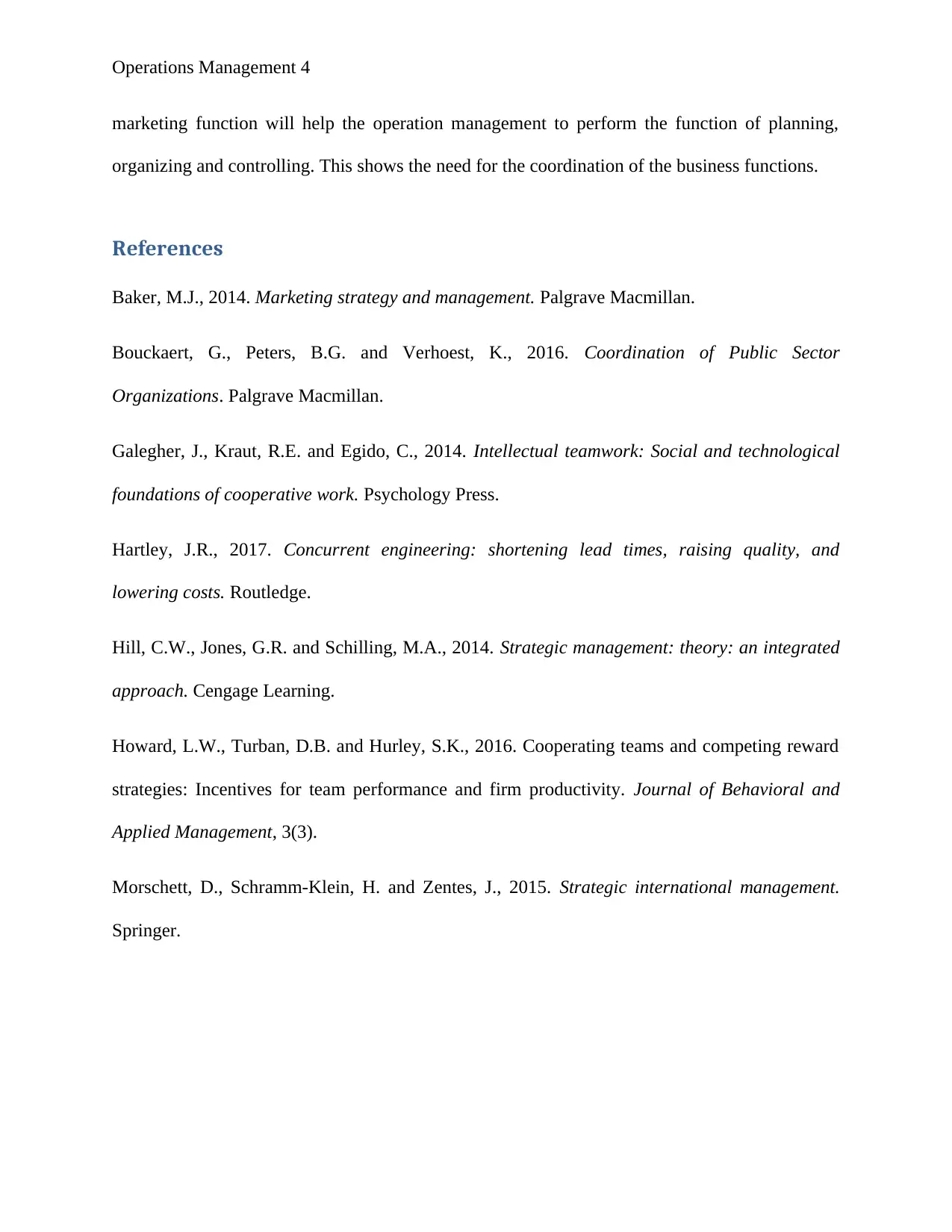
In contemporary business environments, successful management hinges on the efficient coordination of various functional areas within an organization. This essay delves into how operations management and marketing function must collaborate to ensure effective planning, organizing, controlling, and achieving strategic goals. Coordination is crucial for aligning efforts across these functions to provide unity in action towards shared objectives, as noted by Bouckaert et al. (2016). The marketing function establishes customer relationships and develops plans that include demand forecasts and raw material identification, which are essential for new product development. Operations management plays a pivotal role in managing resources and overseeing the production and delivery of products and services (Hill, Jones, & Schilling, 2014). Without coordination, there can be significant quality conflicts due to misalignment between forecasted demands and actual resource allocation, leading to dissatisfaction among customers. Quality is essential for meeting customer expectations and building brand loyalty (Baker, 2014; Hartley, 2017). Coordination ensures that marketing insights into customer needs translate into effective operational strategies, minimizing gaps in quality and enhancing customer satisfaction. Moreover, coordination optimizes the use of organizational resources, reduces inter-departmental conflicts, and fosters a team-oriented culture that motivates employees through autonomy (Galegher et al., 2014). Ultimately, well-coordinated operations and marketing functions can lead to improved market positioning and increased goodwill for the organization. This alignment is necessary for planning, organizing, staffing, and achieving overall business objectives efficiently. As such, both functions must work together harmoniously to understand customer needs and resource requirements, thus ensuring product quality and enhancing customer satisfaction.



1 out of 5


Related Documents


Your All-in-One AI-Powered Toolkit for Academic Success.
+13062052269
info@desklib.com
Available 24*7 on WhatsApp / Email
![[object Object]](/_next/static/media/star-bottom.7253800d.svg)
Copyright © 2020–2026 A2Z Services. All Rights Reserved. Developed and managed by ZUCOL.