Exploring Organizational Effectiveness: Diversity at JP Morgan Chase

Verified

Added on  2023/04/21

|8
|1173
|415
Essay
AI Summary
This essay delves into the concept of organizational effectiveness, examining it through the lenses of decision-making, change and learning, group effectiveness, and self-organizing adaptive systems. It highlights the critical role of people within these perspectives, particularly in decision-making processes and change implementation. The essay then analyzes JP Morgan Chase & Co. regarding workforce diversification, observing a strong representation of women, minorities, and indigenous people, while noting a comparatively lower representation of individuals with disabilities and older employees. The presence of conventional training methods within the organization is also noted. Finally, the essay addresses the concept of stereotyping, its merits and demerits in management, and strategies for overcoming stereotype biases through effective thinking and communication. The document is shared on Desklib, a platform offering study tools and resources for students.
Document Page
Running head: ORGANIZATIONAL BEHAVIOURS
Organizational Behaviours
Name of the Student
Name of the University
Author Note
tabler-icon-diamond-filled.svg

Paraphrase This Document

Need a fresh take? Get an instant paraphrase of this document with our AI Paraphraser
Document Page
1ORGANIZATIONAL BEHAVIOURS
The paper is focused in the elaboration of the organizational effectiveness. Along with
that, the paper evaluates a chosen organization, J P Morgan Chase and Company and
evaluates the diversification of the workforce. Along with that, the paper produces notable
amount of information regarding the stereotyping and the strategies for overcoming the
stereotype biases.
Organizational Effectiveness Perspectives:
The four perspectives of organizational effectiveness can be described as the decision
making, change and learning, group effectiveness and the self-organizing and adaptive
systems (Ford, 2014). The decision making perspectives is concerned with the way people
makes decisions (Colbert, Barrick & Bradley, 2014), change and learning is concerned with
the process of continuous learning and development of the individuals, the group
effectiveness is concerned with the process and the methods in which the employees
collectively works together with the creation of the new ideas and the innovative information
(Zoogah, Peng & Woldu, 2015). In addition to this, the self-organizing and the adaptive
systems is concerned with the procedures for the effective self-organizing systems.
Importance of the people in the organizations:
The importance of the people in the mentioned perspectives of the organizational
effectiveness is seen to be significant. The decision making and the change and learning are
seen to be notably affected with the operations of the employees. The participation of the
employees of the organization in decision making process enables the organizations to have a
larger number of viable options regarding the operation of the organization for the
consideration of the management (Schuler & Jackson, 2014). Along with that, the impact of
the people on the change and the learning is seen to be significant as the employees or
members of the organizations play the crucial of the change agents in implementing the
Document Page
2ORGANIZATIONAL BEHAVIOURS
change. In addition to this, the learning of the employees and the other change agents of the
organizations notably reduces the difficulty level in the implementation of the change.
Description of the Images:
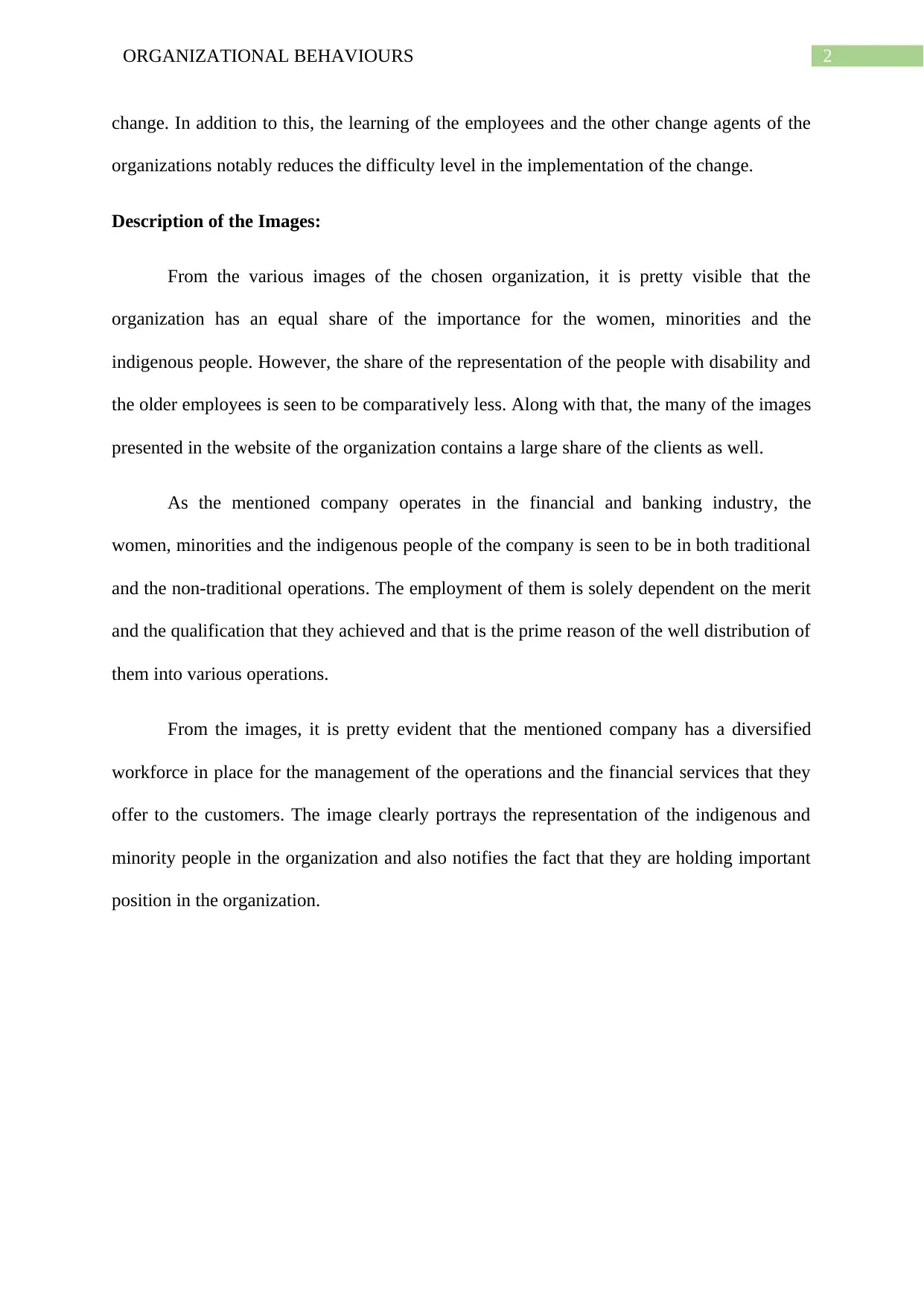
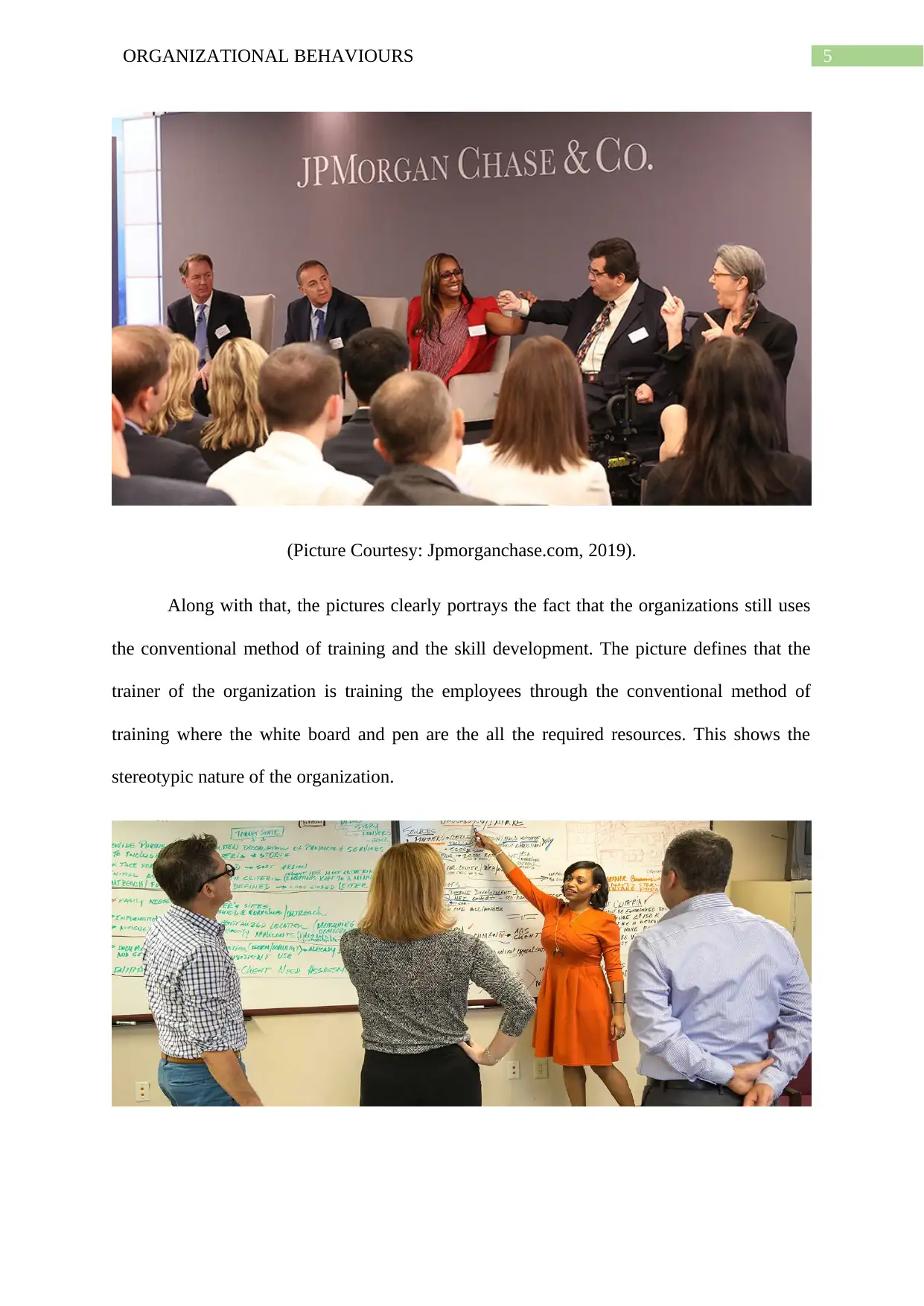
From the various images of the chosen organization, it is pretty visible that the
organization has an equal share of the importance for the women, minorities and the
indigenous people. However, the share of the representation of the people with disability and
the older employees is seen to be comparatively less. Along with that, the many of the images
presented in the website of the organization contains a large share of the clients as well.
As the mentioned company operates in the financial and banking industry, the
women, minorities and the indigenous people of the company is seen to be in both traditional
and the non-traditional operations. The employment of them is solely dependent on the merit
and the qualification that they achieved and that is the prime reason of the well distribution of
them into various operations.
From the images, it is pretty evident that the mentioned company has a diversified
workforce in place for the management of the operations and the financial services that they
offer to the customers. The image clearly portrays the representation of the indigenous and
minority people in the organization and also notifies the fact that they are holding important
position in the organization.
Document Page
3ORGANIZATIONAL BEHAVIOURS
(Picture Courtesy: Jpmorganchase.com, 2019).
tabler-icon-diamond-filled.svg

Paraphrase This Document

Need a fresh take? Get an instant paraphrase of this document with our AI Paraphraser
Document Page
4ORGANIZATIONAL BEHAVIOURS
(Picture Courtesy: Jpmorganchase.com, 2019).
Document Page
5ORGANIZATIONAL BEHAVIOURS
(Picture Courtesy: Jpmorganchase.com, 2019).
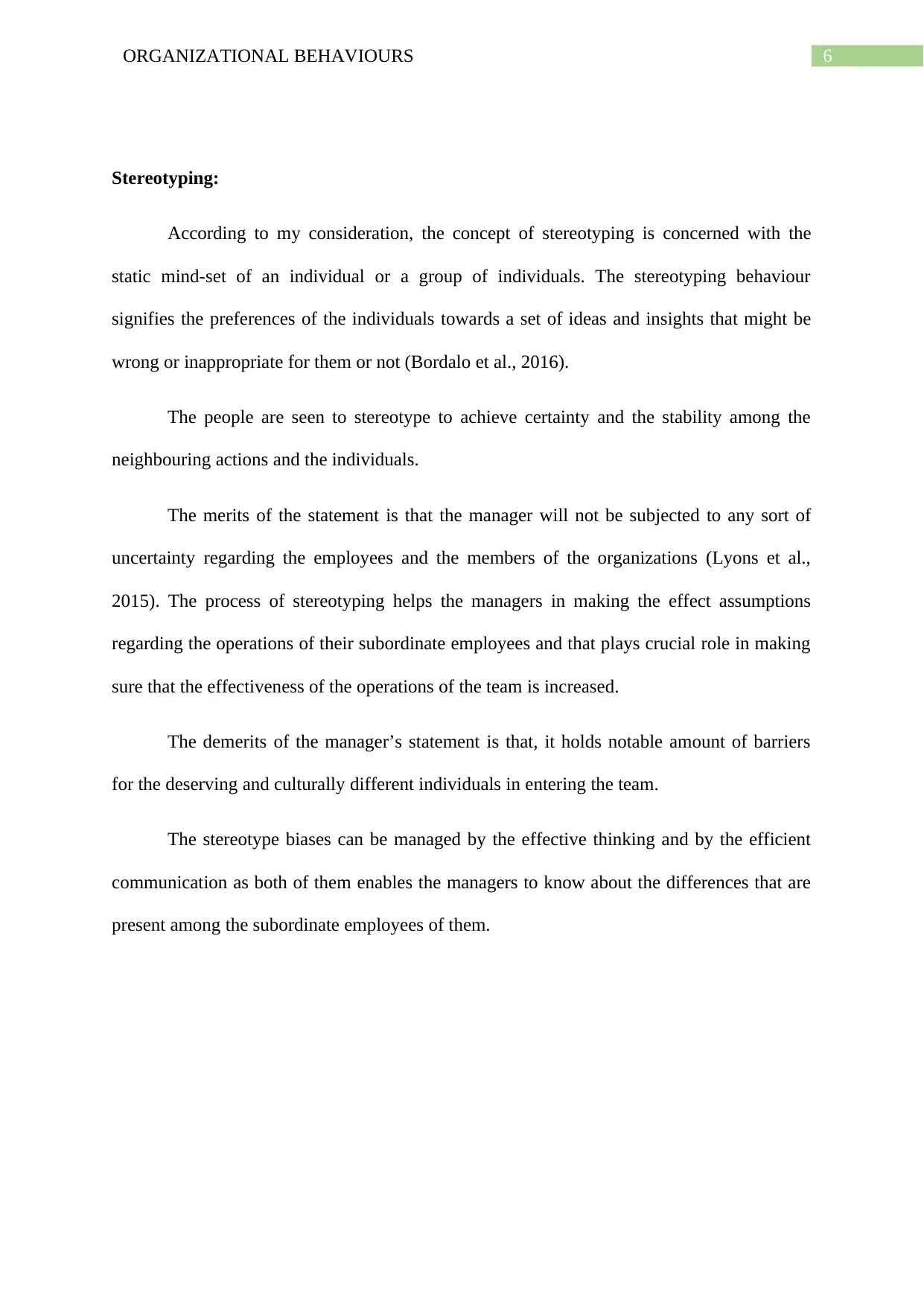
Along with that, the pictures clearly portrays the fact that the organizations still uses
the conventional method of training and the skill development. The picture defines that the
trainer of the organization is training the employees through the conventional method of
training where the white board and pen are the all the required resources. This shows the
stereotypic nature of the organization.
Document Page
6ORGANIZATIONAL BEHAVIOURS
Stereotyping:
According to my consideration, the concept of stereotyping is concerned with the
static mind-set of an individual or a group of individuals. The stereotyping behaviour
signifies the preferences of the individuals towards a set of ideas and insights that might be
wrong or inappropriate for them or not (Bordalo et al., 2016).
The people are seen to stereotype to achieve certainty and the stability among the
neighbouring actions and the individuals.
The merits of the statement is that the manager will not be subjected to any sort of
uncertainty regarding the employees and the members of the organizations (Lyons et al.,
2015). The process of stereotyping helps the managers in making the effect assumptions
regarding the operations of their subordinate employees and that plays crucial role in making
sure that the effectiveness of the operations of the team is increased.
The demerits of the manager’s statement is that, it holds notable amount of barriers
for the deserving and culturally different individuals in entering the team.
The stereotype biases can be managed by the effective thinking and by the efficient
communication as both of them enables the managers to know about the differences that are
present among the subordinate employees of them.
tabler-icon-diamond-filled.svg

Paraphrase This Document

Need a fresh take? Get an instant paraphrase of this document with our AI Paraphraser
Document Page
7ORGANIZATIONAL BEHAVIOURS
References:
Bordalo, P., Coffman, K., Gennaioli, N., & Shleifer, A. (2016). Stereotypes. The Quarterly
Journal of Economics, 131(4), 1753-1794.
Colbert, A. E., Barrick, M. R., & Bradley, B. H. (2014). Personality and leadership
composition in top management teams: Implications for organizational effectiveness.
Personnel Psychology, 67(2), 351-387.
Ford, J. K. (Ed.). (2014). Improving training effectiveness in work organizations. Psychology
Press.
Jpmorganchase.com (2019). Home | JPMorgan Chase & Co. . Retrieved from
https://www.jpmorganchase.com/
Lyons, S., Urick, M., Kuron, L., & Schweitzer, L. (2015). Generational differences in the
workplace: There is complexity beyond the stereotypes. Industrial and
Organizational Psychology, 8(3), 346-356.
Schuler, R., & E. Jackson, S. (2014). Human resource management and organizational
effectiveness: yesterday and today. Journal of Organizational Effectiveness: People
and Performance, 1(1), 35-55.
Zoogah, D. B., Peng, M. W., & Woldu, H. (2015). Institutions, resources, and organizational
effectiveness in Africa. Academy of Management Perspectives, 29(1), 7-31.
chevron_up_icon
1 out of 8
circle_padding
hide_on_mobile
zoom_out_icon
[object Object]