Organizational Processes Report: Analysis of Change and Innovation
VerifiedAdded on 2023/06/10
|24
|5061
|366
Report
AI Summary
This report provides a comprehensive analysis of organizational processes, covering three assessment tasks. Assessment 1 focuses on organizational change, continuous improvement, sustainability practices, and e-commerce strategies. Assessment 2 examines smartphone order projects, project objectives, key deliverables, risk assessments, and quality management. Assessment 3 delves into creativity, innovation, DMAIC method, supply chain management, risk management, entrepreneurial behavior, brand analysis, and feasibility studies. The report explores various aspects such as organizational culture, communication strategies, and risk analysis, offering insights into improving organizational performance and adapting to changing market dynamics. It provides a detailed overview of each assessment, highlighting key findings and strategies for organizational success.
Organizational Processes 0
Title: Organizational Processes
Assignment Name:
Student Name:
Course Name and Number:
Professor:
Date:
Title: Organizational Processes
Assignment Name:
Student Name:
Course Name and Number:
Professor:
Date:

Paraphrase This Document
Need a fresh take? Get an instant paraphrase of this document with our AI Paraphraser
Organizational Processes 1
Executive Summary
This report summarizes three Assessment Tasks 1, 2 and 3. Assessment 1 is on the
organizational change and its principles and summary of sustainability practices and
organizational practices has been provided. Assessment 2 provides a brief overview of the orders
placed by the smart phones users and milestones achieved and the key performance areas to be
covered and other aspects of smartphones. The Assessment 3 provides the brief overview on
creativity and innovations and organizational cultural practices followed by the conclusion.
Executive Summary
This report summarizes three Assessment Tasks 1, 2 and 3. Assessment 1 is on the
organizational change and its principles and summary of sustainability practices and
organizational practices has been provided. Assessment 2 provides a brief overview of the orders
placed by the smart phones users and milestones achieved and the key performance areas to be
covered and other aspects of smartphones. The Assessment 3 provides the brief overview on
creativity and innovations and organizational cultural practices followed by the conclusion.
Organizational Processes 2
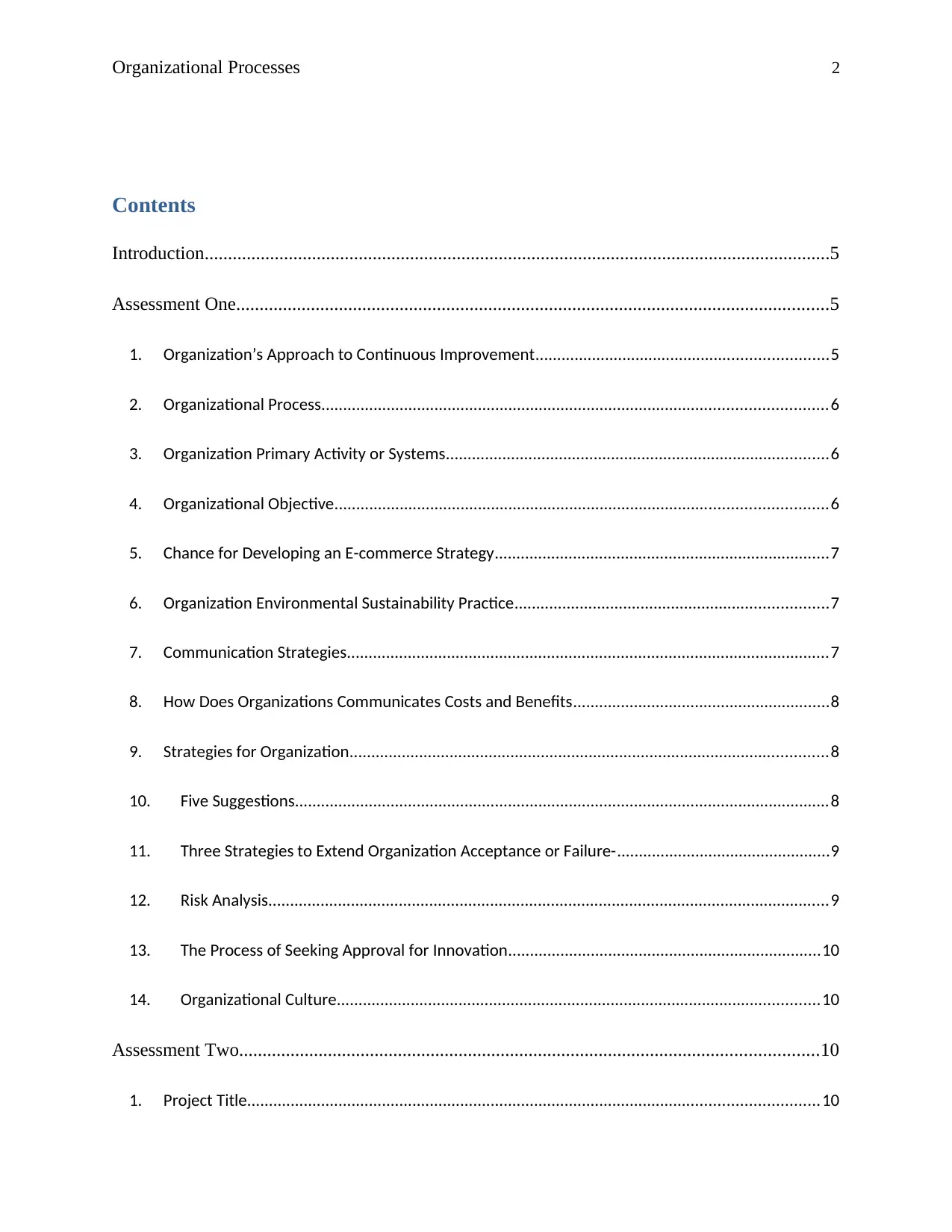
Contents
Introduction......................................................................................................................................5
Assessment One...............................................................................................................................5
1. Organization’s Approach to Continuous Improvement...................................................................5
2. Organizational Process....................................................................................................................6
3. Organization Primary Activity or Systems........................................................................................6
4. Organizational Objective.................................................................................................................6
5. Chance for Developing an E-commerce Strategy.............................................................................7
6. Organization Environmental Sustainability Practice........................................................................7
7. Communication Strategies...............................................................................................................7
8. How Does Organizations Communicates Costs and Benefits...........................................................8
9. Strategies for Organization..............................................................................................................8
10. Five Suggestions...........................................................................................................................8
11. Three Strategies to Extend Organization Acceptance or Failure-.................................................9
12. Risk Analysis.................................................................................................................................9
13. The Process of Seeking Approval for Innovation........................................................................10
14. Organizational Culture...............................................................................................................10
Assessment Two............................................................................................................................10
1. Project Title...................................................................................................................................10
Contents
Introduction......................................................................................................................................5
Assessment One...............................................................................................................................5
1. Organization’s Approach to Continuous Improvement...................................................................5
2. Organizational Process....................................................................................................................6
3. Organization Primary Activity or Systems........................................................................................6
4. Organizational Objective.................................................................................................................6
5. Chance for Developing an E-commerce Strategy.............................................................................7
6. Organization Environmental Sustainability Practice........................................................................7
7. Communication Strategies...............................................................................................................7
8. How Does Organizations Communicates Costs and Benefits...........................................................8
9. Strategies for Organization..............................................................................................................8
10. Five Suggestions...........................................................................................................................8
11. Three Strategies to Extend Organization Acceptance or Failure-.................................................9
12. Risk Analysis.................................................................................................................................9
13. The Process of Seeking Approval for Innovation........................................................................10
14. Organizational Culture...............................................................................................................10
Assessment Two............................................................................................................................10
1. Project Title...................................................................................................................................10
⊘ This is a preview!⊘
Do you want full access?
Subscribe today to unlock all pages.

Trusted by 1+ million students worldwide
Organizational Processes 3
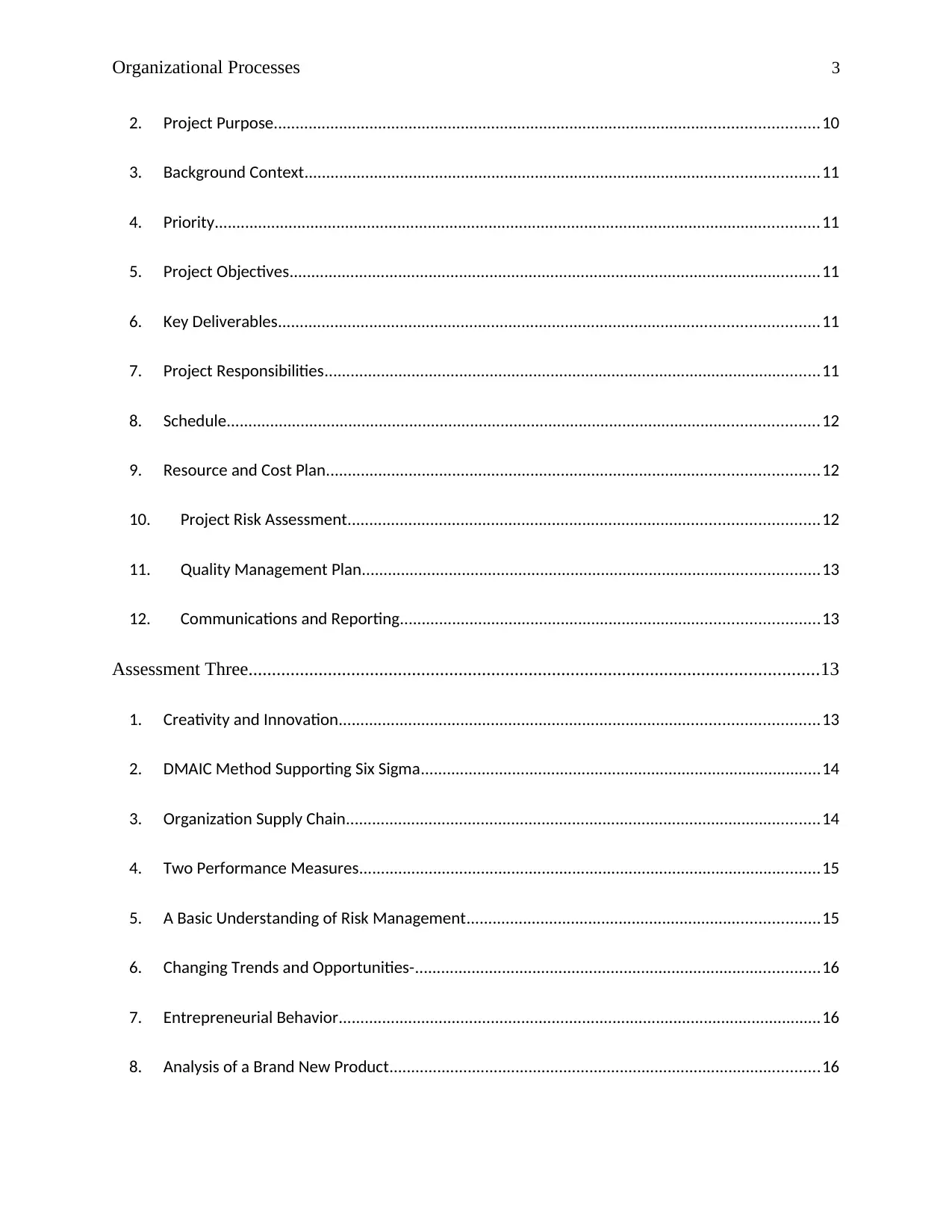
2. Project Purpose.............................................................................................................................10
3. Background Context......................................................................................................................11
4. Priority...........................................................................................................................................11
5. Project Objectives..........................................................................................................................11
6. Key Deliverables............................................................................................................................11
7. Project Responsibilities..................................................................................................................11
8. Schedule........................................................................................................................................12
9. Resource and Cost Plan.................................................................................................................12
10. Project Risk Assessment............................................................................................................12
11. Quality Management Plan.........................................................................................................13
12. Communications and Reporting................................................................................................13
Assessment Three..........................................................................................................................13
1. Creativity and Innovation..............................................................................................................13
2. DMAIC Method Supporting Six Sigma............................................................................................14
3. Organization Supply Chain.............................................................................................................14
4. Two Performance Measures..........................................................................................................15
5. A Basic Understanding of Risk Management.................................................................................15
6. Changing Trends and Opportunities-.............................................................................................16
7. Entrepreneurial Behavior...............................................................................................................16
8. Analysis of a Brand New Product...................................................................................................16
2. Project Purpose.............................................................................................................................10
3. Background Context......................................................................................................................11
4. Priority...........................................................................................................................................11
5. Project Objectives..........................................................................................................................11
6. Key Deliverables............................................................................................................................11
7. Project Responsibilities..................................................................................................................11
8. Schedule........................................................................................................................................12
9. Resource and Cost Plan.................................................................................................................12
10. Project Risk Assessment............................................................................................................12
11. Quality Management Plan.........................................................................................................13
12. Communications and Reporting................................................................................................13
Assessment Three..........................................................................................................................13
1. Creativity and Innovation..............................................................................................................13
2. DMAIC Method Supporting Six Sigma............................................................................................14
3. Organization Supply Chain.............................................................................................................14
4. Two Performance Measures..........................................................................................................15
5. A Basic Understanding of Risk Management.................................................................................15
6. Changing Trends and Opportunities-.............................................................................................16
7. Entrepreneurial Behavior...............................................................................................................16
8. Analysis of a Brand New Product...................................................................................................16
Paraphrase This Document
Need a fresh take? Get an instant paraphrase of this document with our AI Paraphraser
Organizational Processes 4
9. Feasibility Study.............................................................................................................................17
10. Holistic and Cyclic Approach to Gauge Continuous Improvement Systems...............................17
11. Identification of Values..............................................................................................................17
12. Principles of Organizational Learning.........................................................................................18
13. Sustainability Practices..............................................................................................................18
14. Creativeness and Innovation Concepts......................................................................................18
15. Quality Management and Continuous Improvement Theories..................................................18
16. Identify Technology and E-commerce Opportunities................................................................19
Conclusion.....................................................................................................................................20
References......................................................................................................................................21
9. Feasibility Study.............................................................................................................................17
10. Holistic and Cyclic Approach to Gauge Continuous Improvement Systems...............................17
11. Identification of Values..............................................................................................................17
12. Principles of Organizational Learning.........................................................................................18
13. Sustainability Practices..............................................................................................................18
14. Creativeness and Innovation Concepts......................................................................................18
15. Quality Management and Continuous Improvement Theories..................................................18
16. Identify Technology and E-commerce Opportunities................................................................19
Conclusion.....................................................................................................................................20
References......................................................................................................................................21
Organizational Processes 5
Introduction
Organizational change is the process that brings changes in organization processes,
technologies, procedures and policies and measuring the effect of these changes in organization.
Structure amendment is each the method during which a company changes its structure,
strategies, operational ways, technologies, or structure, culture to have an effect on amendment
inside. The different business units will have to undergo the changes and organizational change
will be a continuous process and may last for a year. This study of organizational change is
dynamic in nature and attracts the experts from different fields of study like science, politics,
management and economics. This may not notice a grand, unified theory of structure
amendment. Instead, this may notice distinct theories that haven't very been integrated to this
point. There are different theories propagated through experts.
Assessment One
1. Organization’s Approach to Continuous Improvement
Continuous Improvement comprises of innovations as well as incremental activities through
which best practices of life can be achieved. There are certain objectives and expectations that
should be used for stakeholders. It is essential to implement the increment plans through which
continuous improvement culture can be enhanced. There are many organizations that operate in a
given environment. These all are reliant over the unchanging technology and a given market that
is there is mechanistic market which works effectively. However, there are many corporations
that should have the flexible environment through which they can adapt themselves to the
Introduction
Organizational change is the process that brings changes in organization processes,
technologies, procedures and policies and measuring the effect of these changes in organization.
Structure amendment is each the method during which a company changes its structure,
strategies, operational ways, technologies, or structure, culture to have an effect on amendment
inside. The different business units will have to undergo the changes and organizational change
will be a continuous process and may last for a year. This study of organizational change is
dynamic in nature and attracts the experts from different fields of study like science, politics,
management and economics. This may not notice a grand, unified theory of structure
amendment. Instead, this may notice distinct theories that haven't very been integrated to this
point. There are different theories propagated through experts.
Assessment One
1. Organization’s Approach to Continuous Improvement
Continuous Improvement comprises of innovations as well as incremental activities through
which best practices of life can be achieved. There are certain objectives and expectations that
should be used for stakeholders. It is essential to implement the increment plans through which
continuous improvement culture can be enhanced. There are many organizations that operate in a
given environment. These all are reliant over the unchanging technology and a given market that
is there is mechanistic market which works effectively. However, there are many corporations
that should have the flexible environment through which they can adapt themselves to the
⊘ This is a preview!⊘
Do you want full access?
Subscribe today to unlock all pages.
Trusted by 1+ million students worldwide
Organizational Processes 6
changes that are present in market and technology. These companies are characterized through
the management design and organic approaches (Coy and Adams, 2012).
2. Organizational Process
Processes and artifacts needed for organization shall be known and developed and maintain
at structural level. These shall be accessible to the method implemented. It ought to even be
ensured that these processes shall accommodate the applicable standards, policies and models.
There ought to be integration between all the processes outlined. These ought to be reviewed and
revised sporadically. The organization shall establish and maintain life cycle models utilized in
the organization by completely different project groups. These life cycle models ought to be
reviewed and revised sporadically (Sloan and Sloan, 2011).
3. Organization Primary Activity or Systems
Primary activities have direct relation with the physical sale, creation, product or service and
maintenance. They comprises of following-
1. Operations- These are regarded as transformational activities through which inputs gets
converted into output and that has been sold to final customers. Operational systems will
be creating value.
2. Inbound logistics-These are the different processes that will be storing, receiving and all
the input will get distributed internally. One of the key factors is supplier relationship.
3. Outbound logistics-These ar eth activities through which any product or service has been
delivered to the customer. These are the different things such as collection processes,
distribution systems and these may be external or internal to an organization.
4. Organizational Objective
changes that are present in market and technology. These companies are characterized through
the management design and organic approaches (Coy and Adams, 2012).
2. Organizational Process
Processes and artifacts needed for organization shall be known and developed and maintain
at structural level. These shall be accessible to the method implemented. It ought to even be
ensured that these processes shall accommodate the applicable standards, policies and models.
There ought to be integration between all the processes outlined. These ought to be reviewed and
revised sporadically. The organization shall establish and maintain life cycle models utilized in
the organization by completely different project groups. These life cycle models ought to be
reviewed and revised sporadically (Sloan and Sloan, 2011).
3. Organization Primary Activity or Systems
Primary activities have direct relation with the physical sale, creation, product or service and
maintenance. They comprises of following-
1. Operations- These are regarded as transformational activities through which inputs gets
converted into output and that has been sold to final customers. Operational systems will
be creating value.
2. Inbound logistics-These are the different processes that will be storing, receiving and all
the input will get distributed internally. One of the key factors is supplier relationship.
3. Outbound logistics-These ar eth activities through which any product or service has been
delivered to the customer. These are the different things such as collection processes,
distribution systems and these may be external or internal to an organization.
4. Organizational Objective
Paraphrase This Document
Need a fresh take? Get an instant paraphrase of this document with our AI Paraphraser
Organizational Processes 7
The goals of an organization along with its purpose and mission of a business that are
established by its management are communicated to its workers. The Organizational objectives
of an organization generally specialize in its long vary intentions for operational and its overall
business philosophy that may offer helpful steerage for workers seeking to please their managers.
These can be regarded as strategic objectives that are important to the management of any
company and can guide the efforts of employees (Maxwell and Person, 2016).
5. Chance for Developing an E-commerce Strategy
With customers shifting from shopping for in-store to ecommerce, brands have a
troublesome call to form. It ought to they develop their own complete.com sites or place their
efforts into core promoting. Corporations are developing an internet presence for disapproval
functions and giving basic ecommerce. Then, at constant time, they're more and more creating
merchandise offered on marketplaces to permit customers to be able to purchase their
merchandise where they look (Andersen, Ross and Fenske, 2018).
6. Organization Environmental Sustainability Practice
Sustainability practices at the Associate in nursing structure level are getting a lot of vital in
achieving the property development goal. Over the previous couple of decades, there are a
variety of studies on structural commitment towards adopting sustainability practices. However,
most of the studies were in developing countries instead of developing countries. Moreover, very
little has been written regarding property practices within the facilities management field for
university organizations and none of those studies are relatively investigated between developed
and developing nations (de Winter, 2017).
7. Communication Strategies
These are as follows-
The goals of an organization along with its purpose and mission of a business that are
established by its management are communicated to its workers. The Organizational objectives
of an organization generally specialize in its long vary intentions for operational and its overall
business philosophy that may offer helpful steerage for workers seeking to please their managers.
These can be regarded as strategic objectives that are important to the management of any
company and can guide the efforts of employees (Maxwell and Person, 2016).
5. Chance for Developing an E-commerce Strategy
With customers shifting from shopping for in-store to ecommerce, brands have a
troublesome call to form. It ought to they develop their own complete.com sites or place their
efforts into core promoting. Corporations are developing an internet presence for disapproval
functions and giving basic ecommerce. Then, at constant time, they're more and more creating
merchandise offered on marketplaces to permit customers to be able to purchase their
merchandise where they look (Andersen, Ross and Fenske, 2018).
6. Organization Environmental Sustainability Practice
Sustainability practices at the Associate in nursing structure level are getting a lot of vital in
achieving the property development goal. Over the previous couple of decades, there are a
variety of studies on structural commitment towards adopting sustainability practices. However,
most of the studies were in developing countries instead of developing countries. Moreover, very
little has been written regarding property practices within the facilities management field for
university organizations and none of those studies are relatively investigated between developed
and developing nations (de Winter, 2017).
7. Communication Strategies
These are as follows-
Organizational Processes 8
Focus on the problem, not person
Be real instead of artful.
Empathize instead of stay detached.
Be versatile towards others.
Use affirmed responses.
8. How Does Organizations Communicates Costs and Benefits
Communication- Communication may be a difficult conception to master at intervals a
corporation, significantly one with advanced levels and multiple problems. Once, all elements of
your organization communicate swimmingly, it will improve work flow and overall productivity.
By creating a shot to boost your communication processes, you will be able to build a stronger
company which will have patience within the market.
9. Strategies for Organization
i. Challenge-Complex, difficult and fascinating tasks and goals spur intrinsic motivation
that may be a crucial part of creative thinking.
ii. Intellectual debate-When operating with advanced and difficult tasks, issues typically
surface. The character of those issues is that they're typically novel to that encounters
them and complicated in this they will be solved in several ways in which (Aggarwal and
Lynn, 2012).
10. Five Suggestions
Reward new ideas.
On recognizing new thoughts and celebrate the success of innovation, individuals
can need to be a locality of it a lot of.
Create it a locality of the associations to elevate the worth of innovation.
Focus on the problem, not person
Be real instead of artful.
Empathize instead of stay detached.
Be versatile towards others.
Use affirmed responses.
8. How Does Organizations Communicates Costs and Benefits
Communication- Communication may be a difficult conception to master at intervals a
corporation, significantly one with advanced levels and multiple problems. Once, all elements of
your organization communicate swimmingly, it will improve work flow and overall productivity.
By creating a shot to boost your communication processes, you will be able to build a stronger
company which will have patience within the market.
9. Strategies for Organization
i. Challenge-Complex, difficult and fascinating tasks and goals spur intrinsic motivation
that may be a crucial part of creative thinking.
ii. Intellectual debate-When operating with advanced and difficult tasks, issues typically
surface. The character of those issues is that they're typically novel to that encounters
them and complicated in this they will be solved in several ways in which (Aggarwal and
Lynn, 2012).
10. Five Suggestions
Reward new ideas.
On recognizing new thoughts and celebrate the success of innovation, individuals
can need to be a locality of it a lot of.
Create it a locality of the associations to elevate the worth of innovation.
⊘ This is a preview!⊘
Do you want full access?
Subscribe today to unlock all pages.
Trusted by 1+ million students worldwide
Organizational Processes 9
Have times along as a team that are merely fun.
Something wizard happens after you get folks that work along out of their work
zone and into their fun zone. They typically still speak work – it’s what they share
in common. However, they share add a lot of innovative and productive approach.
And, extremely in an exceedingly a lot of honest approach. Remove obstacles to
innovative thought.
11. Three Strategies to Extend Organization Acceptance or Failure-
i. Fault as well as failure can be regarded as inseparable in most of the organization,
culture and household. Every child will be learning at a given point and thereby
needs to admit the blame. This is one of the prime reasons that organizations are
shifting to the psychological safety.
ii. It is essential to have an understanding of the causes behind failure and there is a
reason to avoid blame and plan an effective strategy to learn the process of
learning through failure. (Julian, 2008).
iii. With correct coaching and support, workers will follow those processes
systematically.
12. Risk Analysis
Risk Analysis is that the method of assessing the probability of an adverse event
occurring at intervals the company, government, or environmental sector (Kakyo and Xiao,
2017).
Treatment strategies-
• Shifts in client demand and preferences
• Legal and restrictive amendment
Have times along as a team that are merely fun.
Something wizard happens after you get folks that work along out of their work
zone and into their fun zone. They typically still speak work – it’s what they share
in common. However, they share add a lot of innovative and productive approach.
And, extremely in an exceedingly a lot of honest approach. Remove obstacles to
innovative thought.
11. Three Strategies to Extend Organization Acceptance or Failure-
i. Fault as well as failure can be regarded as inseparable in most of the organization,
culture and household. Every child will be learning at a given point and thereby
needs to admit the blame. This is one of the prime reasons that organizations are
shifting to the psychological safety.
ii. It is essential to have an understanding of the causes behind failure and there is a
reason to avoid blame and plan an effective strategy to learn the process of
learning through failure. (Julian, 2008).
iii. With correct coaching and support, workers will follow those processes
systematically.
12. Risk Analysis
Risk Analysis is that the method of assessing the probability of an adverse event
occurring at intervals the company, government, or environmental sector (Kakyo and Xiao,
2017).
Treatment strategies-
• Shifts in client demand and preferences
• Legal and restrictive amendment
Paraphrase This Document
Need a fresh take? Get an instant paraphrase of this document with our AI Paraphraser
Organizational Processes 10
• Competitive pressure
• Merger integration
• Technological changes
13. The Process of Seeking Approval for Innovation
Before you gift an inspiration or request resources or approval, it’s a decent plan to check it
with those to blame for giving the inexperienced light-weight. “These serve 3 purposes:
• They build the mandatory buy-in for your plan.
• They demonstrate to your stakeholders that you’re curious about their opinions (Guerra-
López and Hutchinson, 2013).
• They assist you improve and expand on your plan.
14. Organizational Culture
Organizational culture refers to organization expectations, philosophy, experiences It is the
values that are the guiding forces behind behavior and this is expressed in the inner procedures of
working, self-image. This is also predictable in the interactions with outer world and future
expectations. Organizational culture is highly reliant over the customs, beliefs and shared
attitudes and also on the written rules those will be developed over the given period of time
(Muhlbacher and Wekerle, 2010).
Assessment Two
1. Project Title
An Assessment of Smartphone Orders
• Competitive pressure
• Merger integration
• Technological changes
13. The Process of Seeking Approval for Innovation
Before you gift an inspiration or request resources or approval, it’s a decent plan to check it
with those to blame for giving the inexperienced light-weight. “These serve 3 purposes:
• They build the mandatory buy-in for your plan.
• They demonstrate to your stakeholders that you’re curious about their opinions (Guerra-
López and Hutchinson, 2013).
• They assist you improve and expand on your plan.
14. Organizational Culture
Organizational culture refers to organization expectations, philosophy, experiences It is the
values that are the guiding forces behind behavior and this is expressed in the inner procedures of
working, self-image. This is also predictable in the interactions with outer world and future
expectations. Organizational culture is highly reliant over the customs, beliefs and shared
attitudes and also on the written rules those will be developed over the given period of time
(Muhlbacher and Wekerle, 2010).
Assessment Two
1. Project Title
An Assessment of Smartphone Orders
Organizational Processes 11
2. Project Purpose
The aim to supply an outline of studies on smartphone-based systems that mix subjective
ratings with objectively measured knowledge for longitudinal observance of patients with
affection disorders. Specifically, tend to aim to look at current data on: (1) the feebleness of,
and adherence to, such systems; (2) the association of monitoring knowledge with mood
status; and (3) the results of observance on clinical outcomes.
3. Background Context
Electronic psychological state interventions for mood disorders have multiplied speedily
over the past decade, last within the style of numerous systems and apps that are delivered
via smartphones (Jang, Chang and Tsai, 2013).
4. Priority
This is an important phase as the priority is on determination of customized online
settings that will be provided through different applications.
5. Project Objectives
The project objectives involve to analyze the target reach customers within the each
segment of smartphone users. This involves using the information technology. The
second objective is the introduction of value end chain approaches into information
technology studies.
6. Key Deliverables
The user ability of personalization implies that there are number of target markets to be
covered within a smartphone reach. This will be deciding how a smartphone is adopting to a
given product.
2. Project Purpose
The aim to supply an outline of studies on smartphone-based systems that mix subjective
ratings with objectively measured knowledge for longitudinal observance of patients with
affection disorders. Specifically, tend to aim to look at current data on: (1) the feebleness of,
and adherence to, such systems; (2) the association of monitoring knowledge with mood
status; and (3) the results of observance on clinical outcomes.
3. Background Context
Electronic psychological state interventions for mood disorders have multiplied speedily
over the past decade, last within the style of numerous systems and apps that are delivered
via smartphones (Jang, Chang and Tsai, 2013).
4. Priority
This is an important phase as the priority is on determination of customized online
settings that will be provided through different applications.
5. Project Objectives
The project objectives involve to analyze the target reach customers within the each
segment of smartphone users. This involves using the information technology. The
second objective is the introduction of value end chain approaches into information
technology studies.
6. Key Deliverables
The user ability of personalization implies that there are number of target markets to be
covered within a smartphone reach. This will be deciding how a smartphone is adopting to a
given product.
⊘ This is a preview!⊘
Do you want full access?
Subscribe today to unlock all pages.
Trusted by 1+ million students worldwide

1 out of 24


Related Documents


Your All-in-One AI-Powered Toolkit for Academic Success.
+13062052269
info@desklib.com
Available 24*7 on WhatsApp / Email
![[object Object]](/_next/static/media/star-bottom.7253800d.svg)
Unlock your academic potential
Copyright © 2020–2026 A2Z Services. All Rights Reserved. Developed and managed by ZUCOL.