The Role of Management in Organizations and Globalization Effects
VerifiedAdded on 2020/03/04
|8
|1035
|49
Report
AI Summary
This report delves into the pivotal role of management in organizational settings and the profound impact of globalization on business development. The analysis highlights the necessity for organizations to conduct thorough internal and external environmental assessments before making strategic expansion decisions in the global market. The report explores how management styles must adapt based on organizational culture, using examples from the automobile and e-commerce sectors, such as Toyota, Hyundai, and Amazon. It emphasizes the importance of core competency, internal assessment, and adapting to the competitive landscape. The conclusion reinforces the critical need for strategic analysis to navigate the complexities of the global market effectively.

PAPER
Combined Paper
Student’s name
Name of the Institute
Combined Paper
Student’s name
Name of the Institute
Paraphrase This Document
Need a fresh take? Get an instant paraphrase of this document with our AI Paraphraser

PAPER
Executive Summary
The objective of this paper is to discuss the role that management plays in the
organizational setting and the way globalization has affected the growth and development of
organizations. It can be said that organizations must analyse the internal and external
environment before making any expansion decision in the global market.
Executive Summary
The objective of this paper is to discuss the role that management plays in the
organizational setting and the way globalization has affected the growth and development of
organizations. It can be said that organizations must analyse the internal and external
environment before making any expansion decision in the global market.

PAPER
Table of Contents
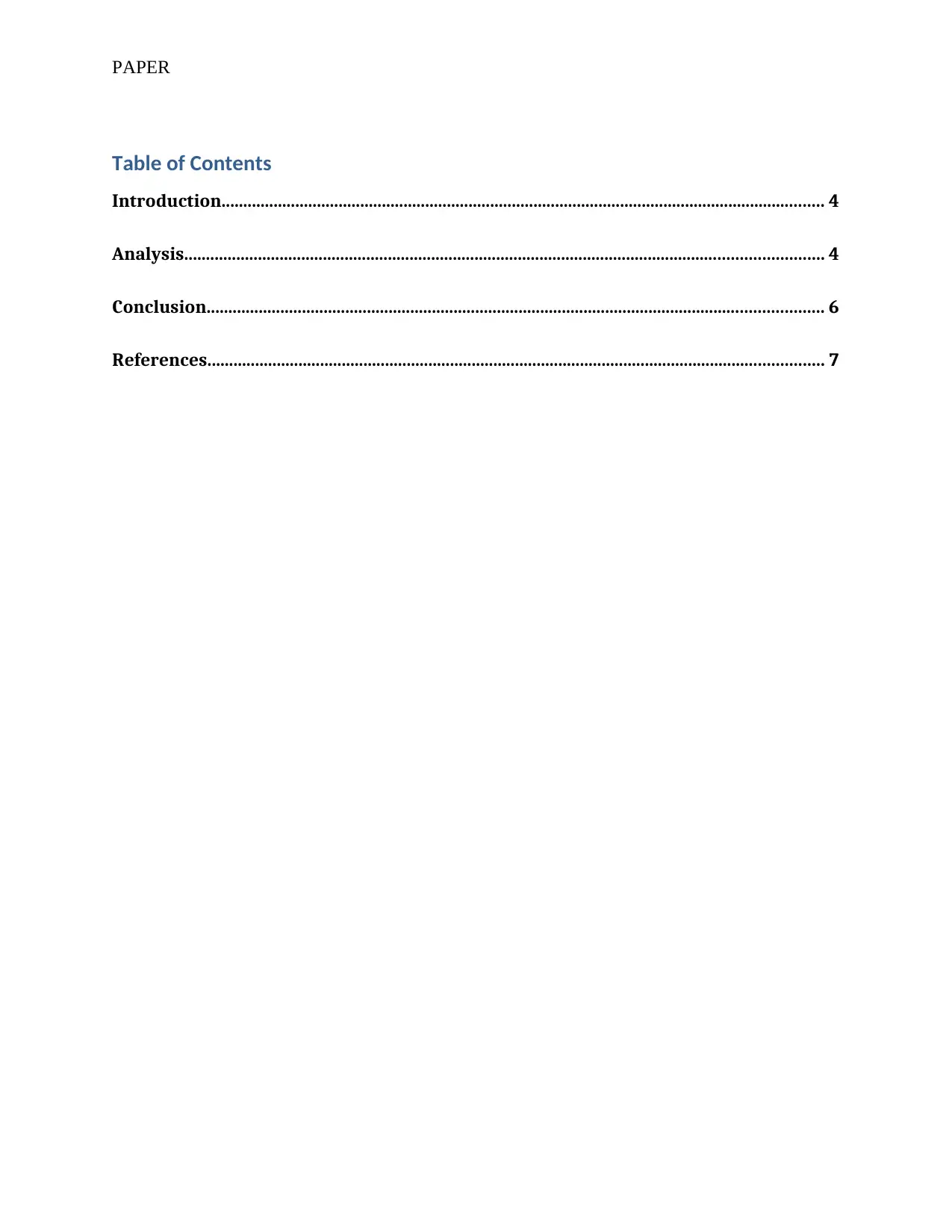
Introduction........................................................................................................................................... 4
Analysis................................................................................................................................................... 4
Conclusion.............................................................................................................................................. 6
References.............................................................................................................................................. 7
Table of Contents
Introduction........................................................................................................................................... 4
Analysis................................................................................................................................................... 4
Conclusion.............................................................................................................................................. 6
References.............................................................................................................................................. 7
⊘ This is a preview!⊘
Do you want full access?
Subscribe today to unlock all pages.

Trusted by 1+ million students worldwide

PAPER
Introduction
One of the key ideas learned in this week 1 is that organizations must learn the art of
management as they grow in size. It is relatively easy to manage a small size organization.
However, the management complexity increases as the organization size increases. Opara &
Eboh (2017) argued that management should be deep rooted in the organization culture A
thorough assessment of the organization would prove to be beneficial in knowing how to manage
and treat the employees of organization. One of the key learnings from this week is that the
management style of leaders within the organization must depend on the type and internal culture
of the organization. The management style that suits an organization may not be the best for all
the organizations in the same industry. For example, Toyota is known for its focus on quality and
defect control. However, the management style of leaders in Toyota is very different than the
management style of Volkswagen. Therefore, it is recommended that the leaders and managers
should not hurry when they have to define the management layer within the company.
Analysis
The learning from this week one could be applied to large number of organizations. Let’s
apply the learning to the companies in the automobile sector. In the global automobile segment,
Toyota is known for its focus on quality and defect control. The competitors of Toyota like
Hyundai want to benchmark its quality improvement techniques and measures against the quality
delivered by Toyota. However, it does not mean that Hyundai should change its culture to suit
the organizational culture of Toyota. Hyundai has its own strengths and weaknesses and it is
important that the organizational culture and the management style of Hyundai should be based
on that. Lee & Desai (2014) argued that organizations should never leave their core competency
Introduction
One of the key ideas learned in this week 1 is that organizations must learn the art of
management as they grow in size. It is relatively easy to manage a small size organization.
However, the management complexity increases as the organization size increases. Opara &
Eboh (2017) argued that management should be deep rooted in the organization culture A
thorough assessment of the organization would prove to be beneficial in knowing how to manage
and treat the employees of organization. One of the key learnings from this week is that the
management style of leaders within the organization must depend on the type and internal culture
of the organization. The management style that suits an organization may not be the best for all
the organizations in the same industry. For example, Toyota is known for its focus on quality and
defect control. However, the management style of leaders in Toyota is very different than the
management style of Volkswagen. Therefore, it is recommended that the leaders and managers
should not hurry when they have to define the management layer within the company.
Analysis
The learning from this week one could be applied to large number of organizations. Let’s
apply the learning to the companies in the automobile sector. In the global automobile segment,
Toyota is known for its focus on quality and defect control. The competitors of Toyota like
Hyundai want to benchmark its quality improvement techniques and measures against the quality
delivered by Toyota. However, it does not mean that Hyundai should change its culture to suit
the organizational culture of Toyota. Hyundai has its own strengths and weaknesses and it is
important that the organizational culture and the management style of Hyundai should be based
on that. Lee & Desai (2014) argued that organizations should never leave their core competency
Paraphrase This Document
Need a fresh take? Get an instant paraphrase of this document with our AI Paraphraser

PAPER
to learn from others. For the organizations that value the focus on developing core competency,
learning comes naturally. Therefore, a good idea for Hyundai would be to an internal assessment
and decide upon the areas that needs improvement. The next step would be to develop a
framework where tangible efforts could be made to improve the quality of its products and
services.
One of the key ideas learned in the week two is that globalization has helped a lot to
businesses to expand in new boundaries. There was a time when organizations have limited
target market. With globalization, organizations have started to target the people beyond
domestic boundaries as well. For example, a seller of precious stones in India can now sell its
products in Australia through Amazon. This has been possible only because of globalization.
Langley & Smallman (2013) argued that globalisation is a powerful force and it has changed the
way business are done. It is expected that globalization would further bring more changes in the
way businesses are conducted. One of the key learning from this week resources is that
globalization has been useful for end consumers as this has increased the choices for consumers.
For example, a buyer in Sydney can now buy a product from a domestic seller in Australian
market or from an international seller. It has also opened the avenues for organization to sell
their products and compete with the international brands. Due to this there has been an increase
in the competition and organizations realizes the importance of delivering high quality products
and services to consumers. It is expected that globalization would continue to make business
more competitive.
The learning from this week could be applied to large number of organizations. Let’s
apply the learning to the companies in the e-commerce sector. The learning can be applied to the
business operations of Amazon. The company, Amazon, is a marketplace and there are millions
to learn from others. For the organizations that value the focus on developing core competency,
learning comes naturally. Therefore, a good idea for Hyundai would be to an internal assessment
and decide upon the areas that needs improvement. The next step would be to develop a
framework where tangible efforts could be made to improve the quality of its products and
services.
One of the key ideas learned in the week two is that globalization has helped a lot to
businesses to expand in new boundaries. There was a time when organizations have limited
target market. With globalization, organizations have started to target the people beyond
domestic boundaries as well. For example, a seller of precious stones in India can now sell its
products in Australia through Amazon. This has been possible only because of globalization.
Langley & Smallman (2013) argued that globalisation is a powerful force and it has changed the
way business are done. It is expected that globalization would further bring more changes in the
way businesses are conducted. One of the key learning from this week resources is that
globalization has been useful for end consumers as this has increased the choices for consumers.
For example, a buyer in Sydney can now buy a product from a domestic seller in Australian
market or from an international seller. It has also opened the avenues for organization to sell
their products and compete with the international brands. Due to this there has been an increase
in the competition and organizations realizes the importance of delivering high quality products
and services to consumers. It is expected that globalization would continue to make business
more competitive.
The learning from this week could be applied to large number of organizations. Let’s
apply the learning to the companies in the e-commerce sector. The learning can be applied to the
business operations of Amazon. The company, Amazon, is a marketplace and there are millions

PAPER
of buyers and sellers listed on Amazon (Vinkenburg & Jansen, 2014). With globalisation, it has
been possible for buyers and sellers to communicate and transact with the sellers and buyers in
different geographies. The best thing for Amazon would be to analyze the internal and the
external environment and variables and then lay down the management layer foundation of the
company.
Conclusion
With the above discussion, It can be said that organizations must analyse the internal and
external environment before making any expansion decision in the global market.
of buyers and sellers listed on Amazon (Vinkenburg & Jansen, 2014). With globalisation, it has
been possible for buyers and sellers to communicate and transact with the sellers and buyers in
different geographies. The best thing for Amazon would be to analyze the internal and the
external environment and variables and then lay down the management layer foundation of the
company.
Conclusion
With the above discussion, It can be said that organizations must analyse the internal and
external environment before making any expansion decision in the global market.
⊘ This is a preview!⊘
Do you want full access?
Subscribe today to unlock all pages.

Trusted by 1+ million students worldwide

PAPER
References
Langley, A., Smallman, C., Tsoukas, H. and Van de Ven, A.H., 2013. Process studies of change
in organization and management: Unveiling temporality, activity, and flow. Academy of
Management Journal, 56(1), pp.1-13.
Lee, C.A., Desai, N. and Brethorst, A., 2014, December. A keystone-based virtual organization
management system. In Cloud Computing Technology and Science (CloudCom), 2014 IEEE 6th
International Conference on (pp. 727-730). IEEE.
Opara, O.U. and Eboh, E.A., 2017. Organization management today: setting the human resource
agenda in the globalized competition. International Journal of Development and Management
Review, 12(1), pp.193-201.
Vinkenburg, C.J., Jansen, P.G., Dries, N. and Pepermans, R., 2014. Arena: A critical conceptual
framework of top management selection. Group & Organization Management, 39(1), pp.33-68.
References
Langley, A., Smallman, C., Tsoukas, H. and Van de Ven, A.H., 2013. Process studies of change
in organization and management: Unveiling temporality, activity, and flow. Academy of
Management Journal, 56(1), pp.1-13.
Lee, C.A., Desai, N. and Brethorst, A., 2014, December. A keystone-based virtual organization
management system. In Cloud Computing Technology and Science (CloudCom), 2014 IEEE 6th
International Conference on (pp. 727-730). IEEE.
Opara, O.U. and Eboh, E.A., 2017. Organization management today: setting the human resource
agenda in the globalized competition. International Journal of Development and Management
Review, 12(1), pp.193-201.
Vinkenburg, C.J., Jansen, P.G., Dries, N. and Pepermans, R., 2014. Arena: A critical conceptual
framework of top management selection. Group & Organization Management, 39(1), pp.33-68.
Paraphrase This Document
Need a fresh take? Get an instant paraphrase of this document with our AI Paraphraser

PAPER
1 out of 8
Related Documents
Your All-in-One AI-Powered Toolkit for Academic Success.
+13062052269
info@desklib.com
Available 24*7 on WhatsApp / Email
Unlock your academic potential
Copyright © 2020–2026 A2Z Services. All Rights Reserved. Developed and managed by ZUCOL.