Pathophysiology: Online Assignment 1 - Cardiovascular Pathophysiology

Verified

Added on  2023/04/05

|14
|1520
|272
Quiz and Exam
AI Summary
This online assignment for a Pathophysiology course consists of 40 multiple-choice and true/false questions covering lectures from weeks 1-4, including topics such as the regulation of organ function, introduction to pathophysiology, and cardiovascular pathophysiology. The questions cover a range of topics including beta 2 adrenergic receptors, alpha 1 adrenergic receptors, the General Adaptation Syndrome, inflammatory cells, prostaglandin synthesis, mediators of acute inflammation, blood clot formation, early effects of ischemia, types of necrosis, bone healing, cell regeneration, ejection fraction, ECG interpretation, heart rate abnormalities, pharmacological management of heart conditions, re-entry of excitation, insudation, treatment options for ischemia, ST segment elevation, causes of cardiac ischemia, electrical cardioversion, compensatory mechanisms of congestive failure, and systolic heart failure. Desklib provides access to similar solved assignments and past papers for students.
Document Page
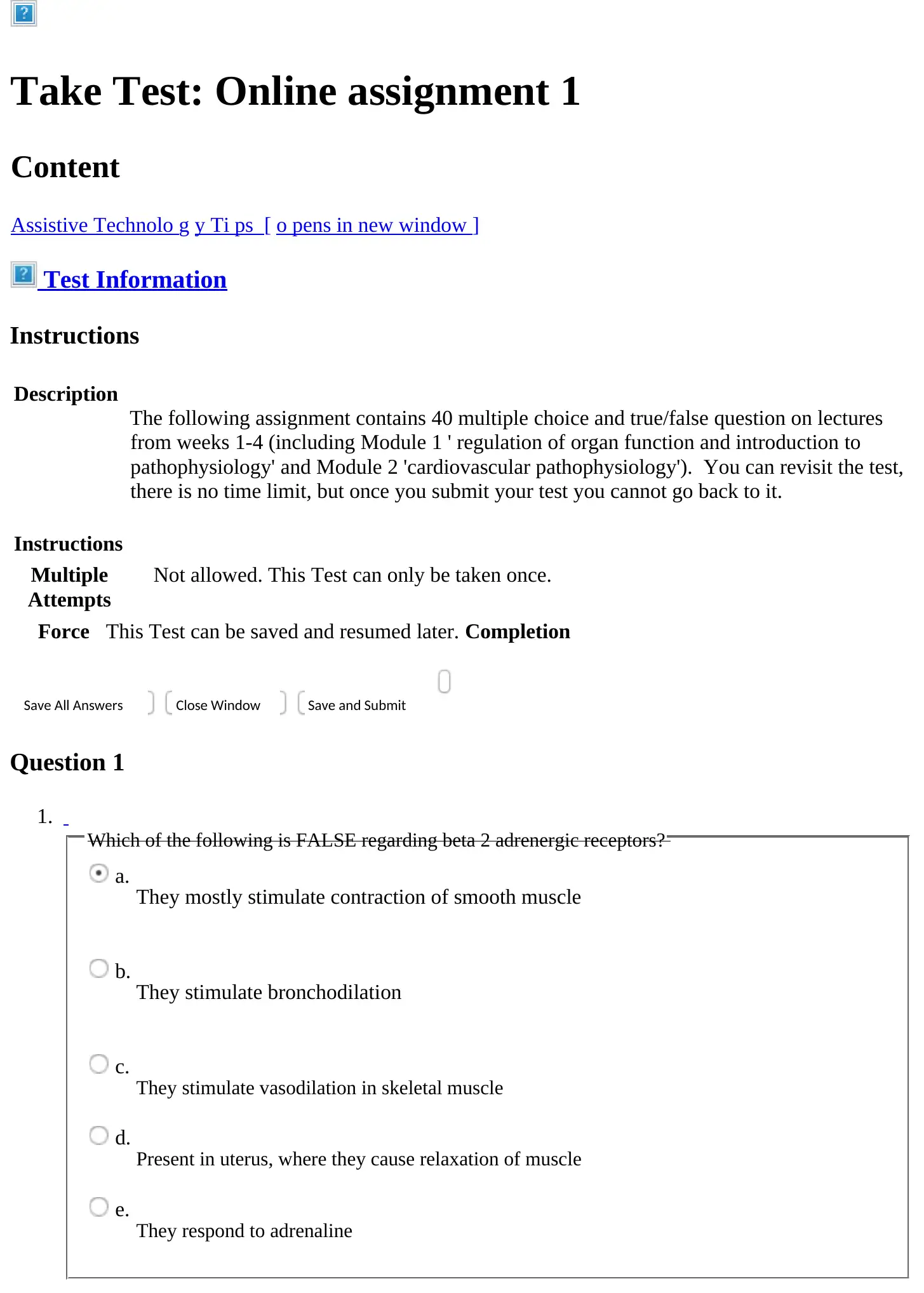
Take Test: Online assignment 1
Content
Assistive Technolo g y Ti ps [ o pens in new window ]
Test Information
Instructions
Description
The following assignment contains 40 multiple choice and true/false question on lectures
from weeks 1-4 (including Module 1 ' regulation of organ function and introduction to
pathophysiology' and Module 2 'cardiovascular pathophysiology'). You can revisit the test,
there is no time limit, but once you submit your test you cannot go back to it.
Instructions
Multiple Not allowed. This Test can only be taken once.
Attempts
Force This Test can be saved and resumed later. Completion
Question 1
1.
Which of the following is FALSE regarding beta 2 adrenergic receptors?
a. They mostly stimulate contraction of smooth muscle
b. They stimulate bronchodilation
c. They stimulate vasodilation in skeletal muscle
d. Present in uterus, where they cause relaxation of muscle
e. They respond to adrenaline
Save All Answers Close Window Save and Submit
tabler-icon-diamond-filled.svg

Paraphrase This Document

Need a fresh take? Get an instant paraphrase of this document with our AI Paraphraser
Document Page
1 points
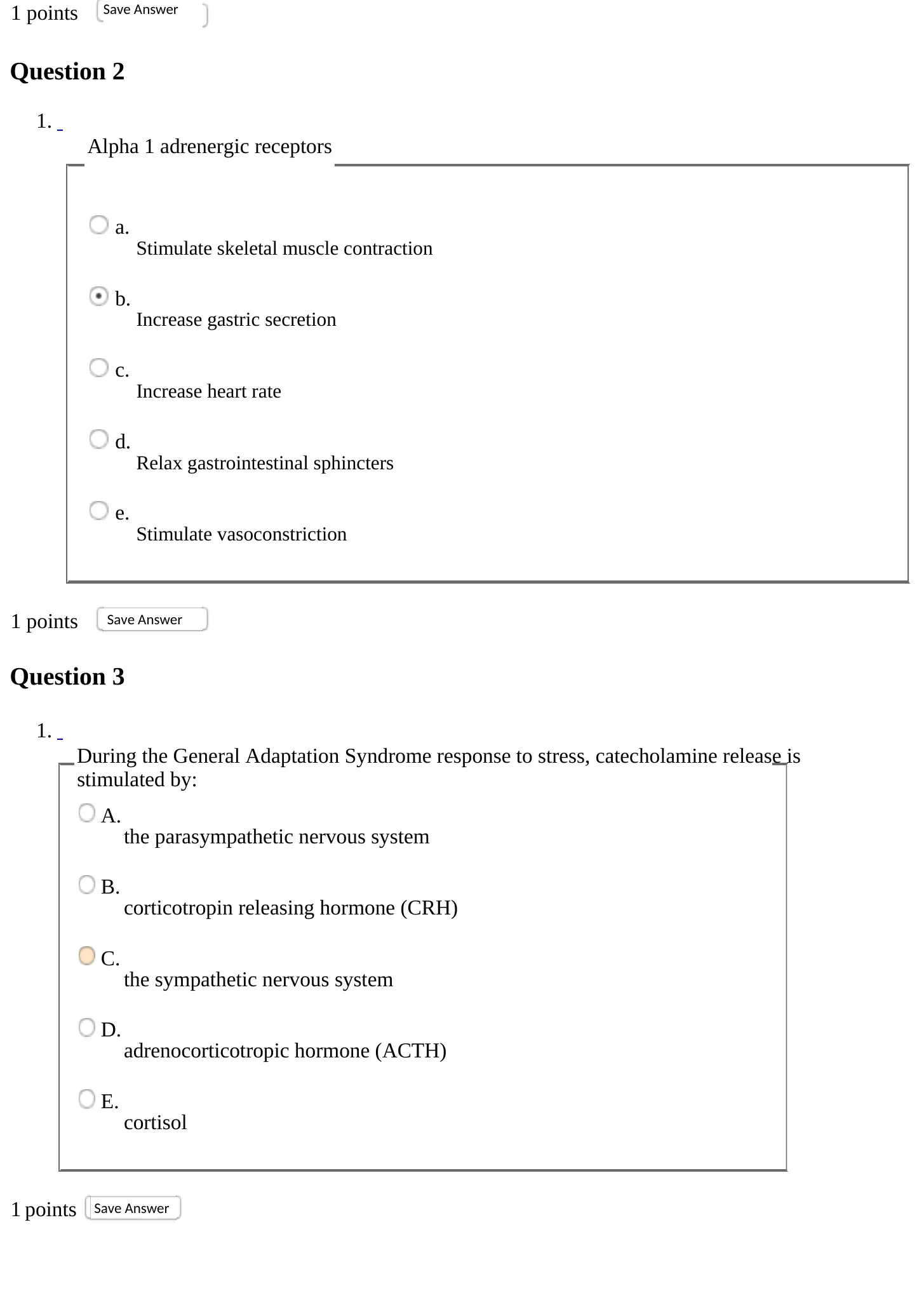
Question 2
1.
Question 3
1.
Alpha 1 adrenergic receptors
a. Stimulate skeletal muscle contraction
b. Increase gastric secretion
c. Increase heart rate
d. Relax gastrointestinal sphincters
e. Stimulate vasoconstriction
1 points Save Answer
During the General Adaptation Syndrome response to stress, catecholamine release is
stimulated by:
A. the parasympathetic nervous system
B. corticotropin releasing hormone (CRH)
C. the sympathetic nervous system
D. adrenocorticotropic hormone (ACTH)
E. cortisol
1 points Save Answer
Save Answer
Document Page
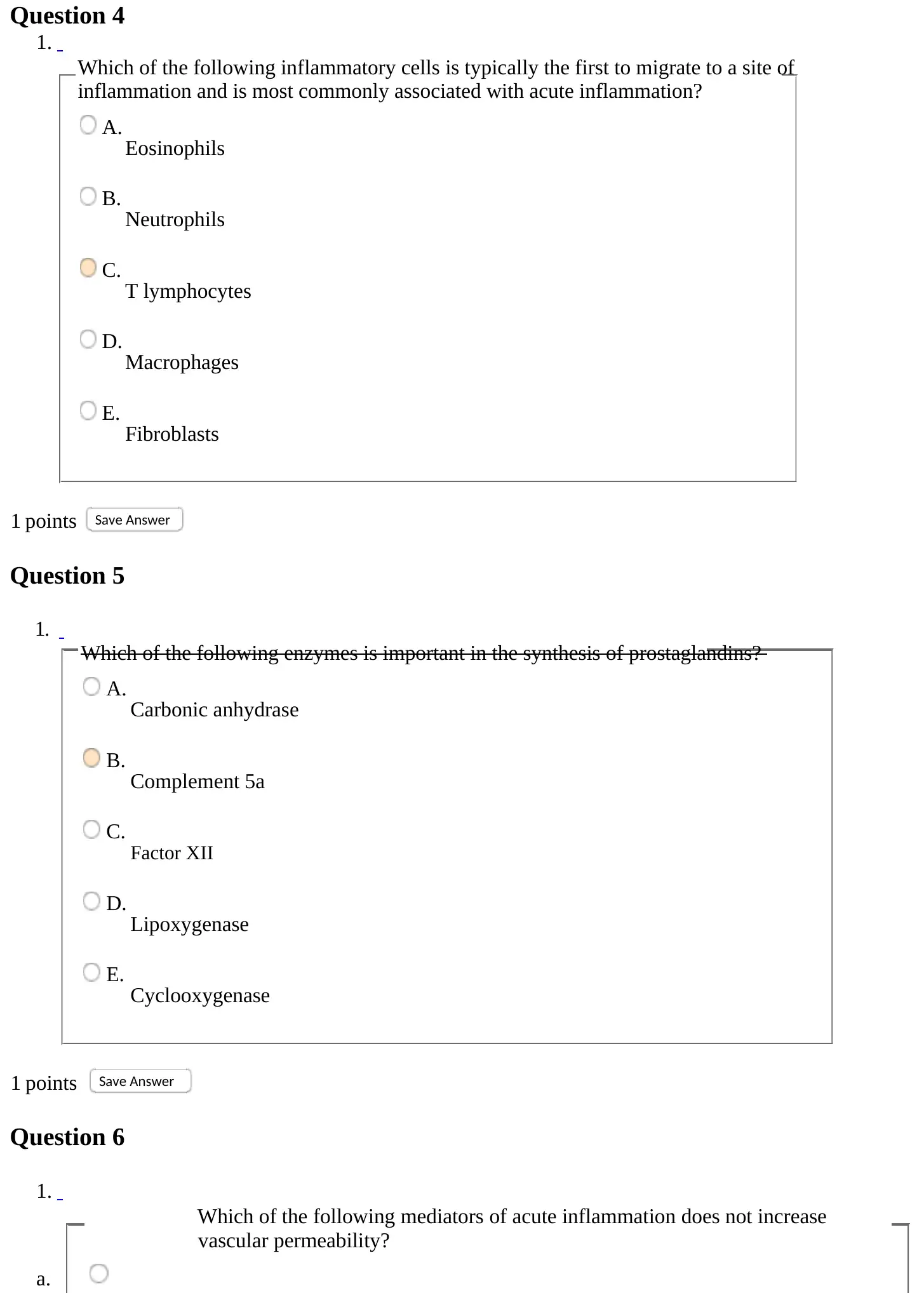
Question 4
1.
Question 5
Question 6
1.
Which of the following mediators of acute inflammation does not increase
vascular permeability?
a.
Which of the following inflammatory cells is typically the first to migrate to a site of
inflammation and is most commonly associated with acute inflammation?
A. Eosinophils
B. Neutrophils
C. T lymphocytes
D. Macrophages
E. Fibroblasts
1 points Save Answer
.1
Which of the following enzymes is important in the synthesis of prostaglandins?
A. Carbonic anhydrase
B. Complement 5a
C. Factor XII
D. Lipoxygenase
E. Cyclooxygenase
1 points Save Answer
Document Page
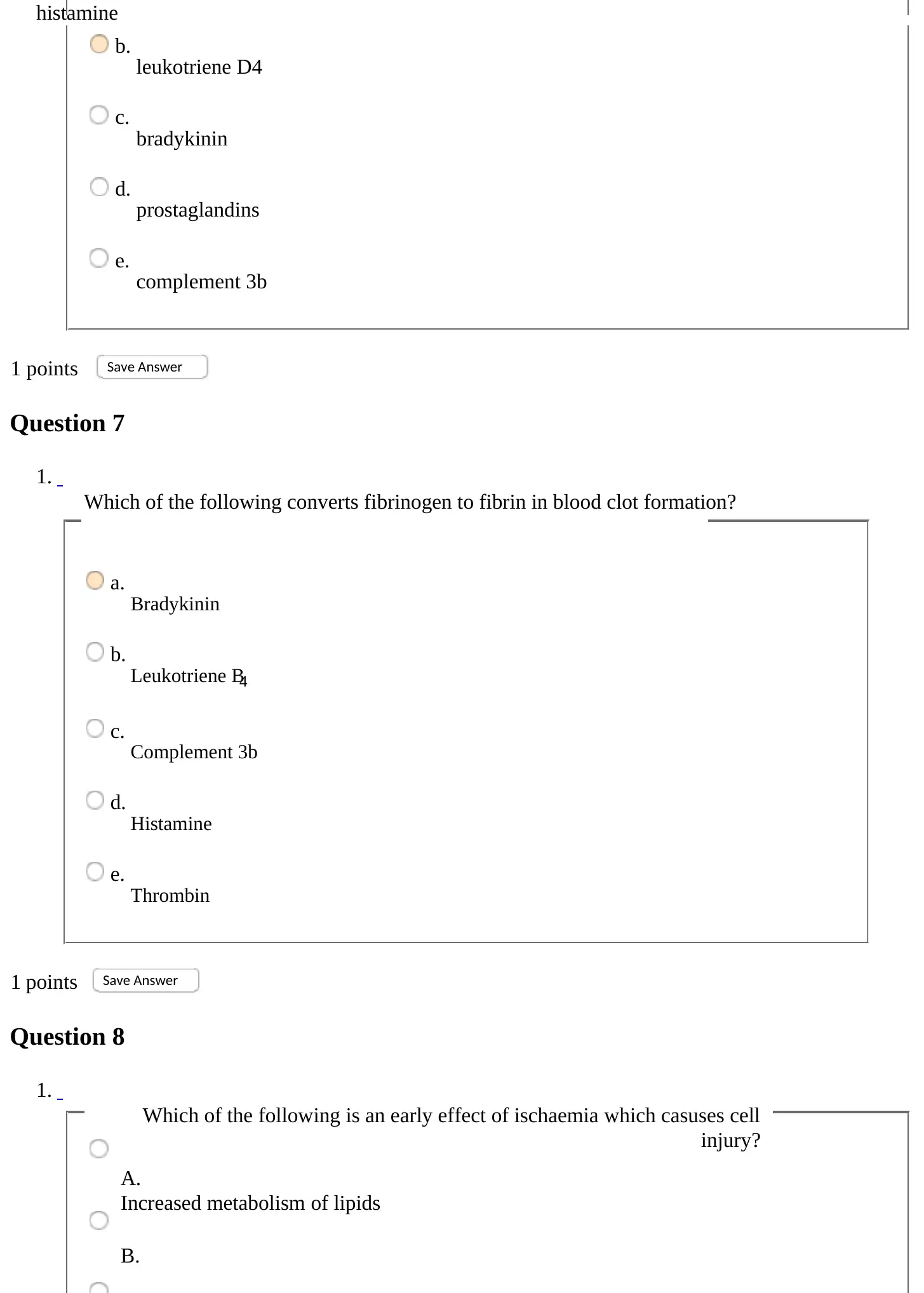
histamine
Question 7
1.
Question 8
1.
Which of the following is an early effect of ischaemia which casuses cell
injury?
A.
Increased metabolism of lipids
B.
b. leukotriene D4
c. bradykinin
d.
prostaglandins
e. complement 3b
1 points Save Answer
Which of the following converts fibrinogen to fibrin in blood clot formation?
a. Bradykinin
b. Leukotriene B4
c. Complement 3b
d. Histamine
e. Thrombin
1 points Save Answer
tabler-icon-diamond-filled.svg

Paraphrase This Document

Need a fresh take? Get an instant paraphrase of this document with our AI Paraphraser
Document Page
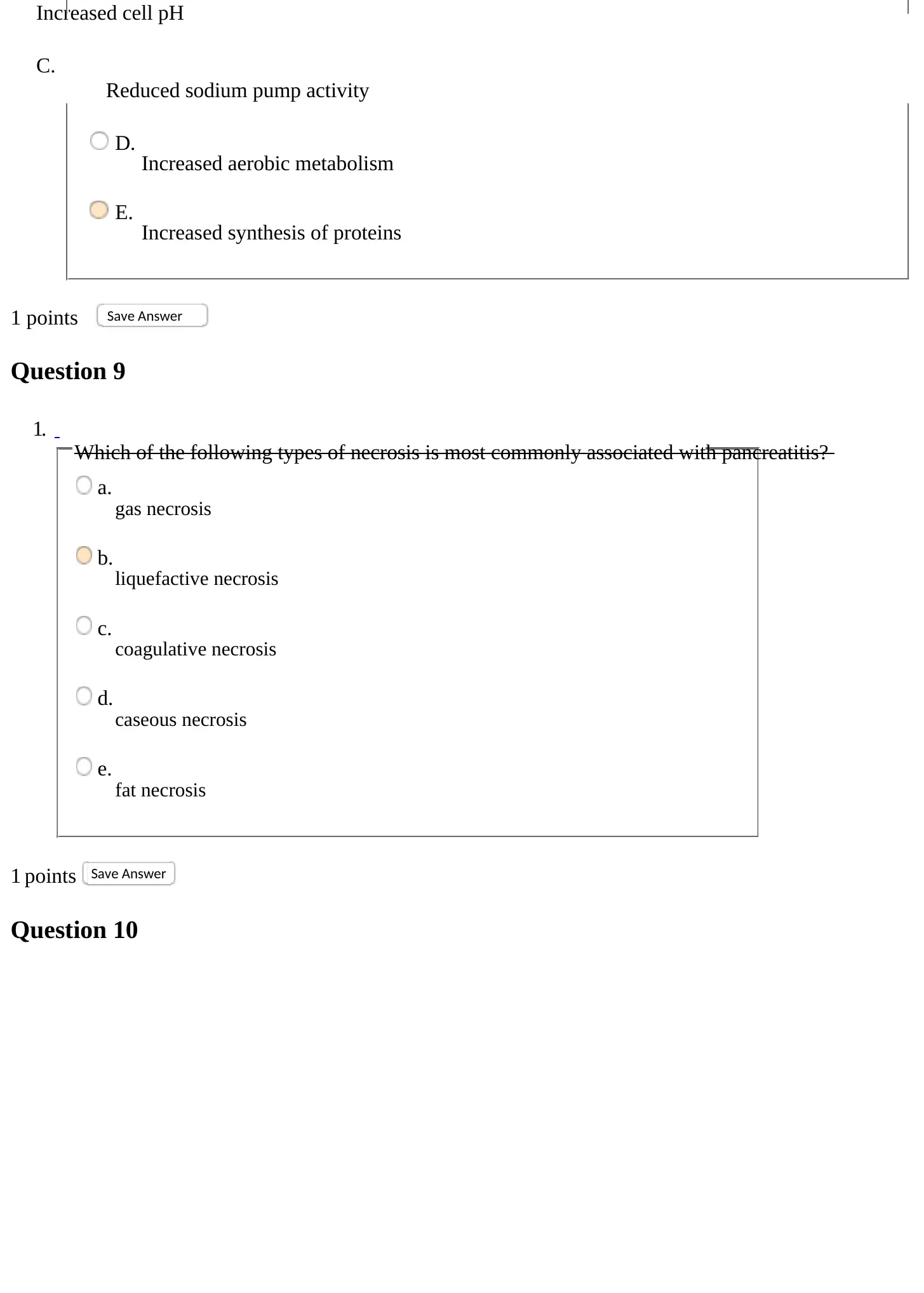
Increased cell pH
C.
Reduced sodium pump activity
D. Increased aerobic metabolism
E. Increased synthesis of proteins
1 points Save Answer
Question 9
.1
Which of the following types of necrosis is most commonly associated with pancreatitis?
a. gas necrosis
b. liquefactive necrosis
c. coagulative necrosis
d. caseous necrosis
e. fat necrosis
1 points Save Answer
Question 10
Document Page
Question 11
1.
1.
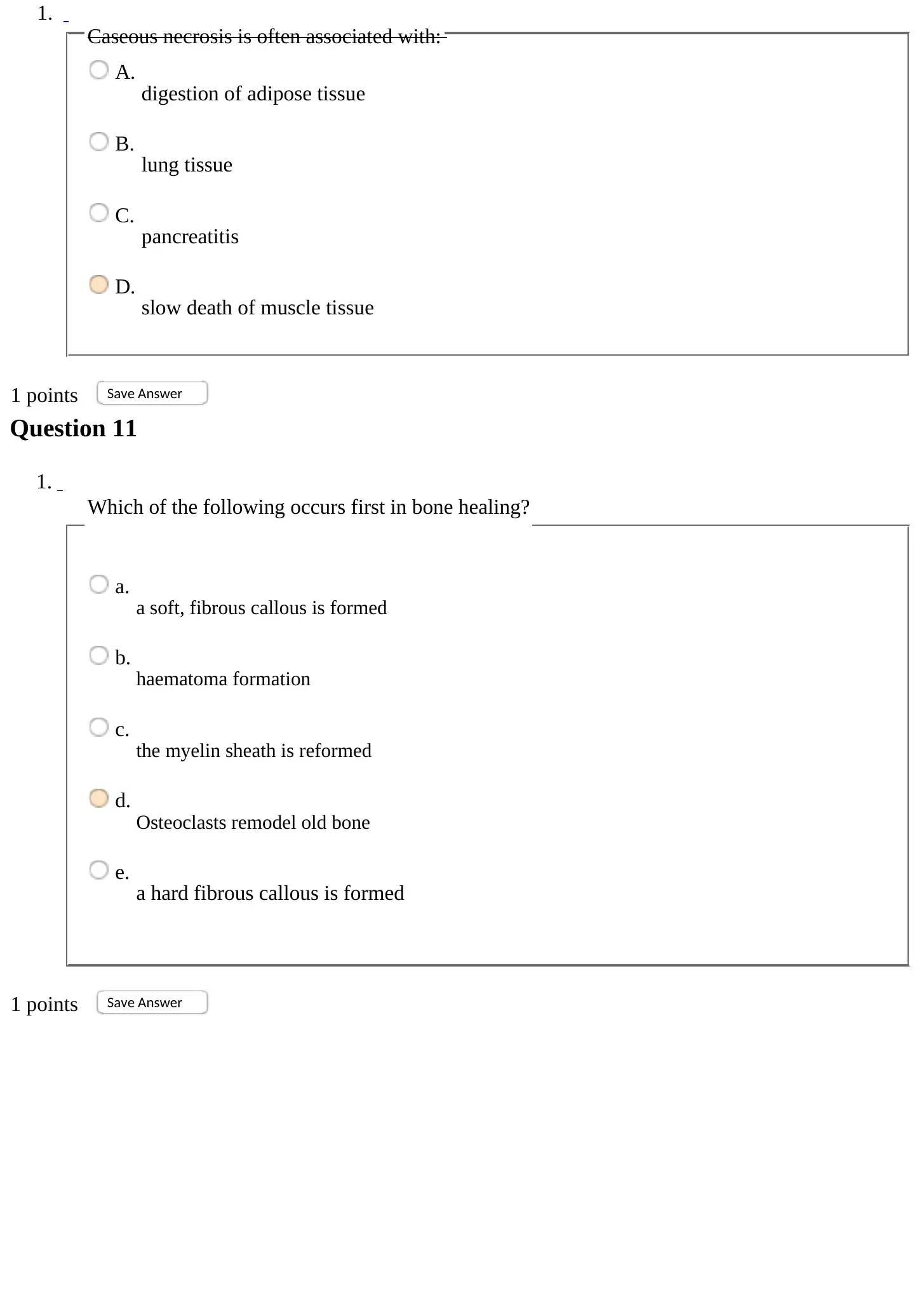
Caseous necrosis is often associated with:
A. digestion of adipose tissue
B. lung tissue
C. pancreatitis
D. slow death of muscle tissue
1 points Save Answer
Which of the following occurs first in bone healing?
a. a soft, fibrous callous is formed
b. haematoma formation
c. the myelin sheath is reformed
d. Osteoclasts remodel old bone
e. a hard fibrous callous is formed
1 points Save Answer
Document Page
Question 12
Question 13
1.
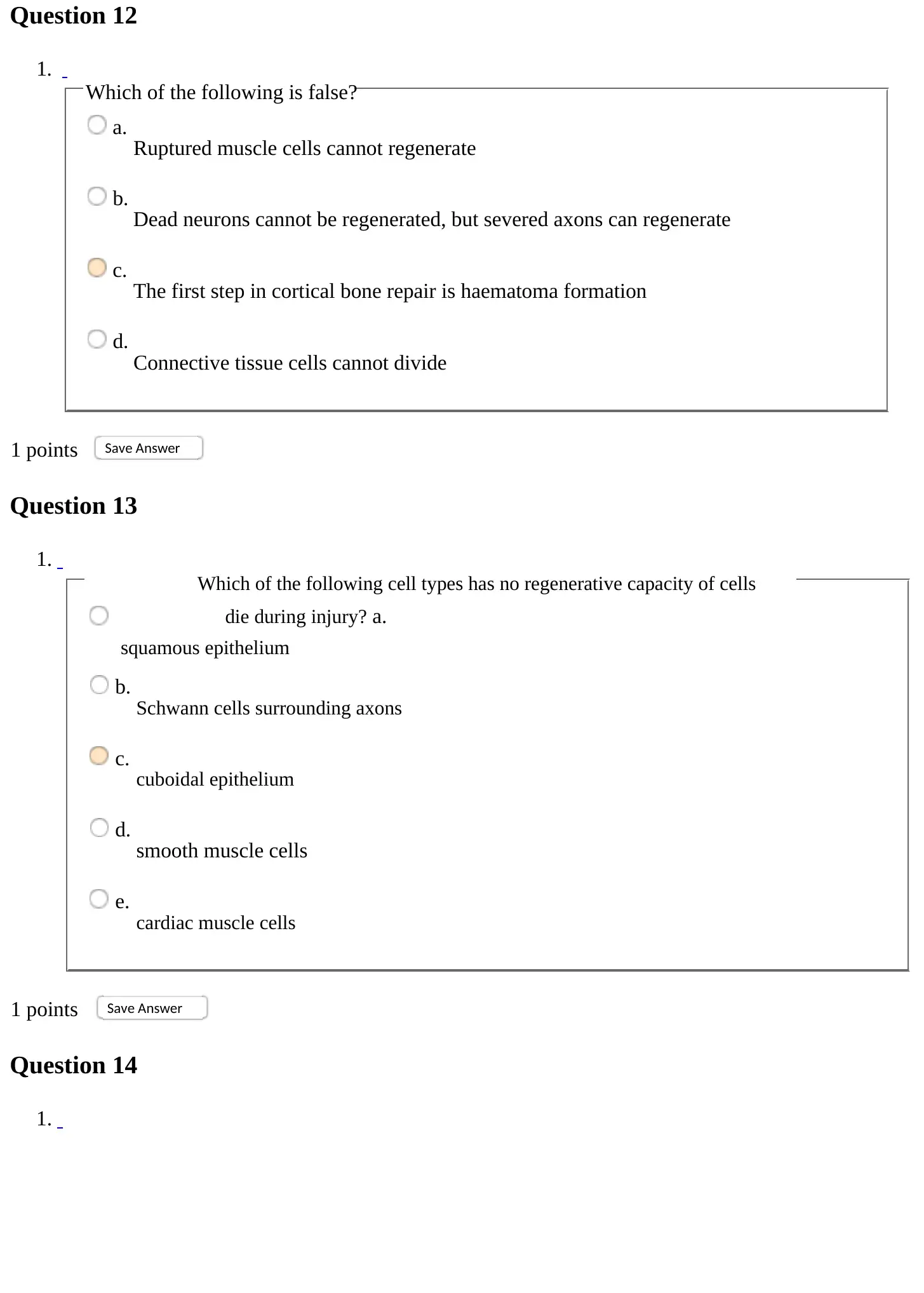
Which of the following cell types has no regenerative capacity of cells
die during injury? a.
squamous epithelium
Question 14
1.
1.
Which of the following is false?
a. Ruptured muscle cells cannot regenerate
b. Dead neurons cannot be regenerated, but severed axons can regenerate
c. The first step in cortical bone repair is haematoma formation
d. Connective tissue cells cannot divide
1 points Save Answer
b. Schwann cells surrounding axons
c. cuboidal epithelium
d. smooth muscle cells
e. cardiac muscle cells
1 points Save Answer
tabler-icon-diamond-filled.svg

Paraphrase This Document

Need a fresh take? Get an instant paraphrase of this document with our AI Paraphraser
Document Page
Question 15
1.
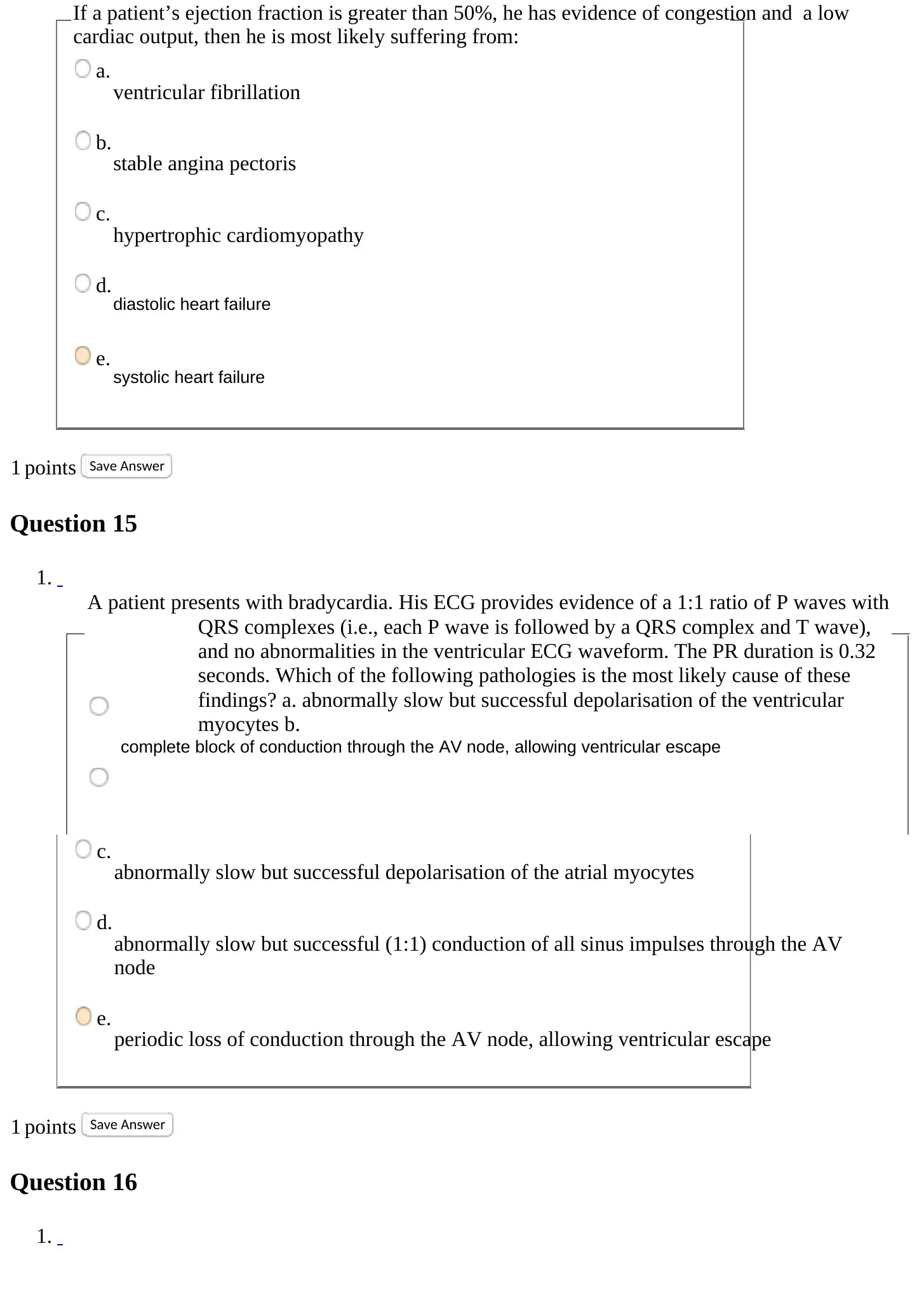
A patient presents with bradycardia. His ECG provides evidence of a 1:1 ratio of P waves with
QRS complexes (i.e., each P wave is followed by a QRS complex and T wave),
and no abnormalities in the ventricular ECG waveform. The PR duration is 0.32
seconds. Which of the following pathologies is the most likely cause of these
findings? a. abnormally slow but successful depolarisation of the ventricular
myocytes b.
complete block of conduction through the AV node, allowing ventricular escape
Question 16
1.
If a patient’s ejection fraction is greater than 50%, he has evidence of congestion and a low
cardiac output, then he is most likely suffering from:
a. ventricular fibrillation
b. stable angina pectoris
c.
hypertrophic cardiomyopathy
d. diastolic heart failure
e. systolic heart failure
1 points Save Answer
c. abnormally slow but successful depolarisation of the atrial myocytes
d. abnormally slow but successful (1:1) conduction of all sinus impulses through the AV
node
e. periodic loss of conduction through the AV node, allowing ventricular escape
1 points Save Answer
Document Page
Question 17
1.
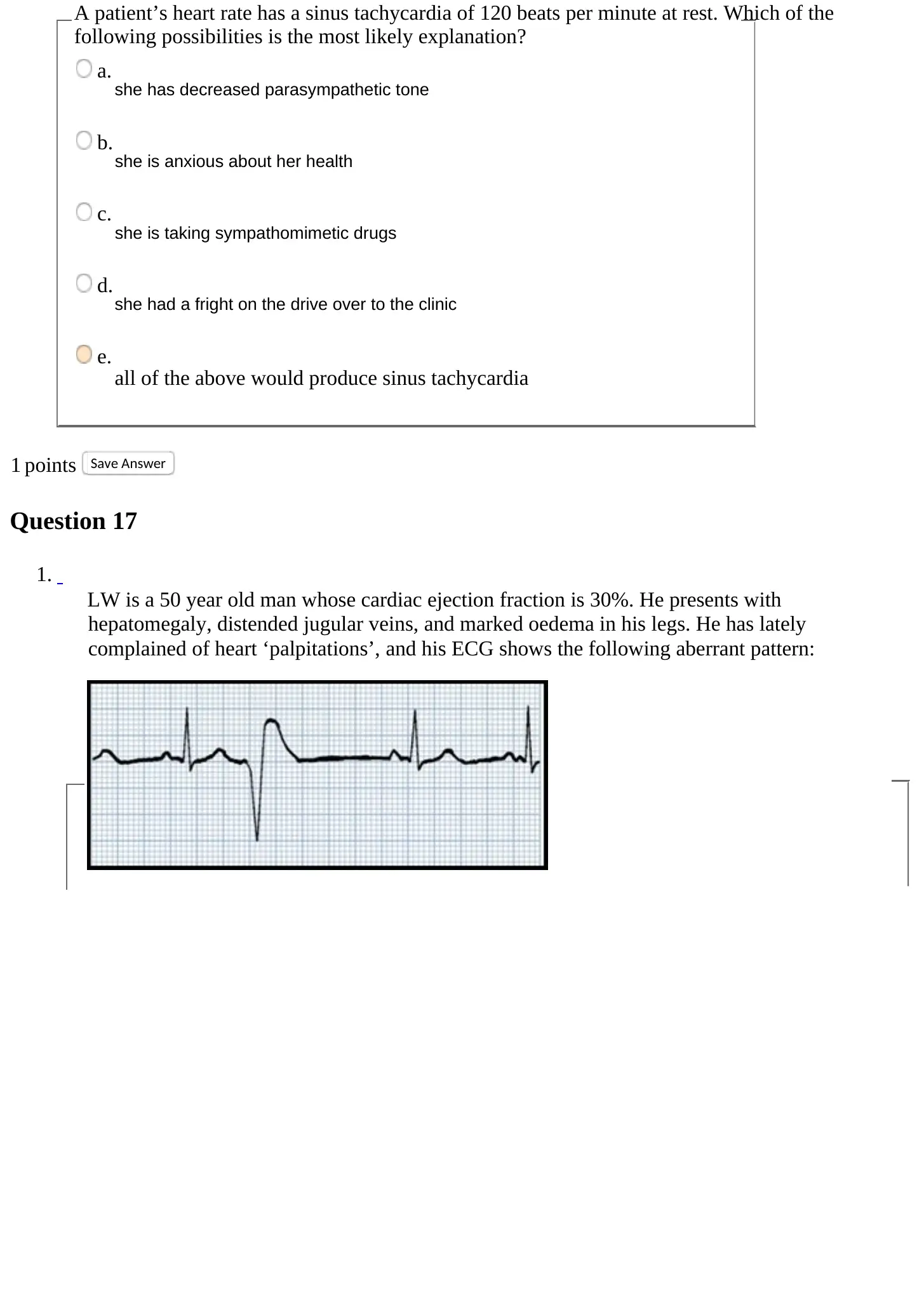
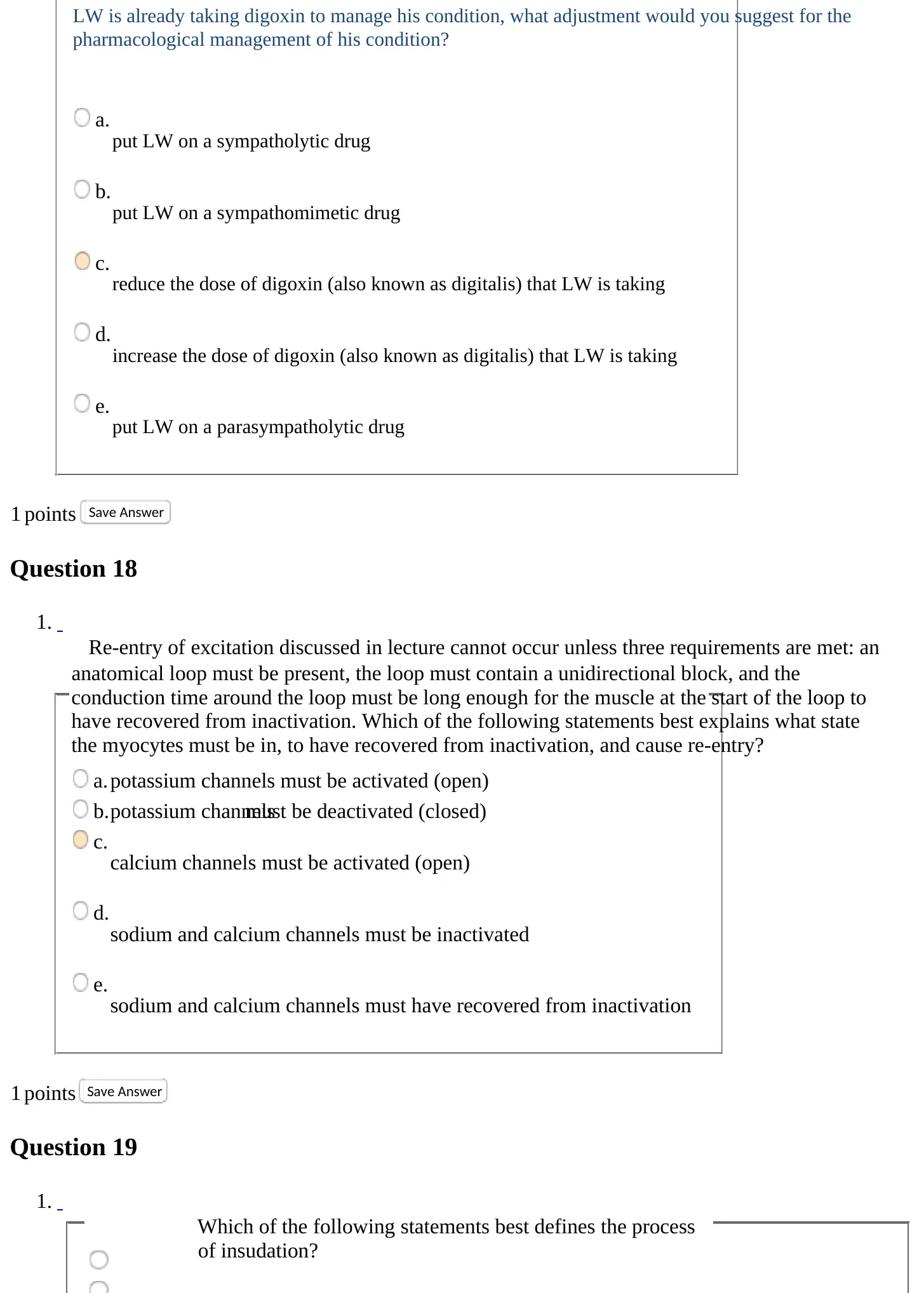
LW is a 50 year old man whose cardiac ejection fraction is 30%. He presents with
hepatomegaly, distended jugular veins, and marked oedema in his legs. He has lately
complained of heart ‘palpitations’, and his ECG shows the following aberrant pattern:
A patient’s heart rate has a sinus tachycardia of 120 beats per minute at rest. Which of the
following possibilities is the most likely explanation?
a. she has decreased parasympathetic tone
b. she is anxious about her health
c. she is taking sympathomimetic drugs
d. she had a fright on the drive over to the clinic
e. all of the above would produce sinus tachycardia
1 points Save Answer
Document Page
Question 18
1.
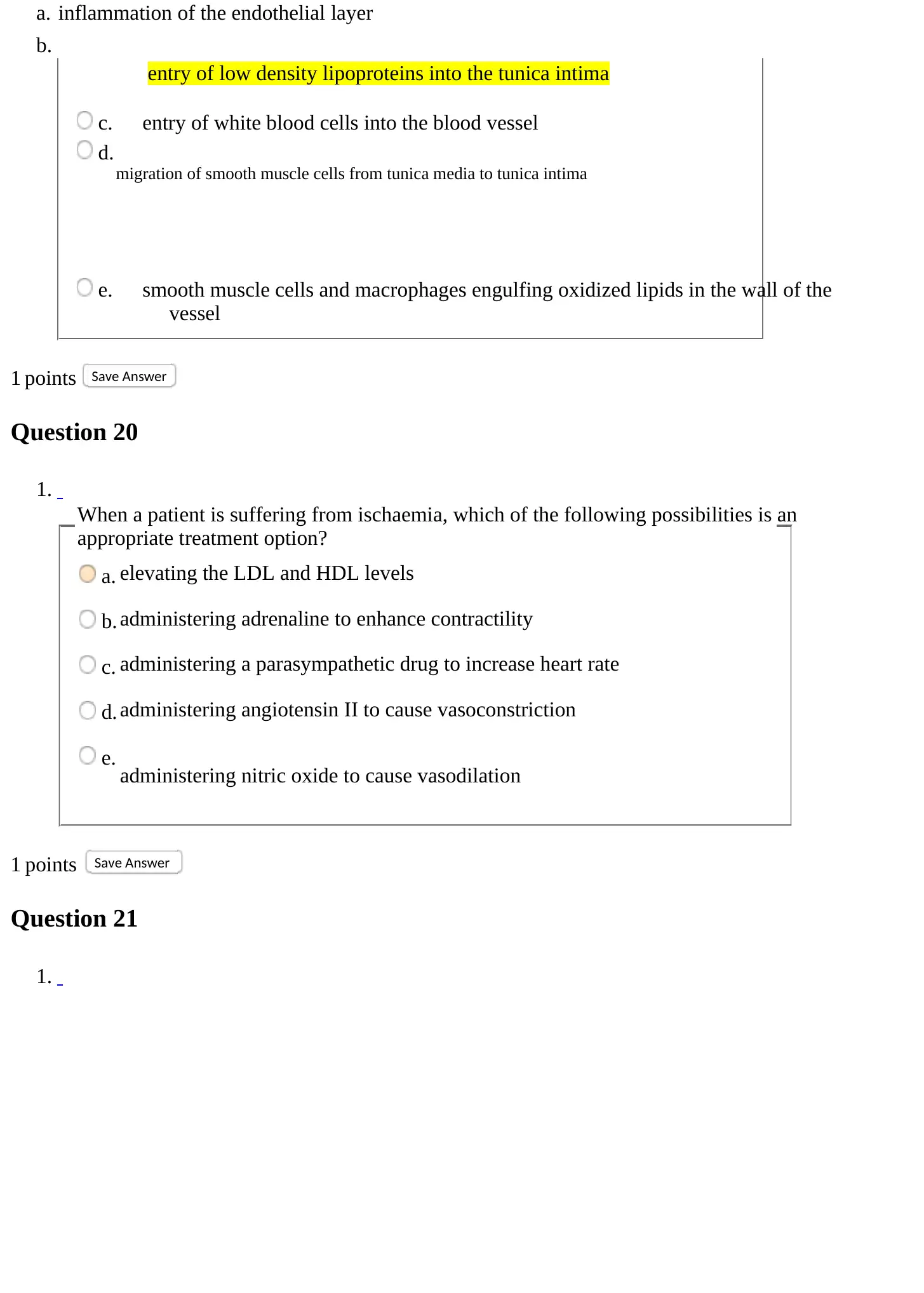
Re-entry of excitation discussed in lecture cannot occur unless three requirements are met: an
Question 19
1.
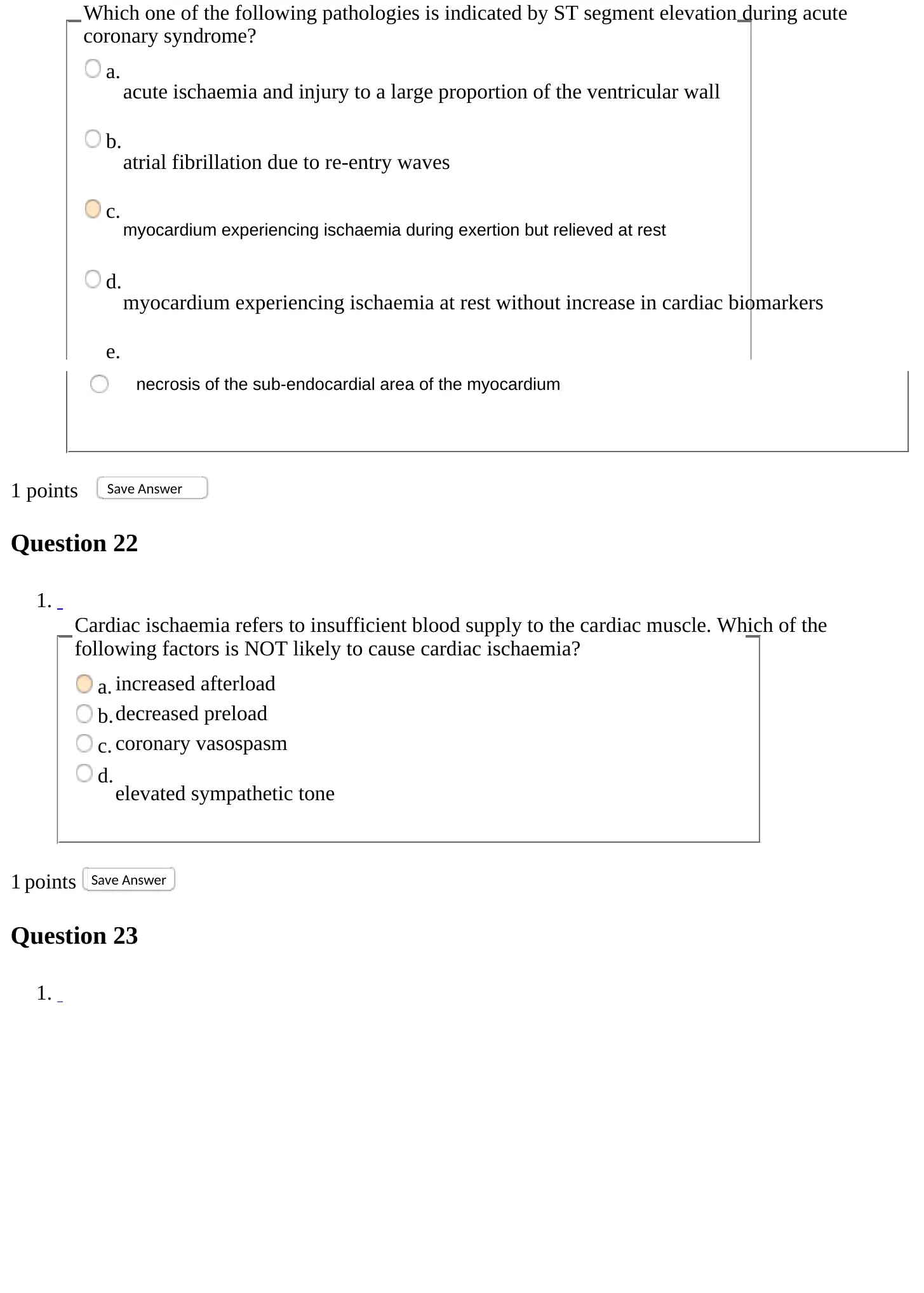
Which of the following statements best defines the process
of insudation?
LW is already taking digoxin to manage his condition, what adjustment would you suggest for the
pharmacological management of his condition?
a. put LW on a sympatholytic drug
b. put LW on a sympathomimetic drug
c. reduce the dose of digoxin (also known as digitalis) that LW is taking
d. increase the dose of digoxin (also known as digitalis) that LW is taking
e. put LW on a parasympatholytic drug
1 points Save Answer
anatomical loop must be present, the loop must contain a unidirectional block, and the
conduction time around the loop must be long enough for the muscle at the start of the loop to
have recovered from inactivation. Which of the following statements best explains what state
the myocytes must be in, to have recovered from inactivation, and cause re-entry?
a.potassium channels must be activated (open)
b.potassium channelsmust be deactivated (closed)
c. calcium channels must be activated (open)
d. sodium and calcium channels must be inactivated
e. sodium and calcium channels must have recovered from inactivation
1 points Save Answer
tabler-icon-diamond-filled.svg

Paraphrase This Document

Need a fresh take? Get an instant paraphrase of this document with our AI Paraphraser
Document Page
a. inflammation of the endothelial layer
b.
1.
1.
entry of low density lipoproteins into the tunica intima
c. entry of white blood cells into the blood vessel
d. migration of smooth muscle cells from tunica media to tunica intima
e. smooth muscle cells and macrophages engulfing oxidized lipids in the wall of the
vessel
1 points Save Answer
Question 20
When a patient is suffering from ischaemia, which of the following possibilities is an
appropriate treatment option?
a. elevating the LDL and HDL levels
b. administering adrenaline to enhance contractility
c. administering a parasympathetic drug to increase heart rate
d. administering angiotensin II to cause vasoconstriction
e. administering nitric oxide to cause vasodilation
1 points Save Answer
Question 21
Document Page
1.
1.
Which one of the following pathologies is indicated by ST segment elevation during acute
coronary syndrome?
a. acute ischaemia and injury to a large proportion of the ventricular wall
b. atrial fibrillation due to re-entry waves
c. myocardium experiencing ischaemia during exertion but relieved at rest
d. myocardium experiencing ischaemia at rest without increase in cardiac biomarkers
e.
necrosis of the sub-endocardial area of the myocardium
1 points Save Answer
Question 22
Cardiac ischaemia refers to insufficient blood supply to the cardiac muscle. Which of the
following factors is NOT likely to cause cardiac ischaemia?
a. increased afterload
b.decreased preload
c. coronary vasospasm
d. elevated sympathetic tone
1 points Save Answer
Question 23
chevron_up_icon
1 out of 14
circle_padding
hide_on_mobile
zoom_out_icon
[object Object]