Pay-for-Performance Programs: Impact on Motivation and Performance

Verified

Added on  2023/04/20

|12
|654
|449
Report
AI Summary
This report examines the influence of pay-for-performance programs on employee work behaviors, motivation, and overall performance within an organization. It highlights the relationship between pay and performance, emphasizing how financial rewards and incentives can significantly motivate employees to exhibit high levels of performance. The report discusses key elements for effectively implementing pay-for-performance, including efficiency, strategy, standards, structure, equity, and compliance, and outlines characteristics of a successful compensation program. It also addresses the impact of generational diversity in the workplace and the importance of coaching, mentoring, and training initiatives to improve employee productivity, satisfaction, motivation, engagement, and performance. The report further identifies appropriate programs for organizations, such as lump-sum bonuses, merit pay, individual spot awards, and individual incentive plans, and references scholarly works to support its findings, providing a comprehensive overview of pay-for-performance strategies and their implications.
Document Page
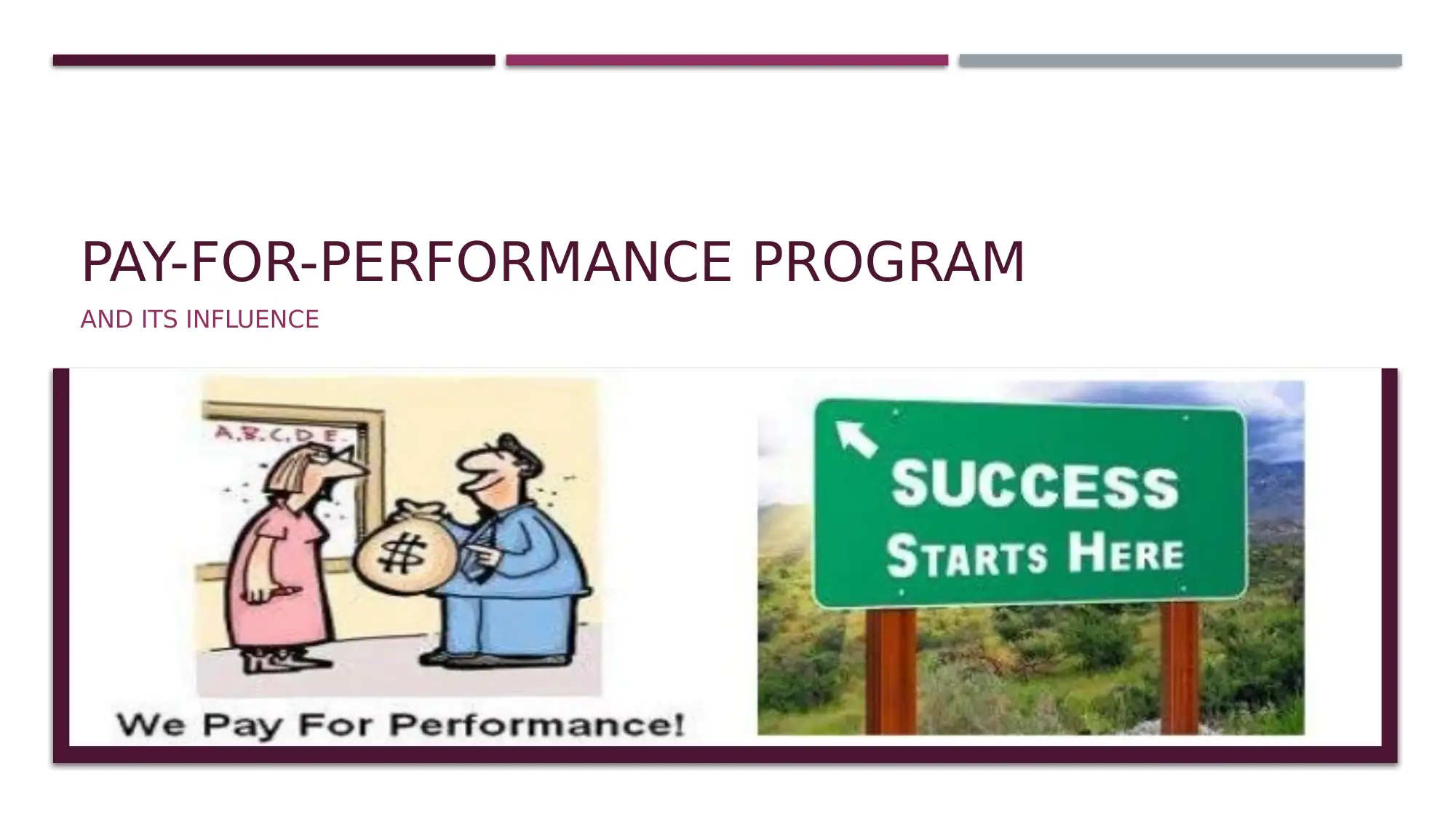
PAY-FOR-PERFORMANCE PROGRAM
AND ITS INFLUENCE
tabler-icon-diamond-filled.svg

Paraphrase This Document

Need a fresh take? Get an instant paraphrase of this document with our AI Paraphraser
Document Page
WHAT IS PAY-FOR-PERFORMANCE PROGRAM?
Pay for performance is the compensation program for the non-
repre)sented employees working in the organisation” (Olaisen &
Revang, 2018).
Document Page
HOW PAY-FOR-PERFORMANCE PROGRAM INFLUENCE
EMPLOYEE WORK BEHAVIOURS
Employees perform better on their job due to pay
They agree for developing the job skills more readily due to pay
People stay in the organisation or leave the organisation mainly due
to pay
People join in an organisation due to pay
Document Page
RELATIONSHIP BETWEEN PAY AND PERFORMANCE
Employees work for earning money that satisfies their needs
Financial rewards or incentives is very important for motivating the
employees for exhibit high degree of performance.
Every employees want to be appreciated for their work and be
properly compensated by their employers
tabler-icon-diamond-filled.svg

Paraphrase This Document

Need a fresh take? Get an instant paraphrase of this document with our AI Paraphraser
Document Page
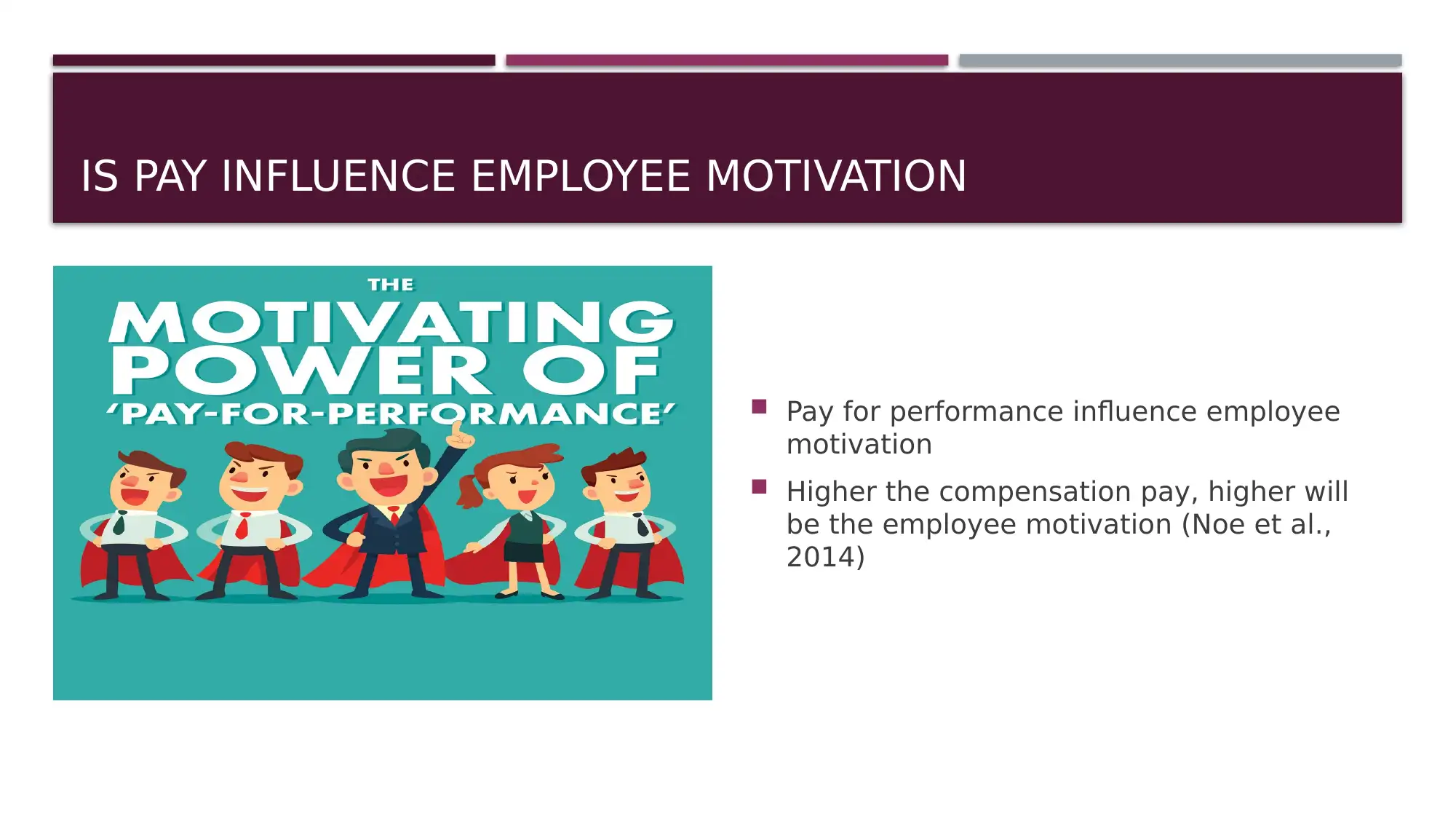
IS PAY INFLUENCE EMPLOYEE MOTIVATION
Pay for performance influence employee
motivation
Higher the compensation pay, higher will
be the employee motivation (Noe et al.,
2014)
Document Page
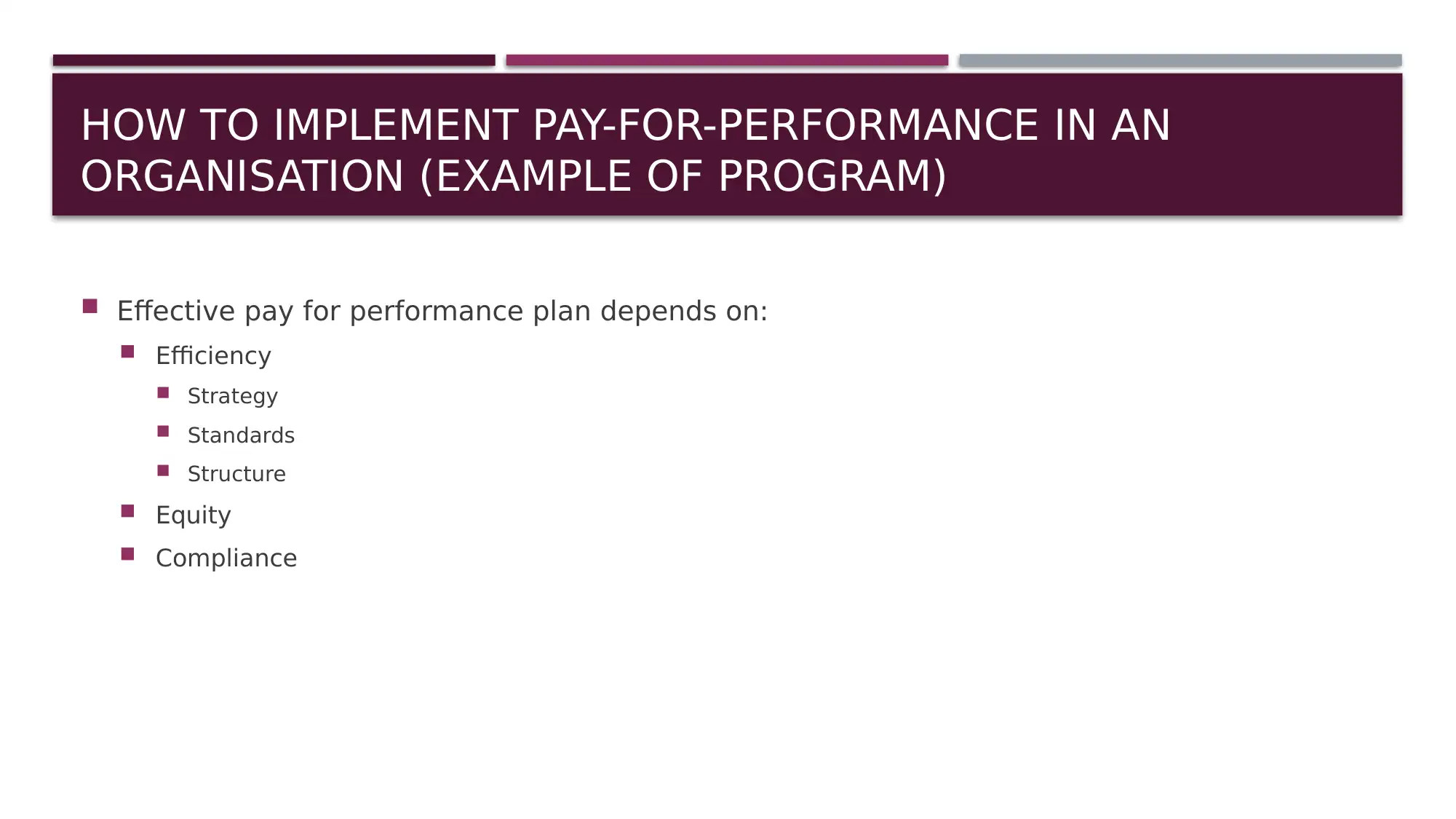
HOW TO IMPLEMENT PAY-FOR-PERFORMANCE IN AN
ORGANISATION (EXAMPLE OF PROGRAM)
Effective pay for performance plan depends on:
Efficiency
Strategy
Standards
Structure
Equity
Compliance
Document Page
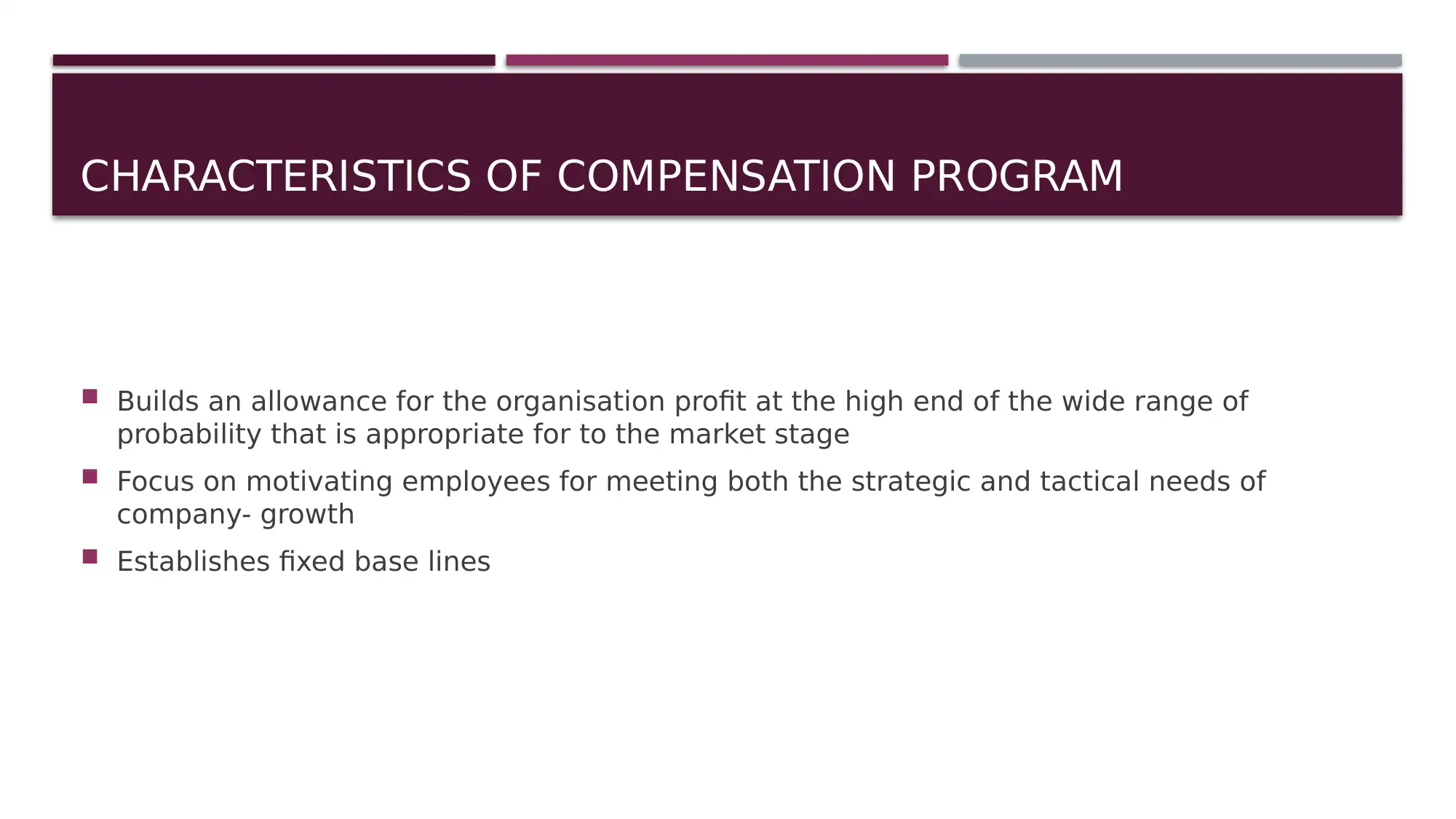
CHARACTERISTICS OF COMPENSATION PROGRAM
Builds an allowance for the organisation profit at the high end of the wide range of
probability that is appropriate for to the market stage
Focus on motivating employees for meeting both the strategic and tactical needs of
company- growth
Establishes fixed base lines
tabler-icon-diamond-filled.svg

Paraphrase This Document

Need a fresh take? Get an instant paraphrase of this document with our AI Paraphraser
Document Page
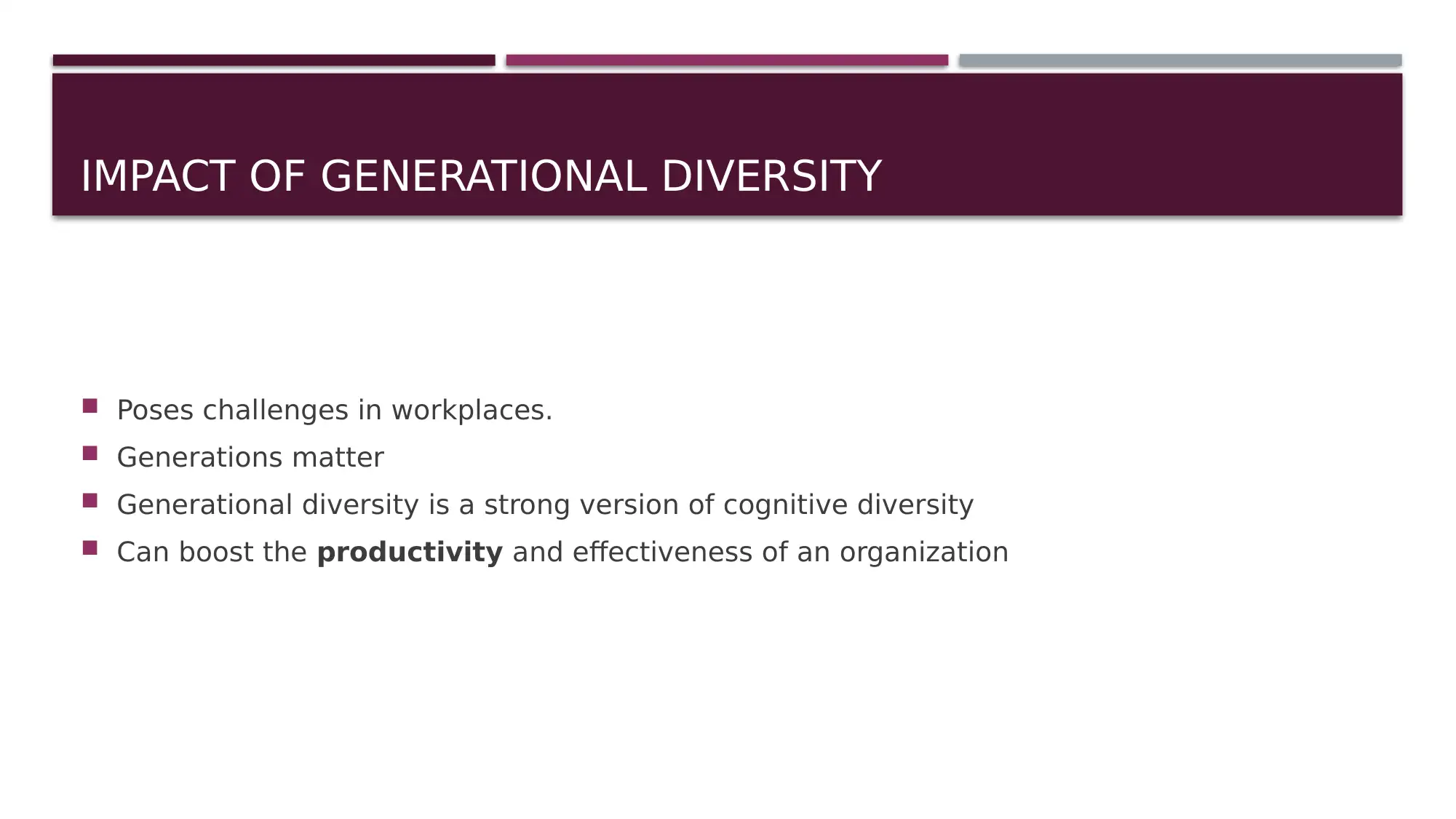
IMPACT OF GENERATIONAL DIVERSITY
Poses challenges in workplaces.
Generations matter
Generational diversity is a strong version of cognitive diversity
Can boost the productivity and effectiveness of an organization
Document Page
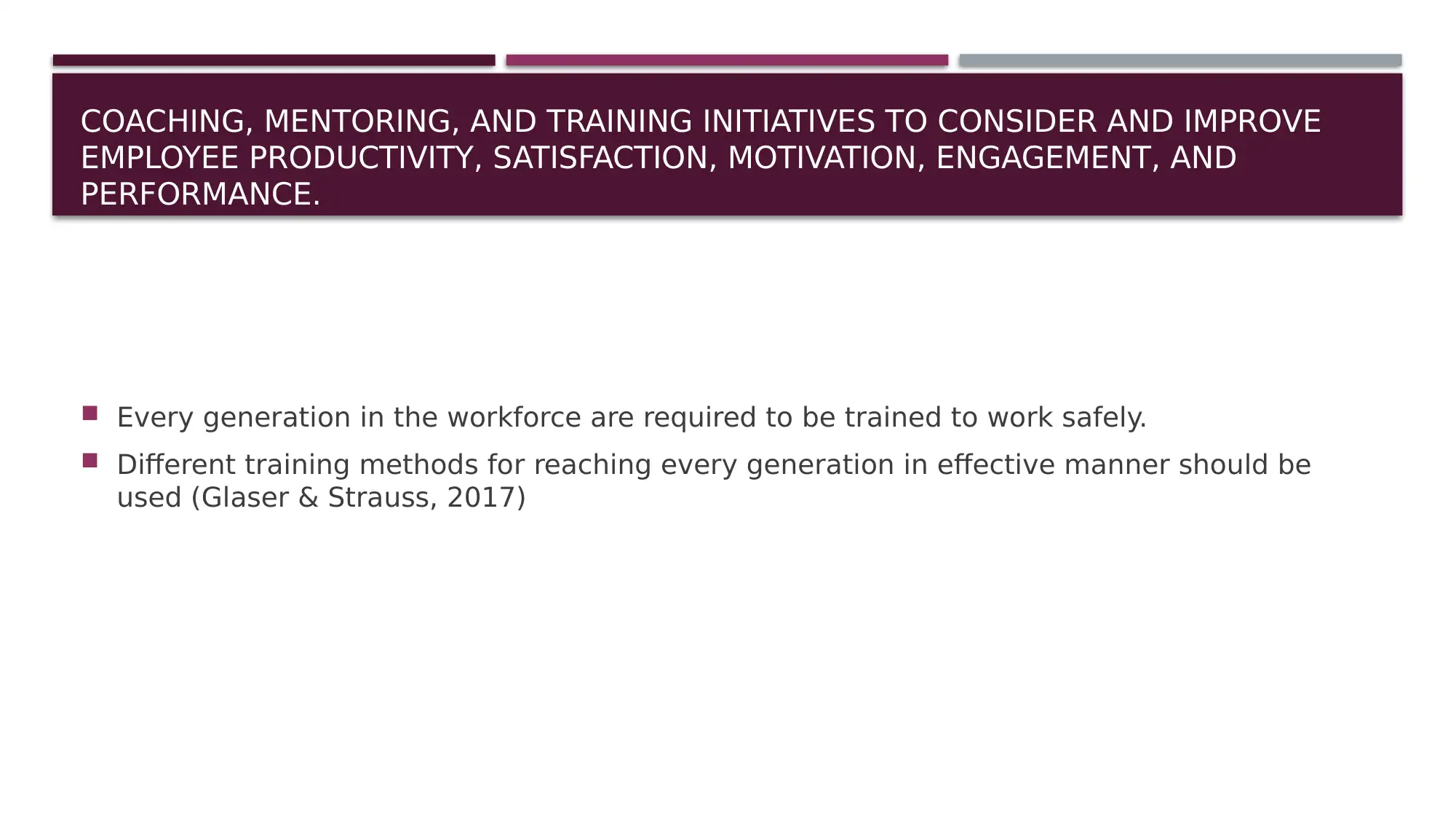
COACHING, MENTORING, AND TRAINING INITIATIVES TO CONSIDER AND IMPROVE
EMPLOYEE PRODUCTIVITY, SATISFACTION, MOTIVATION, ENGAGEMENT, AND
PERFORMANCE.
Every generation in the workforce are required to be trained to work safely.
Different training methods for reaching every generation in effective manner should be
used (Glaser & Strauss, 2017)
Document Page
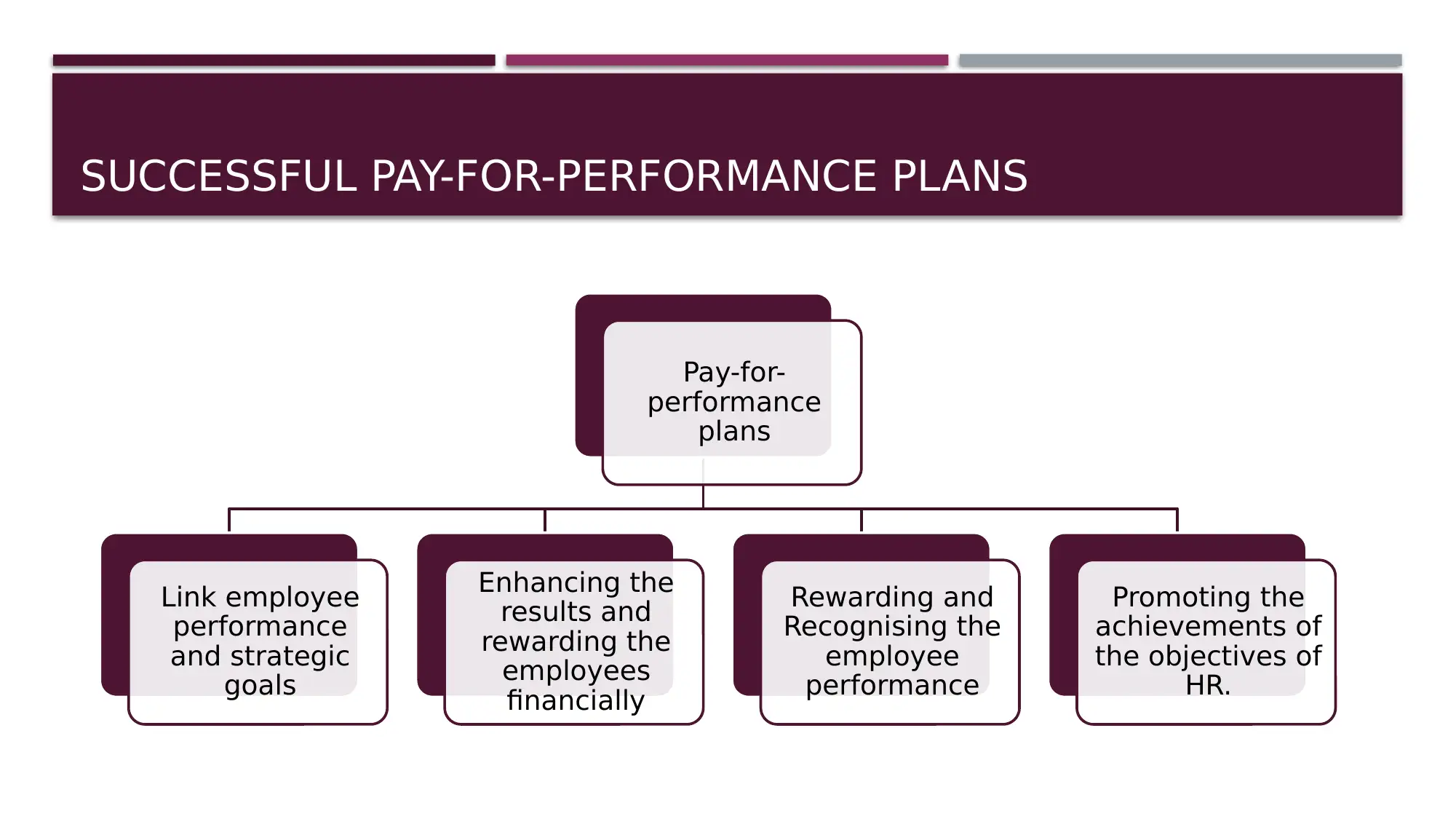
SUCCESSFUL PAY-FOR-PERFORMANCE PLANS
Pay-for-
performance
plans
Link employee
performance
and strategic
goals
Enhancing the
results and
rewarding the
employees
financially
Rewarding and
Recognising the
employee
performance
Promoting the
achievements of
the objectives of
HR.
tabler-icon-diamond-filled.svg

Paraphrase This Document

Need a fresh take? Get an instant paraphrase of this document with our AI Paraphraser
Document Page
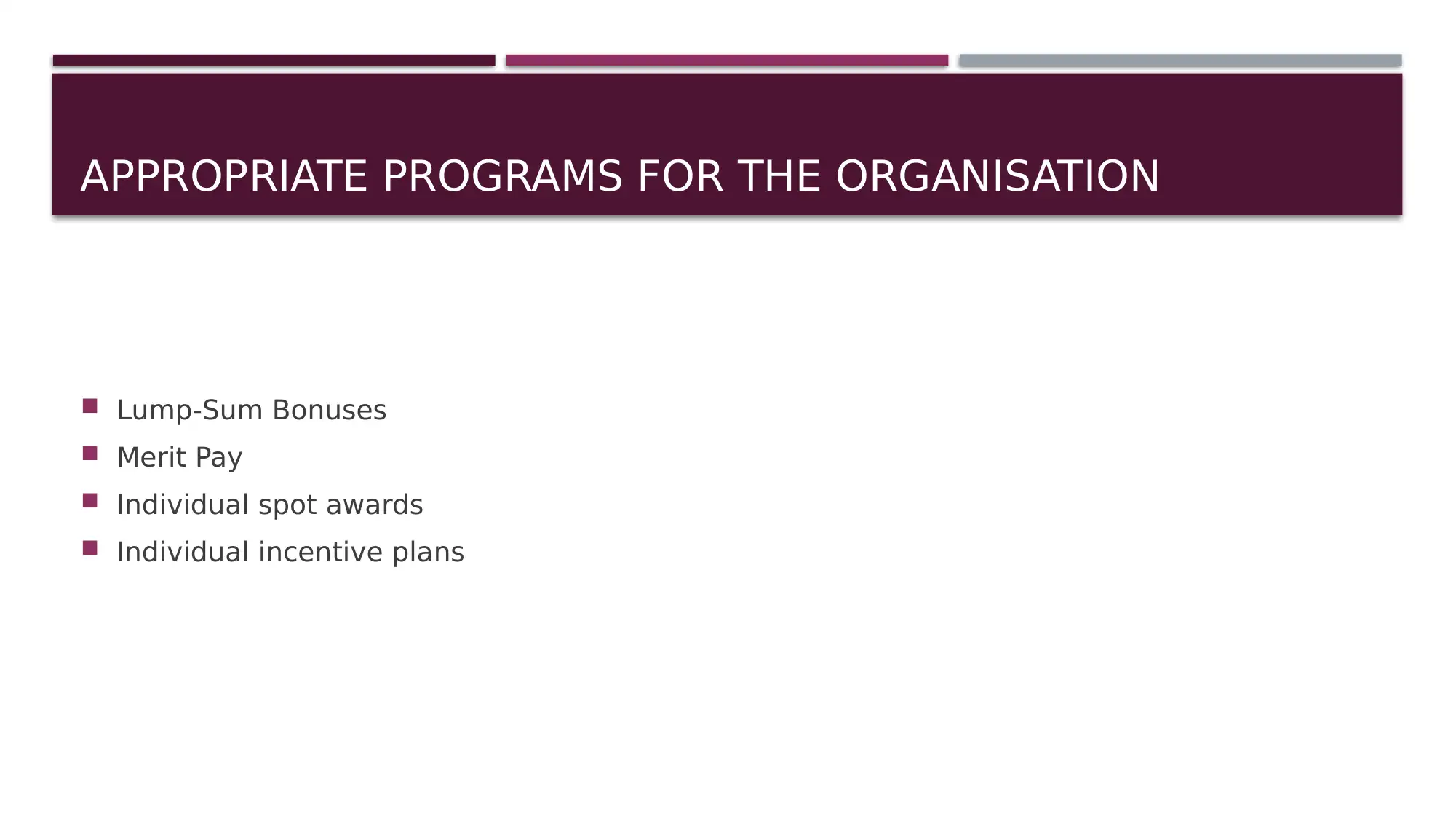
APPROPRIATE PROGRAMS FOR THE ORGANISATION
Lump-Sum Bonuses
Merit Pay
Individual spot awards
Individual incentive plans
Document Page
REFERENCES:
Milkovich, G. T., & Newman, J. M. Gerhart. B.(2014). Compensation.
Kim, J. (2016). Impact of performance appraisal justice on the effectiveness of pay-for-performance systems
after civil service reform. Public Personnel Management, 45(2), 148-170.
Rima, A. R., & Islam, M. R. MOBILITY PATH-A STRATEGIC APPROACH FOR PEOPLE DEVELOPMENT IN THE
PERSPECTIVE OF BANGLADESH.
Olaisen, J., & Revang, O. (2018). Exploring the performance of tacit knowledge: How to make ordinary people
deliver extraordinary results in teams. International Journal of Information Management, 43, 295-304.
Elizabeth, S. A. (2017). What is the Point of Equality?. In Theories of Justice (pp. 133-183). Routledge.
Noe, R. A., Wilk, S. L., Mullen, E. J., & Wanek, J. E. (2014). Employee Development: Issues in Construct Definition
and Investigation ofAntecedents. Improving Training Effectiveness in WorkOrganizations, ed. JK Ford, SWJ
Kozlowski, K. Kraiger, E. Salas, and MS Teachout (Mahwah, NJ: Lawrence Erlbaum, 1997), 153-189.
Glaser, B. G., & Strauss, A. L. (2017). Discovery of grounded theory: Strategies for qualitative research.
Routledge.
chevron_up_icon
1 out of 12
circle_padding
hide_on_mobile
zoom_out_icon
[object Object]