Performance Management: Improving Individual Performance Report
VerifiedAdded on 2020/01/06
|8
|2087
|306
Report
AI Summary
This report delves into the critical aspects of performance management, emphasizing the significance of aligning individual performance targets with overall firm objectives. It explores the importance of employee development, communication, and the integration of performance management systems with other human resource processes. The report highlights the effectiveness of linking performance to financial rewards as a motivator for employees. It underscores the need for strategic implementation of these practices to enhance individual and organizational success, supported by insights from various academic sources. The report provides a comprehensive overview of the issues and offers practical recommendations for improving performance management within an organization.
PERFORMANCE
MANAGEMENT
MANAGEMENT

Paraphrase This Document
Need a fresh take? Get an instant paraphrase of this document with our AI Paraphraser
Table of Contents
INTRODUCTION...........................................................................................................................3
Issue 1 .........................................................................................................................................3
Issue 2..........................................................................................................................................4
Issue 3..........................................................................................................................................5
Issue 4..........................................................................................................................................6
CONCLUSION................................................................................................................................7
REFERENCES................................................................................................................................8
INTRODUCTION...........................................................................................................................3
Issue 1 .........................................................................................................................................3
Issue 2..........................................................................................................................................4
Issue 3..........................................................................................................................................5
Issue 4..........................................................................................................................................6
CONCLUSION................................................................................................................................7
REFERENCES................................................................................................................................8
INTRODUCTION
The process of improving the performance level of an individual needs proper adaptation
of the techniques and strategical implications that are required to be implemented effectively
over them. It is necessary that the overall structuring of strategies and methods of promoting the
individuals to increase their performance should be systematically maintained by the
management (Patterson, Ferguson and Thomas, 2013). The report is specifying the importance of
improving the performance and working abilities of the person in order to attain better and high
level of results.
Issue 1
Structuring individual performance targets to maximise the firm’s performance
It is addressed that the management team should focus their attention on maintaining a
high quality of performance among their workforces for accomplishing market and business
opportunities. For this, it is essential they should encourage organisational people to advance
their skills and abilities to address the objectives and business purposes. The option of
structuring specific performance targets for every management aspect is effective only when
scheduled for certain duration. The main aim of placing this strategy is to gain better level for the
overall firm's performance (Cascio and Aguinis, 2012). It is crucial that the structure should be
formulated and implemented by the team of experts, experienced and well-trained persons. As
the process of specifying performance based targets to the individual needs proper proficiency
and effectiveness.
In this context, it is recommended that the management team of the enterprise should
consider the following action plan and their implications:
At initial stage, the team needs to assess the forms, types and level of abilities, skills and
capabilities present in the individual.
In next step, they are required to address the kind of efficiency required among the person
to attain the desired by completing the business task assigned to them (Stanton and
Nankervis, 2011).
Further, the members of the team should examine their staff members and allocate the
individuals who are capable of achieving the targets in the proposed form.
The process of improving the performance level of an individual needs proper adaptation
of the techniques and strategical implications that are required to be implemented effectively
over them. It is necessary that the overall structuring of strategies and methods of promoting the
individuals to increase their performance should be systematically maintained by the
management (Patterson, Ferguson and Thomas, 2013). The report is specifying the importance of
improving the performance and working abilities of the person in order to attain better and high
level of results.
Issue 1
Structuring individual performance targets to maximise the firm’s performance
It is addressed that the management team should focus their attention on maintaining a
high quality of performance among their workforces for accomplishing market and business
opportunities. For this, it is essential they should encourage organisational people to advance
their skills and abilities to address the objectives and business purposes. The option of
structuring specific performance targets for every management aspect is effective only when
scheduled for certain duration. The main aim of placing this strategy is to gain better level for the
overall firm's performance (Cascio and Aguinis, 2012). It is crucial that the structure should be
formulated and implemented by the team of experts, experienced and well-trained persons. As
the process of specifying performance based targets to the individual needs proper proficiency
and effectiveness.
In this context, it is recommended that the management team of the enterprise should
consider the following action plan and their implications:
At initial stage, the team needs to assess the forms, types and level of abilities, skills and
capabilities present in the individual.
In next step, they are required to address the kind of efficiency required among the person
to attain the desired by completing the business task assigned to them (Stanton and
Nankervis, 2011).
Further, the members of the team should examine their staff members and allocate the
individuals who are capable of achieving the targets in the proposed form.
⊘ This is a preview!⊘
Do you want full access?
Subscribe today to unlock all pages.

Trusted by 1+ million students worldwide
In the end, team should ascertain that whether the aimed objectives were addressed by the
allotted person or not.
Other than this, the Human Resource (HR) team of the organisation should focus their
attention on identifying the issues faced by an individual while processing the assigned business
operation. The organisation could also execute the entire business functions by forming teams at
every department and allotting equal opportunities and work (Garg and Kapellusch, 2011). In the
end of the work completion, the team who have gained better reports should be awarded with
appreciation and incentives. This activity would have dual impact which are the following:
Firstly, on the team who was awarded as they were given recognition by the
management and motivation from the rewards, which eventually works as an
encouragement for every team member.
Secondly, the other teams gets a competitive feeling and they also likely to achieve the
monetary and non-monetary benefits to the employees.
Issue 2
Performance management system can be used to improve employee development and
communications
The process of maintaining the performance involves various strategical and tactical
implications which is implemented in the management with a purpose to improve the individual's
functioning and overall processing of the business task. It is ascertained that the managerial team
mostly adopt the option of performance management system for promoting the present abilities
of the individual to the required level of efficiency (Morris, 2015). This gives an opportunity to
them to maintain their effectiveness and hold a control while working in the organisation.
However, the adaptability of performance based management system is not limited up to that
extent, but is also focused on enhancing the organisational employees to develop their attributes
and personalties in order to execute the assigned operations systematically.
It is evaluated that the adaptability of management system for improving the performance
among the organisational members intensify their ability to communicate in the management
network. Their efficiency to communicate properly at the different level of the organisation
enables them to overcome the business functions in a better and effective way (Nankervis,
Compton and Baird, 2008). It is vital that an individual should be capable of maintaining a
connectivity with their peers, subordinates and superiors during their working hours or while
allotted person or not.
Other than this, the Human Resource (HR) team of the organisation should focus their
attention on identifying the issues faced by an individual while processing the assigned business
operation. The organisation could also execute the entire business functions by forming teams at
every department and allotting equal opportunities and work (Garg and Kapellusch, 2011). In the
end of the work completion, the team who have gained better reports should be awarded with
appreciation and incentives. This activity would have dual impact which are the following:
Firstly, on the team who was awarded as they were given recognition by the
management and motivation from the rewards, which eventually works as an
encouragement for every team member.
Secondly, the other teams gets a competitive feeling and they also likely to achieve the
monetary and non-monetary benefits to the employees.
Issue 2
Performance management system can be used to improve employee development and
communications
The process of maintaining the performance involves various strategical and tactical
implications which is implemented in the management with a purpose to improve the individual's
functioning and overall processing of the business task. It is ascertained that the managerial team
mostly adopt the option of performance management system for promoting the present abilities
of the individual to the required level of efficiency (Morris, 2015). This gives an opportunity to
them to maintain their effectiveness and hold a control while working in the organisation.
However, the adaptability of performance based management system is not limited up to that
extent, but is also focused on enhancing the organisational employees to develop their attributes
and personalties in order to execute the assigned operations systematically.
It is evaluated that the adaptability of management system for improving the performance
among the organisational members intensify their ability to communicate in the management
network. Their efficiency to communicate properly at the different level of the organisation
enables them to overcome the business functions in a better and effective way (Nankervis,
Compton and Baird, 2008). It is vital that an individual should be capable of maintaining a
connectivity with their peers, subordinates and superiors during their working hours or while
Paraphrase This Document
Need a fresh take? Get an instant paraphrase of this document with our AI Paraphraser
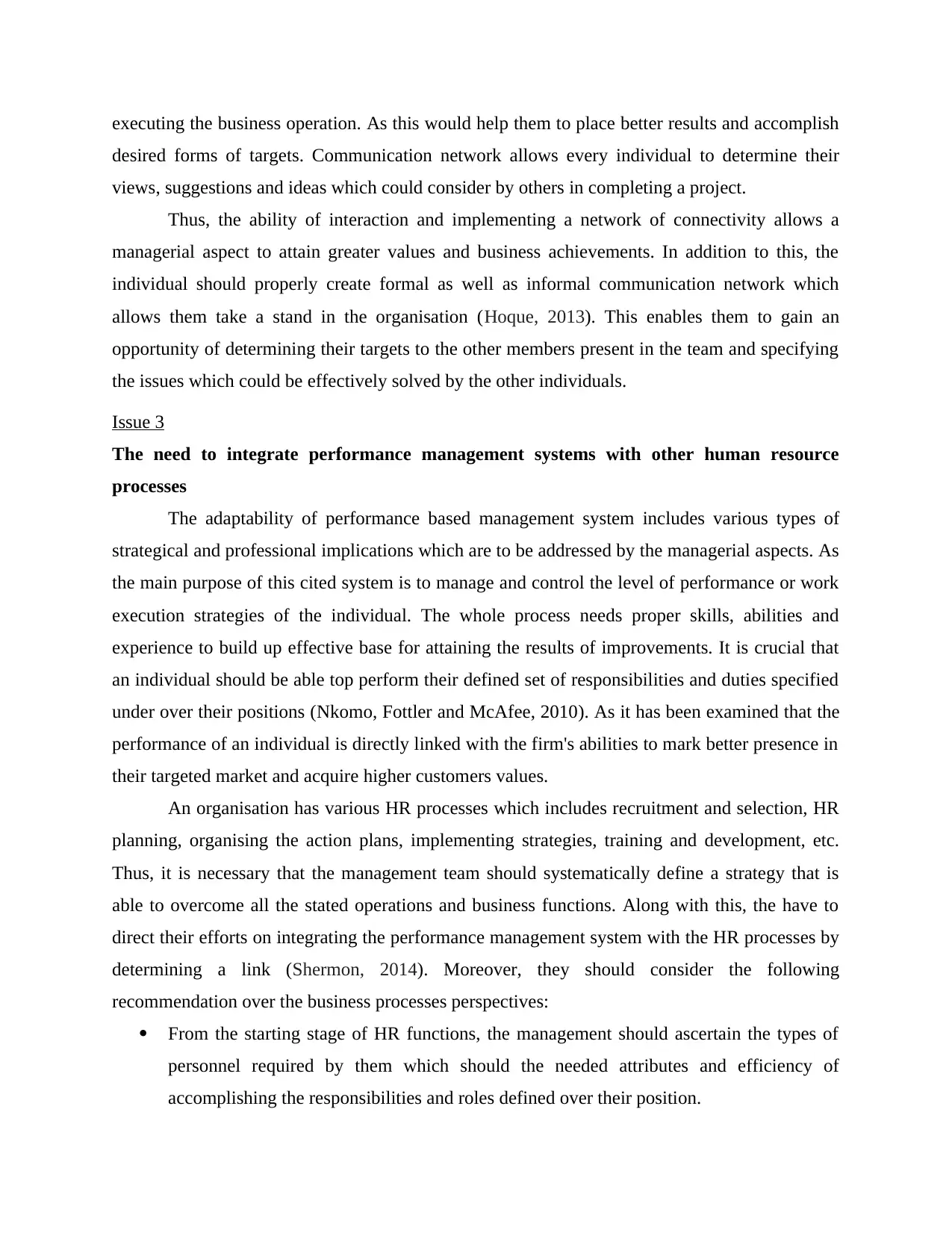
executing the business operation. As this would help them to place better results and accomplish
desired forms of targets. Communication network allows every individual to determine their
views, suggestions and ideas which could consider by others in completing a project.
Thus, the ability of interaction and implementing a network of connectivity allows a
managerial aspect to attain greater values and business achievements. In addition to this, the
individual should properly create formal as well as informal communication network which
allows them take a stand in the organisation (Hoque, 2013). This enables them to gain an
opportunity of determining their targets to the other members present in the team and specifying
the issues which could be effectively solved by the other individuals.
Issue 3
The need to integrate performance management systems with other human resource
processes
The adaptability of performance based management system includes various types of
strategical and professional implications which are to be addressed by the managerial aspects. As
the main purpose of this cited system is to manage and control the level of performance or work
execution strategies of the individual. The whole process needs proper skills, abilities and
experience to build up effective base for attaining the results of improvements. It is crucial that
an individual should be able top perform their defined set of responsibilities and duties specified
under over their positions (Nkomo, Fottler and McAfee, 2010). As it has been examined that the
performance of an individual is directly linked with the firm's abilities to mark better presence in
their targeted market and acquire higher customers values.
An organisation has various HR processes which includes recruitment and selection, HR
planning, organising the action plans, implementing strategies, training and development, etc.
Thus, it is necessary that the management team should systematically define a strategy that is
able to overcome all the stated operations and business functions. Along with this, the have to
direct their efforts on integrating the performance management system with the HR processes by
determining a link (Shermon, 2014). Moreover, they should consider the following
recommendation over the business processes perspectives:
From the starting stage of HR functions, the management should ascertain the types of
personnel required by them which should the needed attributes and efficiency of
accomplishing the responsibilities and roles defined over their position.
desired forms of targets. Communication network allows every individual to determine their
views, suggestions and ideas which could consider by others in completing a project.
Thus, the ability of interaction and implementing a network of connectivity allows a
managerial aspect to attain greater values and business achievements. In addition to this, the
individual should properly create formal as well as informal communication network which
allows them take a stand in the organisation (Hoque, 2013). This enables them to gain an
opportunity of determining their targets to the other members present in the team and specifying
the issues which could be effectively solved by the other individuals.
Issue 3
The need to integrate performance management systems with other human resource
processes
The adaptability of performance based management system includes various types of
strategical and professional implications which are to be addressed by the managerial aspects. As
the main purpose of this cited system is to manage and control the level of performance or work
execution strategies of the individual. The whole process needs proper skills, abilities and
experience to build up effective base for attaining the results of improvements. It is crucial that
an individual should be able top perform their defined set of responsibilities and duties specified
under over their positions (Nkomo, Fottler and McAfee, 2010). As it has been examined that the
performance of an individual is directly linked with the firm's abilities to mark better presence in
their targeted market and acquire higher customers values.
An organisation has various HR processes which includes recruitment and selection, HR
planning, organising the action plans, implementing strategies, training and development, etc.
Thus, it is necessary that the management team should systematically define a strategy that is
able to overcome all the stated operations and business functions. Along with this, the have to
direct their efforts on integrating the performance management system with the HR processes by
determining a link (Shermon, 2014). Moreover, they should consider the following
recommendation over the business processes perspectives:
From the starting stage of HR functions, the management should ascertain the types of
personnel required by them which should the needed attributes and efficiency of
accomplishing the responsibilities and roles defined over their position.
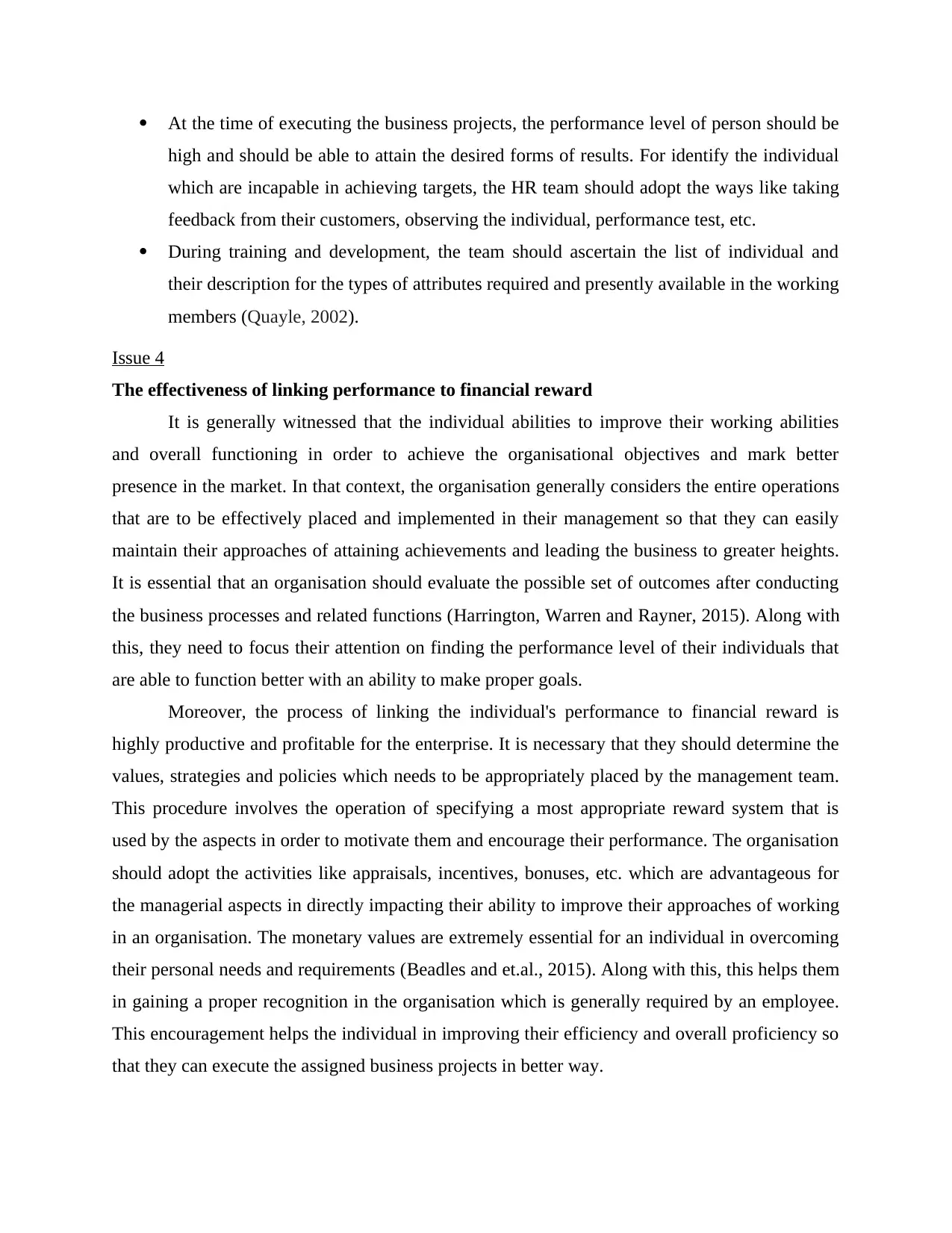
At the time of executing the business projects, the performance level of person should be
high and should be able to attain the desired forms of results. For identify the individual
which are incapable in achieving targets, the HR team should adopt the ways like taking
feedback from their customers, observing the individual, performance test, etc.
During training and development, the team should ascertain the list of individual and
their description for the types of attributes required and presently available in the working
members (Quayle, 2002).
Issue 4
The effectiveness of linking performance to financial reward
It is generally witnessed that the individual abilities to improve their working abilities
and overall functioning in order to achieve the organisational objectives and mark better
presence in the market. In that context, the organisation generally considers the entire operations
that are to be effectively placed and implemented in their management so that they can easily
maintain their approaches of attaining achievements and leading the business to greater heights.
It is essential that an organisation should evaluate the possible set of outcomes after conducting
the business processes and related functions (Harrington, Warren and Rayner, 2015). Along with
this, they need to focus their attention on finding the performance level of their individuals that
are able to function better with an ability to make proper goals.
Moreover, the process of linking the individual's performance to financial reward is
highly productive and profitable for the enterprise. It is necessary that they should determine the
values, strategies and policies which needs to be appropriately placed by the management team.
This procedure involves the operation of specifying a most appropriate reward system that is
used by the aspects in order to motivate them and encourage their performance. The organisation
should adopt the activities like appraisals, incentives, bonuses, etc. which are advantageous for
the managerial aspects in directly impacting their ability to improve their approaches of working
in an organisation. The monetary values are extremely essential for an individual in overcoming
their personal needs and requirements (Beadles and et.al., 2015). Along with this, this helps them
in gaining a proper recognition in the organisation which is generally required by an employee.
This encouragement helps the individual in improving their efficiency and overall proficiency so
that they can execute the assigned business projects in better way.
high and should be able to attain the desired forms of results. For identify the individual
which are incapable in achieving targets, the HR team should adopt the ways like taking
feedback from their customers, observing the individual, performance test, etc.
During training and development, the team should ascertain the list of individual and
their description for the types of attributes required and presently available in the working
members (Quayle, 2002).
Issue 4
The effectiveness of linking performance to financial reward
It is generally witnessed that the individual abilities to improve their working abilities
and overall functioning in order to achieve the organisational objectives and mark better
presence in the market. In that context, the organisation generally considers the entire operations
that are to be effectively placed and implemented in their management so that they can easily
maintain their approaches of attaining achievements and leading the business to greater heights.
It is essential that an organisation should evaluate the possible set of outcomes after conducting
the business processes and related functions (Harrington, Warren and Rayner, 2015). Along with
this, they need to focus their attention on finding the performance level of their individuals that
are able to function better with an ability to make proper goals.
Moreover, the process of linking the individual's performance to financial reward is
highly productive and profitable for the enterprise. It is necessary that they should determine the
values, strategies and policies which needs to be appropriately placed by the management team.
This procedure involves the operation of specifying a most appropriate reward system that is
used by the aspects in order to motivate them and encourage their performance. The organisation
should adopt the activities like appraisals, incentives, bonuses, etc. which are advantageous for
the managerial aspects in directly impacting their ability to improve their approaches of working
in an organisation. The monetary values are extremely essential for an individual in overcoming
their personal needs and requirements (Beadles and et.al., 2015). Along with this, this helps them
in gaining a proper recognition in the organisation which is generally required by an employee.
This encouragement helps the individual in improving their efficiency and overall proficiency so
that they can execute the assigned business projects in better way.
⊘ This is a preview!⊘
Do you want full access?
Subscribe today to unlock all pages.
Trusted by 1+ million students worldwide

CONCLUSION
From the report, it has been concluded that maintaining a high level in the performance
and managing the work is highly significant for an organisation and individual. Thus, they
should accordingly adopt the methods that are useful in improving their overall effectiveness and
working abilities.
From the report, it has been concluded that maintaining a high level in the performance
and managing the work is highly significant for an organisation and individual. Thus, they
should accordingly adopt the methods that are useful in improving their overall effectiveness and
working abilities.
Paraphrase This Document
Need a fresh take? Get an instant paraphrase of this document with our AI Paraphraser
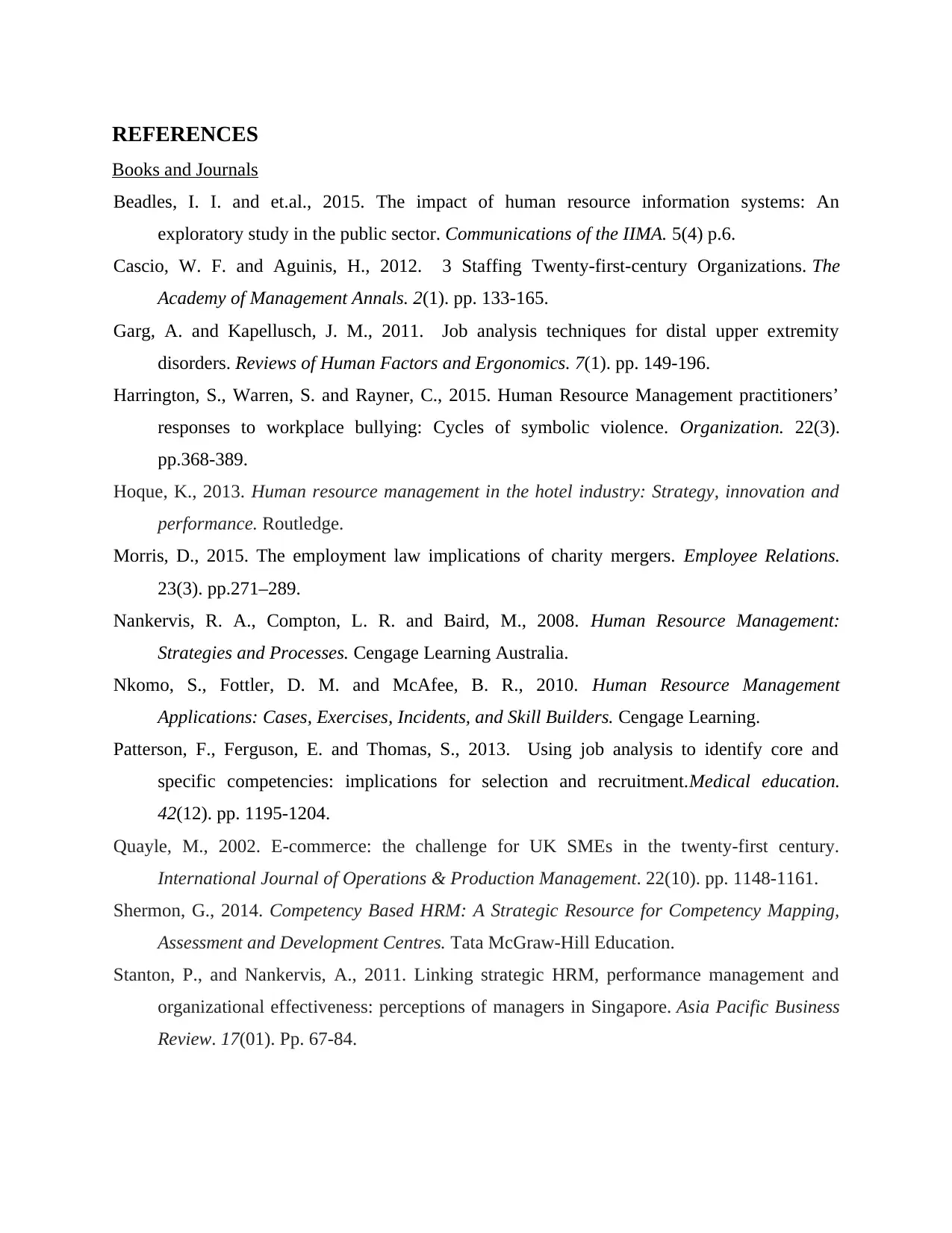
REFERENCES
Books and Journals
Beadles, I. I. and et.al., 2015. The impact of human resource information systems: An
exploratory study in the public sector. Communications of the IIMA. 5(4) p.6.
Cascio, W. F. and Aguinis, H., 2012. 3 Staffing Twenty‐first‐century Organizations. The
Academy of Management Annals. 2(1). pp. 133-165.
Garg, A. and Kapellusch, J. M., 2011. Job analysis techniques for distal upper extremity
disorders. Reviews of Human Factors and Ergonomics. 7(1). pp. 149-196.
Harrington, S., Warren, S. and Rayner, C., 2015. Human Resource Management practitioners’
responses to workplace bullying: Cycles of symbolic violence. Organization. 22(3).
pp.368-389.
Hoque, K., 2013. Human resource management in the hotel industry: Strategy, innovation and
performance. Routledge.
Morris, D., 2015. The employment law implications of charity mergers. Employee Relations.
23(3). pp.271–289.
Nankervis, R. A., Compton, L. R. and Baird, M., 2008. Human Resource Management:
Strategies and Processes. Cengage Learning Australia.
Nkomo, S., Fottler, D. M. and McAfee, B. R., 2010. Human Resource Management
Applications: Cases, Exercises, Incidents, and Skill Builders. Cengage Learning.
Patterson, F., Ferguson, E. and Thomas, S., 2013. Using job analysis to identify core and
specific competencies: implications for selection and recruitment.Medical education.
42(12). pp. 1195-1204.
Quayle, M., 2002. E-commerce: the challenge for UK SMEs in the twenty-first century.
International Journal of Operations & Production Management. 22(10). pp. 1148-1161.
Shermon, G., 2014. Competency Based HRM: A Strategic Resource for Competency Mapping,
Assessment and Development Centres. Tata McGraw-Hill Education.
Stanton, P., and Nankervis, A., 2011. Linking strategic HRM, performance management and
organizational effectiveness: perceptions of managers in Singapore. Asia Pacific Business
Review. 17(01). Pp. 67-84.
Books and Journals
Beadles, I. I. and et.al., 2015. The impact of human resource information systems: An
exploratory study in the public sector. Communications of the IIMA. 5(4) p.6.
Cascio, W. F. and Aguinis, H., 2012. 3 Staffing Twenty‐first‐century Organizations. The
Academy of Management Annals. 2(1). pp. 133-165.
Garg, A. and Kapellusch, J. M., 2011. Job analysis techniques for distal upper extremity
disorders. Reviews of Human Factors and Ergonomics. 7(1). pp. 149-196.
Harrington, S., Warren, S. and Rayner, C., 2015. Human Resource Management practitioners’
responses to workplace bullying: Cycles of symbolic violence. Organization. 22(3).
pp.368-389.
Hoque, K., 2013. Human resource management in the hotel industry: Strategy, innovation and
performance. Routledge.
Morris, D., 2015. The employment law implications of charity mergers. Employee Relations.
23(3). pp.271–289.
Nankervis, R. A., Compton, L. R. and Baird, M., 2008. Human Resource Management:
Strategies and Processes. Cengage Learning Australia.
Nkomo, S., Fottler, D. M. and McAfee, B. R., 2010. Human Resource Management
Applications: Cases, Exercises, Incidents, and Skill Builders. Cengage Learning.
Patterson, F., Ferguson, E. and Thomas, S., 2013. Using job analysis to identify core and
specific competencies: implications for selection and recruitment.Medical education.
42(12). pp. 1195-1204.
Quayle, M., 2002. E-commerce: the challenge for UK SMEs in the twenty-first century.
International Journal of Operations & Production Management. 22(10). pp. 1148-1161.
Shermon, G., 2014. Competency Based HRM: A Strategic Resource for Competency Mapping,
Assessment and Development Centres. Tata McGraw-Hill Education.
Stanton, P., and Nankervis, A., 2011. Linking strategic HRM, performance management and
organizational effectiveness: perceptions of managers in Singapore. Asia Pacific Business
Review. 17(01). Pp. 67-84.

1 out of 8


Related Documents


Your All-in-One AI-Powered Toolkit for Academic Success.
+13062052269
info@desklib.com
Available 24*7 on WhatsApp / Email
![[object Object]](/_next/static/media/star-bottom.7253800d.svg)
Unlock your academic potential
Copyright © 2020–2026 A2Z Services. All Rights Reserved. Developed and managed by ZUCOL.