Environmental Health Report: Pesticide Use and its Global Impact
VerifiedAdded on 2020/04/29
|18
|4604
|34
Report
AI Summary
This report examines the environmental and health impacts of pesticide use, focusing on the negative consequences of pesticides, including soil degradation, health issues, and the contamination of water bodies. The report analyzes the mobility of pesticides through soil, air, and water, highlighting the diseases and health risks they pose to humans and animals. A case study on Bangladesh illustrates the increased use of pesticides and its effects, including the use of herbicides and fungicides that have led to health problems and export issues. The report also offers recommendations for mitigating the adverse effects of pesticides and preventing further environmental damage.

Running head: ENVIRONMENTAL HEALTH
Environmental Health
Name of Student
Name of University
Author Note
Environmental Health
Name of Student
Name of University
Author Note

Paraphrase This Document
Need a fresh take? Get an instant paraphrase of this document with our AI Paraphraser
1
ENVIRONMENTAL HEALTH
Abstract
The report focuses on the environmental issues that arise in the modern world. In order to be
specific, the report takes into account the effects of the use of the pesticide on the health and
environment in the world. The impact created in the world is focused on the report along with
comparison made between the uses of pesticide in the world and in countries in Asia
particularly in Bangladesh. The positives, as well as the negatives of the use of pesticide, is
analysed in order to formulate a clear idea about the use of a pesticide. The various types of
pesticides that can be used for the prevention of crops are analysed in the report. The
components of pesticide include herbicides, fungicides, rodenticides and so on in order to
provide assistance to the smooth growth of the crops. However, despite the positive sides,
negative sides also remain in the use of a pesticide. The cause of degradation of soil, decrease
in the nutritional value of a crop is the results of the excess use of the pesticide. The report
analyses a case study that highlights the level of use of pesticide in countries like Bangladesh.
The case study provides analysis of the manner in which the use of pesticide has increased in
Bangladesh. Over the years, it has been seen that the use of dangerous components such as
herbicides and fungicides have increased in Bangladesh. This resulted in the cause of fatal
diseases that in turn resulted in a loss of exports of vegetables from the country. The report
also provides recommendations about the ways to prevent the ill-effects of pesticides. Thus,
the report takes into account events from the case study as well as natural events that lead to
the impact of the use of a pesticide on the health and environment factors in the world.
ENVIRONMENTAL HEALTH
Abstract
The report focuses on the environmental issues that arise in the modern world. In order to be
specific, the report takes into account the effects of the use of the pesticide on the health and
environment in the world. The impact created in the world is focused on the report along with
comparison made between the uses of pesticide in the world and in countries in Asia
particularly in Bangladesh. The positives, as well as the negatives of the use of pesticide, is
analysed in order to formulate a clear idea about the use of a pesticide. The various types of
pesticides that can be used for the prevention of crops are analysed in the report. The
components of pesticide include herbicides, fungicides, rodenticides and so on in order to
provide assistance to the smooth growth of the crops. However, despite the positive sides,
negative sides also remain in the use of a pesticide. The cause of degradation of soil, decrease
in the nutritional value of a crop is the results of the excess use of the pesticide. The report
analyses a case study that highlights the level of use of pesticide in countries like Bangladesh.
The case study provides analysis of the manner in which the use of pesticide has increased in
Bangladesh. Over the years, it has been seen that the use of dangerous components such as
herbicides and fungicides have increased in Bangladesh. This resulted in the cause of fatal
diseases that in turn resulted in a loss of exports of vegetables from the country. The report
also provides recommendations about the ways to prevent the ill-effects of pesticides. Thus,
the report takes into account events from the case study as well as natural events that lead to
the impact of the use of a pesticide on the health and environment factors in the world.
2
ENVIRONMENTAL HEALTH
Table of contents
Abstract......................................................................................................................................1
Introduction................................................................................................................................3
Analysis of issue........................................................................................................................4
Case study..................................................................................................................................6
Conclusion..................................................................................................................................8
Reference..................................................................................................................................11
ENVIRONMENTAL HEALTH
Table of contents
Abstract......................................................................................................................................1
Introduction................................................................................................................................3
Analysis of issue........................................................................................................................4
Case study..................................................................................................................................6
Conclusion..................................................................................................................................8
Reference..................................................................................................................................11
⊘ This is a preview!⊘
Do you want full access?
Subscribe today to unlock all pages.

Trusted by 1+ million students worldwide
3
ENVIRONMENTAL HEALTH
Introduction
Pesticides are considered as substances that are used to control infectious diseases.
These diseases include pests and weeds that are harmful to the crops. This, in turn, may lead
to harming the human population as the consumption of these crops may lead to life-
threatening diseases. Barański et al. (2014) stated that pesticide includes herbicide,
insecticide, molluscicide, rodenticide and so on. The most common form of pesticide is
considered as herbicide that accounts for about 80% of the usage. The pesticide is normally
associated with protecting crops from harmful diseases. The harmful organisms include
mosquitoes, parasites, fleas and rodents.
Guedes et al. (2016) stated that some of the benefits of pesticide include prevention of
crop loss that can save the money and lives of the farmers. In many countries, farmers
commit suicide due to the loss of crops either by natural causes or from being infected by
pests. The cost required for purchasing stocks for harvesting crops are also reduced. Pesticide
also helps in improving crops and livestock. This is important in order to ensure that invasive
species does not affect the crops (Sanchez-Bayo and Goka 2014). It can also help in saving
human as well as animal lives. This is done by ensuring that the crops are pest free and
consumption of it does not cause diseases among the living beings. It controls the organisms
that pose harm to the human beings. The biggest benefit that pesticide provides is the saving
of costs and crops. It has been proven that every crop that has been saved is worth save of
every money. It can also be used to prevent sickness all over the world.
Fenner et al. (2013) observed that despite the positives of using pesticide, certain
negative side effects also exist. The individuals indulged in the use of pesticides normally
feel these side effects. The environment is degraded as well with the use of a pesticide. Some
of the negative effects include increased chances of cancer. Pesticide includes the use of
ENVIRONMENTAL HEALTH
Introduction
Pesticides are considered as substances that are used to control infectious diseases.
These diseases include pests and weeds that are harmful to the crops. This, in turn, may lead
to harming the human population as the consumption of these crops may lead to life-
threatening diseases. Barański et al. (2014) stated that pesticide includes herbicide,
insecticide, molluscicide, rodenticide and so on. The most common form of pesticide is
considered as herbicide that accounts for about 80% of the usage. The pesticide is normally
associated with protecting crops from harmful diseases. The harmful organisms include
mosquitoes, parasites, fleas and rodents.
Guedes et al. (2016) stated that some of the benefits of pesticide include prevention of
crop loss that can save the money and lives of the farmers. In many countries, farmers
commit suicide due to the loss of crops either by natural causes or from being infected by
pests. The cost required for purchasing stocks for harvesting crops are also reduced. Pesticide
also helps in improving crops and livestock. This is important in order to ensure that invasive
species does not affect the crops (Sanchez-Bayo and Goka 2014). It can also help in saving
human as well as animal lives. This is done by ensuring that the crops are pest free and
consumption of it does not cause diseases among the living beings. It controls the organisms
that pose harm to the human beings. The biggest benefit that pesticide provides is the saving
of costs and crops. It has been proven that every crop that has been saved is worth save of
every money. It can also be used to prevent sickness all over the world.
Fenner et al. (2013) observed that despite the positives of using pesticide, certain
negative side effects also exist. The individuals indulged in the use of pesticides normally
feel these side effects. The environment is degraded as well with the use of a pesticide. Some
of the negative effects include increased chances of cancer. Pesticide includes the use of
Paraphrase This Document
Need a fresh take? Get an instant paraphrase of this document with our AI Paraphraser
4
ENVIRONMENTAL HEALTH
carcinogenicity that increases the chances of cancer among human being. It may also create
organ failure and skin irritation because of the harmful effluents that exist. Trasande et al.
(2016) stated that the poisonous substances used for killing microorganisms and rodents can
severely affect the health of a human. Apart from this, the use of pesticide compromised the
nutritional value of the crops. This is done because the soil required for harvesting the crop is
contaminated because of the excess use of a pesticide. Some of the positive impacts of
pesticide are the fact that it helps in the protection of crops from rodents and other
microorganisms. This is important as most of the crops get destroyed from the infestation that
is caused by rodents and microorganisms. Apart from this pesticide also helps to keep the
crops healthy and reduces the cost required for purchasing livestock for the crops. The saving
of crops and the proper harvesting of crops helps in the increase of income among the
farmers.
The environment is also degraded due to the existence of pesticide. Air, soil and water
remain contaminated due to the use of pesticide in the ecology. It can be said that the
environmental degradation also causes problems for the human beings and animals (Sharma
et al. 2013). Hence, indirectly pesticide poses a threat to the environment. In countries
belonging to the Asian regions, pesticides are found in the groundwater level. This is another
factor that needs to be considered while analysing the effects of pesticide on the health and
environment. Thus, the report is based on the topic and an analysis of the impact in the
countries in the Asian region (Lu et al. 2015).
The report is based on the impact of health and environment that pesticide has on the
environment. The report focuses on a case study that deals with the use of pesticide in
countries situated in Asia. The comparison is made between the use of pesticide in
Bangladesh to understand the impact of the component. The case study also provides analysis
ENVIRONMENTAL HEALTH
carcinogenicity that increases the chances of cancer among human being. It may also create
organ failure and skin irritation because of the harmful effluents that exist. Trasande et al.
(2016) stated that the poisonous substances used for killing microorganisms and rodents can
severely affect the health of a human. Apart from this, the use of pesticide compromised the
nutritional value of the crops. This is done because the soil required for harvesting the crop is
contaminated because of the excess use of a pesticide. Some of the positive impacts of
pesticide are the fact that it helps in the protection of crops from rodents and other
microorganisms. This is important as most of the crops get destroyed from the infestation that
is caused by rodents and microorganisms. Apart from this pesticide also helps to keep the
crops healthy and reduces the cost required for purchasing livestock for the crops. The saving
of crops and the proper harvesting of crops helps in the increase of income among the
farmers.
The environment is also degraded due to the existence of pesticide. Air, soil and water
remain contaminated due to the use of pesticide in the ecology. It can be said that the
environmental degradation also causes problems for the human beings and animals (Sharma
et al. 2013). Hence, indirectly pesticide poses a threat to the environment. In countries
belonging to the Asian regions, pesticides are found in the groundwater level. This is another
factor that needs to be considered while analysing the effects of pesticide on the health and
environment. Thus, the report is based on the topic and an analysis of the impact in the
countries in the Asian region (Lu et al. 2015).
The report is based on the impact of health and environment that pesticide has on the
environment. The report focuses on a case study that deals with the use of pesticide in
countries situated in Asia. The comparison is made between the use of pesticide in
Bangladesh to understand the impact of the component. The case study also provides analysis
5
ENVIRONMENTAL HEALTH
about the consumption of pesticide items in the regions. Analysis of the issue is conducted
and conclusions are drawn based on the evidence from the case study.
Analysis of the issue
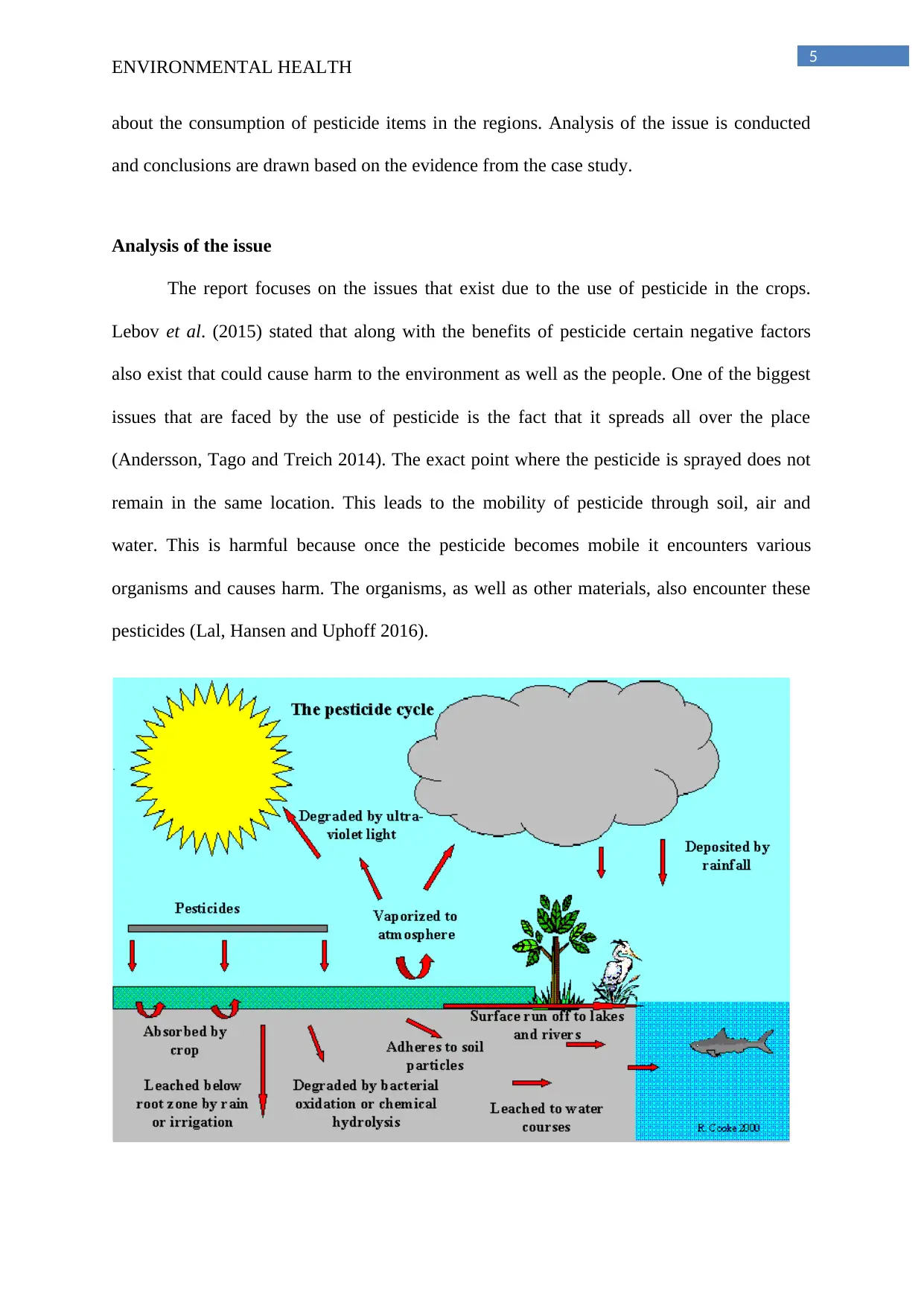
The report focuses on the issues that exist due to the use of pesticide in the crops.
Lebov et al. (2015) stated that along with the benefits of pesticide certain negative factors
also exist that could cause harm to the environment as well as the people. One of the biggest
issues that are faced by the use of pesticide is the fact that it spreads all over the place
(Andersson, Tago and Treich 2014). The exact point where the pesticide is sprayed does not
remain in the same location. This leads to the mobility of pesticide through soil, air and
water. This is harmful because once the pesticide becomes mobile it encounters various
organisms and causes harm. The organisms, as well as other materials, also encounter these
pesticides (Lal, Hansen and Uphoff 2016).
ENVIRONMENTAL HEALTH
about the consumption of pesticide items in the regions. Analysis of the issue is conducted
and conclusions are drawn based on the evidence from the case study.
Analysis of the issue
The report focuses on the issues that exist due to the use of pesticide in the crops.
Lebov et al. (2015) stated that along with the benefits of pesticide certain negative factors
also exist that could cause harm to the environment as well as the people. One of the biggest
issues that are faced by the use of pesticide is the fact that it spreads all over the place
(Andersson, Tago and Treich 2014). The exact point where the pesticide is sprayed does not
remain in the same location. This leads to the mobility of pesticide through soil, air and
water. This is harmful because once the pesticide becomes mobile it encounters various
organisms and causes harm. The organisms, as well as other materials, also encounter these
pesticides (Lal, Hansen and Uphoff 2016).
⊘ This is a preview!⊘
Do you want full access?
Subscribe today to unlock all pages.
Trusted by 1+ million students worldwide
6
ENVIRONMENTAL HEALTH
Figure 1: Pesticide cycle
(Source: Andersson, Tago and Treich 2014)
The reason behind the existence of treat due to the mobility of the pesticides is the
fact that people encounter these components and become vulnerable. This may create the
problem in lives of the human beings as the exposure to pesticides may cause life-threatening
diseases. Van Meter et al. (2014) stated that the exposure to pesticide might cause incurable
diseases such as cancer, skin infections, infertility and brain damage and so on. These
diseases are most common to the farmers working in the fields with sprayers and mixtures in
order to keep away harmful organisms. Miah et al. (2014) stated that it is during the time of
manufacturing and formulation of the pesticides that most individuals are exposed to the
component. Apart from this, neurological symptoms are also seen in some people that are
exposed to pesticides. This also leads to various diseases that can be infectious for human
beings.
According to Linton et al. (2015), pesticides also spread in the human body through
the food that is consumed. This is because, the farmers spread the pesticide in the crops,
vegetables and fruits in order to prevent it from being consumed or destroyed by pests. As
observed by Matthews (2015), about an average of 6000 food items is infected with pesticide.
Despite the fact that the restaurants and household individuals wash the food before
consumption, some residues of pesticides still remain. This proves to be a fatal factor for the
human beings as the unknown consumption of the components leads to health issues. Many
countries have reported poisoning due to the consumption of contaminated pesticide food.
Zhu et al. (2014) stated that apart from human health, a pesticide also degrades the
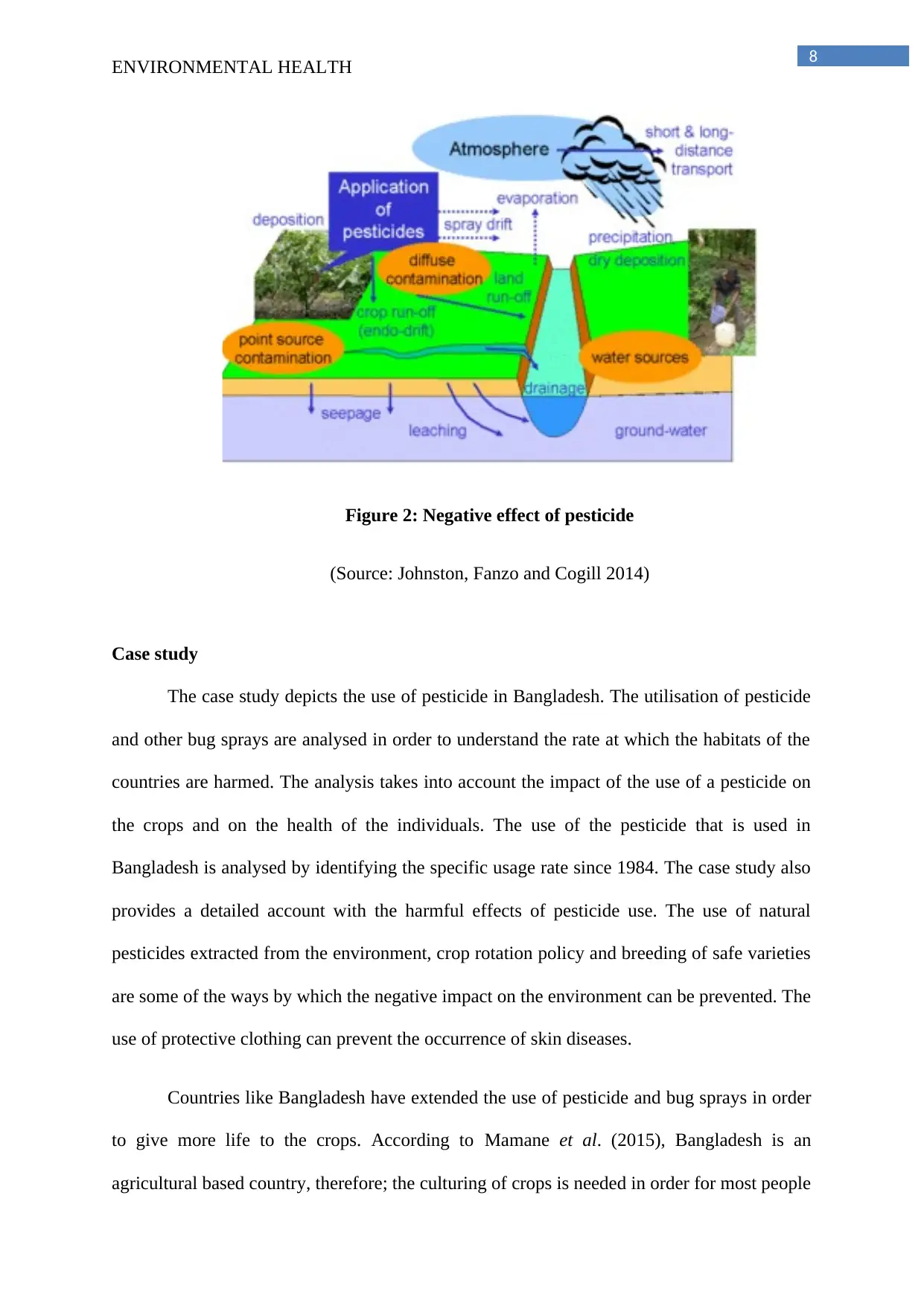
environment. The environmental degradation is caused by the flow of pesticide from place to
another. The mobility of the component is caused by soil, water and air. Pesticides are toxic
ENVIRONMENTAL HEALTH
Figure 1: Pesticide cycle
(Source: Andersson, Tago and Treich 2014)
The reason behind the existence of treat due to the mobility of the pesticides is the
fact that people encounter these components and become vulnerable. This may create the
problem in lives of the human beings as the exposure to pesticides may cause life-threatening
diseases. Van Meter et al. (2014) stated that the exposure to pesticide might cause incurable
diseases such as cancer, skin infections, infertility and brain damage and so on. These
diseases are most common to the farmers working in the fields with sprayers and mixtures in
order to keep away harmful organisms. Miah et al. (2014) stated that it is during the time of
manufacturing and formulation of the pesticides that most individuals are exposed to the
component. Apart from this, neurological symptoms are also seen in some people that are
exposed to pesticides. This also leads to various diseases that can be infectious for human
beings.
According to Linton et al. (2015), pesticides also spread in the human body through
the food that is consumed. This is because, the farmers spread the pesticide in the crops,
vegetables and fruits in order to prevent it from being consumed or destroyed by pests. As
observed by Matthews (2015), about an average of 6000 food items is infected with pesticide.
Despite the fact that the restaurants and household individuals wash the food before
consumption, some residues of pesticides still remain. This proves to be a fatal factor for the
human beings as the unknown consumption of the components leads to health issues. Many
countries have reported poisoning due to the consumption of contaminated pesticide food.
Zhu et al. (2014) stated that apart from human health, a pesticide also degrades the
environment. The environmental degradation is caused by the flow of pesticide from place to
another. The mobility of the component is caused by soil, water and air. Pesticides are toxic
Paraphrase This Document
Need a fresh take? Get an instant paraphrase of this document with our AI Paraphraser
7
ENVIRONMENTAL HEALTH
and pose threat to organisms such as birds or animals. Some plants may also be degraded due
to the emergence of pesticide in the environment. Pesticides are considered as the most
harmful components that can pose a serious threat to lives (Croes et al. 2015).
The negative side includes the occurrence of skin disease, cancer and other diseases
that may cause a threat of life for an individual. This is an important negative aspect as the
poison that is contained in the pesticides is also harmful to other organisms. Apart from this,
the economic and environmental factors also get affected due to the use of pesticides. Water
bodies are contaminated and as a result, aquatic lives are affected. About 143 different types
of pesticides are found in the groundwater. Soil fertility is also lost due to the cause of
pesticide (Sarwar 2015). This is because the loss of bacteria and fungi causes soil
degradation. The overuse of pesticides and other chemicals affects the microorganisms in the
soil. Hence, according to Yadav et al. (2015), crops tend to grow slowly or cease growth due
to the absence of nutrition from the soil. Thus, the pesticide has many negative outcomes that
play a vital role in the contamination of the environment and degrading the health of the
individuals. The report analyses a case study in order to establish a link between the impacts
of pesticide on the health of the people residing in Bangladesh along with those of the other
continents.
ENVIRONMENTAL HEALTH
and pose threat to organisms such as birds or animals. Some plants may also be degraded due
to the emergence of pesticide in the environment. Pesticides are considered as the most
harmful components that can pose a serious threat to lives (Croes et al. 2015).
The negative side includes the occurrence of skin disease, cancer and other diseases
that may cause a threat of life for an individual. This is an important negative aspect as the
poison that is contained in the pesticides is also harmful to other organisms. Apart from this,
the economic and environmental factors also get affected due to the use of pesticides. Water
bodies are contaminated and as a result, aquatic lives are affected. About 143 different types
of pesticides are found in the groundwater. Soil fertility is also lost due to the cause of
pesticide (Sarwar 2015). This is because the loss of bacteria and fungi causes soil
degradation. The overuse of pesticides and other chemicals affects the microorganisms in the
soil. Hence, according to Yadav et al. (2015), crops tend to grow slowly or cease growth due
to the absence of nutrition from the soil. Thus, the pesticide has many negative outcomes that
play a vital role in the contamination of the environment and degrading the health of the
individuals. The report analyses a case study in order to establish a link between the impacts
of pesticide on the health of the people residing in Bangladesh along with those of the other
continents.
8
ENVIRONMENTAL HEALTH
Figure 2: Negative effect of pesticide
(Source: Johnston, Fanzo and Cogill 2014)
Case study
The case study depicts the use of pesticide in Bangladesh. The utilisation of pesticide
and other bug sprays are analysed in order to understand the rate at which the habitats of the
countries are harmed. The analysis takes into account the impact of the use of a pesticide on
the crops and on the health of the individuals. The use of the pesticide that is used in
Bangladesh is analysed by identifying the specific usage rate since 1984. The case study also
provides a detailed account with the harmful effects of pesticide use. The use of natural
pesticides extracted from the environment, crop rotation policy and breeding of safe varieties
are some of the ways by which the negative impact on the environment can be prevented. The
use of protective clothing can prevent the occurrence of skin diseases.
Countries like Bangladesh have extended the use of pesticide and bug sprays in order
to give more life to the crops. According to Mamane et al. (2015), Bangladesh is an
agricultural based country, therefore; the culturing of crops is needed in order for most people
ENVIRONMENTAL HEALTH
Figure 2: Negative effect of pesticide
(Source: Johnston, Fanzo and Cogill 2014)
Case study
The case study depicts the use of pesticide in Bangladesh. The utilisation of pesticide
and other bug sprays are analysed in order to understand the rate at which the habitats of the
countries are harmed. The analysis takes into account the impact of the use of a pesticide on
the crops and on the health of the individuals. The use of the pesticide that is used in
Bangladesh is analysed by identifying the specific usage rate since 1984. The case study also
provides a detailed account with the harmful effects of pesticide use. The use of natural
pesticides extracted from the environment, crop rotation policy and breeding of safe varieties
are some of the ways by which the negative impact on the environment can be prevented. The
use of protective clothing can prevent the occurrence of skin diseases.
Countries like Bangladesh have extended the use of pesticide and bug sprays in order
to give more life to the crops. According to Mamane et al. (2015), Bangladesh is an
agricultural based country, therefore; the culturing of crops is needed in order for most people
⊘ This is a preview!⊘
Do you want full access?
Subscribe today to unlock all pages.
Trusted by 1+ million students worldwide
9
ENVIRONMENTAL HEALTH
to survive. Hence, the use of pesticide is also required in order to ensure that the farmers earn
a living by selling crops. However, the excess use of the pesticide can result in the
decomposition of the soil and create an imbalance in the ecosystem. These pesticides are
considered dangerous and harm the habitat of the living beings. As mentioned by Dabrowski,
Shadung and Wepener (2014), excess use of a pesticide can have a dangerous influence on
the lives of the people as well as other organisms.
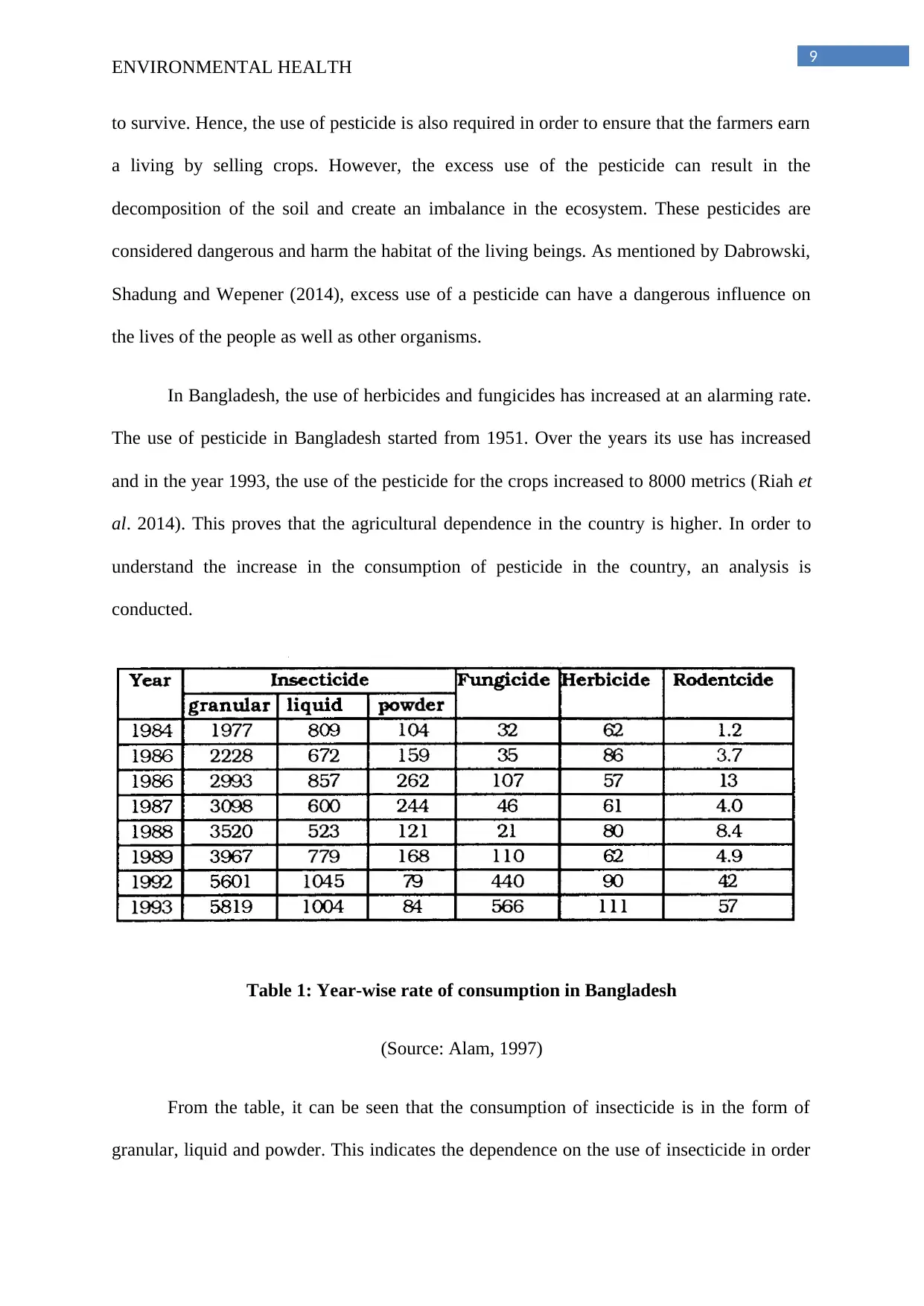
In Bangladesh, the use of herbicides and fungicides has increased at an alarming rate.
The use of pesticide in Bangladesh started from 1951. Over the years its use has increased
and in the year 1993, the use of the pesticide for the crops increased to 8000 metrics (Riah et
al. 2014). This proves that the agricultural dependence in the country is higher. In order to
understand the increase in the consumption of pesticide in the country, an analysis is
conducted.
Table 1: Year-wise rate of consumption in Bangladesh
(Source: Alam, 1997)
From the table, it can be seen that the consumption of insecticide is in the form of
granular, liquid and powder. This indicates the dependence on the use of insecticide in order
ENVIRONMENTAL HEALTH
to survive. Hence, the use of pesticide is also required in order to ensure that the farmers earn
a living by selling crops. However, the excess use of the pesticide can result in the
decomposition of the soil and create an imbalance in the ecosystem. These pesticides are
considered dangerous and harm the habitat of the living beings. As mentioned by Dabrowski,
Shadung and Wepener (2014), excess use of a pesticide can have a dangerous influence on
the lives of the people as well as other organisms.
In Bangladesh, the use of herbicides and fungicides has increased at an alarming rate.
The use of pesticide in Bangladesh started from 1951. Over the years its use has increased
and in the year 1993, the use of the pesticide for the crops increased to 8000 metrics (Riah et
al. 2014). This proves that the agricultural dependence in the country is higher. In order to
understand the increase in the consumption of pesticide in the country, an analysis is
conducted.
Table 1: Year-wise rate of consumption in Bangladesh
(Source: Alam, 1997)
From the table, it can be seen that the consumption of insecticide is in the form of
granular, liquid and powder. This indicates the dependence on the use of insecticide in order
Paraphrase This Document
Need a fresh take? Get an instant paraphrase of this document with our AI Paraphraser
10
ENVIRONMENTAL HEALTH
to protect the crops. However, the use of the powder form of insecticide has been reduced in
1993. This is mainly because of the increase in the use of herbicides and fungicide. The table
provides a detailed comparison of the increase in the use of herbicide and fungicide since
1984. As observed by Johnston, Fanzo and Cogill (2014) the increase in the use of these
components is alarming given the fact that the families residing in the regions close to the
agricultural fields are exposed to the dangers that can be spread from the components.
The case study provides the fact that vegetables consist of the maximum amount of
pesticide in Bangladesh. This is high after being compared with the other nations of the
world. It has also been seen that about 76% of the use of pesticide consisting of 598.8 percent
consumption rate per year prevails in the crops of Bangladesh. According to Köhler and
Triebskorn (2013), the impact of the purchase and consumption of pesticide may lead to
sickness and loss of health among the people. This is mainly because of the fact the fact that
the consumption of vegetables is relatively high among the people in Bangladesh (Balbus et
al. 2013). Some of the ill-effects of health among people include malignancy, skin problems,
and kidney failure and so on. Due to the alarming increase of illness among the people, the
export of vegetables from Bangladesh has decreased in the recent years.
ENVIRONMENTAL HEALTH
to protect the crops. However, the use of the powder form of insecticide has been reduced in
1993. This is mainly because of the increase in the use of herbicides and fungicide. The table
provides a detailed comparison of the increase in the use of herbicide and fungicide since
1984. As observed by Johnston, Fanzo and Cogill (2014) the increase in the use of these
components is alarming given the fact that the families residing in the regions close to the
agricultural fields are exposed to the dangers that can be spread from the components.
The case study provides the fact that vegetables consist of the maximum amount of
pesticide in Bangladesh. This is high after being compared with the other nations of the
world. It has also been seen that about 76% of the use of pesticide consisting of 598.8 percent
consumption rate per year prevails in the crops of Bangladesh. According to Köhler and
Triebskorn (2013), the impact of the purchase and consumption of pesticide may lead to
sickness and loss of health among the people. This is mainly because of the fact the fact that
the consumption of vegetables is relatively high among the people in Bangladesh (Balbus et
al. 2013). Some of the ill-effects of health among people include malignancy, skin problems,
and kidney failure and so on. Due to the alarming increase of illness among the people, the
export of vegetables from Bangladesh has decreased in the recent years.
11
ENVIRONMENTAL HEALTH
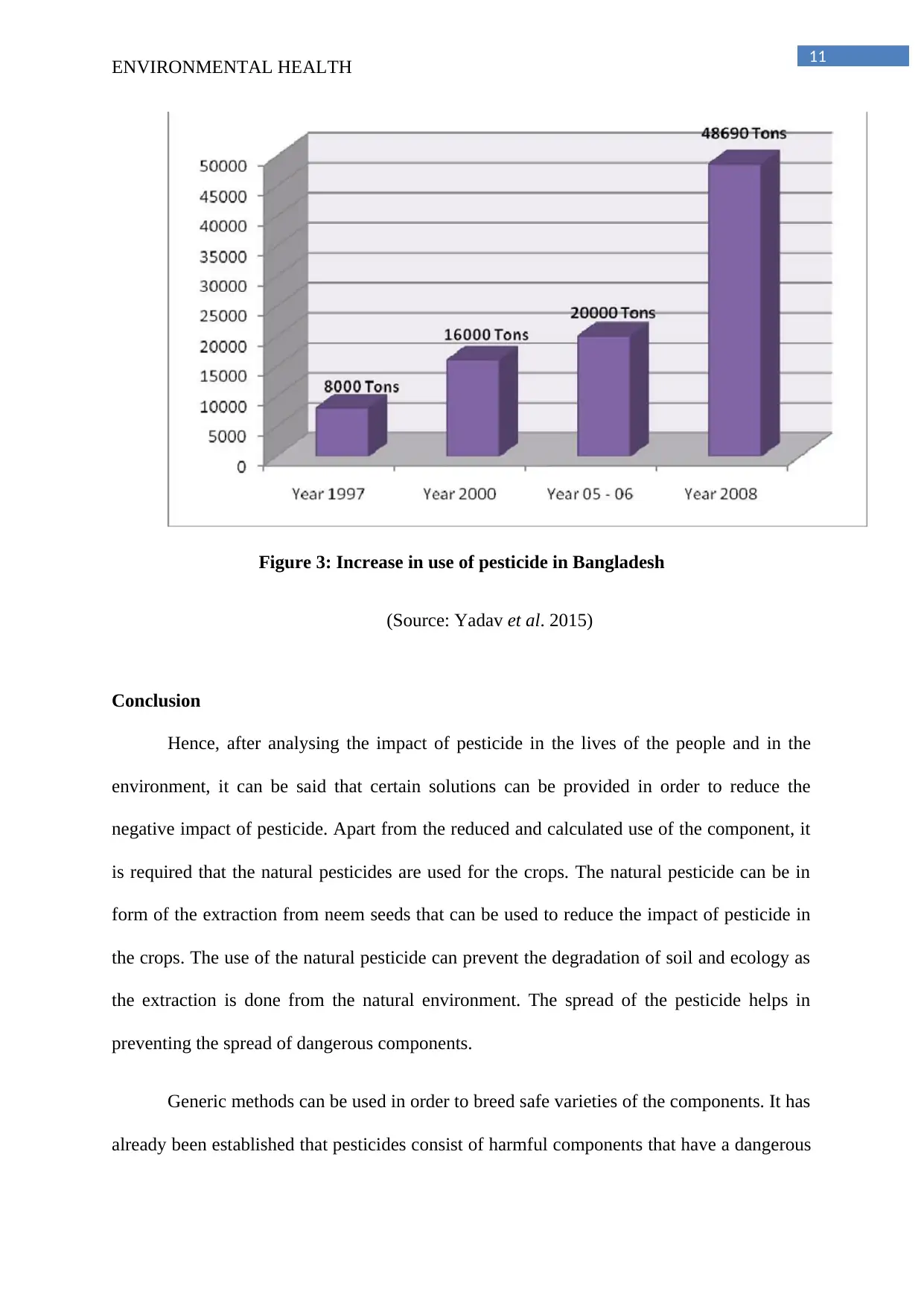
Figure 3: Increase in use of pesticide in Bangladesh
(Source: Yadav et al. 2015)
Conclusion
Hence, after analysing the impact of pesticide in the lives of the people and in the
environment, it can be said that certain solutions can be provided in order to reduce the
negative impact of pesticide. Apart from the reduced and calculated use of the component, it
is required that the natural pesticides are used for the crops. The natural pesticide can be in
form of the extraction from neem seeds that can be used to reduce the impact of pesticide in
the crops. The use of the natural pesticide can prevent the degradation of soil and ecology as
the extraction is done from the natural environment. The spread of the pesticide helps in
preventing the spread of dangerous components.
Generic methods can be used in order to breed safe varieties of the components. It has
already been established that pesticides consist of harmful components that have a dangerous
ENVIRONMENTAL HEALTH
Figure 3: Increase in use of pesticide in Bangladesh
(Source: Yadav et al. 2015)
Conclusion
Hence, after analysing the impact of pesticide in the lives of the people and in the
environment, it can be said that certain solutions can be provided in order to reduce the
negative impact of pesticide. Apart from the reduced and calculated use of the component, it
is required that the natural pesticides are used for the crops. The natural pesticide can be in
form of the extraction from neem seeds that can be used to reduce the impact of pesticide in
the crops. The use of the natural pesticide can prevent the degradation of soil and ecology as
the extraction is done from the natural environment. The spread of the pesticide helps in
preventing the spread of dangerous components.
Generic methods can be used in order to breed safe varieties of the components. It has
already been established that pesticides consist of harmful components that have a dangerous
⊘ This is a preview!⊘
Do you want full access?
Subscribe today to unlock all pages.
Trusted by 1+ million students worldwide

1 out of 18


Related Documents


Your All-in-One AI-Powered Toolkit for Academic Success.
+13062052269
info@desklib.com
Available 24*7 on WhatsApp / Email
![[object Object]](/_next/static/media/star-bottom.7253800d.svg)
Unlock your academic potential
Copyright © 2020–2026 A2Z Services. All Rights Reserved. Developed and managed by ZUCOL.