Pet Therapy Program Survey: Patient and Staff Satisfaction Analysis

Verified

Added on  2021/05/30

|8
|1156
|115
Report
AI Summary
This report presents an analysis of a pet therapy program, encompassing both patient and staff satisfaction surveys. The study utilizes descriptive statistics, chi-square tests, and correlation analysis to evaluate various factors. Key findings include the calculation of mean scores for patient age, days in rehab, number of pet visits, satisfaction levels, and dog size. The chi-square tests reveal no statistically significant difference between having a dog at home and patient age or satisfaction. Correlation analysis indicates no significant relationship between the number of pet visits and satisfaction, or between dog size and satisfaction. Staff survey results show high satisfaction levels and a desire to continue the program. Visual representations, including line diagrams, illustrate the relationship between patient satisfaction and factors such as age, gender, dog size, and number of visits. The report also discusses the importance of considering the type of injury in the evaluation and the reliability of the data, measured using Cronbach's alpha. The conclusion highlights that patient satisfaction from the pet therapy program was independent of the number of pet visits, with the continuation of the program being largely based on days in the unit.
Document Page
1
Pet Therapy Survey
Student Name: Student ID:
Subject Name: Subject ID:
Due Date:
tabler-icon-diamond-filled.svg

Paraphrase This Document

Need a fresh take? Get an instant paraphrase of this document with our AI Paraphraser
Document Page
2
Patient pet therapy survey
1. The Mean scores for ‘age’ (75.57 years), ‘days in rehab unit’(15.54 days), ‘number of
pet visits’ (2.32), ‘satisfaction with pet therapy’ (4.43) and ‘dog size’ (2.11) were
calculated using Excel tool pack. Descriptive statistics were found using data analysis
option.
2. The chi-square test for independent variables was performed to test the association
between ‘having a dog at home ‘and ‘age’ of the participants. First the observed values
were found and then the expected values were calculated. The chi square values were
found by using the formula
χ2= ( OE ) 2
E . The significance level was found by using
the built-in function of excel (CHITEST). The p value (0.78) was greater than 0.05 and
the null hypothesis was accepted. It was concluded that there was no statistically
significant difference between ‘having a dog at home ‘and ‘age’ of the participants.
3. There was no statistically significant difference between ‘having a dog at home ‘and
‘satisfaction with the pet therapy’, as the chi-square value was 0.27 with p value of 0.6.
4. There was no statistically significant correlation between There was no significant
correlation between ‘number of pet visits’ and ‘satisfaction with the pet therapy’, as the
correlation coefficient was 0.25. There was no statistically significant correlation
between ‘dog size’ and ‘satisfaction with the pet therapy’, as correlation coefficient was -
0.12 (Radford, J., 2015)
Document Page
3
Staff member satisfaction survey
1. There was no statistically significant difference between ‘staff position’ and ‘staff
satisfaction’, since the chi-square value was 0.09 with p value as 0.94 (greater than
0.05).
2. A total 76.9% staffs wanted the pet therapy program to continue.
Pet therapy program
6265676871727476787983838489
0
1
2
3
4
5
6
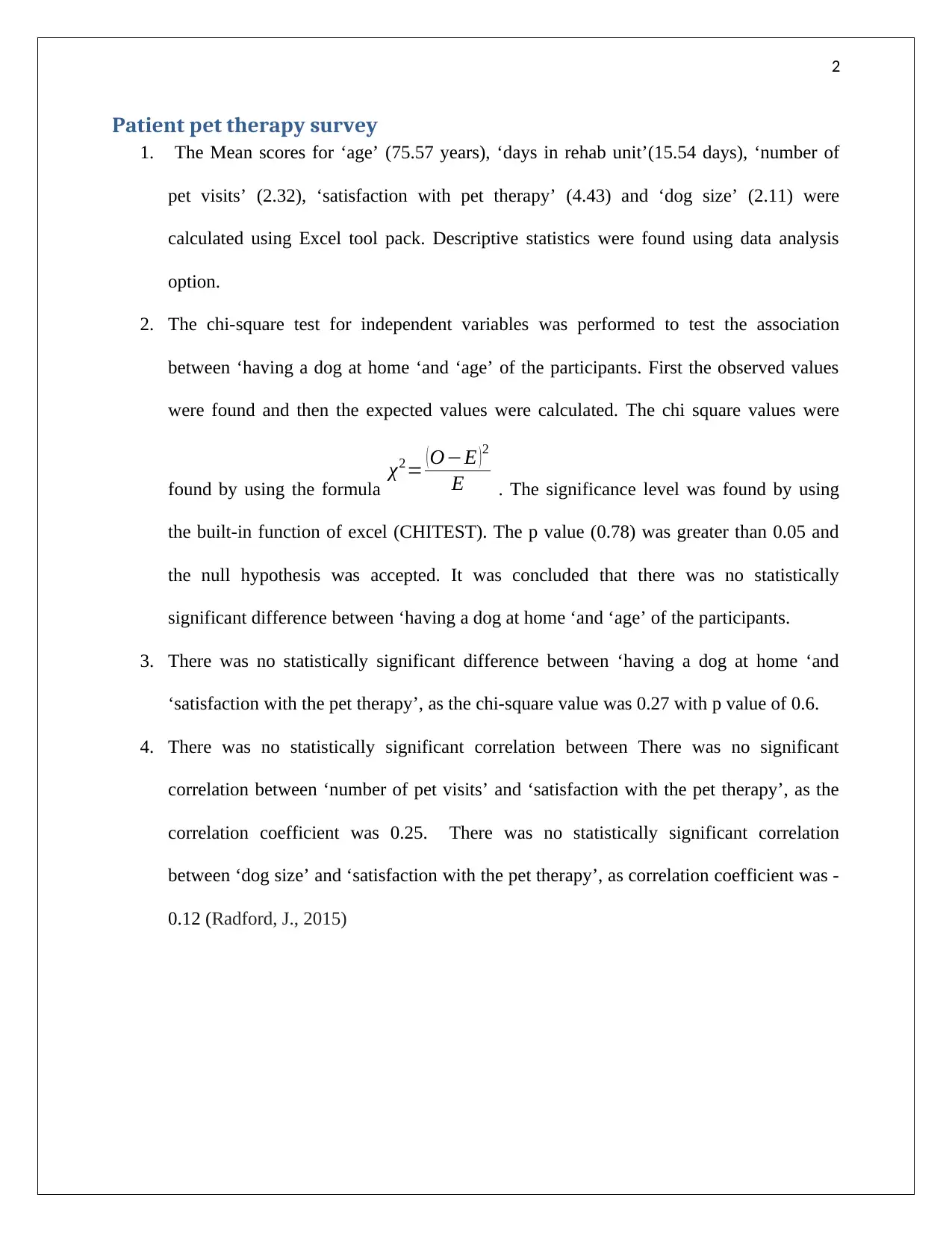
Satisfaction based on Age
SATISFACTION
Age of patient
Satisfaction levels
Figure 1: Patients satisfaction with age
Patient’s satisfaction scores were not correlated with age. The line diagram reflected the fact of
un-correlation.
Document Page
4
73
51
Satisfaction score-Gender wise
Male Female
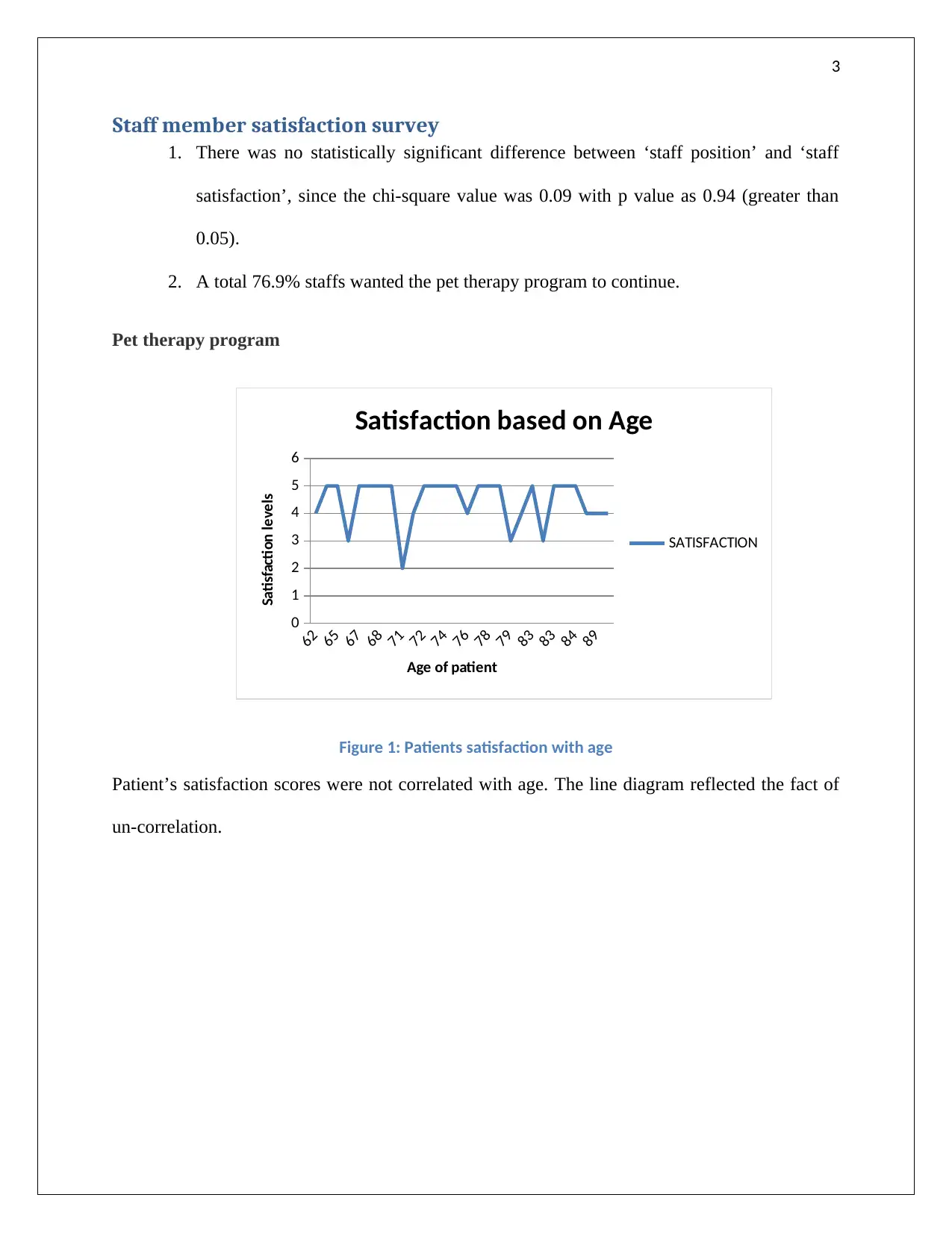
Figure 2: Patients satisfaction score gender wise
Patient’s satisfaction total score was 73 for male patients compared to 51 for female patients. It
was observed that male patients were more satisfied with the program than females.
34
45
45
Satisfaction based on Dog size
SMALL
MEDIUM
LARGE
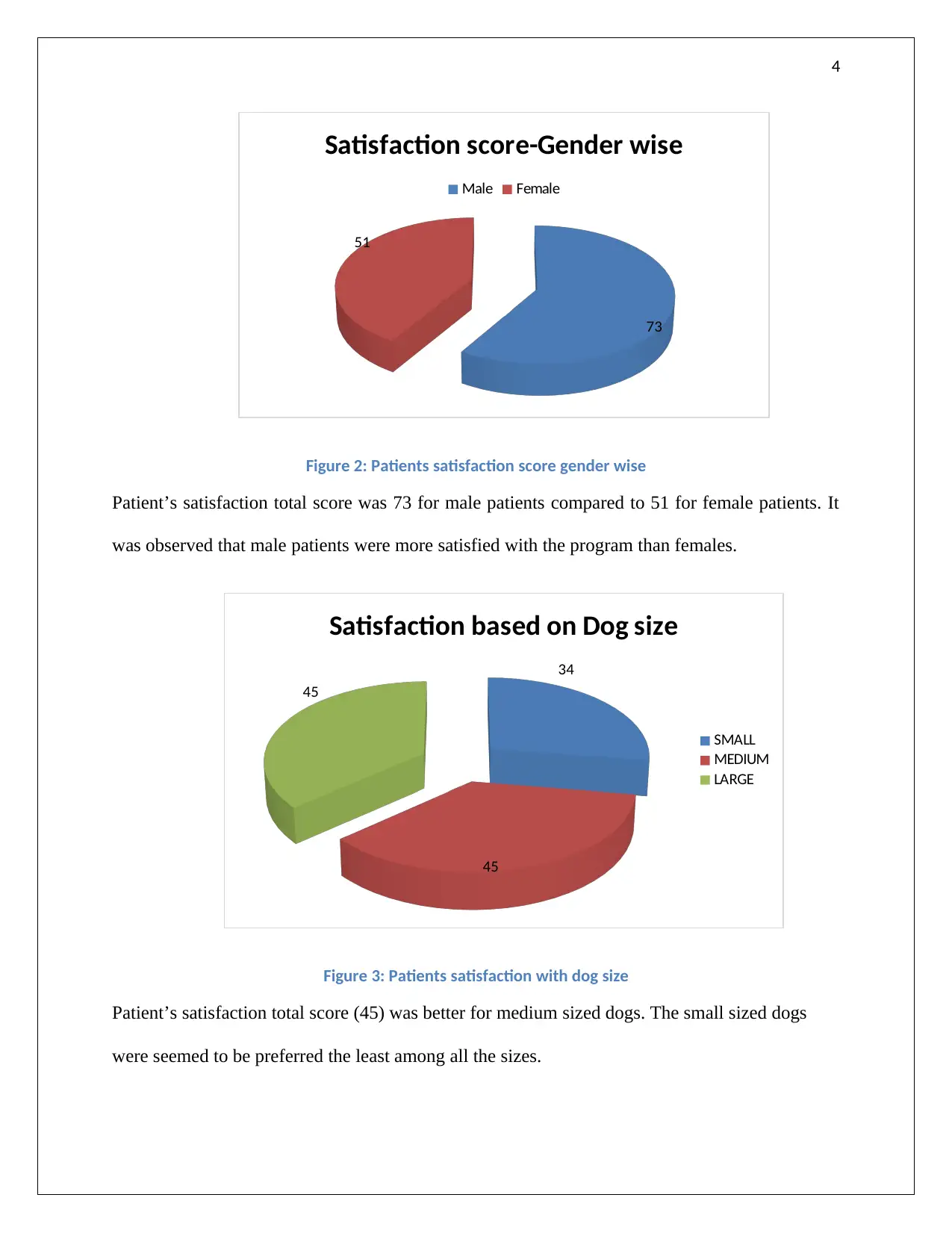
Figure 3: Patients satisfaction with dog size
Patient’s satisfaction total score (45) was better for medium sized dogs. The small sized dogs
were seemed to be preferred the least among all the sizes.
tabler-icon-diamond-filled.svg

Paraphrase This Document

Need a fresh take? Get an instant paraphrase of this document with our AI Paraphraser
Document Page
5
15
50
59
Satisfaction based on Pet visit
Pet vist 1
Pet visit 2
Pet visit 3
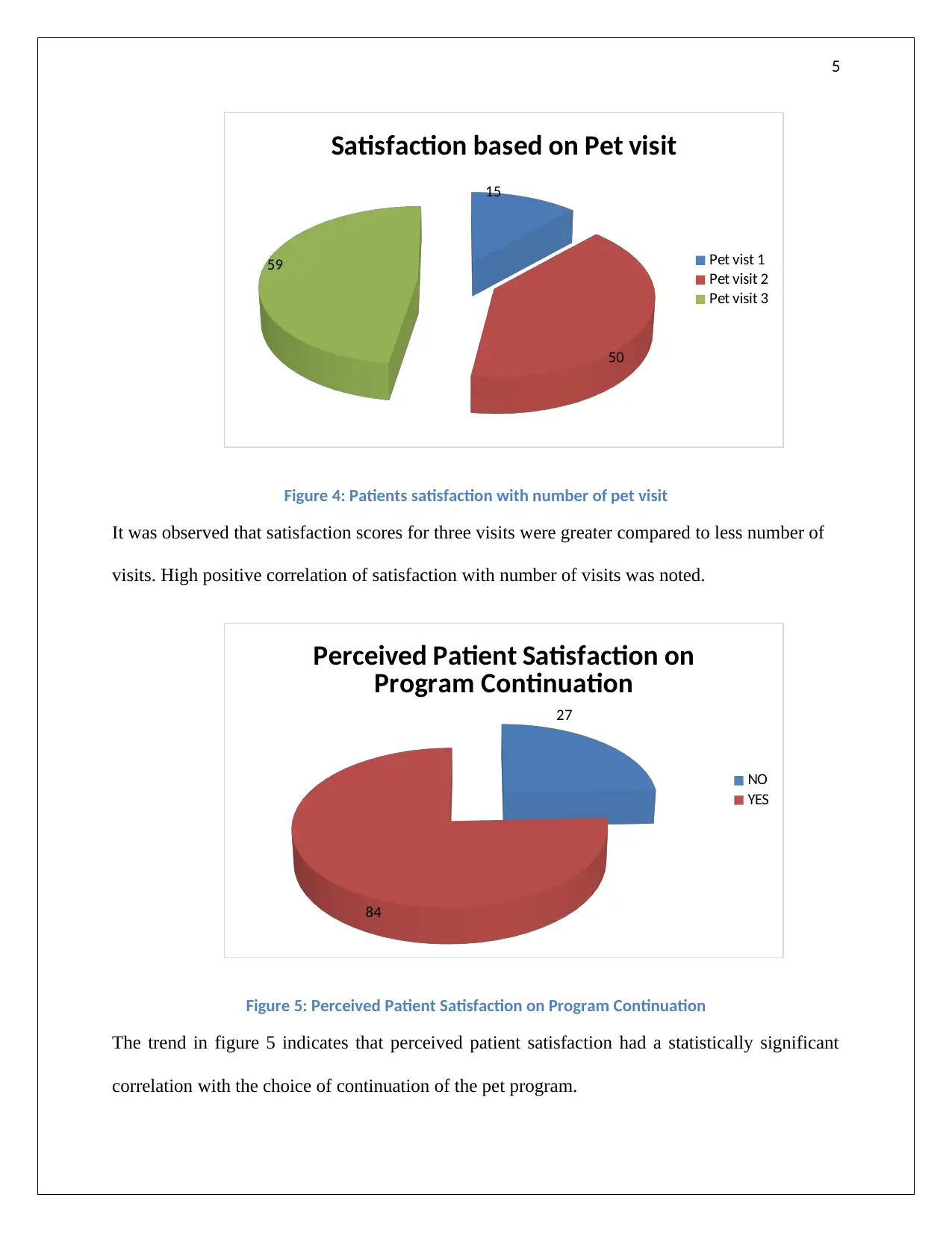
Figure 4: Patients satisfaction with number of pet visit
It was observed that satisfaction scores for three visits were greater compared to less number of
visits. High positive correlation of satisfaction with number of visits was noted.
27
84
Perceived Patient Satisfaction on
Program Continuation
NO
YES
Figure 5: Perceived Patient Satisfaction on Program Continuation
The trend in figure 5 indicates that perceived patient satisfaction had a statistically significant
correlation with the choice of continuation of the pet program.
Document Page
6
Pet therapy survey answers
Overlooking the type of injury was a mistake for the evaluator. The type of injury could
have been the major reason for prolonged stay at the rehab center, and association of type
of injury with the satisfaction of the program could have presented a different angle of
the study (Harper, C. M., Dong, Y., 2015).
The satisfaction scores of each patient were probably calculated as the ratio between
satisfied or happy patients with number of customers interviewed (Fleishman, S. B.,
2015).
Validity of both the data sets was checked in Excel spreadsheets. Total score for both the
scenarios were found and correlation coefficients between all the factors using the data
analysis tool pack. For staff survey, total score was validated by the variables as staff
satisfaction, unit disruption and perceived patient satisfaction. For the patient survey,
total score had significant correlation with age of the patients and days in unit.
Reliability of the data was measured using two factors ANOVA without replication. The
Chronbach’s alpha was calculated as the ratio between MS (mean squares) error and MS
rows from ANOVA table. The Chronbach’s alpha value was 0.76 for patient survey
answers and 0.84 for the staff survey answers. The answers were highly reliable in nature
(Nardi, P. M., 2018).
No existence of statistically significant relationship between the ‘number of pet visits’
and ‘satisfaction with the pet therapy project’ indicated that patient satisfaction from the
pet therapy program was independent of number of pets. The continuation of the program
was largely based on days in the unit.
Document Page
7
For a statistically significant difference between number of visits and satisfaction of the
patients, the dependency of the therapy program would have been dependent on the
number of pet visits. Increasing number of pet visits would have significantly affected the
satisfaction level of the patient, thus increasing the success chance of the pet therapy
program (Chubak, J., & Hawkes, R., 2016).
tabler-icon-diamond-filled.svg

Paraphrase This Document

Need a fresh take? Get an instant paraphrase of this document with our AI Paraphraser
Document Page
8
References
Chubak, J., & Hawkes, R. (2016). Animal-assisted activities: Results from a survey of top-
ranked pediatric oncology hospitals. Journal of Pediatric Oncology Nursing, 33(4), 289-
296.
Fleishman, S. B., Homel, P., Chen, M. R., Rosenwald, V., Abolencia, V., Gerber, J., & Nadesan,
S. (2015). Beneficial effects of animal-assisted visits on quality of life during multimodal
radiation-chemotherapy regimens. J Community Support Oncol, 13(1), 22-26.
Harper, C. M., Dong, Y., Thornhill, T. S., Wright, J., Ready, J., Brick, G. W., & Dyer, G. (2015).
Can therapy dogs improve pain and satisfaction after total joint arthroplasty? A
randomized controlled trial. Clinical Orthopaedics and Related Research®, 473(1), 372-
379.
Nardi, P. M. (2018). Doing survey research: A guide to quantitative methods. Routledge.
Radford, J., Illidge, T., Counsell, N., Hancock, B., Pettengell, R., Johnson, P., ... & McMillan, A.
(2015). Results of a trial of PET-directed therapy for early-stage Hodgkin’s
lymphoma. New England Journal of Medicine, 372(17), 1598-1607.
chevron_up_icon
1 out of 8
circle_padding
hide_on_mobile
zoom_out_icon
[object Object]