Phylogenetic Prediction: Tree Analysis and Species Relationships
VerifiedAdded on  2022/07/21
|7
|1247
|19
Homework Assignment
AI Summary
This assignment delves into the realm of phylogenetic prediction, offering a comprehensive exploration of phylogenetic trees and their significance in understanding species evolution. It begins by introducing the concept of phylogenetic trees as diagrams that represent the evolutionary relationships between organisms. The assignment then proceeds to dissect the anatomy of phylogenetic trees, explaining the meaning of branches, nodes, and the concept of common ancestors. It distinguishes between rooted and unrooted trees, highlighting their distinct characteristics and applications. The content further explores the use of phylogenetic trees in understanding the evolution of different species, referencing resources such as NCBI taxonomy and the tree of life project. The assignment provides a detailed explanation of how species are organized and how they are related to each other, which is the basis for most modern classification systems. The assignment aims to clarify the key concepts and methodologies used in phylogenetic analysis, enhancing the understanding of evolutionary relationships and the construction of phylogenetic trees.
Contents
Phylogenetic prediction.............................................................................................................................3
1. Phylogenetic......................................................................................................................................3
1.1. Phylogenetic Tree......................................................................................................................3
1.1.1. Life Tree:............................................................................................................................3
1.1.2. Phylogenetic tree Anatomy...............................................................................................4
1.1.3. Rooted Trees......................................................................................................................7
1.1.4. Stars Topology (Unrooted Trees).......................................................................................7
Table of Figure:
Figure 6 Life Tree.......................................................................................................................................3
Figure 7 Relationship between different species.......................................................................................4
Figure 8 Rooted Tree.................................................................................................................................6
Figure 9 Unrooted tree..............................................................................................................................7
Phylogenetic prediction.............................................................................................................................3
1. Phylogenetic......................................................................................................................................3
1.1. Phylogenetic Tree......................................................................................................................3
1.1.1. Life Tree:............................................................................................................................3
1.1.2. Phylogenetic tree Anatomy...............................................................................................4
1.1.3. Rooted Trees......................................................................................................................7
1.1.4. Stars Topology (Unrooted Trees).......................................................................................7
Table of Figure:
Figure 6 Life Tree.......................................................................................................................................3
Figure 7 Relationship between different species.......................................................................................4
Figure 8 Rooted Tree.................................................................................................................................6
Figure 9 Unrooted tree..............................................................................................................................7
Paraphrase This Document
Need a fresh take? Get an instant paraphrase of this document with our AI Paraphraser

Phylogenetic prediction
1. Phylogenetic
1.1. Phylogenetic Tree
As a whole, people are very good at organizing things. Not necessarily things like closets or
rooms. I have a lot of room for improvement in both areas of the organization. Instead, most
people enjoy putting what they see in the world around them into groups and ordering them.
This need to put things into groups started with the ancient Greek philosopher Aristotle and
has spread to all of the many different living things on our planet.
The phylogeny of organisms is the study of how they evolved and how they are related to each
other. This is the basis for most modern classification systems. Classification systems based on
phylogeny organize species or other groups based on how we know they evolved from a
common ancestor. Phylogeny is the study of how organisms and their common ancestors have
changed over time.
In this chapter, we'll look at phylogenetic trees, which are diagrams that show how different
organisms have changed over time. And also learn what conclusions can be drawn from a
phylogenetic tree and what it means for organisms to be considered more or less related in
phylogenetic trees.
1.1.1. Life Tree:
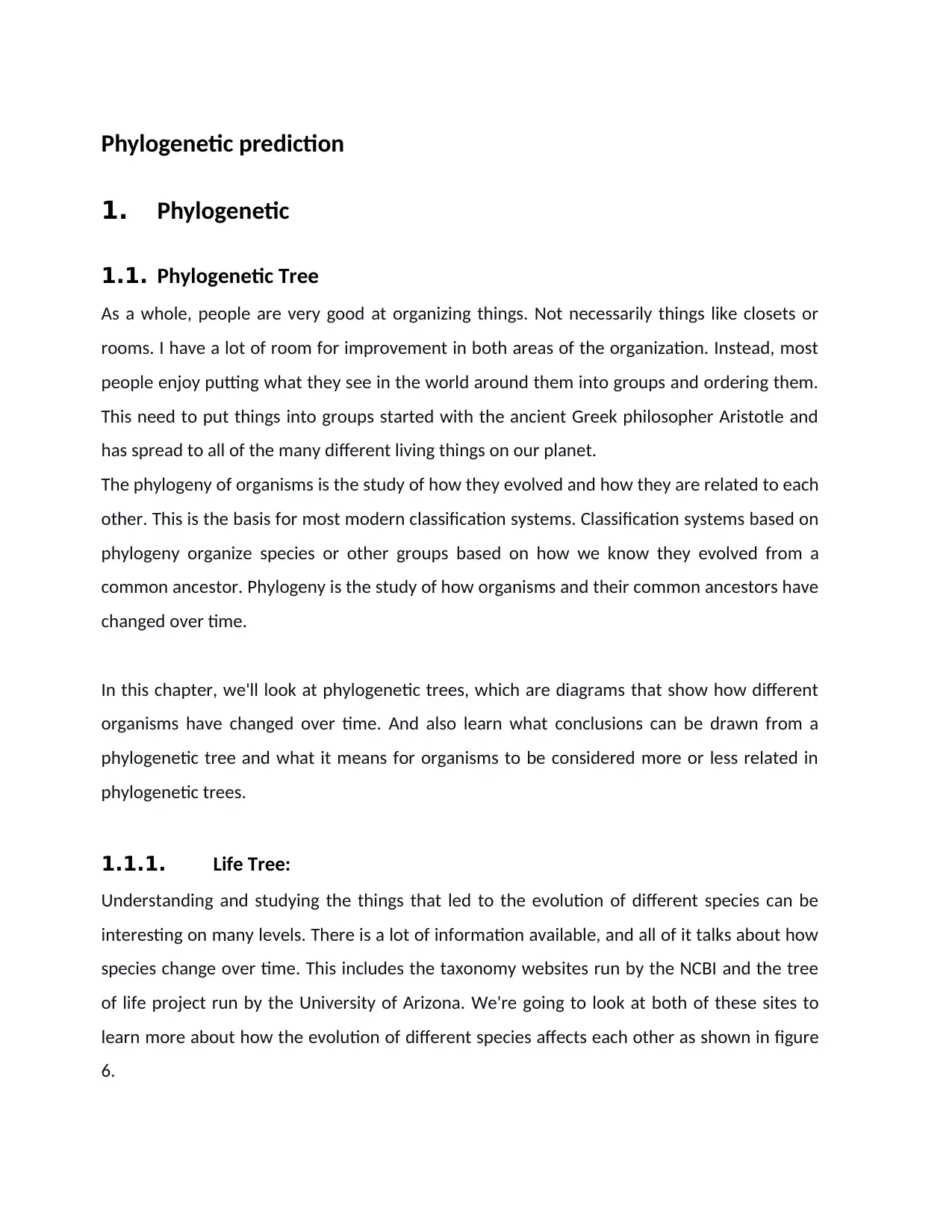
Understanding and studying the things that led to the evolution of different species can be
interesting on many levels. There is a lot of information available, and all of it talks about how
species change over time. This includes the taxonomy websites run by the NCBI and the tree
of life project run by the University of Arizona. We're going to look at both of these sites to
learn more about how the evolution of different species affects each other as shown in figure
6.
1. Phylogenetic
1.1. Phylogenetic Tree
As a whole, people are very good at organizing things. Not necessarily things like closets or
rooms. I have a lot of room for improvement in both areas of the organization. Instead, most
people enjoy putting what they see in the world around them into groups and ordering them.
This need to put things into groups started with the ancient Greek philosopher Aristotle and
has spread to all of the many different living things on our planet.
The phylogeny of organisms is the study of how they evolved and how they are related to each
other. This is the basis for most modern classification systems. Classification systems based on
phylogeny organize species or other groups based on how we know they evolved from a
common ancestor. Phylogeny is the study of how organisms and their common ancestors have
changed over time.
In this chapter, we'll look at phylogenetic trees, which are diagrams that show how different
organisms have changed over time. And also learn what conclusions can be drawn from a
phylogenetic tree and what it means for organisms to be considered more or less related in
phylogenetic trees.
1.1.1. Life Tree:
Understanding and studying the things that led to the evolution of different species can be
interesting on many levels. There is a lot of information available, and all of it talks about how
species change over time. This includes the taxonomy websites run by the NCBI and the tree
of life project run by the University of Arizona. We're going to look at both of these sites to
learn more about how the evolution of different species affects each other as shown in figure
6.

Figure 1 Life Tree
We can find the NCBI's taxonomy at
1.1.2. Phylogenetic tree Anatomy
When we draw a phylogenetic tree, we show our best guess about how a group of species (or
other groups) evolved from a common ancestor start superscript to end superscript. This
theory is based on what we know about our set of species, such as their physical traits and the
DNA sequences of the genes they contain. In the article we've written about building trees,
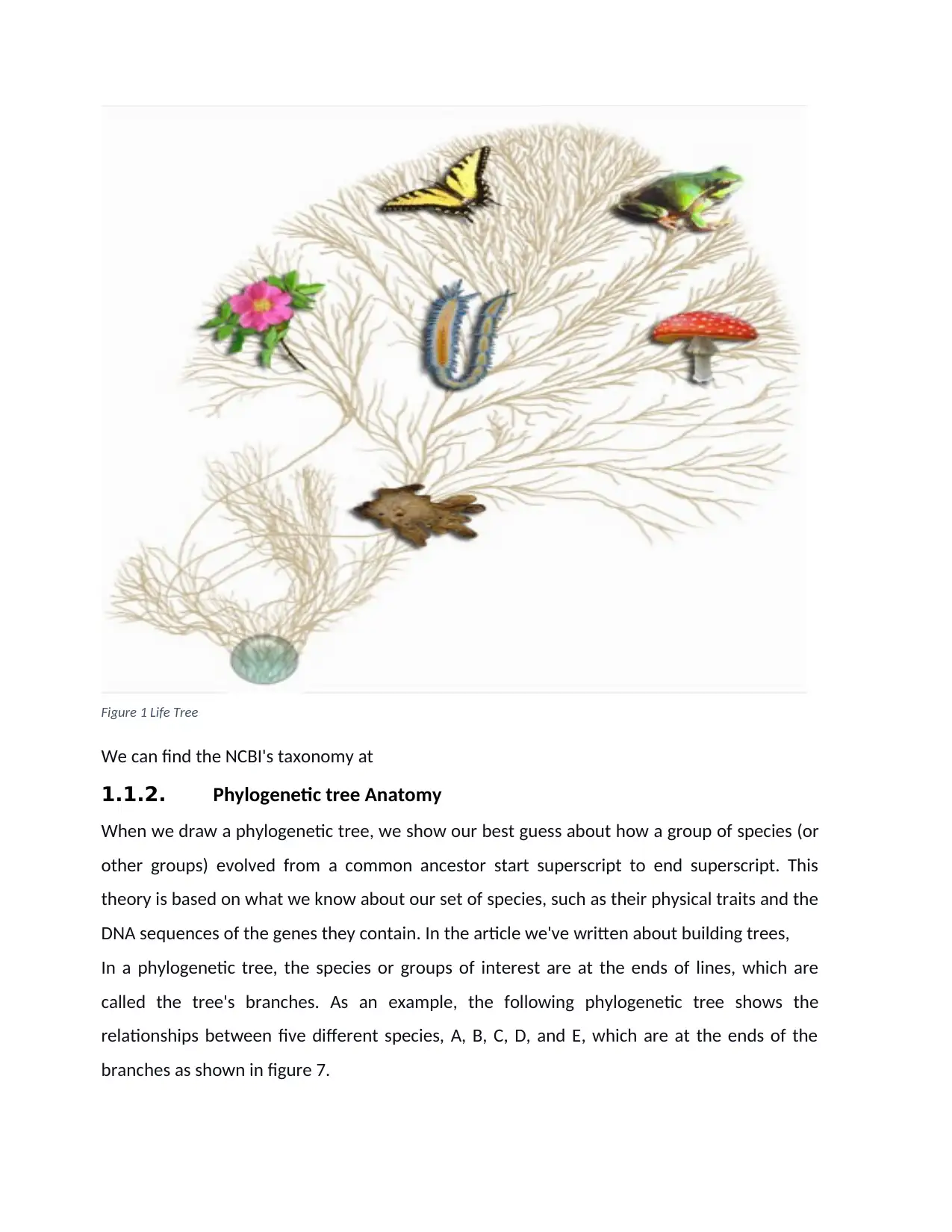
In a phylogenetic tree, the species or groups of interest are at the ends of lines, which are
called the tree's branches. As an example, the following phylogenetic tree shows the
relationships between five different species, A, B, C, D, and E, which are at the ends of the
branches as shown in figure 7.
We can find the NCBI's taxonomy at
1.1.2. Phylogenetic tree Anatomy
When we draw a phylogenetic tree, we show our best guess about how a group of species (or
other groups) evolved from a common ancestor start superscript to end superscript. This
theory is based on what we know about our set of species, such as their physical traits and the
DNA sequences of the genes they contain. In the article we've written about building trees,
In a phylogenetic tree, the species or groups of interest are at the ends of lines, which are
called the tree's branches. As an example, the following phylogenetic tree shows the
relationships between five different species, A, B, C, D, and E, which are at the ends of the
branches as shown in figure 7.
⊘ This is a preview!⊘
Do you want full access?
Subscribe today to unlock all pages.

Trusted by 1+ million students worldwide

Figure 2 Relationship between different species
The way the branches connect shows what we know about how the species shown in the tree
evolved from a common group of ancestors. Each branch point, also called an internal node,
shows a divergence event, which is when a single group splits into two separate groups of
descendants.
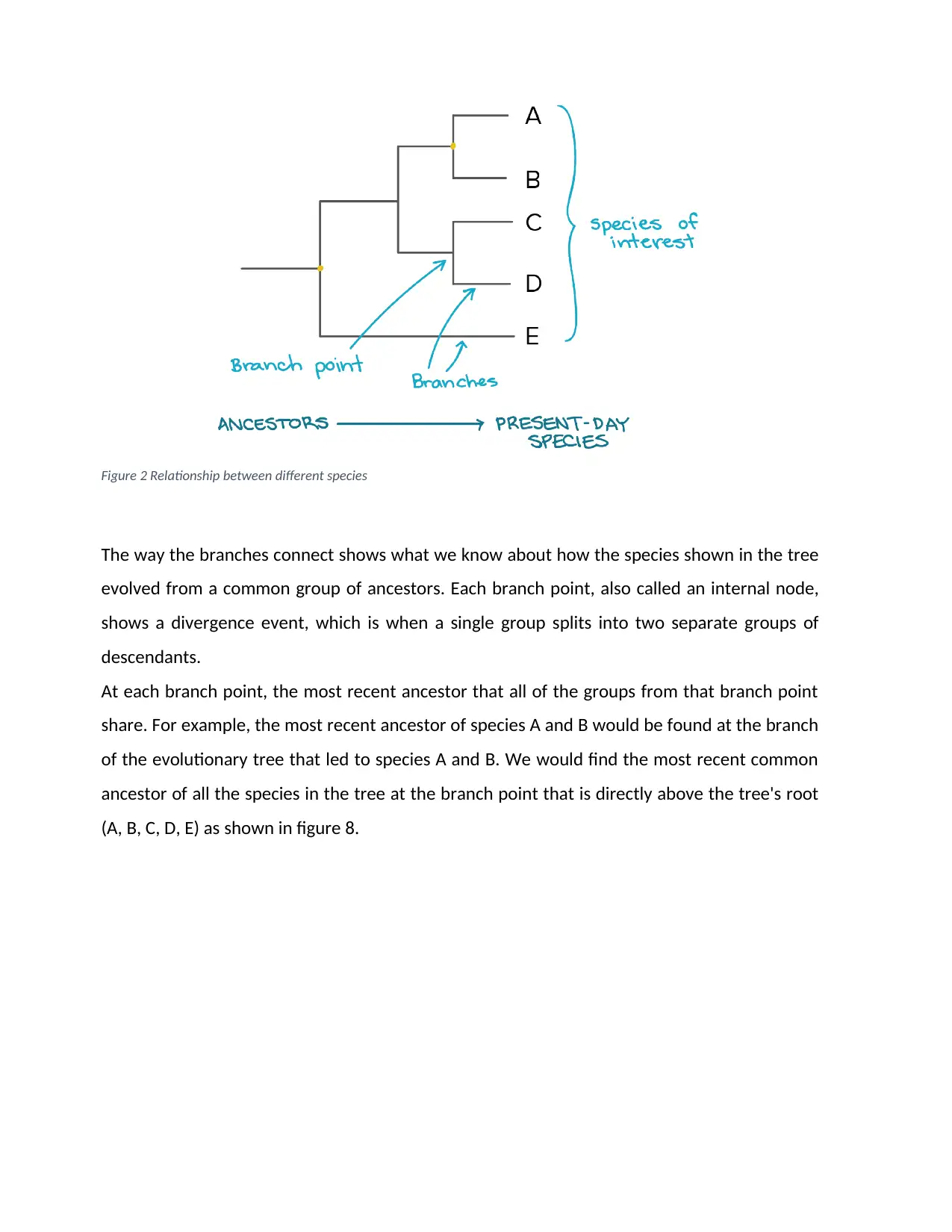
At each branch point, the most recent ancestor that all of the groups from that branch point
share. For example, the most recent ancestor of species A and B would be found at the branch
of the evolutionary tree that led to species A and B. We would find the most recent common
ancestor of all the species in the tree at the branch point that is directly above the tree's root
(A, B, C, D, E) as shown in figure 8.
The way the branches connect shows what we know about how the species shown in the tree
evolved from a common group of ancestors. Each branch point, also called an internal node,
shows a divergence event, which is when a single group splits into two separate groups of
descendants.
At each branch point, the most recent ancestor that all of the groups from that branch point
share. For example, the most recent ancestor of species A and B would be found at the branch
of the evolutionary tree that led to species A and B. We would find the most recent common
ancestor of all the species in the tree at the branch point that is directly above the tree's root
(A, B, C, D, E) as shown in figure 8.
Paraphrase This Document
Need a fresh take? Get an instant paraphrase of this document with our AI Paraphraser

The way our family tree is set up, each horizontal line shows a different lineage that can be
traced back to the last species. For example, the line that goes up to species E shows that
species' ancestors, since species E split off from the other species in the tree at some point in
its evolutionary history. If you look at the tree, you can see this. Similarly, the root is a symbol
of a line of ancestors that goes back to the most recent ancestor that all of the species in the
tree share.
An evolutionary tree is a two-dimensional graph that shows how a group of things being
compared has changed over time. This group could be made up of organisms, genes, or long
stretches of DNA Sequences. The fact is that each part of the set is called a "taxon." On the
tree, each taxon will be defined by a different unit.
An evolutionary tree has outer branches or leaves representing different taxonomic groups. It
also has nodes and branches that show how the groups are related. If two taxonomic groups
share a common ancestor, they will be at the same node in the graph. In general, methods for
making evolutionary trees try to figure out how long each branch is based on the number of
sequence-level changes. In phylogenetic analysis, one thing to watch is that this distance
might not match up exactly with the amount of time passed during evolution. The molecular
clock hypothesis is based on research that backs up the idea that mutations happen at the
same rate over the life of an organism.
traced back to the last species. For example, the line that goes up to species E shows that
species' ancestors, since species E split off from the other species in the tree at some point in
its evolutionary history. If you look at the tree, you can see this. Similarly, the root is a symbol
of a line of ancestors that goes back to the most recent ancestor that all of the species in the
tree share.
An evolutionary tree is a two-dimensional graph that shows how a group of things being
compared has changed over time. This group could be made up of organisms, genes, or long
stretches of DNA Sequences. The fact is that each part of the set is called a "taxon." On the
tree, each taxon will be defined by a different unit.
An evolutionary tree has outer branches or leaves representing different taxonomic groups. It
also has nodes and branches that show how the groups are related. If two taxonomic groups
share a common ancestor, they will be at the same node in the graph. In general, methods for
making evolutionary trees try to figure out how long each branch is based on the number of
sequence-level changes. In phylogenetic analysis, one thing to watch is that this distance
might not match up exactly with the amount of time passed during evolution. The molecular
clock hypothesis is based on research that backs up the idea that mutations happen at the
same rate over the life of an organism.

1.1.3. Rooted Trees
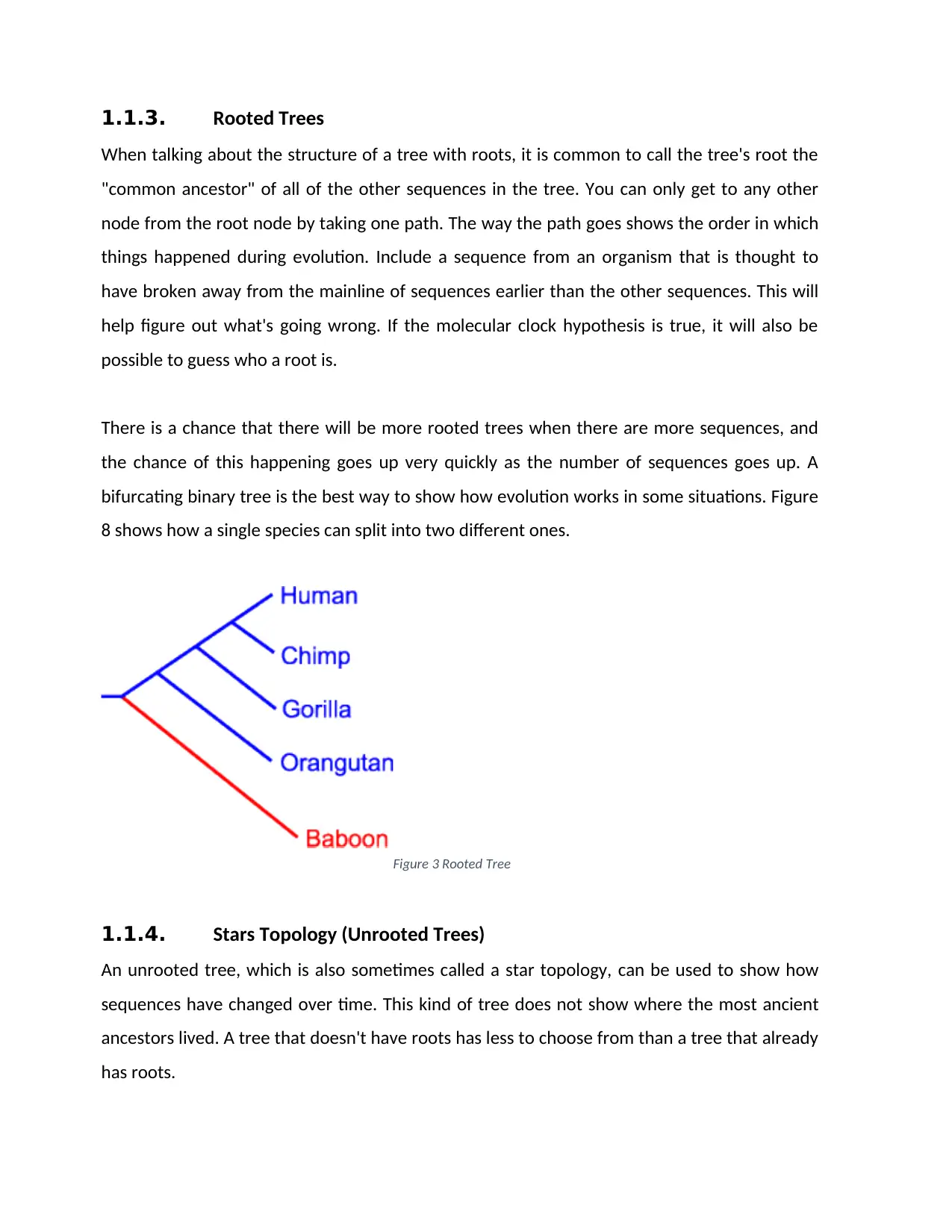
When talking about the structure of a tree with roots, it is common to call the tree's root the
"common ancestor" of all of the other sequences in the tree. You can only get to any other
node from the root node by taking one path. The way the path goes shows the order in which
things happened during evolution. Include a sequence from an organism that is thought to
have broken away from the mainline of sequences earlier than the other sequences. This will
help figure out what's going wrong. If the molecular clock hypothesis is true, it will also be
possible to guess who a root is.
There is a chance that there will be more rooted trees when there are more sequences, and
the chance of this happening goes up very quickly as the number of sequences goes up. A
bifurcating binary tree is the best way to show how evolution works in some situations. Figure
8 shows how a single species can split into two different ones.
1.1.4. Stars Topology (Unrooted Trees)
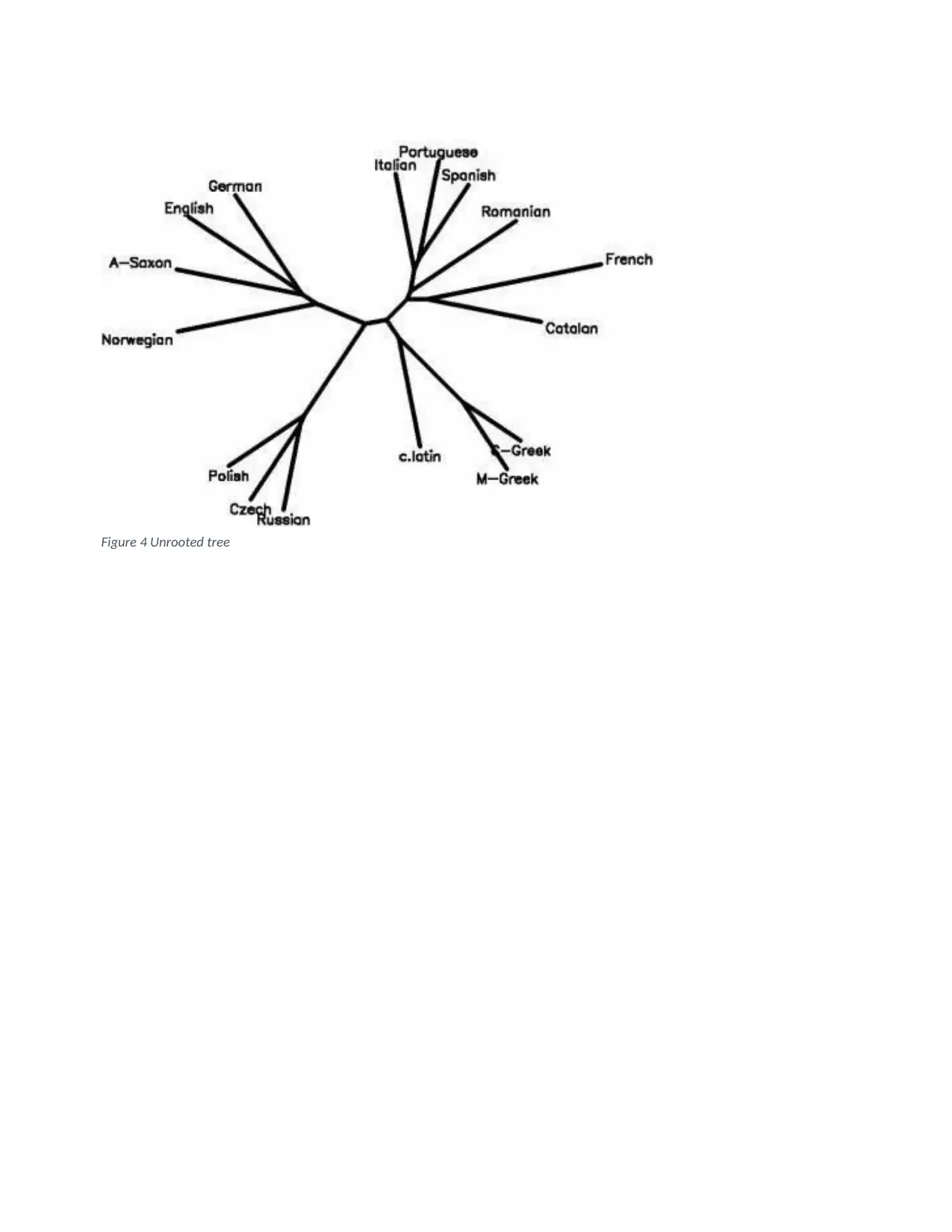
An unrooted tree, which is also sometimes called a star topology, can be used to show how
sequences have changed over time. This kind of tree does not show where the most ancient
ancestors lived. A tree that doesn't have roots has less to choose from than a tree that already
has roots.
Figure 3 Rooted Tree
When talking about the structure of a tree with roots, it is common to call the tree's root the
"common ancestor" of all of the other sequences in the tree. You can only get to any other
node from the root node by taking one path. The way the path goes shows the order in which
things happened during evolution. Include a sequence from an organism that is thought to
have broken away from the mainline of sequences earlier than the other sequences. This will
help figure out what's going wrong. If the molecular clock hypothesis is true, it will also be
possible to guess who a root is.
There is a chance that there will be more rooted trees when there are more sequences, and
the chance of this happening goes up very quickly as the number of sequences goes up. A
bifurcating binary tree is the best way to show how evolution works in some situations. Figure
8 shows how a single species can split into two different ones.
1.1.4. Stars Topology (Unrooted Trees)
An unrooted tree, which is also sometimes called a star topology, can be used to show how
sequences have changed over time. This kind of tree does not show where the most ancient
ancestors lived. A tree that doesn't have roots has less to choose from than a tree that already
has roots.
Figure 3 Rooted Tree
⊘ This is a preview!⊘
Do you want full access?
Subscribe today to unlock all pages.

Trusted by 1+ million students worldwide

Figure 4 Unrooted tree
1 out of 7
Related Documents
Your All-in-One AI-Powered Toolkit for Academic Success.
 +13062052269
info@desklib.com
Available 24*7 on WhatsApp / Email
Unlock your academic potential
Copyright © 2020–2026 A2Z Services. All Rights Reserved. Developed and managed by ZUCOL.