A Comparative Analysis: Plato and Aristotle on Motion and the World
VerifiedAdded on 2022/08/26
|6
|1010
|20
Essay
AI Summary
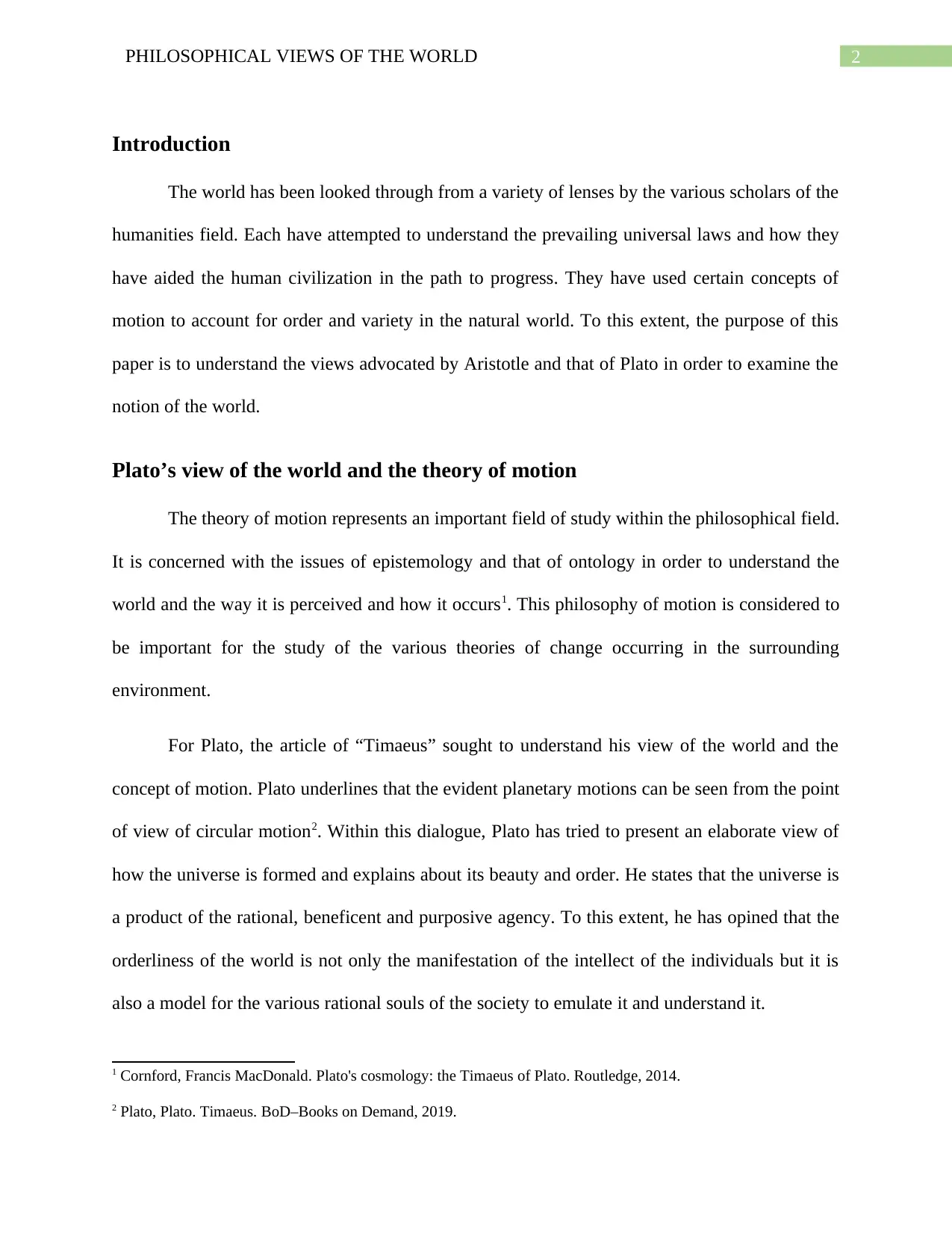
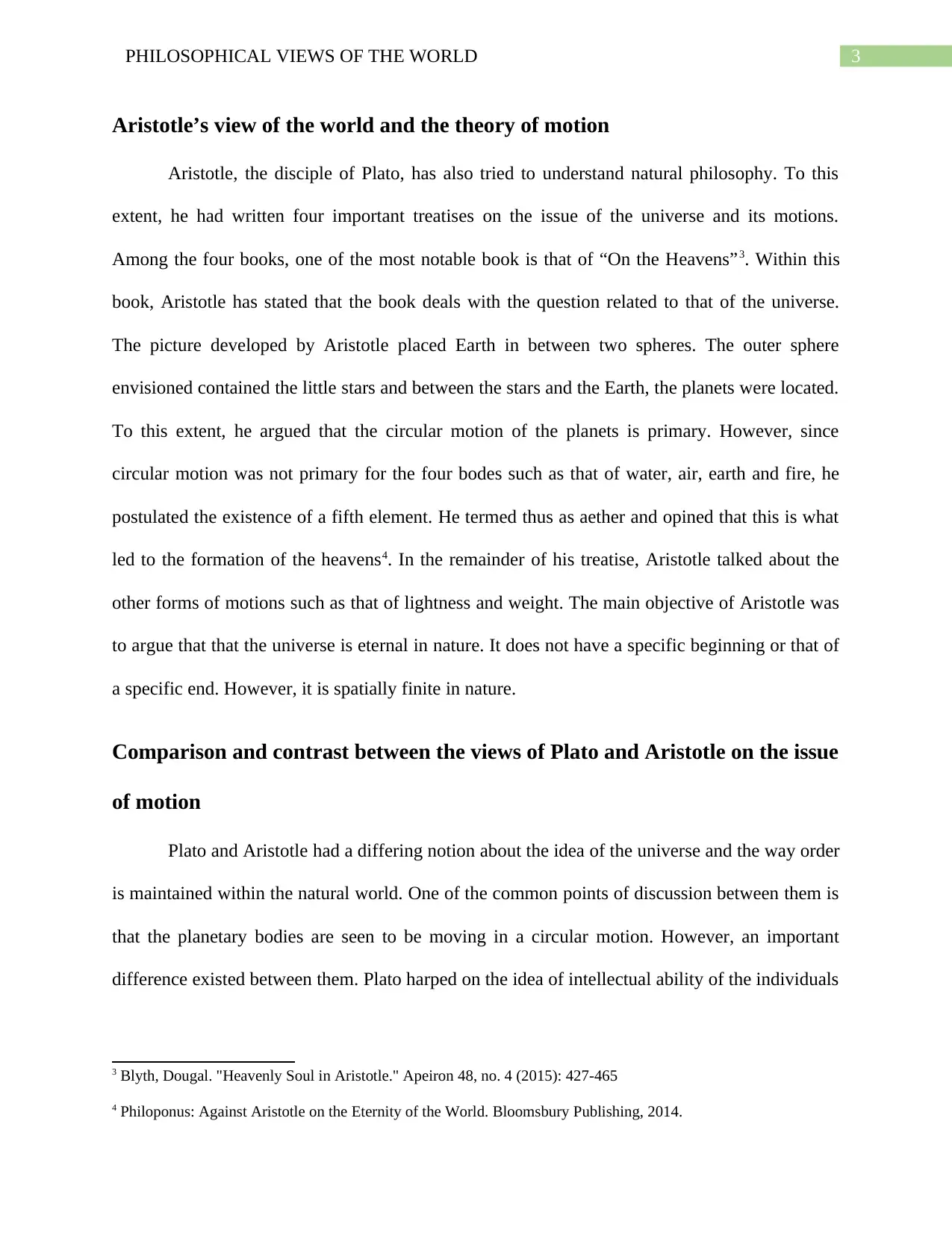
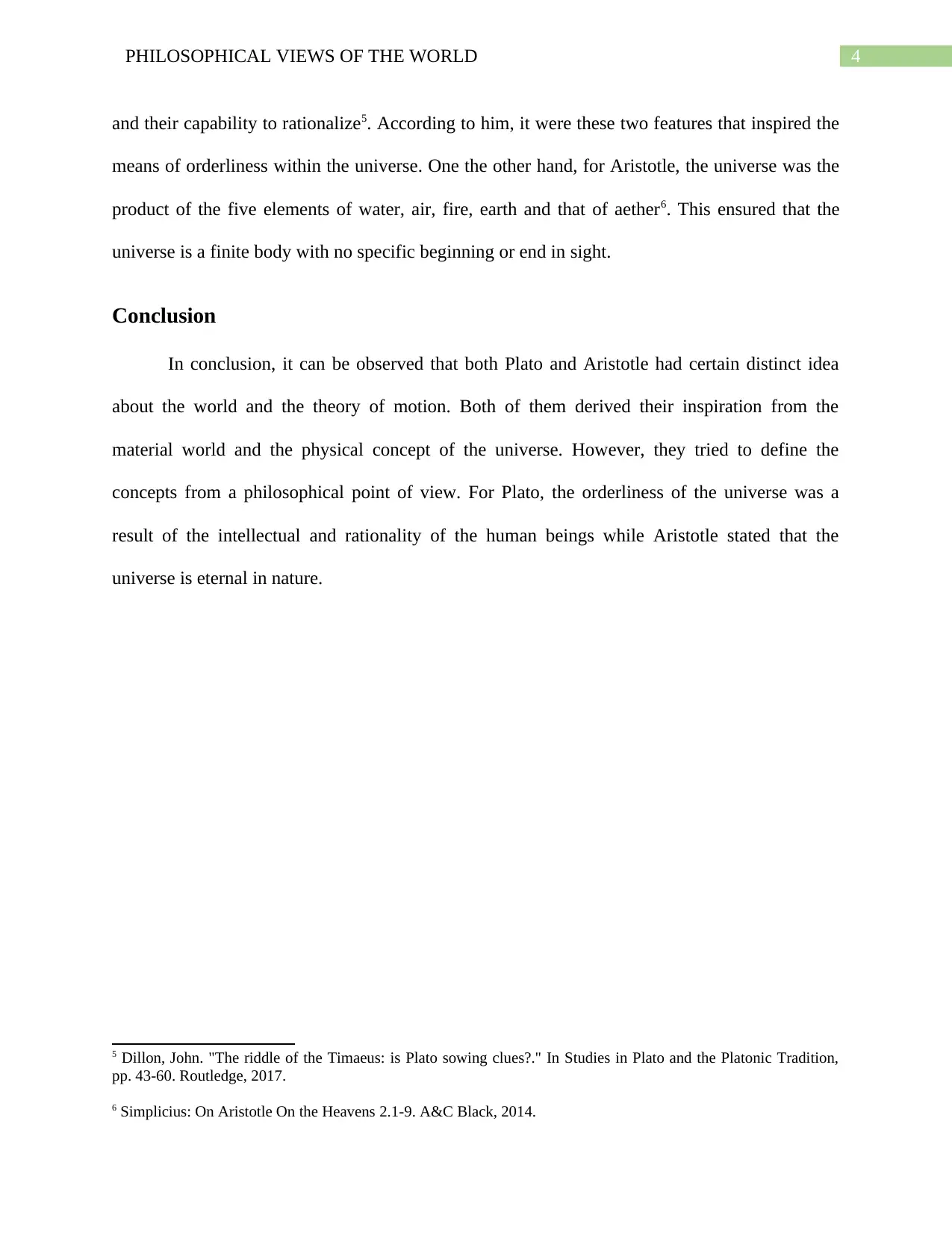
This essay provides a comparative analysis of the philosophical views of Plato and Aristotle on the theory of motion and the nature of the world. The introduction sets the stage by highlighting the significance of understanding universal laws and concepts of motion in the field of humanities. The paper then delves into Plato's perspective, drawing upon his work "Timaeus" to explain his view of the universe as a product of a rational, beneficent, and purposive agency, emphasizing the importance of circular motion. Following this, the essay explores Aristotle's views, referencing his book "On the Heavens," where he posits that the universe consists of the five elements and is eternal in nature, with circular motion being primary. The core of the essay lies in comparing and contrasting the two philosophers' ideas, highlighting Plato's emphasis on intellectual ability and rationality, and Aristotle's focus on the five elements. The conclusion synthesizes these contrasting viewpoints, emphasizing their shared inspiration from the material world and their distinct philosophical approaches to understanding the universe and the concept of motion.



1 out of 6


Your All-in-One AI-Powered Toolkit for Academic Success.
+13062052269
info@desklib.com
Available 24*7 on WhatsApp / Email
![[object Object]](/_next/static/media/star-bottom.7253800d.svg)
Copyright © 2020–2026 A2Z Services. All Rights Reserved. Developed and managed by ZUCOL.