Analyzing Moral Foundations Based on Political Orientation
VerifiedAdded on 2023/04/23
|12
|2753
|255
Report
AI Summary
This report investigates the hypothesis that political liberals base their moral systems on reciprocity/fairness and care/harm, while conservatives rely on oppression/liberty, degradation/sanctity, subversion/authority, betrayal/loyalty, and cheating/fairness/harm/care. The study involved 227 participants and utilized a political orientation scale and the Moral Foundations Questionnaire (MFQ). Results indicated that liberals prioritize harm/care and fairness/reciprocity, while conservatives show a more diverse moral foundation. The study also found that both liberals and conservatives highly value fairness and harm. The report discusses the implications of these findings in the context of political psychology and moral values. Desklib provides access to this and similar solved assignments, offering valuable resources for students.

Running head: PSYCHOLOGY
Psychology
Name of the Student:
Name of the University:
Author Note:
Psychology
Name of the Student:
Name of the University:
Author Note:

Paraphrase This Document
Need a fresh take? Get an instant paraphrase of this document with our AI Paraphraser
1PSYCHOLOGY
Abstract
A study was conducted to analyse the hypothesis that political liberals frame their moral systems
on the two psychological foundations like the reciprocity/fairness and care/harm whereas the
political conservatives construct a moral system which is based on the five psychological
foundation like the oppression/liberty; degradation/sanctity; subversion/authority;
betrayal/loyalty; cheating/fairness/harm/care. This study included a total of 227 individuals that
have a total of 59 men with a mean age of 23.42 years and the standard deviation is 7.6.
Whereas, the total number of women included in the study were 168 and the mean age was found
to be 21.41 years and with a standard deviation of 5.47 years. A total of 239 surveys were
gathered from the respondents and the data unavailability has rendered the remaining 12 sets of
the responses to be useless. It has also been seen that the a total of three respondents did not
return the test of political orientation. The moral foundation questionnaire was not completed by
the 9 respondents. Therefore, a total of 227 responses were used for further analysis. The data
explicitly showed that the hypothesis is correct while the lack of the moral foundation of
liberty/oppression have made it tough to prove the hypothesis correct.
Abstract
A study was conducted to analyse the hypothesis that political liberals frame their moral systems
on the two psychological foundations like the reciprocity/fairness and care/harm whereas the
political conservatives construct a moral system which is based on the five psychological
foundation like the oppression/liberty; degradation/sanctity; subversion/authority;
betrayal/loyalty; cheating/fairness/harm/care. This study included a total of 227 individuals that
have a total of 59 men with a mean age of 23.42 years and the standard deviation is 7.6.
Whereas, the total number of women included in the study were 168 and the mean age was found
to be 21.41 years and with a standard deviation of 5.47 years. A total of 239 surveys were
gathered from the respondents and the data unavailability has rendered the remaining 12 sets of
the responses to be useless. It has also been seen that the a total of three respondents did not
return the test of political orientation. The moral foundation questionnaire was not completed by
the 9 respondents. Therefore, a total of 227 responses were used for further analysis. The data
explicitly showed that the hypothesis is correct while the lack of the moral foundation of
liberty/oppression have made it tough to prove the hypothesis correct.
2PSYCHOLOGY
Method
Participants
The study included a total of 227 individuals that have a total of 59 men with a mean age
of 23.42 years and the standard deviation is 7.6. Whereas, the total number of women included in
the study were 168 and the mean age was found to be 21.41 years and with a standard deviation
of 5.47 years. The male respondents were more aged in comparison to the female respondents.
The difference between the ages is significant with a t (225) = 2.18 and a p-value of 0.011. The
respondents were aged between the 18 to 55 years.
Materials
Within the field of the politics the general people consider themselves to be either
conservative or liberal. This particular study emphasises on the question of political orientation
and it is a scale that have 7 different options. The 7 options are highlighted to be slightly
conservative, slightly liberal, moderately conservative, moderately liberal, strongly conservative,
strongly liberal, neutral (moderate). The question in the survey can be effectively segregated into
the conservative and liberal psychology. A set of questionnaire is also considered which is called
the Moral Foundations Questionnaire (MFQ). The questionnaire is found to be administered by
himself or herself and the individual choices regarding the decision making and priorities are
considered to be moral. The contents of the questionnaire deal with the five major moral
foundations called the care/harm, fairness, loyalty or ingroup, authority, purity. The
questionnaire consists of the two parts and the for this study the part 1 will be explicitly used.
Moral relevance and the moral judgements are the two different parts of the study. However, for
this study the moral relevance is used for the study. The section initiates with a question: The
stage where a person contemplates that something is wrong or right and the degree to which the
Method
Participants
The study included a total of 227 individuals that have a total of 59 men with a mean age
of 23.42 years and the standard deviation is 7.6. Whereas, the total number of women included in
the study were 168 and the mean age was found to be 21.41 years and with a standard deviation
of 5.47 years. The male respondents were more aged in comparison to the female respondents.
The difference between the ages is significant with a t (225) = 2.18 and a p-value of 0.011. The
respondents were aged between the 18 to 55 years.
Materials
Within the field of the politics the general people consider themselves to be either
conservative or liberal. This particular study emphasises on the question of political orientation
and it is a scale that have 7 different options. The 7 options are highlighted to be slightly
conservative, slightly liberal, moderately conservative, moderately liberal, strongly conservative,
strongly liberal, neutral (moderate). The question in the survey can be effectively segregated into
the conservative and liberal psychology. A set of questionnaire is also considered which is called
the Moral Foundations Questionnaire (MFQ). The questionnaire is found to be administered by
himself or herself and the individual choices regarding the decision making and priorities are
considered to be moral. The contents of the questionnaire deal with the five major moral
foundations called the care/harm, fairness, loyalty or ingroup, authority, purity. The
questionnaire consists of the two parts and the for this study the part 1 will be explicitly used.
Moral relevance and the moral judgements are the two different parts of the study. However, for
this study the moral relevance is used for the study. The section initiates with a question: The
stage where a person contemplates that something is wrong or right and the degree to which the
⊘ This is a preview!⊘
Do you want full access?
Subscribe today to unlock all pages.

Trusted by 1+ million students worldwide
3PSYCHOLOGY
question is relevant. The first part of the questionnaire includes the 16 questions and also a scale
that shows the extent up to which it is irrelevant and relevant.
Procedure
The 168 women and the 59 men respondents were asked to respond to a single item
orientation question that is entirely based on the personal inclination towards the conservative or
liberal type of politics. The test explicitly is based on the single type of scale and the respondents
are asked to provide a rating based on the 7-point scale. The scale with a score of 7 shows a
strongly conservative and 1 depicts a strongly liberal. The questionnaire consists of a total of 16
questions and the entirely based on the moral relevance. The respondents that are aged between
the 18 to 55 years are provided with the questionnaires. The data gathered from the respondents
were further used for the analysis.
Results
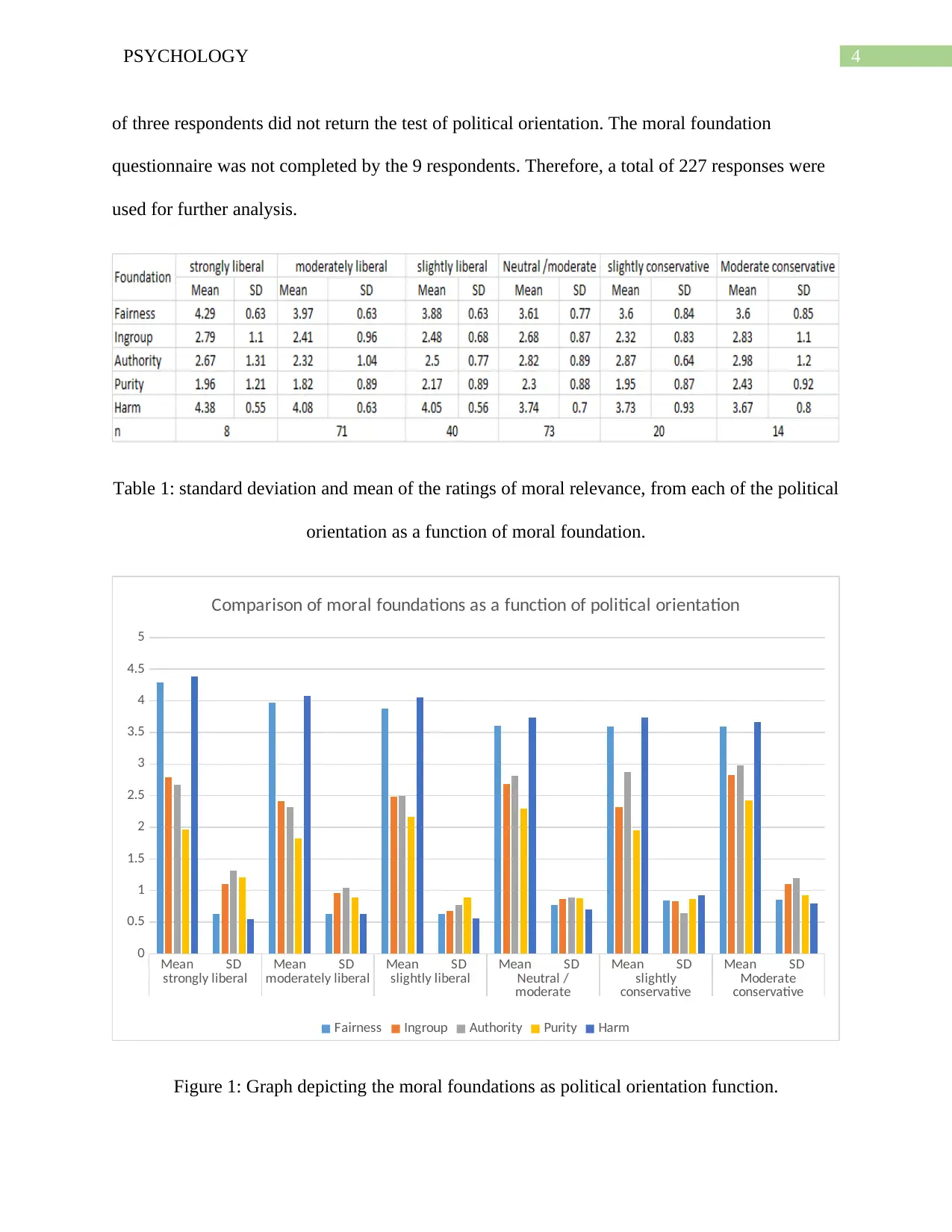
In order to measure the MFQ relevancy, the moral relevance is quantified based on the
political orientation function. The table below shows the data of political orientation and are
shown in terms of the mean and standard deviation. It is also shown based on the number of the
respondents that have explicitly opted for a specific category. The table shows the total number
of the respondents and they are located at the bottom row. The standard deviation also shows as a
rating that facilitates with the mean value. It has been seen that the only one of the respondent
belongs to the category of strongly conservative. Due to this reason the standard deviation cannot
be calculated for the category of the strongly conservative.
A total of 239 surveys were gathered from the respondents and the data unavailability has
rendered the remaining 12 sets of the responses to be useless. It has also been seen that the a total
question is relevant. The first part of the questionnaire includes the 16 questions and also a scale
that shows the extent up to which it is irrelevant and relevant.
Procedure
The 168 women and the 59 men respondents were asked to respond to a single item
orientation question that is entirely based on the personal inclination towards the conservative or
liberal type of politics. The test explicitly is based on the single type of scale and the respondents
are asked to provide a rating based on the 7-point scale. The scale with a score of 7 shows a
strongly conservative and 1 depicts a strongly liberal. The questionnaire consists of a total of 16
questions and the entirely based on the moral relevance. The respondents that are aged between
the 18 to 55 years are provided with the questionnaires. The data gathered from the respondents
were further used for the analysis.
Results
In order to measure the MFQ relevancy, the moral relevance is quantified based on the
political orientation function. The table below shows the data of political orientation and are
shown in terms of the mean and standard deviation. It is also shown based on the number of the
respondents that have explicitly opted for a specific category. The table shows the total number
of the respondents and they are located at the bottom row. The standard deviation also shows as a
rating that facilitates with the mean value. It has been seen that the only one of the respondent
belongs to the category of strongly conservative. Due to this reason the standard deviation cannot
be calculated for the category of the strongly conservative.
A total of 239 surveys were gathered from the respondents and the data unavailability has
rendered the remaining 12 sets of the responses to be useless. It has also been seen that the a total
Paraphrase This Document
Need a fresh take? Get an instant paraphrase of this document with our AI Paraphraser
4PSYCHOLOGY
of three respondents did not return the test of political orientation. The moral foundation
questionnaire was not completed by the 9 respondents. Therefore, a total of 227 responses were
used for further analysis.
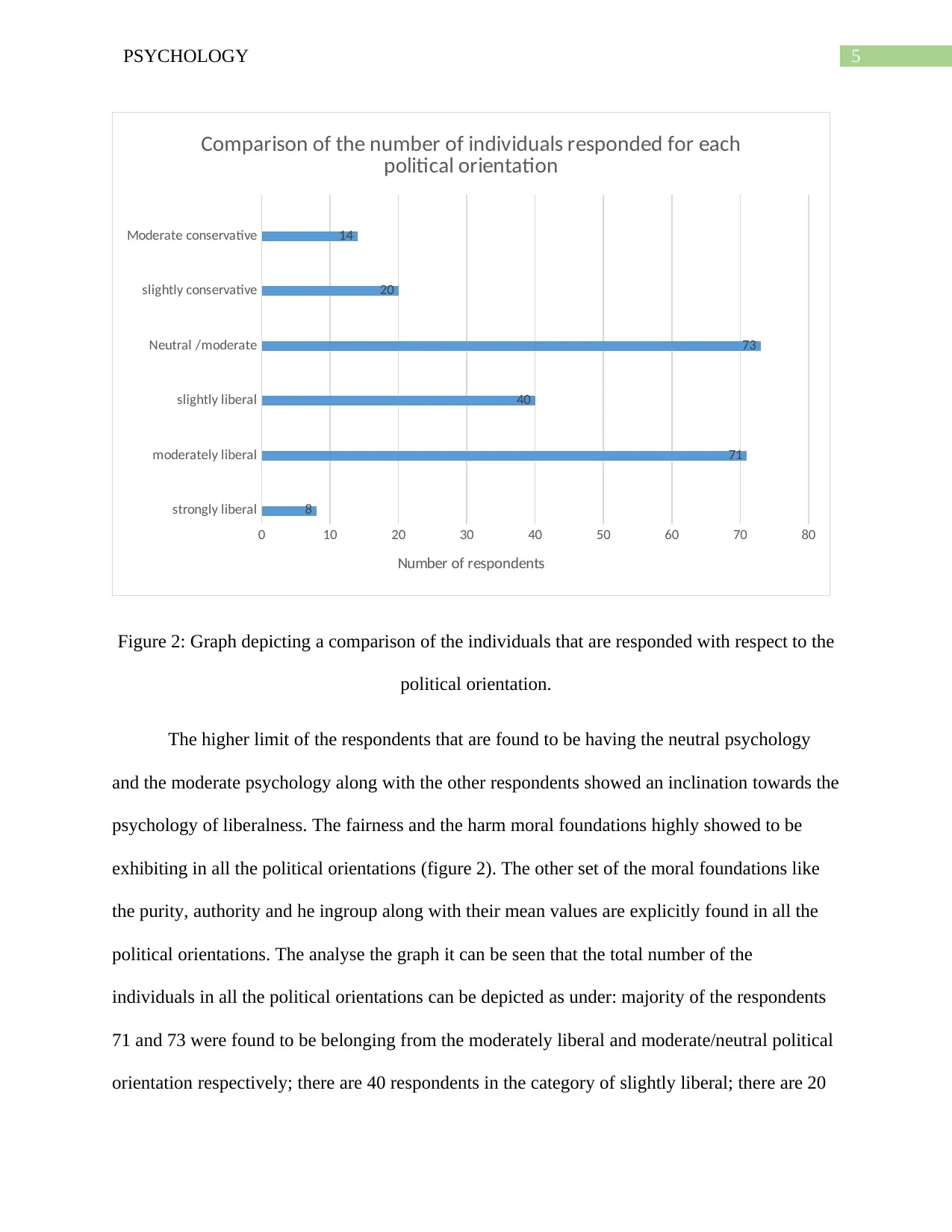
Table 1: standard deviation and mean of the ratings of moral relevance, from each of the political
orientation as a function of moral foundation.
Mean SD Mean SD Mean SD Mean SD Mean SD Mean SD
strongly liberal moderately liberal slightly liberal Neutral /
moderate slightly
conservative Moderate
conservative
0
0.5
1
1.5
2
2.5
3
3.5
4
4.5
5
Comparison of moral foundations as a function of political orientation
Fairness Ingroup Authority Purity Harm
Figure 1: Graph depicting the moral foundations as political orientation function.
of three respondents did not return the test of political orientation. The moral foundation
questionnaire was not completed by the 9 respondents. Therefore, a total of 227 responses were
used for further analysis.
Table 1: standard deviation and mean of the ratings of moral relevance, from each of the political
orientation as a function of moral foundation.
Mean SD Mean SD Mean SD Mean SD Mean SD Mean SD
strongly liberal moderately liberal slightly liberal Neutral /
moderate slightly
conservative Moderate
conservative
0
0.5
1
1.5
2
2.5
3
3.5
4
4.5
5
Comparison of moral foundations as a function of political orientation
Fairness Ingroup Authority Purity Harm
Figure 1: Graph depicting the moral foundations as political orientation function.
5PSYCHOLOGY
strongly liberal
moderately liberal
slightly liberal
Neutral /moderate
slightly conservative
Moderate conservative
0 10 20 30 40 50 60 70 80
8
71
40
73
20
14
Comparison of the number of individuals responded for each
political orientation
Number of respondents
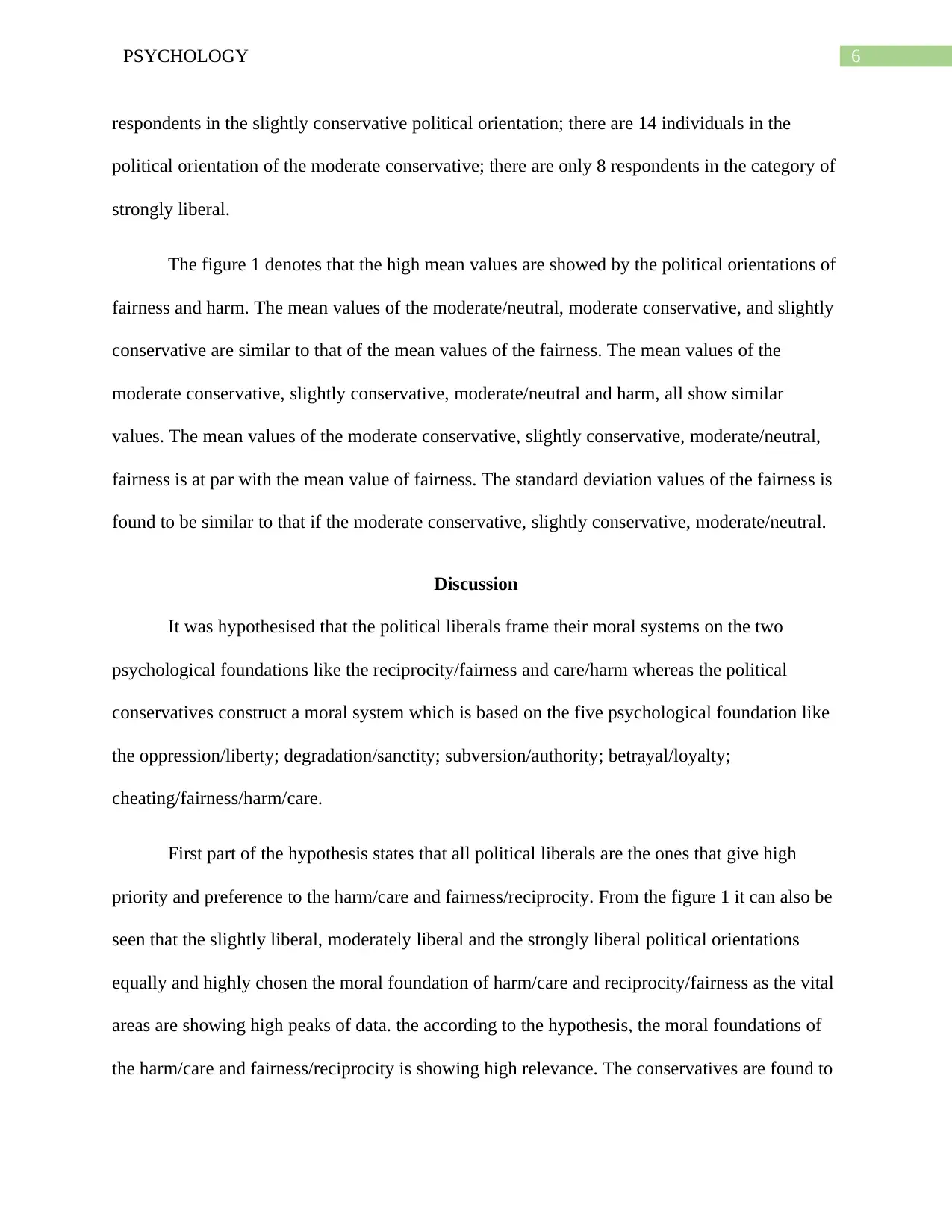
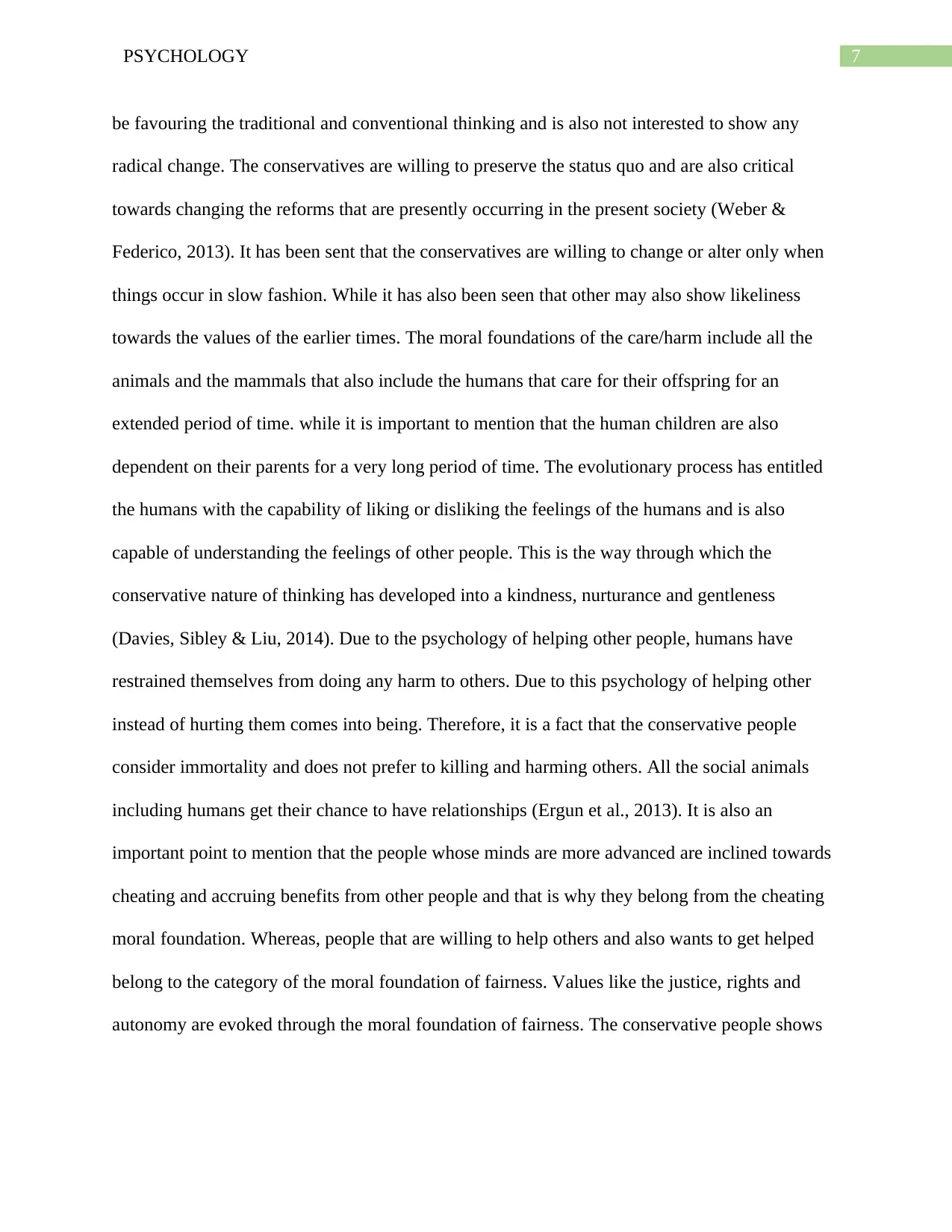
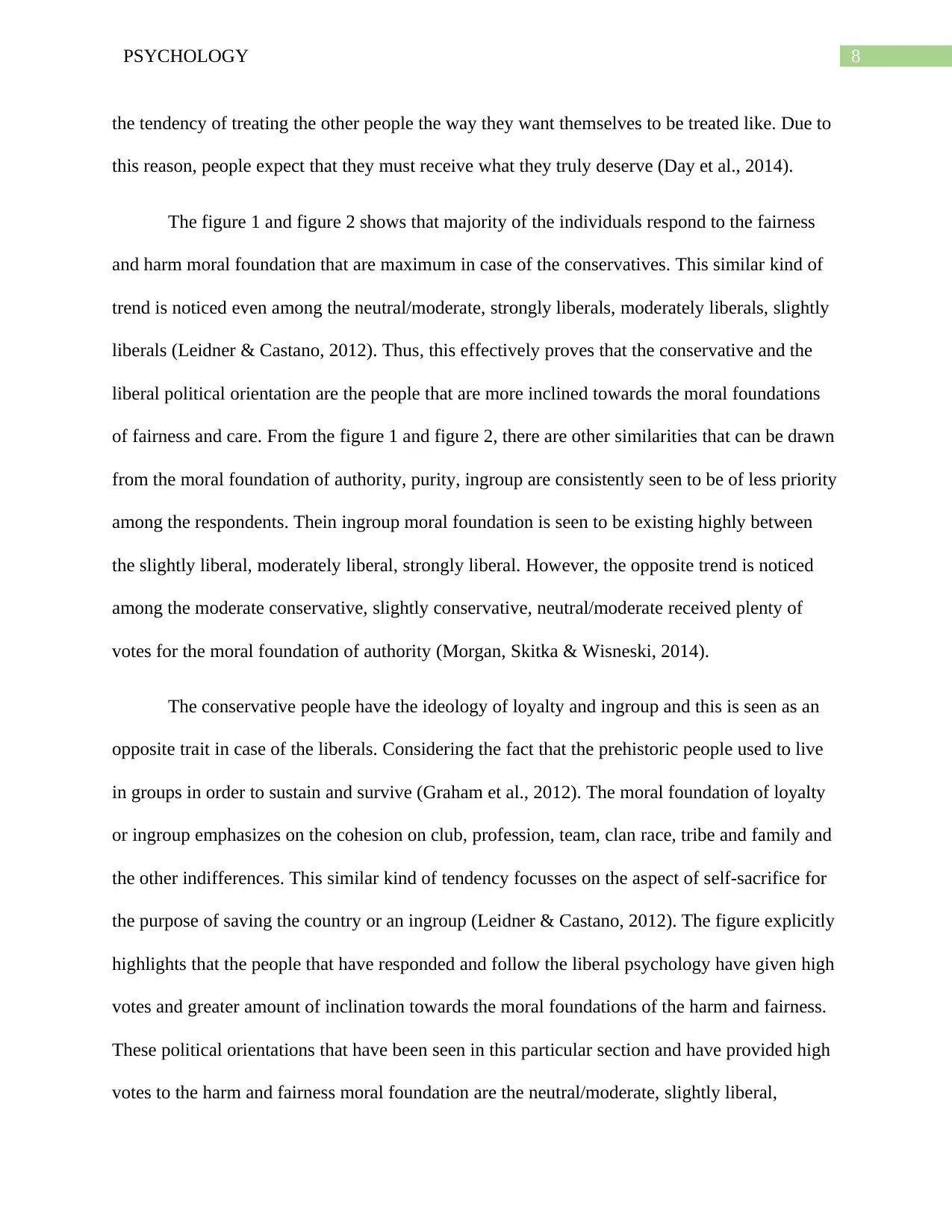
Figure 2: Graph depicting a comparison of the individuals that are responded with respect to the
political orientation.
The higher limit of the respondents that are found to be having the neutral psychology
and the moderate psychology along with the other respondents showed an inclination towards the
psychology of liberalness. The fairness and the harm moral foundations highly showed to be
exhibiting in all the political orientations (figure 2). The other set of the moral foundations like
the purity, authority and he ingroup along with their mean values are explicitly found in all the
political orientations. The analyse the graph it can be seen that the total number of the
individuals in all the political orientations can be depicted as under: majority of the respondents
71 and 73 were found to be belonging from the moderately liberal and moderate/neutral political
orientation respectively; there are 40 respondents in the category of slightly liberal; there are 20
strongly liberal
moderately liberal
slightly liberal
Neutral /moderate
slightly conservative
Moderate conservative
0 10 20 30 40 50 60 70 80
8
71
40
73
20
14
Comparison of the number of individuals responded for each
political orientation
Number of respondents
Figure 2: Graph depicting a comparison of the individuals that are responded with respect to the
political orientation.
The higher limit of the respondents that are found to be having the neutral psychology
and the moderate psychology along with the other respondents showed an inclination towards the
psychology of liberalness. The fairness and the harm moral foundations highly showed to be
exhibiting in all the political orientations (figure 2). The other set of the moral foundations like
the purity, authority and he ingroup along with their mean values are explicitly found in all the
political orientations. The analyse the graph it can be seen that the total number of the
individuals in all the political orientations can be depicted as under: majority of the respondents
71 and 73 were found to be belonging from the moderately liberal and moderate/neutral political
orientation respectively; there are 40 respondents in the category of slightly liberal; there are 20
⊘ This is a preview!⊘
Do you want full access?
Subscribe today to unlock all pages.
Trusted by 1+ million students worldwide
6PSYCHOLOGY
respondents in the slightly conservative political orientation; there are 14 individuals in the
political orientation of the moderate conservative; there are only 8 respondents in the category of
strongly liberal.
The figure 1 denotes that the high mean values are showed by the political orientations of
fairness and harm. The mean values of the moderate/neutral, moderate conservative, and slightly
conservative are similar to that of the mean values of the fairness. The mean values of the
moderate conservative, slightly conservative, moderate/neutral and harm, all show similar
values. The mean values of the moderate conservative, slightly conservative, moderate/neutral,
fairness is at par with the mean value of fairness. The standard deviation values of the fairness is
found to be similar to that if the moderate conservative, slightly conservative, moderate/neutral.
Discussion
It was hypothesised that the political liberals frame their moral systems on the two
psychological foundations like the reciprocity/fairness and care/harm whereas the political
conservatives construct a moral system which is based on the five psychological foundation like
the oppression/liberty; degradation/sanctity; subversion/authority; betrayal/loyalty;
cheating/fairness/harm/care.
First part of the hypothesis states that all political liberals are the ones that give high
priority and preference to the harm/care and fairness/reciprocity. From the figure 1 it can also be
seen that the slightly liberal, moderately liberal and the strongly liberal political orientations
equally and highly chosen the moral foundation of harm/care and reciprocity/fairness as the vital
areas are showing high peaks of data. the according to the hypothesis, the moral foundations of
the harm/care and fairness/reciprocity is showing high relevance. The conservatives are found to
respondents in the slightly conservative political orientation; there are 14 individuals in the
political orientation of the moderate conservative; there are only 8 respondents in the category of
strongly liberal.
The figure 1 denotes that the high mean values are showed by the political orientations of
fairness and harm. The mean values of the moderate/neutral, moderate conservative, and slightly
conservative are similar to that of the mean values of the fairness. The mean values of the
moderate conservative, slightly conservative, moderate/neutral and harm, all show similar
values. The mean values of the moderate conservative, slightly conservative, moderate/neutral,
fairness is at par with the mean value of fairness. The standard deviation values of the fairness is
found to be similar to that if the moderate conservative, slightly conservative, moderate/neutral.
Discussion
It was hypothesised that the political liberals frame their moral systems on the two
psychological foundations like the reciprocity/fairness and care/harm whereas the political
conservatives construct a moral system which is based on the five psychological foundation like
the oppression/liberty; degradation/sanctity; subversion/authority; betrayal/loyalty;
cheating/fairness/harm/care.
First part of the hypothesis states that all political liberals are the ones that give high
priority and preference to the harm/care and fairness/reciprocity. From the figure 1 it can also be
seen that the slightly liberal, moderately liberal and the strongly liberal political orientations
equally and highly chosen the moral foundation of harm/care and reciprocity/fairness as the vital
areas are showing high peaks of data. the according to the hypothesis, the moral foundations of
the harm/care and fairness/reciprocity is showing high relevance. The conservatives are found to
Paraphrase This Document
Need a fresh take? Get an instant paraphrase of this document with our AI Paraphraser
7PSYCHOLOGY
be favouring the traditional and conventional thinking and is also not interested to show any
radical change. The conservatives are willing to preserve the status quo and are also critical
towards changing the reforms that are presently occurring in the present society (Weber &
Federico, 2013). It has been sent that the conservatives are willing to change or alter only when
things occur in slow fashion. While it has also been seen that other may also show likeliness
towards the values of the earlier times. The moral foundations of the care/harm include all the
animals and the mammals that also include the humans that care for their offspring for an
extended period of time. while it is important to mention that the human children are also
dependent on their parents for a very long period of time. The evolutionary process has entitled
the humans with the capability of liking or disliking the feelings of the humans and is also
capable of understanding the feelings of other people. This is the way through which the
conservative nature of thinking has developed into a kindness, nurturance and gentleness
(Davies, Sibley & Liu, 2014). Due to the psychology of helping other people, humans have
restrained themselves from doing any harm to others. Due to this psychology of helping other
instead of hurting them comes into being. Therefore, it is a fact that the conservative people
consider immortality and does not prefer to killing and harming others. All the social animals
including humans get their chance to have relationships (Ergun et al., 2013). It is also an
important point to mention that the people whose minds are more advanced are inclined towards
cheating and accruing benefits from other people and that is why they belong from the cheating
moral foundation. Whereas, people that are willing to help others and also wants to get helped
belong to the category of the moral foundation of fairness. Values like the justice, rights and
autonomy are evoked through the moral foundation of fairness. The conservative people shows
be favouring the traditional and conventional thinking and is also not interested to show any
radical change. The conservatives are willing to preserve the status quo and are also critical
towards changing the reforms that are presently occurring in the present society (Weber &
Federico, 2013). It has been sent that the conservatives are willing to change or alter only when
things occur in slow fashion. While it has also been seen that other may also show likeliness
towards the values of the earlier times. The moral foundations of the care/harm include all the
animals and the mammals that also include the humans that care for their offspring for an
extended period of time. while it is important to mention that the human children are also
dependent on their parents for a very long period of time. The evolutionary process has entitled
the humans with the capability of liking or disliking the feelings of the humans and is also
capable of understanding the feelings of other people. This is the way through which the
conservative nature of thinking has developed into a kindness, nurturance and gentleness
(Davies, Sibley & Liu, 2014). Due to the psychology of helping other people, humans have
restrained themselves from doing any harm to others. Due to this psychology of helping other
instead of hurting them comes into being. Therefore, it is a fact that the conservative people
consider immortality and does not prefer to killing and harming others. All the social animals
including humans get their chance to have relationships (Ergun et al., 2013). It is also an
important point to mention that the people whose minds are more advanced are inclined towards
cheating and accruing benefits from other people and that is why they belong from the cheating
moral foundation. Whereas, people that are willing to help others and also wants to get helped
belong to the category of the moral foundation of fairness. Values like the justice, rights and
autonomy are evoked through the moral foundation of fairness. The conservative people shows
8PSYCHOLOGY
the tendency of treating the other people the way they want themselves to be treated like. Due to
this reason, people expect that they must receive what they truly deserve (Day et al., 2014).
The figure 1 and figure 2 shows that majority of the individuals respond to the fairness
and harm moral foundation that are maximum in case of the conservatives. This similar kind of
trend is noticed even among the neutral/moderate, strongly liberals, moderately liberals, slightly
liberals (Leidner & Castano, 2012). Thus, this effectively proves that the conservative and the
liberal political orientation are the people that are more inclined towards the moral foundations
of fairness and care. From the figure 1 and figure 2, there are other similarities that can be drawn
from the moral foundation of authority, purity, ingroup are consistently seen to be of less priority
among the respondents. Thein ingroup moral foundation is seen to be existing highly between
the slightly liberal, moderately liberal, strongly liberal. However, the opposite trend is noticed
among the moderate conservative, slightly conservative, neutral/moderate received plenty of
votes for the moral foundation of authority (Morgan, Skitka & Wisneski, 2014).
The conservative people have the ideology of loyalty and ingroup and this is seen as an
opposite trait in case of the liberals. Considering the fact that the prehistoric people used to live
in groups in order to sustain and survive (Graham et al., 2012). The moral foundation of loyalty
or ingroup emphasizes on the cohesion on club, profession, team, clan race, tribe and family and
the other indifferences. This similar kind of tendency focusses on the aspect of self-sacrifice for
the purpose of saving the country or an ingroup (Leidner & Castano, 2012). The figure explicitly
highlights that the people that have responded and follow the liberal psychology have given high
votes and greater amount of inclination towards the moral foundations of the harm and fairness.
These political orientations that have been seen in this particular section and have provided high
votes to the harm and fairness moral foundation are the neutral/moderate, slightly liberal,
the tendency of treating the other people the way they want themselves to be treated like. Due to
this reason, people expect that they must receive what they truly deserve (Day et al., 2014).
The figure 1 and figure 2 shows that majority of the individuals respond to the fairness
and harm moral foundation that are maximum in case of the conservatives. This similar kind of
trend is noticed even among the neutral/moderate, strongly liberals, moderately liberals, slightly
liberals (Leidner & Castano, 2012). Thus, this effectively proves that the conservative and the
liberal political orientation are the people that are more inclined towards the moral foundations
of fairness and care. From the figure 1 and figure 2, there are other similarities that can be drawn
from the moral foundation of authority, purity, ingroup are consistently seen to be of less priority
among the respondents. Thein ingroup moral foundation is seen to be existing highly between
the slightly liberal, moderately liberal, strongly liberal. However, the opposite trend is noticed
among the moderate conservative, slightly conservative, neutral/moderate received plenty of
votes for the moral foundation of authority (Morgan, Skitka & Wisneski, 2014).
The conservative people have the ideology of loyalty and ingroup and this is seen as an
opposite trait in case of the liberals. Considering the fact that the prehistoric people used to live
in groups in order to sustain and survive (Graham et al., 2012). The moral foundation of loyalty
or ingroup emphasizes on the cohesion on club, profession, team, clan race, tribe and family and
the other indifferences. This similar kind of tendency focusses on the aspect of self-sacrifice for
the purpose of saving the country or an ingroup (Leidner & Castano, 2012). The figure explicitly
highlights that the people that have responded and follow the liberal psychology have given high
votes and greater amount of inclination towards the moral foundations of the harm and fairness.
These political orientations that have been seen in this particular section and have provided high
votes to the harm and fairness moral foundation are the neutral/moderate, slightly liberal,
⊘ This is a preview!⊘
Do you want full access?
Subscribe today to unlock all pages.
Trusted by 1+ million students worldwide
9PSYCHOLOGY
moderately liberal and strongly liberal. While making comparison with the people that have the
conservative psychology are seen to be inclined towards the moral foundations of harm and
fairness (Weber & Federico, 2013). However, the other moral foundations have received the
similar kinds of votes and they are comparatively high in comparison to the votes received by the
liberals. Thus, it can be said that the hypothesis framed in the assignment 1 is aligned with the
information present in the surveys. Whereas, it is important to mention that the second part of the
hypothesis cannot be proved due to the data lacking in certain section like liberty/oppression.
moderately liberal and strongly liberal. While making comparison with the people that have the
conservative psychology are seen to be inclined towards the moral foundations of harm and
fairness (Weber & Federico, 2013). However, the other moral foundations have received the
similar kinds of votes and they are comparatively high in comparison to the votes received by the
liberals. Thus, it can be said that the hypothesis framed in the assignment 1 is aligned with the
information present in the surveys. Whereas, it is important to mention that the second part of the
hypothesis cannot be proved due to the data lacking in certain section like liberty/oppression.
Paraphrase This Document
Need a fresh take? Get an instant paraphrase of this document with our AI Paraphraser
10PSYCHOLOGY
Reference
Davies, C. L., Sibley, C. G., & Liu, J. H. (2014). Confirmatory factor analysis of the Moral
Foundations Questionnaire. Social Psychology.
https://doi.org/10.1027/1864-9335/a000201
Day, M. V., Downing, E. L., Fiske, S. T., & Trail, T. E. (2014). Shifting Liberal and
Conservative Attitudes Using Moral Foundations Theory. Personality and Social
Psychology Bulletin, 15(1).doi10.1177/0146167214551152
Ergun, D., Hunt, C., Federico, C. M., Weber, C. R. (2013). Mapping the Connections between
Politics and Morality: The Multiple Sociopolitical Orientations Involved in Moral
Intuition. Political Psychology,34(4). doi:10.1111/pops.12006
Graham, J., Haidt, J., Koleva, S., Motyl, M., Iyer, R., Wojcik, S. P., & Ditto, P. H. (2012). Moral
foundations theory: The pragmatic validity of moral pluralism. DOI:
https://ssrn.com/abstract=2184440
Leidner, B., & Castano, E. (2012). Morality shifting in the context of intergroup violence.
European Journal of Social Psychology, 42(1), 82-91. DOI: 10.1002/ejsp.846
Leidner, B., & Castano, E. (2012). Morality shifting in the context of intergroup violence.
European Journal of Social Psychology, 42(1), 82-91. DOI: 10.1002/ejsp.846
Morgan, G. S., Skitka, L. J., Wisneski, D. C. (2014). Political Orientation and Moral Conviction:
A Conservative Advantage or an Equal Opportunity Motivator of Political Engagement?
Retrieved from
http://www.sydneysymposium.unsw.edu.au/2014/chapters/SkitkaSSSP2014.pdf
Reference
Davies, C. L., Sibley, C. G., & Liu, J. H. (2014). Confirmatory factor analysis of the Moral
Foundations Questionnaire. Social Psychology.
https://doi.org/10.1027/1864-9335/a000201
Day, M. V., Downing, E. L., Fiske, S. T., & Trail, T. E. (2014). Shifting Liberal and
Conservative Attitudes Using Moral Foundations Theory. Personality and Social
Psychology Bulletin, 15(1).doi10.1177/0146167214551152
Ergun, D., Hunt, C., Federico, C. M., Weber, C. R. (2013). Mapping the Connections between
Politics and Morality: The Multiple Sociopolitical Orientations Involved in Moral
Intuition. Political Psychology,34(4). doi:10.1111/pops.12006
Graham, J., Haidt, J., Koleva, S., Motyl, M., Iyer, R., Wojcik, S. P., & Ditto, P. H. (2012). Moral
foundations theory: The pragmatic validity of moral pluralism. DOI:
https://ssrn.com/abstract=2184440
Leidner, B., & Castano, E. (2012). Morality shifting in the context of intergroup violence.
European Journal of Social Psychology, 42(1), 82-91. DOI: 10.1002/ejsp.846
Leidner, B., & Castano, E. (2012). Morality shifting in the context of intergroup violence.
European Journal of Social Psychology, 42(1), 82-91. DOI: 10.1002/ejsp.846
Morgan, G. S., Skitka, L. J., Wisneski, D. C. (2014). Political Orientation and Moral Conviction:
A Conservative Advantage or an Equal Opportunity Motivator of Political Engagement?
Retrieved from
http://www.sydneysymposium.unsw.edu.au/2014/chapters/SkitkaSSSP2014.pdf
11PSYCHOLOGY
Weber, C. R., & Federico, C. M. (2013). Moral foundations and heterogeneity in ideological
preferences. Political Psychology, 34(1), 107-126. DOI: 10.1111/j.1467-
9221.2012.00922.x
Weber, C. R., & Federico, C. M. (2013). Moral foundations and heterogeneity in ideological
preferences. Political Psychology, 34(1), 107-126. DOI: 10.1111/j.1467-
9221.2012.00922.x
⊘ This is a preview!⊘
Do you want full access?
Subscribe today to unlock all pages.
Trusted by 1+ million students worldwide

1 out of 12


Your All-in-One AI-Powered Toolkit for Academic Success.
+13062052269
info@desklib.com
Available 24*7 on WhatsApp / Email
![[object Object]](/_next/static/media/star-bottom.7253800d.svg)
Unlock your academic potential
Copyright © 2020–2026 A2Z Services. All Rights Reserved. Developed and managed by ZUCOL.