Electrical Engineering: Power Transmission Efficiency Project
VerifiedAdded on 2020/05/04
|16
|3527
|57
Project
AI Summary
This project investigates the critical issue of power transmission efficiency in electrical systems. It begins with an executive summary highlighting the global significance of electricity and the challenges in efficient transmission, including energy scarcity and the need for efficient methods to minimize losses. A thorough literature review examines peer-reviewed articles on power transmission efficiency, pricing methodologies, and the impact of infrastructure. The research question focuses on adapting technologies to enhance transmission efficiency, with sub-goals addressing loss minimization, quality improvement, and cost-effective pricing. The methodology section outlines theoretical approaches to improvement, including harmonic mitigation, automation, and demand management. The project details an experimental setup with equipment like transmission line cables, conductors, and transformers, along with a discussion of results and calculations. Key findings reveal major barriers to efficient transmission, such as voltage fluctuations and cable quality issues. The project recommends improved cable quality, high-quality capacitors, and other adaptive techniques to enhance efficiency. A project schedule and Gantt chart provide a timeline for the project's execution, and the conclusion summarizes the key findings and recommendations. The project emphasizes the importance of efficient power transmission for reducing operational costs, improving energy efficiency, and ensuring a reliable power supply.

ENGINEERING PROJECT PREPARATION

Paraphrase This Document
Need a fresh take? Get an instant paraphrase of this document with our AI Paraphraser

Executive Summary
Electricity is the significant renewable energy resource that is used by all in the world. One
third of the world population has the lag in electricity supply. By the end of the century or in the
next century there may occur a huge scarcity in electrical energy. Probably it is important to save
the energy and make the electricity transmission in an efficient way. The various adaptive
techniques are there for imrpoving the efficiency of the electricity transmission. The less safety in
the transmission of electricity cause many deaths. So it is very important to take care of the
transmission of electricity from the power generating stations to the consumers. The literature
review is performed on various peer articles that explain about the efficiency of power transmission.
The research question and the sub goals of it are explained in detail. The methodology is explained
theoretically. The experimental setup which is required for improving the efficiency of the power
transmission systems are discussed. The results and calculations of the analysis is tabulated. The
result shows that the less supplied voltage, less frequency and the fluctuations in power are the
major barriers for the power transmission system. The quality of the transmission cable has to be
improved and the capacitor in high qaulity has to be used for improving the efficiency of the power
transmission.
Electricity is the significant renewable energy resource that is used by all in the world. One
third of the world population has the lag in electricity supply. By the end of the century or in the
next century there may occur a huge scarcity in electrical energy. Probably it is important to save
the energy and make the electricity transmission in an efficient way. The various adaptive
techniques are there for imrpoving the efficiency of the electricity transmission. The less safety in
the transmission of electricity cause many deaths. So it is very important to take care of the
transmission of electricity from the power generating stations to the consumers. The literature
review is performed on various peer articles that explain about the efficiency of power transmission.
The research question and the sub goals of it are explained in detail. The methodology is explained
theoretically. The experimental setup which is required for improving the efficiency of the power
transmission systems are discussed. The results and calculations of the analysis is tabulated. The
result shows that the less supplied voltage, less frequency and the fluctuations in power are the
major barriers for the power transmission system. The quality of the transmission cable has to be
improved and the capacitor in high qaulity has to be used for improving the efficiency of the power
transmission.

Table of Contents
Introduction..........................................................................................................................................4
Background and Literature Review......................................................................................................4
Research Question................................................................................................................................6
Methodology........................................................................................................................................6
Improvement in Efficiency of the Power Transmission Systems.........................................................7
Harmonics........................................................................................................................................7
Automation.......................................................................................................................................7
Management in Demand..................................................................................................................7
Experimental Setup..............................................................................................................................7
Results and Calculations......................................................................................................................8
Project Scheduling and Gantt chart......................................................................................................9
Conclusion..........................................................................................................................................14
References......................................................................................................................................14
Introduction..........................................................................................................................................4
Background and Literature Review......................................................................................................4
Research Question................................................................................................................................6
Methodology........................................................................................................................................6
Improvement in Efficiency of the Power Transmission Systems.........................................................7
Harmonics........................................................................................................................................7
Automation.......................................................................................................................................7
Management in Demand..................................................................................................................7
Experimental Setup..............................................................................................................................7
Results and Calculations......................................................................................................................8
Project Scheduling and Gantt chart......................................................................................................9
Conclusion..........................................................................................................................................14
References......................................................................................................................................14
⊘ This is a preview!⊘
Do you want full access?
Subscribe today to unlock all pages.

Trusted by 1+ million students worldwide
Introduction
Electricity consumption has become a efficient thing in this development world. So it is
important to make the transmission of the electricity in an efficient way. Adapting the technologies
for improving the efficiency of the transmission of electricity is the topic that is going to be taken
for the research. The efficient way of transmitting the electricity in all the stages may help in the
reduction of the negative impacts of the consumption of energy. The efficient transmission of the
electricity in the company level helps in reducing the operational cost of the company's expenditure
and it also improves the profit of the company. Energy efficiency means utilizing the electricity in a
cost effective way. Usually the Government plays a vital role in providing the efficiency in
electricity transmission and also they are responsible for addressing about the issues in achieving
the energy efficiency. So there are many methodologies to improve the efficiency of the electricity
transmission. The literature review is performed on articles that address about the methods of
improving the efficiency of the electricity transmission. Research question, goals and sub goals of
the research and methodologies that is a solution for the research is also being explained in this
report. The experimental set up and results are being explained with necessary tabulations and
calculations respectively. The different sectors like industry, transport, household, commerce and
agriculture requires electricity to make their operations in a proper way. About one third of the
world's population has the scarcity in electricity. The benefits of increasing the effciency of
electricity is being discussed in this report.
Background and Literature Review
Improving the efficiency of electricity transmission has been significant in last 20 years. The
pricing of transmission is to be focused to make an efficient transmission in electricity. The pricing
methodologies for transmitting the electricity should have the capabaility in promoting the cost of
transmission which also leads to an efficiency in the economy of the country. This paper focuses on
the motivation for the transmission pricing of electricity in an efficient way. It also want to
formulate the AC-DC OPF dependent embedded pricing method and it wants to compute the pricing
of the transmission network of the country. Their aim in improving the pricing of the electricity
transmission are efficiency in economy, transparency in price, coverage of the cost of electricity.
The embedded cost methods for pricing the electricity transmision is used for allocating the
embedded capital cost of the transmission process. Nodal pricing is a technique that can be used for
determining the market clearing prices that are used for several locations of the transmission. The
price that is spent on the nodes reveals the value of the location of energy which involves the energy
Electricity consumption has become a efficient thing in this development world. So it is
important to make the transmission of the electricity in an efficient way. Adapting the technologies
for improving the efficiency of the transmission of electricity is the topic that is going to be taken
for the research. The efficient way of transmitting the electricity in all the stages may help in the
reduction of the negative impacts of the consumption of energy. The efficient transmission of the
electricity in the company level helps in reducing the operational cost of the company's expenditure
and it also improves the profit of the company. Energy efficiency means utilizing the electricity in a
cost effective way. Usually the Government plays a vital role in providing the efficiency in
electricity transmission and also they are responsible for addressing about the issues in achieving
the energy efficiency. So there are many methodologies to improve the efficiency of the electricity
transmission. The literature review is performed on articles that address about the methods of
improving the efficiency of the electricity transmission. Research question, goals and sub goals of
the research and methodologies that is a solution for the research is also being explained in this
report. The experimental set up and results are being explained with necessary tabulations and
calculations respectively. The different sectors like industry, transport, household, commerce and
agriculture requires electricity to make their operations in a proper way. About one third of the
world's population has the scarcity in electricity. The benefits of increasing the effciency of
electricity is being discussed in this report.
Background and Literature Review
Improving the efficiency of electricity transmission has been significant in last 20 years. The
pricing of transmission is to be focused to make an efficient transmission in electricity. The pricing
methodologies for transmitting the electricity should have the capabaility in promoting the cost of
transmission which also leads to an efficiency in the economy of the country. This paper focuses on
the motivation for the transmission pricing of electricity in an efficient way. It also want to
formulate the AC-DC OPF dependent embedded pricing method and it wants to compute the pricing
of the transmission network of the country. Their aim in improving the pricing of the electricity
transmission are efficiency in economy, transparency in price, coverage of the cost of electricity.
The embedded cost methods for pricing the electricity transmision is used for allocating the
embedded capital cost of the transmission process. Nodal pricing is a technique that can be used for
determining the market clearing prices that are used for several locations of the transmission. The
price that is spent on the nodes reveals the value of the location of energy which involves the energy
Paraphrase This Document
Need a fresh take? Get an instant paraphrase of this document with our AI Paraphraser
cost and the delivery cost of the energy transmission (Warkad, Khedkar and Dhole, 2009).
The stakeholders concentrate more on the new type of transmission infrastructure of the line.
It is different when compared to the old methodology of transmission lines in the 20th century. Now
a days the line of transmitting the electricity is reviewed as a means of blight on the landscape and a
main threat for the biodiversity which has a negative impacts on the values of property. An
approach called BESTGRID is adpated for deploying the grids of the electricity which has a
minimum number of positive environmental impacts. This approach mainly focuses on the
transmission lines of high voltage. Their aim on the electricity transmission is achieving the
transparency, engagement with stakeholders and in the impacts of the environment. Their main goal
is to work on the concerns of the stakeholders. The reviews and feedbacks are collected from the
stakeholders (Komendantova, Vocciante and Battaglini, 2015).
According to the paper on New vision for design of trnasmission line structures in steel by
using the reliable method, the nominal loads and the values of resistance design are being applied
from the values of the mean of probability functions which is used to describe the speed of wind,
thickness of the radial ice and then the stress that is yield. The uncertainity of the performance of
the electricity is because of the variance in loads and the resistance which can be used in the
compensation to design with the least values of the resistive and increased loads. The method makes
a simplification in the load model and the analysis in a structural way of the electricity transmission.
The model can be used to improve the efficiency of the transmission of electricity. The current
method is called LRFD method which results in the structural reliability in increasing the design
control of the reliability method in an efficient way for satisfying the economy and the safety in
transmitting the electricity (Abdalla A. Alsamad and Ahmed, 2014).
The paper on Power System transmission pricing - A review mainly focuses on the overview
of the power system transmission in allocating the cost for transmission. Nodal pricing approach is
used in improving the efficiency of the transmission cost of the electricity. The tracing process of
the power flow is easy for implementation, but it has a demerit in offering economic signal in an
effective way. The congestion price has been managed which is used to improve the reliability and
safety of the system. The work focuses on the pricing methodology of the transmission of electricity
(Kaushik Paul and Niranjan Kumar, 2016).
According to (GILLESPIE and STAPLETON, 2004) double circuit transmission lines makes
the efficiency in the transmission of the electricity. The paper focuses on the modelling of the
outages of lightning on the transmission lines of the double circuit. This compares many
transmission lines. It is found that the faults occur mostly on the single transmission lines which is
about 95.3% and the faults on the double circuit transmission lines are only about 4.7%. They use a
software called Transmission line modeling for designing the double circuit for making
The stakeholders concentrate more on the new type of transmission infrastructure of the line.
It is different when compared to the old methodology of transmission lines in the 20th century. Now
a days the line of transmitting the electricity is reviewed as a means of blight on the landscape and a
main threat for the biodiversity which has a negative impacts on the values of property. An
approach called BESTGRID is adpated for deploying the grids of the electricity which has a
minimum number of positive environmental impacts. This approach mainly focuses on the
transmission lines of high voltage. Their aim on the electricity transmission is achieving the
transparency, engagement with stakeholders and in the impacts of the environment. Their main goal
is to work on the concerns of the stakeholders. The reviews and feedbacks are collected from the
stakeholders (Komendantova, Vocciante and Battaglini, 2015).
According to the paper on New vision for design of trnasmission line structures in steel by
using the reliable method, the nominal loads and the values of resistance design are being applied
from the values of the mean of probability functions which is used to describe the speed of wind,
thickness of the radial ice and then the stress that is yield. The uncertainity of the performance of
the electricity is because of the variance in loads and the resistance which can be used in the
compensation to design with the least values of the resistive and increased loads. The method makes
a simplification in the load model and the analysis in a structural way of the electricity transmission.
The model can be used to improve the efficiency of the transmission of electricity. The current
method is called LRFD method which results in the structural reliability in increasing the design
control of the reliability method in an efficient way for satisfying the economy and the safety in
transmitting the electricity (Abdalla A. Alsamad and Ahmed, 2014).
The paper on Power System transmission pricing - A review mainly focuses on the overview
of the power system transmission in allocating the cost for transmission. Nodal pricing approach is
used in improving the efficiency of the transmission cost of the electricity. The tracing process of
the power flow is easy for implementation, but it has a demerit in offering economic signal in an
effective way. The congestion price has been managed which is used to improve the reliability and
safety of the system. The work focuses on the pricing methodology of the transmission of electricity
(Kaushik Paul and Niranjan Kumar, 2016).
According to (GILLESPIE and STAPLETON, 2004) double circuit transmission lines makes
the efficiency in the transmission of the electricity. The paper focuses on the modelling of the
outages of lightning on the transmission lines of the double circuit. This compares many
transmission lines. It is found that the faults occur mostly on the single transmission lines which is
about 95.3% and the faults on the double circuit transmission lines are only about 4.7%. They use a
software called Transmission line modeling for designing the double circuit for making
transmission lines. Additional earthwires are generated for the transmission lines to improve the
efficiency of the transmission of the electricity. This explains that the transmission can be made
efficient by transmitting the electricity through the double circuit.
Research Question
The research question of this project is Adapting the technologies for making the transmission
of electricity in an efficient way. The research mainly focuses on improving the efficiency of the
transmission of electricity. The goal of improving the efficiency of the eletricity is to make the
safety and cost effective method.
The sub goals of improving the efficiency of the electricity transmission are listed below.
To achieve the highest amount of efficiency in the transmission and distribution of Electrical
transmission.
To minimize the loss in the capacity of the electrical power transmission.
To improve the quality of the power transmission (Swee et al., 2015).
To make the operating voltage as a upgrading voltage, modernization in system, re-
configuring the network, optimizing the operational cost of the power transmission and the
automating feature of the power transmission.
To have a clear vision on designing the transmission line structure made up of steel by the
use of reliable method.
To improve the transmission line reliability by using the double circuit through the design of
the lightning.
To make a cost effective pricing and nodal pricing methodology in the transmission of
power.
To make use of the adaptive tecniques for improving the efficiency of the power
transmission (Using Smart Grids to Enhance Use of Energy-Efficiency and Renewable-
Energy Technologies, 2011).
Methodology
Transmission and Distribution of the electrical power are linked between the production
sectors and the utilization sectors respectively. This network is used to cover the utility of the
system and the network that are private which is located inside the premises of the user. The process
that is transferring the electricity from the electrical energy generating stations to the consumers
results in the loss in the quality and capacity. In the countries which are developed has the
efficiency in the electrical energy of about 92 % and 97 % of the power that is generated in the
efficiency of the transmission of the electricity. This explains that the transmission can be made
efficient by transmitting the electricity through the double circuit.
Research Question
The research question of this project is Adapting the technologies for making the transmission
of electricity in an efficient way. The research mainly focuses on improving the efficiency of the
transmission of electricity. The goal of improving the efficiency of the eletricity is to make the
safety and cost effective method.
The sub goals of improving the efficiency of the electricity transmission are listed below.
To achieve the highest amount of efficiency in the transmission and distribution of Electrical
transmission.
To minimize the loss in the capacity of the electrical power transmission.
To improve the quality of the power transmission (Swee et al., 2015).
To make the operating voltage as a upgrading voltage, modernization in system, re-
configuring the network, optimizing the operational cost of the power transmission and the
automating feature of the power transmission.
To have a clear vision on designing the transmission line structure made up of steel by the
use of reliable method.
To improve the transmission line reliability by using the double circuit through the design of
the lightning.
To make a cost effective pricing and nodal pricing methodology in the transmission of
power.
To make use of the adaptive tecniques for improving the efficiency of the power
transmission (Using Smart Grids to Enhance Use of Energy-Efficiency and Renewable-
Energy Technologies, 2011).
Methodology
Transmission and Distribution of the electrical power are linked between the production
sectors and the utilization sectors respectively. This network is used to cover the utility of the
system and the network that are private which is located inside the premises of the user. The process
that is transferring the electricity from the electrical energy generating stations to the consumers
results in the loss in the quality and capacity. In the countries which are developed has the
efficiency in the electrical energy of about 92 % and 97 % of the power that is generated in the
⊘ This is a preview!⊘
Do you want full access?
Subscribe today to unlock all pages.
Trusted by 1+ million students worldwide
power generating stations. The efficiency of energy in the private network is in the range of about
97 to 99.5 % of the input electrical energy. But considering the developing countries, the efficiency
of energy transmission is only about 52 percentage to 85 percentage. The energy efficiency that is
achieved in the private network ranges between 65 percentage to 94 percentage. So there is a
variation in the efficiency of the power transmission in developing and developed countries
(Csercsik and Koczy, 2013).
Improvement in Efficiency of the Power Transmission Systems
The measures that can be taken for improving the efficiency in transmitting electrcity are listed
below.
Harmonics
The limit of the total distortion in harmonics is about 10 % and the individual distortion is 8
%. The harmocis can be minimized by using the following methods
Elimination or modification of the resources
Voltage harmonic filters should be installed by the consumers of the electricity and by the
electric suppliers.
The capacitors must use reactors which are connected in series for detuning (Csercsik and
Koczy, 2013).
Automation
Control in frequency is achieved by the use of accurate balancing of the real time generation
system. The concumption of electricity is based on the past techniques and the new
operating dynamics.
The on-load tap changers which are automatic in nature should introduced (Csercsik and
Koczy, 2013).
Management in Demand
Control in the curved agriculture load management which uses the remote control
mechanism can be determined by finding the transformers that are catering to the loads of
the agriculture.
The demand can alos be managed using the Solar PV systems that are used for lightning
(Csercsik and Koczy, 2013).
97 to 99.5 % of the input electrical energy. But considering the developing countries, the efficiency
of energy transmission is only about 52 percentage to 85 percentage. The energy efficiency that is
achieved in the private network ranges between 65 percentage to 94 percentage. So there is a
variation in the efficiency of the power transmission in developing and developed countries
(Csercsik and Koczy, 2013).
Improvement in Efficiency of the Power Transmission Systems
The measures that can be taken for improving the efficiency in transmitting electrcity are listed
below.
Harmonics
The limit of the total distortion in harmonics is about 10 % and the individual distortion is 8
%. The harmocis can be minimized by using the following methods
Elimination or modification of the resources
Voltage harmonic filters should be installed by the consumers of the electricity and by the
electric suppliers.
The capacitors must use reactors which are connected in series for detuning (Csercsik and
Koczy, 2013).
Automation
Control in frequency is achieved by the use of accurate balancing of the real time generation
system. The concumption of electricity is based on the past techniques and the new
operating dynamics.
The on-load tap changers which are automatic in nature should introduced (Csercsik and
Koczy, 2013).
Management in Demand
Control in the curved agriculture load management which uses the remote control
mechanism can be determined by finding the transformers that are catering to the loads of
the agriculture.
The demand can alos be managed using the Solar PV systems that are used for lightning
(Csercsik and Koczy, 2013).
Paraphrase This Document
Need a fresh take? Get an instant paraphrase of this document with our AI Paraphraser
Experimental Setup
No
.
Test of Equipment Model Manufactuer
1 Transmission line cables 1 mm radius and
10mm horizontal
plate
India Mart
2 Conductors TC and TC-ER
cable
India Mart
3 Transformers Step Down
transformers
Voltamp Transformers
Private Limited
4 Solar Systems PV model Vikram Solar Energy
Limited
Results and Calculations
Energy Loss in private network
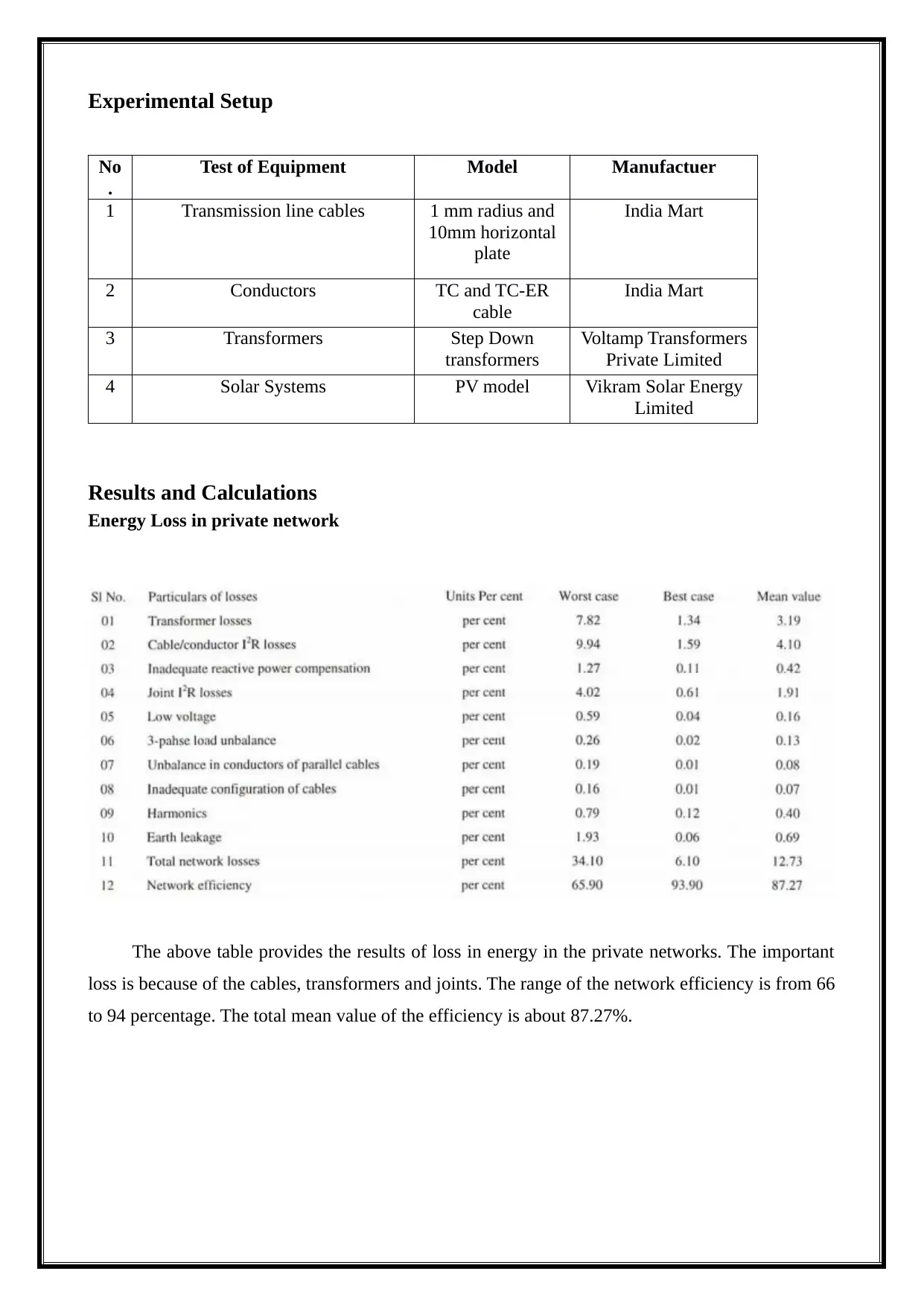
The above table provides the results of loss in energy in the private networks. The important
loss is because of the cables, transformers and joints. The range of the network efficiency is from 66
to 94 percentage. The total mean value of the efficiency is about 87.27%.
No
.
Test of Equipment Model Manufactuer
1 Transmission line cables 1 mm radius and
10mm horizontal
plate
India Mart
2 Conductors TC and TC-ER
cable
India Mart
3 Transformers Step Down
transformers
Voltamp Transformers
Private Limited
4 Solar Systems PV model Vikram Solar Energy
Limited
Results and Calculations
Energy Loss in private network
The above table provides the results of loss in energy in the private networks. The important
loss is because of the cables, transformers and joints. The range of the network efficiency is from 66
to 94 percentage. The total mean value of the efficiency is about 87.27%.
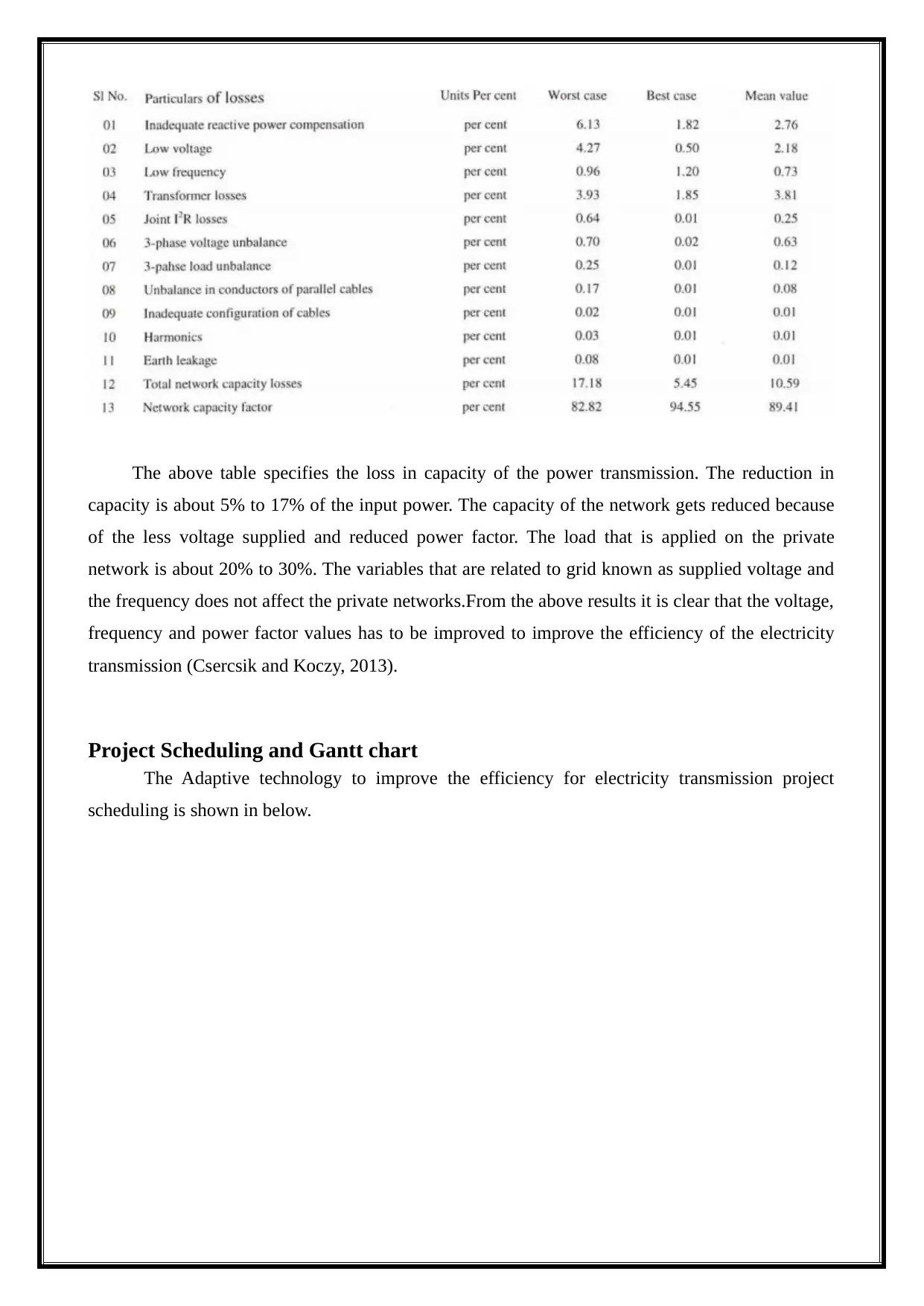
The above table specifies the loss in capacity of the power transmission. The reduction in
capacity is about 5% to 17% of the input power. The capacity of the network gets reduced because
of the less voltage supplied and reduced power factor. The load that is applied on the private
network is about 20% to 30%. The variables that are related to grid known as supplied voltage and
the frequency does not affect the private networks.From the above results it is clear that the voltage,
frequency and power factor values has to be improved to improve the efficiency of the electricity
transmission (Csercsik and Koczy, 2013).
Project Scheduling and Gantt chart
The Adaptive technology to improve the efficiency for electricity transmission project
scheduling is shown in below.
capacity is about 5% to 17% of the input power. The capacity of the network gets reduced because
of the less voltage supplied and reduced power factor. The load that is applied on the private
network is about 20% to 30%. The variables that are related to grid known as supplied voltage and
the frequency does not affect the private networks.From the above results it is clear that the voltage,
frequency and power factor values has to be improved to improve the efficiency of the electricity
transmission (Csercsik and Koczy, 2013).
Project Scheduling and Gantt chart
The Adaptive technology to improve the efficiency for electricity transmission project
scheduling is shown in below.
⊘ This is a preview!⊘
Do you want full access?
Subscribe today to unlock all pages.
Trusted by 1+ million students worldwide
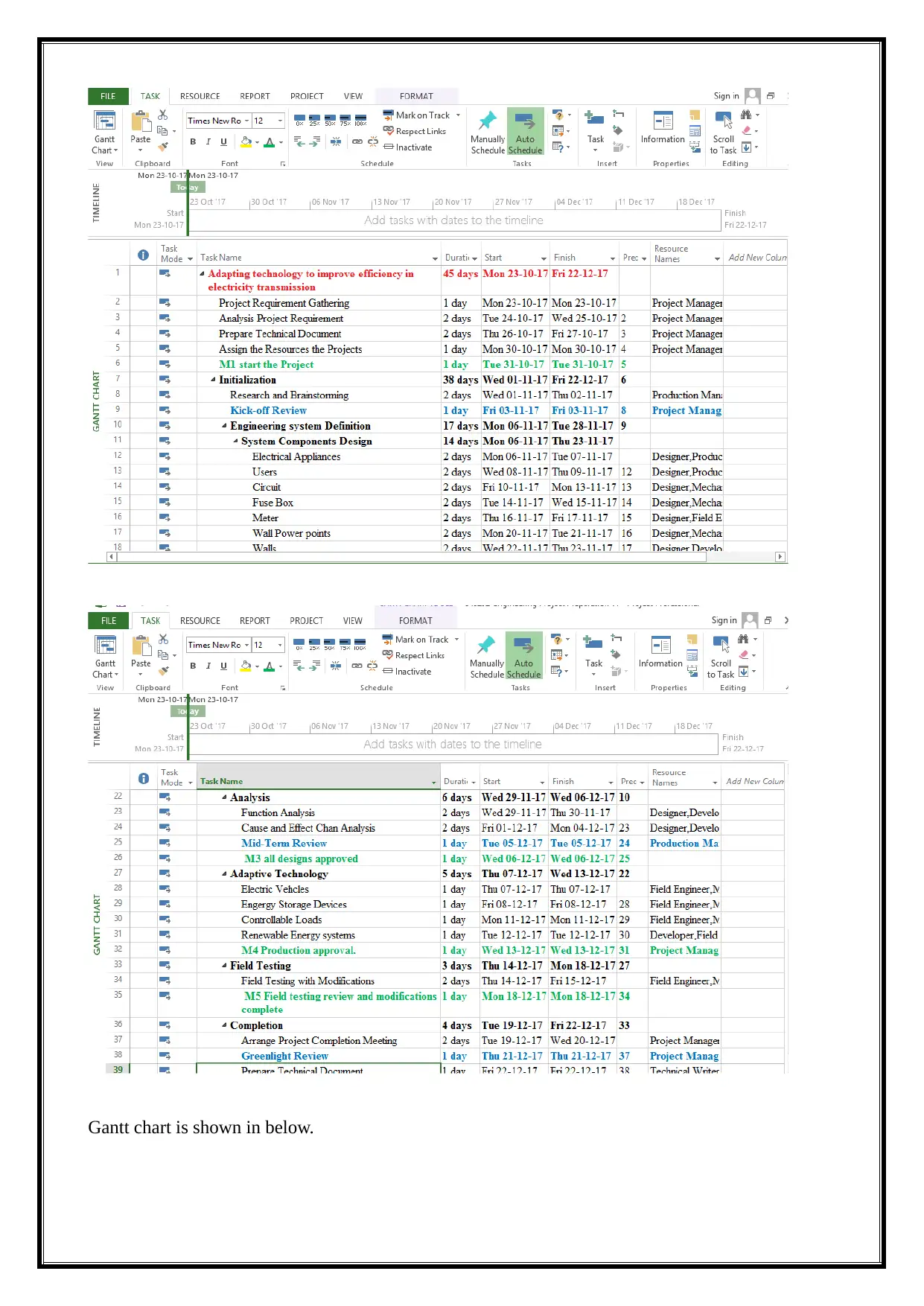
Gantt chart is shown in below.
Paraphrase This Document
Need a fresh take? Get an instant paraphrase of this document with our AI Paraphraser
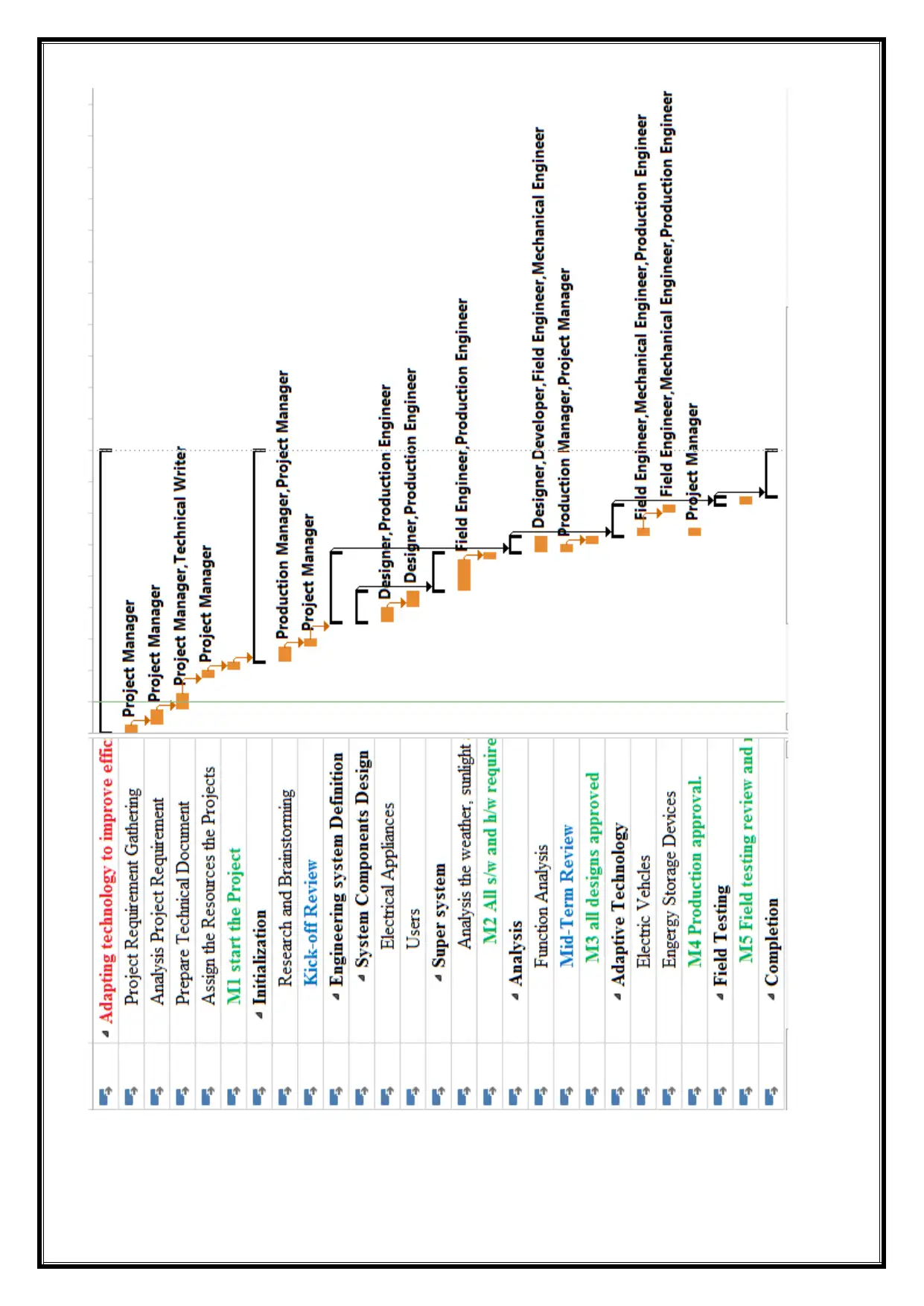

The Project Task is shown in below.
Task Mode Task Name Duration Start Finish Predecessors
Auto Scheduled
Adapting technology to
improve efficiency in
electricity transmission
45 days Mon 23-
10-17
Fri 22-
12-17
Auto Scheduled Project Requirement
Gathering 1 day Mon 23-
10-17
Mon 23-
10-17
Auto Scheduled Analysis Project Requirement 2 days Tue 24-
10-17
Wed 25-
10-17 2
Auto Scheduled Prepare Technical Document 2 days Thu 26-
10-17
Fri 27-
10-17 3
Auto Scheduled Assign the Resources the
Projects 1 day Mon 30-
10-17
Mon 30-
10-17 4
Auto Scheduled M1 start the Project 1 day Tue 31-
10-17
Tue 31-
10-17 5
Auto Scheduled Initialization 38 days Wed 01-
11-17
Fri 22-
12-17 6
Auto Scheduled Research and Brainstorming 2 days Wed 01-
11-17
Thu 02-
11-17
Auto Scheduled Kick-off Review 1 day Fri 03-
11-17
Fri 03-
11-17 8
Auto Scheduled Engineering system
Definition 17 days Mon 06-
11-17
Tue 28-
11-17 9
Auto Scheduled System Components Design 14 days Mon 06-
11-17
Thu 23-
11-17
Auto Scheduled Electrical Appliances 2 days Mon 06-
11-17
Tue 07-
11-17
Auto Scheduled Users 2 days Wed 08-
11-17
Thu 09-
11-17 12
Auto Scheduled Circuit 2 days Fri 10-11-
17
Mon 13-
11-17 13
Auto Scheduled Fuse Box 2 days Tue 14-
11-17
Wed 15-
11-17 14
Task Mode Task Name Duration Start Finish Predecessors
Auto Scheduled
Adapting technology to
improve efficiency in
electricity transmission
45 days Mon 23-
10-17
Fri 22-
12-17
Auto Scheduled Project Requirement
Gathering 1 day Mon 23-
10-17
Mon 23-
10-17
Auto Scheduled Analysis Project Requirement 2 days Tue 24-
10-17
Wed 25-
10-17 2
Auto Scheduled Prepare Technical Document 2 days Thu 26-
10-17
Fri 27-
10-17 3
Auto Scheduled Assign the Resources the
Projects 1 day Mon 30-
10-17
Mon 30-
10-17 4
Auto Scheduled M1 start the Project 1 day Tue 31-
10-17
Tue 31-
10-17 5
Auto Scheduled Initialization 38 days Wed 01-
11-17
Fri 22-
12-17 6
Auto Scheduled Research and Brainstorming 2 days Wed 01-
11-17
Thu 02-
11-17
Auto Scheduled Kick-off Review 1 day Fri 03-
11-17
Fri 03-
11-17 8
Auto Scheduled Engineering system
Definition 17 days Mon 06-
11-17
Tue 28-
11-17 9
Auto Scheduled System Components Design 14 days Mon 06-
11-17
Thu 23-
11-17
Auto Scheduled Electrical Appliances 2 days Mon 06-
11-17
Tue 07-
11-17
Auto Scheduled Users 2 days Wed 08-
11-17
Thu 09-
11-17 12
Auto Scheduled Circuit 2 days Fri 10-11-
17
Mon 13-
11-17 13
Auto Scheduled Fuse Box 2 days Tue 14-
11-17
Wed 15-
11-17 14
⊘ This is a preview!⊘
Do you want full access?
Subscribe today to unlock all pages.
Trusted by 1+ million students worldwide

1 out of 16


Related Documents


Your All-in-One AI-Powered Toolkit for Academic Success.
+13062052269
info@desklib.com
Available 24*7 on WhatsApp / Email
![[object Object]](/_next/static/media/star-bottom.7253800d.svg)
Unlock your academic potential
Copyright © 2020–2026 A2Z Services. All Rights Reserved. Developed and managed by ZUCOL.