Criminal Law 3: Analyzing the Differences Between Probation and Parole
VerifiedAdded on 2022/08/08
|4
|722
|16
Homework Assignment
AI Summary
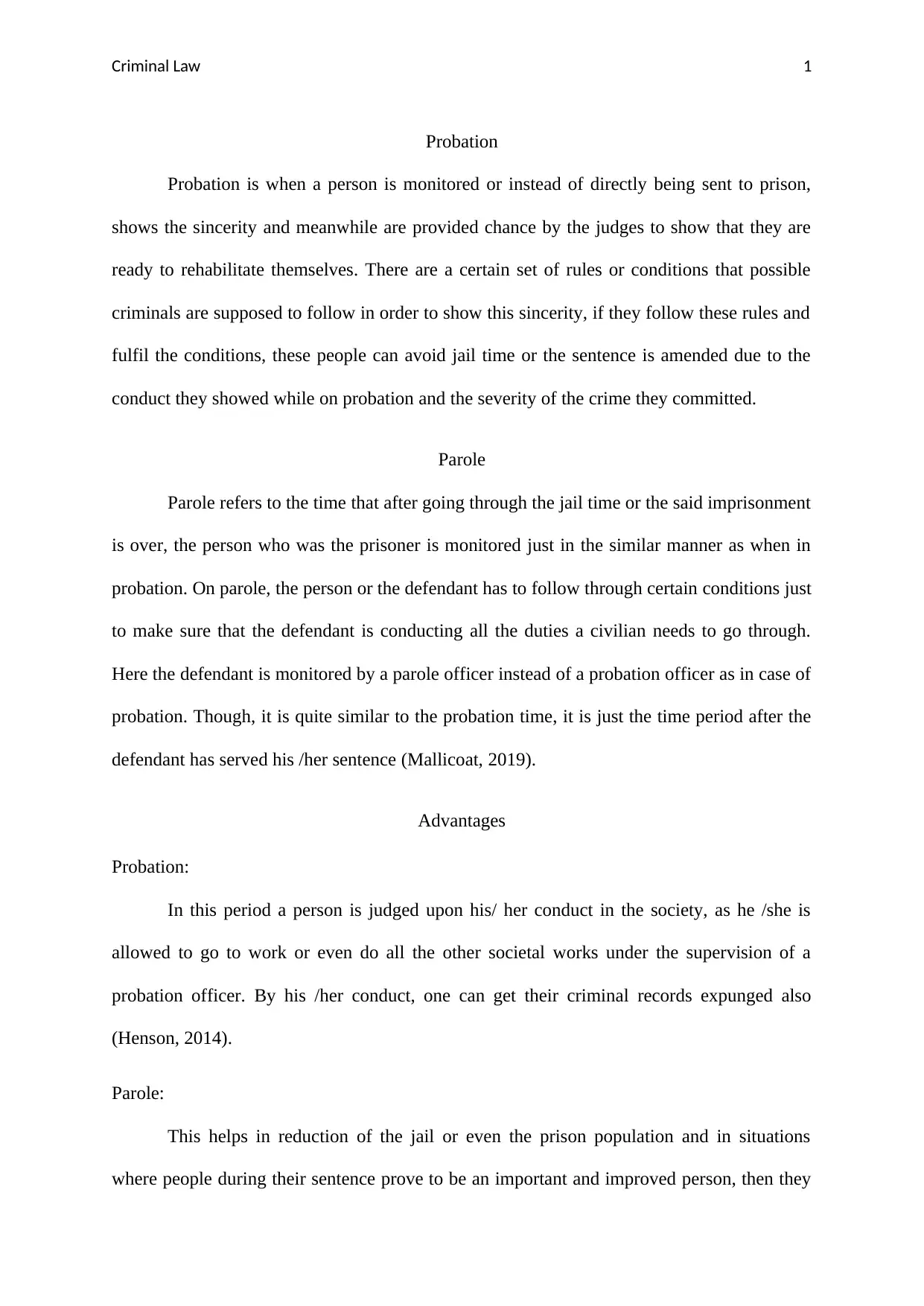
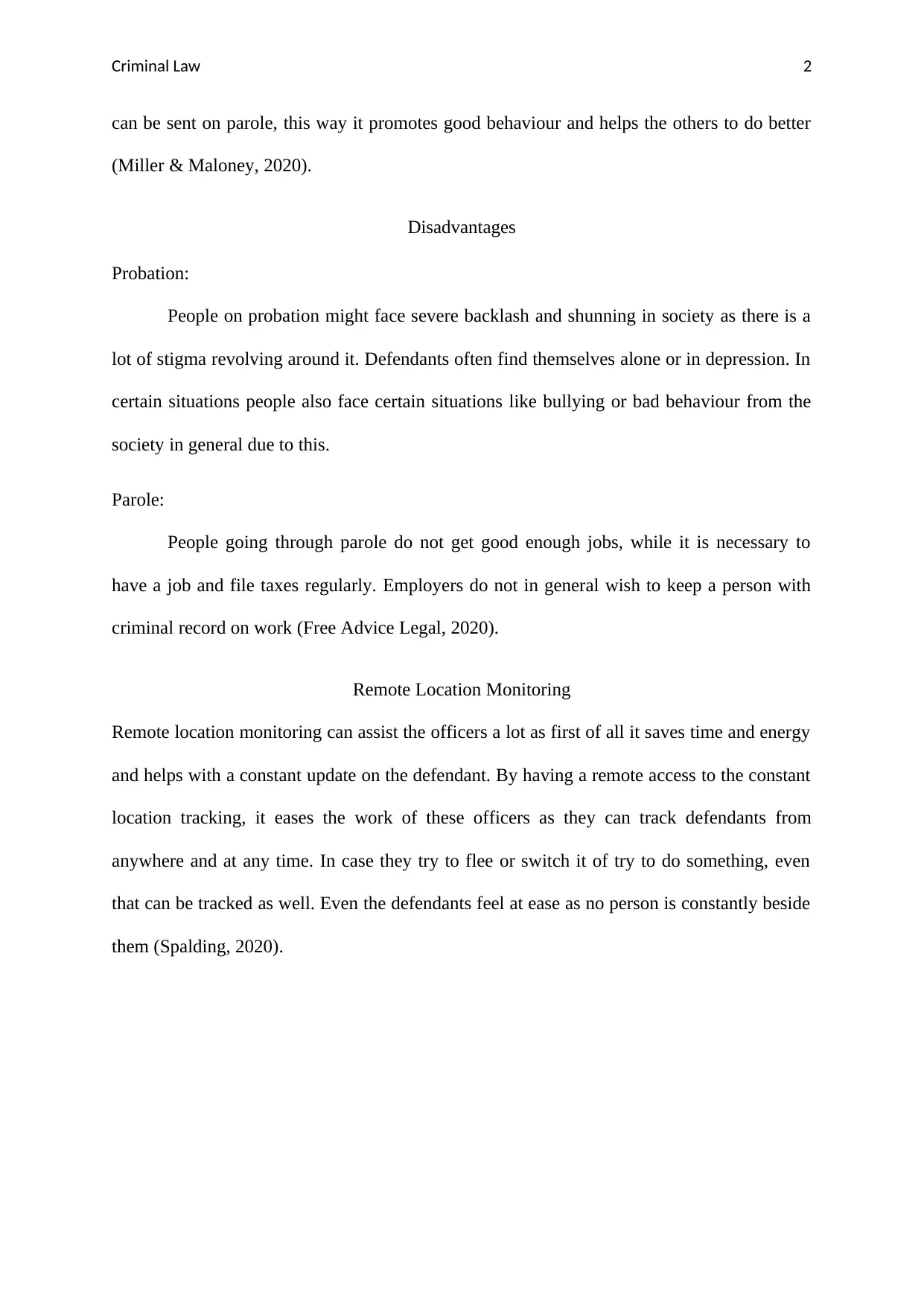
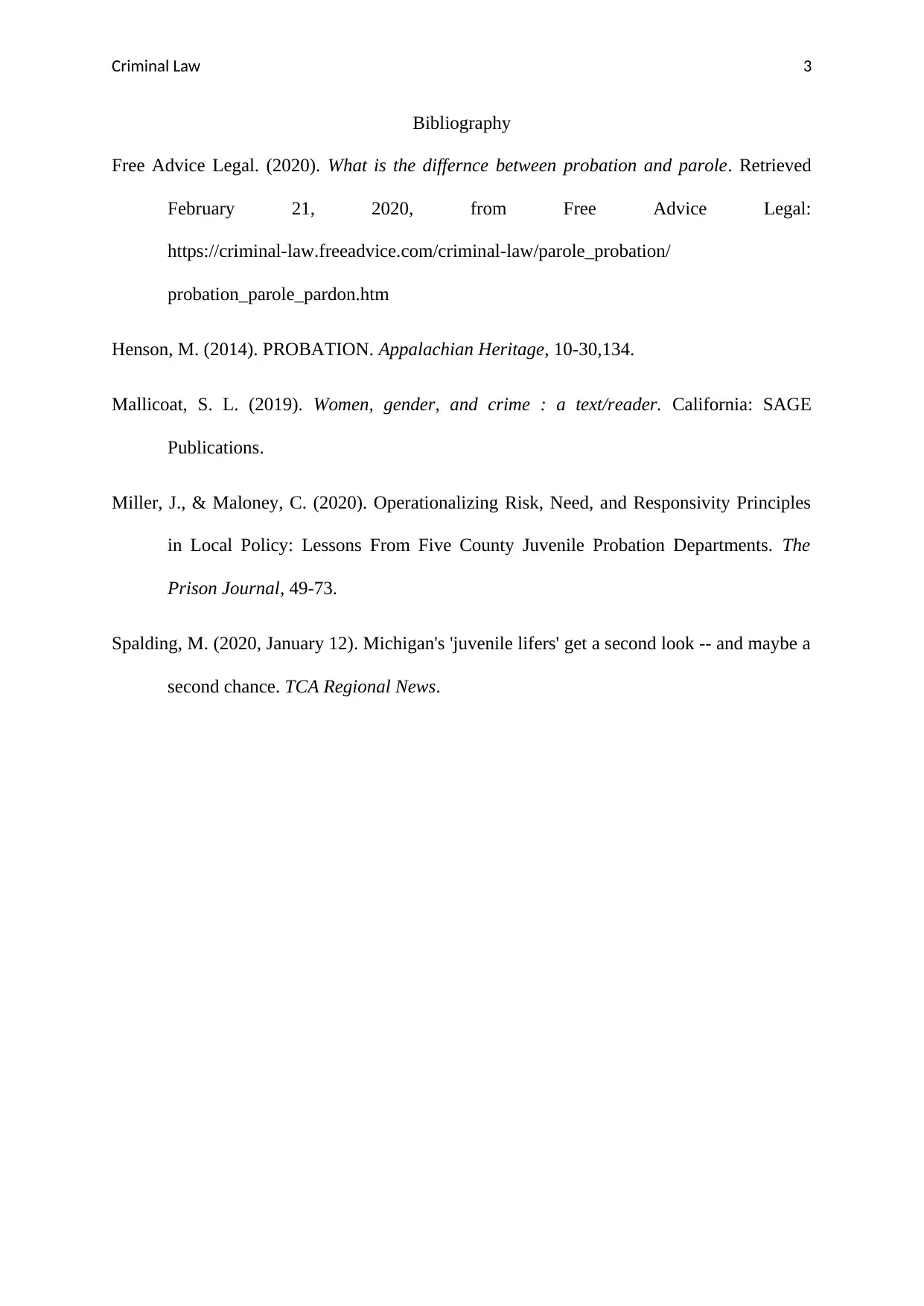
This assignment explores the fundamental differences between probation and parole within the criminal justice system. It defines probation as a period of supervised release, often with specific conditions, allowing offenders to avoid imprisonment while demonstrating rehabilitation. Parole, on the other hand, is a period of supervised release after an individual has served a portion of their prison sentence. The assignment highlights the advantages of probation, such as the opportunity for offenders to maintain employment and integrate into society, and parole, which can help reduce prison populations and promote good behavior. Conversely, it also addresses the disadvantages, including societal stigma, challenges in securing employment, and the potential for re-offending. The document also discusses remote location monitoring as a tool used to supervise and track offenders on probation or parole, enhancing the efficiency of officers and the accountability of the defendants. The assignment uses several sources to support its claims.



1 out of 4


Related Documents


Your All-in-One AI-Powered Toolkit for Academic Success.
+13062052269
info@desklib.com
Available 24*7 on WhatsApp / Email
![[object Object]](/_next/static/media/star-bottom.7253800d.svg)
Copyright © 2020–2026 A2Z Services. All Rights Reserved. Developed and managed by ZUCOL.