Problem Solving and Decision Making Report: Employee Dissatisfaction
VerifiedAdded on 2022/12/14
|11
|2555
|227
Report
AI Summary
This report delves into the critical skills of problem-solving and decision-making within a UK company context, focusing on employee dissatisfaction and its impact on organizational performance. The report identifies the core issue of declining employee satisfaction and analyzes the available data to propose a range of solutions. These solutions include fair treatment, financial incentives, and opportunities for skill development. The report also outlines a detailed implementation plan, encompassing goal definition, resource allocation, milestone scheduling, role assignments, and a follow-up protocol. Furthermore, it emphasizes the importance of stakeholder communication, detailing communication frequencies and responsibilities. The report concludes with a discussion of monitoring and reviewing techniques, such as observation, communication, questionnaires, and feedback sheets, to ensure the effectiveness of the implemented solutions. Finally, the report suggests a hybrid model for employee compensation to address the identified issues, providing a flexible approach tailored to customer needs and employee performance.
Problem solving and decision
making
1
making
1

Paraphrase This Document
Need a fresh take? Get an instant paraphrase of this document with our AI Paraphraser
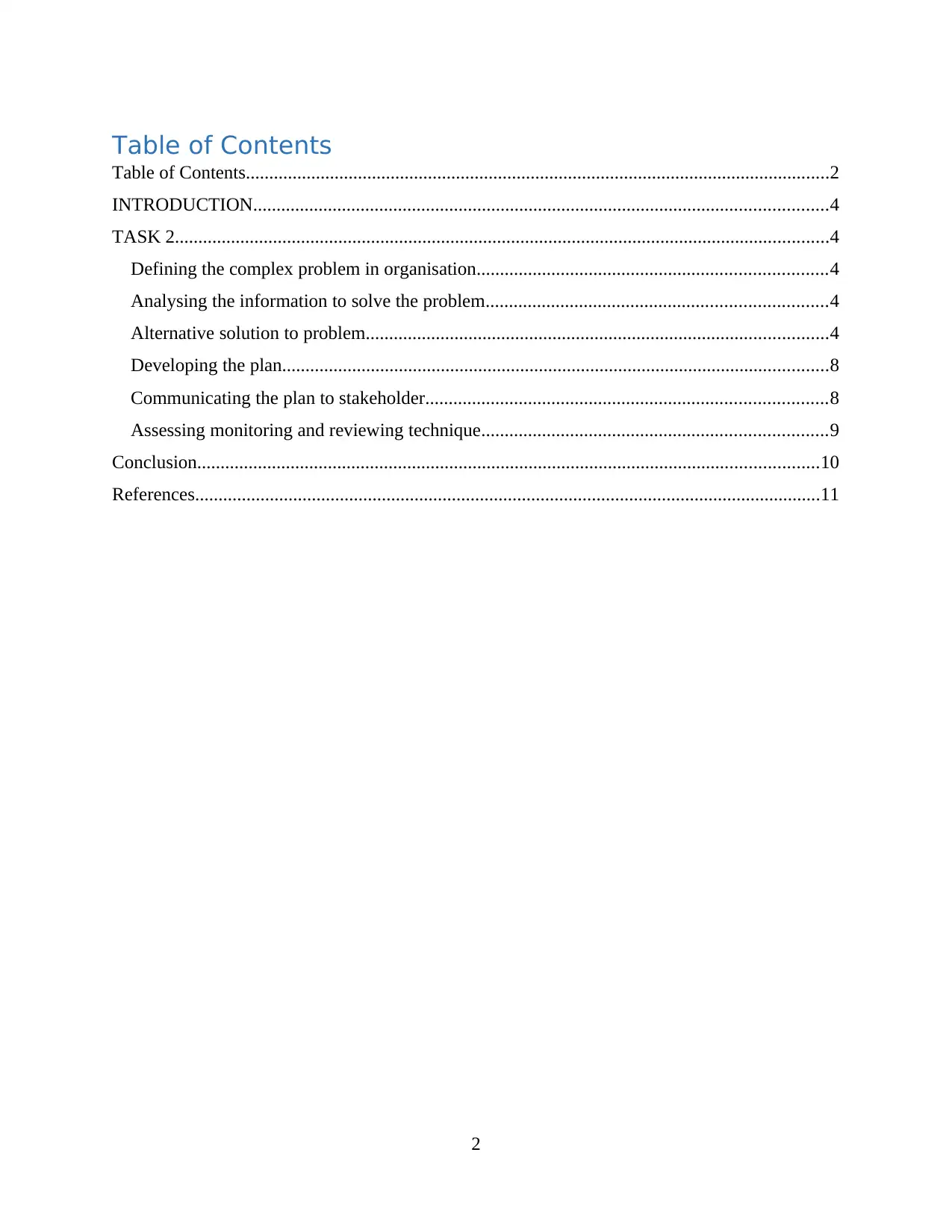
Table of Contents
Table of Contents.............................................................................................................................2
INTRODUCTION...........................................................................................................................4
TASK 2............................................................................................................................................4
Defining the complex problem in organisation...........................................................................4
Analysing the information to solve the problem.........................................................................4
Alternative solution to problem...................................................................................................4
Developing the plan.....................................................................................................................8
Communicating the plan to stakeholder......................................................................................8
Assessing monitoring and reviewing technique..........................................................................9
Conclusion.....................................................................................................................................10
References......................................................................................................................................11
2
Table of Contents.............................................................................................................................2
INTRODUCTION...........................................................................................................................4
TASK 2............................................................................................................................................4
Defining the complex problem in organisation...........................................................................4
Analysing the information to solve the problem.........................................................................4
Alternative solution to problem...................................................................................................4
Developing the plan.....................................................................................................................8
Communicating the plan to stakeholder......................................................................................8
Assessing monitoring and reviewing technique..........................................................................9
Conclusion.....................................................................................................................................10
References......................................................................................................................................11
2

3
⊘ This is a preview!⊘
Do you want full access?
Subscribe today to unlock all pages.

Trusted by 1+ million students worldwide
INTRODUCTION
Problem solving and decision making is essential and very effective skills that helps in
solving the certain issues in the management and will help in evaluating the effectiveness in the
company. In this it is being discussed about the certain problems that has been faced by the
employees and that put impact on the performance of organisation. It is being analysed the
information on the identified problem and will lead to decision making process and propose
range of activities. In addition to it proper implementation plan has also been made to make the
proper communication with stakeholder.
TASK 2
Defining the complex problem in organisation
The problem that has been faced by company is that they were dissatisfy from their job and
percentage is declining from past three years in UK. They were struggling to build the
confidence and enthusiasm to improve their effectiveness. The impact on company is that they it
reducing the overall performance of the company and leads to many problems. This lower down
the productivity and increasing in adverse result on working environment of company.
Analysing the information to solve the problem
Company can collect the whole data on this statistic and study the negative impact on the
organisation. The other thing that could be done is to maintain the efficiency and will help in
maintaining the performance of the employees. Ensuring them for good communication and
giving them proper treatment is important. It is been observed that only 41% of staff is happy at
their work and it is dropped down by 10%. The other information that has come out is that they
will dissatisfy from the job at most of the time.
Alternative solution to problem
The alternative solution will be is to treat them fairly and provide financial help and use
the technique that might reduce the problem.
Motivate them to do better work performance and make them ensure that company
always stood with them in their difficult times.
Providing them rewards and monetary benefits will help in boosting their confidence and
work harder to achieve their goals and objectives.
4
Problem solving and decision making is essential and very effective skills that helps in
solving the certain issues in the management and will help in evaluating the effectiveness in the
company. In this it is being discussed about the certain problems that has been faced by the
employees and that put impact on the performance of organisation. It is being analysed the
information on the identified problem and will lead to decision making process and propose
range of activities. In addition to it proper implementation plan has also been made to make the
proper communication with stakeholder.
TASK 2
Defining the complex problem in organisation
The problem that has been faced by company is that they were dissatisfy from their job and
percentage is declining from past three years in UK. They were struggling to build the
confidence and enthusiasm to improve their effectiveness. The impact on company is that they it
reducing the overall performance of the company and leads to many problems. This lower down
the productivity and increasing in adverse result on working environment of company.
Analysing the information to solve the problem
Company can collect the whole data on this statistic and study the negative impact on the
organisation. The other thing that could be done is to maintain the efficiency and will help in
maintaining the performance of the employees. Ensuring them for good communication and
giving them proper treatment is important. It is been observed that only 41% of staff is happy at
their work and it is dropped down by 10%. The other information that has come out is that they
will dissatisfy from the job at most of the time.
Alternative solution to problem
The alternative solution will be is to treat them fairly and provide financial help and use
the technique that might reduce the problem.
Motivate them to do better work performance and make them ensure that company
always stood with them in their difficult times.
Providing them rewards and monetary benefits will help in boosting their confidence and
work harder to achieve their goals and objectives.
4
Paraphrase This Document
Need a fresh take? Get an instant paraphrase of this document with our AI Paraphraser
Gives them optimum opportunity to proof their skills and quality so that they can perform
it that more effectively and help in increasing their personal and professional goals.
Assist them with effective leader will help in boosting their confidence and also help in
identifying the best options to come out from the problem.
Having effective communication skills will help un reducing the dissatisfaction in the job
as through proper skills will help in building relationship between employer and
employee and able to improve the working environment.
Involving them in organisational process or decision making in the company will ensure
them that they were important part of company and their opinions matters. This will
overall enhance the trust and confidence and will able to perform better.
Fair remuneration is very important to increase the satisfaction and will enhance the
productivity as they will put all their efforts in their task.
Low pay and instability can encourage a high turnover of representatives who can extend the
overall cost of the relationship in selecting, negotiating and increasing the efficiency of the
move. As with these lines, comments on this issue have been scrutinized based on the following
representatives' views and standards:
Organization level:
The Company regularly regulates and pays for labor to keep total costs low. Workers'
compensation arrangements include:
1. Hourly wage: in this philosophy; You can set a reliable level for the work and the assessment
to be made by increasing the hours worked to full scale for the hourly wage (total hours worked
* hourly). The similar benefits of such an approach depend on:
Benefits:
• It is not difficult to find new competitors and experts.
• It is not difficult to give regular cash, £ 0.08, £ 0.09, £ 0.36 all the time.
• Record keeping is basic and basic.
• It is not difficult to prove that you are entitled to the minimum compensation allowed by law
and permitted by law and various essential elements.
5
it that more effectively and help in increasing their personal and professional goals.
Assist them with effective leader will help in boosting their confidence and also help in
identifying the best options to come out from the problem.
Having effective communication skills will help un reducing the dissatisfaction in the job
as through proper skills will help in building relationship between employer and
employee and able to improve the working environment.
Involving them in organisational process or decision making in the company will ensure
them that they were important part of company and their opinions matters. This will
overall enhance the trust and confidence and will able to perform better.
Fair remuneration is very important to increase the satisfaction and will enhance the
productivity as they will put all their efforts in their task.
Low pay and instability can encourage a high turnover of representatives who can extend the
overall cost of the relationship in selecting, negotiating and increasing the efficiency of the
move. As with these lines, comments on this issue have been scrutinized based on the following
representatives' views and standards:
Organization level:
The Company regularly regulates and pays for labor to keep total costs low. Workers'
compensation arrangements include:
1. Hourly wage: in this philosophy; You can set a reliable level for the work and the assessment
to be made by increasing the hours worked to full scale for the hourly wage (total hours worked
* hourly). The similar benefits of such an approach depend on:
Benefits:
• It is not difficult to find new competitors and experts.
• It is not difficult to give regular cash, £ 0.08, £ 0.09, £ 0.36 all the time.
• Record keeping is basic and basic.
• It is not difficult to prove that you are entitled to the minimum compensation allowed by law
and permitted by law and various essential elements.
5
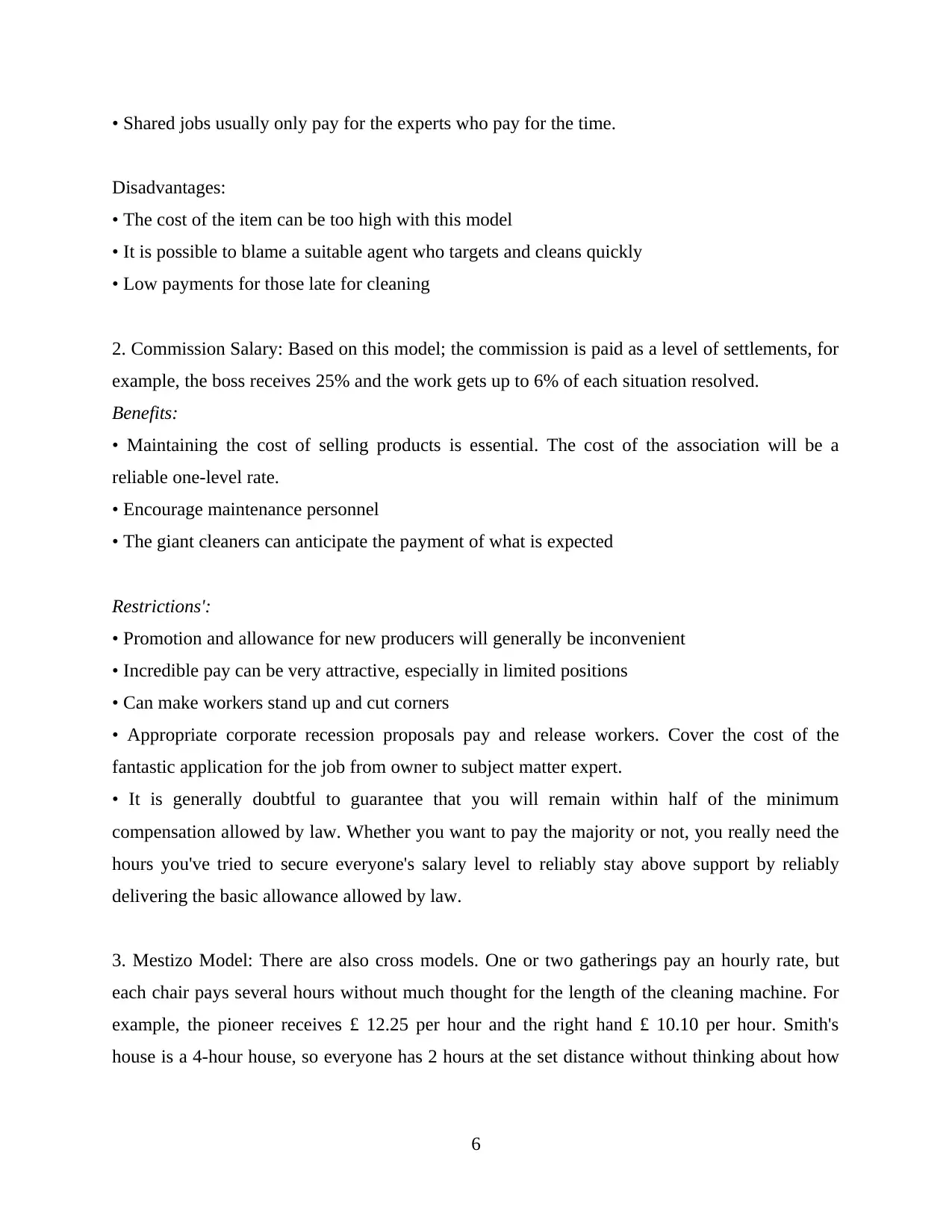
• Shared jobs usually only pay for the experts who pay for the time.
Disadvantages:
• The cost of the item can be too high with this model
• It is possible to blame a suitable agent who targets and cleans quickly
• Low payments for those late for cleaning
2. Commission Salary: Based on this model; the commission is paid as a level of settlements, for
example, the boss receives 25% and the work gets up to 6% of each situation resolved.
Benefits:
• Maintaining the cost of selling products is essential. The cost of the association will be a
reliable one-level rate.
• Encourage maintenance personnel
• The giant cleaners can anticipate the payment of what is expected
Restrictions':
• Promotion and allowance for new producers will generally be inconvenient
• Incredible pay can be very attractive, especially in limited positions
• Can make workers stand up and cut corners
• Appropriate corporate recession proposals pay and release workers. Cover the cost of the
fantastic application for the job from owner to subject matter expert.
• It is generally doubtful to guarantee that you will remain within half of the minimum
compensation allowed by law. Whether you want to pay the majority or not, you really need the
hours you've tried to secure everyone's salary level to reliably stay above support by reliably
delivering the basic allowance allowed by law.
3. Mestizo Model: There are also cross models. One or two gatherings pay an hourly rate, but
each chair pays several hours without much thought for the length of the cleaning machine. For
example, the pioneer receives £ 12.25 per hour and the right hand £ 10.10 per hour. Smith's
house is a 4-hour house, so everyone has 2 hours at the set distance without thinking about how
6
Disadvantages:
• The cost of the item can be too high with this model
• It is possible to blame a suitable agent who targets and cleans quickly
• Low payments for those late for cleaning
2. Commission Salary: Based on this model; the commission is paid as a level of settlements, for
example, the boss receives 25% and the work gets up to 6% of each situation resolved.
Benefits:
• Maintaining the cost of selling products is essential. The cost of the association will be a
reliable one-level rate.
• Encourage maintenance personnel
• The giant cleaners can anticipate the payment of what is expected
Restrictions':
• Promotion and allowance for new producers will generally be inconvenient
• Incredible pay can be very attractive, especially in limited positions
• Can make workers stand up and cut corners
• Appropriate corporate recession proposals pay and release workers. Cover the cost of the
fantastic application for the job from owner to subject matter expert.
• It is generally doubtful to guarantee that you will remain within half of the minimum
compensation allowed by law. Whether you want to pay the majority or not, you really need the
hours you've tried to secure everyone's salary level to reliably stay above support by reliably
delivering the basic allowance allowed by law.
3. Mestizo Model: There are also cross models. One or two gatherings pay an hourly rate, but
each chair pays several hours without much thought for the length of the cleaning machine. For
example, the pioneer receives £ 12.25 per hour and the right hand £ 10.10 per hour. Smith's
house is a 4-hour house, so everyone has 2 hours at the set distance without thinking about how
6
⊘ This is a preview!⊘
Do you want full access?
Subscribe today to unlock all pages.
Trusted by 1+ million students worldwide
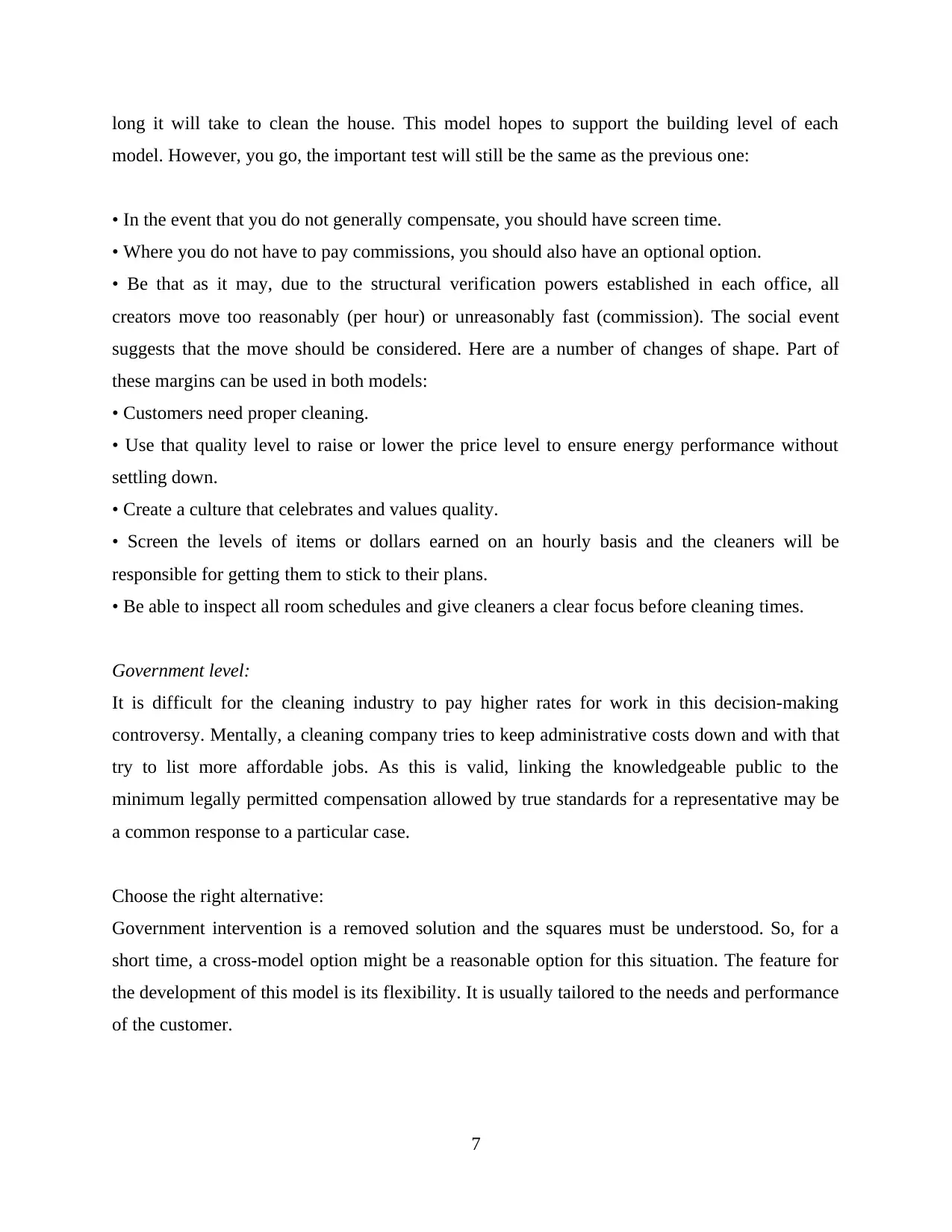
long it will take to clean the house. This model hopes to support the building level of each
model. However, you go, the important test will still be the same as the previous one:
• In the event that you do not generally compensate, you should have screen time.
• Where you do not have to pay commissions, you should also have an optional option.
• Be that as it may, due to the structural verification powers established in each office, all
creators move too reasonably (per hour) or unreasonably fast (commission). The social event
suggests that the move should be considered. Here are a number of changes of shape. Part of
these margins can be used in both models:
• Customers need proper cleaning.
• Use that quality level to raise or lower the price level to ensure energy performance without
settling down.
• Create a culture that celebrates and values quality.
• Screen the levels of items or dollars earned on an hourly basis and the cleaners will be
responsible for getting them to stick to their plans.
• Be able to inspect all room schedules and give cleaners a clear focus before cleaning times.
Government level:
It is difficult for the cleaning industry to pay higher rates for work in this decision-making
controversy. Mentally, a cleaning company tries to keep administrative costs down and with that
try to list more affordable jobs. As this is valid, linking the knowledgeable public to the
minimum legally permitted compensation allowed by true standards for a representative may be
a common response to a particular case.
Choose the right alternative:
Government intervention is a removed solution and the squares must be understood. So, for a
short time, a cross-model option might be a reasonable option for this situation. The feature for
the development of this model is its flexibility. It is usually tailored to the needs and performance
of the customer.
7
model. However, you go, the important test will still be the same as the previous one:
• In the event that you do not generally compensate, you should have screen time.
• Where you do not have to pay commissions, you should also have an optional option.
• Be that as it may, due to the structural verification powers established in each office, all
creators move too reasonably (per hour) or unreasonably fast (commission). The social event
suggests that the move should be considered. Here are a number of changes of shape. Part of
these margins can be used in both models:
• Customers need proper cleaning.
• Use that quality level to raise or lower the price level to ensure energy performance without
settling down.
• Create a culture that celebrates and values quality.
• Screen the levels of items or dollars earned on an hourly basis and the cleaners will be
responsible for getting them to stick to their plans.
• Be able to inspect all room schedules and give cleaners a clear focus before cleaning times.
Government level:
It is difficult for the cleaning industry to pay higher rates for work in this decision-making
controversy. Mentally, a cleaning company tries to keep administrative costs down and with that
try to list more affordable jobs. As this is valid, linking the knowledgeable public to the
minimum legally permitted compensation allowed by true standards for a representative may be
a common response to a particular case.
Choose the right alternative:
Government intervention is a removed solution and the squares must be understood. So, for a
short time, a cross-model option might be a reasonable option for this situation. The feature for
the development of this model is its flexibility. It is usually tailored to the needs and performance
of the customer.
7
Paraphrase This Document
Need a fresh take? Get an instant paraphrase of this document with our AI Paraphraser
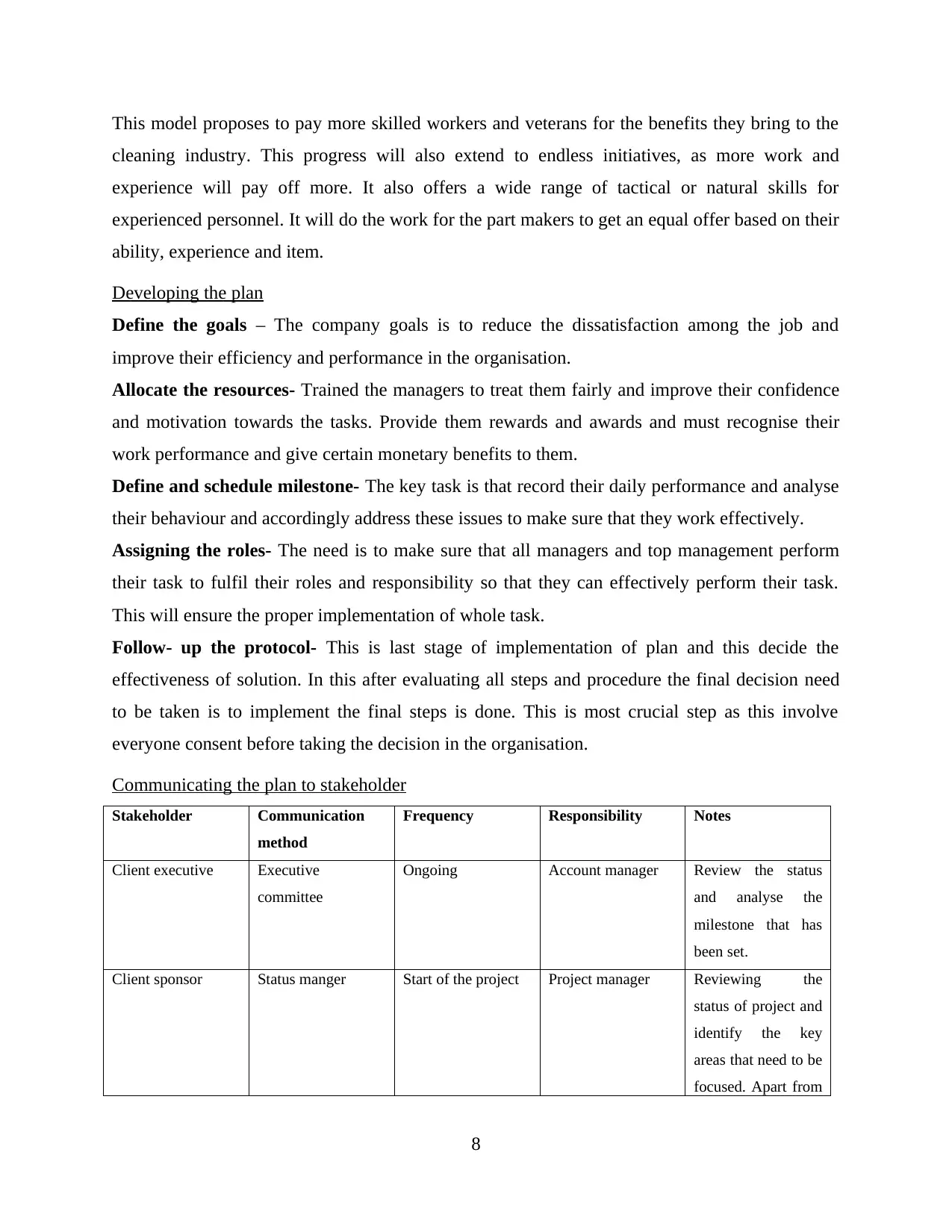
This model proposes to pay more skilled workers and veterans for the benefits they bring to the
cleaning industry. This progress will also extend to endless initiatives, as more work and
experience will pay off more. It also offers a wide range of tactical or natural skills for
experienced personnel. It will do the work for the part makers to get an equal offer based on their
ability, experience and item.
Developing the plan
Define the goals – The company goals is to reduce the dissatisfaction among the job and
improve their efficiency and performance in the organisation.
Allocate the resources- Trained the managers to treat them fairly and improve their confidence
and motivation towards the tasks. Provide them rewards and awards and must recognise their
work performance and give certain monetary benefits to them.
Define and schedule milestone- The key task is that record their daily performance and analyse
their behaviour and accordingly address these issues to make sure that they work effectively.
Assigning the roles- The need is to make sure that all managers and top management perform
their task to fulfil their roles and responsibility so that they can effectively perform their task.
This will ensure the proper implementation of whole task.
Follow- up the protocol- This is last stage of implementation of plan and this decide the
effectiveness of solution. In this after evaluating all steps and procedure the final decision need
to be taken is to implement the final steps is done. This is most crucial step as this involve
everyone consent before taking the decision in the organisation.
Communicating the plan to stakeholder
Stakeholder Communication
method
Frequency Responsibility Notes
Client executive Executive
committee
Ongoing Account manager Review the status
and analyse the
milestone that has
been set.
Client sponsor Status manger Start of the project Project manager Reviewing the
status of project and
identify the key
areas that need to be
focused. Apart from
8
cleaning industry. This progress will also extend to endless initiatives, as more work and
experience will pay off more. It also offers a wide range of tactical or natural skills for
experienced personnel. It will do the work for the part makers to get an equal offer based on their
ability, experience and item.
Developing the plan
Define the goals – The company goals is to reduce the dissatisfaction among the job and
improve their efficiency and performance in the organisation.
Allocate the resources- Trained the managers to treat them fairly and improve their confidence
and motivation towards the tasks. Provide them rewards and awards and must recognise their
work performance and give certain monetary benefits to them.
Define and schedule milestone- The key task is that record their daily performance and analyse
their behaviour and accordingly address these issues to make sure that they work effectively.
Assigning the roles- The need is to make sure that all managers and top management perform
their task to fulfil their roles and responsibility so that they can effectively perform their task.
This will ensure the proper implementation of whole task.
Follow- up the protocol- This is last stage of implementation of plan and this decide the
effectiveness of solution. In this after evaluating all steps and procedure the final decision need
to be taken is to implement the final steps is done. This is most crucial step as this involve
everyone consent before taking the decision in the organisation.
Communicating the plan to stakeholder
Stakeholder Communication
method
Frequency Responsibility Notes
Client executive Executive
committee
Ongoing Account manager Review the status
and analyse the
milestone that has
been set.
Client sponsor Status manger Start of the project Project manager Reviewing the
status of project and
identify the key
areas that need to be
focused. Apart from
8
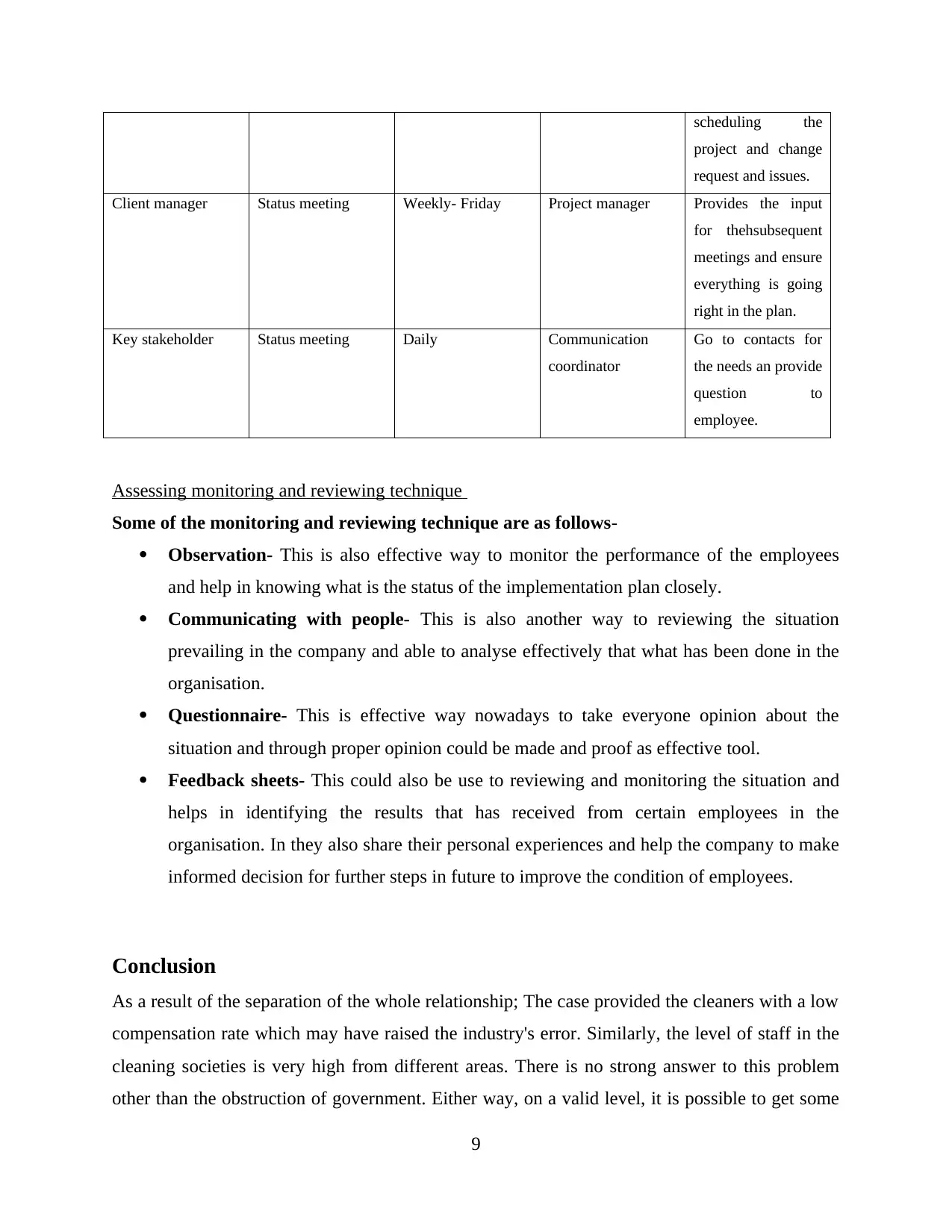
scheduling the
project and change
request and issues.
Client manager Status meeting Weekly- Friday Project manager Provides the input
for thehsubsequent
meetings and ensure
everything is going
right in the plan.
Key stakeholder Status meeting Daily Communication
coordinator
Go to contacts for
the needs an provide
question to
employee.
Assessing monitoring and reviewing technique
Some of the monitoring and reviewing technique are as follows-
Observation- This is also effective way to monitor the performance of the employees
and help in knowing what is the status of the implementation plan closely.
Communicating with people- This is also another way to reviewing the situation
prevailing in the company and able to analyse effectively that what has been done in the
organisation.
Questionnaire- This is effective way nowadays to take everyone opinion about the
situation and through proper opinion could be made and proof as effective tool.
Feedback sheets- This could also be use to reviewing and monitoring the situation and
helps in identifying the results that has received from certain employees in the
organisation. In they also share their personal experiences and help the company to make
informed decision for further steps in future to improve the condition of employees.
Conclusion
As a result of the separation of the whole relationship; The case provided the cleaners with a low
compensation rate which may have raised the industry's error. Similarly, the level of staff in the
cleaning societies is very high from different areas. There is no strong answer to this problem
other than the obstruction of government. Either way, on a valid level, it is possible to get some
9
project and change
request and issues.
Client manager Status meeting Weekly- Friday Project manager Provides the input
for thehsubsequent
meetings and ensure
everything is going
right in the plan.
Key stakeholder Status meeting Daily Communication
coordinator
Go to contacts for
the needs an provide
question to
employee.
Assessing monitoring and reviewing technique
Some of the monitoring and reviewing technique are as follows-
Observation- This is also effective way to monitor the performance of the employees
and help in knowing what is the status of the implementation plan closely.
Communicating with people- This is also another way to reviewing the situation
prevailing in the company and able to analyse effectively that what has been done in the
organisation.
Questionnaire- This is effective way nowadays to take everyone opinion about the
situation and through proper opinion could be made and proof as effective tool.
Feedback sheets- This could also be use to reviewing and monitoring the situation and
helps in identifying the results that has received from certain employees in the
organisation. In they also share their personal experiences and help the company to make
informed decision for further steps in future to improve the condition of employees.
Conclusion
As a result of the separation of the whole relationship; The case provided the cleaners with a low
compensation rate which may have raised the industry's error. Similarly, the level of staff in the
cleaning societies is very high from different areas. There is no strong answer to this problem
other than the obstruction of government. Either way, on a valid level, it is possible to get some
9
⊘ This is a preview!⊘
Do you want full access?
Subscribe today to unlock all pages.
Trusted by 1+ million students worldwide

of the benefits and a hybridization model. Similarly, a link may have a number of options for
reducing costs from working in different locations, for example, using costs and training new
cleaners.
10
reducing costs from working in different locations, for example, using costs and training new
cleaners.
10
Paraphrase This Document
Need a fresh take? Get an instant paraphrase of this document with our AI Paraphraser
References
Aithal, P.S. and Kumar, P.M., 2016. Using six thinking hats as a tool for lateral thinking in
organizational problem solving. International Journal of Engineering Research and Modern
Education (IJERME), 1(2), pp.225-234.
Amani Hamedani, M.H. and Nazem, F., 2020. Providing a Structural Pattern of Problem Solving
for Managers Based on Decision-making and Evaluating the Mediation role of Organizational
culture. Iranian journal of educational sociology, 3(2), pp.196-205.
Aylward, P., 2020. The Collaborative Path: 6 Steps for Better Communication, Problem-Solving,
and Decision-Making. FriesenPress.
Heidari, M. and Shahbazi, S., 2016. Effect of training problem-solving skill on decision-making
and critical thinking of personnel at medical emergencies. International journal of critical illness
and injury science, 6(4), p.182.
Herron, J.P. and Hennessey, M.N., 2019. Organizational Processes of Problem Solving
Groups. Open Journal for Educational Research, 3(2), pp.39-52.
Jarrahi, M.H., 2018. Artificial intelligence and the future of work: Human-AI symbiosis in
organizational decision making. Business Horizons, 61(4), pp.577-586.
Kerns, C.D., 2016. Decisive problem solving: A key leadership practice. Journal of Management
Policy and Practice, 17(2).
Michael, M.G., 2018. Problem Solving, Decision Making, and Kirton Adaption-Innovation
Theory in High-Performance Organizations.
Pruchniki, S., Key, K. and Rao, A.H., 2019. Problem solving/decision making and procedures
for unexpected events: A literature review. DOT/FAA/AM-19/TBD). Washington, DC: Office of
Aerospace Medicine.
TAHIRI, A., KOVAÇI, I. and SHABANI, P.C.S.H., Planning, Problem Solving and Decision
Making Process-Case Study in Small and Medium Enterprises in Kosovo.
Ujwary-Gil, A., 2020, October. Knowledge use and Problem-Solving Networks in an Intra-
Organizational Context: Strong and Weak Ties Analysis. In 17th International Conference on
Intellectual Capital, Knowledge Management & Organisational Learning ICICKM 2020 (p.
372).
Van Aken, J.E. and Berends, H., 2018. Problem solving in organizations. Cambridge university
press.
11
Aithal, P.S. and Kumar, P.M., 2016. Using six thinking hats as a tool for lateral thinking in
organizational problem solving. International Journal of Engineering Research and Modern
Education (IJERME), 1(2), pp.225-234.
Amani Hamedani, M.H. and Nazem, F., 2020. Providing a Structural Pattern of Problem Solving
for Managers Based on Decision-making and Evaluating the Mediation role of Organizational
culture. Iranian journal of educational sociology, 3(2), pp.196-205.
Aylward, P., 2020. The Collaborative Path: 6 Steps for Better Communication, Problem-Solving,
and Decision-Making. FriesenPress.
Heidari, M. and Shahbazi, S., 2016. Effect of training problem-solving skill on decision-making
and critical thinking of personnel at medical emergencies. International journal of critical illness
and injury science, 6(4), p.182.
Herron, J.P. and Hennessey, M.N., 2019. Organizational Processes of Problem Solving
Groups. Open Journal for Educational Research, 3(2), pp.39-52.
Jarrahi, M.H., 2018. Artificial intelligence and the future of work: Human-AI symbiosis in
organizational decision making. Business Horizons, 61(4), pp.577-586.
Kerns, C.D., 2016. Decisive problem solving: A key leadership practice. Journal of Management
Policy and Practice, 17(2).
Michael, M.G., 2018. Problem Solving, Decision Making, and Kirton Adaption-Innovation
Theory in High-Performance Organizations.
Pruchniki, S., Key, K. and Rao, A.H., 2019. Problem solving/decision making and procedures
for unexpected events: A literature review. DOT/FAA/AM-19/TBD). Washington, DC: Office of
Aerospace Medicine.
TAHIRI, A., KOVAÇI, I. and SHABANI, P.C.S.H., Planning, Problem Solving and Decision
Making Process-Case Study in Small and Medium Enterprises in Kosovo.
Ujwary-Gil, A., 2020, October. Knowledge use and Problem-Solving Networks in an Intra-
Organizational Context: Strong and Weak Ties Analysis. In 17th International Conference on
Intellectual Capital, Knowledge Management & Organisational Learning ICICKM 2020 (p.
372).
Van Aken, J.E. and Berends, H., 2018. Problem solving in organizations. Cambridge university
press.
11

1 out of 11


Related Documents


Your All-in-One AI-Powered Toolkit for Academic Success.
+13062052269
info@desklib.com
Available 24*7 on WhatsApp / Email
![[object Object]](/_next/static/media/star-bottom.7253800d.svg)
Unlock your academic potential
Copyright © 2020–2026 A2Z Services. All Rights Reserved. Developed and managed by ZUCOL.