Professional Practice and Development Report: Metro Company Analysis

Verified

Added on  2021/01/02

|22
|4166
|491
Report
AI Summary
This report examines professional practice and development within the context of the Metro Company, a retail enterprise. It begins by defining professionalism and its influence on education and training, followed by an analysis of how social, political, and economic factors shape education policy. The report then explores the roles of stakeholders, including shareholders, employees, customers, and suppliers, and how accountability to these groups impacts the organization. It also investigates the importance of partnerships with employers and other stakeholders. Furthermore, the report delves into key aspects of policies, guidelines, and codes of practice, as well as the impact of organizational requirements on curriculum practice. The report concludes with an analysis of quality improvements, quality assurance arrangements, self-evaluation, and the identification of areas for improvement in learning programs.

Document Page
PROFESSIONAL PRACTISE
AND DEVELOPMENT
tabler-icon-diamond-filled.svg

Paraphrase This Document

Need a fresh take? Get an instant paraphrase of this document with our AI Paraphraser
Document Page
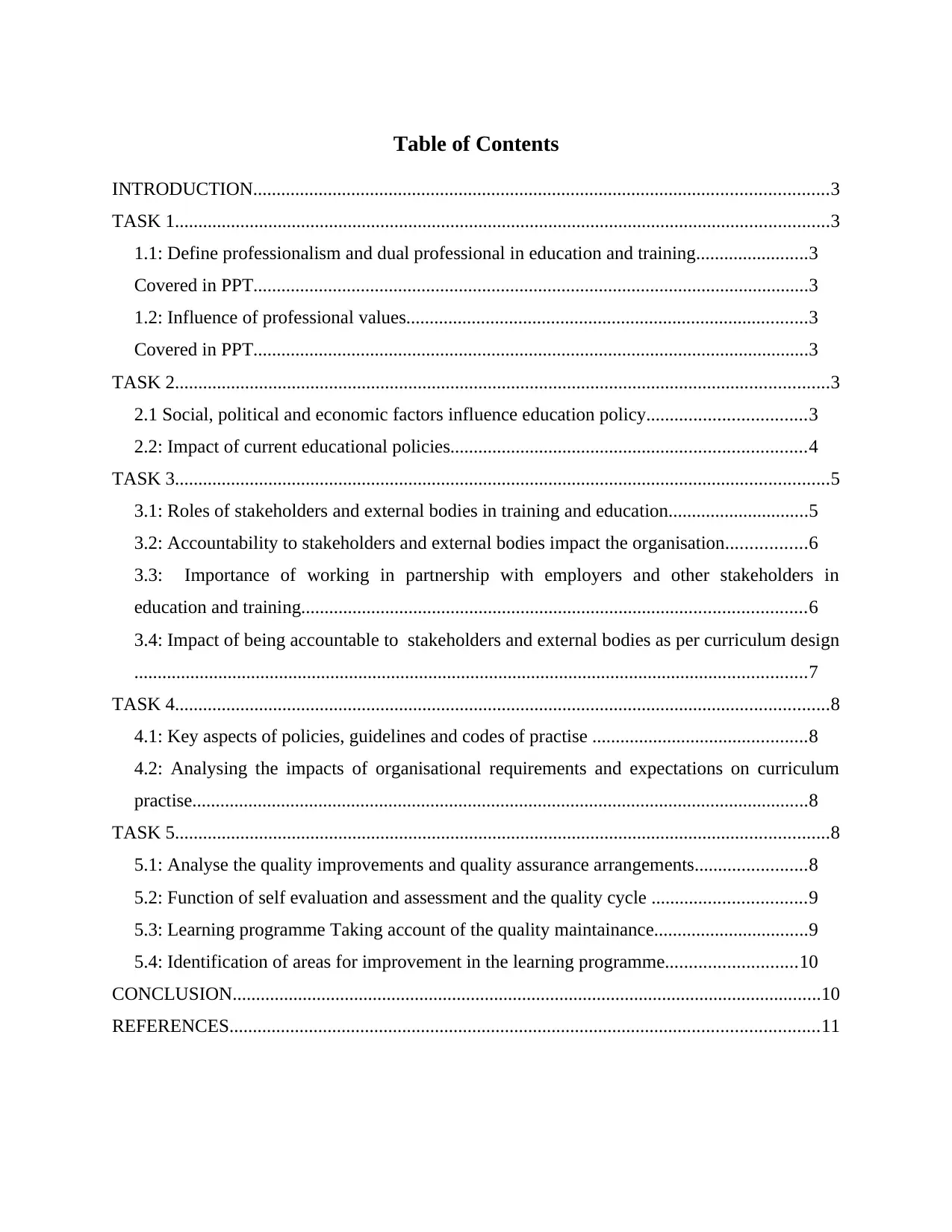
Table of Contents
INTRODUCTION...........................................................................................................................3
TASK 1............................................................................................................................................3
1.1: Define professionalism and dual professional in education and training........................3
Covered in PPT.......................................................................................................................3
1.2: Influence of professional values......................................................................................3
Covered in PPT.......................................................................................................................3
TASK 2............................................................................................................................................3
2.1 Social, political and economic factors influence education policy..................................3
2.2: Impact of current educational policies............................................................................4
TASK 3............................................................................................................................................5
3.1: Roles of stakeholders and external bodies in training and education..............................5
3.2: Accountability to stakeholders and external bodies impact the organisation.................6
3.3: Importance of working in partnership with employers and other stakeholders in
education and training............................................................................................................6
3.4: Impact of being accountable to stakeholders and external bodies as per curriculum design
................................................................................................................................................7
TASK 4............................................................................................................................................8
4.1: Key aspects of policies, guidelines and codes of practise ..............................................8
4.2: Analysing the impacts of organisational requirements and expectations on curriculum
practise....................................................................................................................................8
TASK 5............................................................................................................................................8
5.1: Analyse the quality improvements and quality assurance arrangements........................8
5.2: Function of self evaluation and assessment and the quality cycle .................................9
5.3: Learning programme Taking account of the quality maintainance.................................9
5.4: Identification of areas for improvement in the learning programme............................10
CONCLUSION..............................................................................................................................10
REFERENCES..............................................................................................................................11
Document Page
INTRODUCTION
Education and training is an significant for every individual person who is operating in
the company for the enhancement of their skills and knowledge. In this process the company
hires and the professional trainers who have appropriate skills and knowledge. To achieve this
purpose the company hires professional who have specialisation in the particular department.
This is considered as an long term process which enhances the capabilities knowledge and skills
of the employees as per the requirements of the market( Rushton, Lotter, and Singer, 2011). The
below project is done on Metro company which deals in retail sector. The products which are
offered by them includes supermarket, superstores , hyper markets and convenience shops. This
is large scale enterprise where the training and development is required to be undertaken for the
existing employees and for the new candidates. The entire program is performed on human
resource department of the company which makes an analysis that which employee in the
organisation needs training.
Document Page
TASK 1
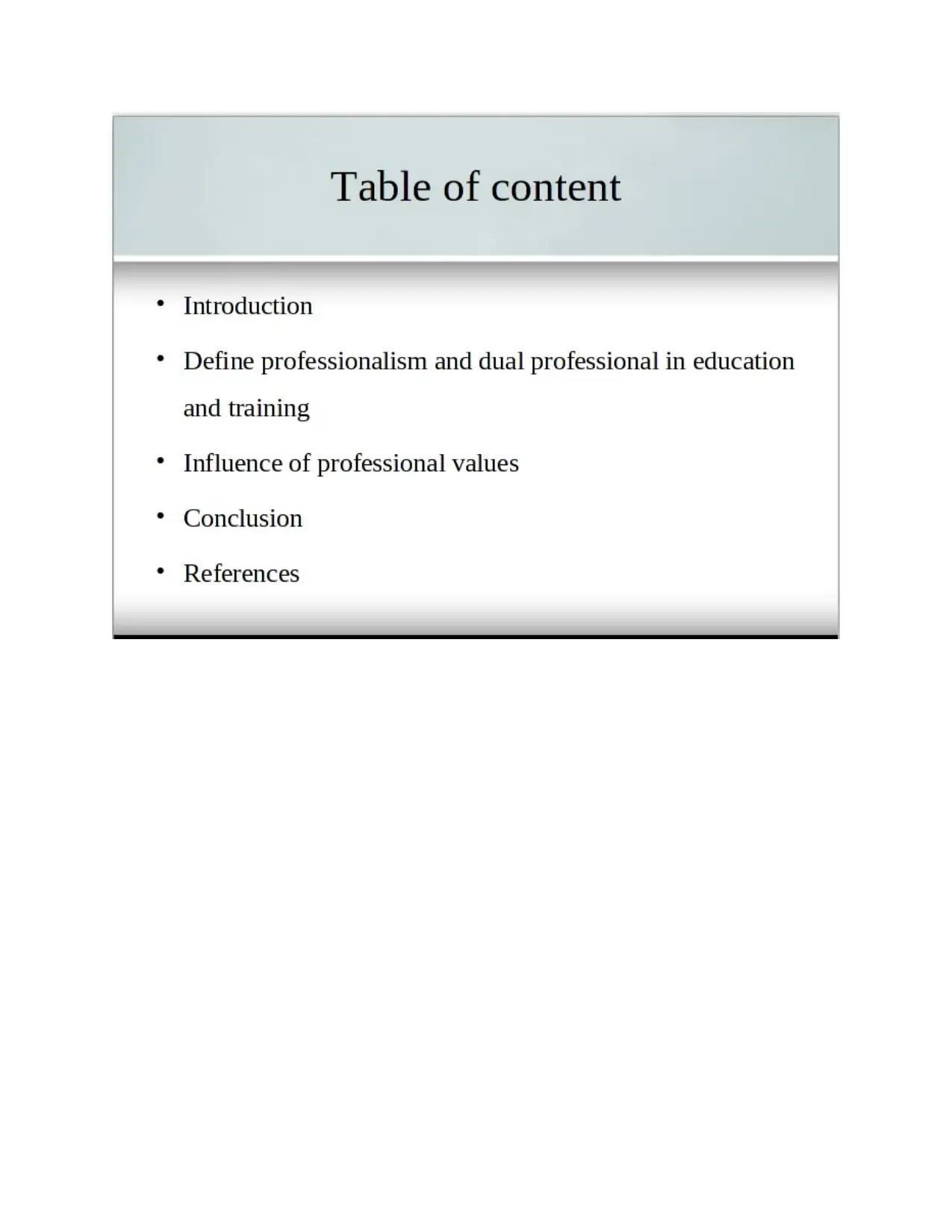
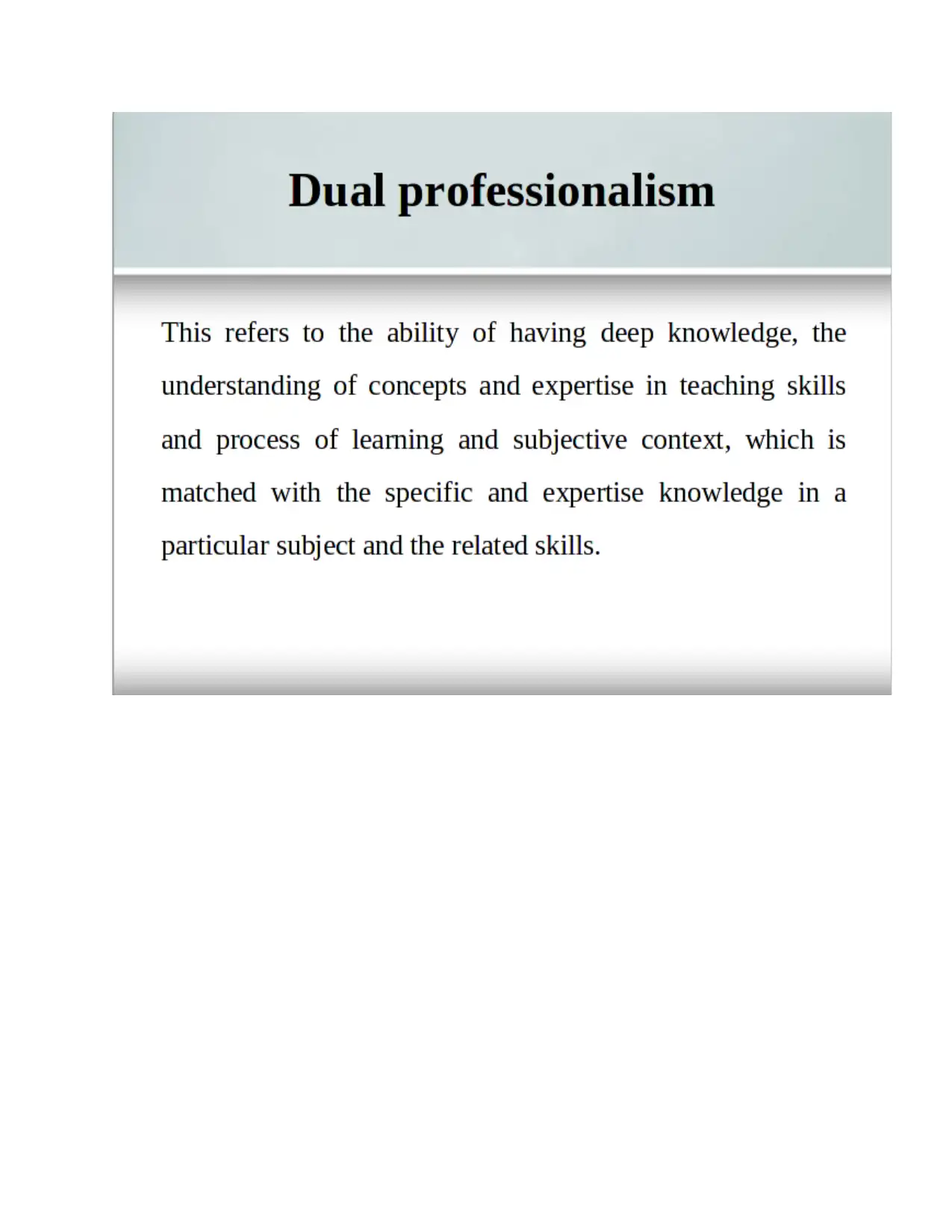
1.1: Define professionalism and dual professional in education and training
tabler-icon-diamond-filled.svg

Paraphrase This Document

Need a fresh take? Get an instant paraphrase of this document with our AI Paraphraser
Document Page
Document Page
Document Page
tabler-icon-diamond-filled.svg

Paraphrase This Document

Need a fresh take? Get an instant paraphrase of this document with our AI Paraphraser
Document Page
Document Page
Document Page
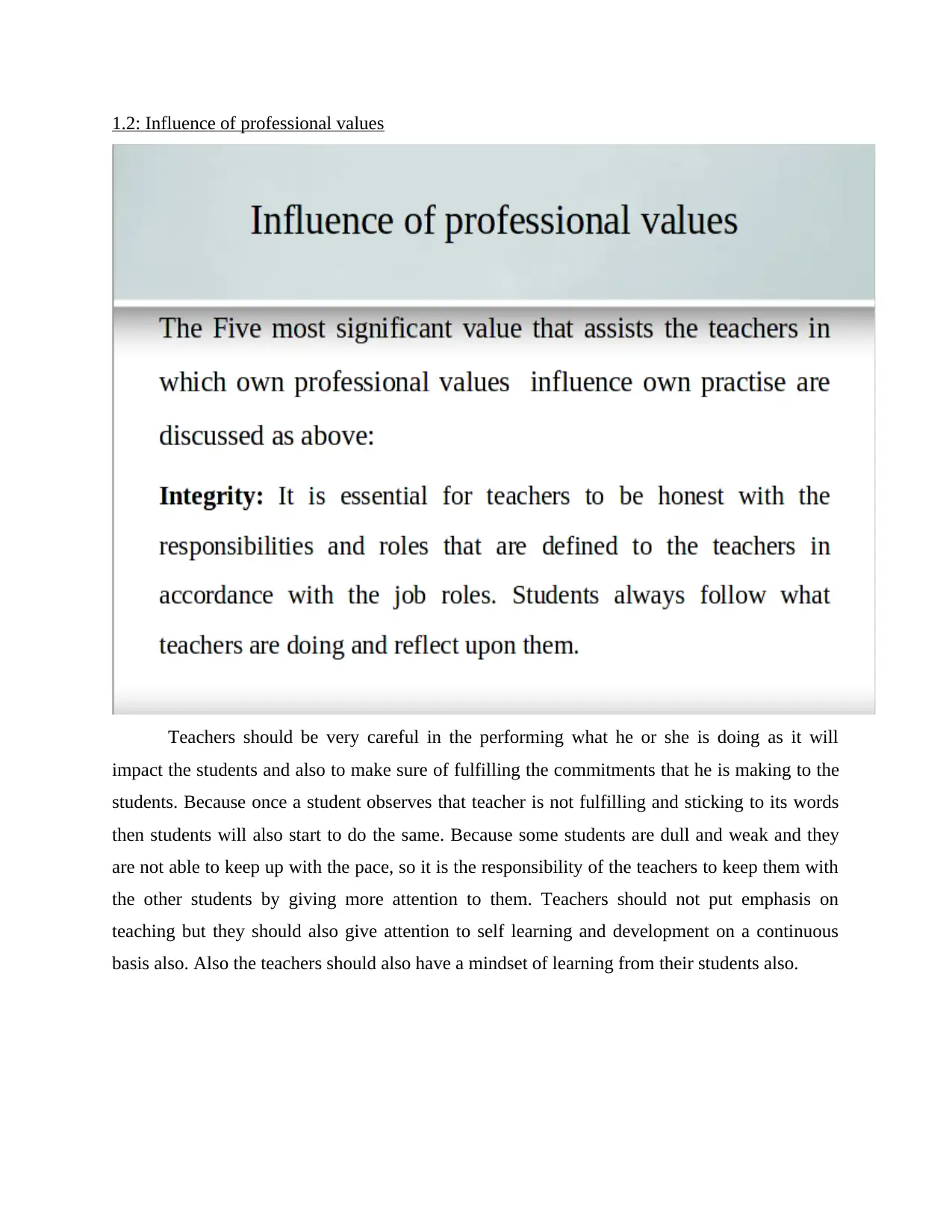
1.2: Influence of professional values
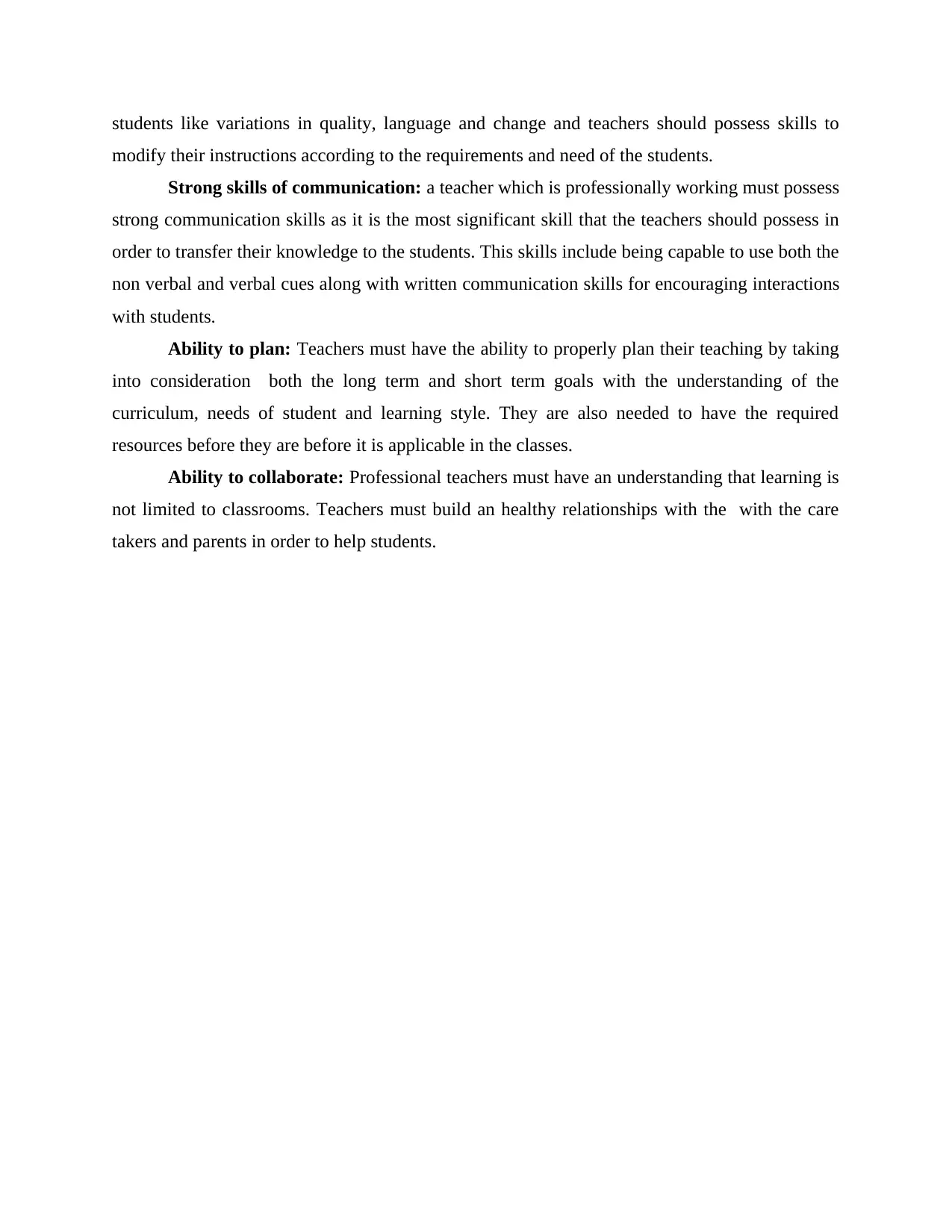
Teachers should be very careful in the performing what he or she is doing as it will
impact the students and also to make sure of fulfilling the commitments that he is making to the
students. Because once a student observes that teacher is not fulfilling and sticking to its words
then students will also start to do the same. Because some students are dull and weak and they
are not able to keep up with the pace, so it is the responsibility of the teachers to keep them with
the other students by giving more attention to them. Teachers should not put emphasis on
teaching but they should also give attention to self learning and development on a continuous
basis also. Also the teachers should also have a mindset of learning from their students also.
tabler-icon-diamond-filled.svg

Paraphrase This Document

Need a fresh take? Get an instant paraphrase of this document with our AI Paraphraser
Document Page
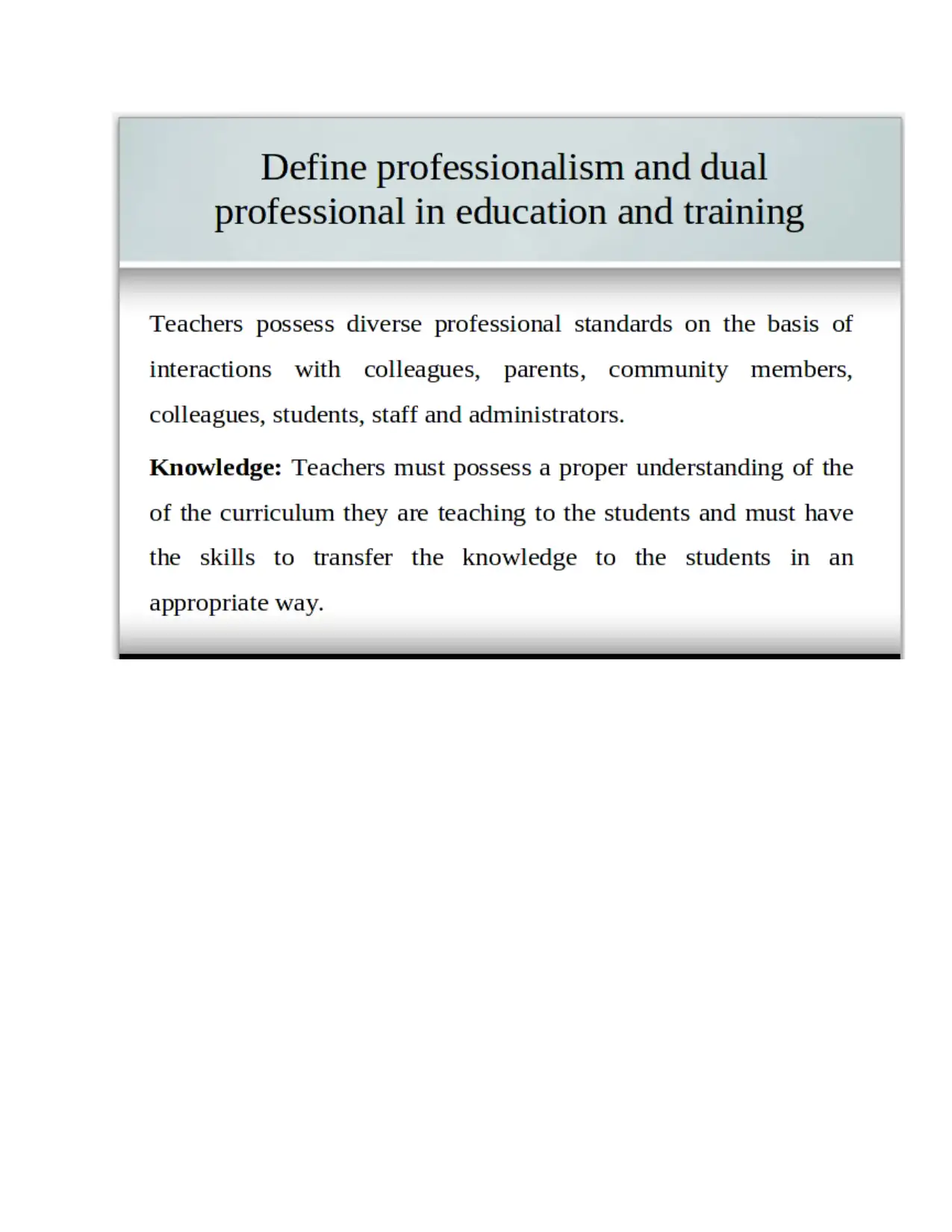
Teachers possess diverse professional standards on the basis of interactions with
colleagues, parents, community members, colleagues, students, staff and administrators. The
primary step for becoming a professional is to get a degree in the related field and meeting the
state licensing standards (Avalos, 2011). Although the actions related to the professionals may
differ, there are few standards that are common among all the professionals.
Knowledge: teachers must possess a proper understanding of the of the curriculum they
are teaching to the students and must have the skills to transfer the knowledge to the students in
an appropriate way. For example an elementary maths teacher should possess knowledge
regarding the problems related to the study matter and must have skills to solve the problems and
ability to show to the students how to solve them by using the examples relating to their lives,
such as counting change at a general store.
Teachers should have a proper understanding regarding the various cultural differences
among the students and how various life experiences can affect the learning ability of the
Document Page
students like variations in quality, language and change and teachers should possess skills to
modify their instructions according to the requirements and need of the students.
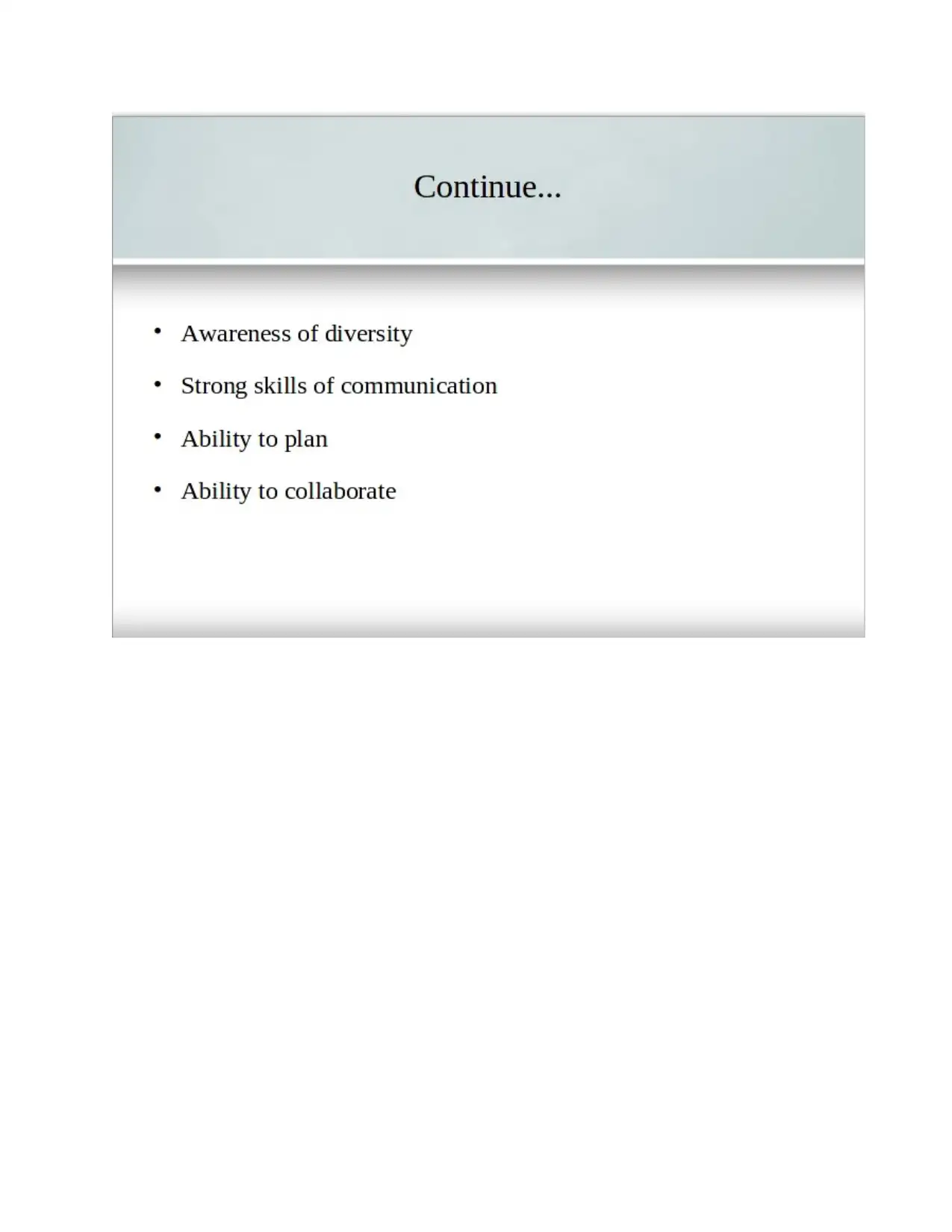
Strong skills of communication: a teacher which is professionally working must possess
strong communication skills as it is the most significant skill that the teachers should possess in
order to transfer their knowledge to the students. This skills include being capable to use both the
non verbal and verbal cues along with written communication skills for encouraging interactions
with students.
Ability to plan: Teachers must have the ability to properly plan their teaching by taking
into consideration both the long term and short term goals with the understanding of the
curriculum, needs of student and learning style. They are also needed to have the required
resources before they are before it is applicable in the classes.
Ability to collaborate: Professional teachers must have an understanding that learning is
not limited to classrooms. Teachers must build an healthy relationships with the with the care
takers and parents in order to help students.
chevron_up_icon
1 out of 22
circle_padding
hide_on_mobile
zoom_out_icon
[object Object]