Professional Development: Green Construction and Sustainability Report
VerifiedAdded on  2023/01/19
|8
|951
|46
Report
AI Summary
This report focuses on the significance of green construction in promoting sustainability. It discusses various methods and techniques used in designing buildings to conserve energy and maintain environmental sustainability. The report explores topics like biodegradable materials, cool roofs, and rammed earth, highlighting how these techniques are applied in green building projects. It also examines the role of government in formulating policies and guidelines, setting standards, and providing ratings for sustainable buildings. The report emphasizes the importance of urban sustainability, addressing challenges such as population growth and environmental pollution, and underscores the need for green construction to ensure a healthy and sustainable urban environment. This report provides valuable insights into the current state and future of green construction practices.
Professional Development and
research methods
research methods
Paraphrase This Document
Need a fresh take? Get an instant paraphrase of this document with our AI Paraphraser

ABSTRACT
Report described the importance of green construction in the future .It also discussed
methods and techniques that are being used in design of buildings and how green construction
has enabled saving energy and maintaining sustainability .Furthermore ,it is explained on what
policies and guidelines are followed and on what basis agencies gives rating to building .Finally
the role of government in this is explained as well.
Report described the importance of green construction in the future .It also discussed
methods and techniques that are being used in design of buildings and how green construction
has enabled saving energy and maintaining sustainability .Furthermore ,it is explained on what
policies and guidelines are followed and on what basis agencies gives rating to building .Finally
the role of government in this is explained as well.

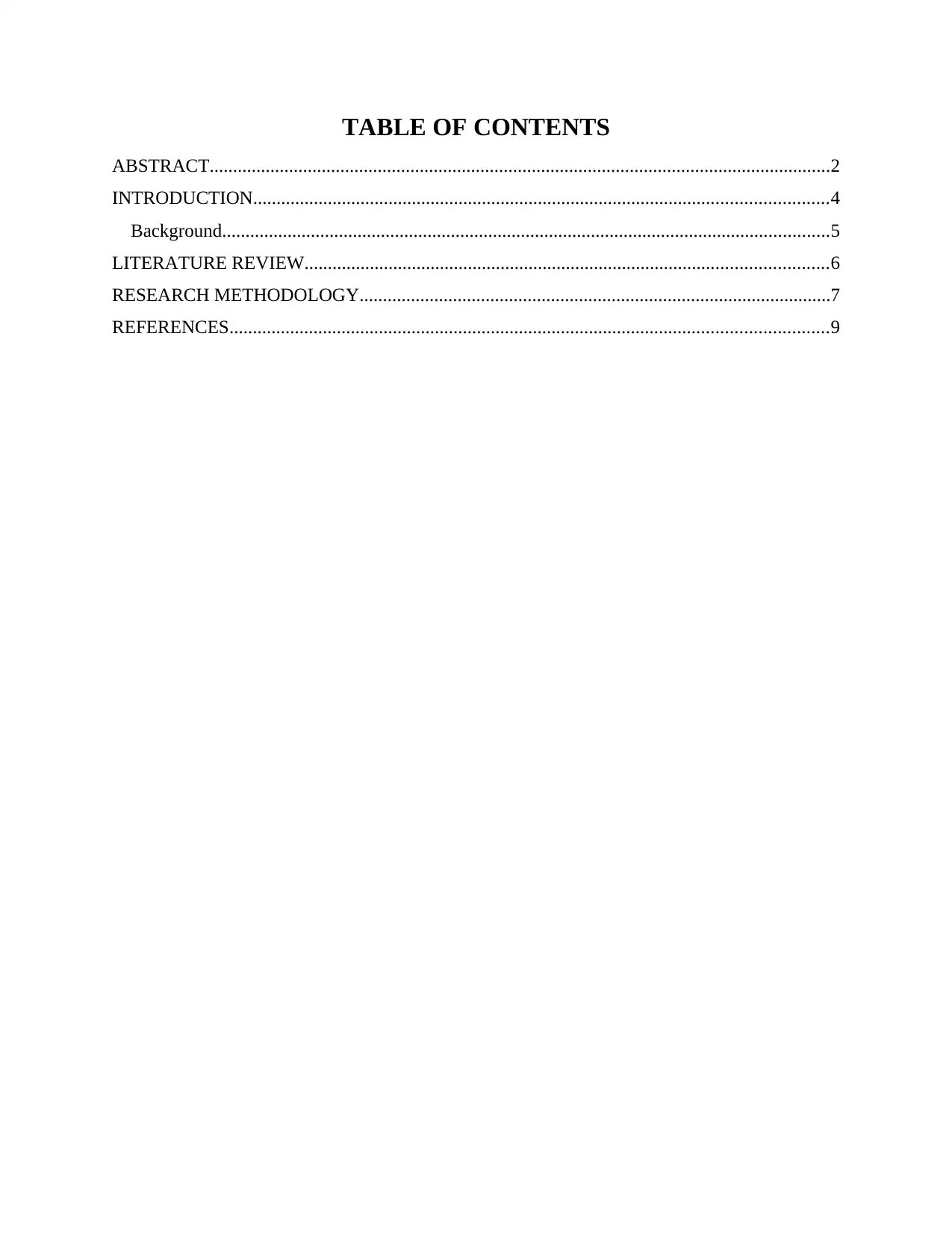
TABLE OF CONTENTS
ABSTRACT.....................................................................................................................................2
INTRODUCTION...........................................................................................................................4
Background..................................................................................................................................5
LITERATURE REVIEW................................................................................................................6
RESEARCH METHODOLOGY.....................................................................................................7
REFERENCES................................................................................................................................9
ABSTRACT.....................................................................................................................................2
INTRODUCTION...........................................................................................................................4
Background..................................................................................................................................5
LITERATURE REVIEW................................................................................................................6
RESEARCH METHODOLOGY.....................................................................................................7
REFERENCES................................................................................................................................9
⊘ This is a preview!⊘
Do you want full access?
Subscribe today to unlock all pages.

Trusted by 1+ million students worldwide

INTRODUCTION
Sustainability can be referred as an ability of the world as well as its resources which are
to be endured in the future. Urban sustainability can be defined as an idea by which a city can be
organised in such a way without any reliance on the surroundings and is able to power itself by
using renewable sources of energy. At present urban cities are offering a huge opportunities for
promoting sustainability in order to improve the quality of life. Sustainable development is
referred as development which can help in meeting the needs of present generation without
making any compromises with the ability of future generations. Sustainability of urban
development is a process through which a sustainability within the urban area can be achieved
and which has become a necessary due rise in pollution within cities. It also involves the making
progress and positive change, emphasising the improvement and incorporation of social and
environmental dimensions. Sustainability in urban cities highlights the importance and
requirement for reforming of market mechanism in order to achieve the environmental objectives
and to achieve the balance in an economic and social systems.
Half of world's population are living in cities and various societies of urban sector has
become an important part of development process and even 60 percent of gross national products
are generated by cities. So, it important that cities should be healthy and sustainable and provide
healthy living, housing, employment opportunities and meet sustainable and environmental
standards to promote sustainability (Liu and Lin, 2016). Sustainability in urban areas has become
a prime concern as there is a huge growth in population within urban areas which have resulted
in the polluted environment and this has put infrastructure of urban cities under pressure. Urban
cities are facing various challenges in maintaining and promoting sustainability. In order to
achieve high level of sustainability one of the modern concept is green construction which is an
attempt of building responsibly in order to preserve environment and reduce waste. It involves
the planning, designing, construction as well as operations of the building with a foremost
consideration such as use of energy, use of water, material section, indoor environmental quality
and effects of building on site (Wong, San Chan. and Wadu, 2016). At present green
construction technology has become more advanced and green technologies are becoming more
important ever before. There are also various techniques which are adopted by various cities in
building sustainable green building the techniques are biodegradable materials, cool roofs and
rammed earth. These are techniques which can be used by various constructors in building green
Sustainability can be referred as an ability of the world as well as its resources which are
to be endured in the future. Urban sustainability can be defined as an idea by which a city can be
organised in such a way without any reliance on the surroundings and is able to power itself by
using renewable sources of energy. At present urban cities are offering a huge opportunities for
promoting sustainability in order to improve the quality of life. Sustainable development is
referred as development which can help in meeting the needs of present generation without
making any compromises with the ability of future generations. Sustainability of urban
development is a process through which a sustainability within the urban area can be achieved
and which has become a necessary due rise in pollution within cities. It also involves the making
progress and positive change, emphasising the improvement and incorporation of social and
environmental dimensions. Sustainability in urban cities highlights the importance and
requirement for reforming of market mechanism in order to achieve the environmental objectives
and to achieve the balance in an economic and social systems.
Half of world's population are living in cities and various societies of urban sector has
become an important part of development process and even 60 percent of gross national products
are generated by cities. So, it important that cities should be healthy and sustainable and provide
healthy living, housing, employment opportunities and meet sustainable and environmental
standards to promote sustainability (Liu and Lin, 2016). Sustainability in urban areas has become
a prime concern as there is a huge growth in population within urban areas which have resulted
in the polluted environment and this has put infrastructure of urban cities under pressure. Urban
cities are facing various challenges in maintaining and promoting sustainability. In order to
achieve high level of sustainability one of the modern concept is green construction which is an
attempt of building responsibly in order to preserve environment and reduce waste. It involves
the planning, designing, construction as well as operations of the building with a foremost
consideration such as use of energy, use of water, material section, indoor environmental quality
and effects of building on site (Wong, San Chan. and Wadu, 2016). At present green
construction technology has become more advanced and green technologies are becoming more
important ever before. There are also various techniques which are adopted by various cities in
building sustainable green building the techniques are biodegradable materials, cool roofs and
rammed earth. These are techniques which can be used by various constructors in building green
Paraphrase This Document
Need a fresh take? Get an instant paraphrase of this document with our AI Paraphraser

building. Even the government are formatting various policies which support green construction
in order to achieve sustainability objectives. As government can play and important role in
achieving the sustainable objectives by formulating polices and setting standards for building
sustainable green buildings.
Background
in order to achieve sustainability objectives. As government can play and important role in
achieving the sustainable objectives by formulating polices and setting standards for building
sustainable green buildings.
Background

⊘ This is a preview!⊘
Do you want full access?
Subscribe today to unlock all pages.

Trusted by 1+ million students worldwide

REFERENCES
Books and Journal
Ahn, Y. H and et.al., 2016. Integrated construction process for green building. Procedia
Engineering. 145. pp.670-676.
Ahn, Y., Shin, H., Jeon, M. and Jung, C., 2017. Construction process framework for a green
building projects. International Journal of Sustainable Building Technology and Urban
Development. 8(4).
Bond, S. A. and Devine, A., 2016. Incentivizing green single-family construction: Identifying
effective government policies and their features. The Journal of Real Estate Finance
and Economics. 52(4). pp.383-407.
Gog, M., 2015. Case study research. International Journal of Sales, Retailing & Marketing. 4(9).
pp.33-41.
Hwang, B. G., Zhu, L. and Ming, J. T. T., 2016. Factors affecting productivity in green building
construction projects: The case of Singapore. Journal of Management in Engineering.
33(3). p.04016052.
Iglesias-Otero, M. A and et.al., 2015. A model to forecast the risk periods of Plantago pollen
allergy by using the ANN methodology. Aerobiologia. 31(2). pp.201-211.
Kibert, C. J., 2016. Sustainable construction: green building design and delivery. John Wiley &
Sons.
Leoncini, R., Montresor, S. and Rentocchini, F., 2016. CO2-reducing innovations and
outsourcing: Evidence from photovoltaics and green construction in North-East
Italy. Research Policy. 45(8). pp.1649-1659.
Liu, H. and Lin, B., 2016. Ecological indicators for green building construction. Ecological
indicators. 67. pp.68-77.
Mohammadi, S. and Birgonul, M. T., 2016. Preventing claims in green construction projects
through investigating the components of contractual and legal risks. Journal of cleaner
production. 139. pp.1078-1084.
Books and Journal
Ahn, Y. H and et.al., 2016. Integrated construction process for green building. Procedia
Engineering. 145. pp.670-676.
Ahn, Y., Shin, H., Jeon, M. and Jung, C., 2017. Construction process framework for a green
building projects. International Journal of Sustainable Building Technology and Urban
Development. 8(4).
Bond, S. A. and Devine, A., 2016. Incentivizing green single-family construction: Identifying
effective government policies and their features. The Journal of Real Estate Finance
and Economics. 52(4). pp.383-407.
Gog, M., 2015. Case study research. International Journal of Sales, Retailing & Marketing. 4(9).
pp.33-41.
Hwang, B. G., Zhu, L. and Ming, J. T. T., 2016. Factors affecting productivity in green building
construction projects: The case of Singapore. Journal of Management in Engineering.
33(3). p.04016052.
Iglesias-Otero, M. A and et.al., 2015. A model to forecast the risk periods of Plantago pollen
allergy by using the ANN methodology. Aerobiologia. 31(2). pp.201-211.
Kibert, C. J., 2016. Sustainable construction: green building design and delivery. John Wiley &
Sons.
Leoncini, R., Montresor, S. and Rentocchini, F., 2016. CO2-reducing innovations and
outsourcing: Evidence from photovoltaics and green construction in North-East
Italy. Research Policy. 45(8). pp.1649-1659.
Liu, H. and Lin, B., 2016. Ecological indicators for green building construction. Ecological
indicators. 67. pp.68-77.
Mohammadi, S. and Birgonul, M. T., 2016. Preventing claims in green construction projects
through investigating the components of contractual and legal risks. Journal of cleaner
production. 139. pp.1078-1084.
Paraphrase This Document
Need a fresh take? Get an instant paraphrase of this document with our AI Paraphraser

by using solar panel roofs. Data will be collected for authentic sources.
1 out of 8
Related Documents
Your All-in-One AI-Powered Toolkit for Academic Success.
 +13062052269
info@desklib.com
Available 24*7 on WhatsApp / Email
Unlock your academic potential
Copyright © 2020–2025 A2Z Services. All Rights Reserved. Developed and managed by ZUCOL.