Project Management Aspects of AIS Anterior Surgical Approach Treatment
VerifiedAdded on 2020/02/24
|20
|4597
|46
Project
AI Summary
This project investigates the application of project management principles to the anterior surgical approach in treating Adolescent Idiopathic Scoliosis (AIS). The research aims to analyze parameters such as cost, time, processes, and execution to improve surgical outcomes. The project explores the background of AIS treatment, including various surgical strategies and the significance of a systematic approach. It examines project management theories, including initiation, planning, execution, control, and closing processes, and how they apply to AIS surgery. The literature review covers the concept of management, different surgical approaches (anterior and posterior), and the risk factors involved. The project also addresses research questions regarding project management aspects, evidence-based models, factors in AIS treatment, and the impact of project management principles. The significance of this research lies in its potential to provide a comprehensive understanding of the anterior surgical approach, incorporating project management techniques to improve surgical processes and patient outcomes. The project also provides a secondary research material for further research regarding surgical approach involving project management techniques.
1
Running Head: INVESTIGATION OF PROJECT MANAGEMENT ASPECTS OF THE ANTERIOR
SURGICAL APPROACH IN ADOLESCENCE IDIOPATHIC SCOLIOSIS TREATMENT
INVESTIGATION OF PROJECT MANAGEMENT ASPECTS
OF THE ANTERIOR SURGICAL APPROACH IN
ADOLESCENCE IDIOPATHIC SCOLIOSIS TREATMENT
Running Head: INVESTIGATION OF PROJECT MANAGEMENT ASPECTS OF THE ANTERIOR
SURGICAL APPROACH IN ADOLESCENCE IDIOPATHIC SCOLIOSIS TREATMENT
INVESTIGATION OF PROJECT MANAGEMENT ASPECTS
OF THE ANTERIOR SURGICAL APPROACH IN
ADOLESCENCE IDIOPATHIC SCOLIOSIS TREATMENT

Paraphrase This Document
Need a fresh take? Get an instant paraphrase of this document with our AI Paraphraser
INVESTIGATION OF PROJECT MANAGEMENT ASPECTS OF THE ANTERIOR SURGICAL APPROACH
IN ADOLESCENCE IDIOPATHIC SCOLIOSIS TREATMENT
Table of Contents
CHAPTER 1: INTRODUCTION 3
1.1 The background for the investigation 3
1.2 Research Aim 3
1.3 Research objectives 3
1.4 Research questions and the hypothesis 4
1.5 Outcomes and results 4
1.6 Significance 5
CHAPTER 2: LITERATURE REVIEW 5
2.1 Concept of management 5
2.2 Theories 6
2.3 Literature Gap 8
2.4 Summary 8
CHAPTER 3: RESEARCH METHODOLOGY 8
3.1 Research philosophy 8
3.2 Research approach 9
3.3 Research strategy 9
3.4 Data collection tools 9
3.5 Time plan 10
3.6 Ethical Consideration 10
3.7 Tasks 10
Reference List 11
Appendices 15
IN ADOLESCENCE IDIOPATHIC SCOLIOSIS TREATMENT
Table of Contents
CHAPTER 1: INTRODUCTION 3
1.1 The background for the investigation 3
1.2 Research Aim 3
1.3 Research objectives 3
1.4 Research questions and the hypothesis 4
1.5 Outcomes and results 4
1.6 Significance 5
CHAPTER 2: LITERATURE REVIEW 5
2.1 Concept of management 5
2.2 Theories 6
2.3 Literature Gap 8
2.4 Summary 8
CHAPTER 3: RESEARCH METHODOLOGY 8
3.1 Research philosophy 8
3.2 Research approach 9
3.3 Research strategy 9
3.4 Data collection tools 9
3.5 Time plan 10
3.6 Ethical Consideration 10
3.7 Tasks 10
Reference List 11
Appendices 15
INVESTIGATION OF PROJECT MANAGEMENT ASPECTS OF THE ANTERIOR SURGICAL APPROACH
IN ADOLESCENCE IDIOPATHIC SCOLIOSIS TREATMENT
CHAPTER 1: INTRODUCTION
1.1 Background for investigation
Surgical treatment related to spinal deformities in Adolescent Idiopathic Scoliosis (AIS) has
faced several new surgical strategies in past twenty years. These new techniques include open
scoliosis surgery using a rod rather than correction of scoliosis that has possibility of affecting
thoracic spine. However, these advanced operating strategies have given rise to complexity in
decision making of surgery. In addition to the actual strategies, a systematic approach is to be
followed both in preoperative and postoperative stages. Consequently, the whole AIS treatment
can be summarised as (i) diagnosis of severity of AIS, (ii) surgical procedures, (iii) rehabilitation
and follow up and continuous spinal monitoring. Project management of this entire process plays
a crucial role in warranting successful outcomes for the patient avoiding any sort of further
spinal complications. Furthermore, if managed correctly the health care costs can be minimised.
This project focuses on investigating various parameters of project management aspects in AIS
such as cost, time, process and execution of the actual anterior surgical approach related to AIS.
1.2 Research Aim
Aim of the project is to investigate parameters of project management including cost, time,
process and execution of surgical approach related to anterior surgical approach in the treatment
of AIS. This research aims to identify a successful outcome of surgery implementing project
management techniques in a methodical manner.
1.3 Research objectives
● To investigate aspects of project management in analyzing the anterior surgical approach
in AIS
● To provide evidence and insight into models of project management that involve time,
procedures and costs
● To critically assess factors that are involved in AIS treatment
● To analyse impact of project management principles of anterior surgical approach in AIS
treatment
IN ADOLESCENCE IDIOPATHIC SCOLIOSIS TREATMENT
CHAPTER 1: INTRODUCTION
1.1 Background for investigation
Surgical treatment related to spinal deformities in Adolescent Idiopathic Scoliosis (AIS) has
faced several new surgical strategies in past twenty years. These new techniques include open
scoliosis surgery using a rod rather than correction of scoliosis that has possibility of affecting
thoracic spine. However, these advanced operating strategies have given rise to complexity in
decision making of surgery. In addition to the actual strategies, a systematic approach is to be
followed both in preoperative and postoperative stages. Consequently, the whole AIS treatment
can be summarised as (i) diagnosis of severity of AIS, (ii) surgical procedures, (iii) rehabilitation
and follow up and continuous spinal monitoring. Project management of this entire process plays
a crucial role in warranting successful outcomes for the patient avoiding any sort of further
spinal complications. Furthermore, if managed correctly the health care costs can be minimised.
This project focuses on investigating various parameters of project management aspects in AIS
such as cost, time, process and execution of the actual anterior surgical approach related to AIS.
1.2 Research Aim
Aim of the project is to investigate parameters of project management including cost, time,
process and execution of surgical approach related to anterior surgical approach in the treatment
of AIS. This research aims to identify a successful outcome of surgery implementing project
management techniques in a methodical manner.
1.3 Research objectives
● To investigate aspects of project management in analyzing the anterior surgical approach
in AIS
● To provide evidence and insight into models of project management that involve time,
procedures and costs
● To critically assess factors that are involved in AIS treatment
● To analyse impact of project management principles of anterior surgical approach in AIS
treatment
⊘ This is a preview!⊘
Do you want full access?
Subscribe today to unlock all pages.

Trusted by 1+ million students worldwide
INVESTIGATION OF PROJECT MANAGEMENT ASPECTS OF THE ANTERIOR SURGICAL APPROACH
IN ADOLESCENCE IDIOPATHIC SCOLIOSIS TREATMENT
1.4 Research questions and the hypothesis
1. What are the aspects of project management that are required in analysing the anterior surgical
approach for treatment of AIS?
2. What are evidences and insights into the models of project management that involve time,
procedures and costs?
3. What are the factors that are involved in AIS treatment?
4. What is impact of project management principles of anterior surgical approach in AIS
treatment?
Hypothesis:
H1: There is a positive impact of the project management aspects of the anterior surgical
approach in AIS treatment
H0: There is no positive impact of the project management aspects of the anterior surgical
approach in AIS treatment
1.5 Outcomes and results
Addressing the above hypotheses and aims will provide new insights into various parameters
affecting project management aspects in surgical treatment of AIS, particular with respect to the
anterior surgical approach. Furthermore, pre- and postoperative stages of AIS surgery will be
included in the assessment as they play an important role in the overall success of the
treatment.Utilising classical methods from engineering project management will help to separate
various steps in the surgical treatment of AIS and help obtain estimates for the costs involved in
each of the steps involved. This will have significant health economic impact. The effect of
surgery using the more routinely posterior surgical approach as well as the minimally invasive
anterior surgical approach can be compared by evaluating the time, cost processes and result
obtained, thus analysing the best process. It is expected that utilizing the project management
techniques and with correct evaluation of each factor, surgical approach of Idiopathic Scoliosis
can obtain a positive outcome. Each step of the surgery can be well defined involving the
perspective of project management that will ultimately cause benefit to the patient. However,
posterior surgical approach in treatment of approach AIS is more in practice being the
conventional method of treatment of this particular spinal deformity.
1.6 Significance
IN ADOLESCENCE IDIOPATHIC SCOLIOSIS TREATMENT
1.4 Research questions and the hypothesis
1. What are the aspects of project management that are required in analysing the anterior surgical
approach for treatment of AIS?
2. What are evidences and insights into the models of project management that involve time,
procedures and costs?
3. What are the factors that are involved in AIS treatment?
4. What is impact of project management principles of anterior surgical approach in AIS
treatment?
Hypothesis:
H1: There is a positive impact of the project management aspects of the anterior surgical
approach in AIS treatment
H0: There is no positive impact of the project management aspects of the anterior surgical
approach in AIS treatment
1.5 Outcomes and results
Addressing the above hypotheses and aims will provide new insights into various parameters
affecting project management aspects in surgical treatment of AIS, particular with respect to the
anterior surgical approach. Furthermore, pre- and postoperative stages of AIS surgery will be
included in the assessment as they play an important role in the overall success of the
treatment.Utilising classical methods from engineering project management will help to separate
various steps in the surgical treatment of AIS and help obtain estimates for the costs involved in
each of the steps involved. This will have significant health economic impact. The effect of
surgery using the more routinely posterior surgical approach as well as the minimally invasive
anterior surgical approach can be compared by evaluating the time, cost processes and result
obtained, thus analysing the best process. It is expected that utilizing the project management
techniques and with correct evaluation of each factor, surgical approach of Idiopathic Scoliosis
can obtain a positive outcome. Each step of the surgery can be well defined involving the
perspective of project management that will ultimately cause benefit to the patient. However,
posterior surgical approach in treatment of approach AIS is more in practice being the
conventional method of treatment of this particular spinal deformity.
1.6 Significance
Paraphrase This Document
Need a fresh take? Get an instant paraphrase of this document with our AI Paraphraser
INVESTIGATION OF PROJECT MANAGEMENT ASPECTS OF THE ANTERIOR SURGICAL APPROACH
IN ADOLESCENCE IDIOPATHIC SCOLIOSIS TREATMENT
Significance of this research lies in the fact that it will allow a more comprehensive
understanding of all steps involved in the surgical treatment of AIS using the anterior method
with a single rod. Incorporating project management techniques with this advanced surgical
approach will cause a benefiting method in the process of surgery as well as post surgical
condition of the patient. This research will also provide as a secondary research material for the
people who would conduct further research regarding surgical approach involving project
management techniques.
IN ADOLESCENCE IDIOPATHIC SCOLIOSIS TREATMENT
Significance of this research lies in the fact that it will allow a more comprehensive
understanding of all steps involved in the surgical treatment of AIS using the anterior method
with a single rod. Incorporating project management techniques with this advanced surgical
approach will cause a benefiting method in the process of surgery as well as post surgical
condition of the patient. This research will also provide as a secondary research material for the
people who would conduct further research regarding surgical approach involving project
management techniques.
INVESTIGATION OF PROJECT MANAGEMENT ASPECTS OF THE ANTERIOR SURGICAL APPROACH
IN ADOLESCENCE IDIOPATHIC SCOLIOSIS TREATMENT
CHAPTER 2: LITERATURE REVIEW
2.1 Concept of management
Project management in a broad spectrum can be associated with the operations management and
the relevant theories that can be strategically applied in management of any activity. As
mentioned by Deyo et al. (2013), surgical approaches have a series of activities including the pre
surgery and post surgery stages. Implementing the concept of project management can be useful
in assessing the anterior surgical approach of Idiopathic Scoliosis to avoid for example the
disruption of the posterior musculature as well as risk of various junction problems which occur
when using a posterior approach. Joseph et al. (2014) mentioned that on implementing the
concept of project management and utilizing various tools assist in explaining the observed
behavior of an activity and provides a logical prediction of future behavior of the same. This
concept can also be applied in the context of surgical approaches for the treatment of AIS as a
number of pre surgical activities ranging from patient diagnosis, procedures of surgery, time for
recovery as well as costs involved. However, Alvin et al. (2014) opposed this fact stating that it
is not always mandatory that project management techniques will work in case of surgical
approach since it is a much unpredictable activity and sometimes doctors change their decisions
in the midway of surgery depending upon condition of patient.
Most commonly used surgical methods to correct AIS
Surgical treatment in AIS is generally recommended for those, who have curves greater than 45
degrees. Lambert et al. (2017) proposed that the goal of the surgery is to get a correction in the
curve and to tp prevent progression of curve. Two major types of surgery are:
Anterior approach
An incision is made through anterior part of spine. By introducing a double rod anterior
instrumentation in the spine, results in an excellent outcome by providing an effective and safe
scoliosis correction. Risk of failure of implementation is much low in this approach.
IN ADOLESCENCE IDIOPATHIC SCOLIOSIS TREATMENT
CHAPTER 2: LITERATURE REVIEW
2.1 Concept of management
Project management in a broad spectrum can be associated with the operations management and
the relevant theories that can be strategically applied in management of any activity. As
mentioned by Deyo et al. (2013), surgical approaches have a series of activities including the pre
surgery and post surgery stages. Implementing the concept of project management can be useful
in assessing the anterior surgical approach of Idiopathic Scoliosis to avoid for example the
disruption of the posterior musculature as well as risk of various junction problems which occur
when using a posterior approach. Joseph et al. (2014) mentioned that on implementing the
concept of project management and utilizing various tools assist in explaining the observed
behavior of an activity and provides a logical prediction of future behavior of the same. This
concept can also be applied in the context of surgical approaches for the treatment of AIS as a
number of pre surgical activities ranging from patient diagnosis, procedures of surgery, time for
recovery as well as costs involved. However, Alvin et al. (2014) opposed this fact stating that it
is not always mandatory that project management techniques will work in case of surgical
approach since it is a much unpredictable activity and sometimes doctors change their decisions
in the midway of surgery depending upon condition of patient.
Most commonly used surgical methods to correct AIS
Surgical treatment in AIS is generally recommended for those, who have curves greater than 45
degrees. Lambert et al. (2017) proposed that the goal of the surgery is to get a correction in the
curve and to tp prevent progression of curve. Two major types of surgery are:
Anterior approach
An incision is made through anterior part of spine. By introducing a double rod anterior
instrumentation in the spine, results in an excellent outcome by providing an effective and safe
scoliosis correction. Risk of failure of implementation is much low in this approach.
⊘ This is a preview!⊘
Do you want full access?
Subscribe today to unlock all pages.
Trusted by 1+ million students worldwide
INVESTIGATION OF PROJECT MANAGEMENT ASPECTS OF THE ANTERIOR SURGICAL APPROACH
IN ADOLESCENCE IDIOPATHIC SCOLIOSIS TREATMENT
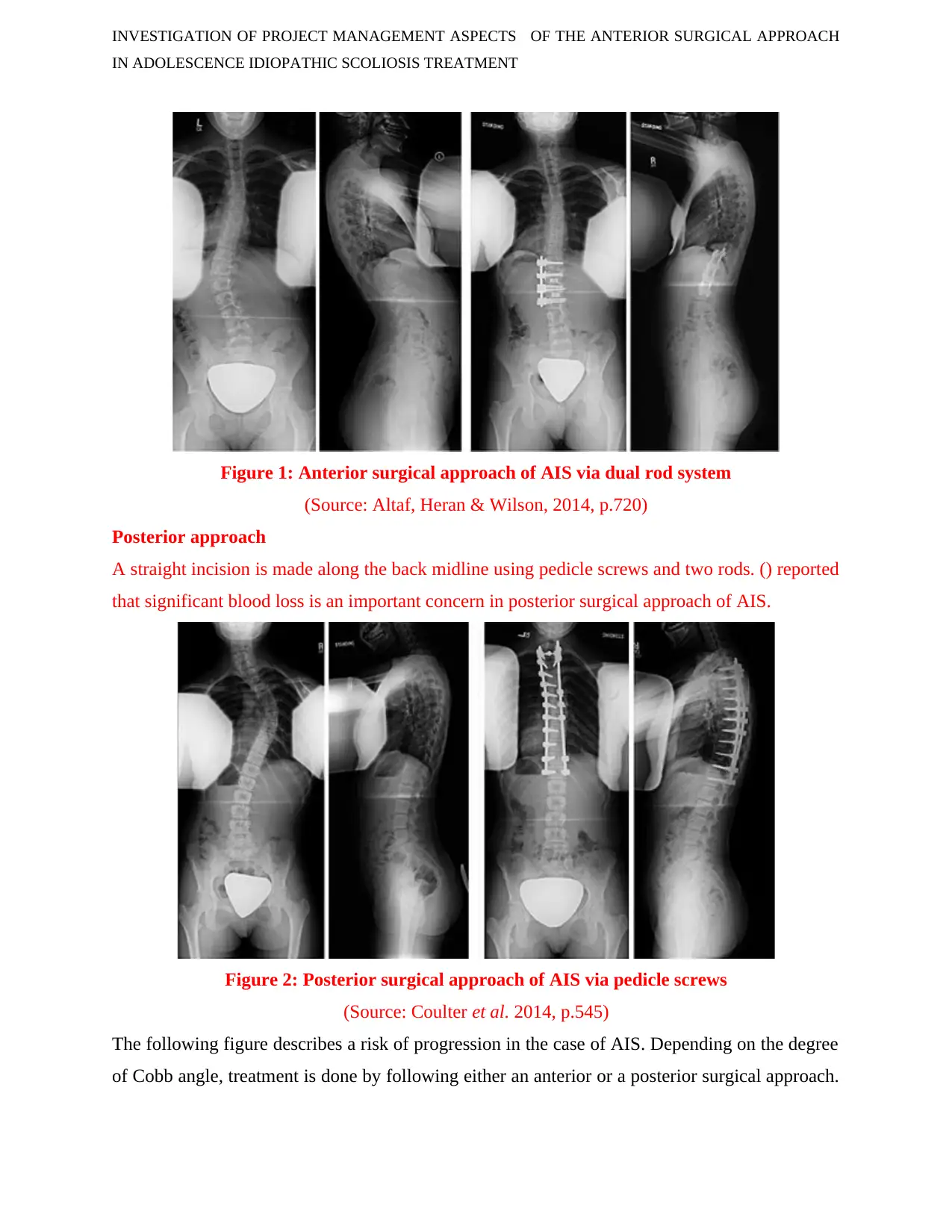
Figure 1: Anterior surgical approach of AIS via dual rod system
(Source: Altaf, Heran & Wilson, 2014, p.720)
Posterior approach
A straight incision is made along the back midline using pedicle screws and two rods. () reported
that significant blood loss is an important concern in posterior surgical approach of AIS.
Figure 2: Posterior surgical approach of AIS via pedicle screws
(Source: Coulter et al. 2014, p.545)
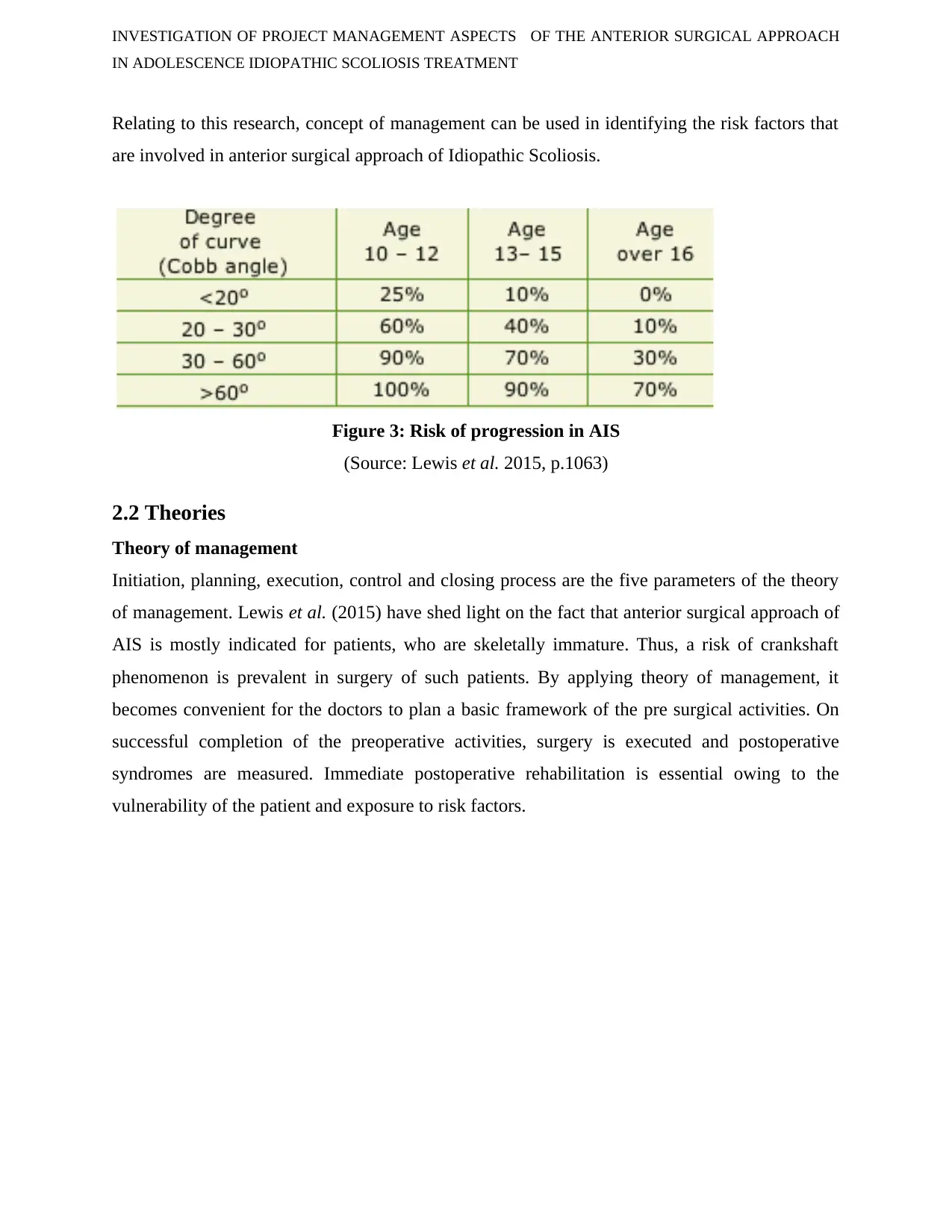
The following figure describes a risk of progression in the case of AIS. Depending on the degree
of Cobb angle, treatment is done by following either an anterior or a posterior surgical approach.
IN ADOLESCENCE IDIOPATHIC SCOLIOSIS TREATMENT
Figure 1: Anterior surgical approach of AIS via dual rod system
(Source: Altaf, Heran & Wilson, 2014, p.720)
Posterior approach
A straight incision is made along the back midline using pedicle screws and two rods. () reported
that significant blood loss is an important concern in posterior surgical approach of AIS.
Figure 2: Posterior surgical approach of AIS via pedicle screws
(Source: Coulter et al. 2014, p.545)
The following figure describes a risk of progression in the case of AIS. Depending on the degree
of Cobb angle, treatment is done by following either an anterior or a posterior surgical approach.
Paraphrase This Document
Need a fresh take? Get an instant paraphrase of this document with our AI Paraphraser
INVESTIGATION OF PROJECT MANAGEMENT ASPECTS OF THE ANTERIOR SURGICAL APPROACH
IN ADOLESCENCE IDIOPATHIC SCOLIOSIS TREATMENT
Relating to this research, concept of management can be used in identifying the risk factors that
are involved in anterior surgical approach of Idiopathic Scoliosis.
Figure 3: Risk of progression in AIS
(Source: Lewis et al. 2015, p.1063)
2.2 Theories
Theory of management
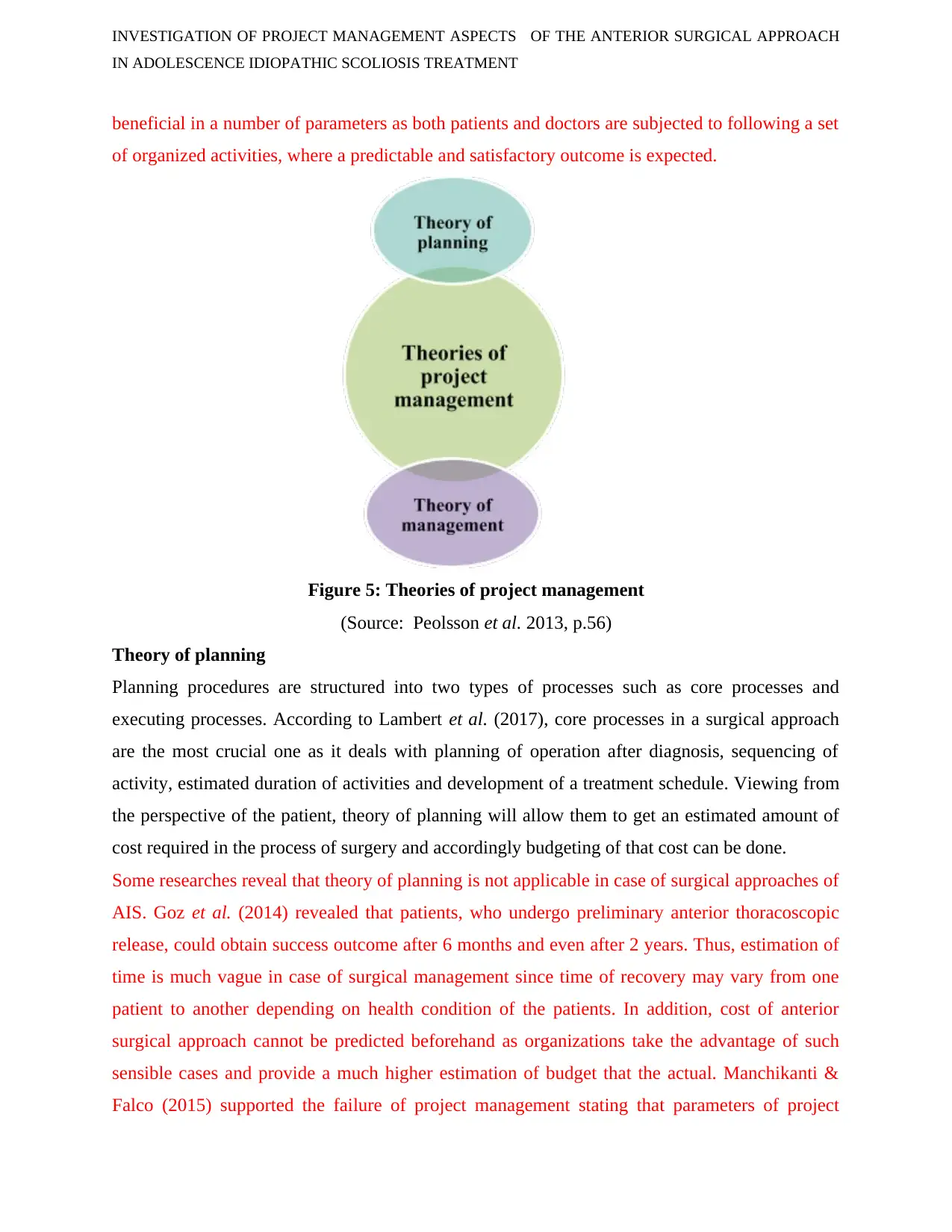
Initiation, planning, execution, control and closing process are the five parameters of the theory
of management. Lewis et al. (2015) have shed light on the fact that anterior surgical approach of
AIS is mostly indicated for patients, who are skeletally immature. Thus, a risk of crankshaft
phenomenon is prevalent in surgery of such patients. By applying theory of management, it
becomes convenient for the doctors to plan a basic framework of the pre surgical activities. On
successful completion of the preoperative activities, surgery is executed and postoperative
syndromes are measured. Immediate postoperative rehabilitation is essential owing to the
vulnerability of the patient and exposure to risk factors.
IN ADOLESCENCE IDIOPATHIC SCOLIOSIS TREATMENT
Relating to this research, concept of management can be used in identifying the risk factors that
are involved in anterior surgical approach of Idiopathic Scoliosis.
Figure 3: Risk of progression in AIS
(Source: Lewis et al. 2015, p.1063)
2.2 Theories
Theory of management
Initiation, planning, execution, control and closing process are the five parameters of the theory
of management. Lewis et al. (2015) have shed light on the fact that anterior surgical approach of
AIS is mostly indicated for patients, who are skeletally immature. Thus, a risk of crankshaft
phenomenon is prevalent in surgery of such patients. By applying theory of management, it
becomes convenient for the doctors to plan a basic framework of the pre surgical activities. On
successful completion of the preoperative activities, surgery is executed and postoperative
syndromes are measured. Immediate postoperative rehabilitation is essential owing to the
vulnerability of the patient and exposure to risk factors.
INVESTIGATION OF PROJECT MANAGEMENT ASPECTS OF THE ANTERIOR SURGICAL APPROACH
IN ADOLESCENCE IDIOPATHIC SCOLIOSIS TREATMENT
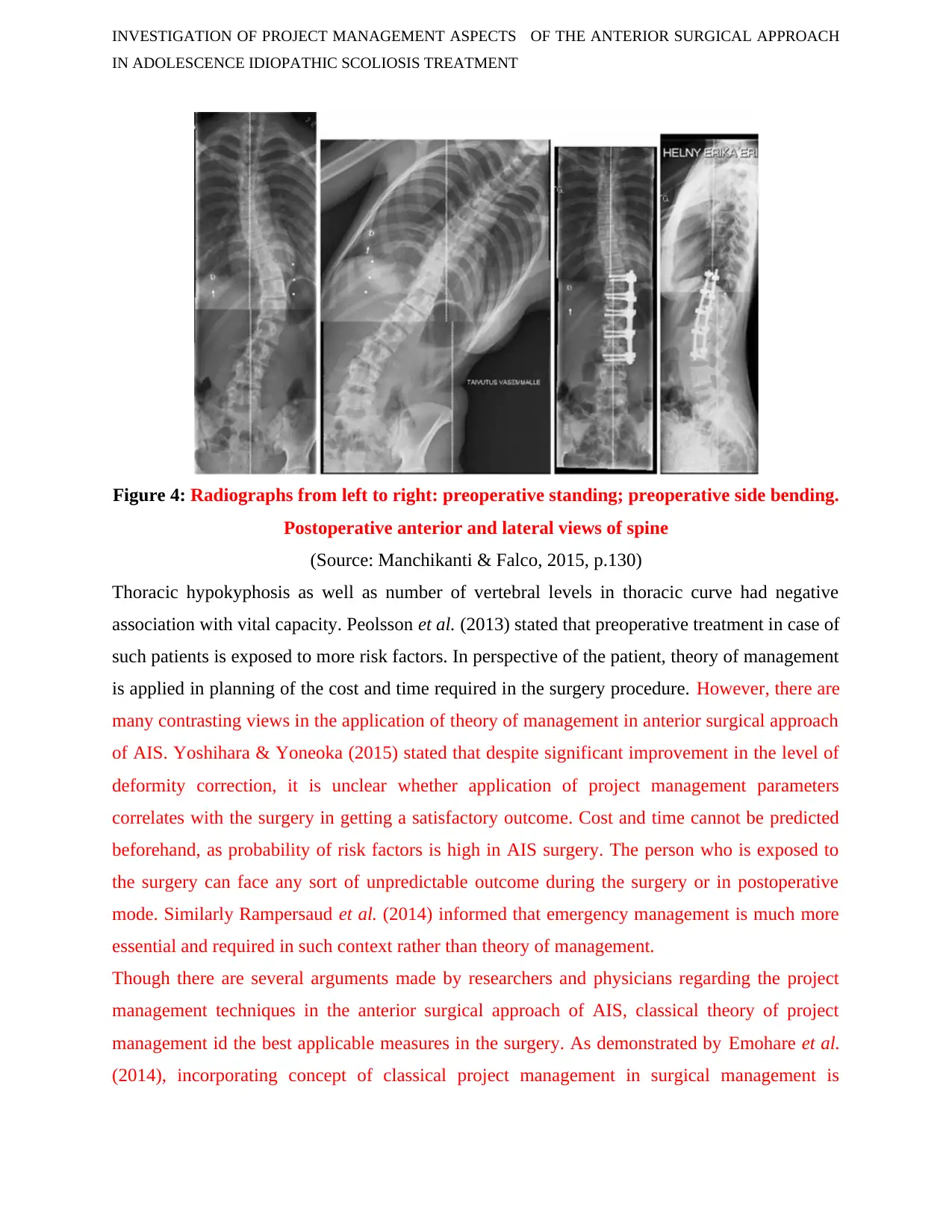
Figure 4: Radiographs from left to right: preoperative standing; preoperative side bending.
Postoperative anterior and lateral views of spine
(Source: Manchikanti & Falco, 2015, p.130)
Thoracic hypokyphosis as well as number of vertebral levels in thoracic curve had negative
association with vital capacity. Peolsson et al. (2013) stated that preoperative treatment in case of
such patients is exposed to more risk factors. In perspective of the patient, theory of management
is applied in planning of the cost and time required in the surgery procedure. However, there are
many contrasting views in the application of theory of management in anterior surgical approach
of AIS. Yoshihara & Yoneoka (2015) stated that despite significant improvement in the level of
deformity correction, it is unclear whether application of project management parameters
correlates with the surgery in getting a satisfactory outcome. Cost and time cannot be predicted
beforehand, as probability of risk factors is high in AIS surgery. The person who is exposed to
the surgery can face any sort of unpredictable outcome during the surgery or in postoperative
mode. Similarly Rampersaud et al. (2014) informed that emergency management is much more
essential and required in such context rather than theory of management.
Though there are several arguments made by researchers and physicians regarding the project
management techniques in the anterior surgical approach of AIS, classical theory of project
management id the best applicable measures in the surgery. As demonstrated by Emohare et al.
(2014), incorporating concept of classical project management in surgical management is
IN ADOLESCENCE IDIOPATHIC SCOLIOSIS TREATMENT
Figure 4: Radiographs from left to right: preoperative standing; preoperative side bending.
Postoperative anterior and lateral views of spine
(Source: Manchikanti & Falco, 2015, p.130)
Thoracic hypokyphosis as well as number of vertebral levels in thoracic curve had negative
association with vital capacity. Peolsson et al. (2013) stated that preoperative treatment in case of
such patients is exposed to more risk factors. In perspective of the patient, theory of management
is applied in planning of the cost and time required in the surgery procedure. However, there are
many contrasting views in the application of theory of management in anterior surgical approach
of AIS. Yoshihara & Yoneoka (2015) stated that despite significant improvement in the level of
deformity correction, it is unclear whether application of project management parameters
correlates with the surgery in getting a satisfactory outcome. Cost and time cannot be predicted
beforehand, as probability of risk factors is high in AIS surgery. The person who is exposed to
the surgery can face any sort of unpredictable outcome during the surgery or in postoperative
mode. Similarly Rampersaud et al. (2014) informed that emergency management is much more
essential and required in such context rather than theory of management.
Though there are several arguments made by researchers and physicians regarding the project
management techniques in the anterior surgical approach of AIS, classical theory of project
management id the best applicable measures in the surgery. As demonstrated by Emohare et al.
(2014), incorporating concept of classical project management in surgical management is
⊘ This is a preview!⊘
Do you want full access?
Subscribe today to unlock all pages.
Trusted by 1+ million students worldwide
INVESTIGATION OF PROJECT MANAGEMENT ASPECTS OF THE ANTERIOR SURGICAL APPROACH
IN ADOLESCENCE IDIOPATHIC SCOLIOSIS TREATMENT
beneficial in a number of parameters as both patients and doctors are subjected to following a set
of organized activities, where a predictable and satisfactory outcome is expected.
Figure 5: Theories of project management
(Source: Peolsson et al. 2013, p.56)
Theory of planning
Planning procedures are structured into two types of processes such as core processes and
executing processes. According to Lambert et al. (2017), core processes in a surgical approach
are the most crucial one as it deals with planning of operation after diagnosis, sequencing of
activity, estimated duration of activities and development of a treatment schedule. Viewing from
the perspective of the patient, theory of planning will allow them to get an estimated amount of
cost required in the process of surgery and accordingly budgeting of that cost can be done.
Some researches reveal that theory of planning is not applicable in case of surgical approaches of
AIS. Goz et al. (2014) revealed that patients, who undergo preliminary anterior thoracoscopic
release, could obtain success outcome after 6 months and even after 2 years. Thus, estimation of
time is much vague in case of surgical management since time of recovery may vary from one
patient to another depending on health condition of the patients. In addition, cost of anterior
surgical approach cannot be predicted beforehand as organizations take the advantage of such
sensible cases and provide a much higher estimation of budget that the actual. Manchikanti &
Falco (2015) supported the failure of project management stating that parameters of project
IN ADOLESCENCE IDIOPATHIC SCOLIOSIS TREATMENT
beneficial in a number of parameters as both patients and doctors are subjected to following a set
of organized activities, where a predictable and satisfactory outcome is expected.
Figure 5: Theories of project management
(Source: Peolsson et al. 2013, p.56)
Theory of planning
Planning procedures are structured into two types of processes such as core processes and
executing processes. According to Lambert et al. (2017), core processes in a surgical approach
are the most crucial one as it deals with planning of operation after diagnosis, sequencing of
activity, estimated duration of activities and development of a treatment schedule. Viewing from
the perspective of the patient, theory of planning will allow them to get an estimated amount of
cost required in the process of surgery and accordingly budgeting of that cost can be done.
Some researches reveal that theory of planning is not applicable in case of surgical approaches of
AIS. Goz et al. (2014) revealed that patients, who undergo preliminary anterior thoracoscopic
release, could obtain success outcome after 6 months and even after 2 years. Thus, estimation of
time is much vague in case of surgical management since time of recovery may vary from one
patient to another depending on health condition of the patients. In addition, cost of anterior
surgical approach cannot be predicted beforehand as organizations take the advantage of such
sensible cases and provide a much higher estimation of budget that the actual. Manchikanti &
Falco (2015) supported the failure of project management stating that parameters of project
Paraphrase This Document
Need a fresh take? Get an instant paraphrase of this document with our AI Paraphraser
INVESTIGATION OF PROJECT MANAGEMENT ASPECTS OF THE ANTERIOR SURGICAL APPROACH
IN ADOLESCENCE IDIOPATHIC SCOLIOSIS TREATMENT
management are not helpful in identifying in the pre operative respiratory complications that can
occur because of anterior surgical approach of AIS. This is completely unpredictable and project
management has no role to play in estimating the time of postoperative rehabilitation.
However, many researchers have supported the use of theory of planning of project management
in beneficial result of anterior surgery of AIS. Alvin et al. (2014) proposed that anterior open
surgery using dual rod system is much safe rather than 50%-60% correction of scoliosis.
Correction of rib hump and thoracic hypokyphosis with open anterior is a better approach rather
than posterior instrumentation approach. It has been analysed that anterior thoracoscopic
instrumentation gives positive cosmetic outcomes; however, it is associated with high pulmonary
complications. These complications can be overcome with successful implementation of project
management parameters within surgical approach. Haldeman et al. (2015) stated that with a
proper implementation of planning theory of project management, it becomes convenient for the
patient to estimate the total cost required in the operative and postoperative stages. In addition,
the doctors can provide an estimation of the entire duration that is generally required to be
recovered from the postoperative syndrome as well as probable rehabilitation duration.
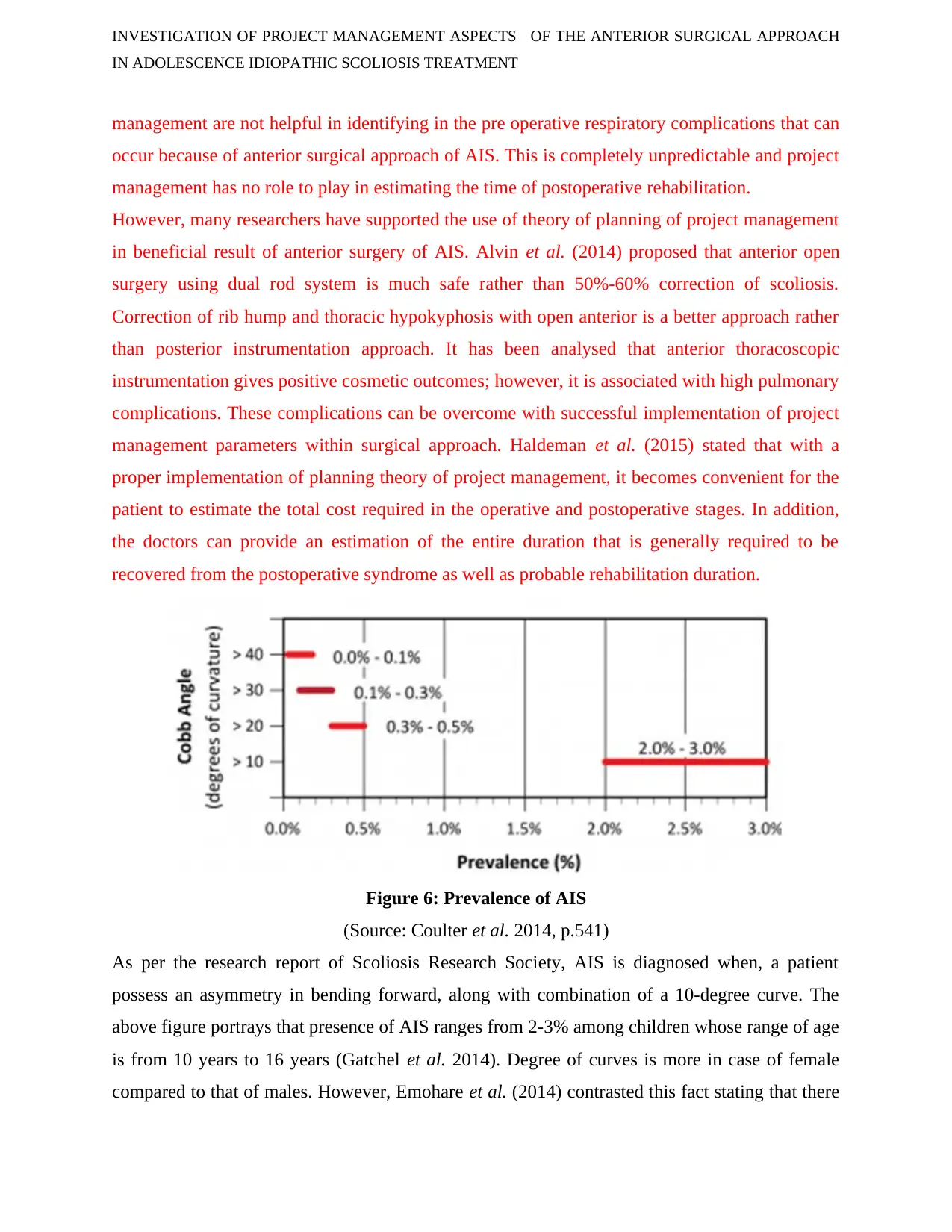
Figure 6: Prevalence of AIS
(Source: Coulter et al. 2014, p.541)
As per the research report of Scoliosis Research Society, AIS is diagnosed when, a patient
possess an asymmetry in bending forward, along with combination of a 10-degree curve. The
above figure portrays that presence of AIS ranges from 2-3% among children whose range of age
is from 10 years to 16 years (Gatchel et al. 2014). Degree of curves is more in case of female
compared to that of males. However, Emohare et al. (2014) contrasted this fact stating that there
IN ADOLESCENCE IDIOPATHIC SCOLIOSIS TREATMENT
management are not helpful in identifying in the pre operative respiratory complications that can
occur because of anterior surgical approach of AIS. This is completely unpredictable and project
management has no role to play in estimating the time of postoperative rehabilitation.
However, many researchers have supported the use of theory of planning of project management
in beneficial result of anterior surgery of AIS. Alvin et al. (2014) proposed that anterior open
surgery using dual rod system is much safe rather than 50%-60% correction of scoliosis.
Correction of rib hump and thoracic hypokyphosis with open anterior is a better approach rather
than posterior instrumentation approach. It has been analysed that anterior thoracoscopic
instrumentation gives positive cosmetic outcomes; however, it is associated with high pulmonary
complications. These complications can be overcome with successful implementation of project
management parameters within surgical approach. Haldeman et al. (2015) stated that with a
proper implementation of planning theory of project management, it becomes convenient for the
patient to estimate the total cost required in the operative and postoperative stages. In addition,
the doctors can provide an estimation of the entire duration that is generally required to be
recovered from the postoperative syndrome as well as probable rehabilitation duration.
Figure 6: Prevalence of AIS
(Source: Coulter et al. 2014, p.541)
As per the research report of Scoliosis Research Society, AIS is diagnosed when, a patient
possess an asymmetry in bending forward, along with combination of a 10-degree curve. The
above figure portrays that presence of AIS ranges from 2-3% among children whose range of age
is from 10 years to 16 years (Gatchel et al. 2014). Degree of curves is more in case of female
compared to that of males. However, Emohare et al. (2014) contrasted this fact stating that there
INVESTIGATION OF PROJECT MANAGEMENT ASPECTS OF THE ANTERIOR SURGICAL APPROACH
IN ADOLESCENCE IDIOPATHIC SCOLIOSIS TREATMENT
as per a research conducted in 1985, 29,195 children were diagnosed with AIS, among which,
17,235 children were male.
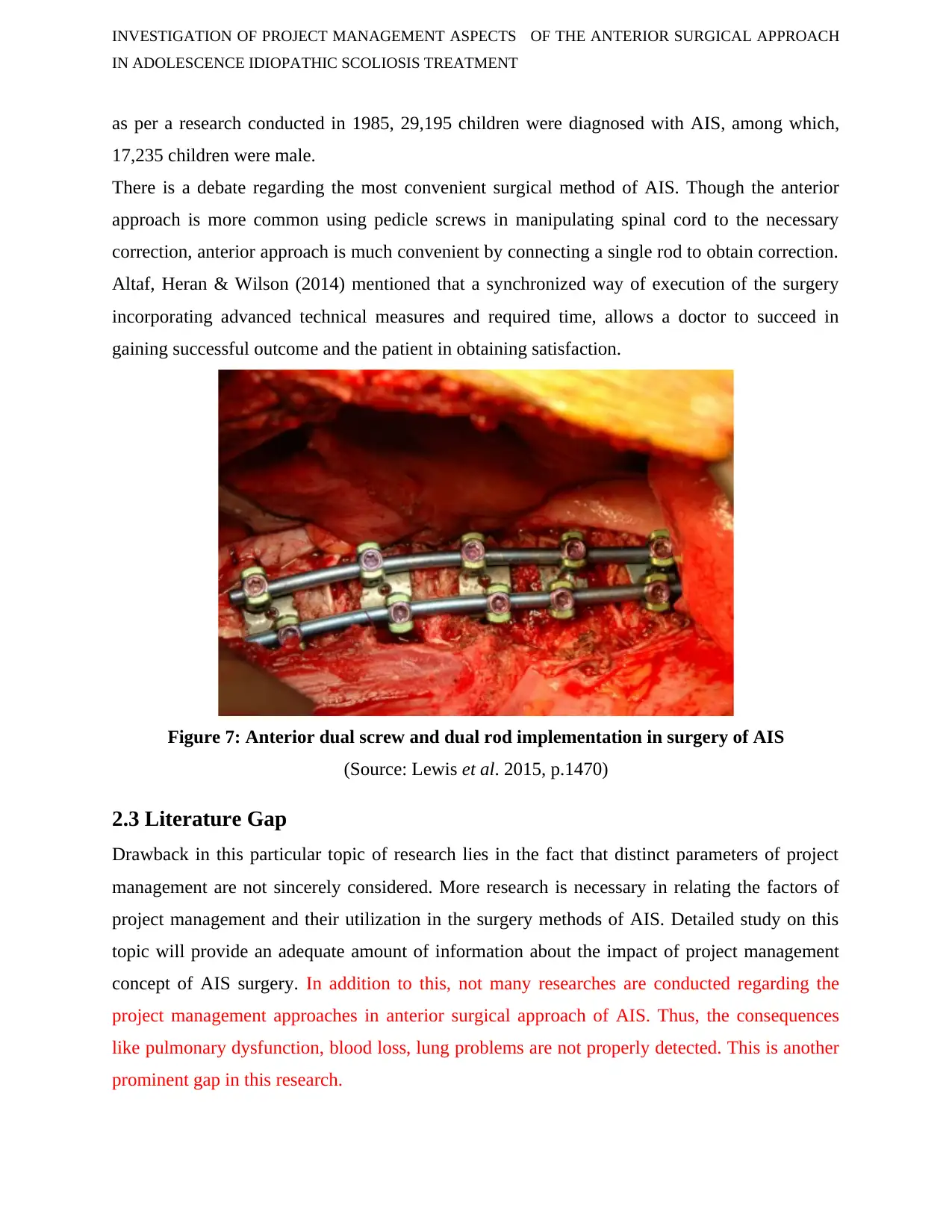
There is a debate regarding the most convenient surgical method of AIS. Though the anterior
approach is more common using pedicle screws in manipulating spinal cord to the necessary
correction, anterior approach is much convenient by connecting a single rod to obtain correction.
Altaf, Heran & Wilson (2014) mentioned that a synchronized way of execution of the surgery
incorporating advanced technical measures and required time, allows a doctor to succeed in
gaining successful outcome and the patient in obtaining satisfaction.
Figure 7: Anterior dual screw and dual rod implementation in surgery of AIS
(Source: Lewis et al. 2015, p.1470)
2.3 Literature Gap
Drawback in this particular topic of research lies in the fact that distinct parameters of project
management are not sincerely considered. More research is necessary in relating the factors of
project management and their utilization in the surgery methods of AIS. Detailed study on this
topic will provide an adequate amount of information about the impact of project management
concept of AIS surgery. In addition to this, not many researches are conducted regarding the
project management approaches in anterior surgical approach of AIS. Thus, the consequences
like pulmonary dysfunction, blood loss, lung problems are not properly detected. This is another
prominent gap in this research.
IN ADOLESCENCE IDIOPATHIC SCOLIOSIS TREATMENT
as per a research conducted in 1985, 29,195 children were diagnosed with AIS, among which,
17,235 children were male.
There is a debate regarding the most convenient surgical method of AIS. Though the anterior
approach is more common using pedicle screws in manipulating spinal cord to the necessary
correction, anterior approach is much convenient by connecting a single rod to obtain correction.
Altaf, Heran & Wilson (2014) mentioned that a synchronized way of execution of the surgery
incorporating advanced technical measures and required time, allows a doctor to succeed in
gaining successful outcome and the patient in obtaining satisfaction.
Figure 7: Anterior dual screw and dual rod implementation in surgery of AIS
(Source: Lewis et al. 2015, p.1470)
2.3 Literature Gap
Drawback in this particular topic of research lies in the fact that distinct parameters of project
management are not sincerely considered. More research is necessary in relating the factors of
project management and their utilization in the surgery methods of AIS. Detailed study on this
topic will provide an adequate amount of information about the impact of project management
concept of AIS surgery. In addition to this, not many researches are conducted regarding the
project management approaches in anterior surgical approach of AIS. Thus, the consequences
like pulmonary dysfunction, blood loss, lung problems are not properly detected. This is another
prominent gap in this research.
⊘ This is a preview!⊘
Do you want full access?
Subscribe today to unlock all pages.
Trusted by 1+ million students worldwide

1 out of 20


Related Documents


Your All-in-One AI-Powered Toolkit for Academic Success.
+13062052269
info@desklib.com
Available 24*7 on WhatsApp / Email
![[object Object]](/_next/static/media/star-bottom.7253800d.svg)
Unlock your academic potential
Copyright © 2020–2026 A2Z Services. All Rights Reserved. Developed and managed by ZUCOL.