Comparative Analysis of Project Management Methodologies for Success
VerifiedAdded on 2021/05/31
|10
|3959
|30
Report
AI Summary
This report analyzes the adoption and implementation of project management methodologies within three different organizations: a memory chip manufacturer in the USA (Organization A), a public infrastructure construction company in Europe (Organization B), and a financial services provider in Australia (Organization C). The report examines the suitability of PMBOK and PRINCE2 methodologies for each organization, considering their existing frameworks (CMMI, Eurocodes), organizational structures, and project management maturity levels. It details proposed methodologies, implementation strategies, challenges faced during adoption (such as resistance to change, integration issues, and metric alignment), and the potential benefits (such as improved project standardization, transparency, and knowledge management). The report also highlights the importance of top management commitment, phased implementation, and the use of external consultants to facilitate successful integration of new project management methodologies. The analysis provides insights into the practical application of project management principles and strategies across diverse business contexts.
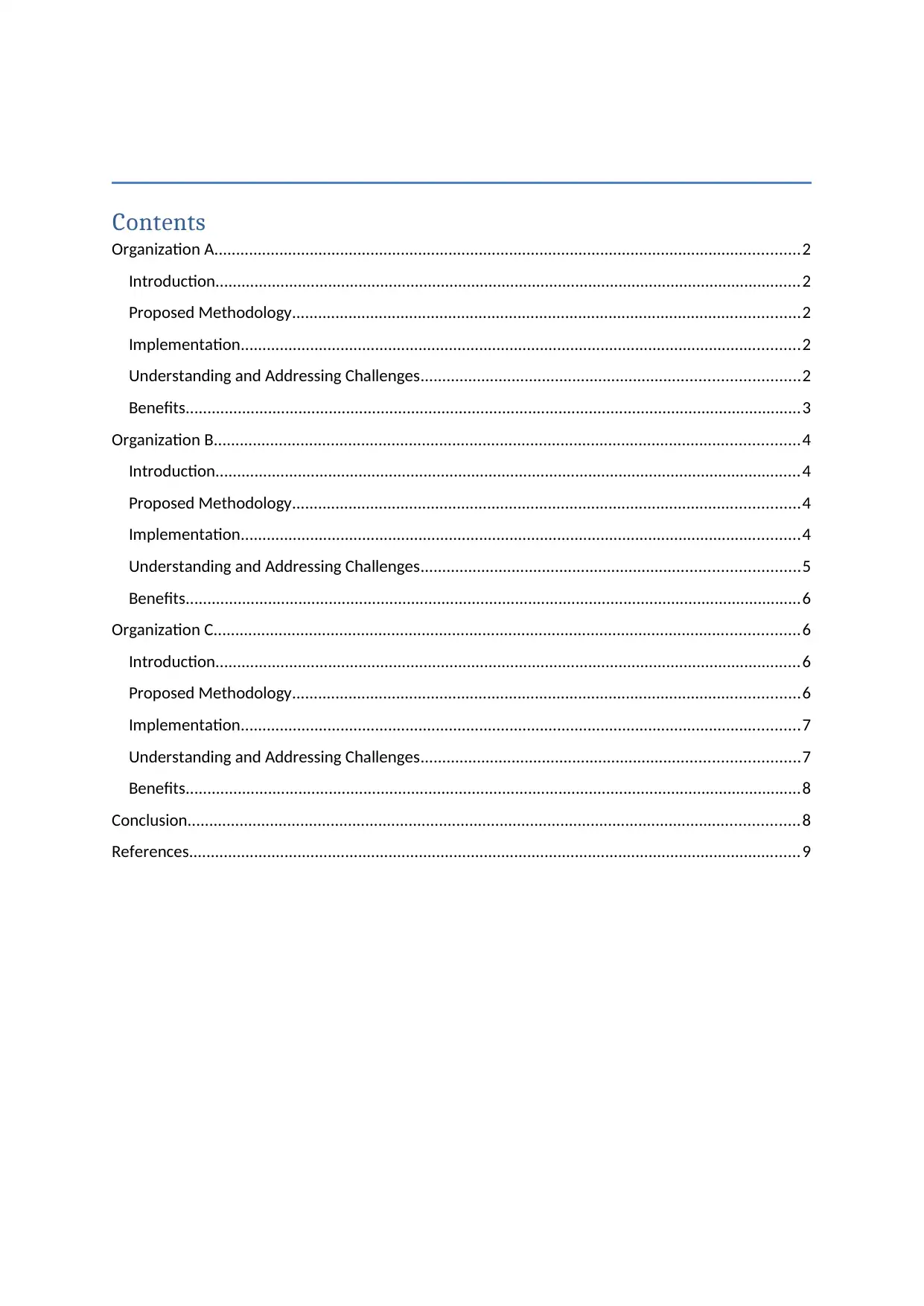
Contents
Organization A.......................................................................................................................................2
Introduction.......................................................................................................................................2
Proposed Methodology.....................................................................................................................2
Implementation.................................................................................................................................2
Understanding and Addressing Challenges.......................................................................................2
Benefits..............................................................................................................................................3
Organization B.......................................................................................................................................4
Introduction.......................................................................................................................................4
Proposed Methodology.....................................................................................................................4
Implementation.................................................................................................................................4
Understanding and Addressing Challenges.......................................................................................5
Benefits..............................................................................................................................................6
Organization C.......................................................................................................................................6
Introduction.......................................................................................................................................6
Proposed Methodology.....................................................................................................................6
Implementation.................................................................................................................................7
Understanding and Addressing Challenges.......................................................................................7
Benefits..............................................................................................................................................8
Conclusion.............................................................................................................................................8
References.............................................................................................................................................9
Organization A.......................................................................................................................................2
Introduction.......................................................................................................................................2
Proposed Methodology.....................................................................................................................2
Implementation.................................................................................................................................2
Understanding and Addressing Challenges.......................................................................................2
Benefits..............................................................................................................................................3
Organization B.......................................................................................................................................4
Introduction.......................................................................................................................................4
Proposed Methodology.....................................................................................................................4
Implementation.................................................................................................................................4
Understanding and Addressing Challenges.......................................................................................5
Benefits..............................................................................................................................................6
Organization C.......................................................................................................................................6
Introduction.......................................................................................................................................6
Proposed Methodology.....................................................................................................................6
Implementation.................................................................................................................................7
Understanding and Addressing Challenges.......................................................................................7
Benefits..............................................................................................................................................8
Conclusion.............................................................................................................................................8
References.............................................................................................................................................9

Paraphrase This Document
Need a fresh take? Get an instant paraphrase of this document with our AI Paraphraser
Organization A
Introduction
Organization A is into manufacturing of memory chips and is based in USA. 2100 people work for the
company. The mission of the organization is to keep growing and it is looking for establishing its
markets in North America and South America. The organization currently uses CMMI methodology
to delivered its projects. The company is already into the growing stage and is getting orders from
the new markets. However, to e able to execute those projects, a more formalize an targeted
approach is required to be taken. For this, the company as decided to adopt a formal project
management methodology. However, in the process it is likely to face several challenges that have
to be overcome (Karaman & Kurt, 2015).
Proposed Methodology
As the company is already CMMI certified, it would need a project methodology that can easily
blend in. Also, the methodology should be complementing CMMI and provide an easy
implementation. Adoption of new project management framework should not result into any
conflicts in the system. PMBOK methodology is a guideline rather than a framework and thus, it is
not very rigid in its structure and thus, can easily be integrated with any other existing
methodologies companies may be using including CMMI. The company can still use the templates
and reporting structured defined by CMMI and begin adapting to the new framework. PRINCE 2
framework would be more stringent in adoption although it does provide a tailoring option. It would
require company staff to have an extensive training on the framework if it has to integrate well with
the existing system. Thus, PMBOK is chosen for the organization A (Measey, 2014).
Implementation
PMBOK implementation would need the teams in the organization to understand its knowledge
areas and the processes defined in the guidelines. For this, the project manager would arrange for
the trainings where the staff would be given guidance on how the methodology can be adopted.
Post training, there would be discussions made between project manager and his team with an aim
to identify specific activities that would be required for integrating the methodology in the sytem
that is already using CMMI framework. An external consultant may be hired to guide the teams
during implementation so that cases of conflicts between two methodologies can be avoided or
handled (Williams, 2014).
Understanding and Addressing Challenges
The challenges that the company would face while adopting PMBOK and integrating the same with
CMMI include:
PMBOK methodology is a very exhaustive methodology that contains 10 knowledge areas
and 47 processes; Understanding and adopting them could be very time and resource
consuming. To overcome this difficulty, the company is recommended to take a phase wise
approach such that parts of the guide are adopted one by one and as the company
progresses, the changes keep happening. This would reduce the pressure on the team to
understand the full methodology before it can be used.
Commitment would neede from the top management as without it the company would not
be able to smoothly embrace the new methodology as the adoption would require high
Introduction
Organization A is into manufacturing of memory chips and is based in USA. 2100 people work for the
company. The mission of the organization is to keep growing and it is looking for establishing its
markets in North America and South America. The organization currently uses CMMI methodology
to delivered its projects. The company is already into the growing stage and is getting orders from
the new markets. However, to e able to execute those projects, a more formalize an targeted
approach is required to be taken. For this, the company as decided to adopt a formal project
management methodology. However, in the process it is likely to face several challenges that have
to be overcome (Karaman & Kurt, 2015).
Proposed Methodology
As the company is already CMMI certified, it would need a project methodology that can easily
blend in. Also, the methodology should be complementing CMMI and provide an easy
implementation. Adoption of new project management framework should not result into any
conflicts in the system. PMBOK methodology is a guideline rather than a framework and thus, it is
not very rigid in its structure and thus, can easily be integrated with any other existing
methodologies companies may be using including CMMI. The company can still use the templates
and reporting structured defined by CMMI and begin adapting to the new framework. PRINCE 2
framework would be more stringent in adoption although it does provide a tailoring option. It would
require company staff to have an extensive training on the framework if it has to integrate well with
the existing system. Thus, PMBOK is chosen for the organization A (Measey, 2014).
Implementation
PMBOK implementation would need the teams in the organization to understand its knowledge
areas and the processes defined in the guidelines. For this, the project manager would arrange for
the trainings where the staff would be given guidance on how the methodology can be adopted.
Post training, there would be discussions made between project manager and his team with an aim
to identify specific activities that would be required for integrating the methodology in the sytem
that is already using CMMI framework. An external consultant may be hired to guide the teams
during implementation so that cases of conflicts between two methodologies can be avoided or
handled (Williams, 2014).
Understanding and Addressing Challenges
The challenges that the company would face while adopting PMBOK and integrating the same with
CMMI include:
PMBOK methodology is a very exhaustive methodology that contains 10 knowledge areas
and 47 processes; Understanding and adopting them could be very time and resource
consuming. To overcome this difficulty, the company is recommended to take a phase wise
approach such that parts of the guide are adopted one by one and as the company
progresses, the changes keep happening. This would reduce the pressure on the team to
understand the full methodology before it can be used.
Commitment would neede from the top management as without it the company would not
be able to smoothly embrace the new methodology as the adoption would require high
degree of coordination among staff which ca n only be brought about with roper
intervention from the top management. Thus, the project manager has to seek buy-in from
the top management before implementing the new methodology. It would also help in
establishing control over project activities (Valek, 2014).
A large number of new documents and templates have to be created while the new
methodology is used that can consume a lot of resources and their time. Thus, there is a
possibility that employees would resist the adoption. The project manager should take the
lead in this time and explain the staff how this adoption is going to help them in the long run
to get their buy-in (Rowley, 2013).
AS the company would have two methodologies working together, there are chances that
conflicts may arise between them if the team did not understand how the integration can be
made successful. Thus, an external project management consultant can be hired to guide
the team in the process of integration between PMBOK and CMMI to get best results
(Business Solutions, Inc., 2015).
Both PMBOK and CMMI guides have different metrics that can be used for measuring
project progress and its performance. This can be confusing as well as time intensive for the
people. Thus, project manager needs to find a way to align the two performance
management systems so that unified metrics are used (Ghosh, et al., 2012).
If the infrastructure is not able to fulfil the needs of new system then it can fail the adoption.
The organization would need a supportive infrastructure to be able to use both methodology
in tandem.
Adoption of new methodology can be confusing for those involved in the process as it is
different from their earlier structure and may demand different responsibilities to be taken
which can be confusing. The company needs to have clearly defined roles and
responsibilities for implementation to avoid any confusions in action (Fritzsche & Keil, 2007).
Benefits
PMBOK adoption would bring in following benefits to the organization:
Project management processes would become more standardized and organized such that
tracking progress of project would become easier.
Organized and planned way of project management would bring in improvements in the
performance of projects and there could be more projects completed within budget and
within scheduled timelines.
PMBOK would make the processes very transparent with high level of documentation of all
the activities and would also serve as a knowledge base for the company in the long run so
that the company can keep on improving itself
Sound monitoring systems can be established for tracking project progress so that deviations
can be identified and prevented on projects
The drawbacks of CMMI would be overcome with the benefits that are provided with the
PMBOK framework which would make improvements in the way projects are managed by
the organization (Tutorialspoint, 2015)
intervention from the top management. Thus, the project manager has to seek buy-in from
the top management before implementing the new methodology. It would also help in
establishing control over project activities (Valek, 2014).
A large number of new documents and templates have to be created while the new
methodology is used that can consume a lot of resources and their time. Thus, there is a
possibility that employees would resist the adoption. The project manager should take the
lead in this time and explain the staff how this adoption is going to help them in the long run
to get their buy-in (Rowley, 2013).
AS the company would have two methodologies working together, there are chances that
conflicts may arise between them if the team did not understand how the integration can be
made successful. Thus, an external project management consultant can be hired to guide
the team in the process of integration between PMBOK and CMMI to get best results
(Business Solutions, Inc., 2015).
Both PMBOK and CMMI guides have different metrics that can be used for measuring
project progress and its performance. This can be confusing as well as time intensive for the
people. Thus, project manager needs to find a way to align the two performance
management systems so that unified metrics are used (Ghosh, et al., 2012).
If the infrastructure is not able to fulfil the needs of new system then it can fail the adoption.
The organization would need a supportive infrastructure to be able to use both methodology
in tandem.
Adoption of new methodology can be confusing for those involved in the process as it is
different from their earlier structure and may demand different responsibilities to be taken
which can be confusing. The company needs to have clearly defined roles and
responsibilities for implementation to avoid any confusions in action (Fritzsche & Keil, 2007).
Benefits
PMBOK adoption would bring in following benefits to the organization:
Project management processes would become more standardized and organized such that
tracking progress of project would become easier.
Organized and planned way of project management would bring in improvements in the
performance of projects and there could be more projects completed within budget and
within scheduled timelines.
PMBOK would make the processes very transparent with high level of documentation of all
the activities and would also serve as a knowledge base for the company in the long run so
that the company can keep on improving itself
Sound monitoring systems can be established for tracking project progress so that deviations
can be identified and prevented on projects
The drawbacks of CMMI would be overcome with the benefits that are provided with the
PMBOK framework which would make improvements in the way projects are managed by
the organization (Tutorialspoint, 2015)
⊘ This is a preview!⊘
Do you want full access?
Subscribe today to unlock all pages.

Trusted by 1+ million students worldwide
Organization B
Introduction
Organization B is into construction of public infrastructure projects in the Europe. It has 300
permanent employees working for it while independent contract workers are hired on the third
party payrolls for specific projects. The company has its headquarters in Paris, France. The company
is in the process of expansion and want to take more projects from other regions. However, for
every new project , the Director is expecting the get a business case presented which would help
him take appropriate decision to choose the projects that would be beneficial for the organization.
The company uses Euro codes as the foundation for managing projects. However, for this to happen,
the organization would need a formal project management processes and thus, the company is
looking for adoption of a project management framework. The new framework would be able to
help the organization plan, execute, and control government projects in an organized way (Karaman
& Kurt, 2015).
Proposed Methodology
The organization does not have any formal process used for managing projects and thus, the
decisions are completely taken by project managers on how to manage government infrastructure
projects. The organization thus needs a framework which is easy to understand and can be adopted
fast by the staff without having a need to conduct an extensive training before the process of
implementation begins. PMBOOK provides clear and easy guidelines to follow and it can be adopted
in phases even with minimal training required. On the other side, PRINCE 2 is a highly formalised
methodology that needs experts to intervene if the adoption of the framework has to be made
smooth. Thus, PMBOK is the methodology recommended for the Organization B (PMI, 2010).
Implementation
PMBOK is a guide and not a proper framework and thus, it provides flexibility in steps of adoption.
The company can thus used a phased approach to its implementation and can be selective in the
processes that it would be adopting in the first phase. The company need not embrace all 47
processes but can be selective. Thus, the implementation process would begin with the
identification of the needs for project management framework in specific processes and selection of
appropriate processes for adoption
Introduction
Organization B is into construction of public infrastructure projects in the Europe. It has 300
permanent employees working for it while independent contract workers are hired on the third
party payrolls for specific projects. The company has its headquarters in Paris, France. The company
is in the process of expansion and want to take more projects from other regions. However, for
every new project , the Director is expecting the get a business case presented which would help
him take appropriate decision to choose the projects that would be beneficial for the organization.
The company uses Euro codes as the foundation for managing projects. However, for this to happen,
the organization would need a formal project management processes and thus, the company is
looking for adoption of a project management framework. The new framework would be able to
help the organization plan, execute, and control government projects in an organized way (Karaman
& Kurt, 2015).
Proposed Methodology
The organization does not have any formal process used for managing projects and thus, the
decisions are completely taken by project managers on how to manage government infrastructure
projects. The organization thus needs a framework which is easy to understand and can be adopted
fast by the staff without having a need to conduct an extensive training before the process of
implementation begins. PMBOOK provides clear and easy guidelines to follow and it can be adopted
in phases even with minimal training required. On the other side, PRINCE 2 is a highly formalised
methodology that needs experts to intervene if the adoption of the framework has to be made
smooth. Thus, PMBOK is the methodology recommended for the Organization B (PMI, 2010).
Implementation
PMBOK is a guide and not a proper framework and thus, it provides flexibility in steps of adoption.
The company can thus used a phased approach to its implementation and can be selective in the
processes that it would be adopting in the first phase. The company need not embrace all 47
processes but can be selective. Thus, the implementation process would begin with the
identification of the needs for project management framework in specific processes and selection of
appropriate processes for adoption
Paraphrase This Document
Need a fresh take? Get an instant paraphrase of this document with our AI Paraphraser
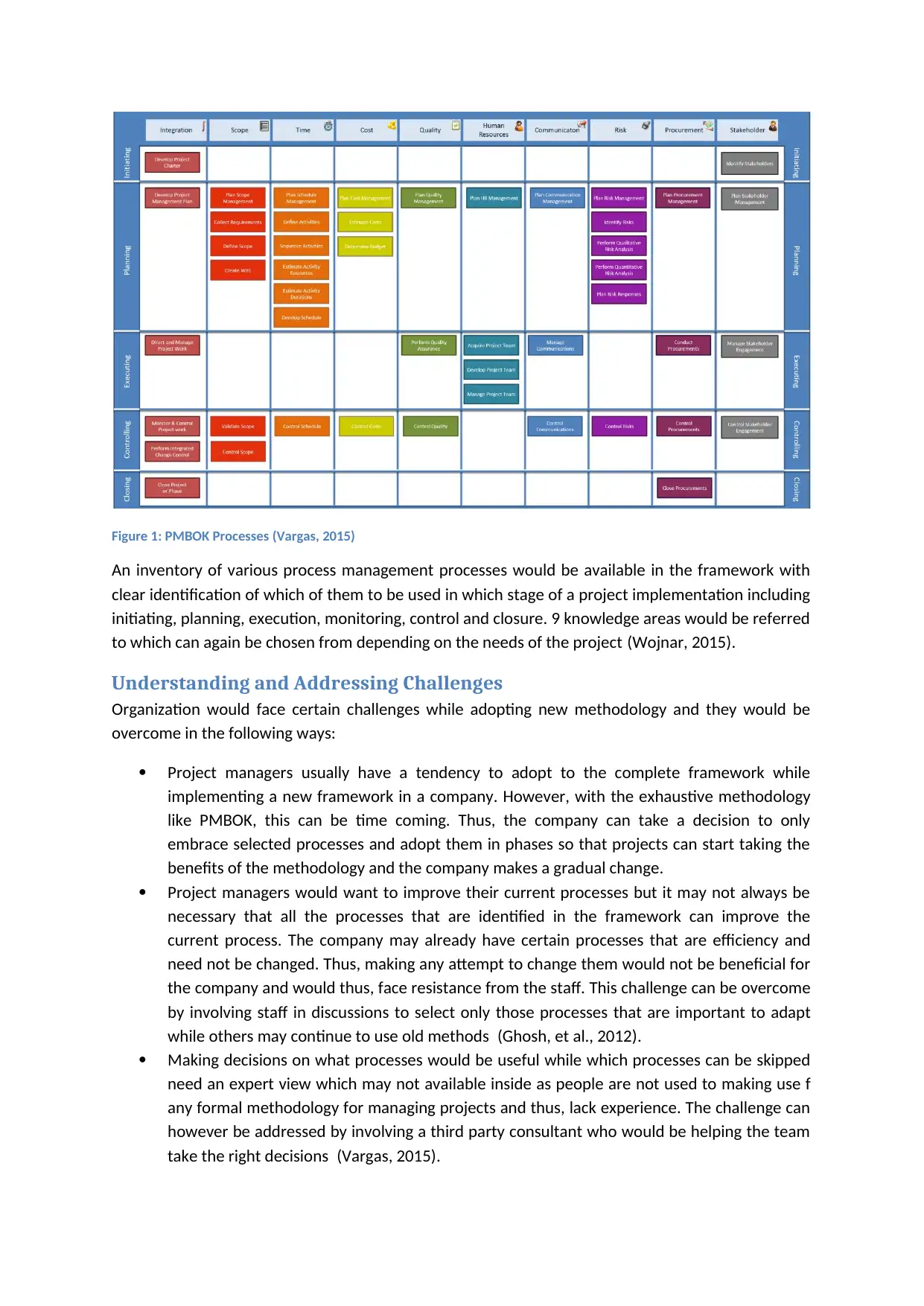
Figure 1: PMBOK Processes (Vargas, 2015)
An inventory of various process management processes would be available in the framework with
clear identification of which of them to be used in which stage of a project implementation including
initiating, planning, execution, monitoring, control and closure. 9 knowledge areas would be referred
to which can again be chosen from depending on the needs of the project (Wojnar, 2015).
Understanding and Addressing Challenges
Organization would face certain challenges while adopting new methodology and they would be
overcome in the following ways:
Project managers usually have a tendency to adopt to the complete framework while
implementing a new framework in a company. However, with the exhaustive methodology
like PMBOK, this can be time coming. Thus, the company can take a decision to only
embrace selected processes and adopt them in phases so that projects can start taking the
benefits of the methodology and the company makes a gradual change.
Project managers would want to improve their current processes but it may not always be
necessary that all the processes that are identified in the framework can improve the
current process. The company may already have certain processes that are efficiency and
need not be changed. Thus, making any attempt to change them would not be beneficial for
the company and would thus, face resistance from the staff. This challenge can be overcome
by involving staff in discussions to select only those processes that are important to adapt
while others may continue to use old methods (Ghosh, et al., 2012).
Making decisions on what processes would be useful while which processes can be skipped
need an expert view which may not available inside as people are not used to making use f
any formal methodology for managing projects and thus, lack experience. The challenge can
however be addressed by involving a third party consultant who would be helping the team
take the right decisions (Vargas, 2015).
An inventory of various process management processes would be available in the framework with
clear identification of which of them to be used in which stage of a project implementation including
initiating, planning, execution, monitoring, control and closure. 9 knowledge areas would be referred
to which can again be chosen from depending on the needs of the project (Wojnar, 2015).
Understanding and Addressing Challenges
Organization would face certain challenges while adopting new methodology and they would be
overcome in the following ways:
Project managers usually have a tendency to adopt to the complete framework while
implementing a new framework in a company. However, with the exhaustive methodology
like PMBOK, this can be time coming. Thus, the company can take a decision to only
embrace selected processes and adopt them in phases so that projects can start taking the
benefits of the methodology and the company makes a gradual change.
Project managers would want to improve their current processes but it may not always be
necessary that all the processes that are identified in the framework can improve the
current process. The company may already have certain processes that are efficiency and
need not be changed. Thus, making any attempt to change them would not be beneficial for
the company and would thus, face resistance from the staff. This challenge can be overcome
by involving staff in discussions to select only those processes that are important to adapt
while others may continue to use old methods (Ghosh, et al., 2012).
Making decisions on what processes would be useful while which processes can be skipped
need an expert view which may not available inside as people are not used to making use f
any formal methodology for managing projects and thus, lack experience. The challenge can
however be addressed by involving a third party consultant who would be helping the team
take the right decisions (Vargas, 2015).
As the implementation of PMBOK framework would nee a lot of change to be made in the
way people work and thus, the company is likely to face some resistance. Thus, the project
manager must involved staff in planning the implementation as well as implementing the
methodology giving them insights at the same time on how the adoption would help them
improve their productivity in the long run and benefit the organization (Siegelaub, 2009).
Benefits
With adoption of PMBOK, the company B would have following benefits:
The project management processes would be more organized and formalized which would
make it easier for the company to deal with the government processes.
With proper documentation of everything, the company would be able to track the progress
of projects and identify any problems proactively so that they can be resolved before
affecting the projects significantly
The knowledge base that would be created as a result of documentation would be useful for
the company in the long run as it would serve as recorded lessons for the future projects
that company would be taking
Standardization and documentation would bring in transparency on how projects are
managed by the company
Formalized communication management would help project teams coordinate better which
would enhance their cooperation and productivity (Jarocki, 2014).
Organization C
Introduction
Orgnization C is a 11 year old organization that provides financial services to companies in Asutralia
and it is operated by around 800 people across the nation. The company is mature in thee industry
and uses formal processes for delivering its projects. However, the company still feels the need to
improve its proejct delivery for which it is looking for adopting a new project management
framework that is more formalized and effective in managing projets. The company is currently using
regulator performance framework of Australian Prudential Regulation Authority. The company has a
structure in which a projects manager is at the heart of any projects and thus, have complete
freedom to take decisions on how to manage the project. (Court, 2006).
Proposed Methodology
The company is currently using an age old framework for managing its projects but to be able to
enhance its project delivery capabilities, a new framework may be chosen from the two most
common project management methodologies including PMBOK and PRINCE 2. PRINCE 2 can provide
best practices for improvement and can be adopted fast with involvement of expertise people while
PMBOK is more exhaustive methodology that can take time adopt completely. Considering the level
of maturity company already has an the rich experience of the project manager, PRINCE 2
framework could be adopted here as it would help already mature company further improve its
processes through the use of its principles (Ferguson, 2011).
way people work and thus, the company is likely to face some resistance. Thus, the project
manager must involved staff in planning the implementation as well as implementing the
methodology giving them insights at the same time on how the adoption would help them
improve their productivity in the long run and benefit the organization (Siegelaub, 2009).
Benefits
With adoption of PMBOK, the company B would have following benefits:
The project management processes would be more organized and formalized which would
make it easier for the company to deal with the government processes.
With proper documentation of everything, the company would be able to track the progress
of projects and identify any problems proactively so that they can be resolved before
affecting the projects significantly
The knowledge base that would be created as a result of documentation would be useful for
the company in the long run as it would serve as recorded lessons for the future projects
that company would be taking
Standardization and documentation would bring in transparency on how projects are
managed by the company
Formalized communication management would help project teams coordinate better which
would enhance their cooperation and productivity (Jarocki, 2014).
Organization C
Introduction
Orgnization C is a 11 year old organization that provides financial services to companies in Asutralia
and it is operated by around 800 people across the nation. The company is mature in thee industry
and uses formal processes for delivering its projects. However, the company still feels the need to
improve its proejct delivery for which it is looking for adopting a new project management
framework that is more formalized and effective in managing projets. The company is currently using
regulator performance framework of Australian Prudential Regulation Authority. The company has a
structure in which a projects manager is at the heart of any projects and thus, have complete
freedom to take decisions on how to manage the project. (Court, 2006).
Proposed Methodology
The company is currently using an age old framework for managing its projects but to be able to
enhance its project delivery capabilities, a new framework may be chosen from the two most
common project management methodologies including PMBOK and PRINCE 2. PRINCE 2 can provide
best practices for improvement and can be adopted fast with involvement of expertise people while
PMBOK is more exhaustive methodology that can take time adopt completely. Considering the level
of maturity company already has an the rich experience of the project manager, PRINCE 2
framework could be adopted here as it would help already mature company further improve its
processes through the use of its principles (Ferguson, 2011).
⊘ This is a preview!⊘
Do you want full access?
Subscribe today to unlock all pages.
Trusted by 1+ million students worldwide
The methodology would further strengthen the management processes and reduce complexities
with defined stage wise approach to projects management. It would involve proper planning and
documentation that the company would use to monitor its projects (Turley, 2012). The PRINCE 2
framework devices projects into stages with specific boundaries that ate to be controlled and
managed independently till the last part of the project and that is closure. The lessons learned would
be recorded for the company to make use of in the future projects (Hinde, 2012).
Implementation
The top management involvement in the process of implementation is required for PRINCE 2
adoption as it would need to staff to change its working culture and learn to adopt a lot of new
processes for management of the projects. The company ‘s top officials include CEO, CFO, COO, and
VP who would be involved in taking decisions about the adoption and project management. For
implementation, the company employees would be trained on the methodology with some given
proper certification to ensure that they have all the required knowledge about the framework. An
external consultant would be hired to guide them through training as well as adoption. The team
members who would be participating in initial stages of adoption of PRINCE 2 framework would
include operations manager, project manager, IT manager, pre-sales manager, sales manager, and
procurement manager. After completing the training, the PRINCE 2 framework would be officially
adopted and all processes used for managing projects would be used for tailoring the methodology
to suit the organization (Kirwan, et al., 2008).
The PRINCE 2 adoption does not have specific steps to follow but a few principles to adhere to and
these include:
Development of a business case that would justify the project strategically so that the
director can take a decision on whether to proceed with the project or not.
The lessons that are learned from any project are recorded as lessons learned document
and would be used for guiding future projects (Saad, et al., 2012)
Project activities are required to be divided into stages with defined and manageable
boundaries such that they can be assessed periodically for improvement (Siegelaub, 2009)
The staff should be made accountable for the projects deliverables in order to establish a
better control over the projects (Murray, 2009).
The projects management methodology has to be tailored according to the needs of the
organization considering its structure and existing processes that already deliver results
(Siegelaub, 2009).
Understanding and Addressing Challenges
PRINCE 2 adoption would bring certain challenges for the company that have to be overcome in
following ways:
Tailoring needs to be done carefully as any errors can impact the project performance and
the company would not be able to achieve its objectives sufficiently. An expert may thus, be
needed to guide the team into efficient adoption. The company would thus, hire an external
projects management consultant to guide the team through the implementation process
(Valek, 2014).
with defined stage wise approach to projects management. It would involve proper planning and
documentation that the company would use to monitor its projects (Turley, 2012). The PRINCE 2
framework devices projects into stages with specific boundaries that ate to be controlled and
managed independently till the last part of the project and that is closure. The lessons learned would
be recorded for the company to make use of in the future projects (Hinde, 2012).
Implementation
The top management involvement in the process of implementation is required for PRINCE 2
adoption as it would need to staff to change its working culture and learn to adopt a lot of new
processes for management of the projects. The company ‘s top officials include CEO, CFO, COO, and
VP who would be involved in taking decisions about the adoption and project management. For
implementation, the company employees would be trained on the methodology with some given
proper certification to ensure that they have all the required knowledge about the framework. An
external consultant would be hired to guide them through training as well as adoption. The team
members who would be participating in initial stages of adoption of PRINCE 2 framework would
include operations manager, project manager, IT manager, pre-sales manager, sales manager, and
procurement manager. After completing the training, the PRINCE 2 framework would be officially
adopted and all processes used for managing projects would be used for tailoring the methodology
to suit the organization (Kirwan, et al., 2008).
The PRINCE 2 adoption does not have specific steps to follow but a few principles to adhere to and
these include:
Development of a business case that would justify the project strategically so that the
director can take a decision on whether to proceed with the project or not.
The lessons that are learned from any project are recorded as lessons learned document
and would be used for guiding future projects (Saad, et al., 2012)
Project activities are required to be divided into stages with defined and manageable
boundaries such that they can be assessed periodically for improvement (Siegelaub, 2009)
The staff should be made accountable for the projects deliverables in order to establish a
better control over the projects (Murray, 2009).
The projects management methodology has to be tailored according to the needs of the
organization considering its structure and existing processes that already deliver results
(Siegelaub, 2009).
Understanding and Addressing Challenges
PRINCE 2 adoption would bring certain challenges for the company that have to be overcome in
following ways:
Tailoring needs to be done carefully as any errors can impact the project performance and
the company would not be able to achieve its objectives sufficiently. An expert may thus, be
needed to guide the team into efficient adoption. The company would thus, hire an external
projects management consultant to guide the team through the implementation process
(Valek, 2014).
Paraphrase This Document
Need a fresh take? Get an instant paraphrase of this document with our AI Paraphraser
The work culture of the company would have to be changed to some extent if the
methodology has to be fully embraced which could bring resistance from people who are
used to working in old ways. To overcome this resistance, the company can involve the
employees from the beginning of adoption planning and provide them insights into the
improvements that company would have with the new adoption in order to get their buy-in.
The methodology implementation would need a high level of coordination among people
which makes buy-in of employees important as well as push the need for cooperation from
top management to keep the employees on track. However, this can be a challenging task
and thus, it is recommended that top management must be involved in the planning process
and buy-in is sought before the methodology could be implemented.
The company has not used any similar methodology for the management of it projects in
past and thus, its employees would need an extensive guidance on the methodology. For
this, the company can provide them training and certification on the framework so that they
are able to serve the needs sufficiently (Turley, 2012)
Methodology does not define processes in some areas like procurement and knowledge
management which if needed by the company, the company would need to add them to the
methodology in tailoring process (Saad, et al., 2012).
Benefits
PRINCE 2 methodology adoption would bring following benefits to the organisation C:
Being a highly flexible methodology, the company would be able to tailor it as per its
requirements and take the opportunity to improve its processes.
The lessons learned would be recorded which would form a knowledge base that can be
used in the near future
With certified professionals involved, the effectiveness of project management practices can
be enhanced so that the company can achieve better results (Measey, 2014).
Conclusion
This paper had the objectives to compare PMBOK and PRINCE 2 prjoect management methodlogy
considering specific cases of companies in which they can be adopted. For each case, the two
methodologies were evaluated with background of the company in considered and a selection was
mode on which methodology would be more suited for respective companies. The report also
explained how the processes would be implemented, identified challenges that would faced by the
company in the process and presented solutions for the same. Several benefits would be achieved in
each company with this adoption which is highlighted in very case in the report. Some common
challenges discovered were requirement for training, resistance from employees, and introduction
of complexity. Solutions recommended were hiring of an expert consultant, proper training of
employees, phase wise adoption in cases of PMBOK, and tailoring of the methodologies to suit the
needs of the organization.
methodology has to be fully embraced which could bring resistance from people who are
used to working in old ways. To overcome this resistance, the company can involve the
employees from the beginning of adoption planning and provide them insights into the
improvements that company would have with the new adoption in order to get their buy-in.
The methodology implementation would need a high level of coordination among people
which makes buy-in of employees important as well as push the need for cooperation from
top management to keep the employees on track. However, this can be a challenging task
and thus, it is recommended that top management must be involved in the planning process
and buy-in is sought before the methodology could be implemented.
The company has not used any similar methodology for the management of it projects in
past and thus, its employees would need an extensive guidance on the methodology. For
this, the company can provide them training and certification on the framework so that they
are able to serve the needs sufficiently (Turley, 2012)
Methodology does not define processes in some areas like procurement and knowledge
management which if needed by the company, the company would need to add them to the
methodology in tailoring process (Saad, et al., 2012).
Benefits
PRINCE 2 methodology adoption would bring following benefits to the organisation C:
Being a highly flexible methodology, the company would be able to tailor it as per its
requirements and take the opportunity to improve its processes.
The lessons learned would be recorded which would form a knowledge base that can be
used in the near future
With certified professionals involved, the effectiveness of project management practices can
be enhanced so that the company can achieve better results (Measey, 2014).
Conclusion
This paper had the objectives to compare PMBOK and PRINCE 2 prjoect management methodlogy
considering specific cases of companies in which they can be adopted. For each case, the two
methodologies were evaluated with background of the company in considered and a selection was
mode on which methodology would be more suited for respective companies. The report also
explained how the processes would be implemented, identified challenges that would faced by the
company in the process and presented solutions for the same. Several benefits would be achieved in
each company with this adoption which is highlighted in very case in the report. Some common
challenges discovered were requirement for training, resistance from employees, and introduction
of complexity. Solutions recommended were hiring of an expert consultant, proper training of
employees, phase wise adoption in cases of PMBOK, and tailoring of the methodologies to suit the
needs of the organization.
References
Business Solutions, Inc., 2015. What is the Capability Maturity Model? (CMM). [Online]
Available at: http://www.selectbs.com/process-maturity/what-is-the-capability-maturity-model
Court, R., 2006. An Introduction to the PRINCE2 project methodology , s.l.: FTC Kaplan ; CIMA.
Ferguson, C., 2011. PRINCE 2 for Small Scale Projects, s.l.: Novare Consulting.
Fritzsche, M. & Keil, P., 2007. Agile Methods and CMMI:Compatibility or Conflict?. e-Informatica
Software Engineering Journal, pp. 9-25.
Ghosh, S. et al., 2012. Enhance PMBOK® by Comparing it with P2M, ICB, PRINCE2, APM and Scrum
Project Management Standards. PM World Today, XIV( I), pp. 1-77.
Hinde, D., 2012. PRINCE2 Study Guide. s.l.:Wiley Publications.
Jarocki, T. L., 2014. ONE SOLUTION FOR PROJECT SUCCESS: PROJECT AND CHANGE MANAGEMENT IN
THE PMBOK GUIDE, s.l.: Emergence One International, Ltd.
Karaman, E. & Kurt, M., 2015. Comparison of project management methodologies: prince 2 versus
PMBOK for it projects. Int. Journal of Applied Sciences and Engineering Research, 4(4), pp. 572-574.
Kirwan, P., Siviy, J., Marino, L. & Morley, J., 2008. Implementation Challenges in a Multimodel
Environment, s.l.: Carnegie Mellon University. .
Measey, P., 2014. Agile and PRINCE2® And how they integrate, s.l.: BCS.
Murray, A., 2009. PRINCE2® and governance, s.l.: Outperform UK Ltd.
PMI, 2010. The Value of Project Management , s.l.: PMI.
Rowley, J., 2013. 5th Edition PMBOK® Guide—Chapter 10: Communication Requirements Analysis,
s.l.: 4Square.
Saad, S. et al., 2012. A Case Study on Implementation of Prince2 Methodology in Automotive
Industry in Malaysia (A Preliminary Study). International Journal of Scientific & Engineering Research,
3(4), pp. 1-24.
Siegelaub, J. M., 2009. How PRINCE2® Can Complement the PMBOK® Guide and Your PMP®, s.l.:
Impact Strategies LLC.
Turley, F., 2012. The PRINCE2 Foundation Training Manual. s.l.:MPlaza.
Tutorialspoint, 2015. CMMI Maturity Levels. [Online]
Available at: http://www.tutorialspoint.com/cmmi/cmmi-maturity-levels.htm
Valek, L., 2014. The Time Bank implementation and governance: Is PRINCE 2 suitable?, s.l.: University
of Hradec Kralove.
Business Solutions, Inc., 2015. What is the Capability Maturity Model? (CMM). [Online]
Available at: http://www.selectbs.com/process-maturity/what-is-the-capability-maturity-model
Court, R., 2006. An Introduction to the PRINCE2 project methodology , s.l.: FTC Kaplan ; CIMA.
Ferguson, C., 2011. PRINCE 2 for Small Scale Projects, s.l.: Novare Consulting.
Fritzsche, M. & Keil, P., 2007. Agile Methods and CMMI:Compatibility or Conflict?. e-Informatica
Software Engineering Journal, pp. 9-25.
Ghosh, S. et al., 2012. Enhance PMBOK® by Comparing it with P2M, ICB, PRINCE2, APM and Scrum
Project Management Standards. PM World Today, XIV( I), pp. 1-77.
Hinde, D., 2012. PRINCE2 Study Guide. s.l.:Wiley Publications.
Jarocki, T. L., 2014. ONE SOLUTION FOR PROJECT SUCCESS: PROJECT AND CHANGE MANAGEMENT IN
THE PMBOK GUIDE, s.l.: Emergence One International, Ltd.
Karaman, E. & Kurt, M., 2015. Comparison of project management methodologies: prince 2 versus
PMBOK for it projects. Int. Journal of Applied Sciences and Engineering Research, 4(4), pp. 572-574.
Kirwan, P., Siviy, J., Marino, L. & Morley, J., 2008. Implementation Challenges in a Multimodel
Environment, s.l.: Carnegie Mellon University. .
Measey, P., 2014. Agile and PRINCE2® And how they integrate, s.l.: BCS.
Murray, A., 2009. PRINCE2® and governance, s.l.: Outperform UK Ltd.
PMI, 2010. The Value of Project Management , s.l.: PMI.
Rowley, J., 2013. 5th Edition PMBOK® Guide—Chapter 10: Communication Requirements Analysis,
s.l.: 4Square.
Saad, S. et al., 2012. A Case Study on Implementation of Prince2 Methodology in Automotive
Industry in Malaysia (A Preliminary Study). International Journal of Scientific & Engineering Research,
3(4), pp. 1-24.
Siegelaub, J. M., 2009. How PRINCE2® Can Complement the PMBOK® Guide and Your PMP®, s.l.:
Impact Strategies LLC.
Turley, F., 2012. The PRINCE2 Foundation Training Manual. s.l.:MPlaza.
Tutorialspoint, 2015. CMMI Maturity Levels. [Online]
Available at: http://www.tutorialspoint.com/cmmi/cmmi-maturity-levels.htm
Valek, L., 2014. The Time Bank implementation and governance: Is PRINCE 2 suitable?, s.l.: University
of Hradec Kralove.
⊘ This is a preview!⊘
Do you want full access?
Subscribe today to unlock all pages.
Trusted by 1+ million students worldwide

Vargas, R., 2015. PMBOK Guide 5the Edition, s.l.: PMI.
Williams, M. R., 2014. Project Human Resource Management : Overview of PMBOK Basics, s.l.: Illinois
State University.
Wojnar, K., 2015. Comparison between ISO 21500 and PMBOK® Guide 5th Edition. : Theoretical
background and practical usage of ISO 21500 in IT projects., s.l.: ISO project Committee.
Williams, M. R., 2014. Project Human Resource Management : Overview of PMBOK Basics, s.l.: Illinois
State University.
Wojnar, K., 2015. Comparison between ISO 21500 and PMBOK® Guide 5th Edition. : Theoretical
background and practical usage of ISO 21500 in IT projects., s.l.: ISO project Committee.

1 out of 10


Related Documents


Your All-in-One AI-Powered Toolkit for Academic Success.
+13062052269
info@desklib.com
Available 24*7 on WhatsApp / Email
![[object Object]](/_next/static/media/star-bottom.7253800d.svg)
Unlock your academic potential
Copyright © 2020–2026 A2Z Services. All Rights Reserved. Developed and managed by ZUCOL.